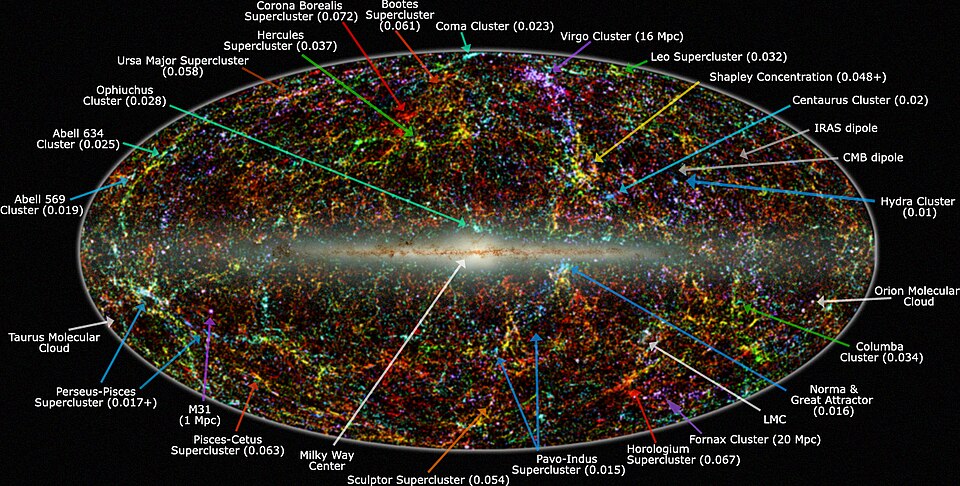
Imagine discovering that everything you know – our planet, our Sun, our entire Milky Way galaxy – is not just drifting through space, but rushing toward a vast, unseen gravitational monster we can barely describe and cannot directly see. That is, in essence, what the idea of the Great Attractor is: a region of space so massive that it tugs on entire clusters of galaxies, quietly rewriting our sense of where “here” even is. The strangest part is that we are not watching this from a safe distance; we are already caught in the flow, like a leaf swept along a cosmic river with no way to climb onto the shore.
This is one of those ideas in cosmology that sounds almost mythic at first, like something out of a science fiction novel, until you realize it comes from painstaking measurements and years of sky surveys. The Great Attractor sits in a direction of the sky clogged by our own Milky Way’s dust and stars, making it maddeningly hard to observe. Yet we see its fingerprint in the motions of galaxies around us, including our own. We know something is there. We know it is massive. We know we are moving toward it. And we also know that the story is still unfolding, with newer discoveries hinting that the Great Attractor might be just one chapter in an even bigger cosmic pull.
The Shocking Idea: Our Galaxy Is Not Just Spinning, It’s Falling
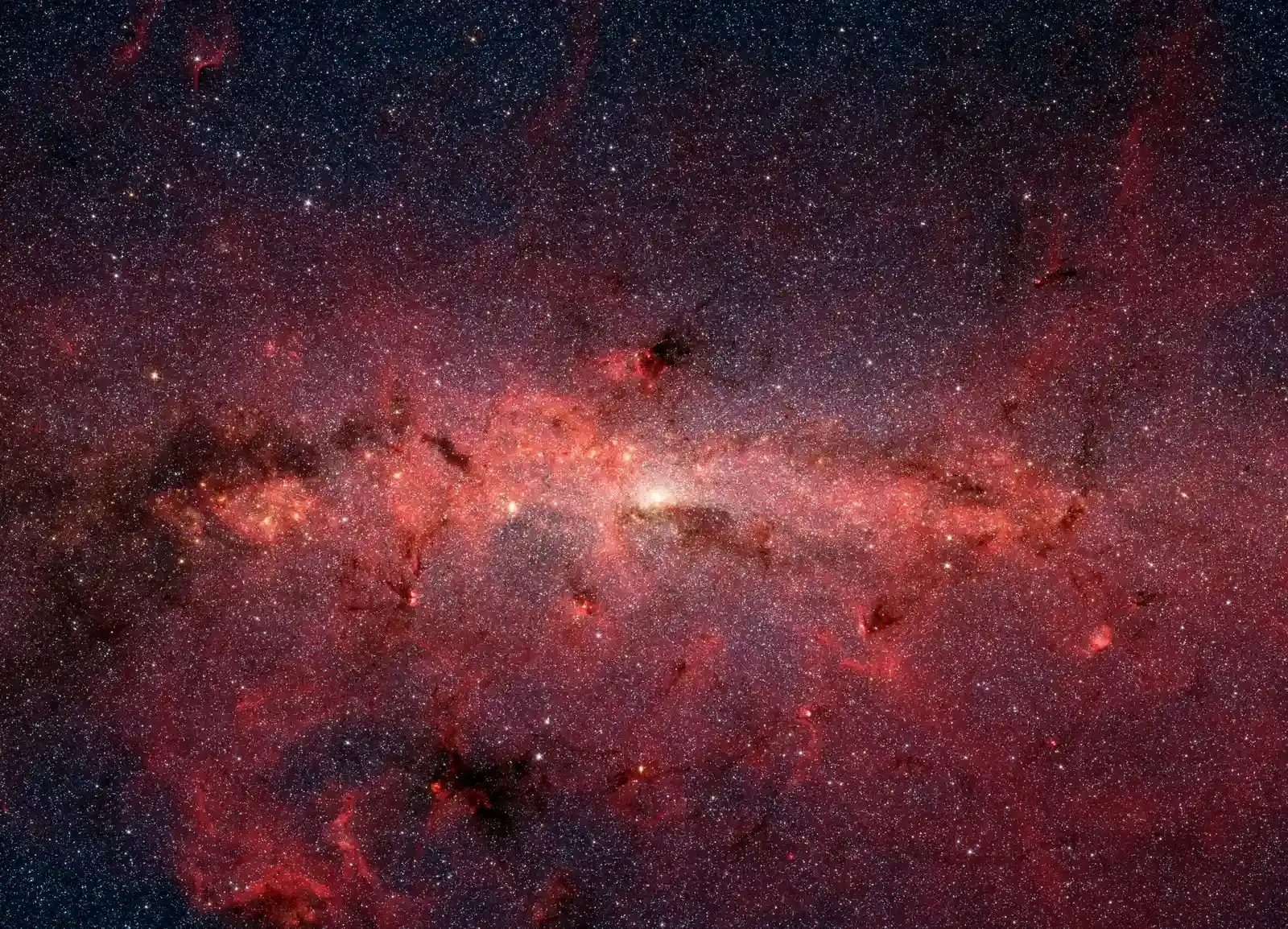
When most people picture the Milky Way, they imagine a calm spiral galaxy turning slowly like a lighthouse in the dark. The reality is much wilder: while we spin around our galactic center, the entire Milky Way is also hurtling through space at hundreds of kilometers per second, not in a random direction, but along a preferred flow influenced by nearby cosmic structures. To put it in more down‑to‑earth terms, we are on a moving train that itself is on a bigger, faster train, and both are on tracks that curve toward something heavy hidden in the fog ahead.
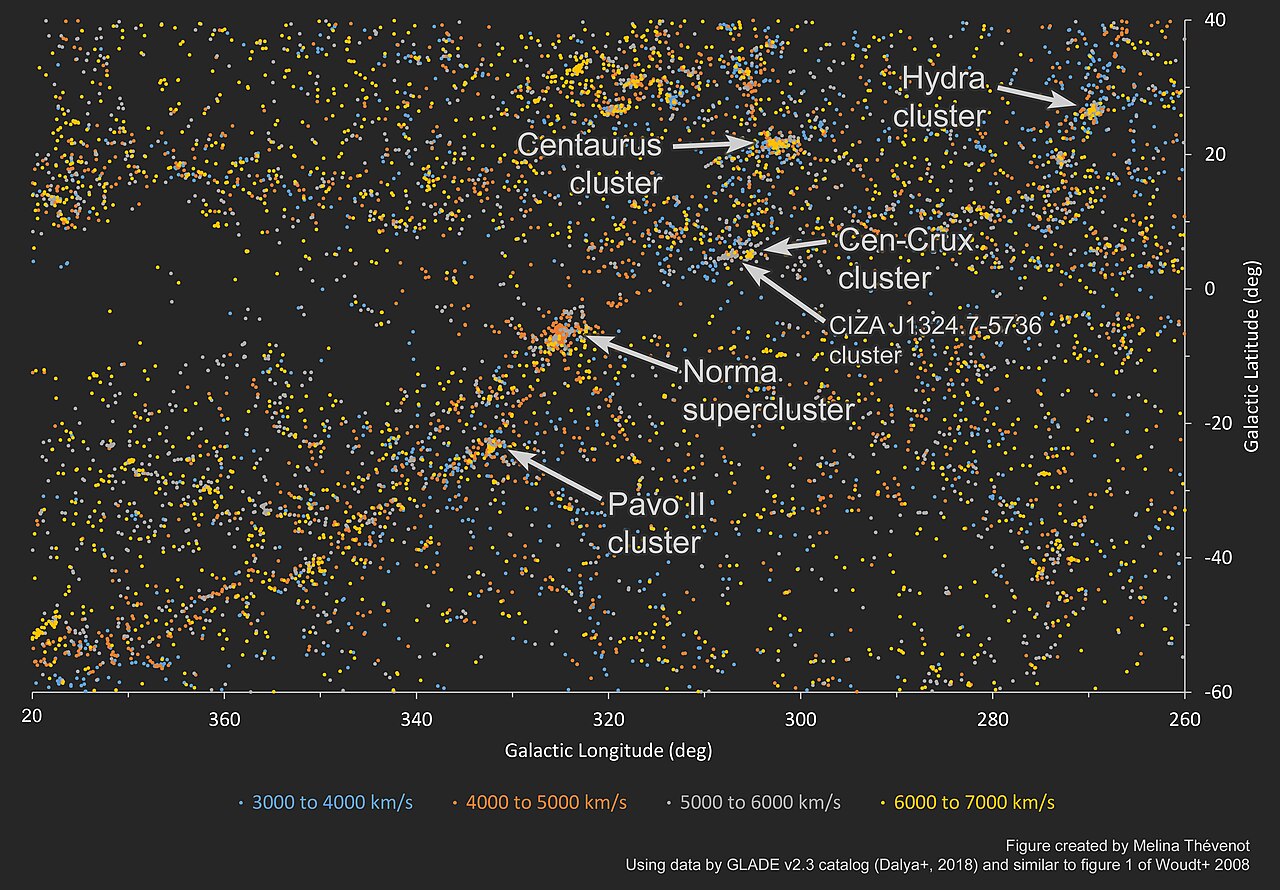
The Great Attractor is the name cosmologists gave to that “something heavy” when they realized local galaxies were not just expanding away from each other with the universe, but carrying an extra motion toward a specific region. This discovery was unsettling because the standard picture of cosmic expansion says galaxies should mostly follow the Hubble flow, where distance sets their recession speed. But when scientists corrected for this, they still found a residual drift – ours included – aimed toward a patch of sky in the direction of the constellations Centaurus and Norma. Suddenly, it was not enough to talk about expansion; we had to admit we were also in free fall toward a deeper gravitational basin.
How We Discovered the Great Attractor Without Ever Seeing It Clearly
The Great Attractor did not show up as a dramatic blob on a telescope image. It emerged as a puzzle in the numbers when astronomers started to map galaxy velocities in three dimensions. By carefully measuring redshifts, distances, and peculiar motions – the deviations from smooth expansion – they noticed that many galaxies in our region of the universe appeared to share a common flow. Like leaves on a stream all drifting the same way, their paths betrayed the presence of a hidden current.
This was especially striking once data from different surveys were combined, including catalogs of galaxy clusters and detailed maps of the cosmic microwave background that show our own motion through space. The Milky Way and its local group of galaxies are not standing still with respect to this ancient afterglow; instead, we are moving through it at hundreds of kilometers per second. That motion is not random. It lines up with the same direction where galaxy flows converge, leading astronomers to infer a massive concentration of matter – the Great Attractor – lurking behind the bright, dusty plane of our own galaxy, in what is ominously called the Zone of Avoidance.
The Zone of Avoidance: Why the Great Attractor Is Hidden From Our Eyes
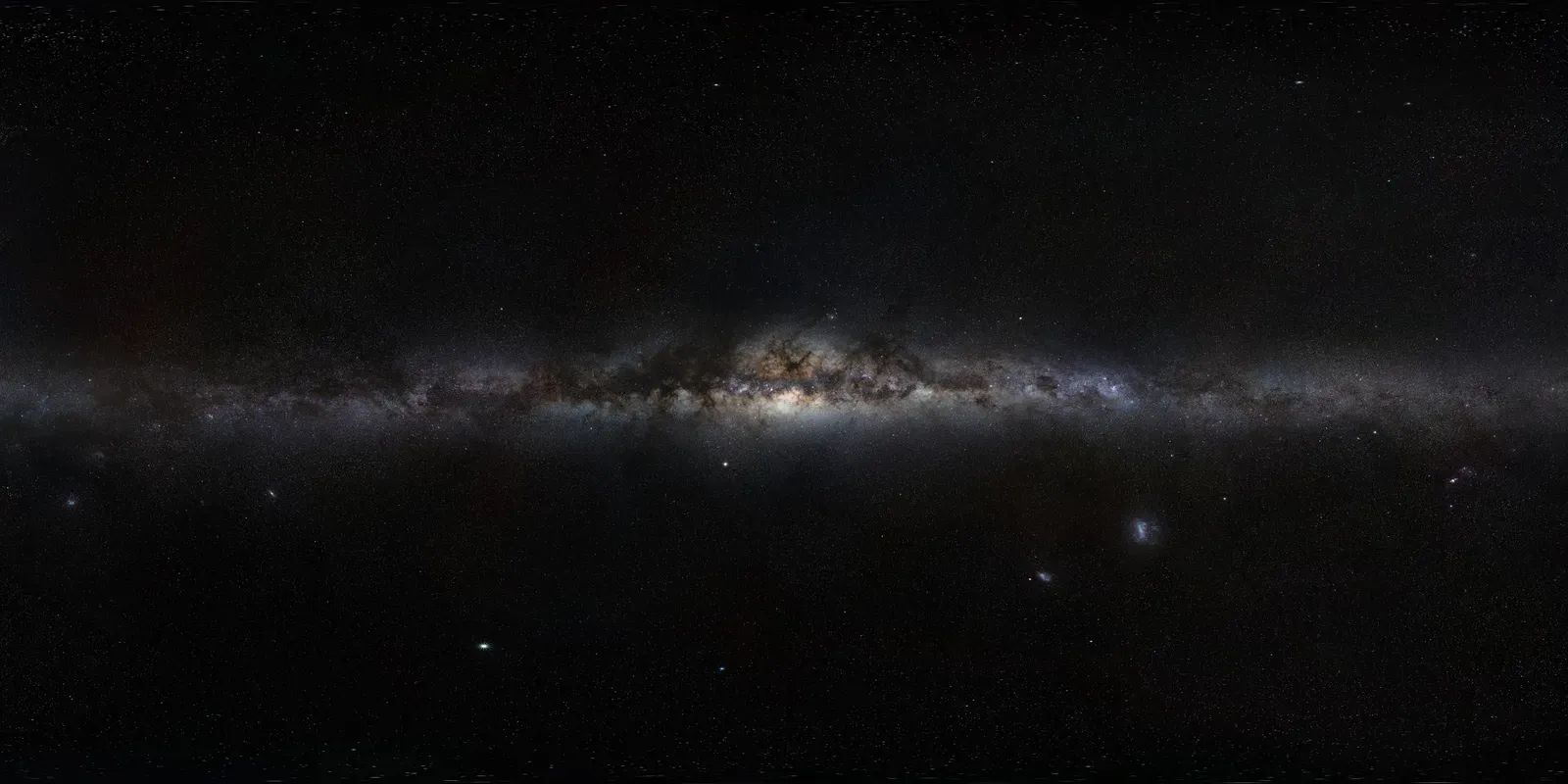
The cruel twist in this story is that the Great Attractor sits in exactly the worst possible part of the sky for us to study directly. The plane of the Milky Way, where our galaxy’s disk is thickest with gas, dust, and stars, blocks our view like a blinding spotlight. Optical telescopes see a crowded, messy foreground where distant galaxies are dimmed or erased, creating a kind of observational blind spot known as the Zone of Avoidance. It is not that nothing lies behind it; it is that we struggle to pierce the fog.
To get around this, astronomers have turned to wavelengths less affected by dust, like infrared and radio waves, and to X‑ray surveys that can reveal hot gas in massive galaxy clusters. These techniques have gradually sketched out structures hiding behind the Zone of Avoidance, including the Norma Cluster and other dense regions that likely contribute to the gravitational pull we attribute to the Great Attractor. Still, the picture remains incomplete. It is a bit like trying to reconstruct a distant city’s skyline while looking through a dense forest: you get glimpses of skyscrapers here and there, but the full silhouette stays frustratingly elusive.
Falling Inside the Stream: What It Means to Already Be Moving Toward It
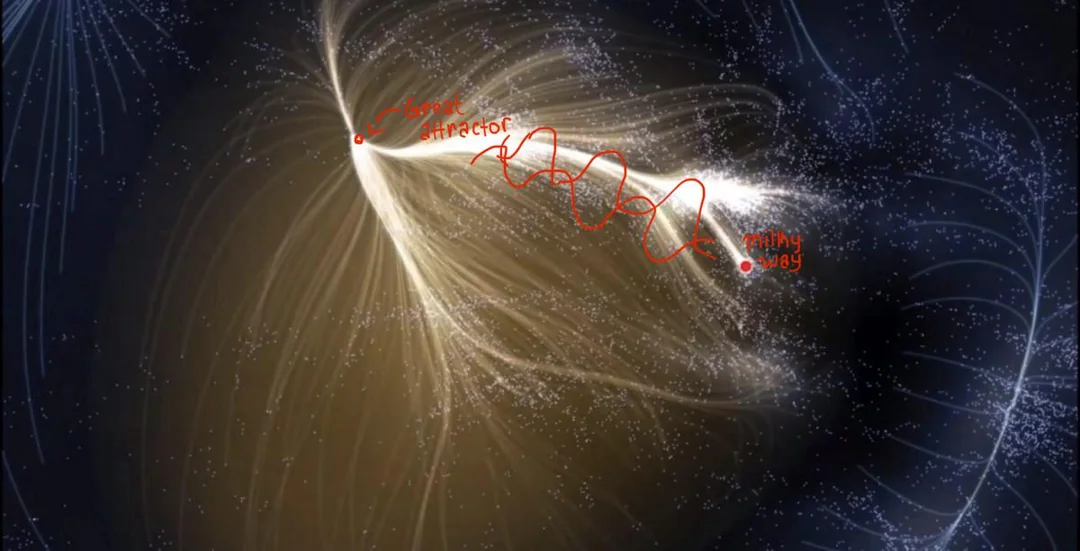
One of the mind‑bending aspects of the Great Attractor is that we are not outside observers watching galaxies fall into its influence; we are participants in the flow. Our galaxy, our cluster, and our entire local region of space are already streaming toward this gravitational well. That means we cannot step back and measure our motion against some truly fixed backdrop; the very reference frame we use is drifting, like trying to gauge the river’s current while floating in the middle of it.
This inside‑the‑stream perspective makes the whole concept feel more intimate and unsettling. We tend to think of large‑scale cosmic structures as abstract diagrams on paper, but in this case, the diagram includes our own home. The cosmic microwave background gives us a sort of external reference, a relic light from the early universe, and against that background we see our own motion and the direction of our fall. Yet knowing we are falling and being able to do anything about it are two very different things. On these scales, the motion is simply part of the universe’s choreography; all we can do is measure, model, and marvel.
How Massive Is the Great Attractor Really – and Could It Be Just One Part of Something Bigger?
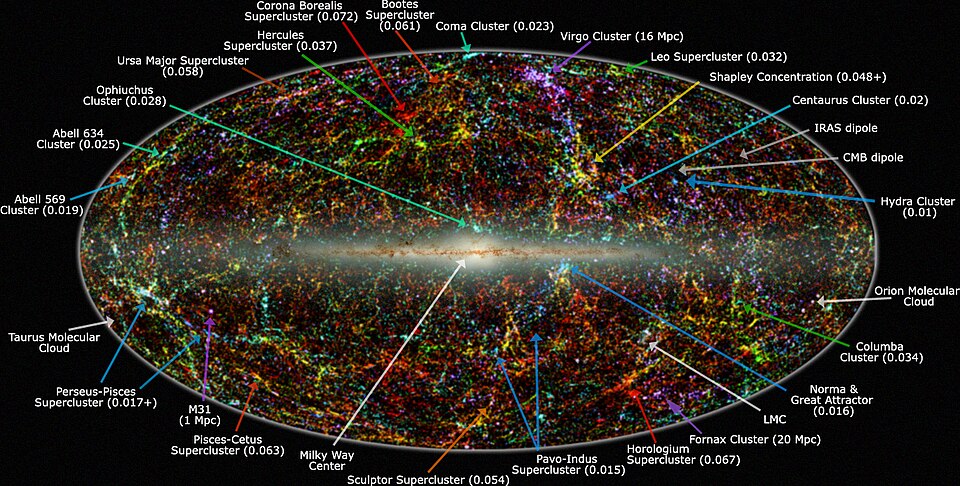
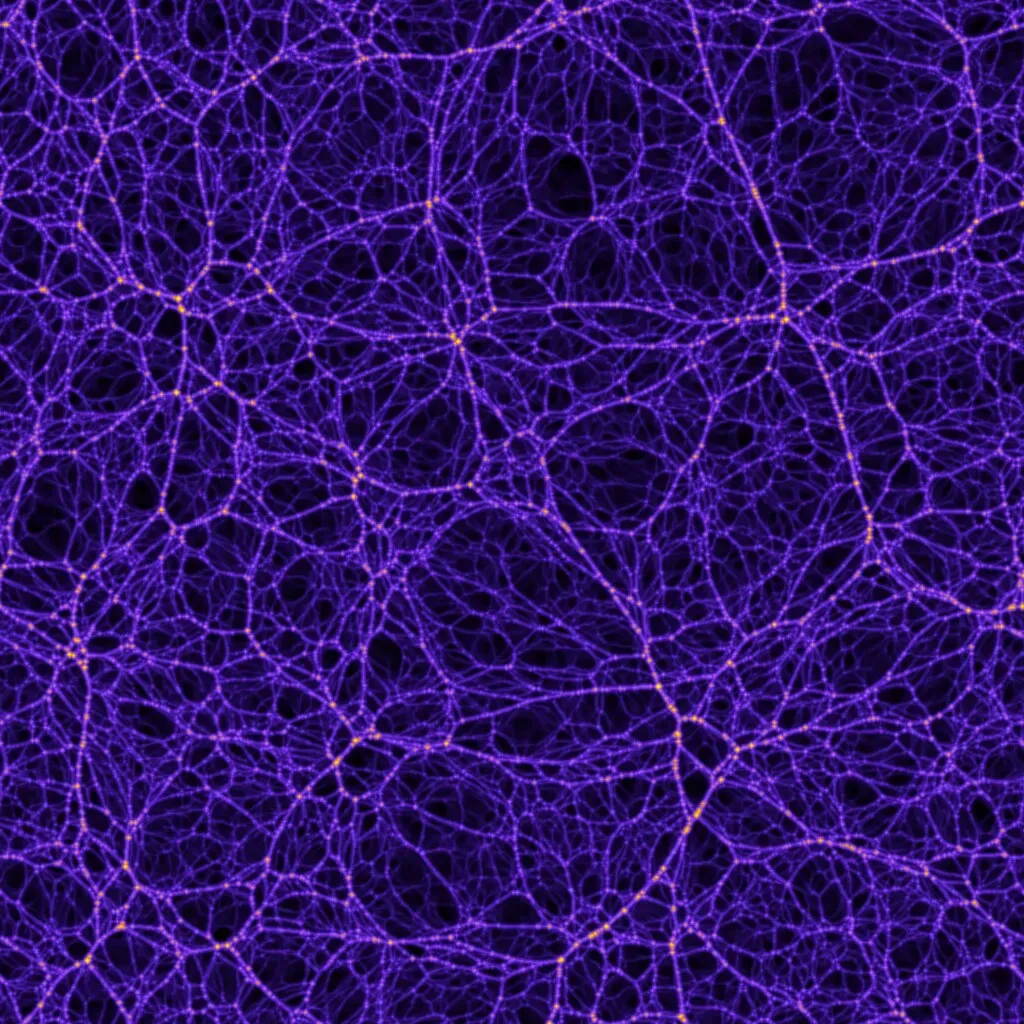
Here is where the story gets even more intriguing and, frankly, more complicated. Early on, the Great Attractor was imagined as a single dominant mass concentration, maybe a huge cluster or supercluster that could neatly explain the flows we observe. But as surveys probed deeper and farther, cosmologists began to suspect that the Great Attractor might not be a lone titan, but rather a dense region along a much larger chain of structures. Think less “isolated monster” and more “heavy knot in a vast, tangled web.”
Beyond the Great Attractor region lies the Shapley Supercluster, an even more enormous assembly of galaxy clusters that very likely contributes significantly to the motion of our local group. When you step back and map the cosmic web on these scales, you see filaments, walls, and nodes of matter stretching across hundreds of millions of light‑years. Our motion appears to be influenced by this whole landscape – pulled by overdense regions like Shapley and nudged away from underdense cosmic voids – rather than by a single, sharply defined object. So the term Great Attractor is both useful and slightly misleading: it marks a dominant pull in our neighborhood, but the true gravitational story is broader, more distributed, and still being refined.
Dark Matter, Dark Energy, and the Invisible Hands Guiding the Flow
Any conversation about cosmic motions on this scale has to wrestle with the fact that most of the mass doing the pulling is invisible to us. Ordinary matter – the stars, gas, dust, and planets we can see – makes up only a small fraction of the universe’s total mass‑energy budget. The rest is dark matter, which clumps and pulls through gravity without shining, and dark energy, which acts more like a mysterious pressure causing the universe’s expansion to speed up. When we say the Great Attractor is massive, we are mostly talking about dark matter halos wrapped around clusters and superclusters, sculpting the deep gravitational valleys that galaxies fall into.
Dark energy complicates things because, on the largest scales, it accelerates the expansion of the universe, stretching space faster over time. Yet on the scales of the Great Attractor and the surrounding structures, gravity from dark matter and ordinary matter still dominates local motion. You can think of it like this: dark energy drives the overall expansion, like a balloon being blown up, while dark matter and baryonic matter carve small dents into that balloon’s surface, guiding galaxies into filaments and basins. The Great Attractor is one particularly deep dent in our region of the cosmic balloon, one that we feel acutely even though we cannot see the main sculptors directly.
Will the Great Attractor Ever Tear Us Apart – or Is It Just Part of the Cosmic Dance?
The phrase Great Attractor sounds ominous, almost like a black hole waiting to swallow us. But in practical terms, this gravitational pull is not a cosmic doom scenario unfolding on human timescales. The velocities involved are immense compared to everyday experience, yet the distances are so vast that from our point of view, nothing dramatic is going to happen anytime soon. Over billions of years, galaxy clusters will continue to drift and fall along filaments, merging, interacting, and reshaping their environments, but this is more slow choreography than sudden catastrophe.
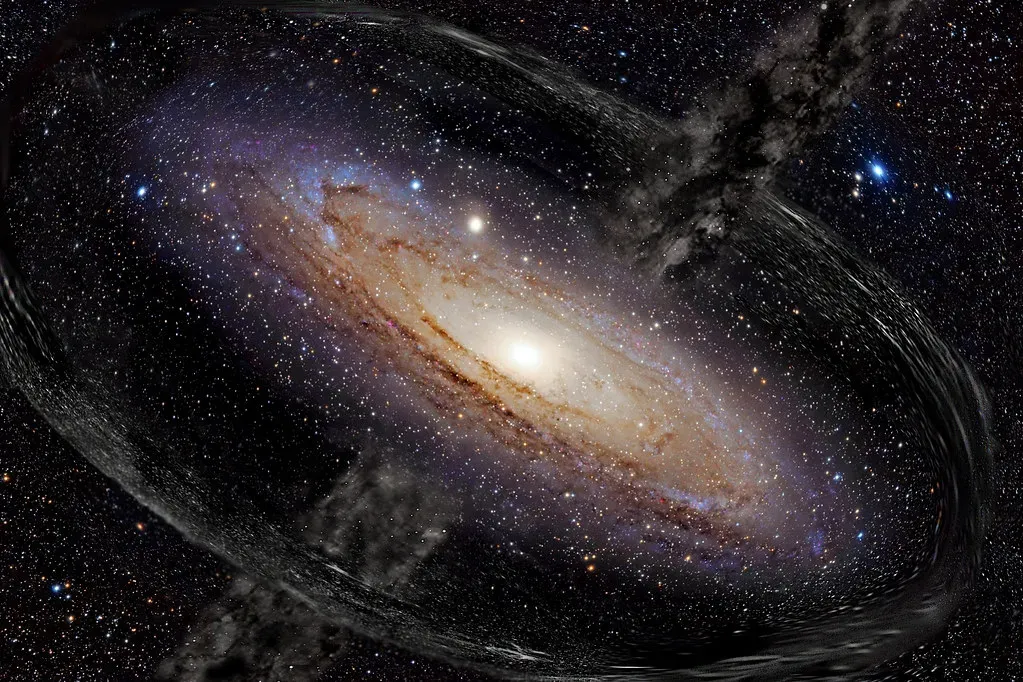
In fact, the bigger trend that will likely define our long‑term cosmic future is not being dragged into the Great Attractor, but the accelerating expansion of the universe. Far‑flung galaxies are receding faster and faster, and many will eventually slip beyond our observable horizon. Locally, our Milky Way will merge with the Andromeda galaxy, and our combined system will continue its journey through the cosmic web. The Great Attractor and structures like it are part of the pattern, not its ultimate endpoint. So while it is emotionally tempting to dramatize this as a looming gravitational fate, it is more accurate – and more awe‑inspiring – to see it as one thread in a vast, ongoing tapestry.
What the Great Attractor Tells Us About Our Place in the Universe
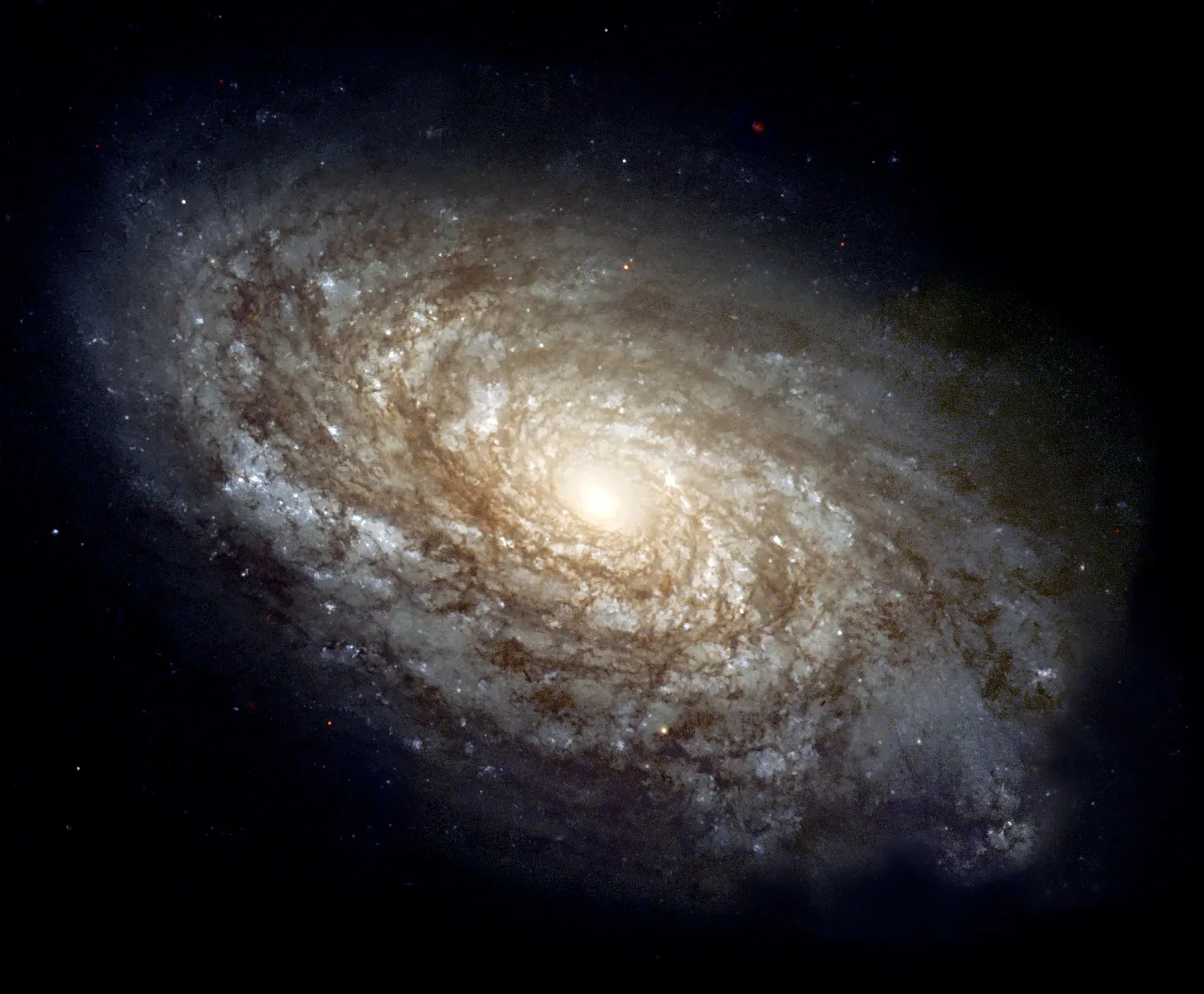
For me, the most striking thing about the Great Attractor is not the exact mass estimates or the catalog of clusters involved, but the way it flips our sense of cosmic geography. We like to imagine ourselves as neutral observers, standing on a stable platform looking out at a moving universe. Instead, we discover that the “platform” itself is sliding down a gravitational slope, bundled with countless other galaxies on a shared journey. We are not the cartographers drawn outside the map; we are ink strokes within it.
That realization is both humbling and strangely comforting. It reminds us that motion, change, and entanglement with distant structures are the norm, not the exception. The Great Attractor is a powerful symbol of this: a name we gave to a region we can barely see, inferred from the way it tugs on everything around it – including us. In a world where it is easy to feel small or unmoored, there is something quietly profound in knowing that even our galaxy is part of a grand cosmic current, pulled by structures we are only beginning to understand.
Conclusion: An Invisible Destination and Why It Matters That We Are Already On the Road
I think the Great Attractor is one of those ideas that refuses to stay in the realm of dry data; it sneaks into how you feel about being alive in this universe. The notion that our entire galaxy is streaming toward a partly unseen, massive region is a reminder that our perspective is always local and partial, no matter how advanced our instruments get. We name it, model it, and argue over how much of our motion it explains, but we are trapped inside the very flow we are trying to chart. In that sense, the Great Attractor feels less like a destination and more like a mirror held up to our cosmic ignorance.
My opinion is that this story matters not because it predicts some dramatic future collision, but because it forces us to admit that we live in a universe shaped by things we cannot yet fully see or grasp. That is unsettling, yes, but it is also deeply exciting. The Great Attractor, the Shapley Supercluster beyond it, the dark matter scaffolding and dark energy background – they all remind us that our cosmic map is still under construction. We are already on the road, moving with the stream, whether we are ready or not. The real question is not where we are being pulled, but how far we are willing to keep pushing our understanding of a universe that keeps hiding its biggest influences just out of view.