
Picture walking outside at night, looking up at the sky, and being told, with a straight scientific face, that you are standing at the very centre of the universe. Now imagine someone on a distant galaxy, billions of light‑years away, being told the exact same thing – and both of you are right. It sounds like mystical fluff or a self‑help slogan, but it is actually a brutally literal statement about how space itself behaves. Cosmology, the serious mathematical kind, insists this is not poetry; it is geometry.
This idea is so alien to everyday experience that the brain almost refuses to let it in. We are wired for maps with edges, centres, borders, and directions, not for a reality where expansion has no preferred middle. When you first really try to internalize that every point in space can legitimately claim to be the centre, it feels like trying to hold a soap bubble with bare hands: it keeps slipping through your intuition. Let’s walk through why this is true, why it is not just a word game, and how modern cosmology forces us to let go of a very old, very human picture of what a universe should look like.
The Universe Is Not Expanding “Into” Anything
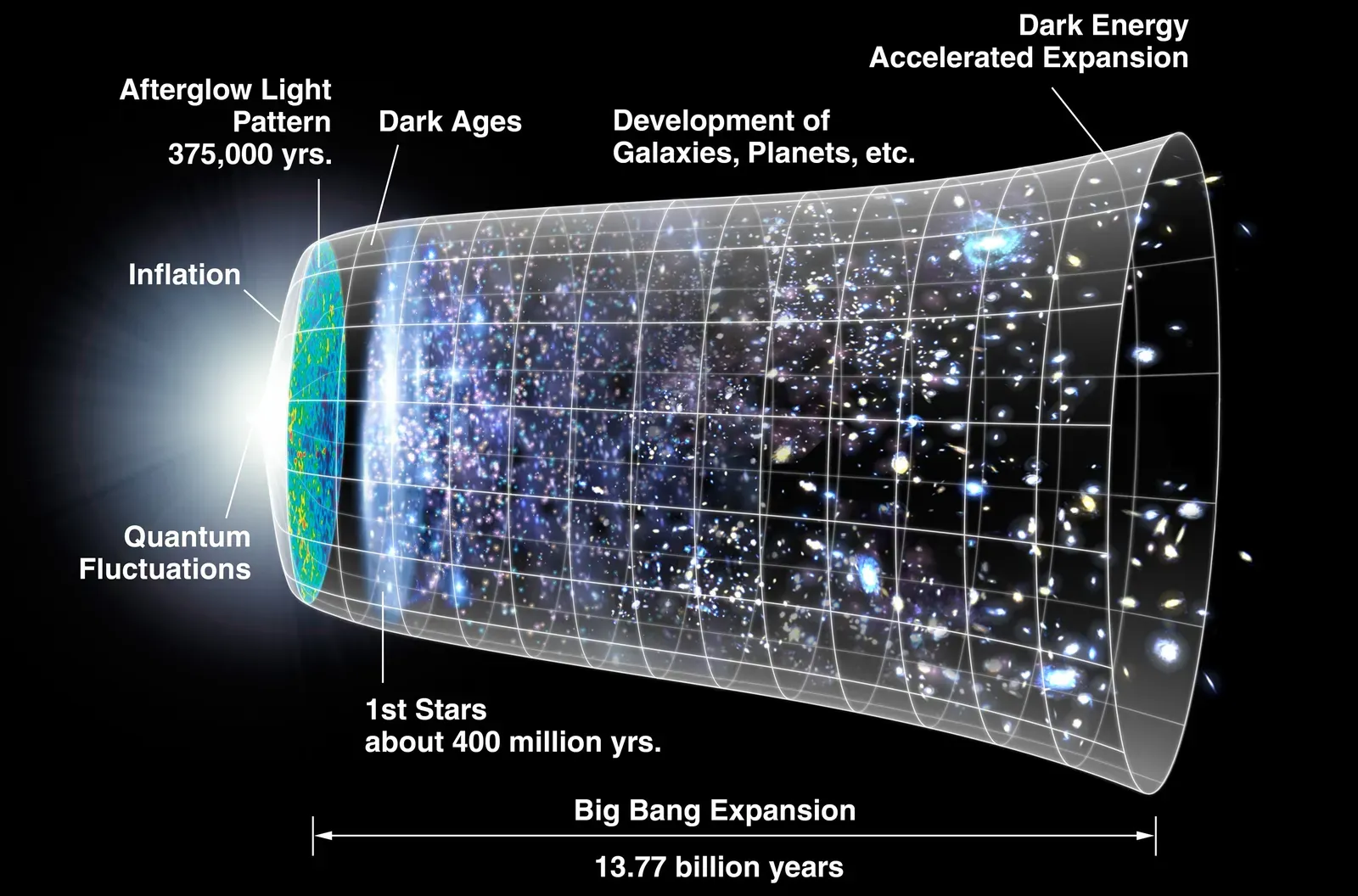
Here’s the first mind‑bend: when cosmologists say “the universe is expanding,” they do not mean galaxies are flying outward into some bigger empty container of space. There is no outer room, no cosmic hallway that the universe is drifting through like a balloon. Instead, what is expanding is space itself – the metric that measures how far apart things are. Imagine that every ruler in the universe is very slowly stretching, so the distance between any two distant galaxies grows over time, even if those galaxies are not “moving” through space in the usual sense.
Because it’s space that is changing, not some fixed arena we sit inside, the idea of an external edge becomes meaningless. Ask “what’s outside the universe?” and you’re really asking “what’s north of the North Pole?” – the question sounds grammatical, but the concept falls apart under scrutiny. That’s why talking about expansion as if the universe were a fireball racing into black emptiness is deeply misleading. It tricks the brain into searching for a centre and a boundary that simply are not there in the way we imagine.
The Raisin‑Bread Analogy and Why Every Raisin Thinks It’s Special
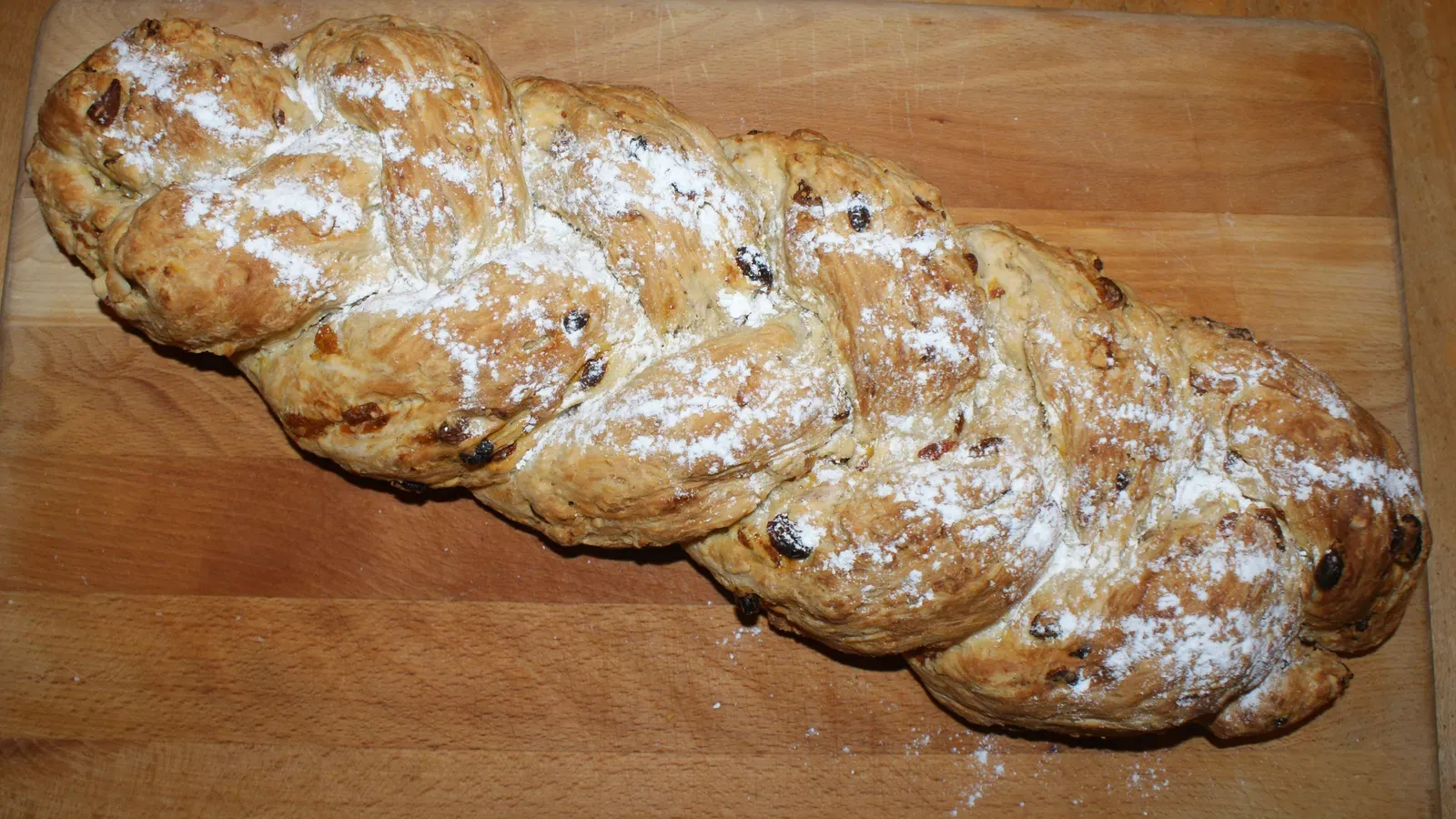
The classic analogy astrophysicists use is a loaf of raisin bread rising in the oven. The dough stands in for space; the raisins represent galaxies. As the dough expands, every raisin sees all the others moving away. The further away another raisin is, the faster it appears to recede. Crucially, there is no single raisin that owns the “true” centre of expansion inside the dough itself. From the perspective of any raisin sitting in the middle of its own local view, the expansion looks symmetric in all directions.
Now here’s the twist that usually scrambles people’s intuition: our universe, on large scales, behaves exactly like that rising dough, except in three dimensions instead of one baking tray. You, sitting in the Milky Way, measure neighboring galaxies receding, and the pattern looks the same in every direction. An observer in some galaxy billions of light‑years away would see the same thing. Each one would conclude, honestly and correctly, that they appear to be at rest in the middle of the Hubble expansion. The analogy is not perfect, but it is good enough to show why “centre” becomes a relative, not an absolute, idea.
The Cosmological Principle: No Privileged Places, No Cosmic VIP Seats
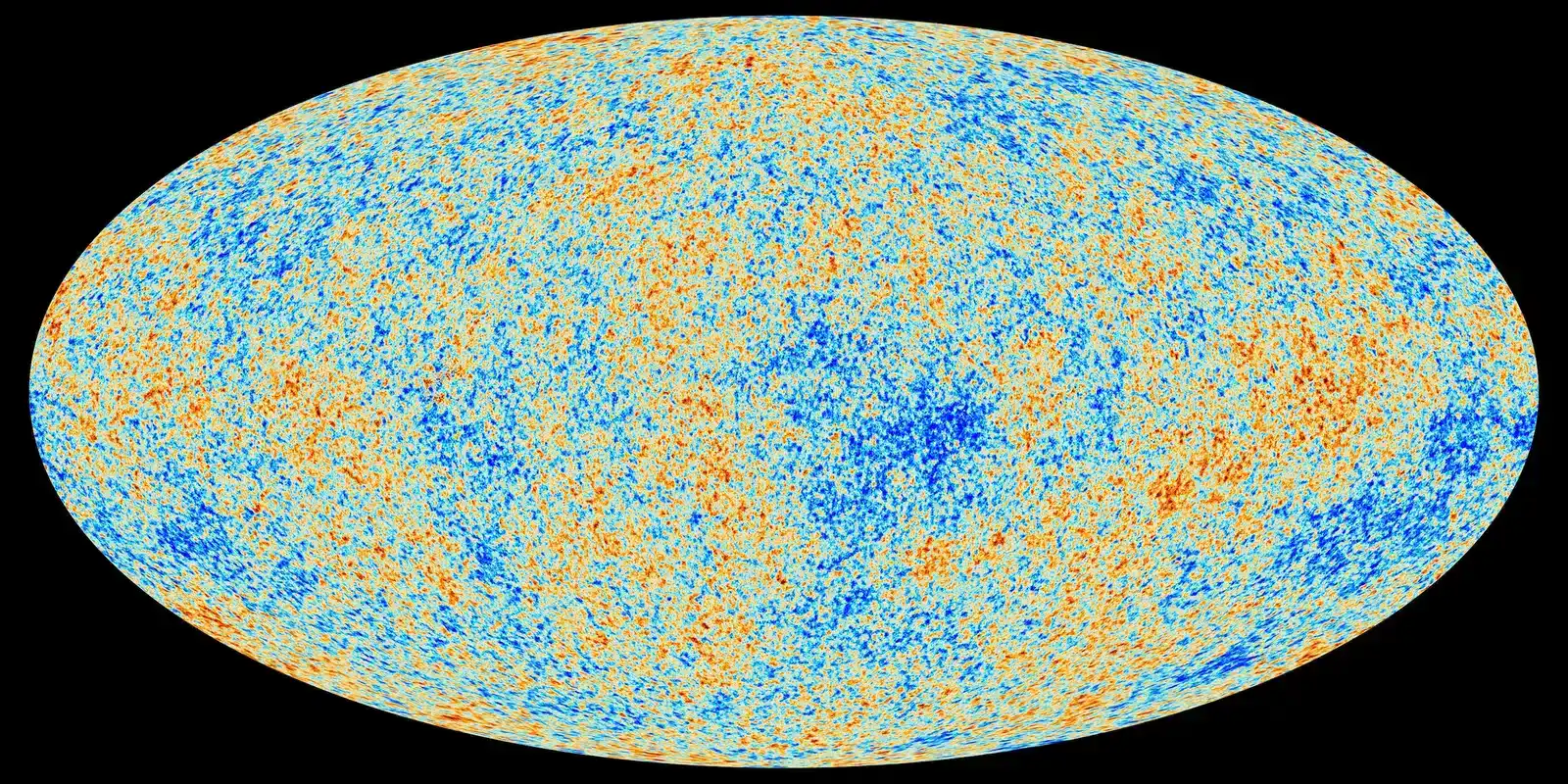
Underneath all of this is a deceptively simple assumption called the cosmological principle. It says that on the largest scales – averaging over clusters and voids and all the messy local structure – the universe is homogeneous and isotropic. In plain language, that means it looks roughly the same everywhere (homogeneous) and roughly the same in every direction (isotropic). There are local differences, of course, but if you zoom out far enough, no region of space gets to claim special status.
This principle is not just philosophical; it is supported by hard measurements. The cosmic microwave background – that faint afterglow of the Big Bang – has nearly the same temperature in all directions, with only tiny fluctuations layered on top. Galaxy surveys show large‑scale distributions that are statistically similar no matter where you look. When you take these observations seriously, the conclusion follows with a kind of cold inevitability: there is no unique central point from which everything is flying away, and every location can be treated as a centre of its own observable universe.
Geometry Without Edges: How Curved Spacetime Plays Tricks on Intuition
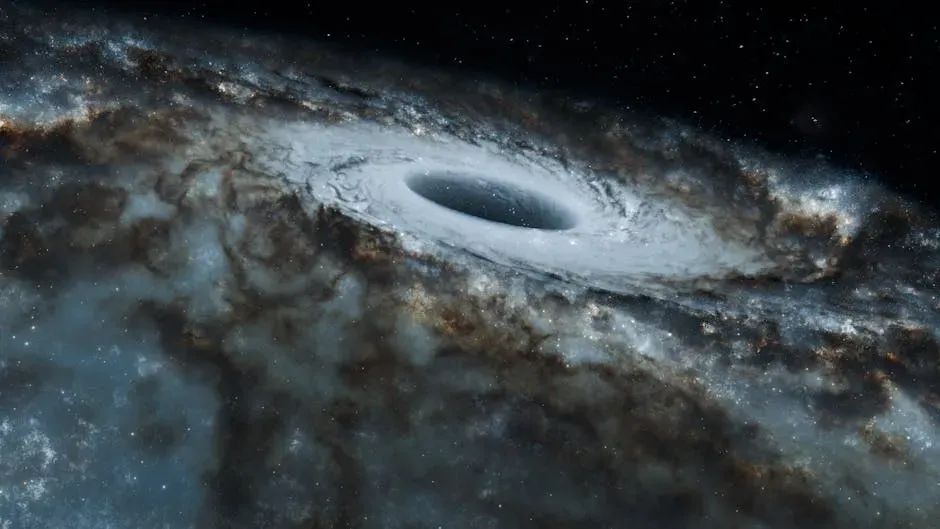
Most of us grow up with flat‑map instincts. We imagine the universe as a big three‑dimensional box that might be finite or infinite, but always with a mental grid lurking underneath. General relativity wrecks that picture by making space and time dynamic, flexible, and curved by energy and matter. In such a geometry, “straight lines” and “distances” are not fixed background features; they depend on the shape of spacetime itself, which can evolve. Once you accept that, the demand for a single, rigid centre stops making sense.
A useful analogy is the surface of Earth. Stand anywhere on the planet, and you can claim you are at the centre of your own horizon; the view is symmetric in all directions. The Earth’s surface has no edge you can walk off, but it is also finite. Similarly, some cosmological models describe universes that are finite yet unbounded, or effectively infinite with no centre even in principle. The brain wants to imagine hovering outside with a ruler, pointing at a middle, but in a curved, self‑contained geometry, there is no “outside perspective” to appeal to. The universe is all there is, so its “centre” has to be defined from within – and from within, every point plays the same geometric role.
Your Observable Universe vs. The Whole Thing
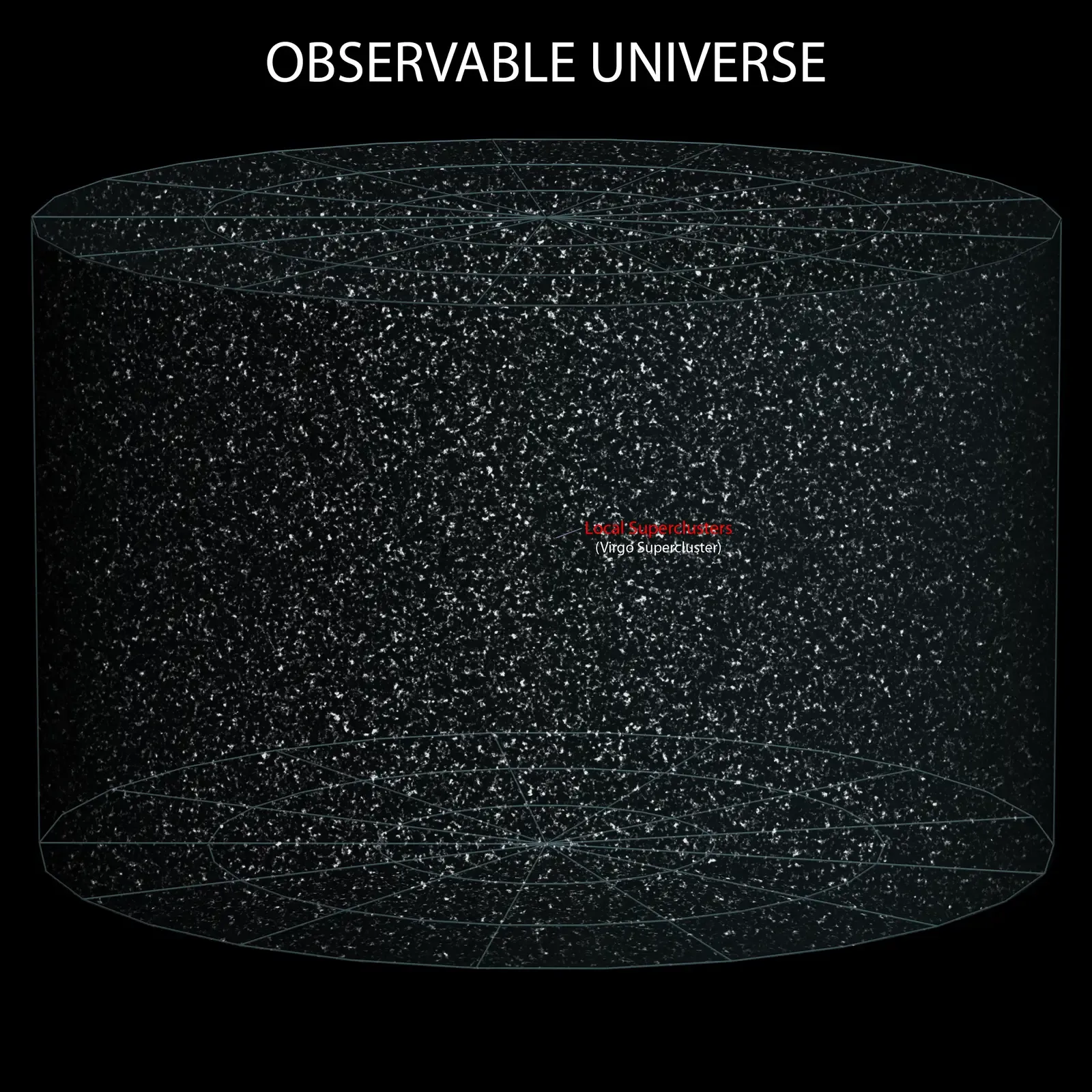
Here’s where things get sneakily psychological: you do, in a very real sense, live at the centre of your observable universe. Light takes time to travel, and the speed of light is finite. So when you look in any direction, you see a sphere of space whose radius is defined by how far light has had time to reach you since the Big Bang. That sphere is centred on you, by definition. Someone in a distant galaxy has their own observable sphere, also centred on them, overlapping with yours but not identical.
This distinction between “the observable universe” and “the whole universe” is crucial. It lets you say “I am in the centre” without making an arrogant claim about the total cosmic structure. Every observer, wherever they happen to be, will see roughly about the same large‑scale pattern of galaxies and background radiation around themselves, each from their own centre point. The geometry of expansion, combined with the finite speed of light, guarantees that the universe feels like it is centred on you, while still refusing to give anyone a privileged cosmic address.
Why the Brain Hates This: Evolution Did Not Train Us for General Relativity
Our ancestors evolved on savannas and in forests, not in Friedmann–Lemaître–Robertson–Walker universes. The mental machinery we inherited is fantastic at tracking moving predators, throwing spears, and navigating local landscapes with clear edges, but it was never asked to understand metric expansion or curved spacetime. So when cosmology tells us every point is simultaneously the centre, the brain falls back on familiar metaphors – balloons, explosions, fireworks – that smuggle in the very concepts that break the explanation.
I remember the first time I really tried to internalize this. I sat staring at a diagram of galaxy receding velocities, thinking, “There has to be some real middle they are hiding behind the math,” as if nature were playing a language trick. It took a while to accept that the problem was not with the equations but with my insistence on picturing myself outside the universe, looking in. The discomfort you feel when grappling with this topic is not a sign you are bad at science; it is a sign your intuition is still tuned to a world with walls and centres, not to a scale where those ideas melt.
The Ego Trap: You Are the Centre, But So Is Everyone Else
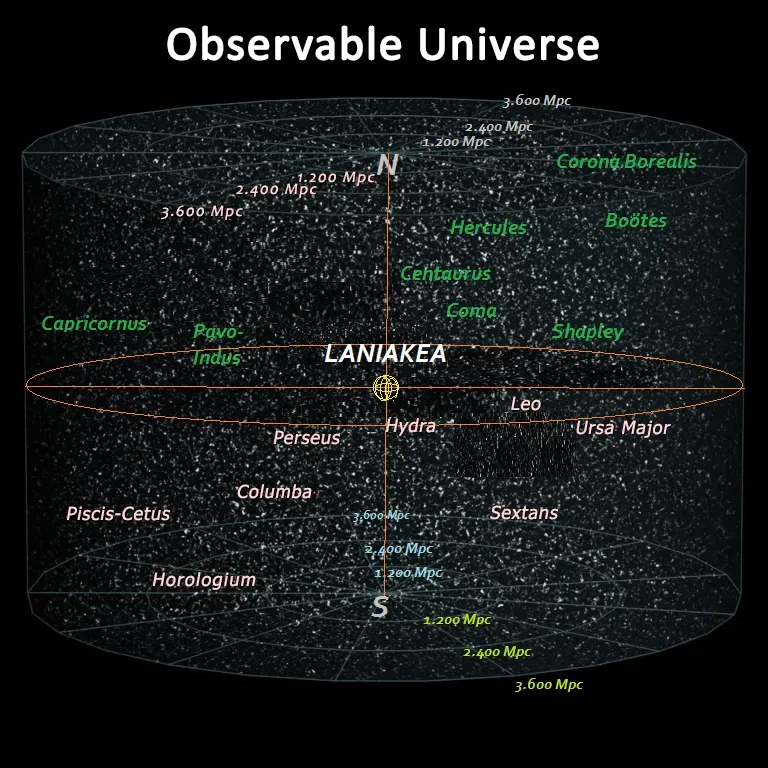
There is a slightly dangerous but fascinating philosophical edge to all of this. On one hand, cosmology ruthlessly strips away human specialness: Earth is a tiny planet orbiting a mediocre star in a galaxy that is one of countless others. On the other hand, the same cosmology tells you, with equal ruthlessness, that from your own vantage point, you sit at the literal centre of your observable universe. That is not flattery; it is geometry. The trick is to hold both truths at once without letting either inflate or deflate your sense of significance.
I actually find this duality grounding. You are absolutely central in your own light cone – everything you ever see or know must pass through that personal cosmic sphere – yet your centre is no more special than any other. It is like standing in a crowd where everyone has a spotlight shining on them from above: you are uniquely illuminated from your perspective, but the pattern is the same for all. That mix of humility and centrality is strangely healthy. It undermines grand cosmic egos while still acknowledging that your viewpoint is, in a very literal and unrepeatable way, the centre of a universe.
Conclusion: The Universe Without a Privileged Middle Is a Better Story
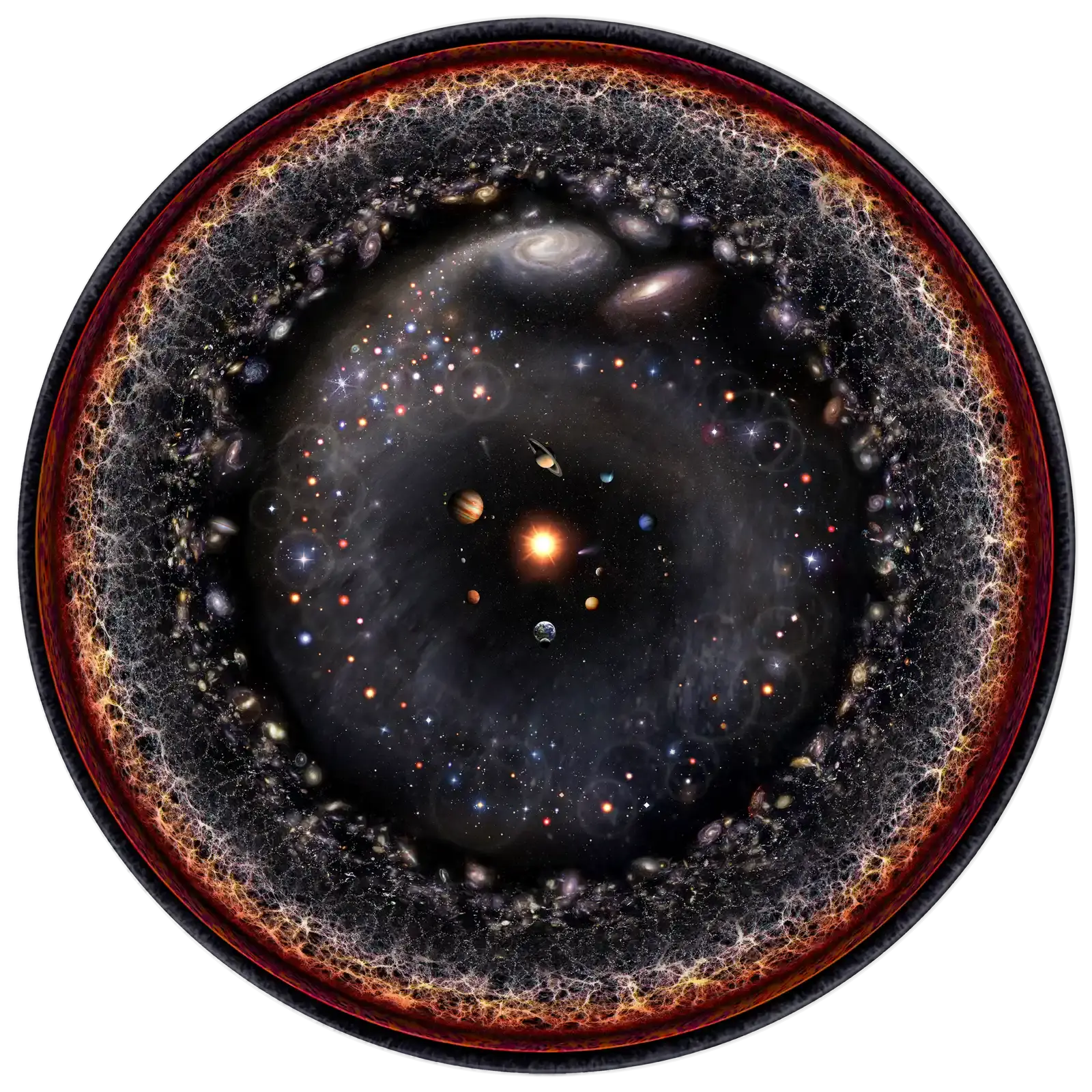
If you force me to take a stance, I think the idea that every point in space is the centre of the universe is not only a geometric fact but also one of the most beautiful corrections to human storytelling we have ever stumbled into. Old cosmologies loved clear hierarchies: thrones, layers, shells, and a single sacred middle. Modern cosmology replaces that with a universe that is democratically structured, where no location gets a cosmic crown. That is a deeply unsettling message if you crave a built‑in sense of superiority, but it is liberating if you care about understanding reality on its own terms.
In the end, our discomfort is a small price to pay for a picture that actually fits the data and the equations. The expansion of space does not care about our craving for a central seat, and the geometry of the cosmos quietly makes every vantage point a centre without elevating any of them. To me, that is a better, richer story than the old image of a universe revolving around a chosen place. It asks you to be both humble and awed at the same time. When you look up tonight, can you hold in your mind that you are at the centre of everything you can ever see – and that everyone, everywhere, is too?