You have probably had at least one moment where everything suddenly felt strangely vivid: colors seemed sharper, sounds clearer, and you had this quiet sense of watching life unfold from somewhere just behind your eyes. In those moments, it can feel like reality is not just happening around you, but also somehow through you. That feeling sits right at the heart of a radical idea: maybe your consciousness is not just a private show inside your skull, but one way the universe gets to taste its own existence.
This thought is both unsettling and oddly comforting. On one hand, it makes you feel very small, like a brief flicker in a vast cosmic story. On the other hand, it makes your existence feel deeply meaningful, as if your every perception counts for more than you realize. You are not just observing the universe; you might be one of the ways it learns what it is like to be stars, stones, cities, and stories. Let’s walk through what that could really mean for you, without losing touch with what science and philosophy actually know so far.
The Strange Mystery Of Your Own Awareness

Start with the one thing you cannot doubt: you are aware right now. You might be tired, distracted, or skeptical, but you still have a conscious experience of reading these words. You do not just process information the way a calculator does; you feel. There is a texture to your experience: the mental sound of your inner voice, the emotional flavor of your mood, the subtle sense of being “you” behind it all.
What makes this so mysterious is that, when you look at the brain scientifically, you mostly see electrical spikes, chemical signals, and networks of neurons. You can map which region lights up when you see a color or think of a memory, but that does not explain why it feels like anything from the inside. This gap between physical processes and lived experience is sometimes called the hard problem of consciousness, and no one has solved it in a way that satisfies both intuition and data. You are walking around every day carrying the hardest problem in philosophy between your ears.
From Star Dust To Self-Awareness
When you zoom out from your personal experience, the cosmic story gets even stranger. The atoms in your body were forged in ancient stars that exploded long before Earth existed. Over billions of years, matter organized into galaxies, then planets, then chemistry, then life, then nervous systems, and finally this thing you call a mind. In that sense, you are literally a piece of the universe that has grown eyes, ears, and a narrative voice inside its own flow.
Seen this way, consciousness is not something dropped into the universe from the outside; it is a natural development of cosmic evolution. Just as hydrogen clouds become stars, and stars create heavier elements, complex matter can become living systems that eventually wake up to themselves. You may feel separate from the cosmos, but you are made of the same stuff, following the same physical laws, simply arranged in a way that can say, “I am here, and this is what it feels like.”
Why Some Think Consciousness Is Fundamental

Because consciousness is so hard to reduce to brain mechanics alone, some thinkers have turned the usual picture upside down. Instead of saying that physical matter comes first and consciousness is a late, accidental byproduct, they suggest that conscious experience might be a basic feature of reality, woven into it from the start. In this view, your mind is not a strange exception; it is a highly organized expression of something that is present, in far simpler forms, everywhere.
You do not need to imagine rocks and electrons having rich inner lives to get the idea. You can think of the universe like a vast ocean of potential experience, with complex beings like you being intense waves on that ocean. Your personal consciousness would then be a localized, structured way that this underlying field of awareness becomes specific: seeing this room, worrying about this deadline, remembering this smell. It is a bold suggestion, and the evidence for it is philosophical and interpretive rather than direct, so you have to hold it lightly – but it does give you a new lens through which to see your own mind.
How Science Tries To Track Consciousness In The Brain
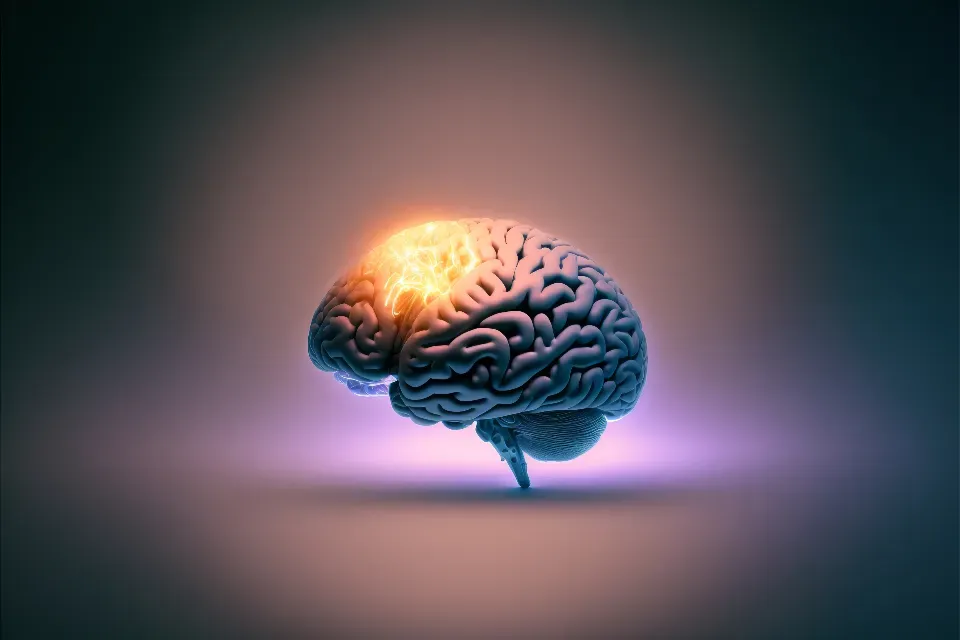
Even if you like big cosmic ideas, you still live in a world where your experiences depend heavily on what your brain is doing. Modern neuroscience tries to answer a more modest but practical question: which patterns of brain activity go along with conscious awareness, and which do not? When you are under anesthesia, in deep non-dream sleep, or in a coma, your brain behaves differently than when you are awake or vividly dreaming. Researchers track those differences to find signatures of consciousness.
Some studies point to how widely information is integrated across your brain when you are aware compared to when you are not. Other work looks at specific networks that seem crucial for your sense of self and your ability to report what you experience. None of this fully explains why any of it feels like something, but it does ground the mystery in measurable facts: damage certain regions or disrupt certain connections and your vivid inner world fades or changes. For you, the practical takeaway is that consciousness appears whenever matter is organized in particular dynamic ways, and your brain is one of the most complex examples you know.
You As A Local Point Of View On The Whole
Now imagine consciousness as a vast landscape, and each individual mind as a specific vantage point within it. You never see the entire terrain; you see from where you stand. Your upbringing, language, culture, body, and history shape what you notice and how it feels. You are like a window through which a tiny part of reality looks at itself from one angle, under a particular light, at a particular moment.
This is where the idea that you are the universe experiencing itself becomes personal. Your joys, fears, and questions are not separate from the cosmos; they are one strand in its unfolding story. When you hear music and get chills, when you stand under a night sky and feel small and wide open at the same time, that is the universe encountering its own patterns and possibilities through your nervous system. You are not the only window, but you are the only one that has exactly your view, which quietly makes your perspective irreplaceable.
What This Changes About Meaning And Everyday Life

If you take seriously the idea that your awareness is a way the universe experiences itself, daily life starts to feel a bit different. Eating breakfast is no longer just fuel management; it is matter reorganized over eons now tasting itself as coffee and toast. Your conversations become exchanges between two localized perspectives, each carrying a lifetime of memories, biology, and culture in every sentence. That does not magically fix your problems, but it does shift the background story you tell yourself about what you are doing here.
On a more practical level, this view can nudge you toward caring more about how you treat your own mind and the minds of others. If every conscious being is another angle from which reality wakes up, then causing unnecessary suffering is not just “being unkind”; it is dimming or distorting those points of view. Caring for your mental health, cultivating awareness through reflection or meditation, and seeking understanding instead of quick judgment all become ways of honoring this strange, shared project of existence paying attention to itself.
Staying Honest About What We Know And What We Do Not

With ideas this big, it is easy to drift into fantasy or dogma, so you have to keep one foot firmly on the ground. Scientifically, no one has proven that consciousness is fundamental to the universe or that it literally pervades all matter. What you do have are tough unanswered questions, useful but incomplete brain theories, and a long history of philosophical exploration that keeps circling the same core puzzle: how subjective experience fits into an objective world.
For you, the healthiest stance is probably curious humility. You can treat the idea that you are the universe experiencing itself as a suggestive metaphor that might point toward a deeper truth, without pretending it is settled fact. You can respect the limits of current evidence while still letting the mystery reshape how you feel about being alive. This balance protects you from both shallow certainty and cold cynicism, leaving you open to wonder without losing your critical mind.
Touching The Mystery In Your Own Experience

All these theories and models are interesting, but your most direct access to the mystery is your own awareness in this moment. If you pause for a second, feel your breathing, notice the play of thoughts and sensations, you might glimpse something simple but profound: experience is just happening, without you having to make it happen. Sounds, sights, feelings, and ideas all appear in a shared space you call “me,” yet you cannot quite find where that space begins or ends.
In quiet moments like that, the line between “you” and “the world” gets a little blurry. Are you a small thing inside a big universe, or are you one expression of something bigger briefly recognizing itself? You do not have to answer that with words; you can just feel into the question. Sometimes that felt sense of connection does more to change how you live than any perfectly crafted argument. It invites you to move through life with a bit more awe, a bit more gentleness, and a deeper respect for the simple fact that anything is aware of anything at all.
Conclusion: Living As A Conscious Piece Of The Cosmos
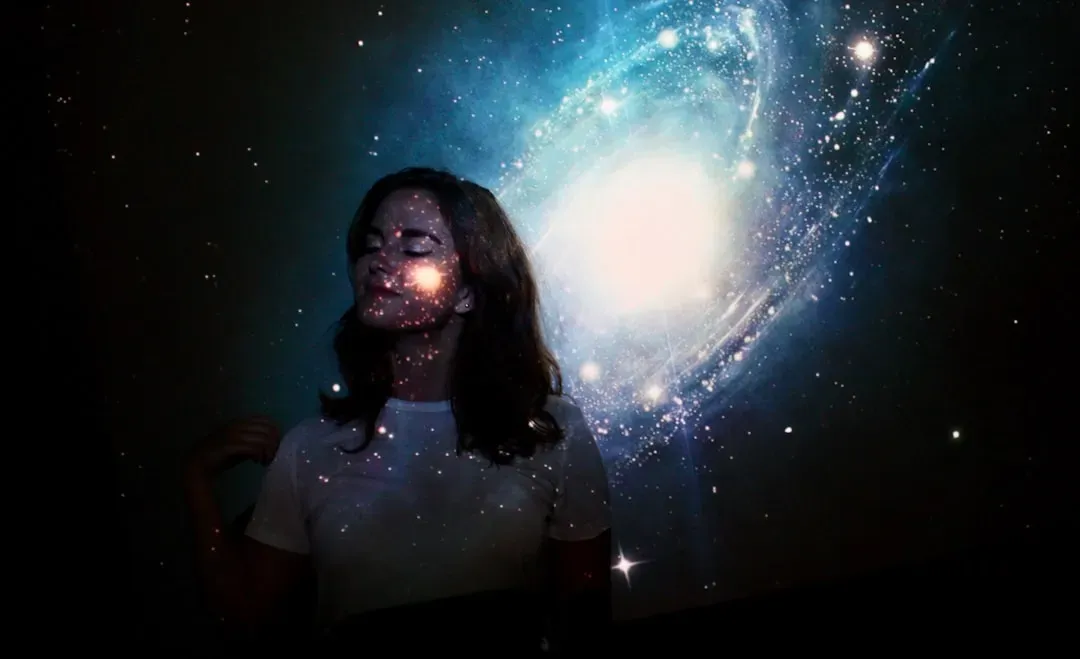
When you see yourself as the universe experiencing itself, your life stops being a random accident and starts to feel like a peculiar kind of cosmic responsibility. You are not asked to be perfect or enlightened; you are simply invited to show up fully to your own experience. Every time you pay attention with honesty – whether to joy, pain, confusion, or beauty – you help reality know itself a little more clearly from your corner of space and time. That alone can make the ordinary feel quietly sacred.
You do not need to choose between science and wonder to hold this view; you can let neuroscience map the mechanics while philosophy and personal reflection explore the meaning. What matters most is how this perspective changes the way you treat your mind, your relationships, and the world around you. If your awareness is one fragile, fleeting lens through which the cosmos looks back at itself, how do you want to use it while you have the chance?