Astonishing Endurance Against Meteorite-Like Blasts (Image Credits: Pexels)
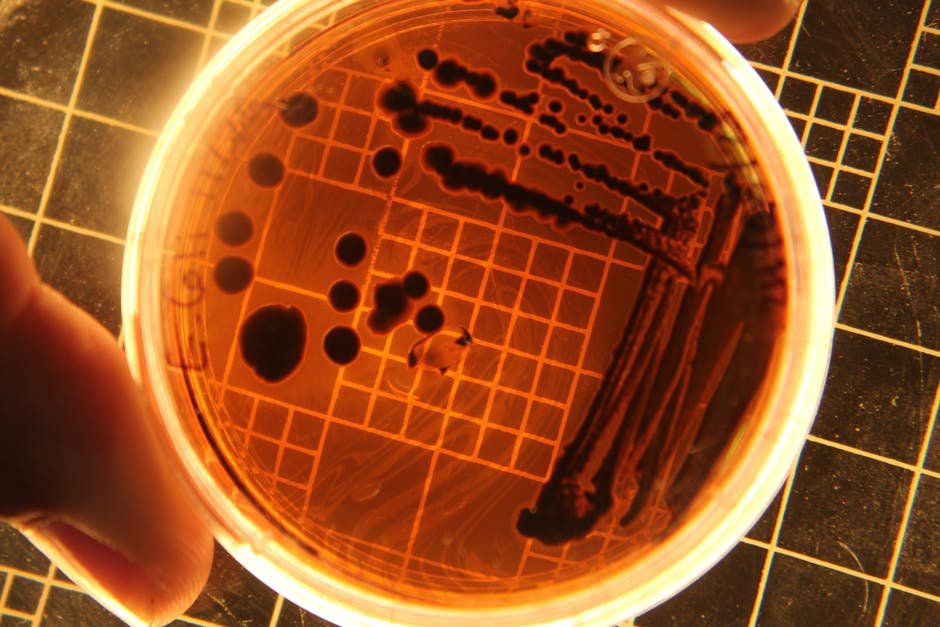
Researchers exposed ordinary baker’s yeast to conditions mimicking Mars’ brutal surface, including intense pressure blasts and poisonous chemicals. The microbes endured these dual threats, revealing a protective mechanism that could hint at life’s tenacity beyond Earth. This study challenges assumptions about the Red Planet’s hostility and opens doors to astrobiology research.[1][2]
Astonishing Endurance Against Meteorite-Like Blasts
Scientists unleashed shock waves traveling at 5.6 times the speed of sound on yeast cells, replicating the violent impacts from meteorites that routinely pummel Mars. These blasts, generated by a specialized device called the High-Intensity Shock Tube for Astrochemistry, tested the microbes’ limits in ways never before attempted with live cells. Remarkably, the yeast survived, though their growth slowed temporarily.[1]
The experiment marked a first: recovering viable yeast post-shock for detailed analysis. Lead author Riya Dhage noted the challenge in setting up the tube and minimizing contamination. “One of the biggest hurdles was setting up the HISTA tube to expose live yeast cells to shock waves — something that has not been attempted before,” she explained.[2]
Toxic Martian Soil Poses Another Deadly Challenge
Mars’ surface harbors high levels of perchlorate salts, such as sodium perchlorate, which disrupt proteins and cellular structures. Experimenters treated yeast with a 100 millimolar concentration of this compound, mirroring concentrations detected on the planet. Alone or combined with shock waves, the toxin failed to wipe out the cells entirely.[1]
Perchlorates break hydrogen bonds and alter hydrophobic interactions, creating chaos inside cells. Yet yeast persisted, demonstrating resilience that surprised the team. The Physical Research Laboratory in Ahmedabad, India, provided the shock tube, while collaborators at the Indian Institute of Science analyzed molecular responses.[2]
The Secret Weapon: Ribonucleoprotein Condensates
Under stress, yeast formed ribonucleoprotein (RNP) condensates — dynamic clusters known as stress granules and P-bodies. These structures shielded RNA transcripts and stabilized vital cellular functions during the onslaught. Shock waves prompted both types of condensates, while perchlorates triggered only P-bodies.[1]
Transcriptome analysis confirmed widespread RNA disruption from the Mars-like stresses. However, RNP condensates mitigated damage, allowing recovery once conditions eased. Genetically modified yeast unable to form these clusters showed drastically reduced survival, proving their essential role.[2]
- Stress granules manage excess messenger RNA during crises.
- P-bodies degrade faulty transcripts and regulate gene expression.
- Both dissolve post-stress, restoring normal cell operations.
- These act as biomarkers for extraterrestrial stress detection.
Bridging Earth Life to Martian Possibilities
Purusharth I. Rajyaguru, corresponding author and associate professor at the Indian Institute of Science, expressed surprise at the outcome. “We were surprised to observe yeast surviving the Mars-like stress conditions that we used in our experiments,” he said. The integration of physics, chemistry, and cell biology in this work highlighted novel ways life copes with planetary threats.[2]
Yeast, a model organism with traits shared by higher life forms, has flown on space missions before. Dhage hopes the findings spur its inclusion in future explorations. “We hope that this study will galvanize efforts to have yeast on board in future space explorations,” Rajyaguru added.[2]
While Mars remains inhospitable overall, these results suggest simple organisms might endure localized extremes. They inform searches for biosignatures and strategies for space biotechnology.
Key Takeaways
- Yeast cells survived Mach 5.6 shock waves and 100 mM perchlorate, singly and combined.
- RNP condensates (stress granules, P-bodies) provided crucial protection against RNA damage.
- Findings from Indian labs advance understanding of life in extreme extraterrestrial environments.
These experiments underscore life’s adaptability, even in simulated alien hellscapes. As astrobiologists probe the Red Planet further, yeast’s story reminds us that survival mechanisms may be more universal than once thought. What do you think about the potential for Earth microbes on Mars? Tell us in the comments.