Blog

How Does Our Brain Process and Recognize Faces So Quickly

How Does Our Brain Process and Recognize Faces So Quickly

Gargi Chakravorty

You encounter thousands of faces each day, and in a split second, your brain effortlessly sorts through them all. Whether it’s spotting your best friend across a crowded room or instinctively recognizing a familiar celebrity on television, this remarkable feat happens faster than you can blink. Yet behind this seemingly simple task lies one of ...

7 Ways Science Explains Superstitions

7 Ways Science Explains Superstitions

Andrew Alpin

Walk under a ladder and bad luck will follow. Break a mirror and seven years of misfortune await. Cross your fingers and good fortune might come your way. These beliefs persist across cultures and generations, defying our rational, scientific age. You might dismiss as outdated nonsense, yet research shows that roughly one in four Americans ...

Earth.

Study Suggests Life Tried to Evolve 1.5 Billion Years Earlier than Thought

Andrew Alpin

In a groundbreaking study, researchers from Cardiff University claim that life on Earth may have attempted to evolve 2.1 billion years ago—about 1.5 billion years earlier than previously believed. The study, led by Dr. Ernest Chi Fru, has sparked significant debate within the scientific community. The team’s findings, centered on fossil evidence from present-day Gabon, ...

a piece of wood sitting on top of a blue and yellow wall

The Microplastic in Your Cement: Could Recycled Waste Make Buildings Greener or More Fragile?

Maria Faith Saligumba

Imagine walking into a building, feeling the firm ground beneath your feet, and knowing that the very material supporting you contains tiny plastic particles. Sounds surprising, right? This is the emerging reality as researchers explore the potential of integrating microplastics into cement. On one hand, this innovation could revolutionize sustainable construction by reducing waste. On ...

a view of the earth from space

Are There Free-Floating Worlds Drifting Through the Cosmos?

Suhail Ahmed

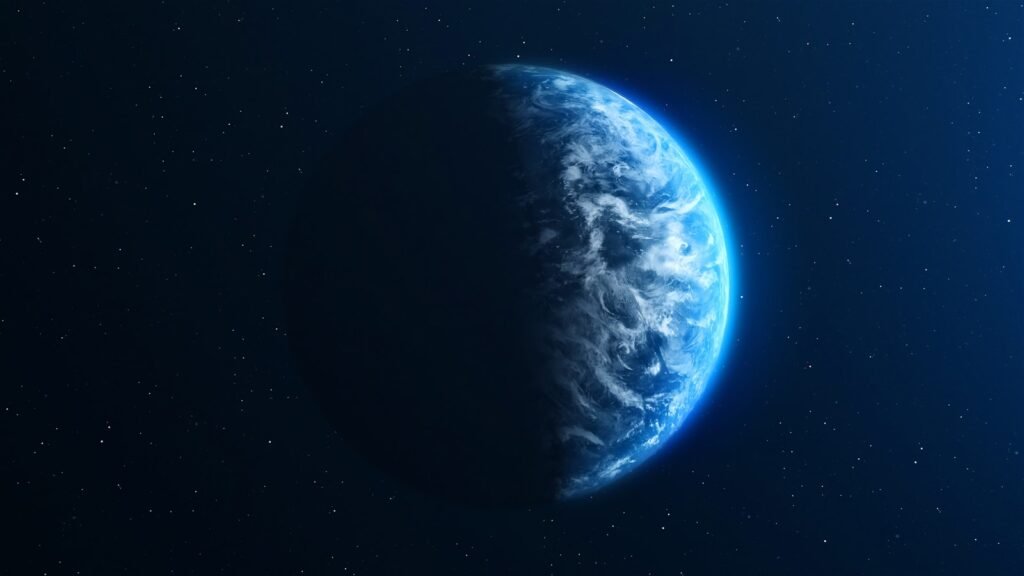
  Imagine a planet the size of Jupiter, wrapped in darkness, with no sunrise, no parent star, and no familiar sky – just an endless night lit only by distant galaxies. For decades, this kind of world sounded like pure science fiction, a playground for novelists and movie directors. Now, astronomers are quietly gathering evidence ...