
Picture this: while humans were still figuring out stone tools, two entire galaxies were already locked in a slow-motion cosmic embrace that will eventually rewrite the night sky. It sounds like science fiction, but it is one of the most grounded, well-studied predictions in modern astrophysics: the Andromeda galaxy and the Milky Way are not just on a collision course, they are already feeling each other’s pull in deep and measurable ways. The drama that will culminate in a galactic merger is not some future event waiting to start; it is an ongoing story that has been unfolding for billions of years.
What makes this so fascinating is the mismatch between human timescales and cosmic ones. We think in days, years, maybe centuries if we stretch ourselves, but gravity plays the long game across millions and billions of years. When you realize that the future of our sky was essentially locked in long before humans appeared, it changes how you see everything: our history, our place in the universe, even what “change” really means. The universe is in motion now, not just someday, and we are living in the middle of a process that will eventually erase the Milky Way as we know it.
The Milky Way and Andromeda: Two Giants Already in a Dance
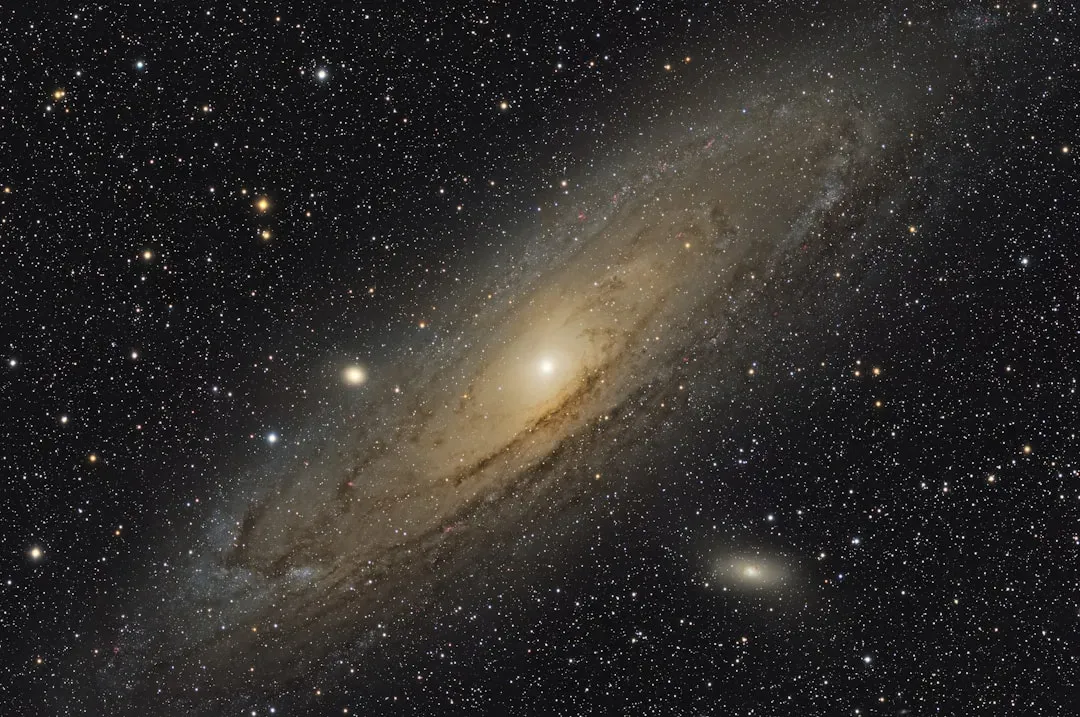
It is easy to think of the Milky Way and Andromeda as distant, separate islands of stars, each minding its own business in space. In reality, these are two massive spiral galaxies in the same small neighborhood of the universe, known as the Local Group, sitting roughly a few million light-years apart. When astronomers measure Andromeda’s motion relative to the Milky Way, they do not just find a quiet neighbor; they see a galaxy heading toward us at hundreds of kilometers per second, which is already a sign of their deep gravitational connection.
Even though the distance between them is vast beyond imagination, their mutual gravity has been binding their fates for a very long time. You can think of them like two enormous ice skaters starting far apart on a frictionless rink, slowly curving toward each other because of a barely perceptible rope pulling them together. That “rope” is gravity, and it does not care whether we notice it or not. Long before humans, long before Earth cooled enough for life, this gravitational dance was underway, quietly adjusting the paths of hundreds of billions of stars.
Gravity Has Already Set the Future: The Interaction Is Underway
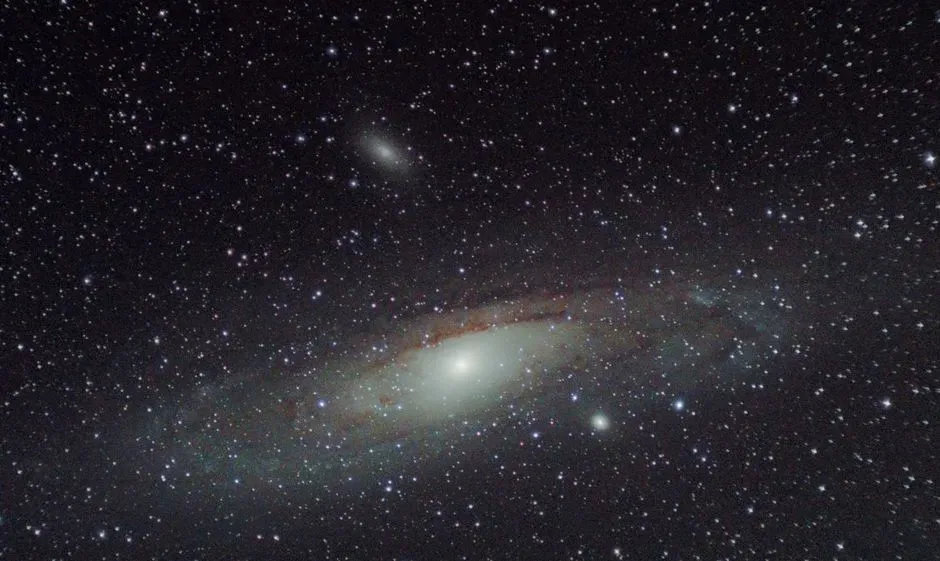
When astrophysicists say the galaxies are already gravitationally interacting, they do not just mean “they will bump into each other someday.” They mean that the force of gravity from each galaxy is already altering the motion of the other, right now, in ways we can calculate. The stars in the outer halos of the Milky Way and Andromeda are not moving as if they are orbiting in isolation; they are moving within a shared gravitational landscape shaped by both galaxies and their dark matter halos. In very simple terms, they are already falling toward each other.
The wild part is that gravitational interaction does not need visible fireworks to be real or important. Just because the night sky does not yet show Andromeda stretched and torn across half the horizon does not mean nothing is happening. Subtle shifts in velocities, distortions in the outer dark matter halos, and the paths of small satellite galaxies are all evidence that the merger has, in a dynamical sense, already started. Think of it as the prelude phase of a storm: the wind direction has changed, the pressure is dropping, and the system is locked into what comes next, even if the first raindrops have not hit the ground yet.
Dark Matter Halos: The Invisible Bridge Between the Two Galaxies
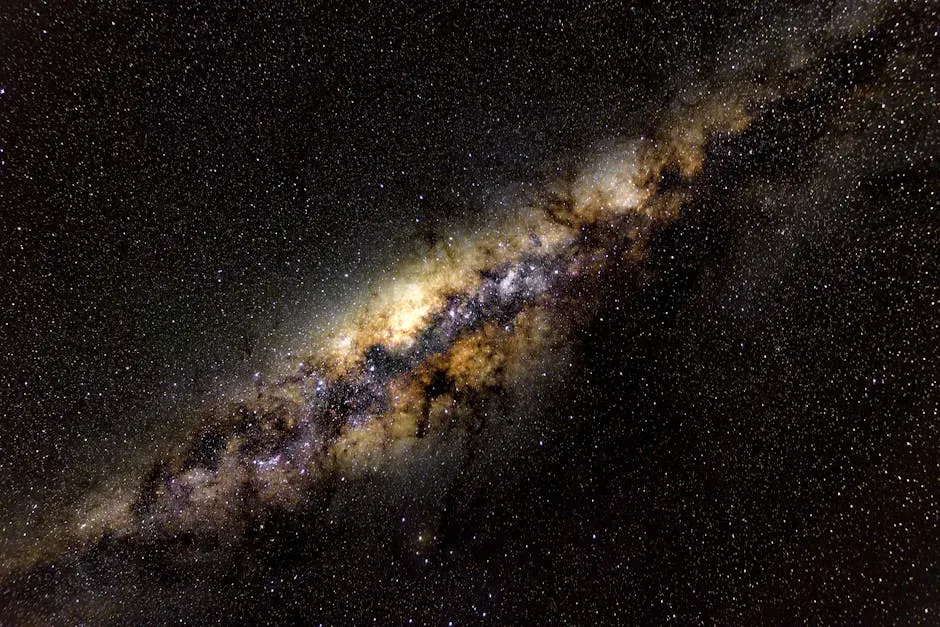
One of the most underrated parts of this story is that the real “bodies” of the Milky Way and Andromeda are far larger than the glowing disks of stars we can see. Each galaxy is wrapped in an enormous, roughly spherical halo of dark matter that extends well beyond its visible edge, like a huge invisible cloud that outweighs the stars by many times. These halos likely overlap or at least strongly influence each other already, meaning the gravitational handshake between our galaxies is happening through structures we cannot see directly with our eyes.
Astrophysicists infer the presence and extent of these halos by watching how stars and gas move, and by studying how galaxies in general orbit within groups and clusters. When you model the Milky Way and Andromeda with realistic dark matter halos, the picture becomes even clearer: they are not two neat, well-separated disks gliding toward a future collision, they are fuzzy, extended mass distributions already tugging on and reshaping each other’s outskirts. In a way, their dark matter halos have met long before their bright stellar disks will, like two people’s shadows touching before their hands do.
This Merger Started Long Before Humans – And Will Outlast Our Species
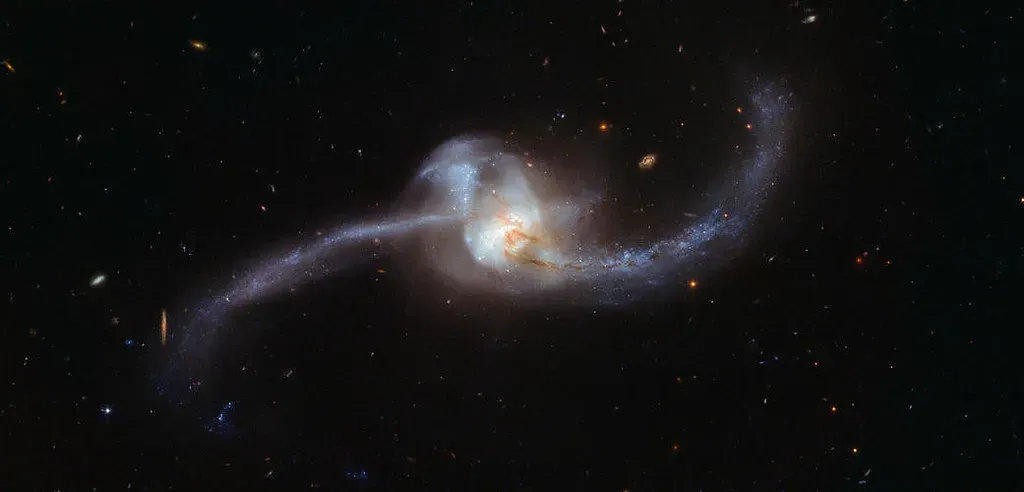
From a human standpoint, it feels natural to talk about the Milky Way–Andromeda merger as a future event, because the spectacular parts happen billions of years from now. But if you shift your frame of reference to cosmic timescales, the story is different: the process began when both galaxies were still much younger, long before Earth even formed. The slow gravitational infall, the shaping of orbits, the rearranging of small satellite galaxies around them – all of that has been going on for an enormous fraction of the age of the universe.
What is almost unsettling is how indifferent this timescale is to us. Humans are a very recent phenomenon in cosmic history, appearing only in the last tiny sliver of time. Our entire species’ existence so far is like a single heartbeat in a marathon that has already been running for hours. The merger story began without us and will almost certainly end without us, regardless of how long humanity lasts. There is something humbling, and strangely freeing, in realizing that the universe has been rearranging itself at this level for eons, with or without anyone here to watch.
What the Future Sky Will Look Like When the Real Fireworks Begin
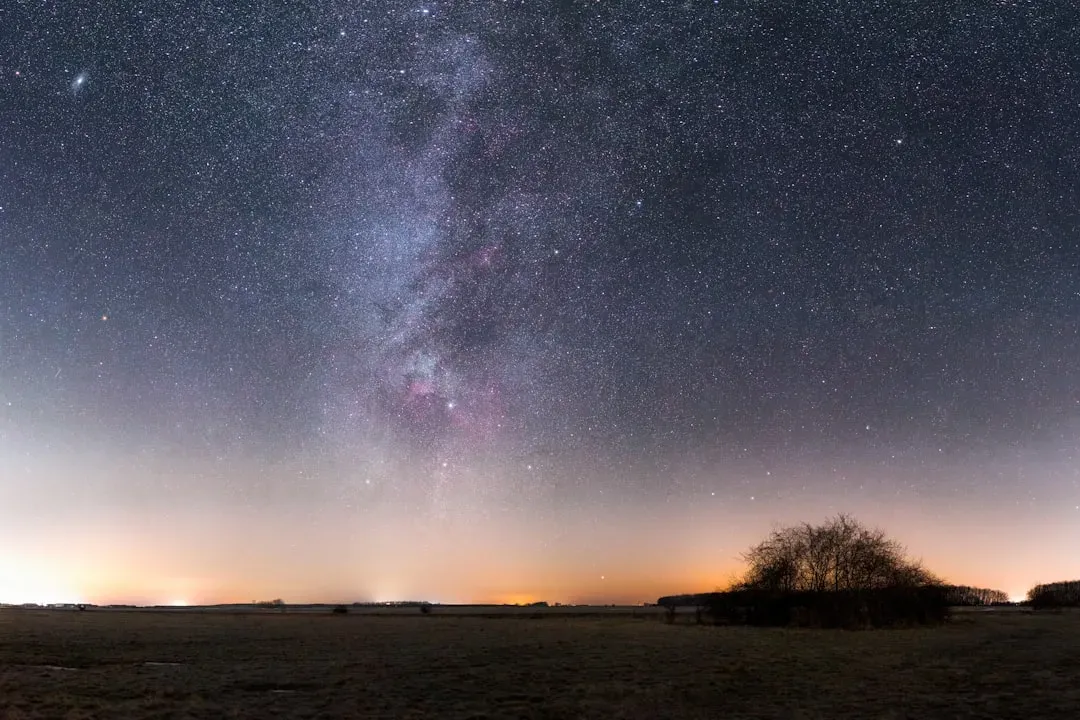
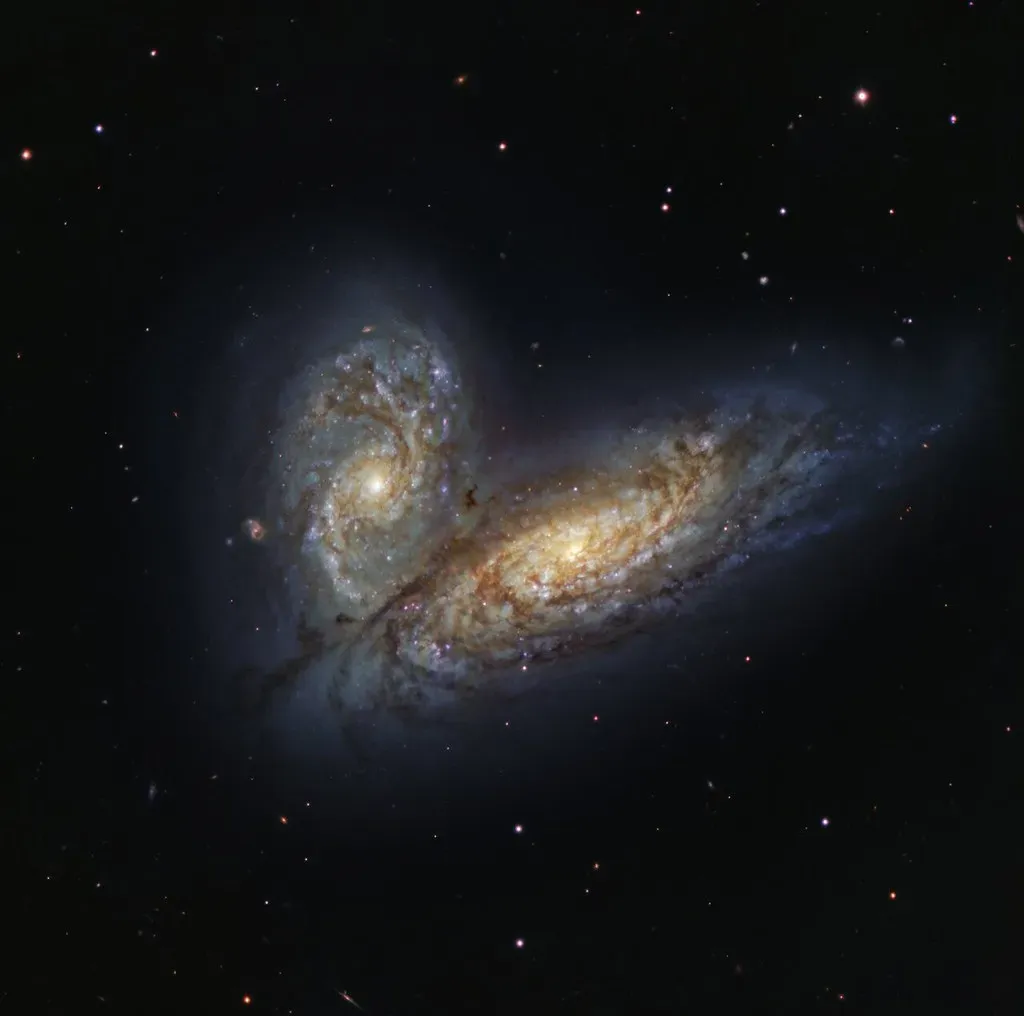
Even though the gravitational interaction is already underway, the truly jaw-dropping visual changes are still in the future, on a scale of billions of years. Eventually, Andromeda will appear larger and larger in the night sky, turning from a faint smudge to a sprawling, detailed structure with star-forming regions and spiral arms visible to the naked eye. As the galaxies close in, tidal forces will start to stretch and twist both disks, triggering bursts of star formation as gas clouds are compressed and shocked by the chaos of the encounter.
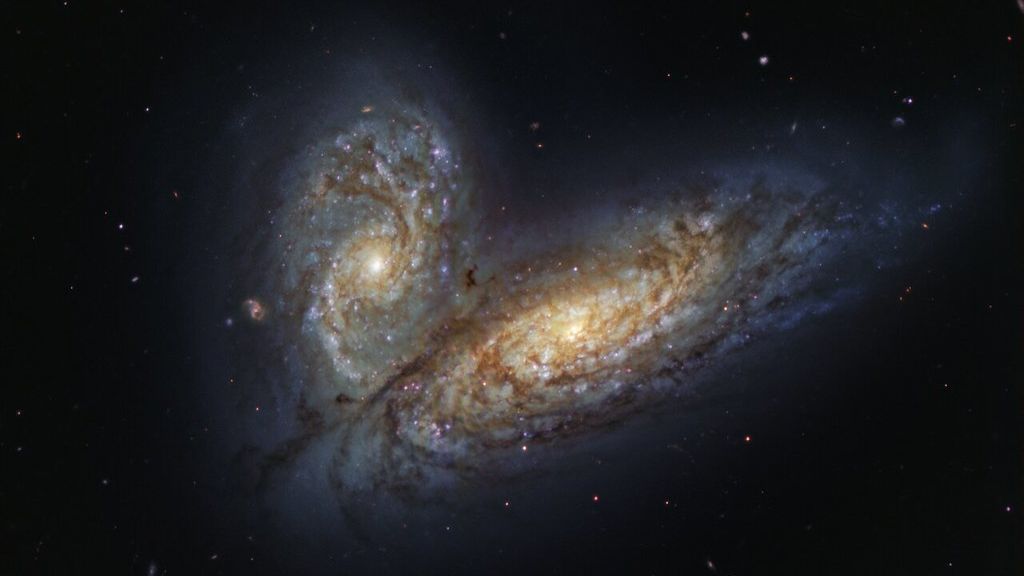
Over multiple passes, the elegant spiral shapes of both galaxies will be distorted into long tidal tails and warped streams of stars, like two whirlpools colliding in slow motion. After enough time, the separate identities of the Milky Way and Andromeda will blur into a single, larger, more rounded galaxy, often nicknamed “Milkomeda” in popular descriptions. Despite that dramatic name, the merged galaxy will just be the next natural phase in the life cycle of large galaxies, many of which show signs of past collisions. In other words, our future sky may look wild to us, but to the universe, it is business as usual.
Why This Ongoing Merger Matters for How We See Ourselves
It might be tempting to shrug and say, if this merger takes billions of years to play out, why should we care? But that viewpoint misses the emotional and philosophical punch of the story. Knowing that the Milky Way and Andromeda are already interacting – that the future of our home galaxy is being shaped right now – forces us to step outside the cramped confines of human timescales. It undercuts the illusion that the universe is a static backdrop and reminds us we are living inside an evolving, dynamic system on every scale, from planetary to galactic.
Personally, I find it oddly comforting that our galaxy is not some isolated, permanent structure but part of a larger cosmic flow that has been unfolding since long before humans had words for the sky. The fact that the merger started without us and will continue long after us does not make our existence meaningless; it makes it rare and precious. For a fleeting moment in an ancient and changing universe, we get to be the ones who figure this out, who name the galaxies, who map their trajectories, who tell the story. In a cosmos where even galaxies collide and transform, the most radical thing we can do is recognize how brief our window is and still choose to care – about our planet, our future, and the tiny patch of time we have been given. Did you expect a galactic collision to make everyday life feel more urgent?