Imagine staring into what looks like empty, peaceful space and knowing that, even from that seemingly safe distance, the very atoms in your body could be twisted by an invisible force. That’s the unsettling reality of magnetars: ultra-magnetized neutron stars whose fields are so extreme that the usual rules of matter start to wobble. To the naked eye, you’d see nothing but darkness and distant pinpricks of light. In the language of physics, though, that same patch of sky could be humming with energy strong enough to tear apart atomic structures.
Magnetars sit right at the boundary of what we can even imagine, let alone experience. Their existence forces us to confront an almost uncomfortable question: how strong can nature turn the dial before reality itself starts to look different? In a universe that already feels huge and indifferent, magnetars are like warning signs that say, very quietly, that we still have no intuitive sense of what “extreme” really means. Once you understand what their magnetic fields can do to matter, even ordinary starlight feels tame by comparison.
The Birth of a Monster: What Exactly Is a Magnetar?
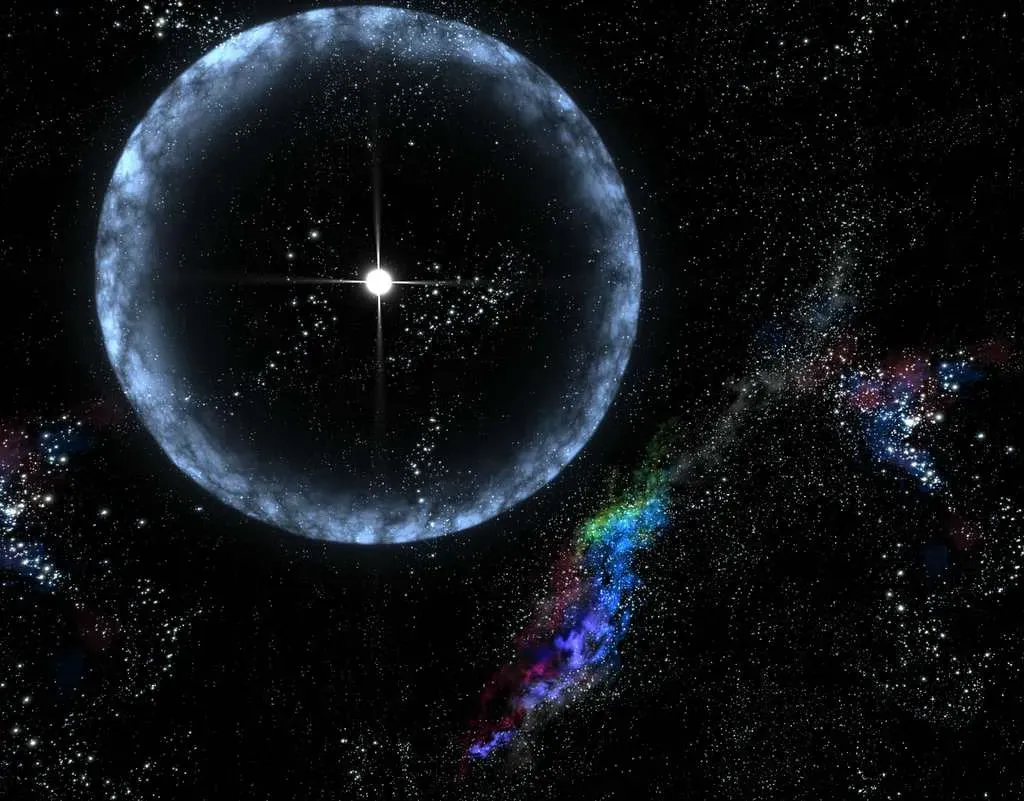
A magnetar starts life in violence. After a massive star burns through its nuclear fuel, gravity wins the final argument and the core collapses in a supernova, crushing more than the mass of the Sun into a sphere only about as wide as a large city. That core becomes a neutron star: an object so dense that a teaspoon of its material would outweigh a mountain. In a small fraction of these neutron stars, the magnetic field is amplified to such an extent that they cross a new threshold and earn a new name: magnetar.
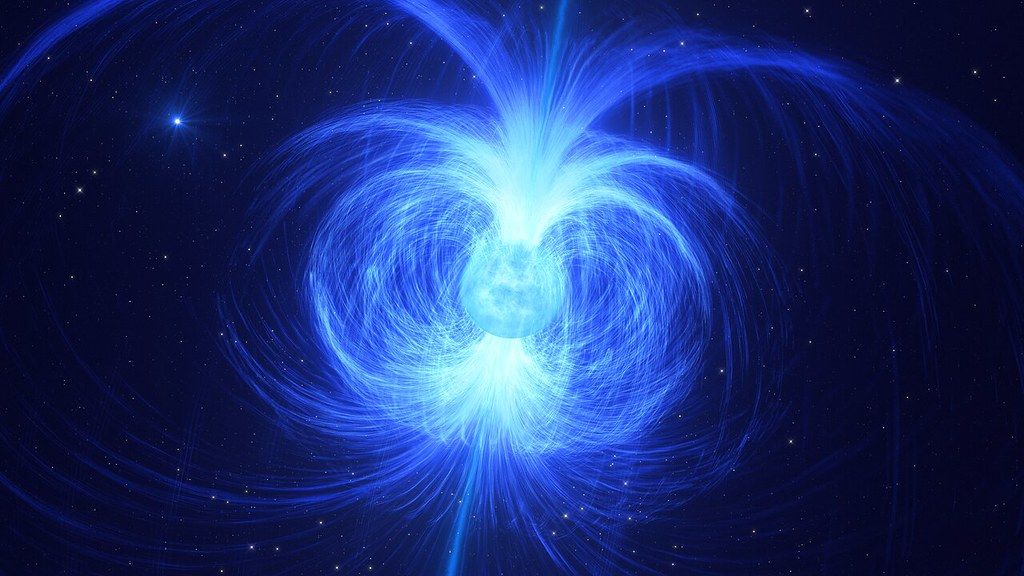
To get a feel for how absurd this is, remember that Earth’s magnetic field is strong enough to guide a compass needle and shape the auroras, yet it is barely a whisper on the cosmic scale. Ordinary neutron stars already have magnetic fields trillions of times stronger than Earth’s. Magnetars then crank that up by another factor of roughly a thousand or more, reaching field strengths where the vacuum of space itself begins to behave differently. These are not just “strong magnets”; they are objects where magnetism becomes a fundamental sculptor of reality.
Fields Beyond Intuition: How Strong Is “Strong” in Magnetar Terms?
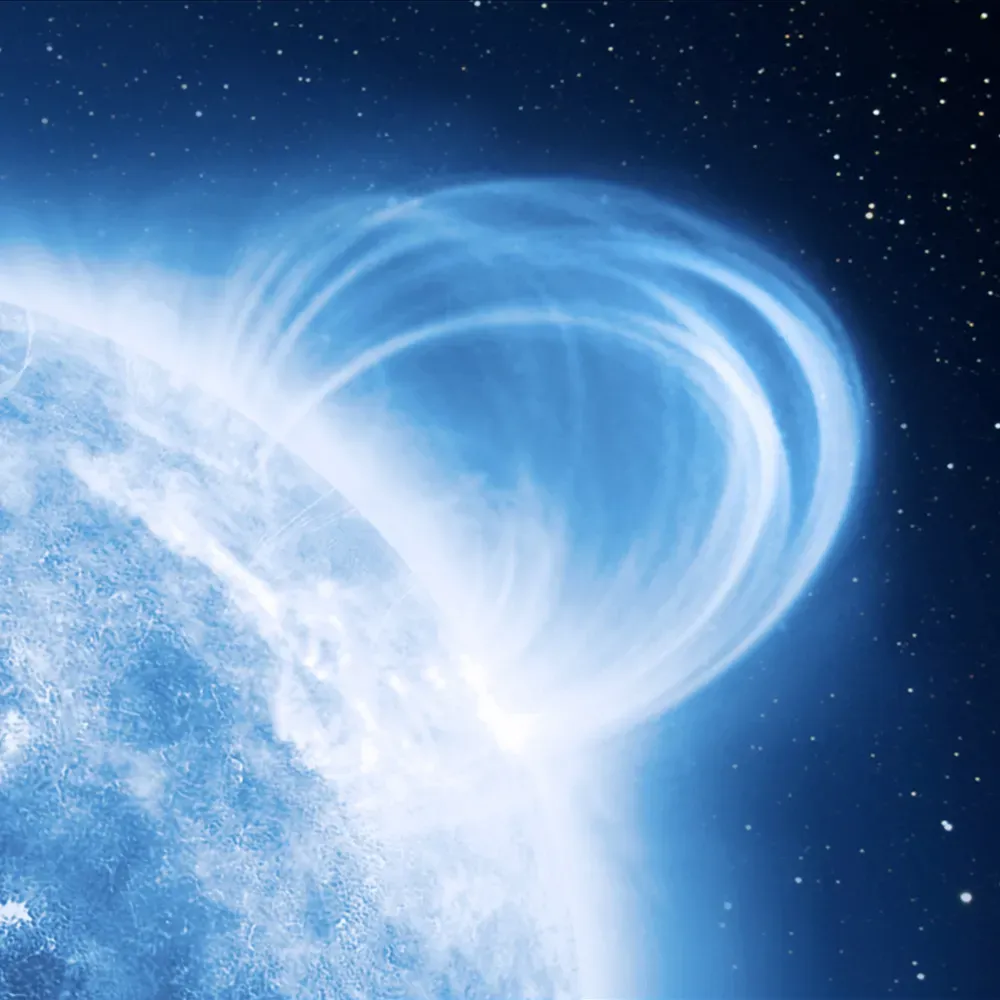
When astrophysicists talk about magnetars, they usually quote magnetic field strengths around ten to the power of fourteen to ten to the power of fifteen gauss. Those numbers are so big they stop meaning much unless you anchor them. The strongest steady magnetic fields humans can create in the lab sit far below that; even our most ambitious experimental magnets are dwarfed by magnetars by many orders of magnitude. If you stacked the magnetic field of a fridge magnet, the Earth, and a typical neutron star in a line, a magnetar would still stand apart like a skyscraper next to grains of sand.
At these field strengths, the comparison game breaks down because nothing in human experience comes close. Magnetic forces no longer just influence metal objects or moving charges; they compete with the fundamental forces that bind atoms and particles. The electromagnetic interaction, which under normal conditions calmly holds electrons in orbit around atomic nuclei, becomes wildly distorted. It is in this regime that talk of matter being altered “at the atomic level” stops being a dramatic flourish and becomes a literal description of what the physics predicts.
When Magnetism Attacks Matter: Atomic Distortion in Extreme Fields
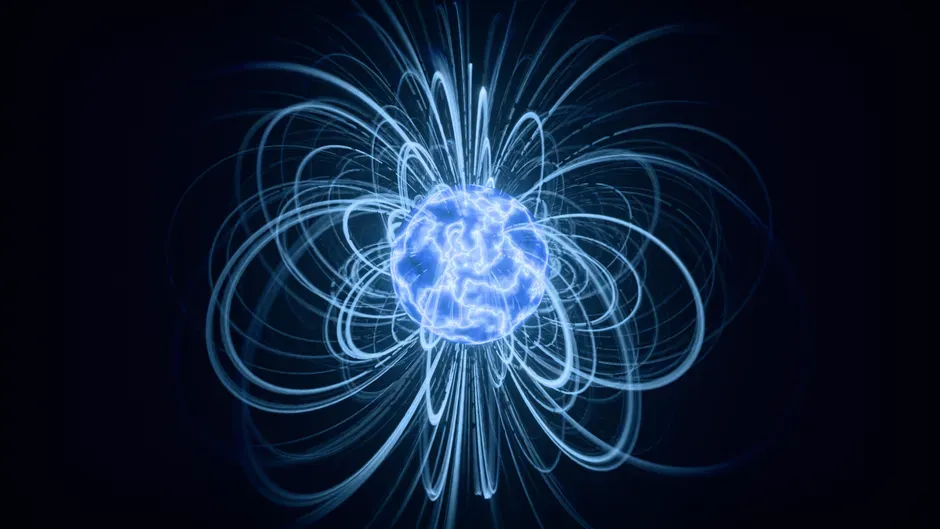
Under everyday conditions, atoms are mostly empty space: a tiny nucleus surrounded by a cloud of electrons that are bound by electromagnetic attraction. In the mind-bending fields around a magnetar, this familiar structure is stretched and squeezed. The magnetic field can force electrons into narrow, elongated states, confining their motion in directions perpendicular to the field lines. Instead of roughly spherical atoms, you get bizarre, cigar-shaped distributions where the usual chemistry is heavily disrupted or simply does not apply in the normal way.
Physicists describe this in terms of energy levels being reshuffled and split apart by the overwhelming magnetic influence. The field is not a gentle perturbation; it dominates the system and can tear apart loosely bound structures entirely. Even the vacuum around the magnetar starts to act like a strange medium, altering how light itself propagates. When you say that magnetar fields can change matter at the atomic level, you are really saying that they can reach into the architecture of atoms and rewrite what “normal” looks like from the inside out.
Looks Like Deep Space, Acts Like a Grinder: Dangerous From Afar
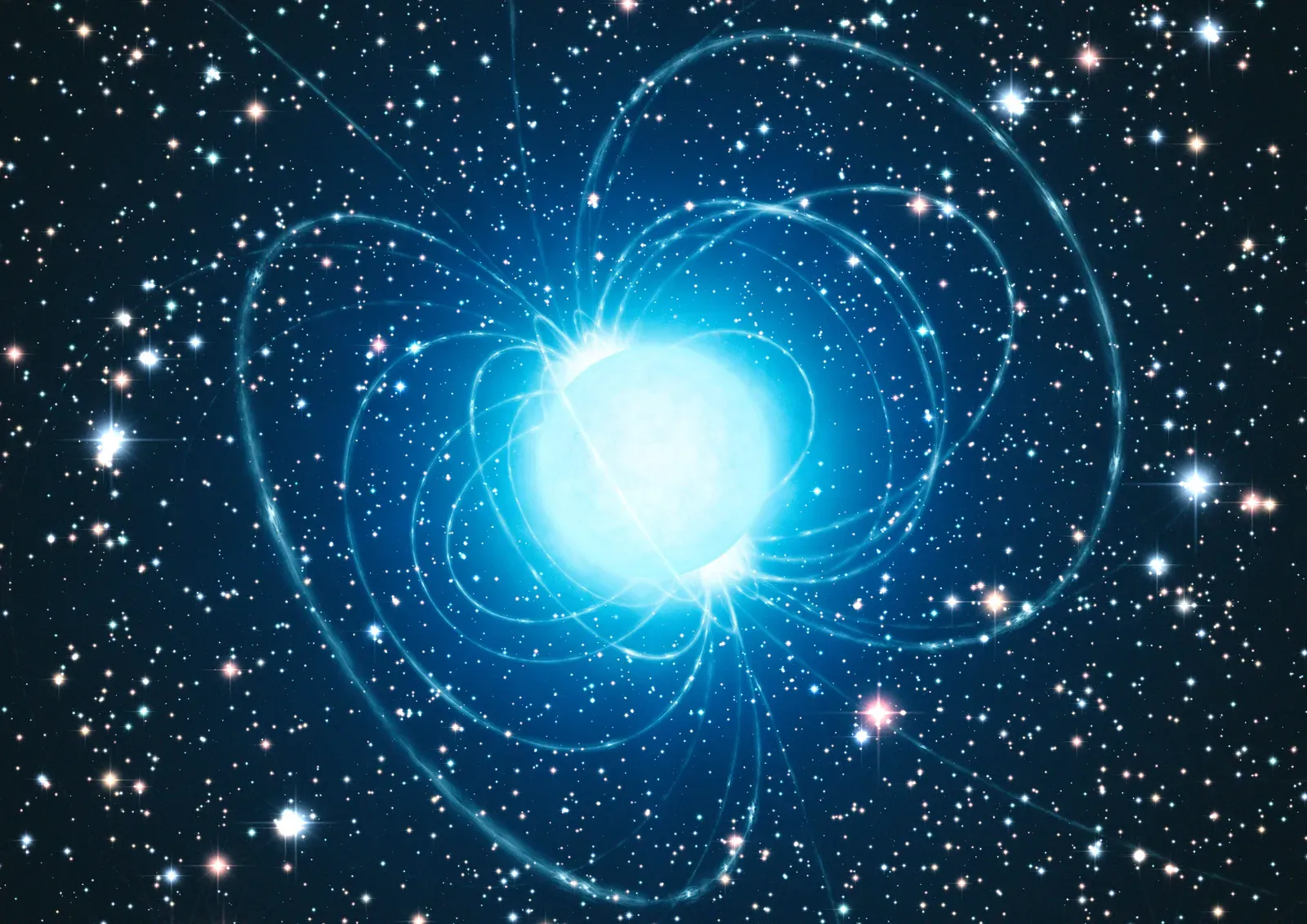
Here’s the deeply unsettling part: you do not need to be parked just above the magnetar’s surface for these effects to matter. Because the fields are so strong to begin with, they reach out into space and remain powerful even at distances where a human observer would see nothing unusual. From far enough away, the magnetar might be just another faint point in a crowded star field, or even be completely invisible to your eyes. But the field lines threading through that region could still be strong enough to seriously distort atomic structures in anything unlucky enough to cross their path.
Think of it like walking through a perfectly clear patch of air that is actually inside an industrial shredder you cannot see or hear. To your senses, everything seems calm; to the physics, you have stepped into a regime where the forces are utterly unlike anything you evolved to handle. On a spaceship or around delicate electronics, such a field could induce enormous currents, rip apart materials, and scramble information. On a more fundamental level, any matter drifting by could find its internal structure stressed and reconfigured, not by collision or heat, but by raw magnetic intensity alone.
Starquakes and Cosmic Fireworks: How Magnetars Announce Themselves
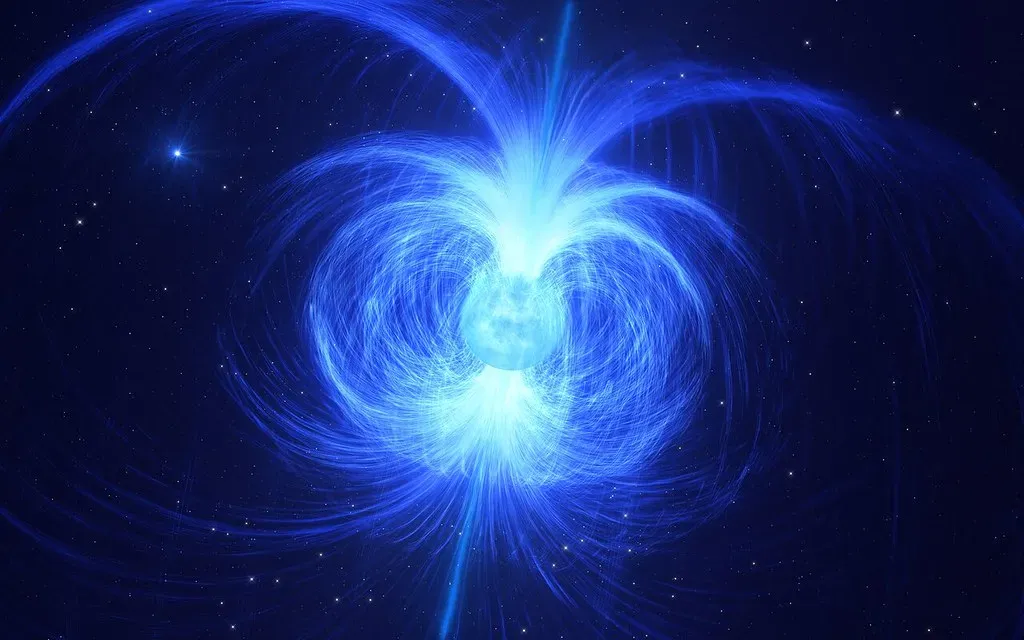
Magnetars are not just quiet monsters lurking in the dark; sometimes they snap. As their intense magnetic fields twist and evolve, they can stress the solid crust of the neutron star to the breaking point. When that crust fractures, the result is a starquake: a sudden reconfiguration that releases a staggering burst of energy in the form of high-energy radiation. Detectors on and around Earth have seen these events as brief, violent flares of X-rays and gamma rays, bright enough to outshine entire galaxies for a heartbeat.
These outbursts are a brutal reminder that the magnetic field is not just sitting there; it is dynamic, shifting, and occasionally exploding outward into space. The particles and radiation unleashed during these magnetar tantrums can sweep across vast distances, potentially affecting other objects long before the magnetar itself is clearly identified. While the odds of one of these flares directly threatening Earth are incredibly small on human timescales, the mere fact that such phenomena exist makes our everyday cosmic environment look almost unbelievably gentle.
The Quantum Frontier: Vacuum Birefringence and Reality Bending Effects
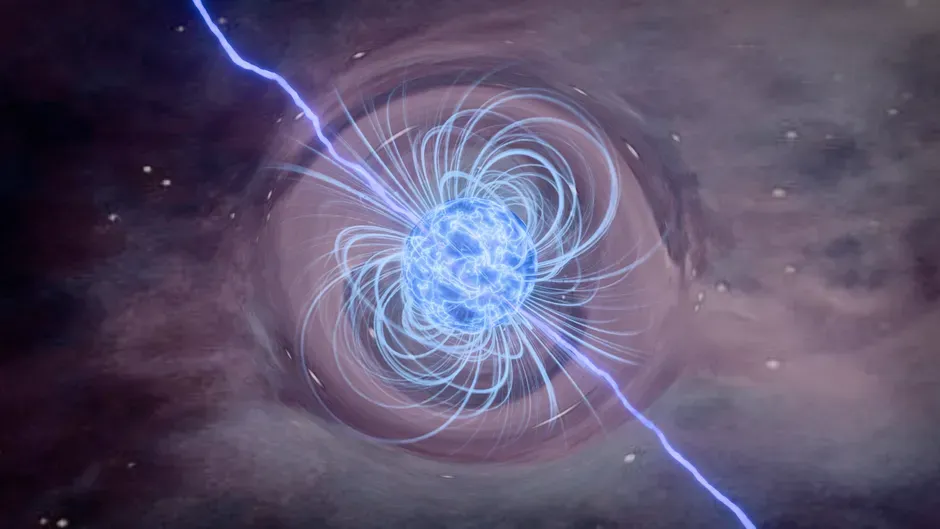
At magnetar field strengths, even empty space refuses to behave. Quantum theory predicts that the vacuum is not truly empty but teems with fleeting particle-antiparticle pairs that wink in and out of existence. In ultra-strong magnetic fields, these virtual processes become important enough to change how light passes through space. One predicted effect is called vacuum birefringence, where light with different polarizations travels slightly differently through the magnetized vacuum, as if space itself had become a strange crystal.
This is not just a mathematical curiosity; there is observational evidence that strongly magnetized neutron stars may indeed be showing hints of this effect. If that interpretation is right, magnetars are laboratories where we can watch quantum electrodynamics operating in its most extreme regime, far beyond what any Earth-based experiment can reach. In that sense, the same fields that can tear at atoms also give us a rare window into the deepest rules of nature, letting us test ideas about the fabric of reality itself using nothing more than careful measurements of distant starlight.
Life, Technology, and the Cosmic Neighborhood: Should We Worry?
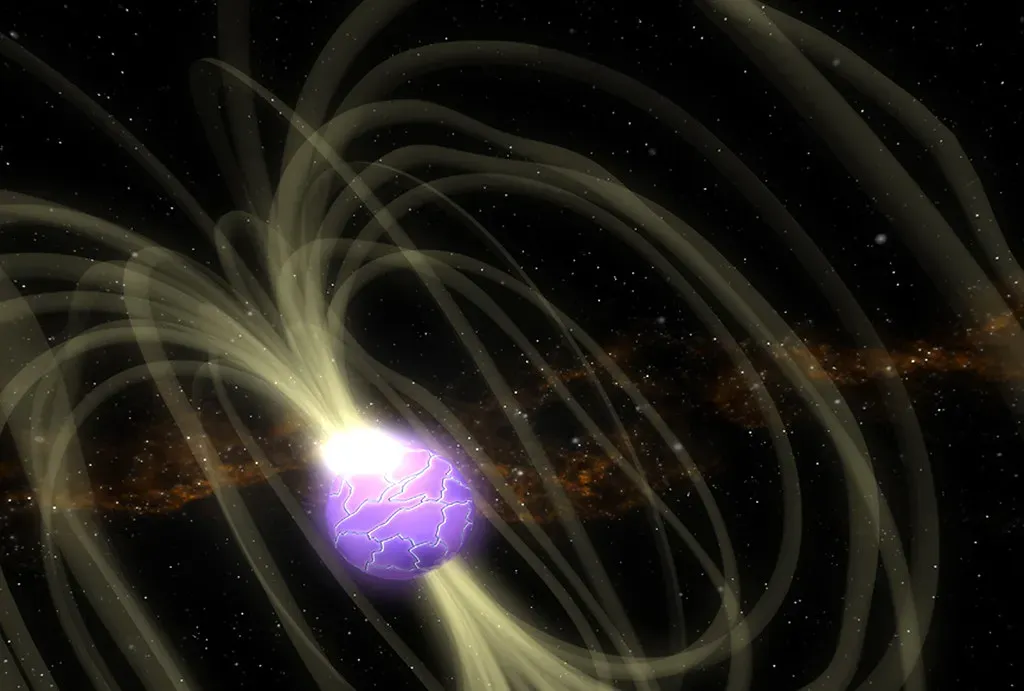
On a practical level, you do not need to lose sleep over a magnetar suddenly frying Earth’s atoms from afar. Space is vast, and the distances between us and known magnetars are enormous. By the time their fields and flares reach our planet, they are heavily diluted. That said, if a civilization ever tried to operate close to a magnetar – say, in some far-future scenario where we travel between stars – its environment would be an engineering and biological nightmare. Electronics, data storage, and even structural materials would be under constant assault from both the magnetic fields and the high-energy radiation.
There is a more philosophical worry, though, and I think it is healthy: magnetars remind us that not all regions of space are created equal. We often talk about the “habitable zone” around stars in terms of light and temperature, but extreme magnetic environments add another layer to what makes a neighborhood friendly to life and technology. In that sense, magnetars help refine our sense of cosmic humility. They are a blunt reminder that the universe contains pockets so harsh that our instincts, tools, and assumptions about safety completely fall apart.
Conclusion: Magnetars as Nature’s Harshest Reminder
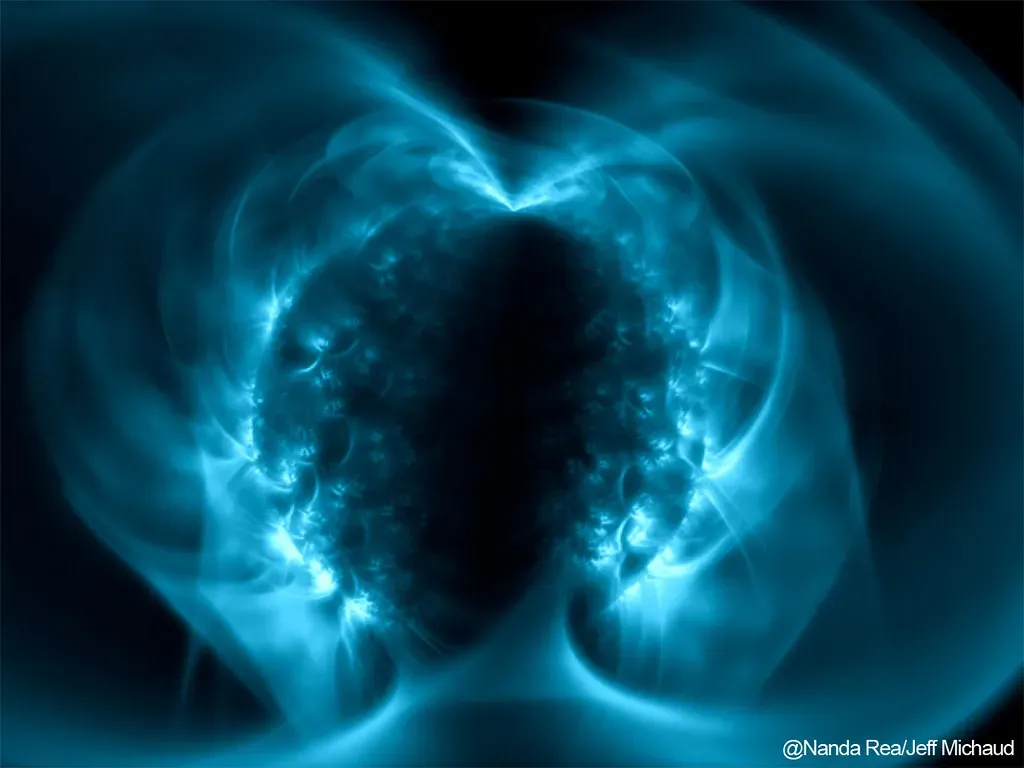
To me, magnetars feel like the universe flexing, quietly showing off the upper limit of what magnetic fields can do to matter. It is one thing to learn in school that magnets can attract iron or guide a compass; it is another to realize that, in some corners of the cosmos, magnetism is strong enough to stretch atoms, twist the vacuum, and cause matter to misbehave from distances that would still look like harmless empty sky. If anything, I think we have been too casual in how we talk about “extreme” environments in space; magnetars set a standard that makes black holes feel almost polite by comparison because at least black holes hide their worst inside an event horizon.
In the end, magnetars serve as both a scientific opportunity and a psychological shock. Scientifically, they give us a unique chance to test our deepest theories of matter and light under conditions we could never reproduce on Earth. Emotionally, they force us to admit that the universe is not just beautiful and vast, but also capable of sculpting regions where even the building blocks of reality are under siege. If a patch of sky that looks like ordinary deep space can secretly host fields fierce enough to rewrite atoms, what else might be hiding in the darkness between the stars that we still have not imagined?