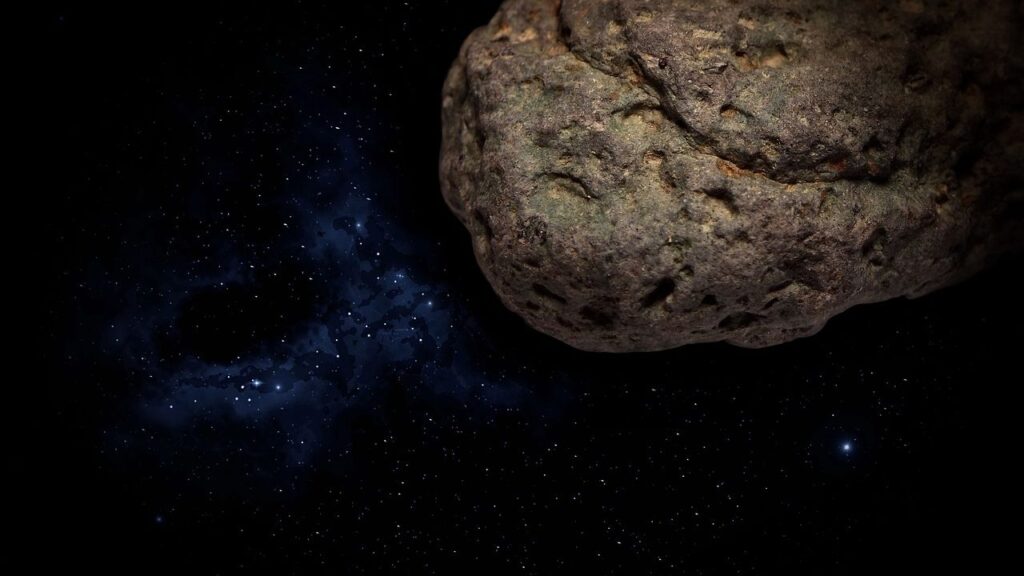
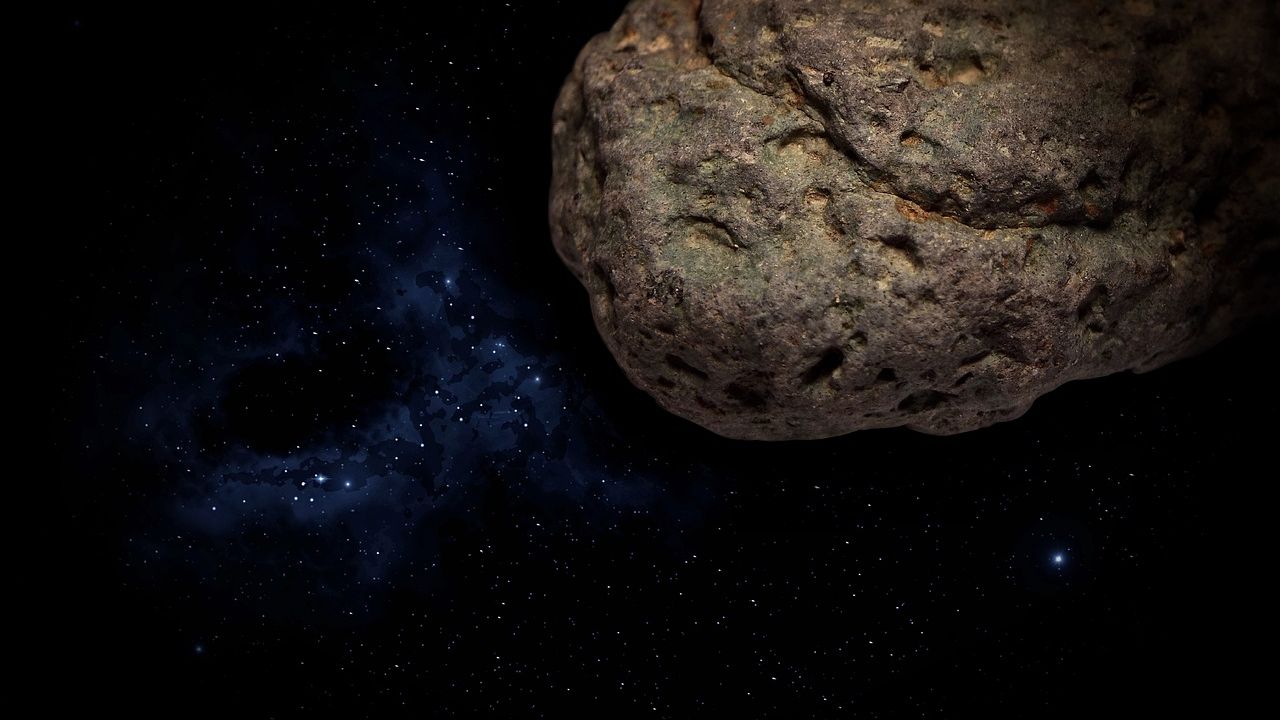
Watch a newly discovered, blue-whale-size asteroid fly super close to Earth on Monday – Image for illustrative purposes only (Image credits: Pixabay)
May 18 brings a rare close encounter as astronomers monitor a newly identified asteroid designated 2026 JH2. The object, comparable in size to a blue whale, will sweep past Earth at a distance tighter than many operational satellites. Observers around the world can follow the flyby in real time through a dedicated livestream.
Timing and Trajectory
The asteroid’s path brings it nearer to our planet than some satellites that circle in low Earth orbit. Calculations place the minimum approach on May 18, with the object moving at a speed that allows only a brief window for detailed observation. Ground-based telescopes have already locked onto the trajectory to refine predictions as the moment nears.
Because the pass occurs during daylight hours for much of the Americas, direct visual sightings will be limited for casual viewers. Professional observatories, however, continue to gather data that will help assess the asteroid’s exact size and composition once it recedes.
Public Viewing Options
Stargazers without access to professional equipment can still participate by tuning into the livestream organized for the event. The broadcast combines feeds from multiple observatories and offers real-time commentary from astronomers tracking the object. Viewers are encouraged to check the scheduled start time, which aligns with the asteroid’s closest approach.
Online platforms hosting the stream also provide background explanations of how such near-Earth objects are detected and why their orbits are monitored so closely. The session is expected to run for several hours to capture both the approach and the departure phase.
Scientific Context
Objects the size of 2026 JH2 are discovered regularly, yet few come this close on short notice. The late identification underscores the ongoing challenge of spotting smaller asteroids before they enter the inner solar system. Continued surveys aim to reduce the number of surprises like this one in the future.
Data collected during the flyby will contribute to models that predict future encounters and improve deflection strategies should any larger threat ever be identified. For now, the event serves mainly as a reminder of the dynamic environment surrounding our planet.