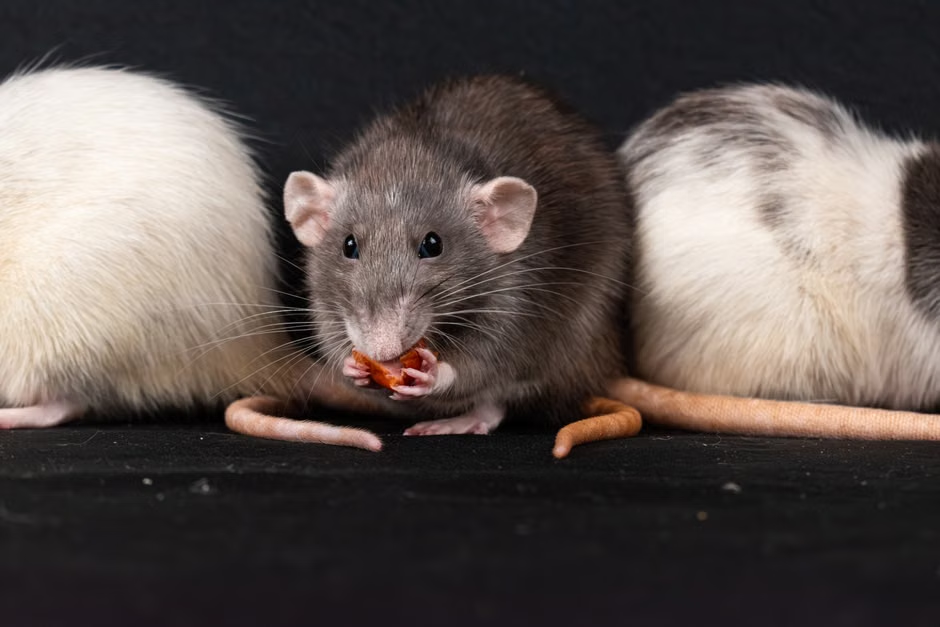
You have probably heard people use the word “rat” as an insult, as if rats are sneaky, selfish little villains. Then you stumble across a study where a rat ignores chocolate to help another rat escape a tiny plastic prison, and suddenly the story does not fit so neatly anymore. When a small, whiskered animal paces anxiously around a trapped stranger, learns a tricky latch, and then keeps coming back day after day to set others free, you are forced to consider a different possibility: maybe you are looking at a very old form of the same empathy you feel. When you dive into animal psychology, you find that this is not a cute anecdote, but a pattern. In a series of controlled experiments, rats worked to free trapped companions even when they could not cuddle them afterward, and even when a pile of treats was sitting right there for the taking. That kind of behavior pushes you beyond easy explanations like habit or simple reflex. It nudges you toward a more unsettling and inspiring conclusion: the emotional machinery you rely on to care about others might not be uniquely human at all, but part of a shared mammalian toolkit that you and a lab rat both carry around in your skull.
You Watch a Rat Do Something You Recognize in Yourself
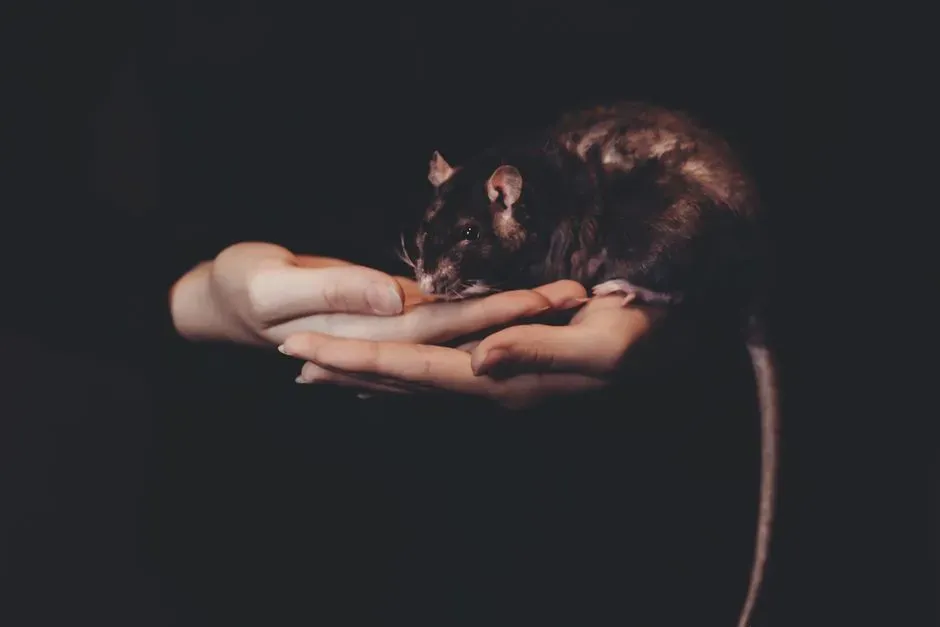
Imagine you are watching through a clear plexiglass wall while one rat moves freely in an arena and another is stuck in a small tube, able to wiggle but not escape. At first the free rat is just agitated, circling, sniffing, poking at the restrainer, clearly tuned in to the other rat’s distress. Over several days, you see it learn how to tip the door open, and once it figures it out, it starts doing it faster and faster, as if it now has a mission. When the tube is empty or holding a toy, the interest drops; when it holds a live rat, the urgency comes back.
Now picture the scientists changing the rules so that when the trapped rat is freed, it is released into a separate space and cannot come over to groom, cuddle, or play. You might expect helping to stop if the real goal is social time, but the helpers keep opening the door anyway. In some variations, the free rat is given a choice between a tube full of chocolate and a tube with a trapped rat, and instead of just gorging on treats, it opens both and even shares the food. When you see that pattern laid out, you cannot help but feel a jolt of recognition: that looks uncomfortably similar to the way you sometimes help just because someone else is in trouble and you cannot ignore it.
Empathy in a Rat Looks Like a Spectrum, Not a Switch
If you imagine animal behavior as pure instinct, these experiments force you to update that mental picture. Not every rat turns into a tiny hero; in several helping tests, most rats learn to open the restrainer, but a solid minority never does. Some rush to help quickly and repeatedly, while others hesitate, stall, or ignore the situation entirely. That spread of responses should feel very familiar to you, because you already see it in humans: some people jump into rivers to save strangers, others freeze, and some walk away. You are not looking at a simple hardwired reflex that every rat automatically performs; you are seeing individual differences in a social emotion.
Researchers have even found that previous experience can tune this response. When a rat has been trapped in the tube before, it later tends to help more readily, as if having felt that discomfort makes the other rat’s distress more compelling. Housing and social conditions also matter; rats raised in richer, more social environments often show stronger prosocial behavior in these tasks. In other words, empathy in rats looks like empathy in you: it is built on shared biology but shaped by personal history, learning, and context. You are seeing shades of gray, not an on–off switch.
The Brain Circuit: Your Anterior Cingulate Looks a Lot Like Theirs

Here is where things get almost spooky. When neuroscientists record from rat brains during these helping and distress scenarios, they see strong activity in a region called the anterior cingulate cortex, or ACC. That same region in your brain lights up when you feel pain yourself and when you see someone else in pain. In rats, some neurons in this area behave like emotional mirror cells: they fire when the animal experiences a mild shock and also when it watches another rat receive that same shock. The brain is literally mapping another’s state onto its own internal signals.
Importantly, the ACC is not some quirky rat structure; it is part of a broader empathy network that has been studied in humans for years during brain imaging experiments. When you wince watching someone stub a toe or feel a twist in your stomach as a loved one cries, your ACC is part of that felt response. Seeing the same region handle similar emotional information in a rat suggests you are both drawing on a shared mammalian solution: a neural system specialized for representing other creatures’ suffering in a way that can guide your own behavior. The continuity is not a poetic metaphor; it is anatomical and functional overlap you could trace on a brain diagram.
Why “Instinct” Is Not Enough to Explain What You Are Seeing
It is tempting to wave all of this away by saying, “Well, that is just instinct, like a bird building a nest.” But if you look closely, the helping behavior in rats does not behave like a rigid, pre-programmed script. The rats do not open any and every door; they learn to open this specific mechanism through trial and error, and they selectively apply it when another rat is actually trapped. When the tube is empty or filled with an object, they mostly stop trying. That kind of conditional, targeted behavior demands more than a single reflex arc.
You also see flexibility and trade-offs that do not fit well with a simple reward rule. In some studies, rats could avoid hurting others by switching away from a lever that delivered shocks to a companion, even though pressing that lever had earned them treats before. Many of them changed their behavior when they realized their actions caused visible distress. If this was only about chasing the most straightforward reward, those patterns would be hard to explain. Instead, you are looking at a system where the sight and sound of another animal’s suffering is itself emotionally significant enough to compete with food, curiosity, and habit in the rat’s decision-making.
What This Means for How You Understand Your Own Empathy

Once you accept that a small rodent is operating with a brain circuit that is recognizably similar to yours, the story you tell yourself about human uniqueness shifts. Your ability to feel for others starts to look less like a magical upgrade and more like a carefully elaborated version of something very old. The ACC and related regions in your brain did not suddenly appear when language and culture arrived; they are refinements built atop circuits that were already handling basic social pain, distress calls, and bonds in earlier mammals. You are standing on top of a tall structure that has deep, shared foundations.
That does not mean your empathy and a rat’s empathy are identical. You bring complex perspective-taking, symbolic thinking, and cultural norms into the mix, so your empathy can stretch across continents and abstract causes in ways a rat cannot match. But when you strip all that away and look at the raw emotional core – the uncomfortable, motivating tug you feel when someone nearby is suffering – you see something continuous, not alien. Realizing that your compassion may have started as a survival tool for groups of small mammals caring for one another does not cheapen it; in a strange way, it makes your kindness feel more deeply rooted and harder to dismiss as just social polish.
How This Changes the Way You Look at Other Animals

Once you know that rats can be disturbed by one another’s distress and act to relieve it, it becomes harder to treat them as mindless test instruments or cartoon vermin. You start to picture the lab rat pacing under harsh lights as a social animal wired to care about cage-mates, not a little robot responding to pellets and shocks. The same logic stretches outward to other mammals: if a simple rodent brain can support emotionally tuned helping, what about dogs, pigs, or primates, whose social worlds are richer and whose brains are larger and more complex?
This does not mean you must suddenly grant every creature human-like inner lives, but it does ask you to move from a default of indifference to a default of caution and curiosity. When you see a crow defend a wounded partner or an elephant linger over a dead relative, you now have a framework that says, “It is plausible there is a real emotional state there, not just a reflex.” You are not required to know exactly what it feels like from the inside to still admit that those behaviors belong on the same spectrum as your own emotional responses. That shift alone can change how you talk about, legislate, and personally justify the ways you use other animals.
Learning From Rats: Building Your Own Everyday Empathy Muscles
These rat studies do not just tell you a story about animals; they quietly challenge you about your own daily choices. A rat with no language, no moral philosophy, and no social media still learns to help a stranger in distress, even when it costs time and competes with food. If that tiny brain can be pulled toward prosocial action by the sound of another’s squeaks, what excuse do you really have when you scroll past someone else’s pain because it feels inconvenient? That might sound harsh, but it is hard not to feel called out when an animal you usually rank below yourself shows up behaving in a way you recognize as deeply decent.
At the same time, you can take comfort and instruction from the way rats seem to learn empathy through experience and environment. When you expose yourself to others’ struggles – not just abstract statistics but real stories and faces – you are essentially doing for your own brain what those shaping experiences did for the rats. You are training your emotional circuitry to respond more quickly, more reliably, and more generously. Empathy is not a fixed trait you either have or lack; it is a practice, one your nervous system is surprisingly well prepared for if you are willing to use it.
The Uncomfortable Ethical Mirror These Findings Hold Up to You
There is an unavoidable irony sitting at the heart of all of this: your strongest evidence that rats feel something like empathy comes from experiments that themselves caused stress to the animals. A rat is trapped, frightened, confined to an “unpleasantly restrictive” tube, so that another rat can reveal concern by setting it free. When you appreciate that both rats in that setup likely feel something meaningful, you are forced to reckon with what it means to inflict that experience on them for the sake of knowledge. The data do not let you keep pretending they are unaware of each other or of their own fear.
You may not be ready to discard animal research entirely, but these findings make the moral math harder to ignore. If rats have brain circuits and behaviors that overlap with your own emotional life, then the line between necessary and unnecessary suffering becomes sharper and more personal. It nudges you toward supporting stricter welfare standards, seeking alternatives where possible, and questioning casual harm in other areas, from pest control to entertainment. In a sense, the rats free more than each other in these studies; they free you from the comforting fiction that only humans feel enough to matter.
Conclusion: A Tiny Door Opens Onto a Bigger Story About You
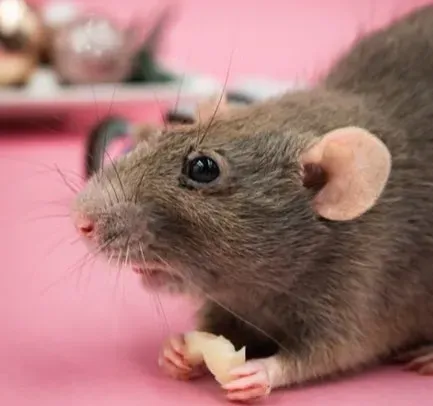
When a rat stands on its hind legs, wrestles with a plastic latch, and finally pops open a door to release a trapped stranger – with no snack, no hug, and no obvious payoff on the other side – you are watching more than a neat trick. You are seeing an echo of your own better impulses playing out in miniature, driven by a brain region your species and theirs both rely on to feel with others. The old picture of animals as purely selfish, mechanical beings cannot easily survive that image, just as the old picture of human empathy as something divine and separate from biology looks thinner in its light. You and that rat are sharing more than DNA; you are sharing an emotional architecture that has been honed for a very long time to keep social creatures looking out for one another.
So the next time you catch yourself dismissing another person’s pain as overblown, or shrugging off an animal’s distress as irrelevant, remember the little rodent who kept choosing to help, day after day, simply because another creature was stuck. You carry the same hardware, wired into the same ancient brain circuits, capable of the same kind of response if you let it fire. The question that lingers, once you know what a rat will do for a stranger, is uncomfortably simple: with all your extra intelligence and freedom, what are you willing to do?