
You know that strange, almost embarrassing moment: you are drifting off, your body feels heavy, everything is going dark and peaceful, and then suddenly your leg kicks, your arm jerks, or your whole body jumps like you just tripped off a curb in your dreams. For a second your heart is racing, you feel oddly exposed, and you wonder what on earth just happened to you. It feels dramatic, even though you are literally just lying in bed doing nothing. Yet that tiny explosion of movement can snap you from almost-asleep back into full alertness in a heartbeat.
Sleep researchers actually have a name for this: the hypnic jerk, also called a sleep start. You are not broken, you are not secretly dying, and you are definitely not the only one. What makes this moment fascinating is that your brain, in a way, really is doing a kind of quick survival check: it is interpreting signals, deciding whether you are safe, and sometimes hitting a panic button just as you cross the border into sleep. When you understand what is going on under the surface, those random jerks stop feeling like a mysterious curse and start looking more like the natural side effect of a very old, very protective brain.
What That Sudden Jerk Actually Is

When you feel your body twitch right before sleep, you are most likely experiencing what sleep specialists call a hypnic jerk or sleep start. You usually feel it in a leg, an arm, or your whole body, often paired with a mental image of falling, stepping into nothing, or missing a stair. The experience can be so vivid that you feel like you physically hit the ground, even though you never moved more than a few centimeters in reality. It is your body’s motor system firing off a sharp burst of activity just as you are letting go of wakefulness.
You tend to be in the very first stage of sleep when this happens, almost like you are hovering between two worlds: you are no longer fully awake, but you are not deeply asleep yet either. In that fragile in‑between state, your muscles are starting to relax, your breathing slows, your temperature drops, and your brain waves shift gears. That transition is not always smooth, and sometimes your nervous system misfires. The result is that sudden full‑body flinch you feel, a kind of startled jump without any obvious threat in the room.
Why Your Brain Misreads Relaxation as Danger

Here is the strange part: your body doing exactly what it is supposed to do can still trigger a false alarm in your brain. As you are falling asleep, your muscles go limp, your head may nod, and your breathing pattern changes. To the older, more primitive parts of your brain, that rapid loss of muscle tone looks suspiciously like losing consciousness for a bad reason, such as fainting or falling from somewhere. Your brain is obsessed with safety, not comfort, so it tends to err on the side of overreaction when things change too quickly.
So what does your brain do when it thinks you might be collapsing? It sends out an emergency burst of signals to your muscles to snap you back toward wakefulness and check that you are still in control. You experience that as a jerk, a kick, or a full‑body twitch. In a way, your brain is saying, if you can move sharply and wake up, you are probably not dying. It is the neurological version of shaking someone’s shoulder and shouting to see if they respond, only your brain is doing it to your own body from the inside.
An Evolutionary Throwback: Falling From a Tree

If you picture your ancestors sleeping in trees, on branches, or in rocky shelters instead of cushy beds, this reflex makes even more sense. When your muscles suddenly go slack and you are perched above hard ground, that is not just relaxing, that is dangerous. A quick jolt to test if you are about to fall could be the difference between waking up to climb back into a safer position and crashing to the ground. Your brain, shaped by thousands of years of survival challenges, still carries that logic even if your modern bed never moves.
In that light, your hypnic jerk becomes less of an annoying glitch and more of a leftover safety feature from a harsher world. Your nervous system is wired to interpret sudden loss of muscle tension as a possible slip, slide, or drop. A fast, explosive muscle contraction is like throwing out an anchor at the last second. You feel it as a shock; your heart races, your breath catches, and within seconds you realize you are not actually in danger. But the reflex still fired its shot, just in case.
How Stress, Caffeine, and Exhaustion Crank It Up

You might notice that these sleep starts seem to happen more often when you are stressed, overtired, or buzzing with caffeine. That is not your imagination. When your nervous system is running hot all day, it has a harder time switching smoothly into a calm, sleepy mode at night. Your brain is still scanning for threats, replaying conversations, or worrying about tomorrow, even as your body is trying to power down. That tension between a wired brain and a relaxing body makes the transition to sleep feel unstable.
Caffeine and certain stimulants can keep your muscles and nerves a bit more excitable, so when your body starts to let go into sleep, there is more of a gap between your brain’s alertness and your muscles’ relaxation. Being severely sleep deprived can have a similar effect, ironically making your sleep more jerky and fragmented even though you are desperately tired. You might experience more frequent jumps, more vivid falling sensations, and more abrupt awakenings. It is like trying to land an airplane on a short, bumpy runway instead of a long, smooth one.
When It Is Normal and When You Should Pay Attention
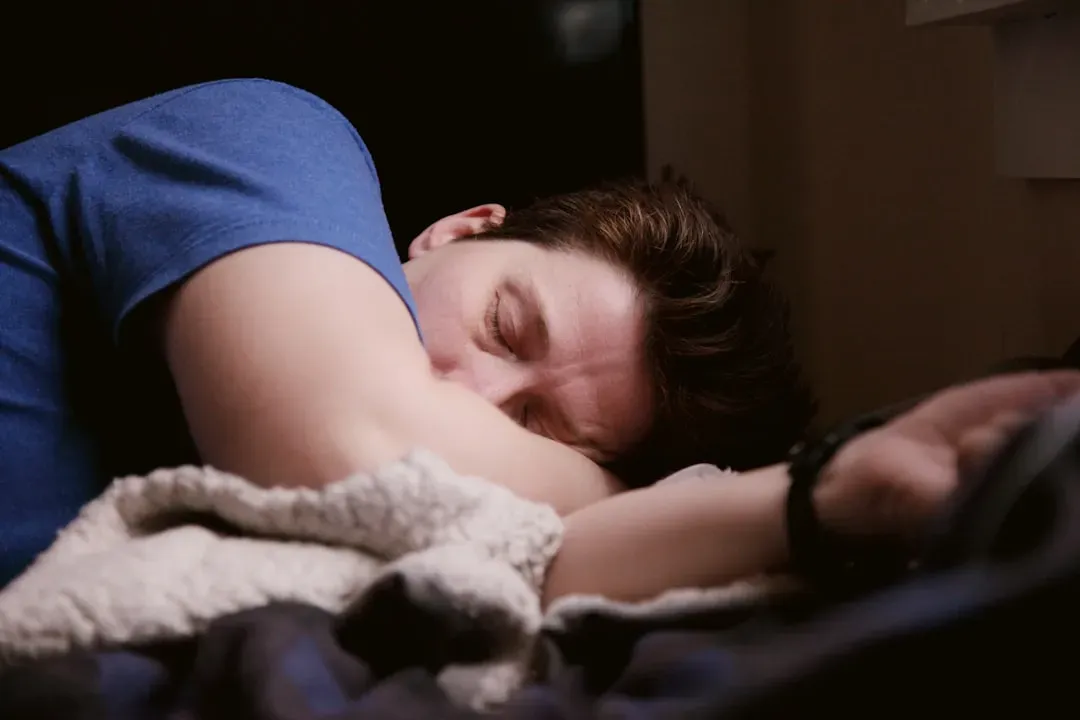
For most people, hypnic jerks are completely normal and harmless, even if they feel dramatic. They can show up once in a while, a few nights in a row, or almost every night without meaning anything is seriously wrong with you. As long as you are generally sleeping well, waking rested, and not dealing with other unusual symptoms, those little shocks are usually just part of how your nervous system handles the boundary between wake and sleep. You can think of them as background noise, annoying but not dangerous.
That said, it is worth paying attention if these jerks become very frequent, intensely violent, or start causing real distress or injury. If you find yourself dreading bedtime, kicking so hard that you hurt yourself or a partner, or pairing these jerks with other strange movements, breathing problems, or daytime exhaustion, then it makes sense to talk to a medical professional. There are other sleep‑related movement disorders and conditions that deserve real treatment. Your goal is not to panic every time you twitch, but to stay curious and notice patterns, especially if your overall sleep quality is clearly suffering.
What You Can Do to Calm Your Nighttime Jumps

While you cannot completely turn off this reflex, you can make it much less intense and less frequent by calming the whole system that creates it. You help yourself by building a gentle landing strip into sleep: dimmer lights in the evening, a regular bedtime, and a wind‑down routine that signals to your brain that the day is done. When your nervous system has time to glide into rest instead of slamming on the brakes, your body has fewer reasons to fire off emergency jolts as you drift off.
Cutting back on caffeine late in the day, not going to bed absolutely wired from work or screens, and avoiding intense workouts right before sleep can also help. Simple practices like slow breathing, a warm shower, light stretching, or reading a physical book can convince your body that it is finally safe to relax. You are not trying to control every twitch; you are simply lowering the overall tension so your brain does not feel compelled to keep testing whether you are okay every few minutes.
How It Compares to Other Nighttime Movements

You might wonder how this is different from other strange things that happen in your sleep, like restless legs, sleepwalking, or waking up unable to move. Hypnic jerks are unique in that they mostly happen right at the edge of sleep, not in the deeper stages. They are sudden, brief, and usually tied to that feeling of dropping or tripping. Restless legs, on the other hand, usually feel like an ongoing urge to move, creepiness in your limbs, or constant fidgeting, rather than one big shock.
Sleep paralysis sits almost on the opposite side of the spectrum: instead of your muscles suddenly jerking awake, they stay completely still while your mind wakes up and you feel stuck. Sleepwalking and other complex behaviors usually come from deeper sleep and can involve full‑body actions, not just a quick twitch. When you understand that your bedtime jerk lives in this narrow, light‑sleep transition zone, it becomes easier to see it as a specific quirk of that moment, not a sign that your whole sleep system is broken.
Making Peace With Your Brain’s Survival Test
Once you know that your brain is basically running a quick check to see if you are still safe, the whole experience feels a little less spooky. You can even see it as evidence that your brain is deeply invested in keeping you alive, even when you are doing nothing more dramatic than lying under the covers. The same protective wiring that once helped keep humans from falling out of trees now occasionally startles you in your apartment, and that is oddly humbling. Your modern life rides on ancient circuitry.
Instead of bracing yourself and getting angry every time it happens, you can respond with a mix of curiosity and kindness toward your own body. You notice the jerk, feel your heart speed up, and remind yourself that this is an old survival reflex firing in a new context. Then you breathe, let the surge pass, and allow sleep to come back in its own time. Your goal is not to force perfect stillness, but to work with the brain you have, one that sometimes tests you a little too eagerly just to make sure you are still here.
Conclusion: A Startle That Tells You You Are Alive

The next time you are about to fall asleep and your leg kicks or your whole body jumps, you can see it differently. Instead of treating it as a random glitch or something embarrassing, you can recognize it as your brain’s slightly clumsy way of looking out for you. Your nervous system is reading rapid relaxation as a possible threat, firing off a quick movement to double‑check, and then handing you back to sleep once it realizes that nothing is actually wrong. It is not perfect, it is not always comfortable, but it is part of the same system that keeps your heart beating and your lungs working without your permission.
With better sleep habits, less late‑night stimulation, and a bit more understanding of what is happening inside you, those nighttime jolts often settle down. Even when they do not disappear, they stop feeling like a mystery and start feeling like a reminder that your brain is still on duty, even as you let go of the day. In a world where so much of your life is automated, it is strangely grounding to realize that, yes, your body is still running ancient survival checks in the dark. Knowing that, how will you feel the next time your brain gives you that sudden little nudge on the edge of sleep?