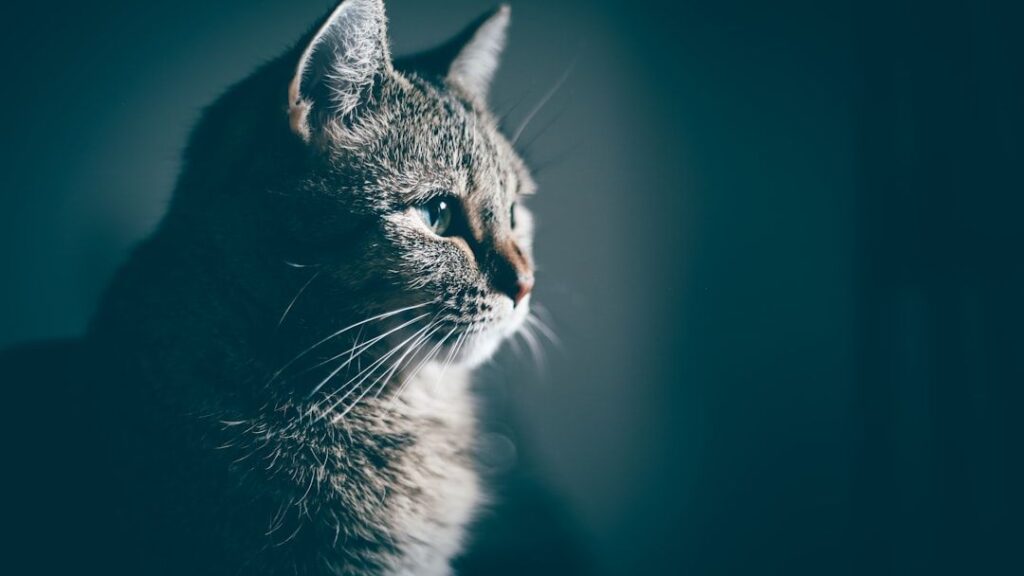
If you’ve ever watched your cat freeze, widen their eyes, and stare intensely at a blank patch of wall, you’ve probably wondered if your home is haunted. From your perspective, there’s nothing there. No shadow, no bug, no sound. Yet your cat looks completely locked in, as if they’re following something moving through the air. It can feel a little eerie, like they’re tuned into a secret channel you just can’t access.
Modern research into animal vision suggests that, in a way, that’s exactly what’s happening. You live in a narrow slice of the light spectrum, while your cat’s eyes and brain are wired to pick up hints of ultraviolet patterns and other subtle cues you’ll never see. Scientists are still careful about what they can prove and what’s just an intriguing possibility, but when you put together what’s known about feline vision, behavior, and sensory processing, that “blank” wall suddenly becomes a lot more crowded.
The hidden world your cat sees that you don’t
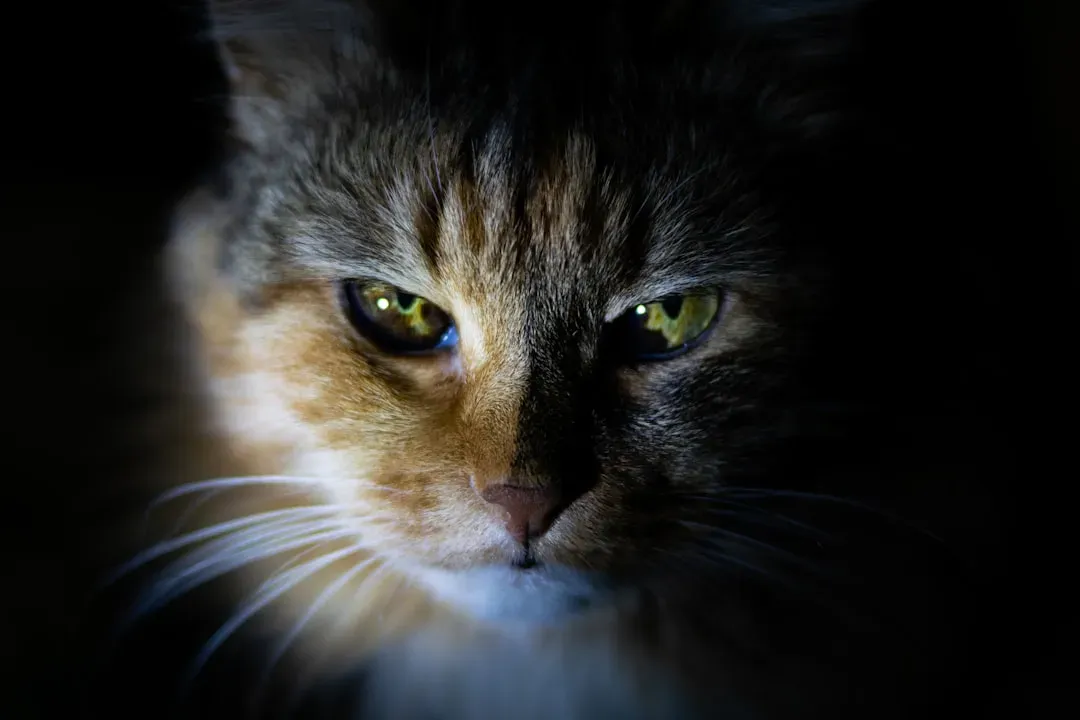
When you look around your home, you’re only seeing a small band of wavelengths called visible light, running from red to violet. Your cat’s eyes, like those of many other mammals, are built differently: their lenses and retinas let in more light at the edges of this range, nudging into the ultraviolet zone. To you, ultraviolet light is invisible; to your cat, it likely appears as extra brightness or contrast in certain areas, adding details that simply don’t exist in your version of reality.
That means a plain white wall might not be plain at all. Traces of cleaning products, old stains, sunlight reflections, or tiny differences in texture can reflect ultraviolet light in patterns you can’t detect. Your cat might see faint glowing streaks, outlines, or shifting highlights where you just see matte paint. So when your cat fixes on that “empty” spot and tracks it with their eyes, you’re not witnessing random weirdness; you’re watching an animal reading a visual layer you were never built to see.
Why evolution gave cats a different visual “channel”
To understand why your cat might be tuned into ultraviolet and other subtle visual cues, you have to think like a small hunter trying to survive outdoors. Cats evolved as crepuscular predators, most active around dawn and dusk, when light is low and many prey animals are moving. In those conditions, seeing fine color differences in bright sunlight matters less than picking up contrast, motion, and faint traces of living things against complex backgrounds. Their eyes became specialists in low light, not in high-definition color.
A lens that lets in more short-wavelength light, including some ultraviolet, can help highlight edges and patterns in dim environments. Many small prey species also have fur, feathers, or urine markings that reflect UV in ways that stand out against foliage, snow, or rock. So a cat with slightly more sensitivity at the violet–UV edge may be better at detecting a hiding mouse or tracing scent-marked paths another animal walked hours before. You inherited the kind of vision that suits a daytime, tool-using primate; your cat inherited the kind that suits a twilight stalker.
What’s really happening when your cat stares at a “blank” wall
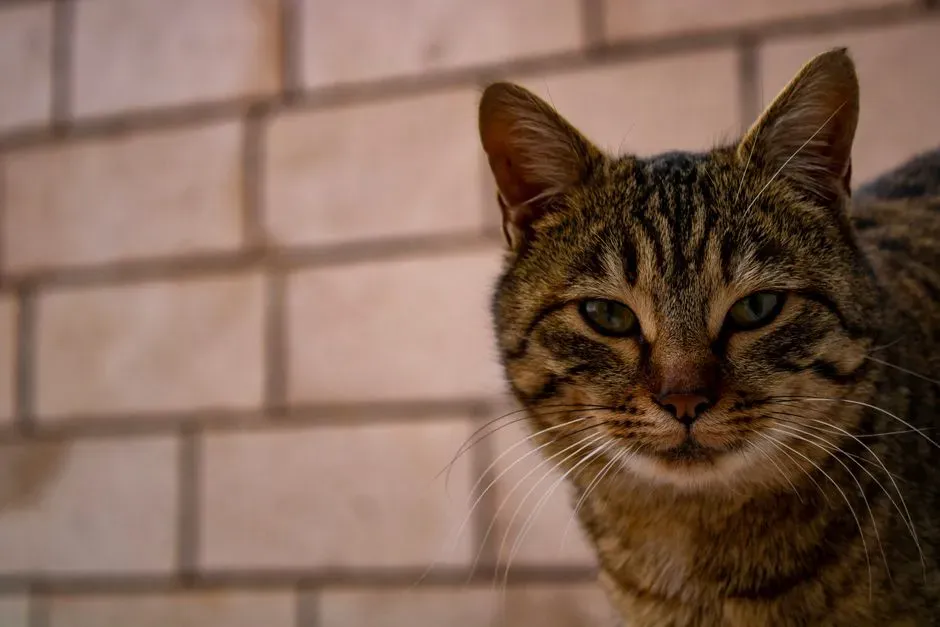
When you see your cat staring at a wall, it’s tempting to assume they’re seeing something supernatural or that they’re just spacing out. But if you slow down and watch closely, you’ll often notice tiny head tilts, ear twitches, or small eye movements, as if they’re tracking something drifting or flickering. In many cases, they probably are – just not something you can easily confirm. A faint reflection from a passing car, a tiny insect in a corner, the changing shimmer of sunlight through glass, or an ultraviolet-bright streak on the paint can all become deeply attention-grabbing for them.
Think of it like watching someone react to a high-pitched sound you can’t hear. Their reaction is very real, even if you’re missing the input. Your cat’s wall-staring sessions may be exactly that: a real response to subtle sights in a spectrum you’re partially blind to. Sometimes it’s likely a mix of UV cues, motion, and even memory – they might keep watching the place where an insect was last seen or where a light reflection used to dance, just in case it comes back.
Ultraviolet light: what science can and can’t say yet
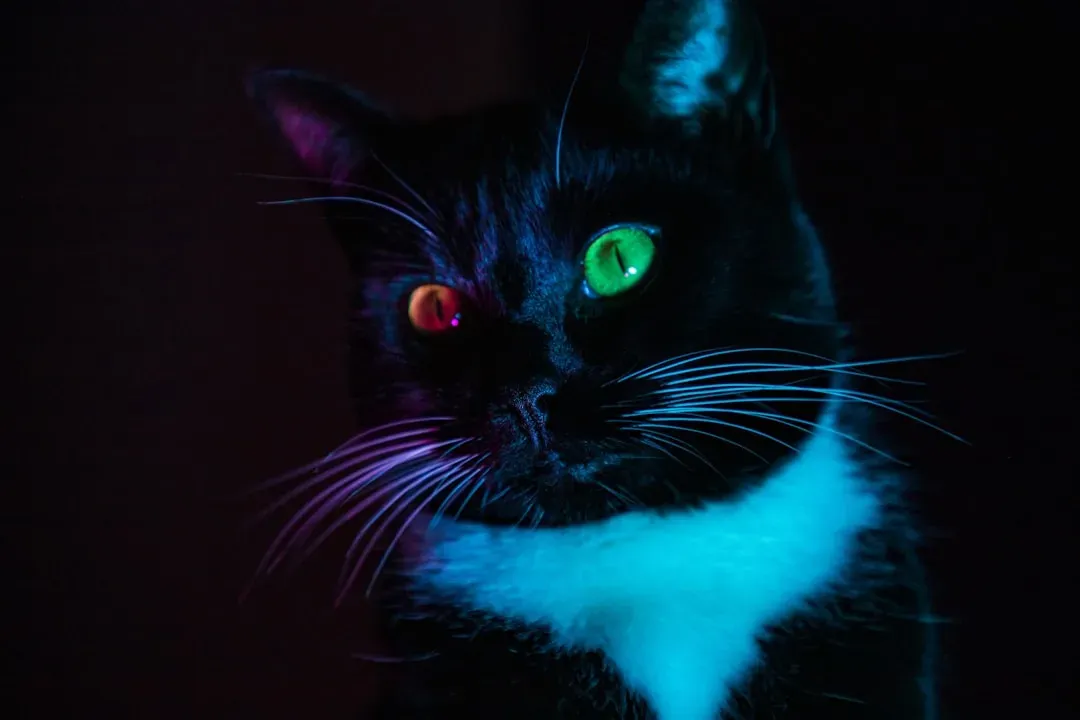
You’ve probably seen bold claims online that cats “see in ultraviolet” as if they have a special built-in blacklight. The truth is more nuanced. Studies on lenses and retinal sensitivity in various mammals suggest that domestic cats, like many animals, let more ultraviolet wavelengths reach the retina than humans do. That gives you a strong hint that your cat experiences UV-influenced vision in some way, but it doesn’t fully map out what that actually looks like to them or how central it is to their everyday behavior.
So when you hear that cats staring at blank walls are “tracking ultraviolet light waves,” you should treat it as a compelling hypothesis rather than a settled fact. You do know they detect more subtle light patterns than you, and you know ultraviolet can alter how surfaces look to animals built this way. But you still don’t have a clean, direct window into their subjective experience. Animal psychology in this area is a careful balancing act: you draw on anatomy, behavior, and experiments with other species, then stay honest about where the data stops and your educated guesses begin.
How your home secretly glows in your cat’s eyes
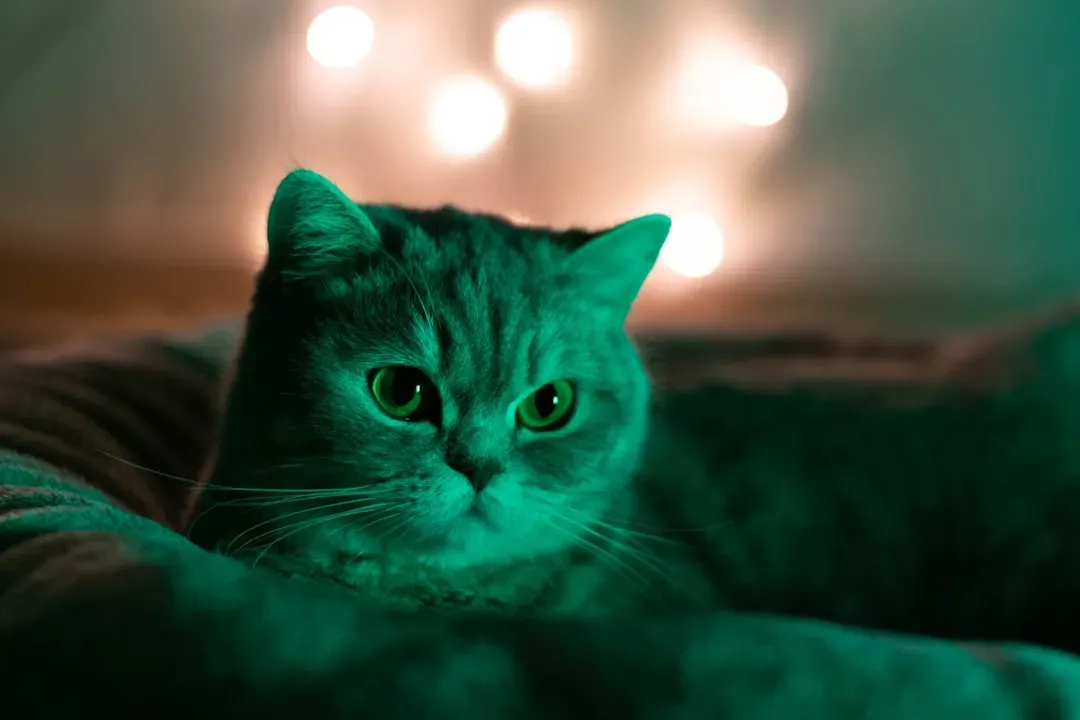
Take a walk through your home in your imagination, but this time, picture it through a cat’s more UV-tolerant lens. Laundry detergents, glass cleaners, and many bright white fabrics are loaded with optical brighteners that pop under ultraviolet light. What looks like a neutral white sheet to you might stand out with glowing edges or patterns to your cat. Even patches of worn paint, old tape residue, or faint spills that have long dried can reflect differently, turning certain spots on your walls into subtle patches of interest.
Sunlight complicates things even more. As the sun moves, the angle of UV-rich light hitting your walls and furniture changes throughout the day. To you, that might register only as slightly shifting brightness. To your cat, it could mean creeping bands of light, tiny moving differences in contrast, or sudden flares of brightness at certain angles. A place that looks permanently dull to you can temporarily “switch on” in their visual world, and that might be exactly when they hop up, sit down, and start that intense staring session.
Beyond vision: how sound, smell, and whiskers join the party
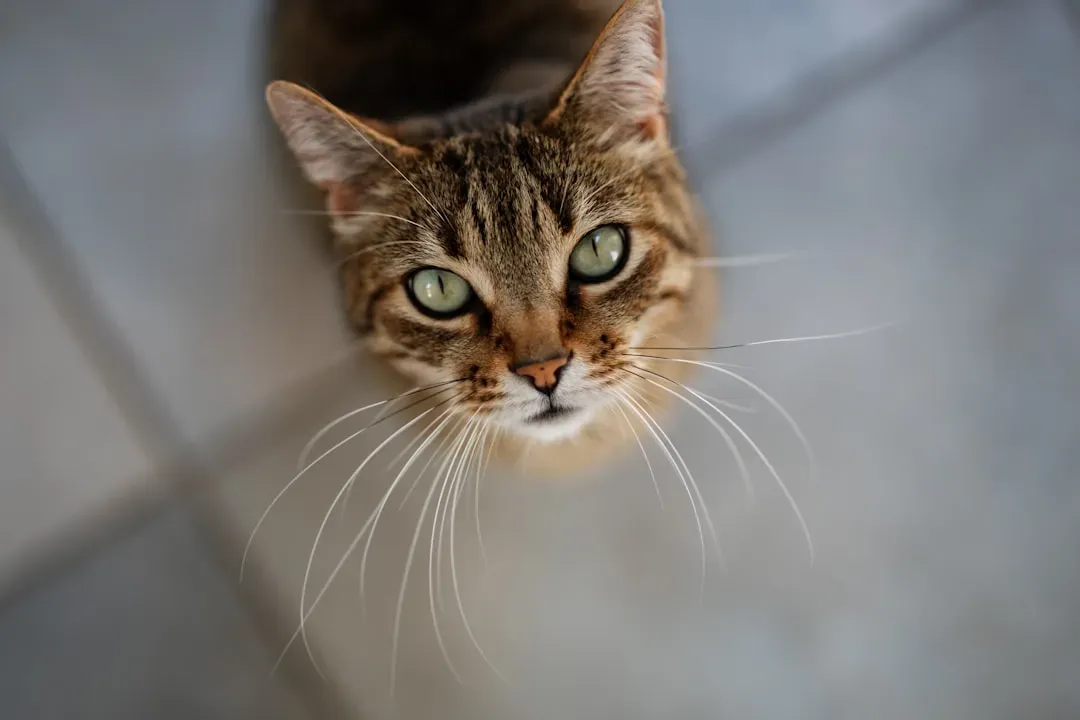
Even though ultraviolet sensitivity is fascinating, you don’t want to underestimate everything else your cat is using when they lock onto a spot on the wall. Their hearing ranges into frequencies you’ll never notice, so a mouse behind the drywall, a faint scratching in a pipe, or a distant vibration from appliances can grab their attention. When their ears pivot and their eyes fix in the same direction, it can look like pure visual focus, but they may be overlaying sound on top of sight, building a mental map that’s richer than what you’re experiencing.
Their whiskers and sense of smell add even more layers. Scent trails can linger along baseboards or around corners far longer than you realize, and your cat may pause to “watch” an area where they smell a trace of another animal or a strange odor. Sometimes the staring is part of a broader investigative mode, where they hold still to process information coming from several senses at once. From the outside, it looks like they’re mesmerized by a blank wall; on the inside, they’re running a multi-sensory detective operation.
When wall-staring is normal quirkiness – and when it’s not
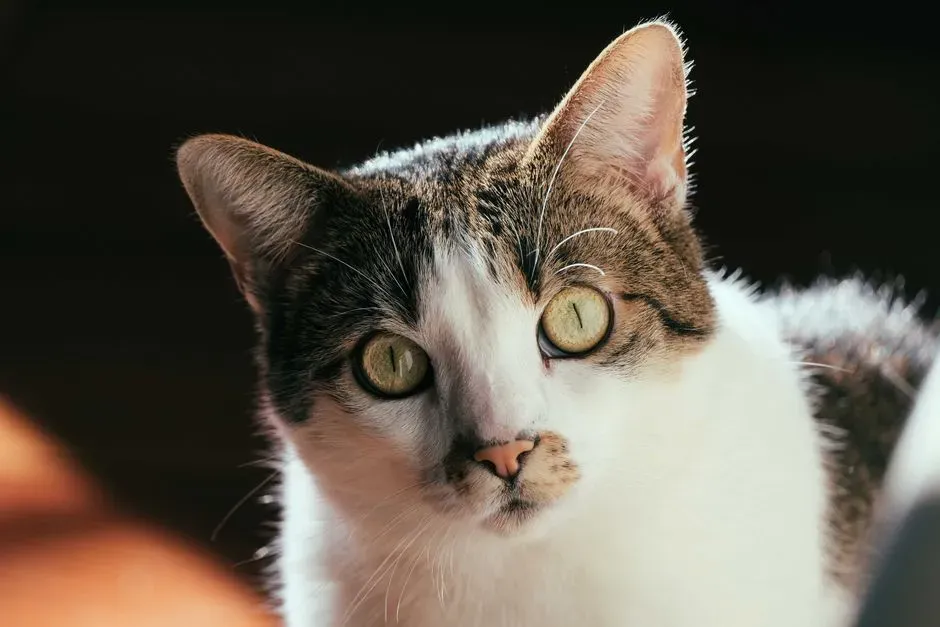
Most of the time, your cat’s intense focus on a wall is just them being, well, a cat: curious, hyper-aware, and tuned into tiny things you never notice. Regular, short episodes where they stare, track something with their eyes, maybe change posture a bit, and then move on are usually part of healthy feline behavior. Think of it as mental exercise; their brain gets to practice pattern recognition, threat detection, and hunting instincts, even if the “prey” is just a dancing reflection or a UV-bright patch of paint.
However, you do want to keep an eye out for changes that feel off. If your cat suddenly starts staring at walls for long stretches, seems disoriented, flicks their head oddly, or has trouble navigating spaces they used to move through easily, that can hint at neurological issues, vision problems, or even seizures. In older cats, especially, strange new fixation behaviors can be a sign of cognitive decline. In those cases, you’re not dealing with ultraviolet tracking or harmless daydreaming anymore; you’re looking at a reason to talk with a vet and rule out medical causes.
How you can make use of your cat’s “extra” perception
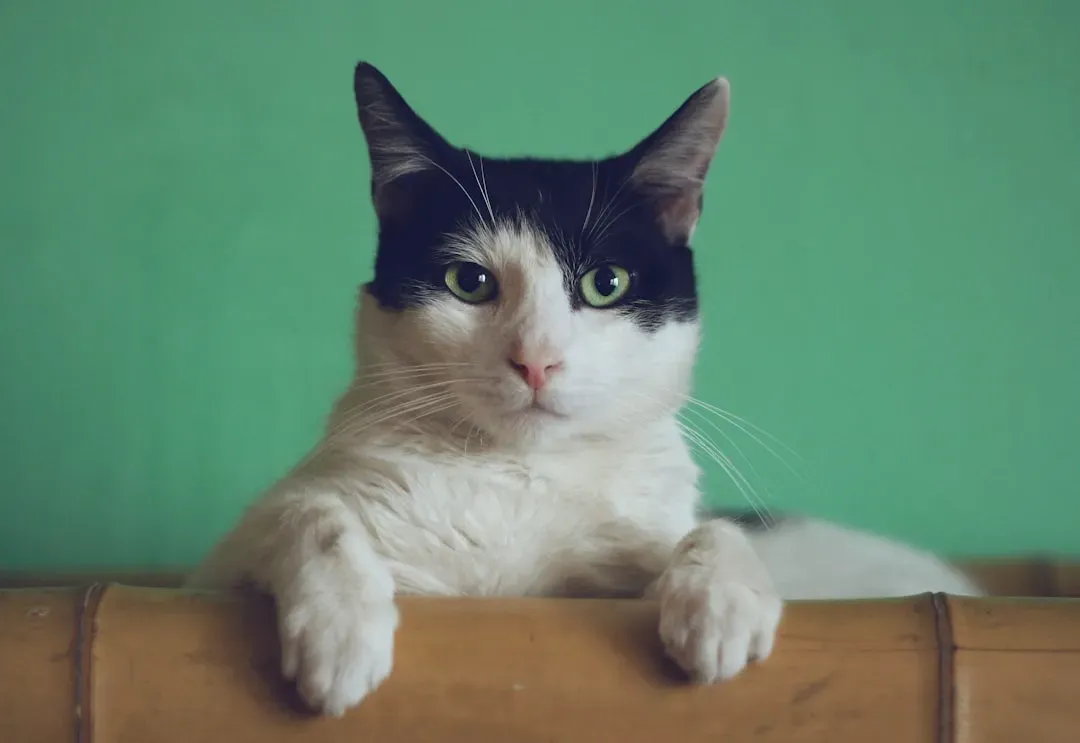
Instead of getting freaked out every time your cat stares at the wall, you can treat it as a reminder that your home is more complex than it looks. If your cat always fixates on the same area, it’s worth checking for drafts, insects, mold, or structural noises you might be ignoring. Sometimes, their strange focus clues you into little problems before they turn into big ones. You can also play with their sensitivity in safe ways, like using moving light reflections or interactive toys that exploit their motion detection and curiosity.
At the same time, you can adjust your expectations of how they experience your space. What feels visually boring to you can be stimulating for them, especially near windows or light sources. Giving them perches where the light shifts, textured surfaces, and varied hiding spots respects the fact that they’re processing more subtle signals. You’re not just decorating a human living room; you’re curating an environment for a small predator equipped with a different sensory toolkit.
What your cat’s gaze really tells you
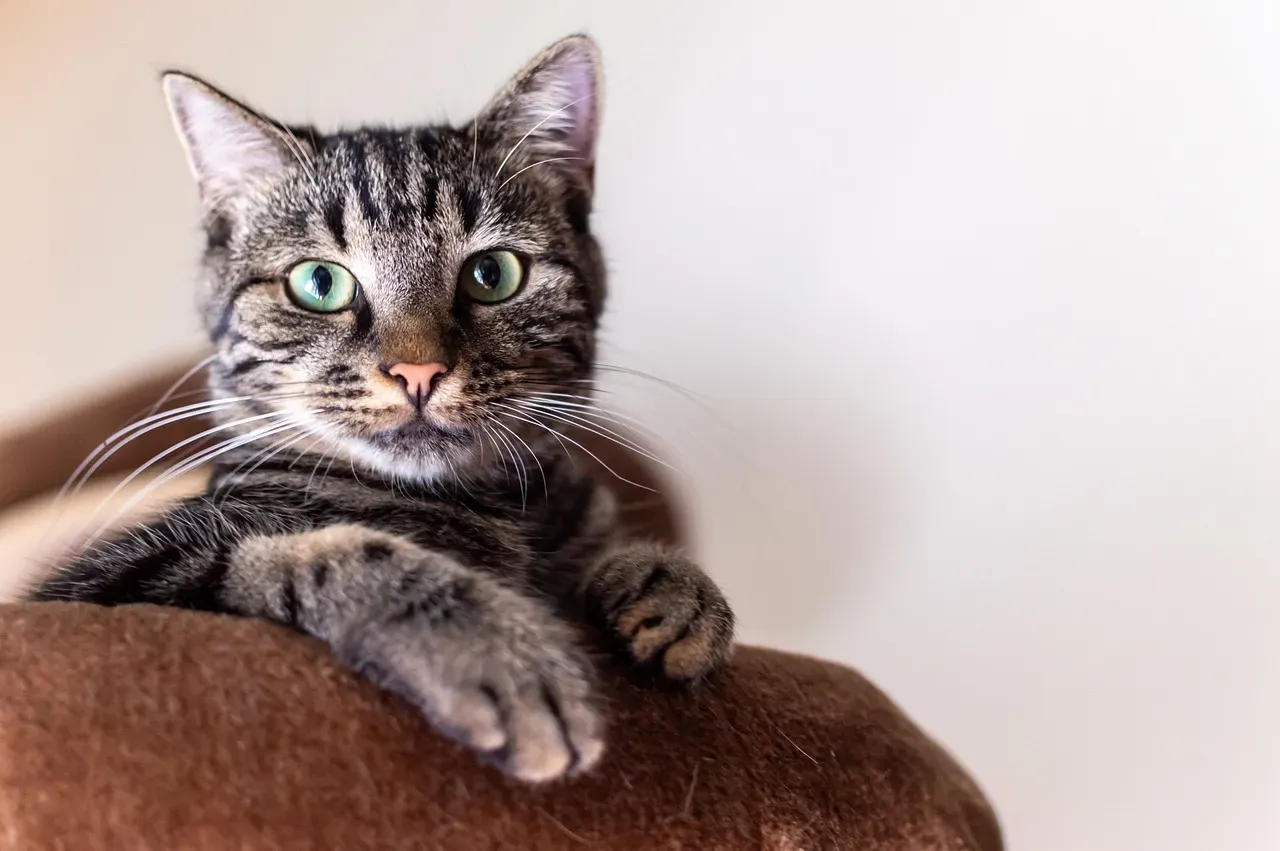
When you catch your cat transfixed by a blank wall, you’re seeing the gap between your world and theirs. You see a smooth, neutral surface; they see a layered canvas of light, texture, shadow, sound, and scent. Ultraviolet sensitivity is likely one piece of that, nudging certain spots to stand out where your eyes see nothing special. Even if scientists are still filling in the details of exactly how cats perceive UV, it’s clear that their visual and sensory experience runs on a richer channel than yours.
Instead of brushing off that behavior as random or spooky, you can let it shift how you think about them. Your cat isn’t just zoning out; they’re engaging with a reality you only glimpse indirectly. Next time they stare down a blank wall, you might find yourself wondering what patterns they’re tracking and what waves of light are dancing just beyond your reach. If you could borrow their eyes for a day, how different do you think your home would look?