A Treasure Trove at Gesher Benot Ya’aqov (Image Credits: Pexels)
Israel – Nearly 800,000 years ago, Acheulian hunter-gatherers repeatedly settled along the shores of a now-vanished lake in northern Israel. These early hominins relied on fire not just for warmth and protection but as a central element of their daily routines, from cooking fish to organizing camp spaces. A recent study of preserved charcoal from one such site offers fresh evidence of their practical approach to fuel gathering, highlighting resource efficiency in a lush paleo-environment.[1][2]
A Treasure Trove at Gesher Benot Ya’aqov
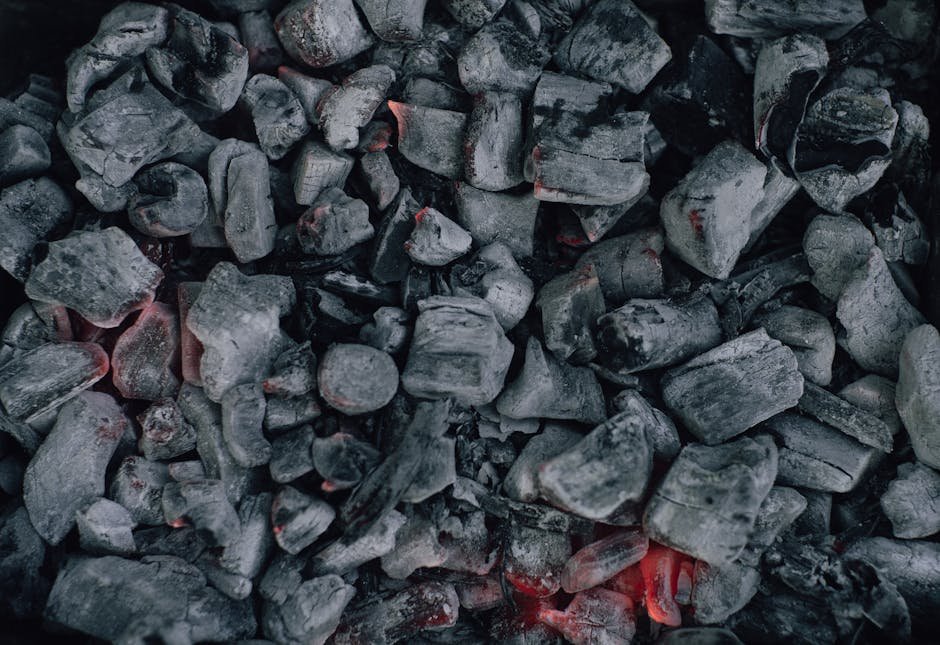
The Gesher Benot Ya’aqov site, perched near paleo-Lake Hula, preserves over 20 layers of human occupation spanning tens of thousands of years. Excavations there uncovered dense clusters of charcoal alongside fish remains, stone tools, and bones from large game like straight-tusked elephants. Researchers focused on a specific layer dated to about 780,000 years ago, where 266 charcoal fragments survived in exceptional condition – a rarity for sites this ancient.[1]
This assemblage stood out because charcoal often decays quickly, yet here it captured a snapshot of the surrounding landscape. The fragments overlapped with pharyngeal teeth from large carp, confirming that hominins cooked fish over controlled fires. Such spatial patterns suggest fire structured camp activities, from food preparation to tool-making and social gatherings.[2]
Diversity in the Flames
Analysis revealed a rich variety of woods in the charcoal, exceeding the plant diversity seen in seeds, fruits, or unburned wood from the same site. Hominins drew primarily from driftwood – fallen branches and logs washed up on the lakeshore – rather than venturing inland to chop trees. This opportunistic strategy matched the natural accumulation of materials, making fuel collection straightforward and sustainable.[1]
The identified species painted a picture of a mixed environment, blending wet riparian zones with drier woodlands. Key plants included:
- Ash (Fraxinus), common in moist areas.
- Willow (Salix), thriving along water edges.
- Wild grapevine (Vitis).
- Oleander (Nerium oleander).
- Olive (Olea europaea).
- Oak (Quercus).
- Pistachio (Pistacia) – noting the earliest evidence of pomegranate (Punica granatum) in the Levant.[2]
Sun-dried driftwood burned reliably after minimal preparation, supporting habitual fire use without excessive effort.
Precision in Analysis
An international team applied advanced microscopy to unlock these secrets. They examined transverse sections of each fragment under an Environmental Scanning Electron Microscope (ESEM), identifying anatomical structures unique to each species. This method allowed precise botanical classification despite the charring process.[1]
Spatial mapping further linked charcoal to other artifacts, revealing how fire integrated into broader subsistence. The researchers – Prof. Naama Goren-Inbar and colleagues from Hebrew University of Jerusalem, Bar-Ilan University, Universitat Rovira i Virgili, Institut Català de Paleoecologia, and Leuphana University – published their findings in Quaternary Science Reviews.[2]
Shaping Early Human Behavior
These discoveries challenge simpler views of prehistoric fire use. Early hominins at GBY showed environmental awareness, selecting sites for multiple resources: water, game, plants, raw materials for tools, and abundant driftwood. Fuel availability likely drew them back repeatedly, anchoring complex behaviors like coordinated hunting and biface knapping.[1]
The evidence points to cognitive sophistication. Controlling fire for cooking demanded planning, while relying on lakeside driftwood demonstrated efficiency. This routine task freed energy for higher pursuits, refining our understanding of Middle Pleistocene life outside Africa. Fire emerged not as a novelty but as a woven thread in survival strategies.[2]
Such insights from GBY underscore how local ecology influenced occupation patterns. Hominins attuned to fluvio-lacustrine dynamics gained a stable energy source, bolstering endurance in a variable world.
Key Takeaways
- Driftwood fueled efficient, low-effort fires at a 780,000-year-old lakeside camp.
- Charcoal diversity highlights a vibrant paleo-landscape of woods and shrubs.
- Fire structured daily life, from fish cooking to spatial organization.
This window into ancient ingenuity prompts reflection on human adaptability. What do you think these findings reveal about our ancestors’ resourcefulness? Share in the comments.