
What if the weight of everything around you, from the coffee cup in your hand to the chair you’re sitting on, isn’t really what you think it is? What if mass itself doesn’t come from some mysterious field permeating the universe, but from the very shape of reality twisted into dimensions we can’t even see?
A recent study published in Nuclear Physics B examines how hidden dimensions might influence physical reality, proposing that these unseen dimensions change over time, eventually forming stable geometric patterns that behave like particles and fields within the four dimensions of spacetime. It’s a concept that challenges everything we thought we knew about the building blocks of matter. The research comes from physicist Richard Pincak and his team at the Slovak Academy of Sciences, and honestly, it’s the kind of idea that makes you wonder if we’ve been looking at the universe all wrong.
The Geometry Behind Everything
The geometry of space itself may play a far more central role in physics than previously thought, with spacetime possibly being responsible for the forces and particles that make up the universe rather than merely serving as a backdrop where forces act. Think of it like this: instead of reality being a stage where actors perform, the stage itself becomes the actor.
The research proposes that the universe includes additional dimensions that are not directly observable, which may be compact and folded into complex seven-dimensional shapes called G2-manifolds. These aren’t the sprawling dimensions of science fiction. They’re incredibly small, curled up so tightly that we’ve never noticed them. Until now, physicists typically treated these geometric structures as fixed and unchanging, like a sculpture frozen in stone.
Twisted Spaces and Evolving Dimensions
Here’s where things get really interesting. The new study explores what happens when these shapes are allowed to evolve over time through a mathematical process known as the G2-Ricci flow, which gradually alters their internal geometry. Imagine a piece of fabric that slowly twists and folds itself over time, creating new patterns and structures.
These extra-dimensional structures can possess torsion, a kind of intrinsic twist, like the twisting of DNA or the handedness of amino acids. This isn’t just abstract mathematics. The researchers discovered something remarkable when they let these twisted shapes evolve. The geometry can naturally settle into stable patterns called solitons, which could provide a purely geometric explanation of phenomena such as spontaneous symmetry breaking.
Rethinking the Higgs Field
We’ve all heard about the Higgs boson, that famous particle discovered at CERN back in 2012. In the Standard Model of particle physics, mass arises through interactions with the Higgs field, which gives weight to particles such as the W and Z bosons. It’s been the accepted explanation for decades.
The new theory suggests a different possibility: instead of relying on a separate field, mass may result from torsion within extra-dimensional geometry itself. Let’s be real here, this is a radical departure from conventional thinking. Mass reflects how spacetime responds to its own internal structure rather than the influence of an added physical ingredient. In other words, mass might be geometry’s way of resisting its own twisting motion.
From Cosmic Expansion to Unknown Particles
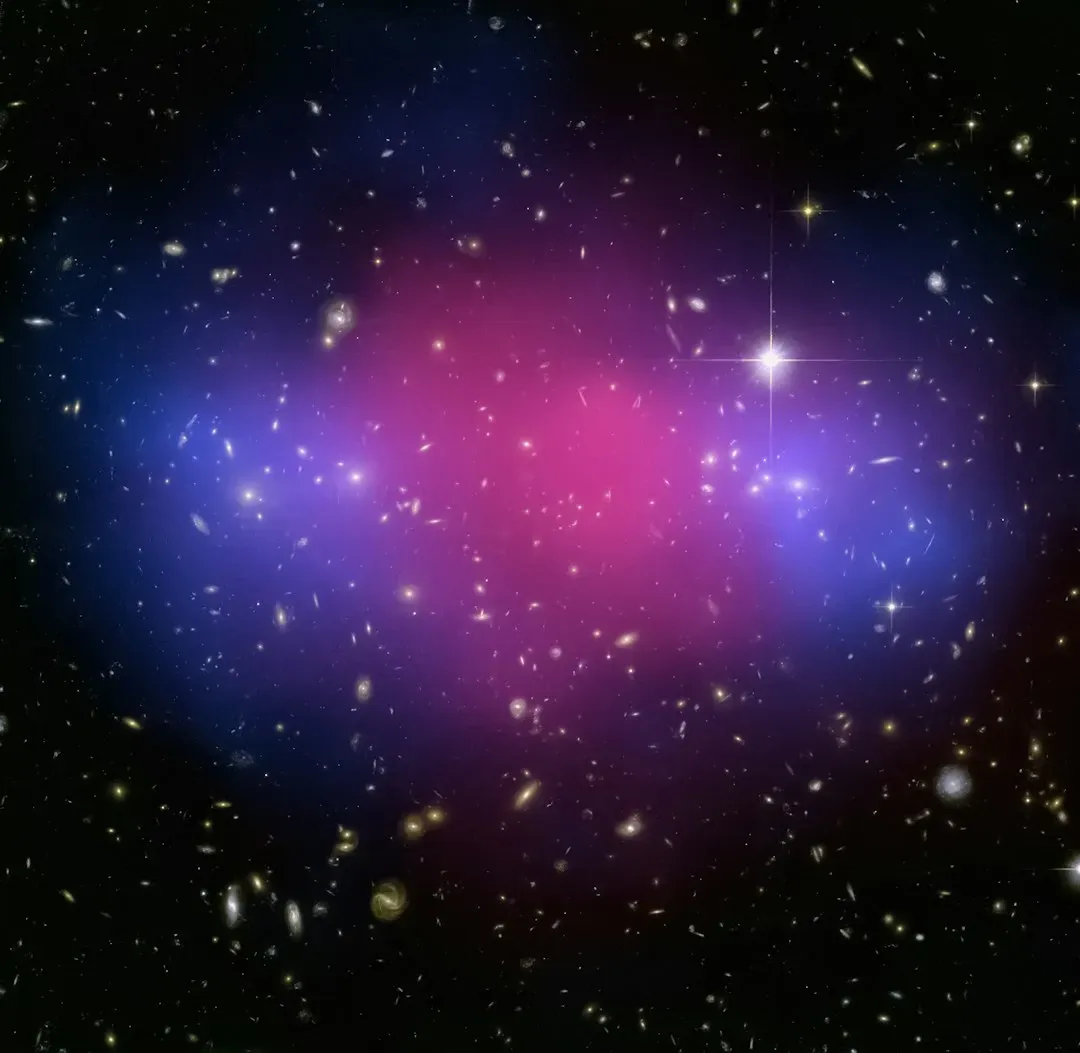
The implications don’t stop at explaining mass. The researchers also connect geometric torsion to the curvature of spacetime on large scales, which could help explain the positive cosmological constant associated with the accelerating expansion of the universe. That’s the mysterious force pushing galaxies apart at an ever-increasing rate.
Beyond these cosmological implications, the team speculates about the existence of a previously unknown particle linked to torsion, which they call the Torstone, and if real, it could potentially be detected in future experiments. The name might sound like something from a fantasy novel, yet this hypothetical particle could be the key to testing whether this entire theory holds water. It’s hard to say for sure whether we’ll be able to detect it with current technology, but the possibility is tantalizing.
All Forces as Geometry
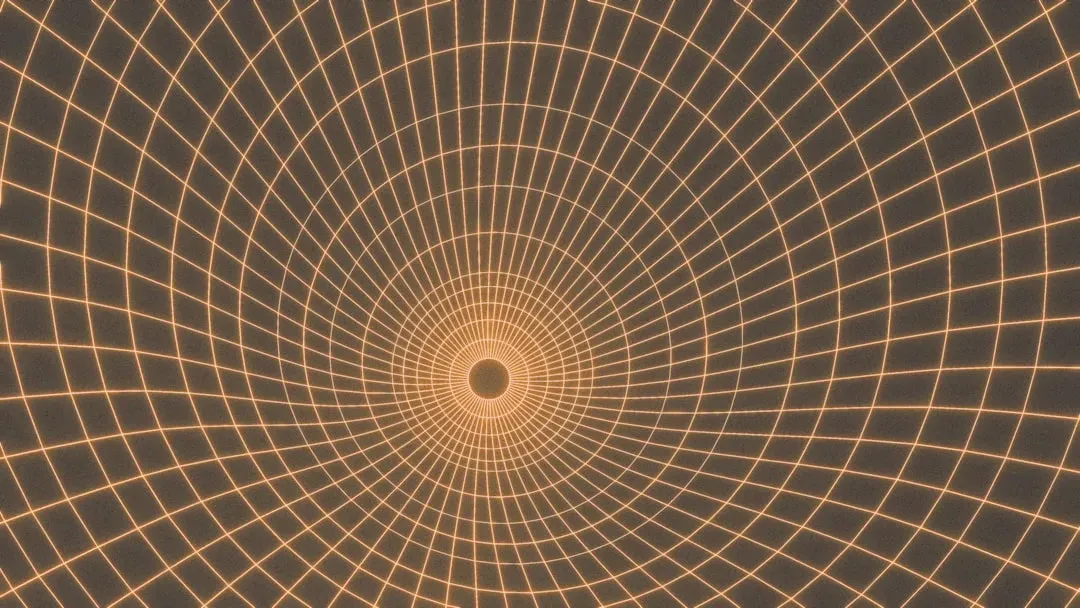
The broader ambition of the work is to push Einstein’s idea further by asking whether all fundamental forces might share the same geometric origin if gravity arises from geometry. Einstein showed us that gravity is the curvature of spacetime. What if electromagnetism, the strong nuclear force, and the weak nuclear force are all just different flavors of geometric warping?
Perhaps the masses of the W and Z bosons come not from the famous Higgs field, but directly from the geometry of seven-dimensional space. There’s something elegant about this idea. Nature does tend to prefer simple solutions, even when those solutions look impossibly complex to our limited perspective. This proposal is still theoretical and does not replace the standard model of particle physics or offer an immediate experimental test, but it offers a new perspective on where mass, along with symmetry-breaking, could originate.
The Road Ahead
This new idea from Pincak’s team does not contradict the existence of the Higgs field, but instead explores whether similar effects could come from the geometrical properties of space itself. It’s not about tearing down established physics. It’s about adding another layer of understanding.
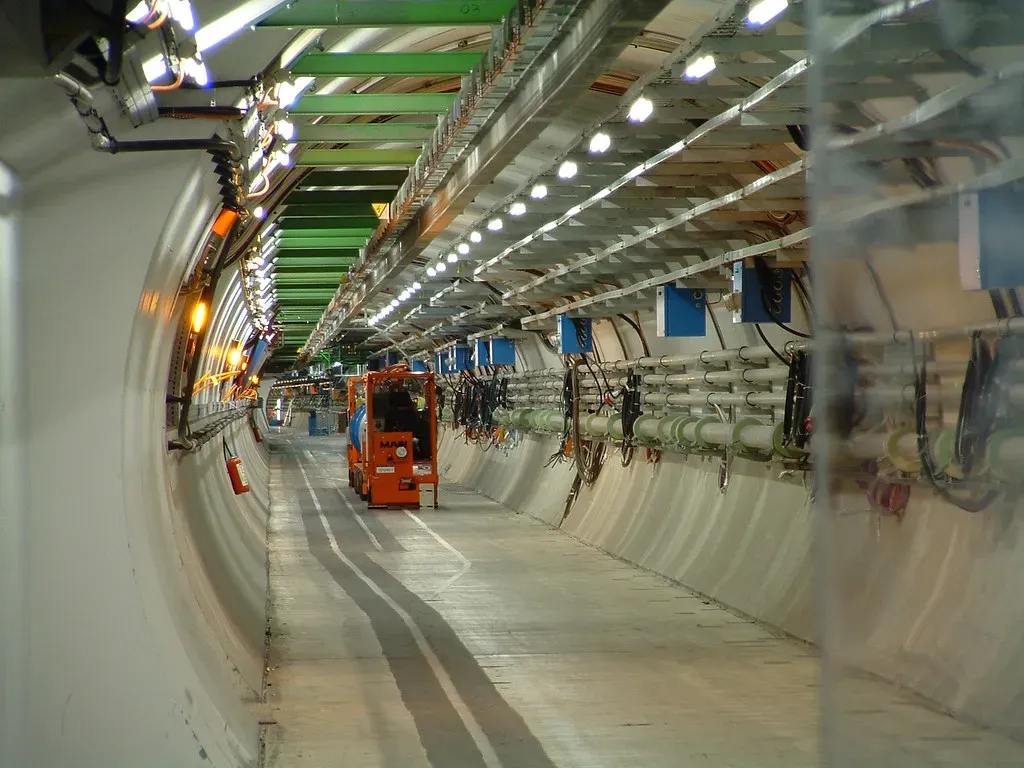
The challenge now is finding ways to test these ideas. The approach may even predict a new particle, which gives experimentalists something concrete to search for. Particle accelerators might one day provide evidence for or against this geometric view of mass. Gravitational wave detectors could reveal signatures of these hidden dimensions. The technology to probe these questions is advancing rapidly.
Conclusion
It hints at a universe built entirely from geometry. The idea that mass emerges from invisible dimensions twisting through higher-dimensional space is both beautiful and unsettling. It forces us to reconsider fundamental assumptions about reality itself. Whether these hidden dimensions truly exist and whether torsion really generates mass remains to be proven, yet the mathematical framework is there, waiting to be tested.
We stand at an interesting crossroads in physics. The Standard Model has served us well for decades, explaining countless phenomena with remarkable precision. Yet it leaves so many questions unanswered. Where does mass really come from? Why is gravity so weak? What is dark matter? This new geometric approach might not answer all these questions, but it offers a fresh perspective that could reshape our understanding of the cosmos. What would you say if everything you thought was solid turned out to be just a twist in the fabric of invisible dimensions? Would that change how you see the world around you?