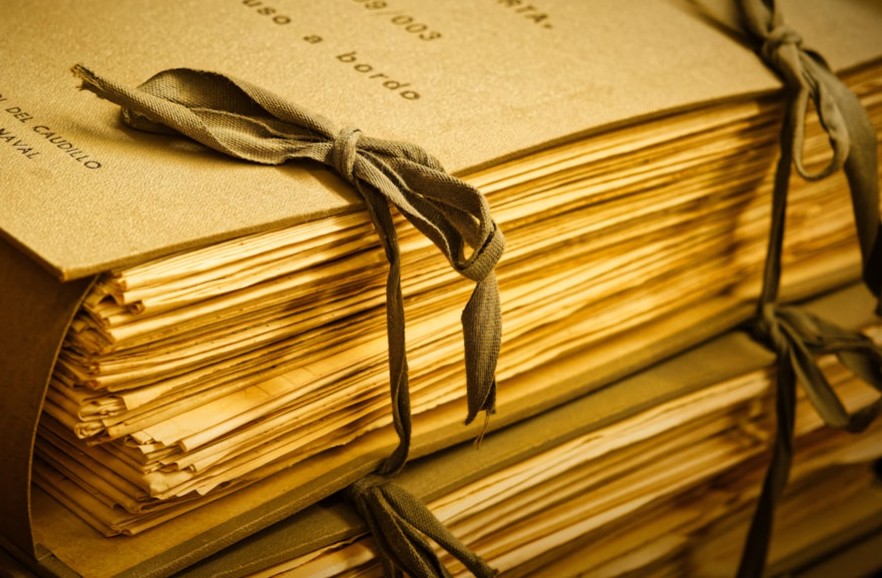
Most people assume are just dusty paperwork collecting mold in a museum basement, useful only for citations in academic footnotes. But archaeologists have quietly rewritten entire chapters of human history simply by re-reading notebooks that were shelved decades ago. A forgotten sketch, a mislabeled box, or a single overlooked sentence in a field diary has overturned “settled” interpretations of burials, tombs, and entire dig sites.
Turns out, the real excavation never really ends – it just moves from the trench to the archive. These thirteen paper-trail discoveries are stranger, messier, and more human than anything you’d expect from a filing cabinet. Here’s what researchers actually found when they finally went back and reopened the paperwork.
#1 – A Forgotten Notebook Rewrote the Story of a Neanderthal Child’s Burial

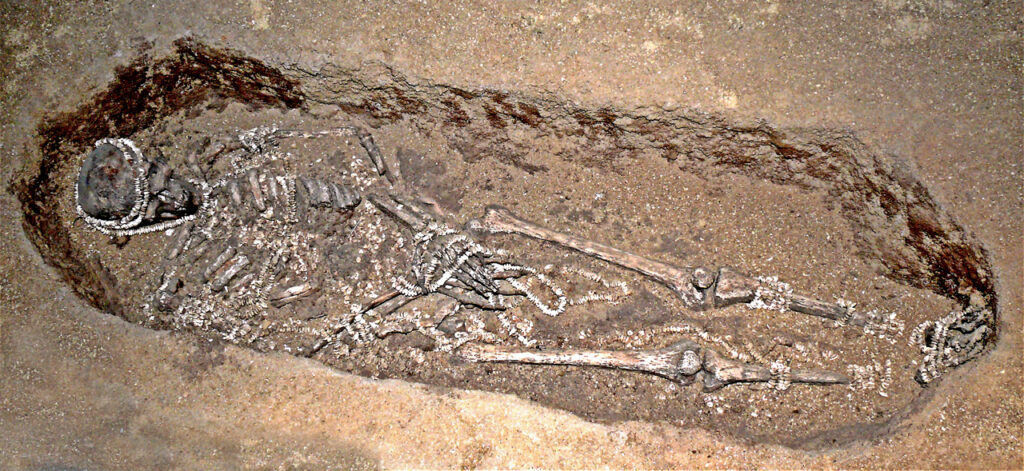
For nearly 50 years, the partial skeleton of a two-year-old Neanderthal child known as La Ferrassie 8 sat in a French museum collection, dismissed by scientists as coming from a poorly recorded dig.
That assumption turned out to be wrong. A research team decided to go back to the original notebooks and field diaries kept by the excavation team that worked the site between 1968 and 1973. Researchers found that “the discovery and context of this skeleton has generally been regarded as poorly documented, but in fact this deficiency stems from a lack of the necessary processing of the information,” adding that “a huge amount of data remained unassessed prior to our current study.”
By combing through those old pages alongside archived boxes, the team was able to reconstruct exactly how the child’s body had been positioned in the ground. Using the notebooks of their predecessors, researchers reconstructed the spatial distribution of the human remains, showing the skeleton had been buried in a sedimentary layer that inclined differently from the surrounding stratigraphy.
Fast Facts
- La Ferrassie 8 was excavated between 1968 and 1973 in southwestern France.
- The remains sat unanalyzed in storage for nearly 50 years before researchers reopened the original notebooks.
- The child was roughly two years old at the time of death.
- The burial pit’s sediment tilted at a different angle than the surrounding natural layers – a clue pointing to deliberate digging.
That single geometric detail became key evidence that Neanderthals intentionally buried their dead – a debate that had raged for over a century. That’s just the first crack in the archive – next up is a legend whose own paperwork undercuts his own legacy.
#2 – A Legendary Archaeologist’s Own Field Cards Contradicted His Published Reports
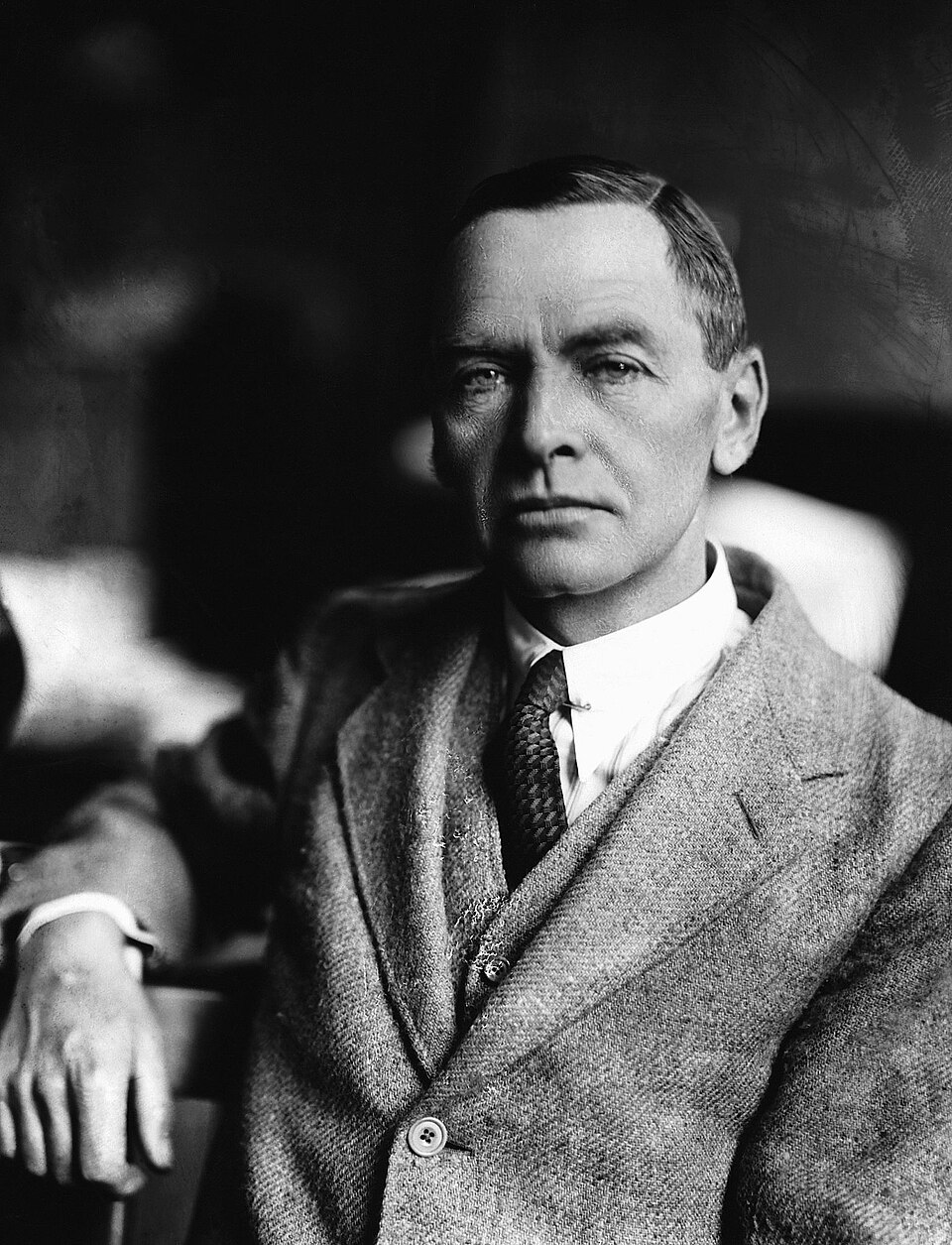
Leonard Woolley is remembered as one of the towering figures of 20th-century archaeology, famous for uncovering the so-called Royal Cemetery at Ur in the 1920s. His published volumes became foundational texts for understanding ancient Mesopotamia.
Here’s the part most textbooks skip: Woolley left behind an almost unbelievable paper trail. His field records include 20,000 blue-line cards and over 2,350 field photographs, now digitized and available online. When modern researchers finally sat down and cross-referenced every card against his finished reports, they didn’t find a perfect match.
Instead, they found gaps between what Woolley wrote in the field and what he later published for the world. The study reveals discrepancies in Woolley’s published reports compared to his original field notes and records. Museum staff have since acknowledged this reality outright – as one researcher put it, “Woolley was a good archaeologist for his day, but he could not publish every object nor completely explain every decision,” recording his real thoughts instead in field notes and reports.
Some archaeologists now argue that entire artifact groupings from Ur may need to be reassigned once the full card catalog is cross-checked. That’s uncomfortable enough – but the single most famous discovery story in archaeology has its own paper-trail problem.
#3 – Howard Carter’s Private Diaries Reveal a Very Different Discovery Story
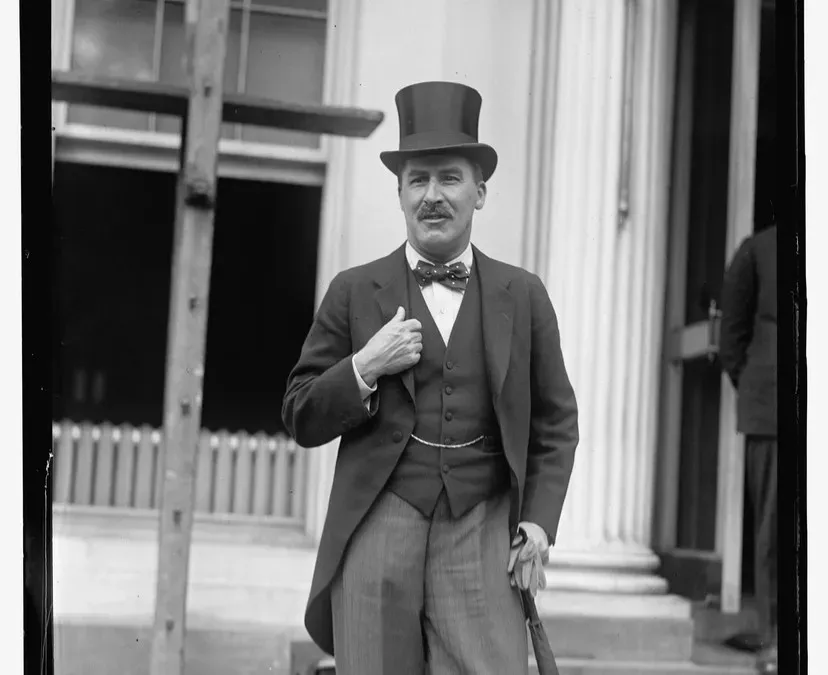
Everyone knows the legend: Howard Carter peers through a hole into Tutankhamun’s tomb and gasps at “wonderful things.” It’s one of the most repeated lines in archaeology.
Except the story you’ve heard may not be entirely accurate. It has been a century since Carter allegedly told his patron Lord Carnarvon he saw “wonderful things” – except he may not have said that at all, since Carnarvon had already sold the story to The Times. The only way historians even know to question this is because Carter’s actual pocket diaries survived and were re-read line by line.
Those notebooks are now housed at the Griffith Institute, and researchers describe combing through them as uncovering a completely different texture of the dig. Archivists brought out “a small diary, cream-colored with a red spine, as well as a larger ring binder – Carter’s excavation journal” that recorded his real-time impressions rather than the polished version later sold to newspapers.
Discovered tomb under tomb of Ramses VI investigated same & found seals intact.
Howard Carter, excavation diary, November 5, 1922
That’s the actual line Carter wrote the day he found the tomb – flat, procedural, almost bureaucratic. The polished quote the world remembers may have been theater for the press, not the real discovery moment. And that’s nothing compared to what old excavation photographs alone can resurrect.
#4 – Old Excavation Photos Can Digitally Rebuild a Site That No Longer Exists
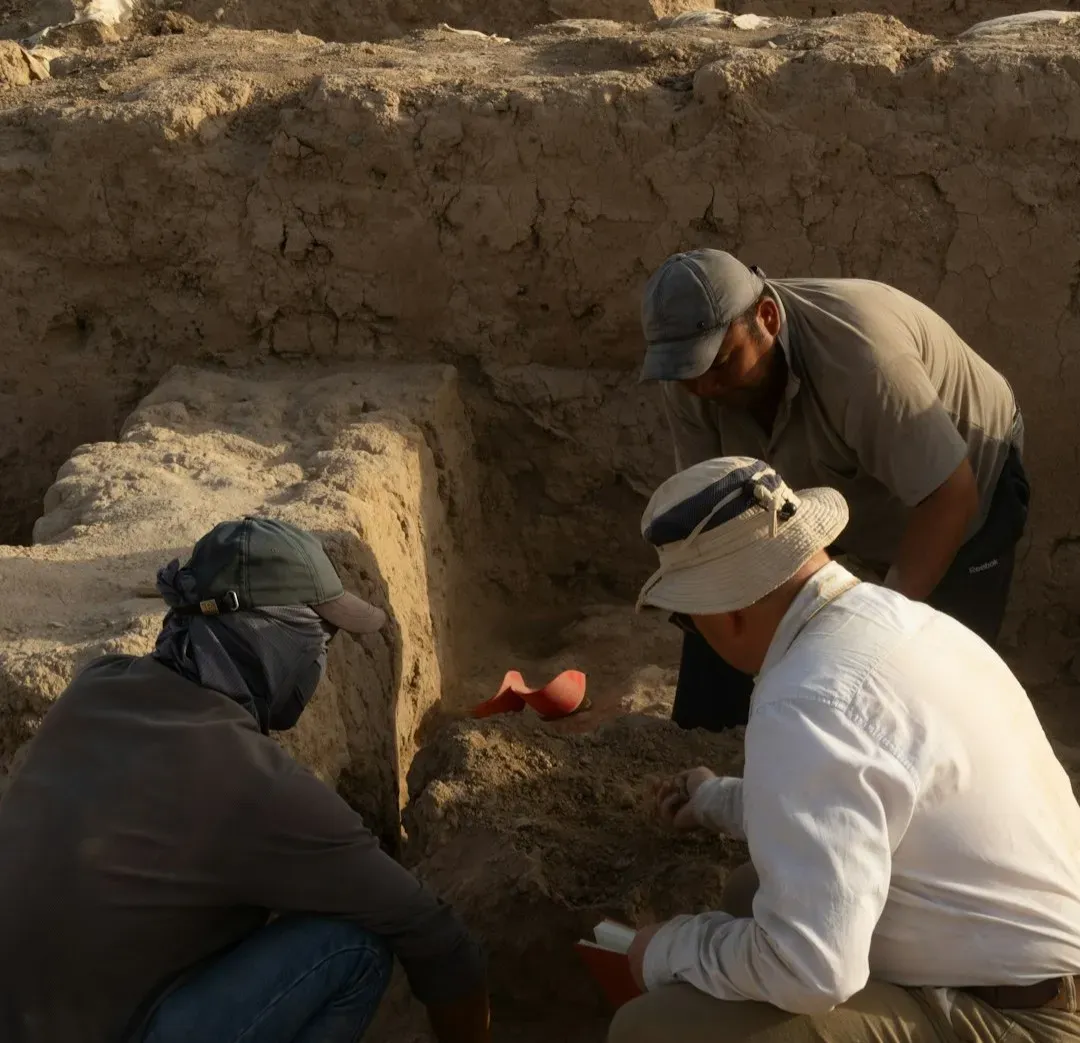
Here’s a mistake almost every amateur history fan makes: assuming that once a site is dug up, the physical evidence is gone forever and all that’s left is whatever made it into the final report.
Archaeologists have quietly found a workaround. An archaeological deposit is often described as a “three-dimensional artefact, only seen once during excavation, and never seen whole” – once a site is dug, usually in reverse order of how it formed, it can never be physically reassembled. That sounds like bad news, until you realize old excavation photographs can substitute for the missing dirt.
Researchers have started feeding decades-old archive photos into modern software to rebuild trenches in three dimensions, a method some now call “retrospective photogrammetry.” This approach demonstrates how merging old and new archaeological field data can lead to new results, offering more complete mapping and more accurate, analytically dynamic visualisations.
Worth Knowing
- Retrospective photogrammetry turns old 2D excavation photos into navigable 3D digital models.
- The technique works best on long-running digs with decades of mixed analog and digital records.
- It effectively lets researchers “re-excavate” a site virtually, layer by layer, without ever picking up a shovel.
A grainy black-and-white snapshot from the 1970s can now be turned into a navigable 3D model. Long-running digs with decades of mixed analog and digital records are prime candidates for this treatment. That raises an uncomfortable question about how “poorly documented” even gets defined in the first place.
#5 – “Poorly Documented” Often Just Means “Nobody Finished Reading the Paperwork”
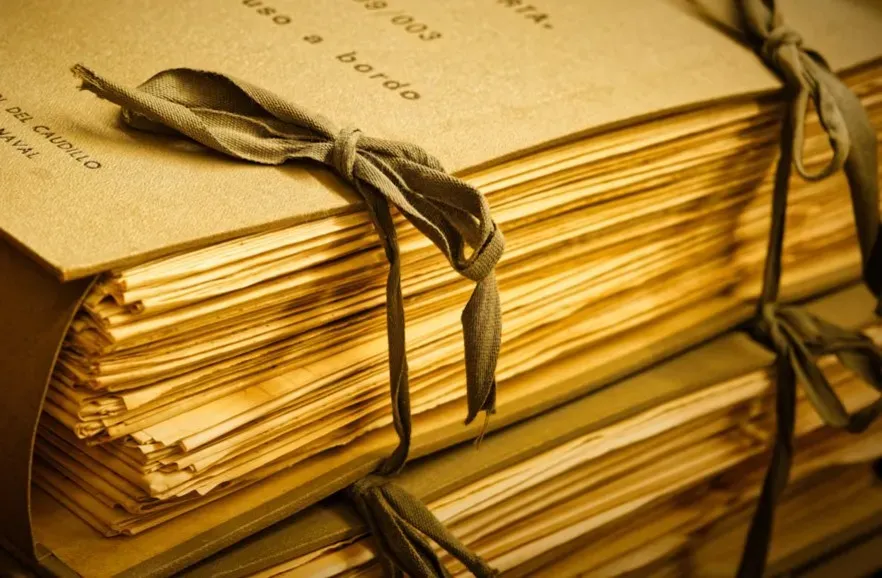
Most people believe that if a discovery is labeled “poorly documented” in scientific literature, the original records are genuinely thin or lost. Experts are increasingly pushing back on that assumption.
The La Ferrassie case is the clearest proof. The researchers stated plainly that “a huge amount of data remained unassessed prior to our current study” – meaning the paperwork existed the entire time, just unread. This wasn’t a matter of missing files; it was a matter of nobody sitting down to process them.
This raises an uncomfortable question for the field: how many other “poorly documented” sites are actually just poorly revisited? Some researchers now argue that entire generations of interpretation may rest on secondhand summaries rather than the primary notebooks themselves.
The uncomfortable truth is that laziness with archives, not scarcity of records, is often the real problem. It’s a controversial opinion inside academic circles, but the paper trail increasingly supports it. Sometimes, though, it isn’t a notebook that cracks a case wide open – it’s a photograph.
#6 – Decades-Old Photographs Sparked a Hidden Chamber Theory
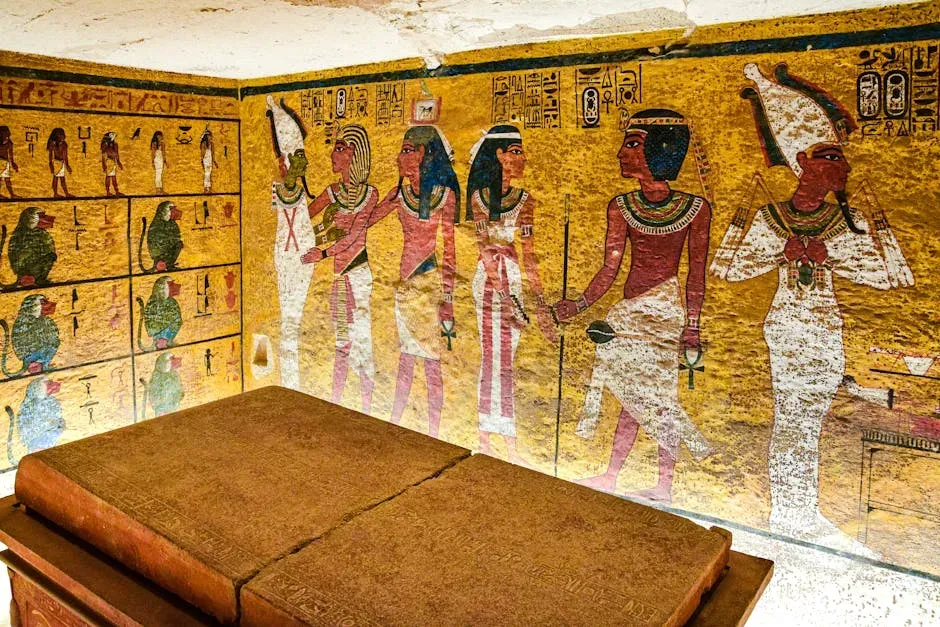
Some of the biggest recent archaeological headlines didn’t come from a shovel – they came from someone staring at old high-resolution scans of walls that had already been excavated a century earlier.
Tutankhamun’s tomb has been picked apart by scholars for a hundred years, yet the surviving photographic and documentary record from Carter’s original dig keeps producing fresh questions. Researchers going back through “the definitive archaeological record of Howard Carter and Lord Carnarvon’s discovery of the tomb of Tutankhamun” have used those original images and plans to re-examine wall surfaces for irregularities invisible to the naked eye decades ago.
That kind of archival re-scrutiny is exactly why Egyptologists keep returning to the Griffith Institute’s collection instead of treating the case as closed. A tomb “finished” being studied in the 1930s is still generating new theories today, purely from paperwork. That same instinct to look closer is also fixing a name problem the field ignored for a century.
#7 – Old Notebooks Are Finally Giving Credit to the Workers Who Did the Digging
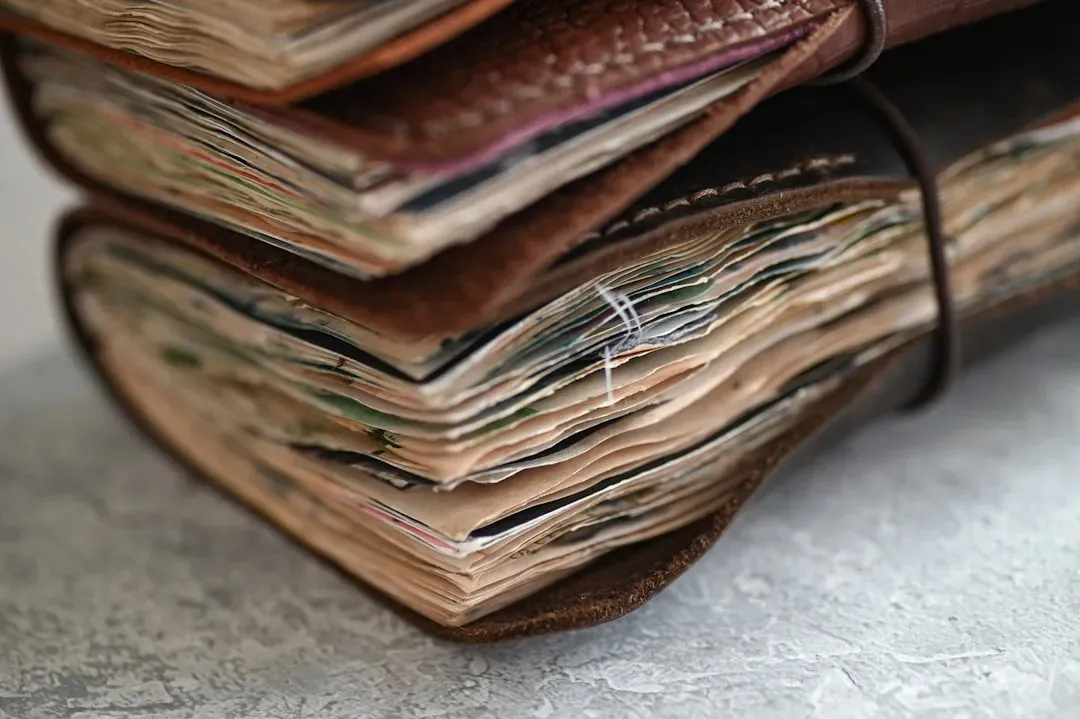
Walk through most classic excavation reports from the early 20th century, and you’ll notice something odd: the local laborers who did the actual digging are barely named, while the foreign director gets full credit for every find.
Re-reading old records is slowly correcting that imbalance. Photographs and daybooks from major digs, including large team excavations like Ur, show dozens of workers organized into disciplined crews responsible for locating and reporting artifacts. Archive photographs even document Leonard and Katharine Woolley seated in front of “their large group of local workers” – a visual record that outlines a workforce nowhere near as small as popular retellings suggest.
Modern researchers combing through these archives are increasingly crediting local excavation teams with discoveries historically attributed only to the site director. This is one of the more openly debated shifts in archaeology today – some traditionalists argue it’s revisionism, while others insist it’s simply reading the record accurately for the first time. Either way, the paperwork doesn’t lie about who was standing in the trench. Sometimes, though, the biggest discovery isn’t a name at all – it’s a box nobody bothered to reopen.
#8 – Miscatalogued Bones Have Been Sitting in Drawers for Decades
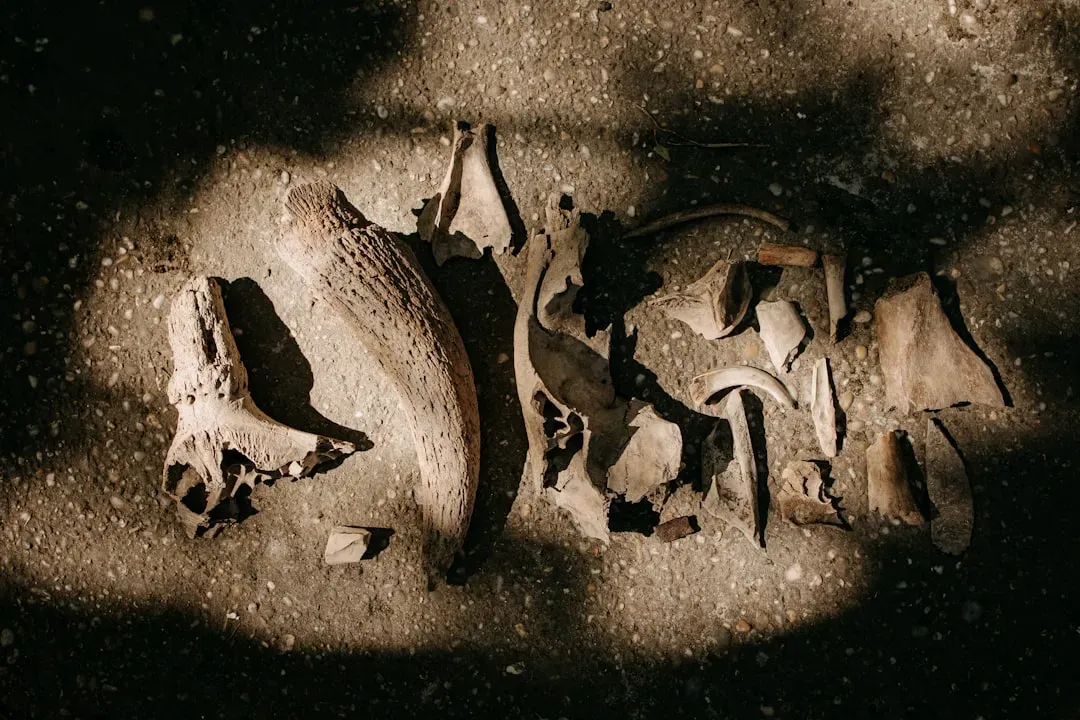
It sounds almost too simple to be true, but one of the most reliable ways to make a “new” discovery in archaeology is to open a box that was sealed and labeled wrong decades ago.
The La Ferrassie case again offers a textbook example. Researchers conducted a thorough re-evaluation of the child’s remains, which had been kept in storage for almost 50 years after being discovered between 1970 and 1973. Nobody lost the bones. Nobody hid them. They simply sat there while nobody cross-checked them against the field notebooks that explained where they actually came from.
This pattern shows up again and again across major institutions holding early-20th-century collections. The rediscovery of a box containing hominin bones in one museum collection “provided new fossils and helped to locate” the individual within the site, and further visits to another archive “resulted in the discovery of all of the notes from the excavation.”
At a Glance
- Museum storerooms worldwide still hold uncounted boxes from early-20th-century digs that were never fully processed.
- A single rediscovered box can reunite scattered fossils with the field notes that explain their original context.
- La Ferrassie 8’s remains sat in storage for nearly five decades before being cross-checked against the original notebooks.
A box that sits unopened for half a century can still hold information that changes a scientific consensus. And once you start opening those boxes, you find out exactly why the paperwork got messy to begin with.
#9 – Field Diaries Reveal Digs Were Rushed to Beat Funding Deadlines
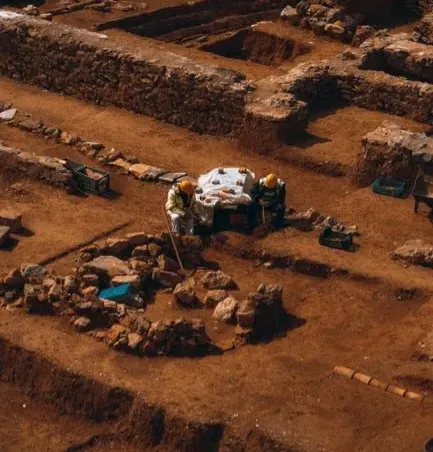
Modern archaeology likes to imagine early 20th-century digs as slow, meticulous affairs. Old field diaries tell a messier story: many excavations were running against the clock the entire time.
Ur’s excavation stretched across roughly a decade, and Woolley’s own preliminary reports admit the pace of discovery outstripped his ability to fully process it. Woolley himself noted that evidence had accrued season after season, “not all of which I have been able to publish in these preliminary reports.” That’s a remarkable admission from the man in charge – he was finding things faster than he could write them up properly.
This mirrors a broader pattern seen across major digs of the era: seasons often ran on tight budgets tied to sponsoring institutions, meaning teams pushed forward even when documentation lagged behind.
Some of the most famous excavation reports in history were essentially rough drafts, never fully caught up to what was actually happening in the ground. That chaos left a paper trail of its own – including sketches that don’t match a single item on today’s museum shelves.
#10 – Old Sketches Are Turning Up Artifacts Missing From Official Museum Records
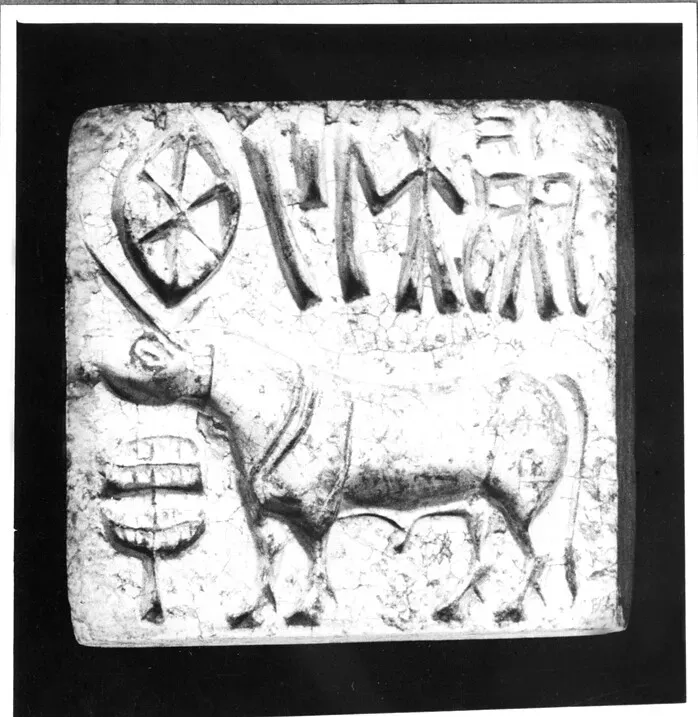
Anyone who’s spent time in a museum archive knows the frustrating gap between an object’s catalog card and what was actually pulled from the ground. Old excavation sketches are proving to be the missing link.
At Ur alone, Woolley assigned tracking numbers to an enormous volume of material. He utilized around 20,094 U-numbers for cataloging artifacts over twelve years of excavations, having excavated approximately 600 burials in just three months at one point. With cataloging happening at that speed, errors were inevitable – objects logged twice, mislabeled, or never fully described in the accompanying illustrations.
Digitization projects are now allowing researchers worldwide to compare original hand-drawn sketches directly against museum inventories for the first time in nearly a century. With Woolley’s records now digitized and searchable online, discrepancies that were invisible in paper form are finally becoming obvious.
Entire artifacts described in field sketches have no matching entry in official collection databases, suggesting some pieces were lost, sold, or simply never properly logged after leaving the trench. Which raises an uncomfortable question about how “settled” science actually gets settled.
#11 – Reanalysis Is Overturning “Settled” Interpretations From a Century Ago
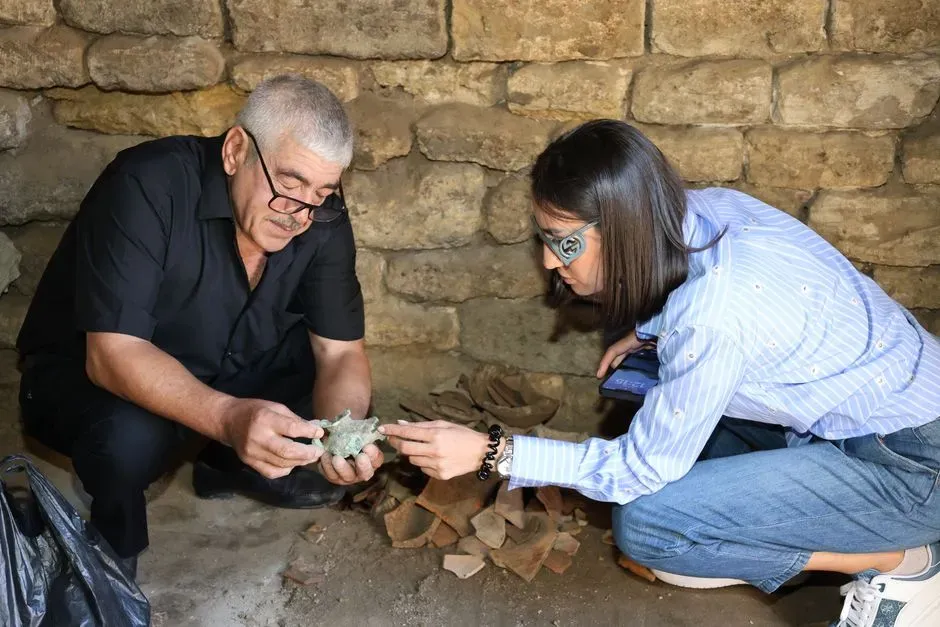
Here’s a controversial opinion gaining traction among younger archaeologists: many interpretations from the early 1900s were never really proven, they just went unchallenged for so long they calcified into fact.
The La Ferrassie burial debate is a perfect case study. For decades, whether Neanderthals intentionally buried their dead was treated as settled – until researchers actually cracked open the original notebooks. Returning to the site and using the notebooks of the original excavators, the team was able to reconstruct the spatial distribution of remains that had never been fully analyzed before.
The result reshaped a debate that had simmered in academic journals for generations. Rather than confirming the old assumption blindly, researchers used archival cross-referencing to build an actual evidentiary case.
Old “facts” in archaeology are often just old opinions that nobody bothered to re-test. This is exactly the kind of finding that makes some senior academics uncomfortable – nobody likes being told the textbook chapter they memorized was based on a shortcut. None of this rewriting would even be possible without one modern shift that changed the entire game.
#12 – Digitization Projects Are Turning Forgotten Archives Into Global Research Tools

For most of the 20th century, if you wanted to check an excavation’s original notes, you had to physically travel to whatever institution was hoarding the paperwork. That barrier alone kept countless discoveries locked away.
That’s changing fast. Ur’s excavation records, once scattered across two continents’ worth of institutional archives, have now been fully digitized. Woolley’s field records – 20,000 blue-line cards and over 2,350 field photographs – are now digitized at Ur Online, meaning any researcher anywhere can cross-check field data against published claims without ever visiting the physical archive.
The same shift is happening with Egyptology’s most famous archive. All of Howard Carter’s and Arthur Mace’s archaeological journals from the Tutankhamun excavation have now been fully published online. Museum staff involved in these projects describe the goal explicitly: “Digitizing these records will increase access and allow for more complete reanalysis,” since “reinvestigation of old work in the light of new understandings is at the very heart of scholarship.”
Quick Compare
- Then: Checking Ur’s field cards meant booking travel to a physical archive on another continent.
- Now: All 20,000 blue-line cards and 2,350+ field photographs are searchable online at Ur Online.
- Then: Carter’s Tutankhamun diaries were locked away, accessible only in person at the Griffith Institute.
- Now: Those same journals are fully published and browsable from any device.
A century-old notebook that used to require a plane ticket to Oxford can now be searched from a phone. Which brings us to the discovery that ties every single one of these stories together.
#13 – Some of Archaeology’s Biggest Names Left Detailed Confessions in Their Own Field Notes

Here’s the discovery that ties everything together: the archaeologists we now treat as legendary, near-mythical figures often left behind startlingly honest accounts of their own uncertainty, mistakes, and improvisation – written down in real time, decades before anyone thought to check.
Woolley’s own field reports admit he couldn’t keep pace with his own discoveries. He directly acknowledged that evidence had accumulated across seasons faster than he could publish it. Carter’s private diary shows a plainer, more procedural man than the theatrical version later sold to newspapers, recording a simple factual note about intact seals rather than a dramatic quote. And the La Ferrassie team’s decades-buried notebooks turned out to contain “a huge amount of data” that had simply never been assessed by anyone before.
None of these figures were hiding anything – they were simply human, working faster than their paperwork could keep up, and trusting future generations to eventually catch up on the reading. That trust is finally being repaid. Every fresh archival dig like this proves the same point: the most valuable tool in modern archaeology might not be a trowel at all – it might be a library card.
The Bottom Line
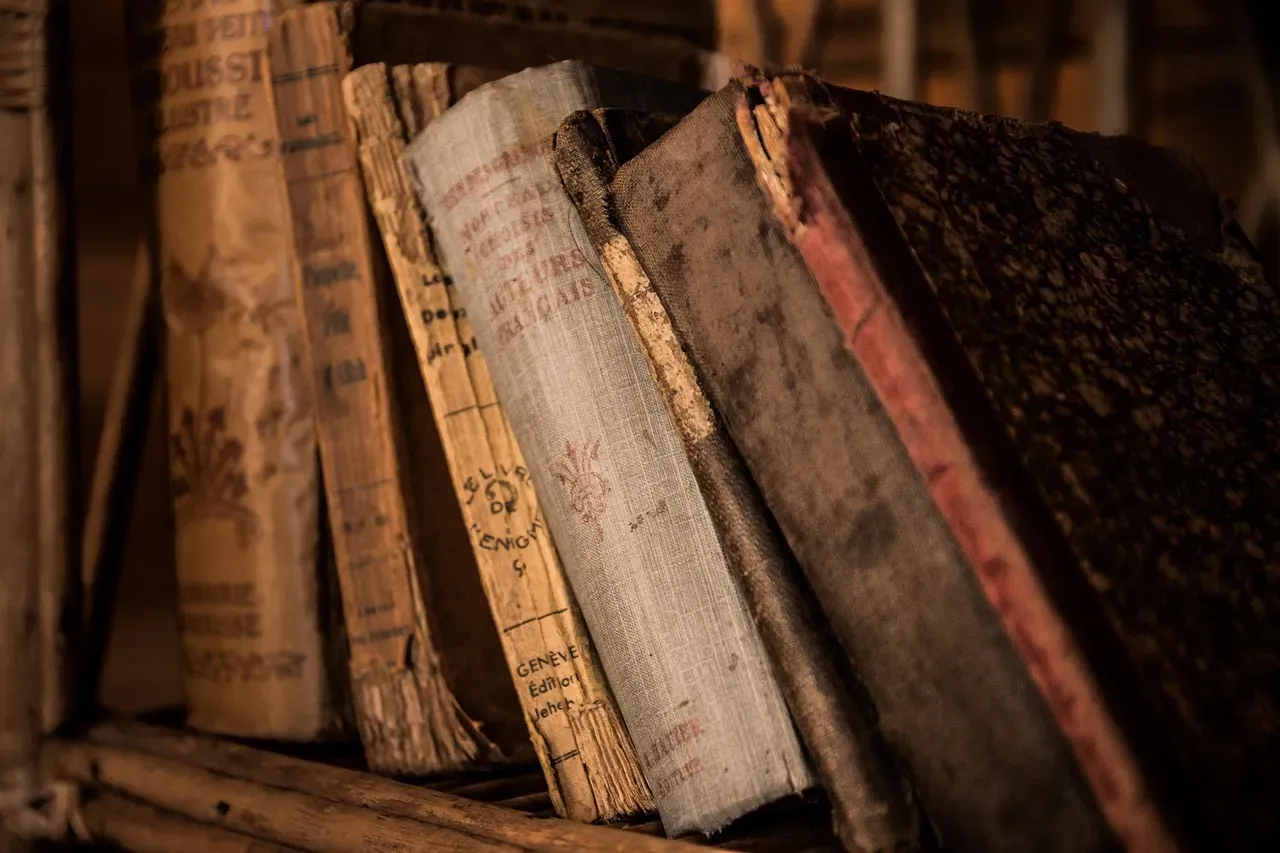
has quietly become one of archaeology’s most powerful tools, proving that groundbreaking discoveries don’t always require a shovel – sometimes they require a library card and a lot of patience. From a Neanderthal child’s burial confirmed through 50-year-old notebooks, to Woolley’s own field cards contradicting his published reports, to Carter’s private diaries reshaping the most famous discovery story in history, the pattern is undeniable: the paperwork was often right there all along, just unread.
The next big archaeological breakthrough may already be sitting in a museum basement, waiting for someone to open the right box. What forgotten archive do you think is hiding the next big discovery? Drop your theory in the comments.