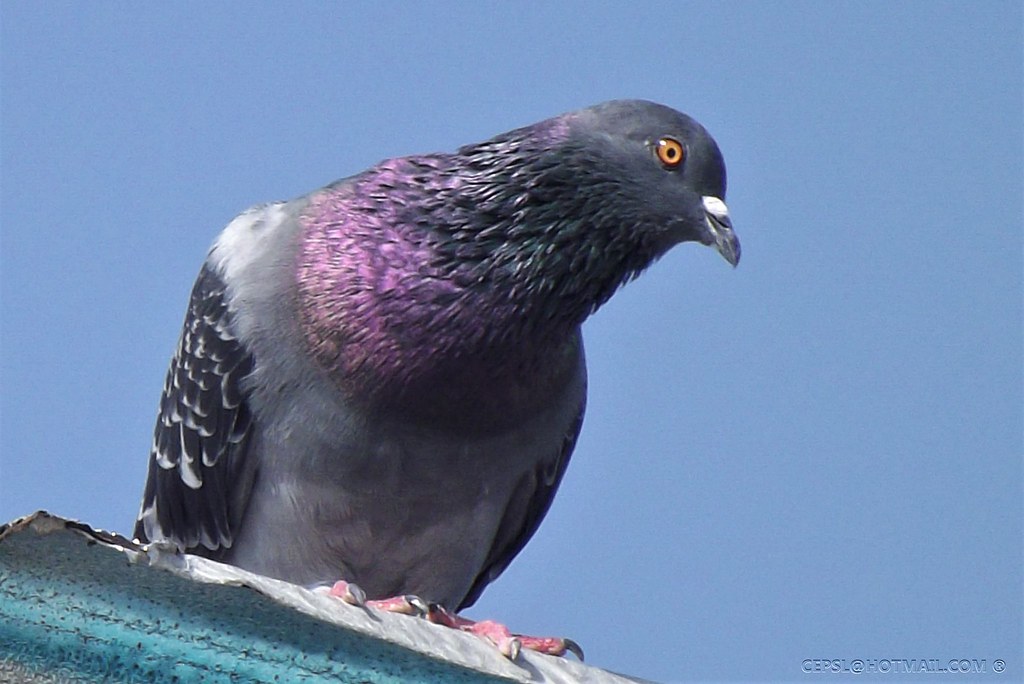
If you still think “bird brain” is an insult, you might want to retire that phrase. In recent decades, scientists have been quietly discovering that pigeons – the same birds dodging traffic and pecking at crumbs on city sidewalks – are capable of surprisingly sophisticated mental feats. One of the most striking findings is that pigeons can learn to sort hundreds of different images into meaningful categories, and then apply that knowledge to new pictures they have never seen before.
This is not a party trick. It cuts straight into one of the big questions in psychology and neuroscience: how do brains, human or otherwise, turn raw sensory chaos into concepts? When a pigeon can correctly group photographs of trees, people, or even medical slides into “this type” and “not this type,” it forces us to rethink what kinds of minds are needed for abstract thinking. Once you see what these birds can do, the world’s most underrated city animal starts to look a lot more like a tiny feathered cognitive scientist.
Why Pigeon Categorization Experiments Blew Scientists’ Minds
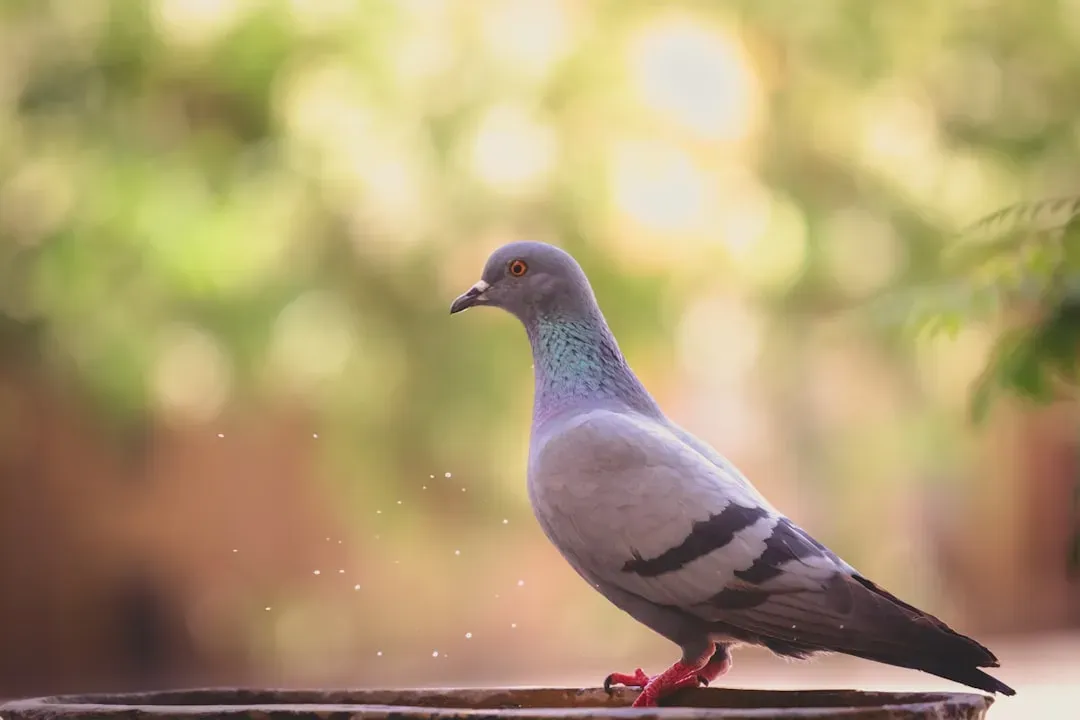
The idea that pigeons can sort hundreds of images into categories was not some casual observation at a park; it came from tightly controlled lab studies. Researchers showed pigeons large sets of photographs that belonged to broad categories, such as trees versus non-trees, or pictures containing people versus those without people. The birds were trained to peck one key for “yes, this fits the category” and a different key for “no, it does not,” with food rewards when they got it right.
After training, the real shock came: when scientists presented completely new images that the pigeons had never seen before, the birds still classified them correctly at levels far above chance. That means the pigeons were not just memorizing specific photos; they were grasping something general about the category itself. For decades, people assumed that kind of flexible categorization required a human-level brain, or at least a primate brain. Instead, a common street bird calmly walked into the experiment and broke that assumption.
How Do You Actually Teach a Pigeon a “Concept”?
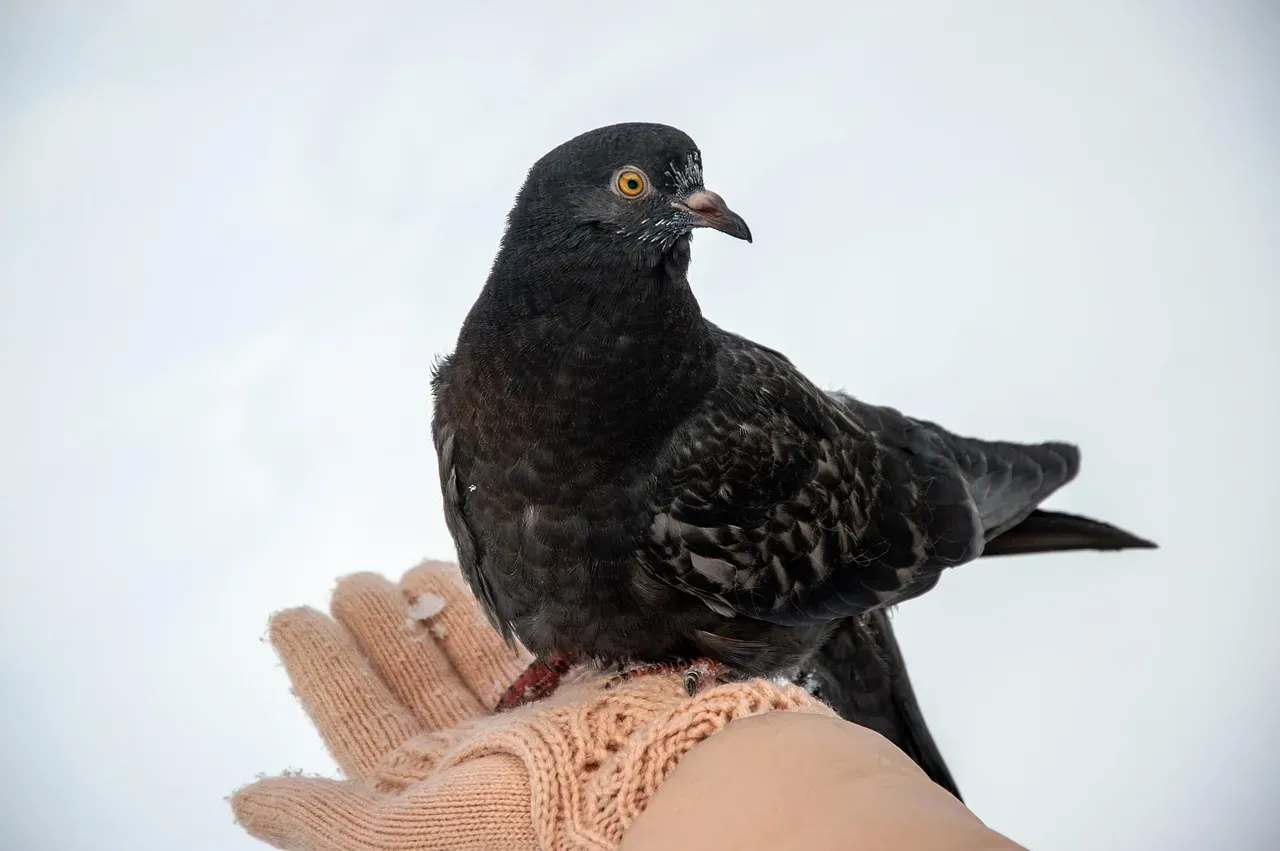
Teaching a pigeon to sort images sounds cute, but the procedure is methodical and slow. At first, the birds are simply rewarded for pecking at a display, learning that the screen and keys matter. Then the images come in, paired with clear rules: peck the left key when any picture from Category A appears, and the right key for Category B. Over many repetitions, the pigeon starts to associate visual patterns – shapes, textures, colors, arrangements – with one response or the other.
What makes this impressive is not that they can follow a rule, but that they can extract the rule from a flood of variety. Imagine being shown hundreds of different trees: leafless, leafy, close-ups, distant shots, in snow, at sunset, and still spotting “tree-ness” in all of them. Pigeons achieve something similar with no language, no verbal instructions, and a brain that fits in the palm of your hand. The learning emerges from experience and feedback, which is exactly how much of human learning works, too.
Hundreds of Images, One Bird Brain: What That Really Means
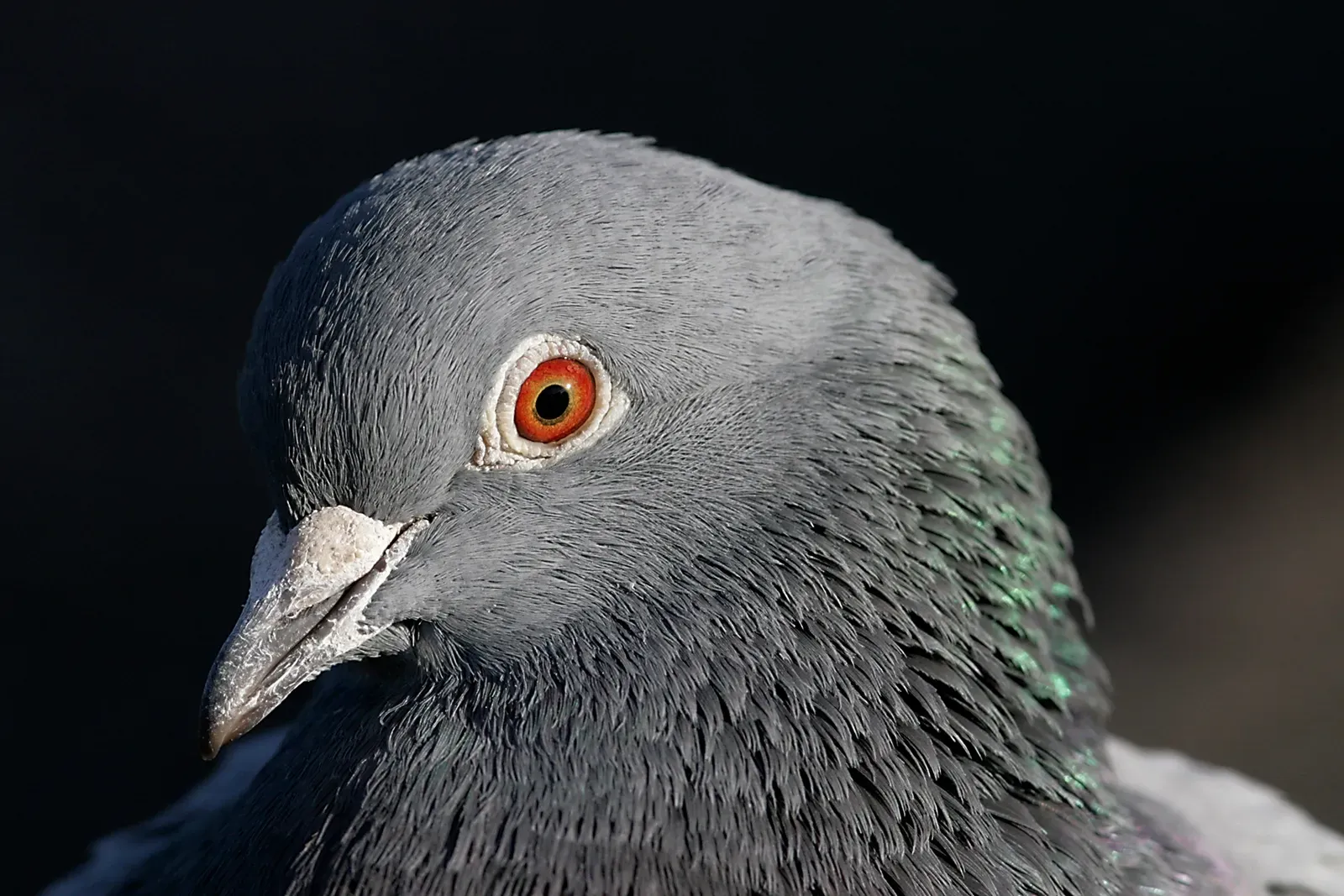
When scientists say pigeons can categorize “hundreds of images,” it is easy to gloss over what that implies. Each image can differ in lighting, angle, background clutter, and style, yet the bird still gets the category right far more often than random guessing would allow. They are not just doing a simple pattern match; they are handling real-world messiness, the type that makes object recognition hard even for computers.
In some experiments, pigeons have been pushed to deal with a wide variety of visual domains: nature scenes, artificial objects, even complex stimuli like medical slides or artworks. The fact that these very different images can all be folded into coherent categories in a pigeon’s mind suggests that their visual system is remarkably flexible. It is a quiet but powerful reminder that cognitive richness does not require a giant cortex; sometimes, a compact, efficient brain is more than enough to pull off feats we used to call uniquely human.
Are Pigeons Using Simple Tricks or Genuine Abstraction?

A common criticism of animal cognition research is that animals might be using cheap tricks rather than true concepts. Maybe, the argument goes, pigeons are just learning to respond to one obvious feature in the image, like a specific color patch or a typical shape, without understanding anything deeper. Researchers have taken this concern seriously and designed experiments to rule out those shortcuts as much as possible.
By varying images heavily, mixing in new scenes, and carefully controlling for simple visual cues, scientists have shown that pigeons can succeed even when no single low-level feature guarantees success. They cope when background colors change, when sizes differ, and when the central objects appear in weird positions or new contexts. That does not mean pigeons think in words or introspective concepts like we do. But it does strongly suggest they form something like abstract categories – internal templates that can stretch to include new examples while excluding imposters.
What This Reveals About Visual Intelligence Without Language
One of the most striking things about pigeon categorization is that it happens in a completely nonverbal mind. Humans often lean on language to solidify concepts: we name things, we describe them, and we build definitions. Pigeons have none of that. Yet they can still organize the visual world into clusters of meaning, suggesting that language is not a prerequisite for robust categories.
This has deep implications for how we think about intelligence itself. It hints that a big part of what we call “thinking” might emerge from pattern recognition and statistical learning, not inner speech. If a pigeon can carve the world into meaningful chunks just through experience and feedback, then human concepts might be built on similar foundations, with language coming later as a powerful add-on rather than the root cause. In a way, pigeons are like living demonstrations that you can have rich perception-based understanding without any inner narrator.
Comparing Pigeons to Humans and AI: Who’s Really Smarter Here?
Put a pigeon next to a human and it feels absurd to compare their intelligence. But if you zoom in on specific tasks, like rapid visual categorization, the comparison becomes genuinely interesting. Humans are great at this, but so are pigeons; in some tightly defined lab tasks, pigeons can rival human-level accuracy in telling certain image types apart, especially after大量 training and consistent conditions.
Now add artificial intelligence to the mix. Modern computer vision systems also learn to classify huge sets of images, from cats and dogs to street signs. The way pigeons and AI systems learn has some surprising parallels: both rely on lots of examples, feedback on right or wrong answers, and gradual adjustment of internal “weights” or connections. Of course, humans bring rich world knowledge and reasoning on top of this, but as narrow pattern recognizers, pigeons are more competitive than most people would ever guess. It is slightly humbling that a city bird and a cutting-edge neural network can sometimes look like cousins in how they learn.
Beyond Party Tricks: Practical Uses of Pigeon Categorization
It might sound quirky, but researchers have explored whether pigeons’ categorization skills can have real-world value. In some small-scale studies, pigeons have been trained to distinguish between certain types of medical images, like benign versus malignant tissue slides, at surprisingly respectable levels of accuracy. The idea is not to replace human experts with birds, but to probe how far animal visual systems can be pushed and what that might teach us about perception.
These experiments double as a testing ground for models of pattern recognition. If a pigeon can learn to spot subtle differences that even novice humans struggle with, that tells us something valuable about how biological systems can be tuned to certain signal patterns. At the same time, there is a strong ethical and practical limit here: no hospital is going to build a radiology department around coops of pigeons. Instead, their role is more like that of a strange, feathered collaborator helping us understand what is possible in brains that are tiny yet incredibly capable.
Do Pigeons Understand Meaning, or Just Respond to Stimuli?
The big philosophical question lurking under all this is whether pigeons truly “understand” what they are seeing. When a pigeon pecks the correct key for “tree,” is it experiencing any sense of a tree as an object, or is it just following a learned statistical rule? Honestly, we do not have a clean answer, and the same question could be asked of many human behaviors that rely heavily on habit and pattern recognition.
My own view is that demanding human-style understanding as the only legitimate form of meaning is too narrow. Pigeons clearly treat some sets of images as functionally similar and act on that basis even when the exact pictures change. In their world, that is what meaning looks like: certain patterns predict rewards, others do not, and the bird forms stable categories around that structure. We might never know what a pigeon’s inner experience feels like, but dismissing its abilities as “mere stimulus-response” seems more like a comforting story for our ego than an honest read of the evidence.
What Pigeons Teach Us About the Evolution of Minds
The fact that pigeons can handle complex visual categories reshapes how we think about the evolution of intelligence. It suggests that powerful pattern recognition and flexible learning did not suddenly appear with primates or humans; instead, they are deep, ancient tools shared by many branches of the animal kingdom. Birds and mammals split a long time ago, yet both lineages evolved sophisticated ways to make sense of rich, noisy environments.
This points to a more democratic view of cognition across species. Instead of a neat ladder with humans at the top and “simple” animals at the bottom, a better picture is a tangled forest of different strengths and specializations. Pigeons might not plan their retirement or write novels, but they are absolute experts at visual discrimination and category learning. In evolutionary terms, their abilities are not a cheap imitation of human thinking; they are a solution tuned beautifully to the demands of a flying, foraging, hyper-visual life.
Rethinking the “Bird Brain” Insult
Once you know that and generalize to new ones, it gets harder to use “bird brain” with a straight face. The insult rests on the idea that birds are simple, automatic creatures, driven by instinct and lacking in flexibility. Pigeon cognition research blows that stereotype out of the water. These birds learn, adapt, and extract patterns from their world in ways that mirror our own learning more than we like to admit.
Personally, I find it oddly comforting that intelligence is not as rare or fragile as we once thought. If a bird dodging buses and scavenging fries outside a fast-food place is also quietly running advanced pattern recognition in its head, then rich minds might be more common in nature than our human-centered stories allow. Maybe the real shift we need is not in how smart pigeons are, but in how willing we are to see intelligence in forms that do not look or feel like us.
Conclusion: Pigeons, Categories, and Our Fragile Ego
When you put it all together, the story is pretty clear: pigeons are not little feathered robots mindlessly reacting to light and sound. They are capable of learning broad visual categories, generalizing across huge sets of images, and coping with the messy variability of real-world scenes. In my opinion, the honest conclusion is that we have underestimated them, more out of habit and ego than evidence. We wanted a clean gap between human minds and everyone else’s, and pigeons flew right through it.
At the same time, their talents do not magically make them “tiny humans.” Their concepts are likely grounded in perception and reward rather than language and introspection, and that difference matters. But instead of clinging to old hierarchies, we can let pigeons nudge us toward a richer, more interesting view: intelligence as a spectrum of clever solutions shaped by evolution, not a single crown worn only by us. The real question is not whether pigeons are smart enough, but whether we are humble enough to accept what their abilities say about our own place in the cognitive world – did you honestly expect a city pigeon to be this good at sorting out reality?