Ask someone to picture “animal migration” and they’ll probably describe a V of geese honking south for the winter, or maybe caribou trudging across some frozen tundra in a nature documentary. Cute. Predictable. Wrong.
The real numbers, pulled from satellite tags, geolocators, and researchers who kept double-checking their own data because it seemed impossible, describe something closer to science fiction. A bird smaller than a soda can will out-fly commercial jets over the course of a year. A fish will claw its way hundreds of miles upstream without eating a single bite. An insect that weighs less than a paperclip will cross an ocean. None of this is exaggeration – it’s just biology nobody bothered to explain to us in school.
#1 – Arctic Tern: The Small Bird That Outflies Commercial Jets
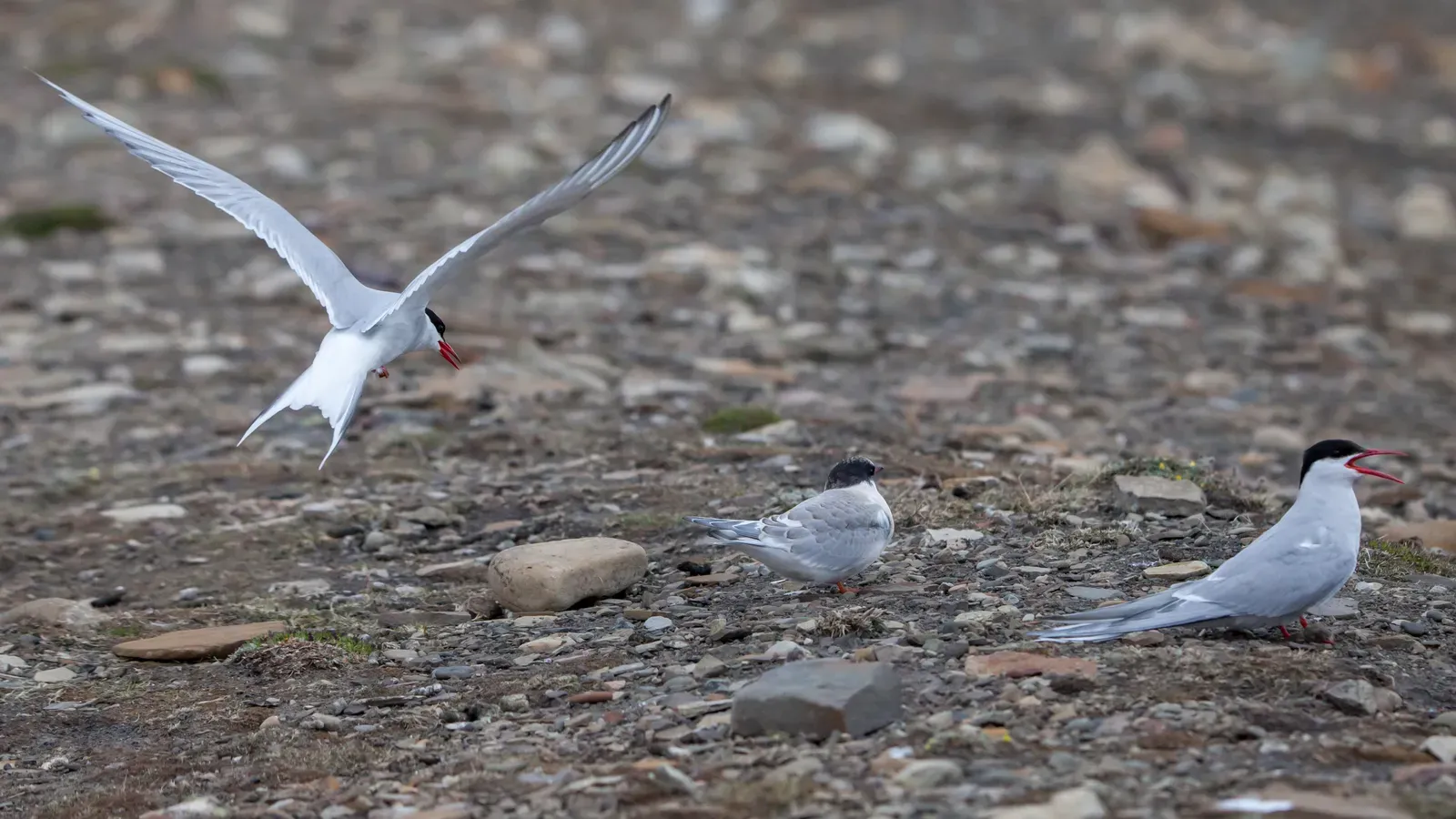
Let’s start with the record holder, because it sets the tone for everything else on this list. The Arctic tern doesn’t just migrate far – it owns the entire concept of long-distance migration. Every year, this slim white-and-gray seabird chases an endless summer between the Arctic and Antarctic, refusing to let winter ever catch up to it.
That’s not poetic exaggeration. Satellite tagging has clocked round trips of 44,000 to 56,000 miles (71,000-90,000 km) in a single year, depending on the exact route a bird takes. Scientists originally underestimated this distance by thousands of miles, until featherweight geolocator tags finally told the truth. Stretch that across a tern’s 30-year lifespan and you get a journey equivalent to flying from Earth to the Moon and back, multiple times over.
What makes this even harder to process is the bird’s size. An Arctic tern weighs about 3 to 4 ounces – roughly the same as a smartphone. Yet it crosses entire ocean basins, often zigzagging in loops that look wasteful on a map until you realize they’re surfing favorable wind systems to save precious energy. Some terns even trace an S-shaped route across the Atlantic, adding thousands of “extra” miles purely because the wind makes it cheaper in the end.
Fast Facts
- Body weight: 3-4 oz, about the same as an average smartphone
- Annual round trip: 44,000-56,000 miles between the Arctic and Antarctic
- Lifetime mileage rivals multiple round trips to the Moon
- Flies zigzagging routes to ride favorable wind systems, not the shortest path
They also time their journeys so they live in near-constant daylight year-round, squeezing every possible minute out of feeding season. In brutally simple terms, the tern has optimized its entire life around chasing sunlight, even if that means flying a distance most airlines would need a full route map to match.
#2 – Bar-Tailed Godwit: The Longest Non-Stop Flight Ever Recorded
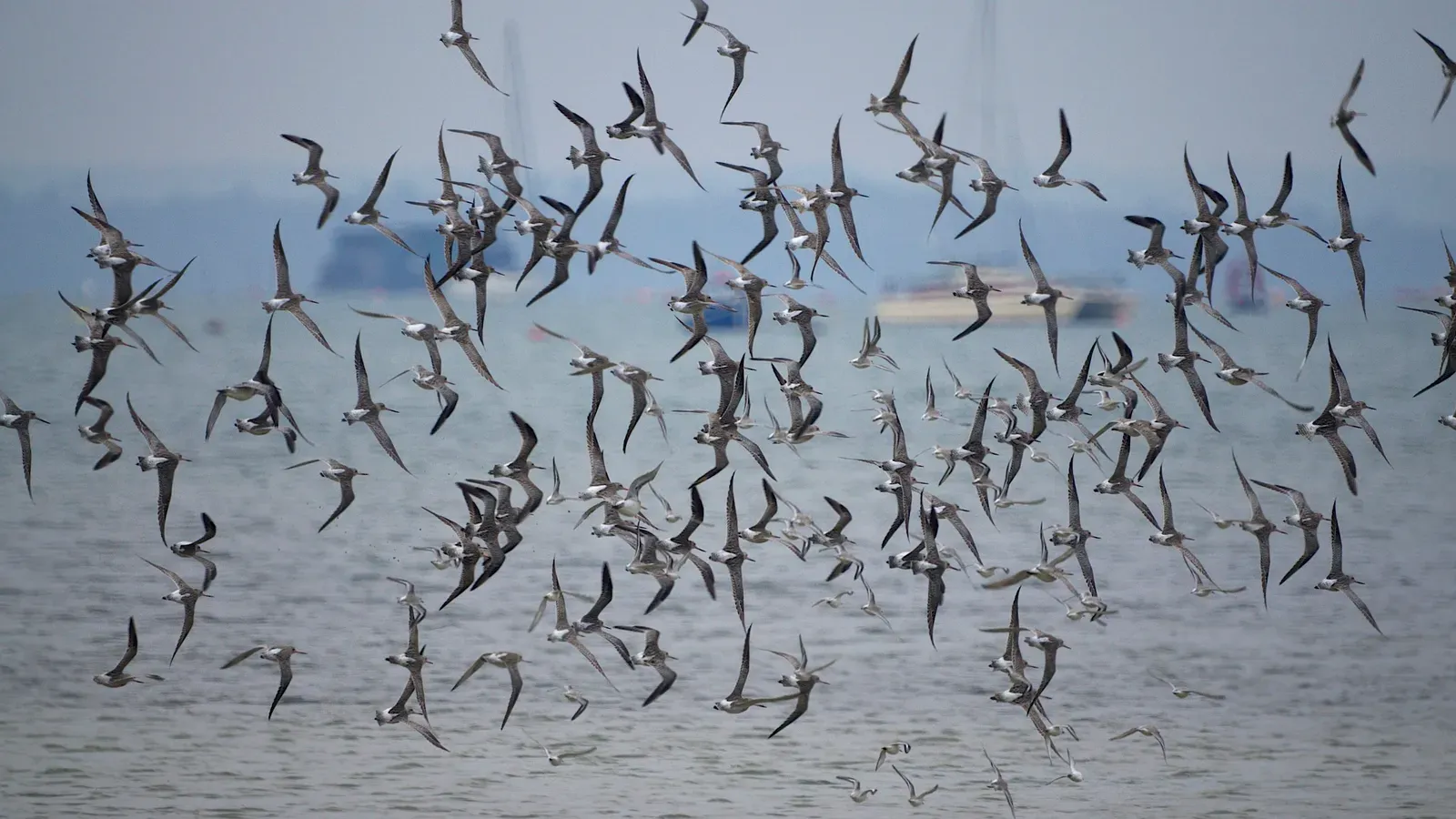
Most people assume even the toughest birds need to stop and rest somewhere along a long journey. The bar-tailed godwit exists specifically to prove that assumption wrong. This medium-sized shorebird pulls off what might be the single most absurd migration feat on the planet: a non-stop, transoceanic flight covering 7,000 to 8,000 miles (11,000-13,000 km) without ever touching down.
One tracked male shattered records by flying from Alaska to New Zealand in about 11 days straight – no island hopping, no floating breaks on the water, just uninterrupted flight over open ocean. To even attempt this, the godwit turns its own body into a flying fuel tank before departure, gorging on food until it nearly doubles its weight.
Its internal organs actually shrink to shed unnecessary weight – the digestive system included – while massive fat reserves build up to take their place. That stored fat, roughly half its total body weight, becomes the high-octane fuel it burns mid-air, for days, without a single refill.
Consider what that actually requires: maintaining an average speed of 35-40 mph (56-64 km/h) for over a week, crossing an empty stretch of Pacific in total darkness, through storms, with no landmarks to check position against. By the time it lands, the bird may have burned through so much stored energy that it arrives having lost close to half its body weight. It’s a marathon that never stops, run over an ocean that offers no second chances.
#3 – Humpback Whales: Giants Running Marine Ultra-Marathons
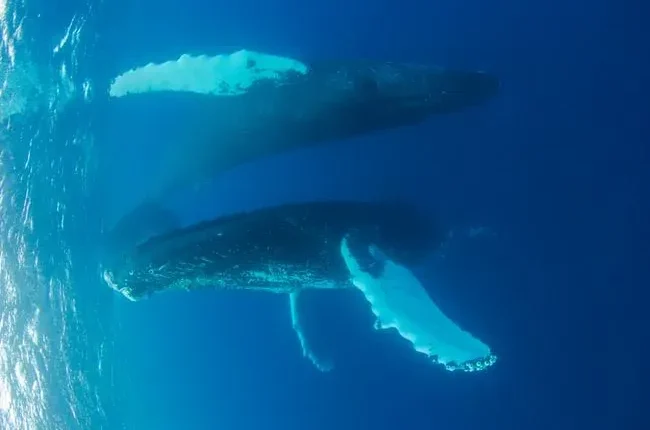
Most people assume enormous animals must be slow, lazy movers that barely leave their home patch. Humpback whales make that assumption look ridiculous. These 40-to-50-foot giants migrate between warm, tropical breeding grounds and cold, nutrient-rich polar feeding areas, and the distances involved are no joke.
In the Pacific, some populations travel between Hawaii and Alaska, covering roughly 3,000 miles (4,800 km) one way, sometimes more. Other populations swim between Central or South America and Antarctica, pushing total journeys past 5,000 miles (8,000+ km) each way. And they do it while barely eating.
Humpbacks cruise at a modest 3 to 5 mph, but they hold that pace for weeks at a stretch, living almost entirely off blubber they packed on during the feeding season. Some individuals lose up to a third of their body weight across the combined breeding-and-migration stretch. Their routes, oddly enough, are remarkably precise – tagging studies show many whales following nearly identical tracks year after year, like underwater highways carved by memory.
Maybe the most humbling detail: mothers migrate with calves born only weeks earlier, expecting a newborn to complete a multi-thousand-mile swim before it’s even had time to build real strength. Next time a long-haul flight feels unbearable, remember there’s a baby whale out there doing something far harder, entirely under its own power, on an empty stomach.
#4 – Monarch Butterflies: A Multi-Generational Road Trip Across a Continent
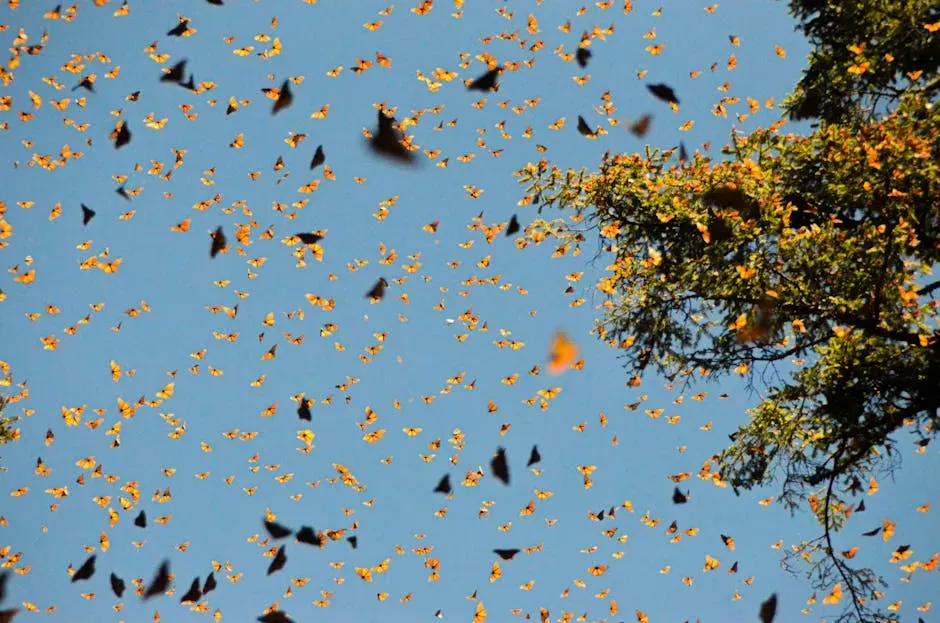
Ask most people how far a butterfly can fly and you’ll get guesses in the single digits, maybe a hundred miles on a wild day. Monarch butterflies quietly cross an entire continent. Every autumn, eastern North American monarchs travel from as far north as Canada down to a small cluster of high-elevation forests in central Mexico – a journey of up to 3,000 miles (4,800 km) for an insect that weighs about half a gram.
Here’s the twist that makes it genuinely strange: no single butterfly makes the full round trip. The journey is split across multiple generations, a relay race that most people never learn about past elementary school. Generation one hatches in Mexico, flies north, breeds, and dies. Generations two and three continue the push northward through the U.S. and southern Canada, each living just a few weeks.
Quick Compare: The Generational Relay
- Generation 1: hatches in Mexico, flies north, breeds and dies within weeks
- Generations 2 & 3: push further north through the U.S. and Canada, living just a few weeks each
- Supergeneration: delays breeding, lives up to 8 months, and flies the entire way back to Mexico alone
Then something remarkable happens – a “supergeneration” emerges. These monarchs delay breeding entirely, live up to eight months instead of a few weeks, and fly the entire way back to Mexico on their own. They navigate to forests they have never personally visited, using a mix of internal clocks, the position of the sun, and possibly Earth’s magnetic field to stay oriented.
Somehow, they arrive at the exact same clusters of oyamel fir trees their great-great-grandparents used the year before. While most road-trippers think a 10-hour drive is brutal, an insect with paper-thin wings quietly crosses a dozen states, guided by a map it inherited rather than learned.
#5 – Sooty Shearwater: The “Global Commuter” That Circles Oceans
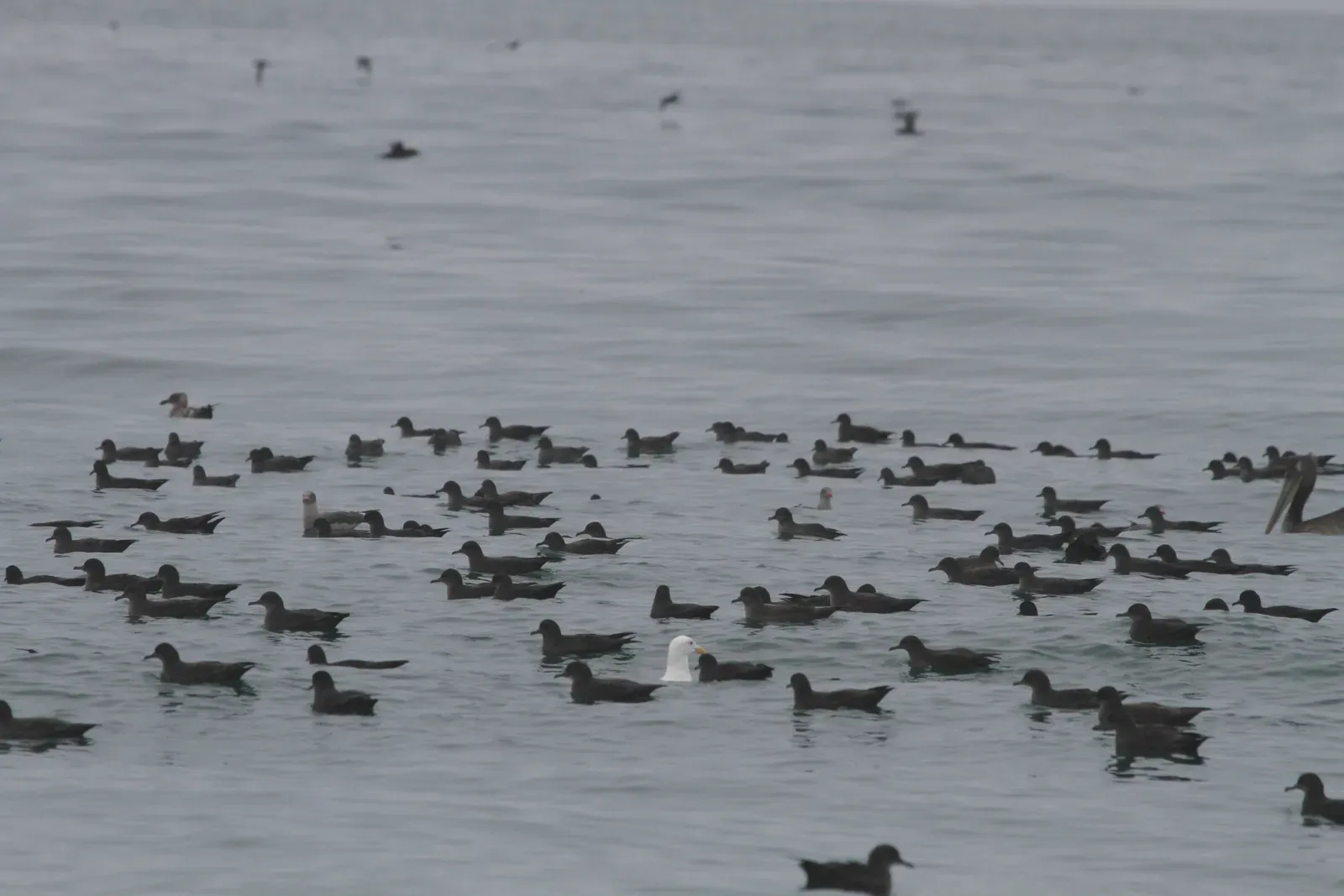
If frequent-flyer programs existed for birds, the sooty shearwater would be platinum for life without even trying. This seabird, routinely overlooked in favor of flashier species, quietly pulls off one of the most extreme annual migrations ever recorded. Tagging studies suggest individuals may cover 40,000 to 46,000 miles (64,000-74,000 km) in a single year.
Instead of a simple back-and-forth commute, these birds trace a giant figure-eight across the entire globe. They breed around New Zealand, Chile, and the Falklands, then fan out across the northern oceans to feed, sometimes reaching waters off Japan, Alaska, and California. By the time they return south, some individuals have essentially circled the Pacific Ocean.
The secret is a flight style called dynamic soaring – using wind gradients just above the wave tops to gain speed and conserve energy, swooping up into the wind, then sliding downwind in long, barely-flapping glides. It’s less flying and more like the bird has quietly figured out how to hack physics itself.
Minimal wingbeats, constant micro-adjustments to wind direction, and travel speeds that can exceed 40-50 mph when conditions line up. Your most hardcore traveling friend, the one who brags about frequent-flyer status, isn’t coming anywhere close to those annual miles.
#6 – Caribou: Land Mammals That Outwalk Almost Everything
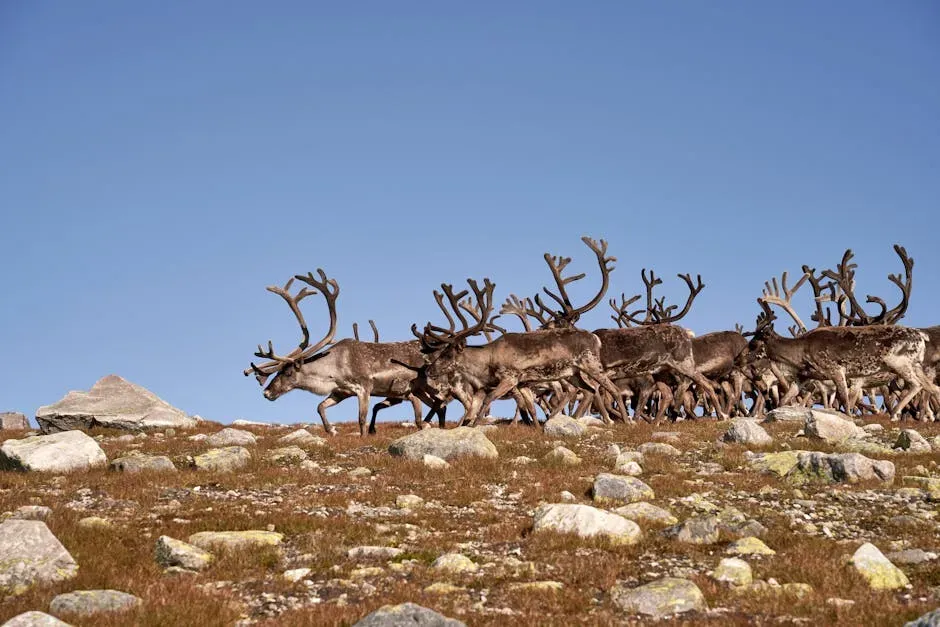
When people picture epic land migrations, they usually think of wildebeest thundering across the Serengeti. Impressive, sure – but in terms of sheer annual distance, caribou quietly take the crown. In Arctic and sub-Arctic regions, some herds migrate between winter forests and summer tundra, covering up to 3,000 to 3,700 miles (4,800-6,000 km) every single year.
This isn’t a one-time stunt. It’s an annual lifestyle, repeated decade after decade, and over a caribou’s lifetime the total distance can rival some of the long-distance birds on this list – just covered at a much slower, grinding pace. Their movement is driven by a handful of brutal, non-negotiable realities: chasing emerging plants north as the tundra greens up, escaping biting insect swarms by seeking colder, windier ground in summer, then retreating into forests come winter where snow is shallower and lichen is reachable.
What’s quietly shocking is how the entire herd moves as one. Satellite data show hundreds of thousands of animals shifting in coordinated waves across hundreds of miles of open land, like a single organism reading the landscape. Calves just days old are expected to keep pace, sometimes covering dozens of miles almost immediately after birth just to stay ahead of predators and clouds of mosquitoes.
It isn’t dramatic in the way a single, jaw-dropping leap would be. It’s relentless – step after step, across a landscape that spends half the year actively trying to kill everything on it.
#7 – Leatherback Sea Turtles: Ancient Navigators of Entire Oceans
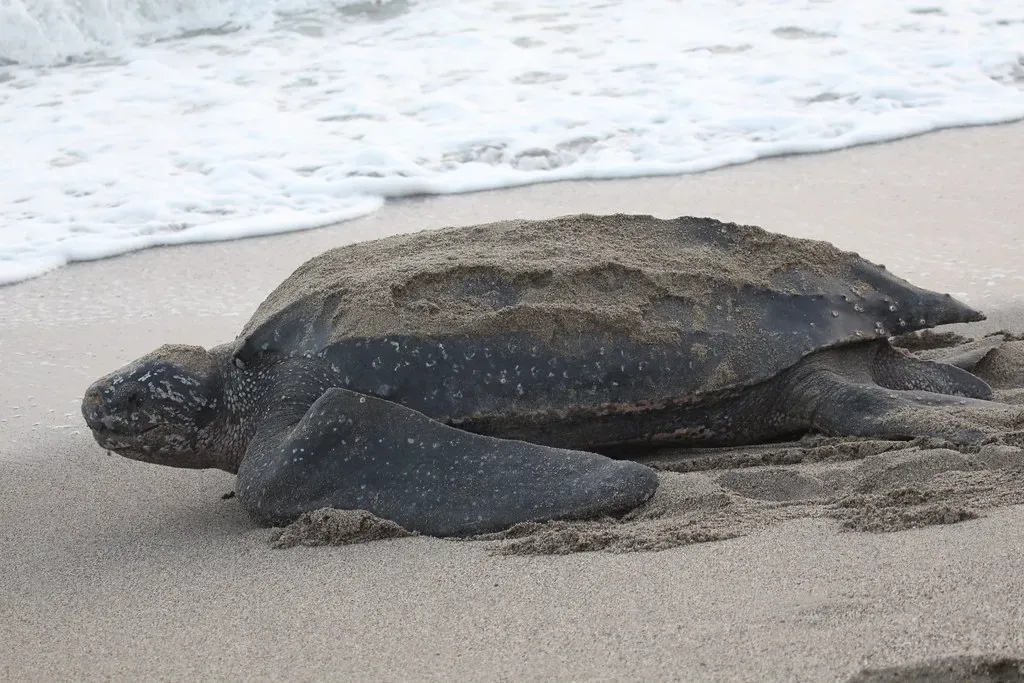
Sea turtles look slow and half-asleep near the shoreline, which tricks most people into badly underestimating them. The leatherback exists to correct that impression. These are the largest living turtles on Earth, sometimes exceeding 6 feet (2 m) and 1,000 pounds (450 kg) – and they hold the distance record for any sea turtle species.
Tagged leatherbacks have been documented traveling more than 10,000 to 12,000 miles (16,000-19,000 km) round trip, crossing entire ocean basins between nesting beaches and distant feeding grounds. Unlike other sea turtles, leatherbacks specialize in jellyfish and other gelatinous prey found in cold, nutrient-dense waters, which means their commute often runs from tropical nesting beaches straight into sub-Arctic or temperate seas.
Worth Knowing
- Largest living turtle species on Earth, sometimes over 6 ft and 1,000 lbs
- Round-trip migrations exceeding 10,000-12,000 miles between beaches and feeding grounds
- Capable of diving deeper than 3,000 feet in search of prey
- Specializes in jellyfish, often traveling from tropical beaches into cold sub-Arctic waters
They can dive more than 3,000 feet (1,000 m) down, tolerating brutal cold thanks to thick fat layers and an unusual, oil-rich shell structure that helps regulate body temperature. It’s essentially a tropical-to-polar commute that would kill most reptiles outright.
The navigation is where things get genuinely eerie. Hatchlings crawl to the sea, vanish for years, then somehow return as adults to the same broad region where they hatched. Evidence points to Earth’s magnetic field acting like a built-in map, layered with ocean currents and chemical cues. Nobody has the full picture yet, but one thing is clear: for an animal that spends most of its life never seeing the seafloor, it always seems to know exactly where it’s going.
#8 – Globe Skimmer Dragonflies: Tiny Insects, Transoceanic Journeys
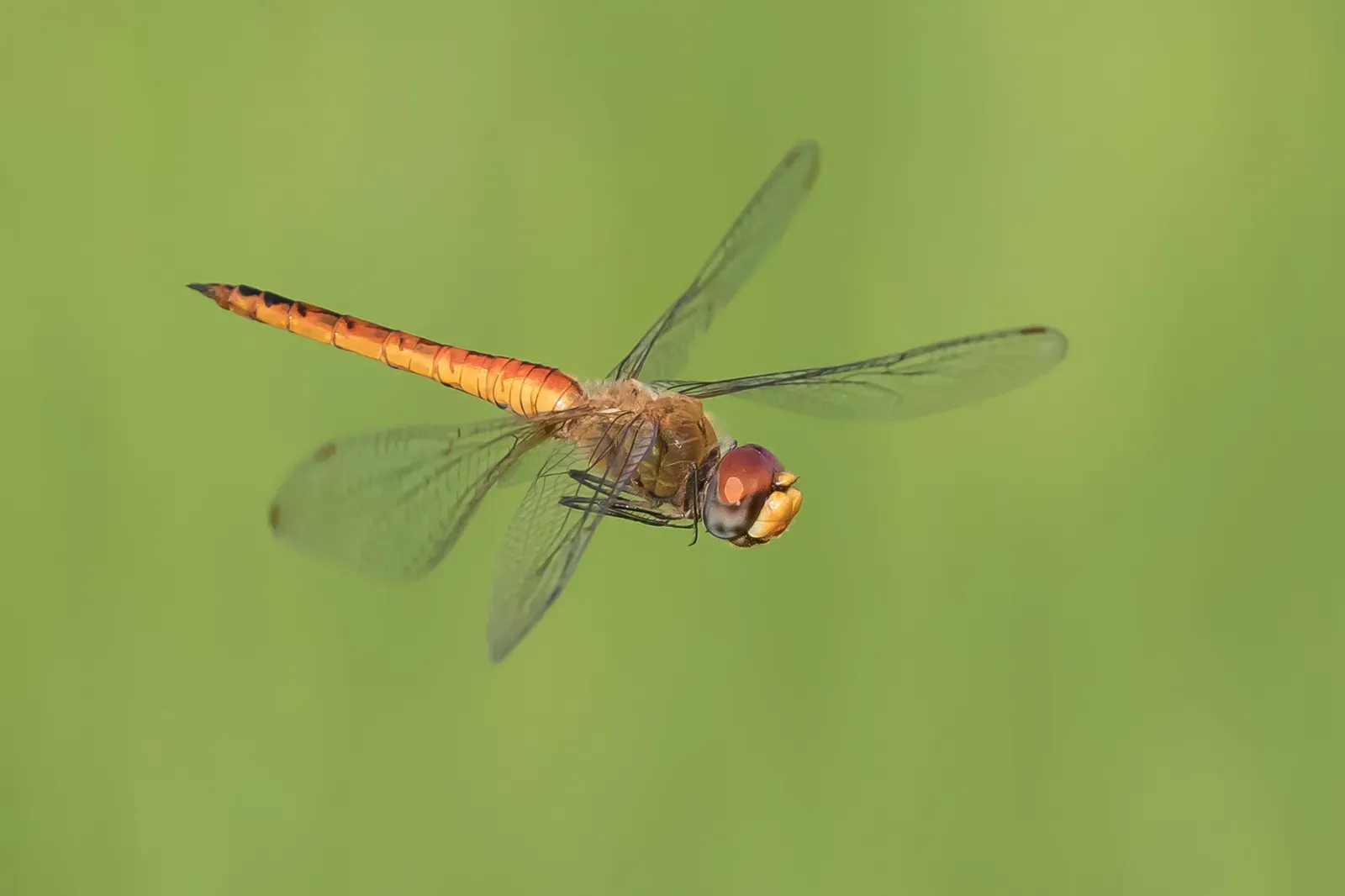
If you assume insects are too fragile for serious long-distance travel, the globe skimmer dragonfly will happily embarrass that assumption. Also known as Pantala flavescens, this small, golden dragonfly holds the record for the longest known insect migration on the planet – and it isn’t even a simple straight line.
Researchers tracking populations around the Indian Ocean uncovered a multi-stage, multi-generation route that can total 9,000 to 11,000 miles (14,000-18,000 km) or more, including long stretches over open water. Globe skimmers breed in temporary freshwater pools formed by monsoon rains, and as those pools dry up, adults ride high-altitude winds toward new regions where rains are just starting – a journey that appears to span Africa, the Middle East, India, and out toward the Maldives and beyond.
One especially wild detail: these dragonflies have been documented more than 2,000 miles offshore, nowhere near land, riding wind currents at serious altitude. This isn’t random wandering – their movements are tightly synced to seasonal rain patterns, which strongly suggests a deliberate, evolved migration strategy rather than dumb luck.
Some entomologists argue this is the single most impressive long-distance feat pulled off by any insect on Earth, arguably overshadowing even the monarch butterfly. It just happens to get almost no popular attention, probably because nobody expects a half-gram predator with gossamer wings to be out-traveling most large animals alive today.
#9 – European Eel: The Lost Route to the Sargasso Sea
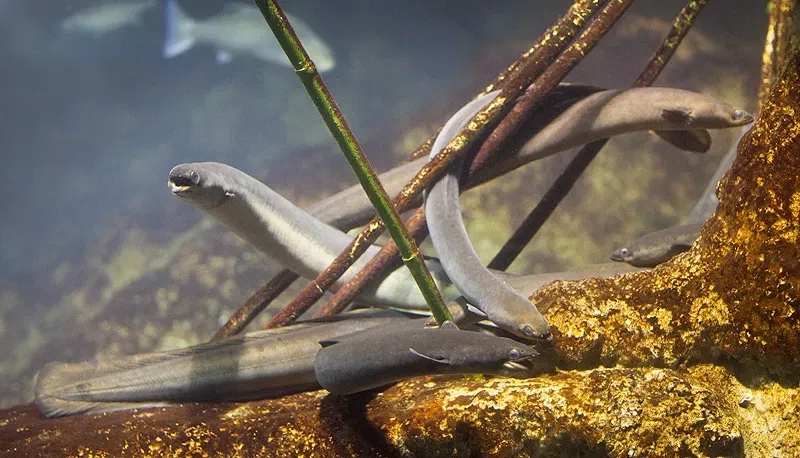
Of every migration on this list, the European eel’s story might be the strangest and least understood. These eels begin life as transparent, leaf-shaped larvae in the Sargasso Sea, a mysterious region of the North Atlantic defined by ocean currents rather than any actual coastline. From there, they drift and swim thousands of miles toward Europe and North Africa.
After transforming into small “glass eels,” they push into rivers, lakes, and estuaries, sometimes traveling hundreds of additional miles inland. Then comes the twist: they simply stay there, maturing quietly in freshwater or coastal habitats for anywhere from 5 to 20 years.
Eventually, in what looks almost like a coordinated signal firing across an entire population, they transform again – turning silver, developing larger eyes – and begin the long journey home. They head back downstream into the Atlantic and navigate thousands of miles back to the exact region they started from, to spawn once, and die.
Despite decades of research, nobody has ever directly observed European eels spawning in the wild. We know the general area from larval distribution data and some tagging efforts, but the precise spawning grounds and behavior remain one of marine biology’s most fascinating unsolved mysteries. In raw numbers, some individuals cover 4,000 to 6,000 miles (6,400-9,600 km) between inland habitats and the Sargasso and back – yet ask an average person to name a long-distance migrator, and “eel” almost never comes up.
#10 – Wildebeest: The Endless Loop Across the Serengeti
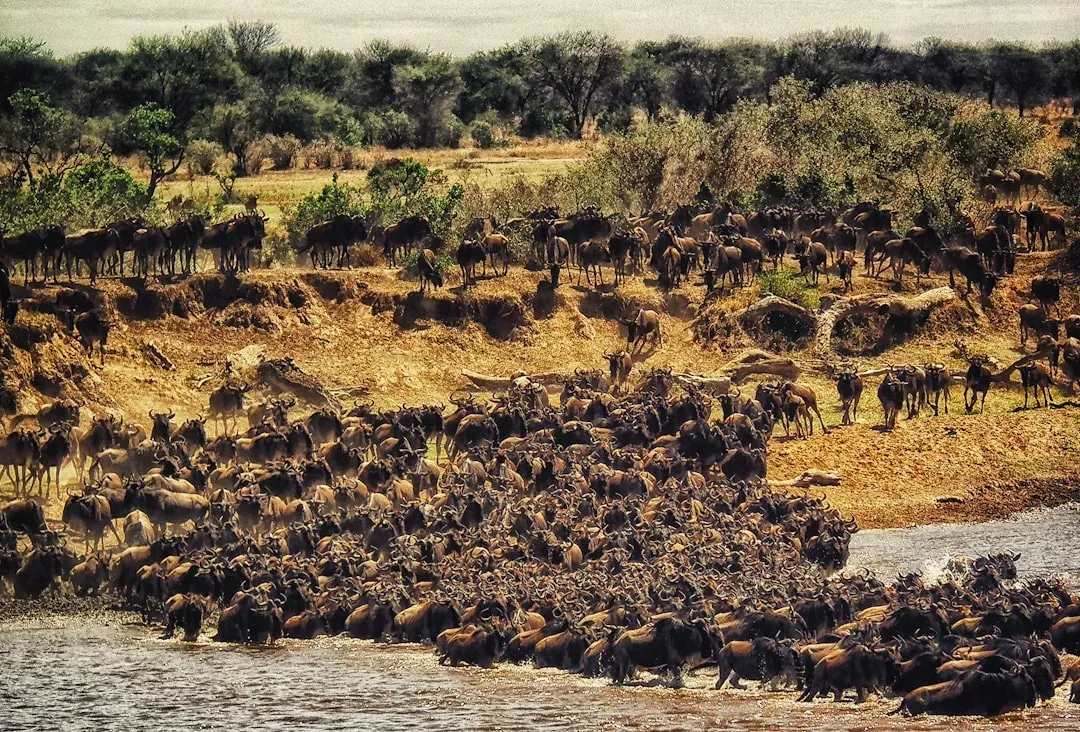
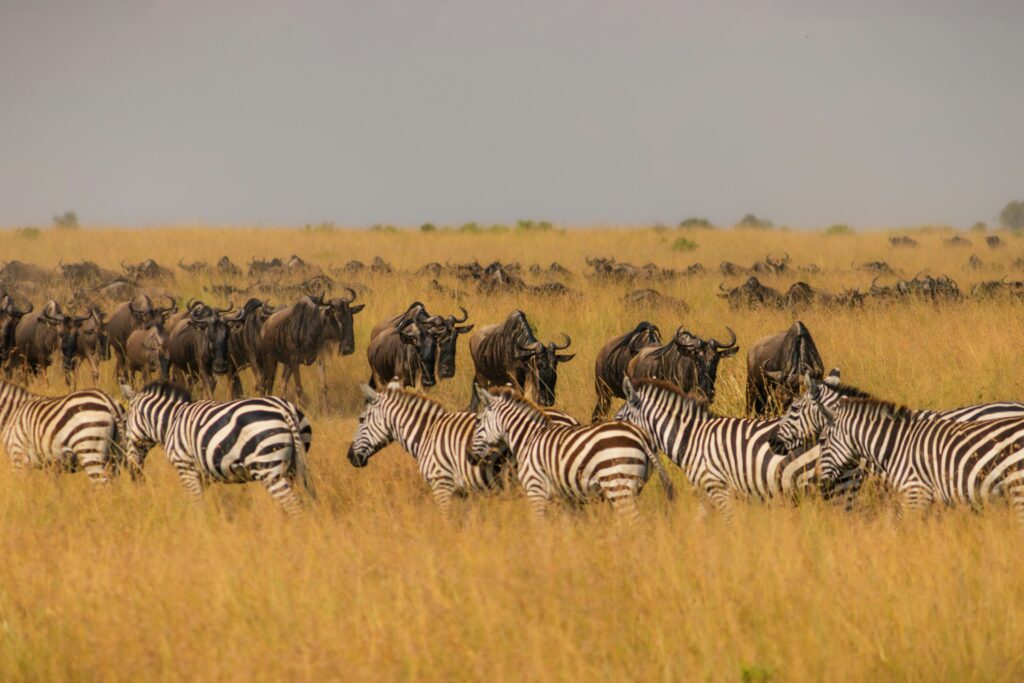
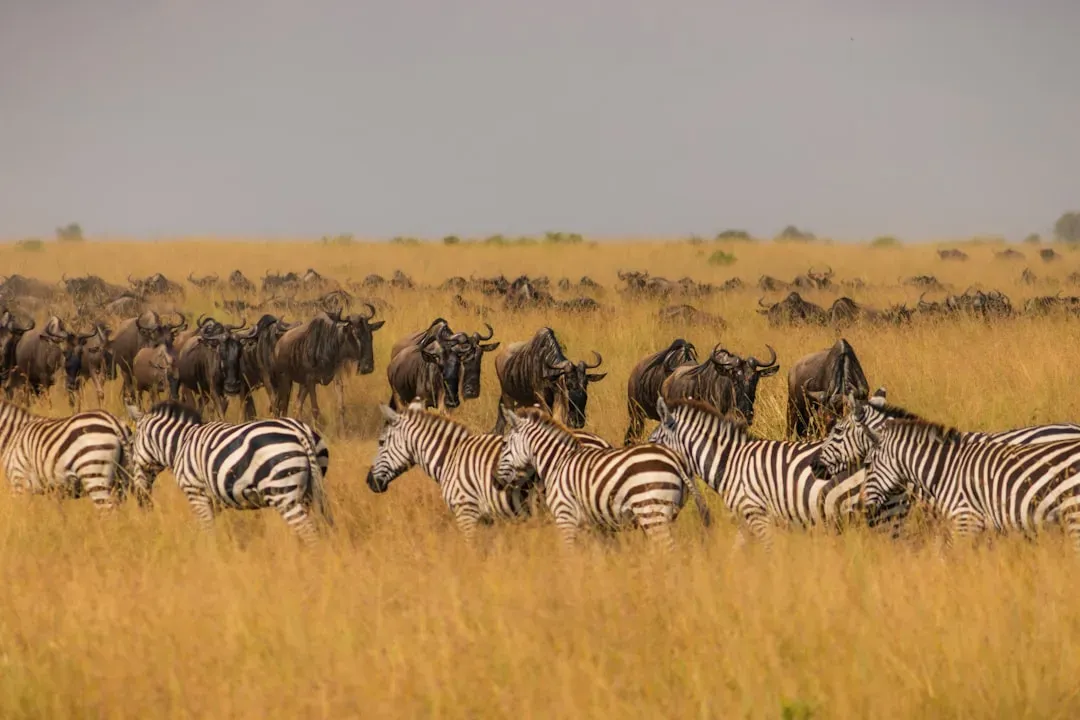
Everyone’s seen wildebeest on a nature documentary, river crossing and all, but most people seriously underestimate just how relentless their movement really is. In the Serengeti-Mara ecosystem of East Africa, around 1.2 million wildebeest constantly cycle through a massive loop across Tanzania and Kenya, chasing rainfall and fresh grass wherever it appears.
The exact route shifts from year to year, but the total annual distance can reach 800 to 1,600 miles (1,300-2,600 km), depending on local conditions. That number sounds almost modest next to some of the oceanic journeys on this list – until you factor in the context these animals are moving through. They’re crossing crocodile-infested rivers like the Mara and the Grumeti, calving en masse on wide-open plains while predators watch and wait, and surviving droughts, disease, and a growing number of human-made barriers along the way.
At a Glance
- Herd size: roughly 1.2 million wildebeest on the move
- Annual loop distance: 800-1,600 miles, shifting year to year with rainfall
- Major obstacles: the Mara and Grumeti river crossings, plus predators and drought
- One of the last large, fully intact land migrations still functioning on Earth
What most people miss is that wildebeest aren’t just going back and forth on a schedule – they’re almost always moving. It isn’t a single trip but a nearly continuous search for new growth, driven entirely by highly localized rainfall patterns that can shift without warning. One badly timed movement can mean mass starvation for thousands of animals at once.
There’s a somewhat controversial opinion floating around among conservationists: while tourists romanticize the dramatic river crossings, the real miracle is simply that this migration still exists at all. This is one of the last large, fully intact land migrations left on Earth, and a poorly placed fence or road could collapse the entire system.
#11 – Sockeye Salmon: Fighting Gravity for Hundreds of Miles
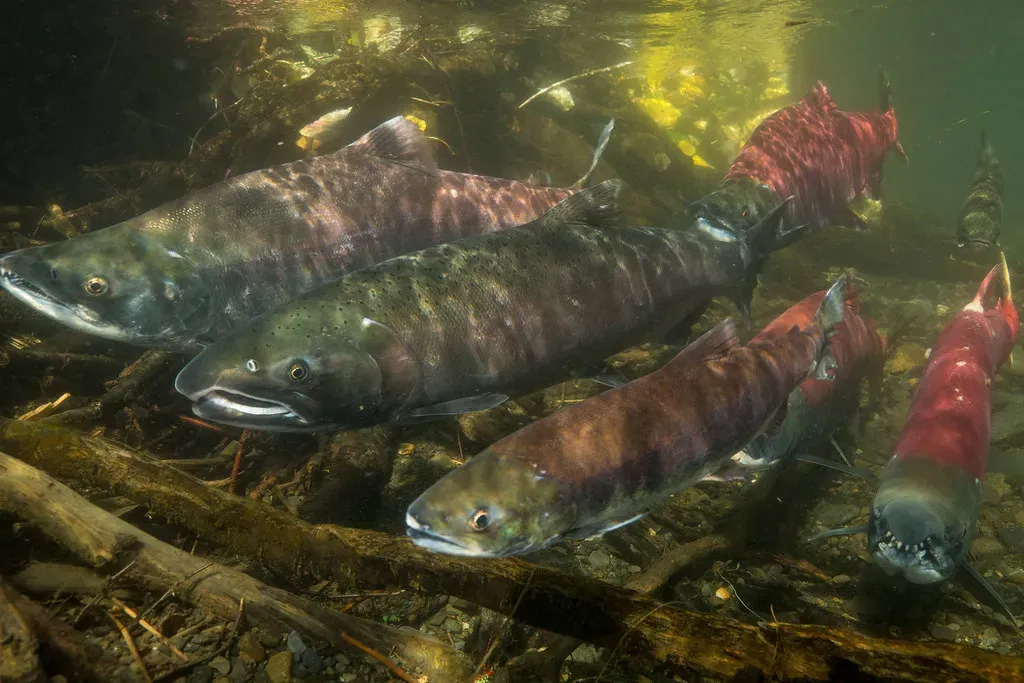
Fish don’t get much respect in migration conversations, but sockeye salmon might be some of the most stubborn, determined travelers on the planet. Born in freshwater rivers or lakes, juveniles migrate downstream to the ocean, sometimes covering hundreds of miles just to reach saltwater for the first time in their lives.
They then spend one to four years at sea, roaming widely across the North Pacific and racking up thousands of miles while they feed and grow. When it’s finally time to spawn, something remarkable kicks in: they turn around and head back to almost the exact stream where they hatched, guided by a memory that seems almost impossibly precise.
Depending on the river system, adults may travel hundreds of miles inland against strong currents, up steep gradients, over churning rapids, and sometimes up human-made fish ladders built specifically to help them survive dam infrastructure. They do all of this while not feeding at all, running entirely on stored energy reserves. Some upriver journeys, like those in the Fraser or Columbia river systems, can exceed 900 to 1,000 miles (1,450-1,600 km) of upstream travel – not gliding with the current, but fighting gravity and physics with every single push forward.
The navigation puzzle is still being untangled by researchers, but we know salmon imprint on chemical cues – essentially the unique “scent” of their home watershed – and likely use the sun and Earth’s magnetic field while out in open ocean. Transplant young salmon to a new stream, and they’ll often return to that new location instead of the original one. In human terms, it’s the equivalent of running an uphill ultra-marathon with zero food, just to die in the town where you were born.
#12 – Gray Whales: Coastal Commuters That Never Really Stop
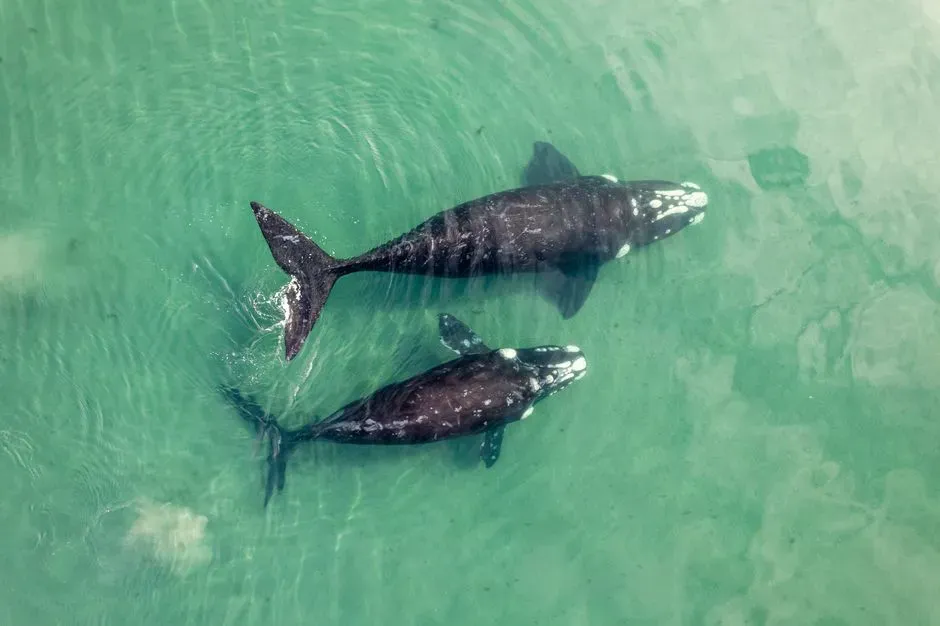
Gray whales don’t get the same spotlight as humpbacks, but in terms of classic, straight-line migration, they’re some of the hardest-working mammals alive. The eastern North Pacific population travels between summer feeding grounds in the Bering and Chukchi Seas and winter calving lagoons in Baja California, Mexico – roughly 5,000 to 6,800 miles (8,000-11,000 km) one way, making it one of the longest migrations of any mammal on Earth.
Round trip, some individuals log 10,000 to 13,600 miles (16,000-22,000 km) in a single year. Unlike humpbacks, which spend much of their journey in open ocean, gray whales hug coastlines closely, which gives researchers (and whale-watchers) incredible visibility into their movements. It also means they run a constant gauntlet: predation pressure from orcas, ship strikes, entanglement in fishing gear, noise pollution, and rapidly changing Arctic ice cover that’s scrambling their prey supply.
They’re bottom-feeders by trade, sucking in sediment and filtering out tiny crustaceans, gorging and building thick blubber reserves during their short Arctic feeding season before the long haul south. Some females complete this entire trek while pregnant, give birth in the calving lagoons, then nurse a newborn calf on the return trip north – one of the most demanding reproductive schedules of any mammal.
In recent years, unusual mortality events among gray whales have raised hard questions about whether migrations this long are still sustainable under rapid ocean change. Many scientists now treat gray whales as a kind of living climate barometer: if this migration starts collapsing, it’s a blunt, unmistakable sign that something further down the food chain has already gone wrong.
#13 – Bar-Headed Geese: High-Altitude Flights Over the “Roof of the World”
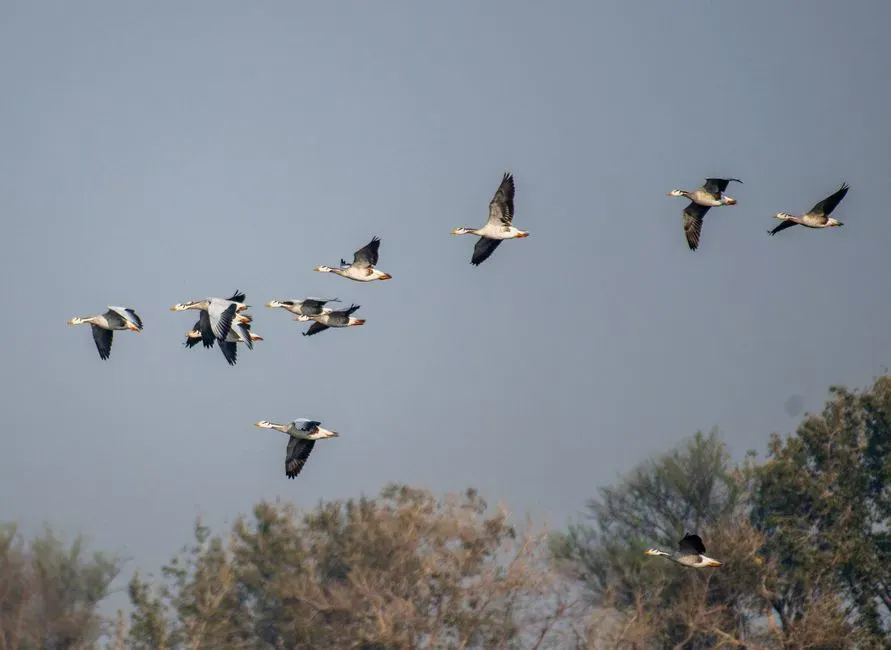
Distance is one thing. Distance combined with extreme altitude is an entirely different game, and bar-headed geese chose to play it on hard mode. These geese breed in Central Asia and winter in the Indian subcontinent, which means getting there requires crossing the Himalayas – including airspace above elevations that rival Mount Everest.
Their point-to-point distances, often 1,000 to 2,000-plus miles (1,600-3,200+ km), aren’t record-breaking on their own. It’s the conditions that make the flight outrageous: altitudes above 20,000 feet (6,000-plus meters), where oxygen is roughly half of what it is at sea level, temperatures plunging far below freezing, and air so thin that generating lift becomes brutally expensive in terms of energy.
Physiologically, these birds are borderline science fiction. Their hemoglobin binds oxygen far more efficiently than most birds’, letting them function in conditions that would leave other species gasping. They can hyperventilate at those altitudes without suffering the dangerous side effects that would knock a human unconscious, and they often cross major Himalayan passes in a matter of hours rather than days, timing departures around favorable wind windows.
Why It Stands Out
- Crosses Himalayan airspace above 20,000 feet, rivaling Everest’s elevation
- Functions on roughly half the oxygen available at sea level
- Specialized hemoglobin binds oxygen more efficiently than most birds’
- Often flies at night directly into headwinds rather than coasting on jet streams
Contrary to early assumptions, they don’t simply hitch a ride on high-altitude jet streams. Tracking data shows them sometimes flying at night, directly into headwinds, actively powering their way across instead of passively coasting. Distance alone doesn’t tell their story – it’s the vertical component, migrating through an atmosphere that would make most animals black out, that makes their journey nearly unbelievable.
The Bottom Line
Animal migration usually gets filed under “cute nature facts,” and honestly, that’s an insult to what’s actually happening. These are brutal, high-stakes survival strategies that routinely shatter human intuition about distance, endurance, and navigation – and most of us walk around never knowing any of it is happening over our heads, under our oceans, or across our own backyards.
A 4-ounce tern outflies commercial airliners in yearly mileage. A shorebird crosses the entire Pacific without landing once. A half-gram dragonfly rides the wind across open ocean that most cargo ships would think twice about. Meanwhile whales, caribou, turtles, and eels quietly stitch continents and seas together on routes that are, in some cases, older than human civilization itself.
Here’s the opinion part: we should be far more alarmed than we currently are that so many of these migrations are one bad human decision away from breaking permanently. A fence stops caribou. A warming ocean starves whales and confuses salmon. A cleared forest scrambles a monarch’s entire multi-generational memory. Skyglow and noise pollution interfere with birds that have navigated by starlight since long before we existed as a species. These aren’t backup systems nature can casually rebuild – most took millions of years to fine-tune, and once broken, they don’t come back on any human timeline.
If these journeys collapse, we’re not just losing a nice photo opportunity for a nature documentary. We’re losing what amounts to the planet’s circulatory system – the actual physical process that moves nutrients, energy, and life between hemispheres every single year. That’s worth more concern than it currently gets.