Picture a cave wall the way most people do: one group of prehistoric humans, one afternoon, one image, done forever. That mental picture is almost completely wrong. Scientists using uranium-series dating and radiocarbon analysis keep discovering that many of the world’s most famous painted caves were visited again and again – sometimes by cultures separated by 10,000 years or more who had absolutely no idea anyone had ever stood in that same spot before them.
These walls aren’t single paintings. They’re something closer to geological strata, layer stacked on layer, each one a different hand from a different era leaving its mark on top of a stranger’s work. Here are twelve places where the paint itself keeps a record of human return that stretches across almost unimaginable stretches of time.
#1 – Lascaux Cave, France
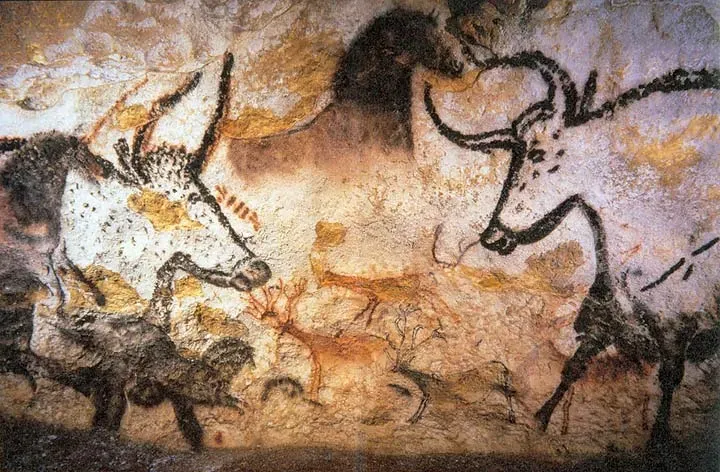
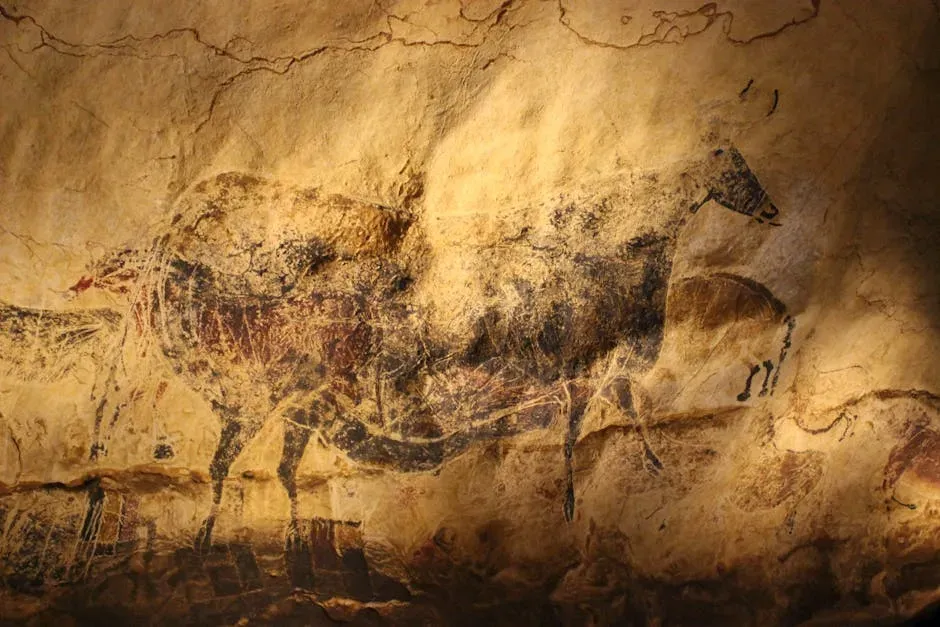
The Hall of Bulls at Lascaux looks like one unified masterpiece, but researchers now believe it wasn’t painted in a single sitting by a single artist.
The Hall of Bulls features prehistoric animals including bulls, horses, aurochs, and deer, presented in different degrees of detail and size, suggesting the drawing was created by multiple people, potentially over an extended period of time. That inconsistency in scale and technique is a dead giveaway that different hands, working in different eras, contributed to the same wall.
Most people don’t realize Lascaux isn’t one gallery – it’s several. The cave features many different paintings across several chambers, and each chamber shows its own stylistic quirks. Some figures are crude outlines; others are extraordinarily refined, layered with shading techniques that took real mastery. That gap in skill level is exactly the kind of evidence that tips off researchers to multiple painting generations – and it’s mild compared to what turns up next door at Font-de-Gaume.
#2 – Font-de-Gaume Cave, France
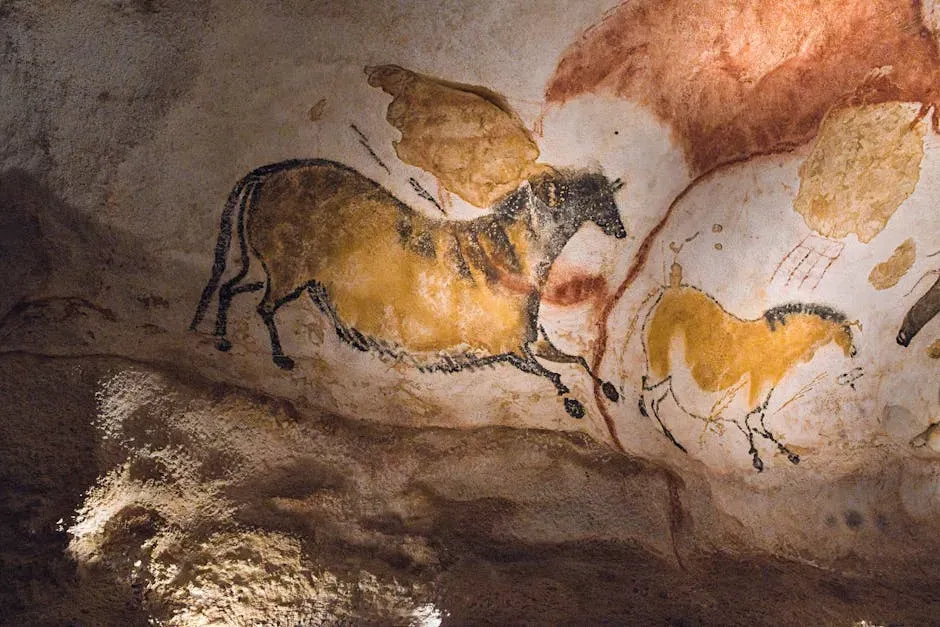
For over a century, nobody could actually date the black paint at Font-de-Gaume because scientists assumed it was pure mineral pigment with no organic material to test.
That changed recently. Scientists discovered charcoal inside black pigments once thought to contain only minerals, allowing them to use radiocarbon dating. The results were stunning: a bison was painted about 13,000 years ago, while sections of a mask-like figure were added during several widely separated periods.
Here’s the truly wild part. The mask image may contain elements created at very different times, and rather than being the work of a single artist during one visit, it may preserve multiple episodes of artistic activity separated by thousands of years. Separate research on the cave’s technical layers found something similar: the creation periods of the art at Font-de-Gaume are mainly attributed to the Magdalenian period, but likely constitute at least two creation phases rather than one. Someone came back to this wall generations after the original artist died, and touched the same figure decades or centuries after that hand went cold. Pech Merle takes that same idea and multiplies it by five.
#3 – Pech Merle Cave, France
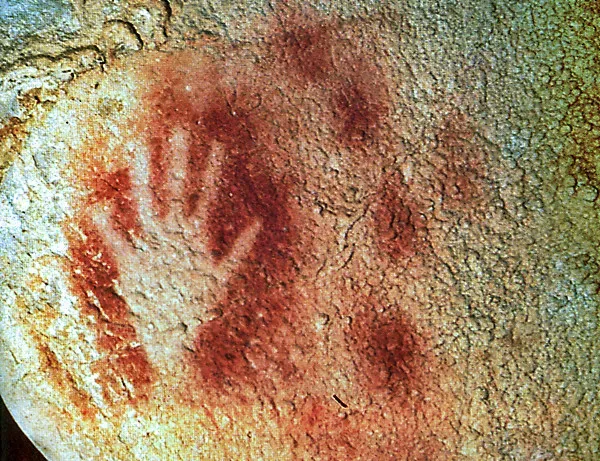
Pech Merle in southern France doesn’t just have layered paintings – it has an entire painted panel that archaeologists have literally broken down into five distinct historical “coats.”
A study of the 25 overlapping black drawings – horses, bison, mammoth, and aurochs – on the “Frise noire” (Black Frieze) of Pech Merle revealed five distinct phases of creation. Five. Not two, not three – five separate visits by different artistic hands, layered onto a single wall like tracing paper stacked on tracing paper.
Archaeologists believe the cave’s decoration unfolded across three broad eras spanning thousands of years: the first two phases occurred during Gravettian and Solutrean art, between about 25,000 and 17,000 BCE, while the third phase occurred around 13,000 BCE, during the Magdalenian period exemplified by Altamira. That’s a working timeline of roughly 12,000 years of people returning to draw on the exact same rock.
At a Glance: Pech Merle’s Five Painting Phases
- Phases 1-2: Gravettian and Solutrean art, roughly 25,000-17,000 BCE
- Phase 3: Magdalenian period, around 13,000 BCE
- 25 overlapping black drawings found on the “Frise noire” alone
- Total span: roughly 12,000 years of repeat visits to one wall
Even that looks modest next to what divers found hidden below the Mediterranean.
#4 – Cosquer Cave, France
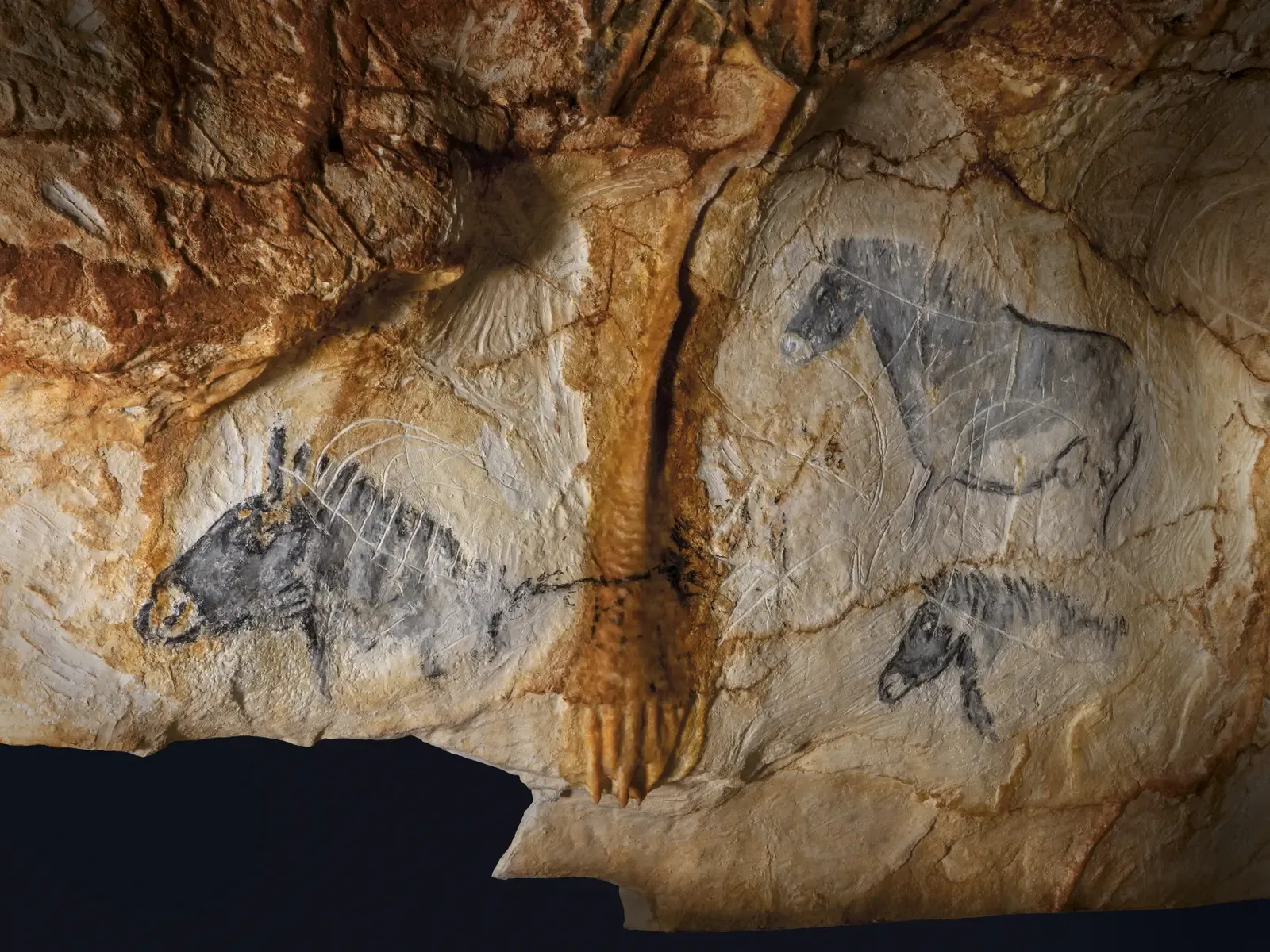
Here’s a cave that literally hides its layered history underwater. Cosquer Cave’s entrance now sits below the Mediterranean, submerged by rising sea levels since the end of the Ice Age, but its interior chambers stayed dry and preserved.
Divers who eventually mapped the cave found two clearly separated painting traditions inside: an older wave of hand stencils and simple markings from the Gravettian period, and a much later wave of finely rendered animals – including penguins and seals rarely seen in European cave art – added thousands of years afterward during the Solutrean period. The gap between those two visits is comparable to the entire span of recorded human civilization.
Most people assume cave art staying “hidden” means it’s untouched – Cosquer proves the opposite. Different groups, separated by an enormous stretch of time, found their way into the same cramped, dangerous passage and added their own mark to what earlier visitors left behind. It’s proof that even sites we now consider impossibly remote were treated as meaningful, repeat-visit locations across deep time. Chauvet, though, is the site that rewrote the entire timeline of cave art skill.
#5 – Chauvet Cave, France
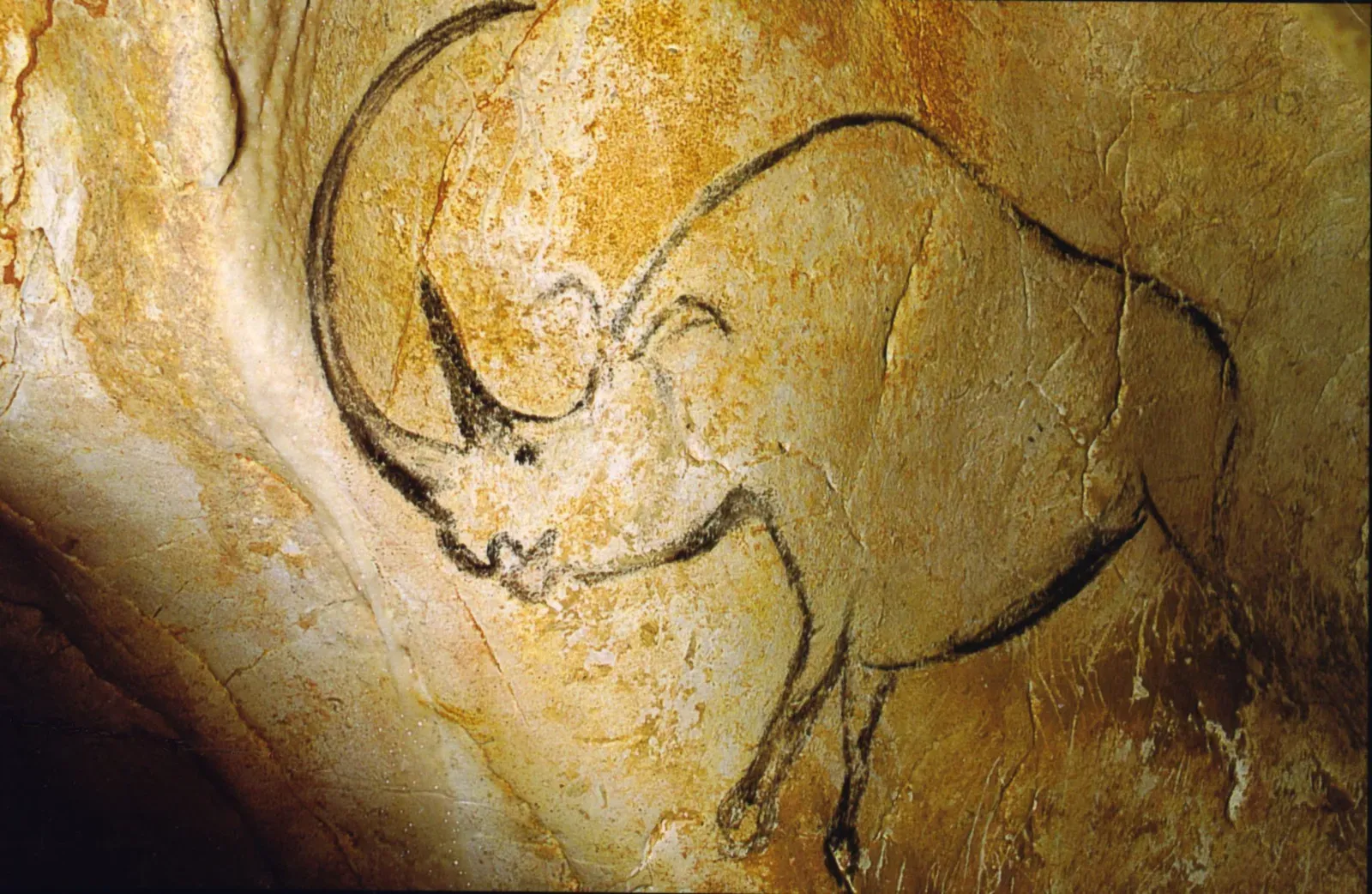
Chauvet is the cave that broke the “cave art gets simpler over time” myth, and its layered occupation history is the reason why.
The Chauvet Cave was occupied by humans during at least two periods, the first from around 37,500 years ago to about 33,500 years ago, and the second from around 32,000 to about 27,000 years ago. Most of the paintings are about 36,000 years old, but another group of humans arrived roughly 5,000 years later and added more paintings, meaning the entire collection of art spans 10,000 years of human history.
The truth nobody expected: many of the paintings were modified repeatedly over thousands of years, possibly explaining confusion about finer paintings that seemed to date earlier than cruder ones. Artists weren’t getting worse – later visitors were adding to, editing, or reworking figures that already existed. Each wave of artistry ended with a rock fall that blocked the cave from human entrance, which is the only reason this layered record survived untouched for tens of thousands of years. Cross into Spain, though, and the layering gets almost absurd.
#6 – El Castillo Cave, Spain
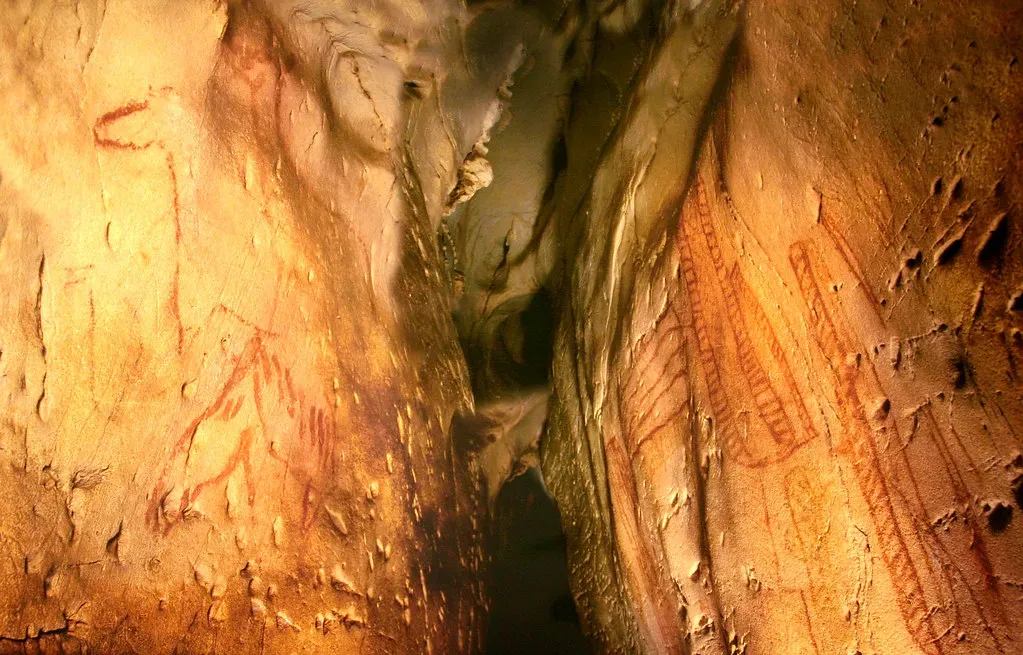
If Chauvet has two layers, El Castillo has what might be the deepest stack of human painting history on the planet.
The world’s oldest known artwork, believed to be at least 40,800 years old, was discovered in the Cave of El Castillo, and that’s just the beginning of the timeline. Researchers have identified an ongoing sequence of styles painted directly on top of each other: black-coloured images assigned to the era of Solutrean art (20,000-15,000 BC), polychrome works belonging to the period of Magdalenian art (15,000-10,000 BC), and El Castillo’s abstract art – including some 60 hand stencils and dozens of large red ochre discs – belonging to the earlier Aurignacian phase (40,000-30,000 BC).
Quick Compare: El Castillo’s Stacked Eras
- Aurignacian (40,000-30,000 BC): hand stencils and large red ochre discs
- Solutrean (20,000-15,000 BC): black-coloured images added on top
- Magdalenian (15,000-10,000 BC): polychrome works layered in next
- Neolithic (4600-4000 BC): pigmented pebbles left in the soil below the panels
Here’s the detail that stunned excavators: archaeological digs in front of the painted panels revealed pigments and pigmented pebbles in soil layers attributed to the Neolithic Square Mouthed Pottery culture, dated 4600-4000 BC. That means people were still interacting with this painted wall over 35,000 years after the very first red disk went up. Just a short walk away, Altamira raises an even messier question about who actually painted what.
#7 – Altamira Cave, Spain
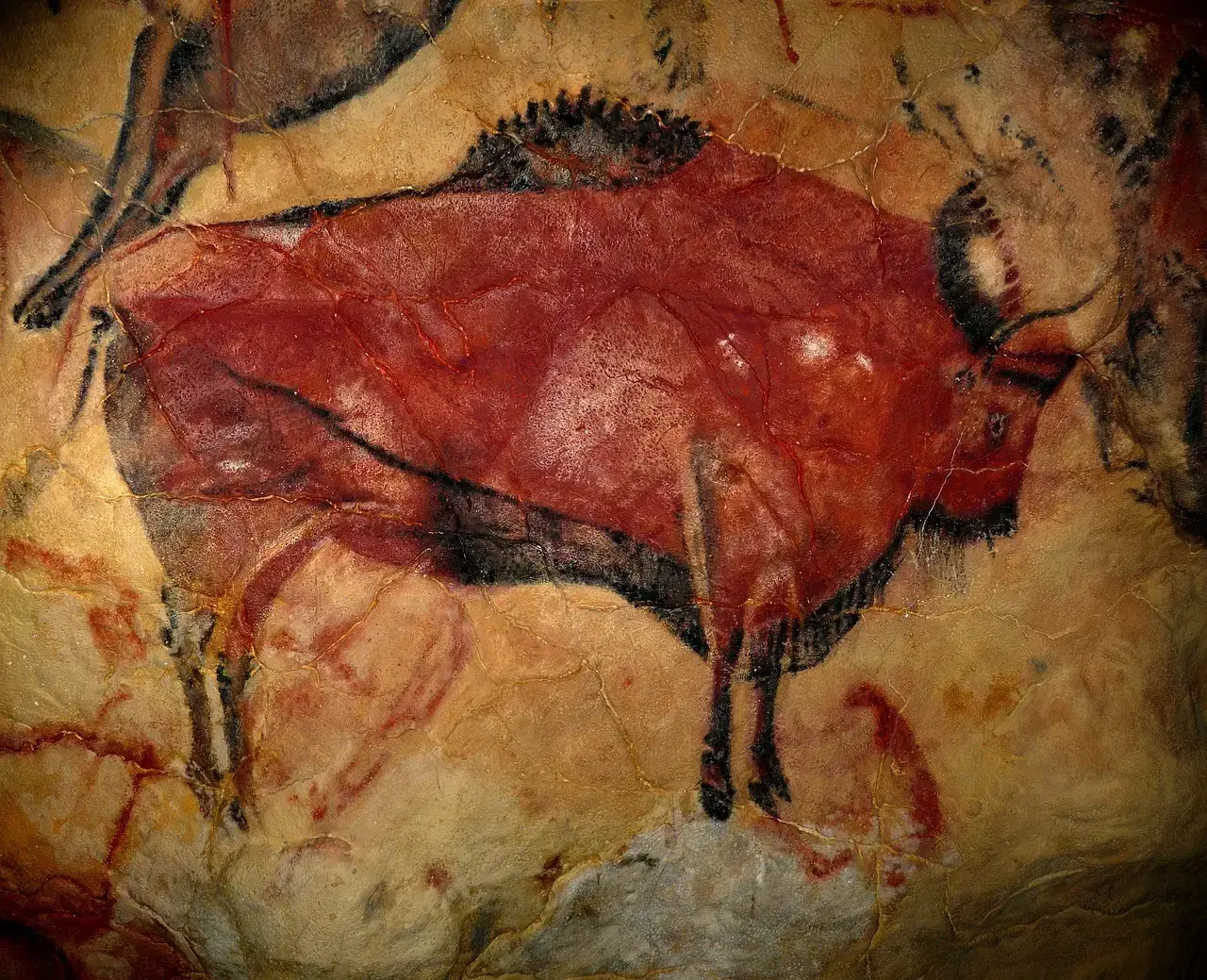
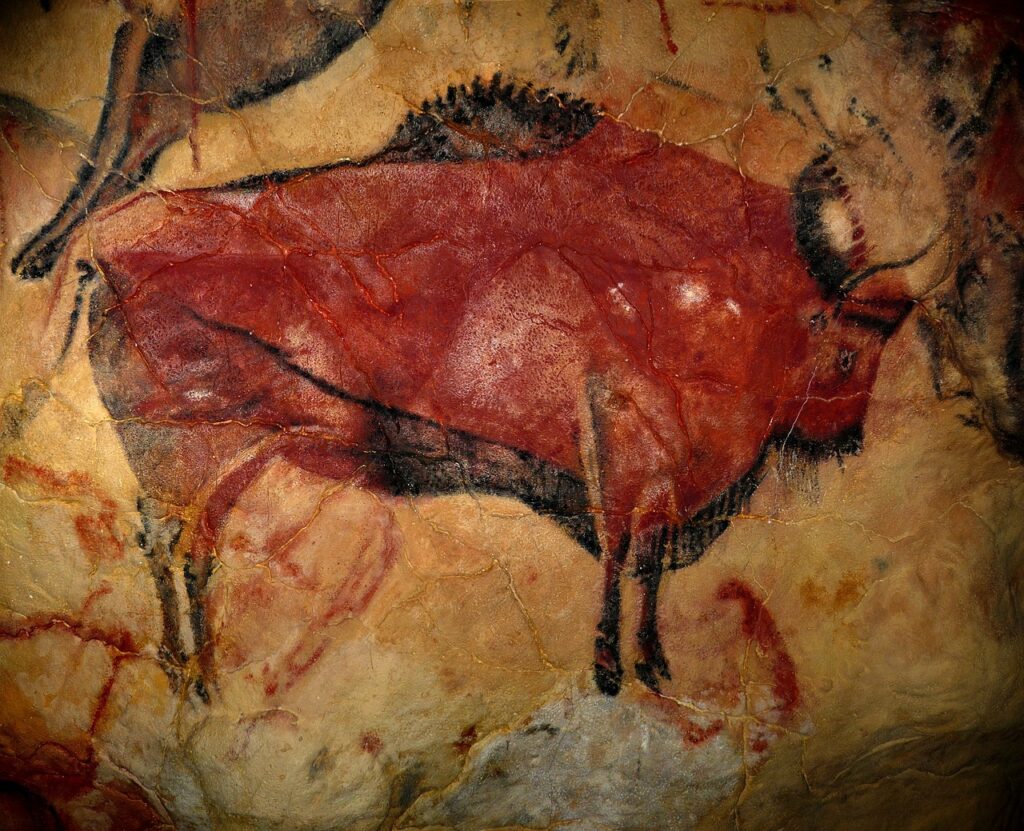
Altamira is famous for its ceiling of polychrome bison, but few casual visitors realize that “famous ceiling” is actually a jumbled overlap of images from wildly different eras.
Researchers studying the site have long used the piled-up layers of engravings and paintings to reconstruct a timeline of who visited when. Cave art palimpsests, particularly in caves like Altamira, have been studied since the early twentieth century with the aim of establishing a relative chronology of Palaeolithic art from the superimpositions of depictions. In plain terms: scientists figure out the order paintings were made by literally tracing which lines cross over which.
Here’s the controversial part experts still argue about. Some art historians insist Altamira’s famous bison ceiling represents one cohesive masterwork by a single skilled group, while newer superimposition studies argue it’s actually a patchwork stitched together from multiple separate visits centuries or millennia apart. Many cave sites in northern Spain reflect palimpsests of artistic behaviours, produced by different hunter-gatherer groups painting and engraving on the same walls as their predecessors. That means the “single genius artist” theory so many textbooks repeat might be flatly wrong. Its neighbor La Pasiega pushes that same argument into genuinely uncomfortable territory.
#8 – La Pasiega Cave, Spain
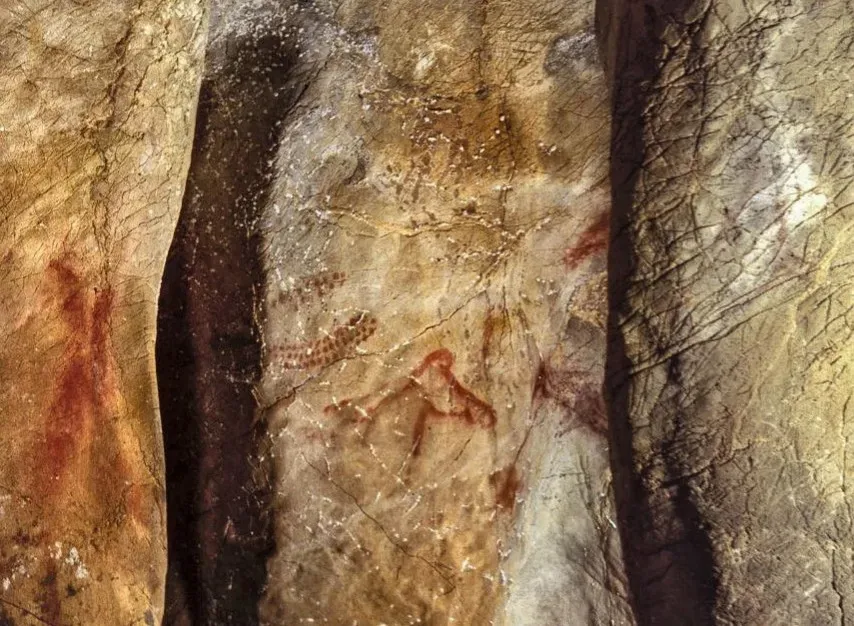
La Pasiega sits just minutes from El Castillo in the same limestone mountain, and its walls tell an even messier layered story.
Cave art palimpsests in La Pasiega were studied specifically to establish a relative chronology of Palaeolithic art from the superimpositions of depictions, meaning generations of researchers have spent careers untangling which red dot, animal outline, or geometric sign came first. The cave’s ladder-shaped red symbol was even dated using uranium-series methods to over 64,000 years old in a controversial study – a date so early it predates modern humans arriving in Europe altogether.
This is where the debate turns genuinely heated. If that early date holds up, it would mean Neanderthals – not Homo sapiens – made the earliest marks on this wall, and that modern humans layered their own art on top tens of thousands of years later without any idea who came before. Not every archaeologist accepts the dating methodology, and the disagreement over La Pasiega’s true age remains one of the most contested debates in Ice Age archaeology. Leave Europe entirely, though, and the layering starts recording something bigger than art history.
#9 – Tassili n’Ajjer, Algeria
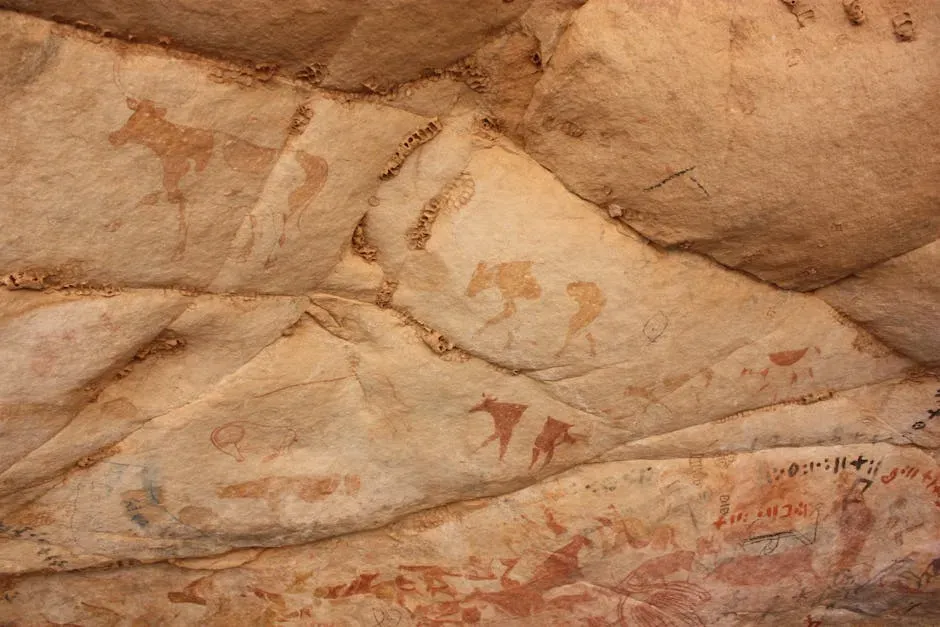
Tucked deep in the Sahara Desert, Tassili n’Ajjer holds thousands of paintings and engravings that record one of the most dramatic environmental transformations humans have ever documented – because the artists kept coming back as their entire landscape changed underneath them.
The earliest layers, often called the “Round Head” period, show large, ghostly humanoid figures painted when the Sahara was still a green savanna dotted with lakes. As centuries passed and the climate slowly shifted, later generations painted over and around those figures with entirely new subject matter: herds of cattle during a wetter pastoral phase, then horses and chariots as the region dried further, and finally camels once the Sahara became the arid desert we know today.
Fast Facts: Tassili n’Ajjer’s Four Climate Chapters
- Round Head period – ghostly humanoid figures painted when the Sahara was green savanna
- Pastoral phase – herds of cattle painted as the region grew wetter
- Horse period – horses and chariots appear as the climate dried further
- Camel period – camels take over once true desert conditions set in
Most people picture the Sahara as timeless and unchanging – this site proves the opposite. Each new wave of artists wasn’t just adding decoration; they were documenting an ecosystem collapsing in real time, layer by layer, on the same rock faces their ancestors used. It’s a rare case where painted layers double as an ancient climate record. India’s Bhimbetka shelters carry an even longer, stranger version of that same idea.
#10 – Bhimbetka Rock Shelters, India
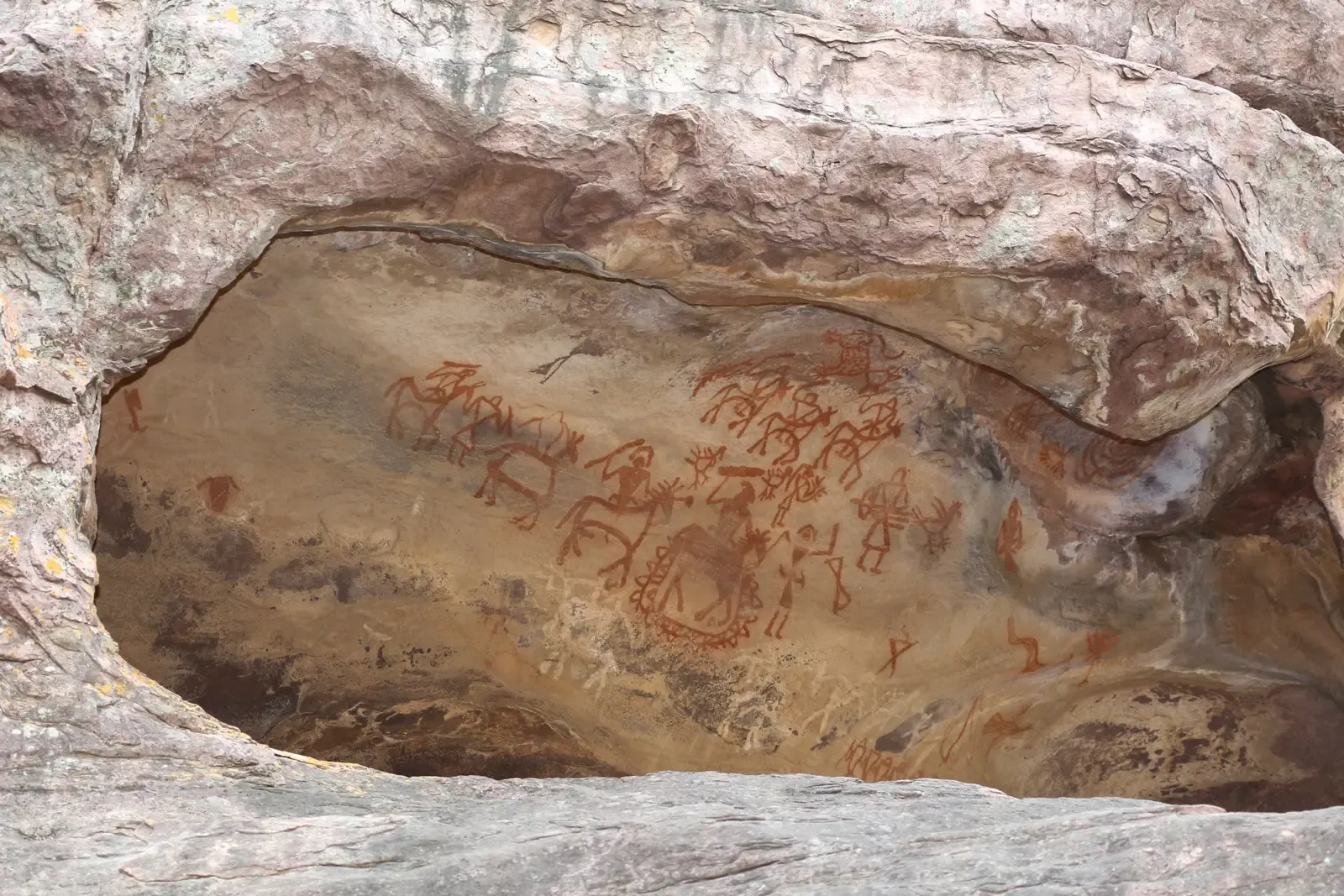
In central India, the Bhimbetka rock shelters hold one of the longest continuously used painting traditions ever documented, with images layered from the Mesolithic era all the way through into recorded history.
Some panels show faint, weathered animal outlines from hunter-gatherer groups thousands of years before organized agriculture reached the region, painted directly beneath sharper, more detailed figures added by later farming communities and, eventually, symbols and scenes reflecting historical-era life. Archaeologists studying the shelters have identified overlapping styles that suggest the site was never truly abandoned – just periodically rediscovered and reused by whoever passed through next.
Here’s the detail that surprises most visitors: unlike single-era caves in Europe, Bhimbetka’s layering spans not just prehistoric periods but stretches into eras when people were already building cities elsewhere in India. That makes it less a single “ancient painting” and more a rolling, unbroken visual diary that different cultures kept adding entries to for thousands of years. Not far away, Kerala’s Edakkal Caves prove the same habit survived well into recorded history.
#11 – Edakkal Caves, India
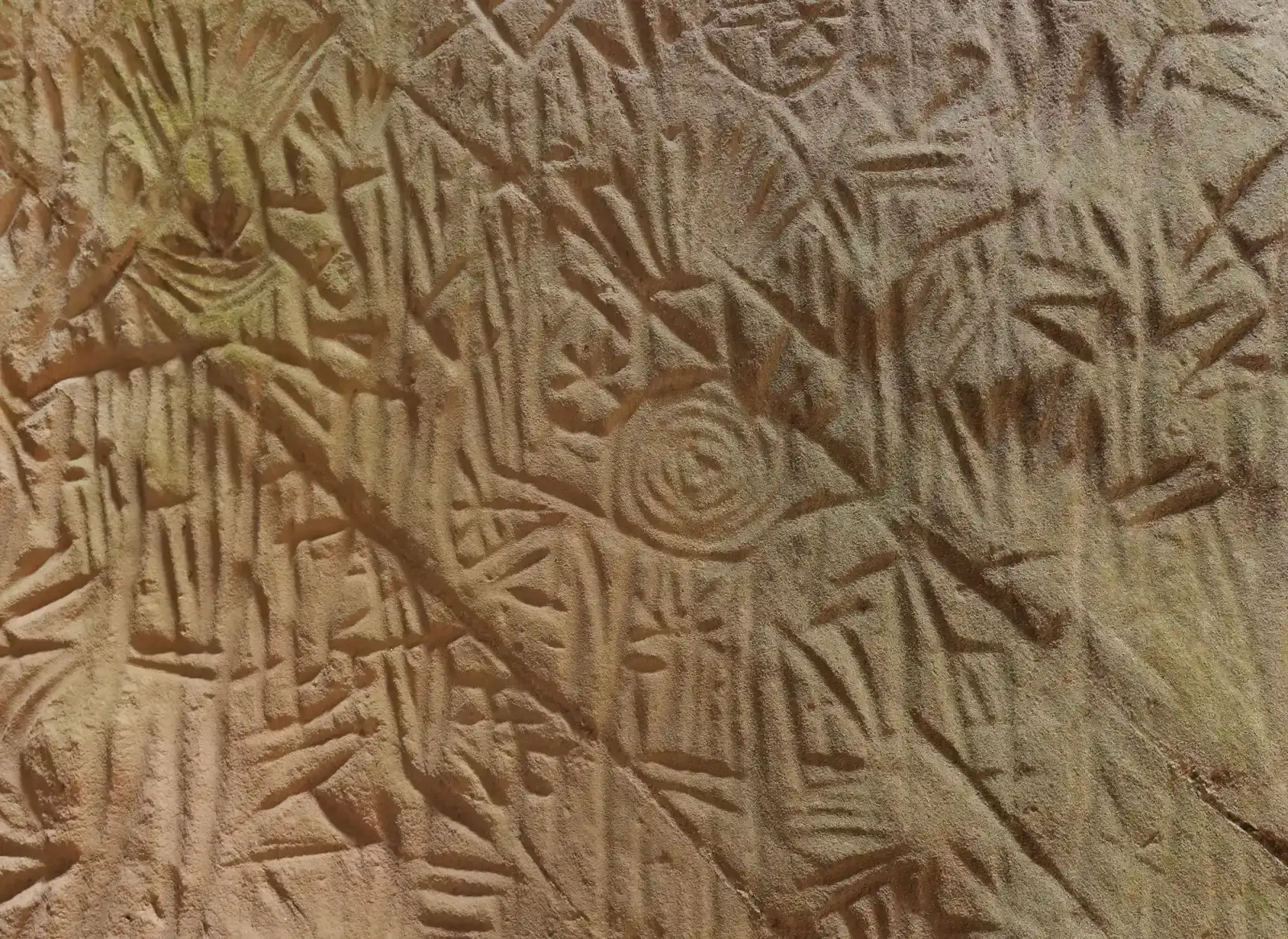
The Edakkal Caves in Kerala prove that layered cave art isn’t just a European Ice Age phenomenon – it happened well into more recent prehistory too.
The Edakkal Caves contain drawings that range over periods from the Neolithic as early as 5,000 BC to 1,000 BC, a 4,000-year window during which different groups clearly returned to carve and mark the same rock surfaces. That’s a span roughly equivalent to the entire distance between the construction of the Great Pyramid and today.
The detail most guides skip: unlike painted pigment caves, Edakkal’s markings are mostly petroglyphs – carved rather than painted – but the same layering principle applies. Later carvers worked around, over, and sometimes directly through older symbols, creating a crowded visual record where you can trace human presence changing style, tools, and subject matter across four millennia without ever leaving the same two rock chambers. Nothing on this list, though, prepares you for Australia.
#12 – Kakadu / Arnhem Land Rock Art, Australia
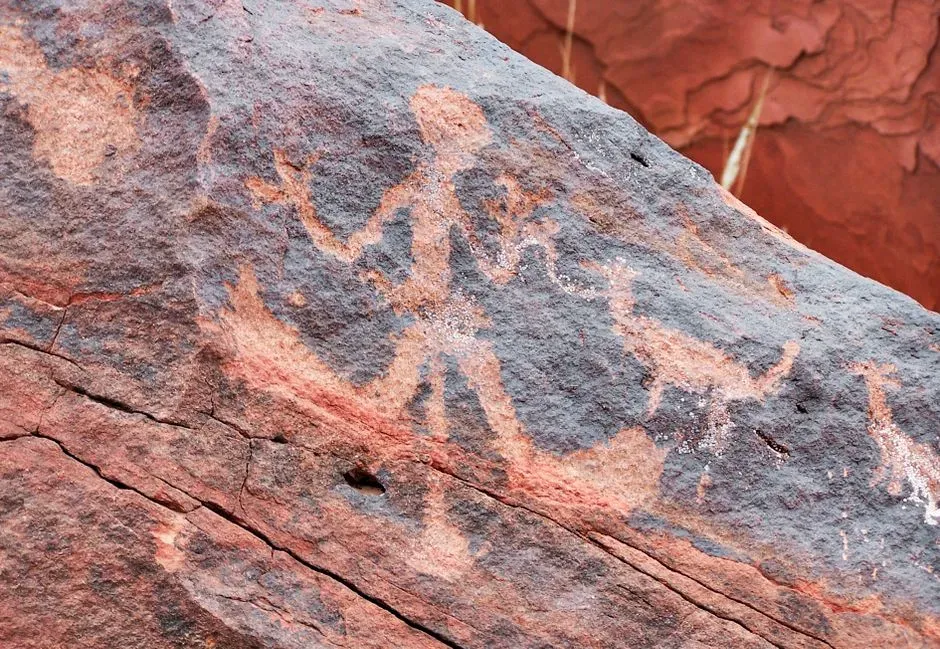
Nothing on this list compares to the sheer, staggering timescale of layered rock art in Australia’s Kakadu region and greater Arnhem Land – a painting tradition that didn’t just span millennia, it may represent the longest continuously practiced art tradition on Earth.
Generations of Aboriginal artists painted directly over earlier work for tens of thousands of years, creating a visible stack of distinct stylistic periods on the same rock surfaces – from ancient, large-scale figures, through dynamic hunting scenes, to later X-ray style paintings that reveal internal anatomy of animals, right up through paintings depicting European ships after first contact. Each new style didn’t erase the old tradition so much as build directly on top of it, sometimes literally painted over the previous layer.
Why It Stands Out
- Possibly the longest continuously practiced art tradition on Earth
- Style progression: large ancient figures, dynamic hunting scenes, X-ray anatomy, then European contact ships
- Never sealed off by a rockfall like the European caves
- Still maintained and periodically renewed by descendant communities today
This is the one that should reframe everything else on this list. While European caves like Chauvet or Lascaux represent a finite, sealed window of human activity frozen by a rockfall, Arnhem Land’s rock art was never sealed off – it’s a living tradition maintained and periodically renewed by descendant communities for an almost incomprehensible length of time. Many archaeologists argue this makes it the single most important layered art record on the planet, more significant than any Ice Age European cave, precisely because it never stopped.
The Bottom Line
These twelve sites destroy the idea that cave art is a single frozen moment. From Chauvet’s two Aurignacian-era visits separated by 5,000 years, to El Castillo’s staggering 35,000-year span of continuous human interaction, to Arnhem Land’s still-living painting tradition, the evidence keeps pointing to the same conclusion: humans have always returned to meaningful places and added their own chapter to what came before.
The most controversial takeaway? Many “single genius artist” theories taught for decades are likely wrong – most famous cave panels were community projects stretched across generations who never met each other, never spoke the same language, and never knew they were collaborating on the same wall. If that doesn’t change how you look at a cave painting, nothing will. Which layered cave surprised you most? Drop your pick in the comments.