You’d think a find spot would be the one boring, unshakeable fact in archaeology. A GPS pin, a photo, a signed report – done. Instead, some of the most famous objects on Earth were allegedly pulled from a cave, a cliff, a barn, a border, or a farmer’s field depending entirely on which witness you ask, and sometimes the same witness tells it three different ways over three decades.
That’s not a harmless footnote. Find location decides how an object gets dated, who owns it, whether it’s a miracle or a hoax, and whether entire theories about ancient civilizations stand or collapse. Twelve artefacts below have location stories so tangled that even the experts can’t agree on the ground they stood on – and by the end, you’ll never trust a museum placard’s confident little map dot again.
#12 – The London Hammer That Can’t Agree Where It Emerged
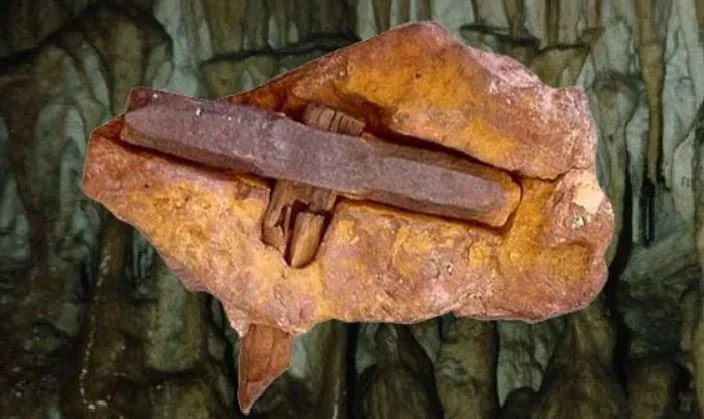
This one is a conspiracy-forum favorite: a 19th-century hammer supposedly encased in rock “hundreds of millions of years old.” The story shifts depending on who’s telling it. Some accounts say it was found half-embedded in a rock nodule on a creek bed near London, Texas. Others insist it came from a nearby cliff face, chipped out of solid strata well above the waterline, and a few retellings just shrug it off to “a field in Texas” with no creek in sight at all.
When the location shifts that wildly, the dating story collapses almost instantly. If you don’t know the exact findspot, you don’t know the geological context – and the “rock” likely formed around the hammer as a concretion in the last few hundred years, not in a Paleozoic ocean. When a single family’s anecdote becomes the only source of find-location data, you’re doing folklore, not science – and that fuzziness is exactly what keeps this myth alive decade after decade.
Fast Facts
- Found: June 1936 near London, Texas, by Max and Emma Hahn on a walk along Red Creek
- Hammerhead size: about 6 inches (15 cm) long with a roughly 1-inch diameter
- Composition: iron hammerhead reportedly around 96.6% iron, with a partly mineralized wooden handle
- Twist: the rock nodule wasn’t even cracked open until 1947, over a decade after the original “discovery”
#11 – The Antikythera Mechanism’s Depth, Deck, and Disagreements
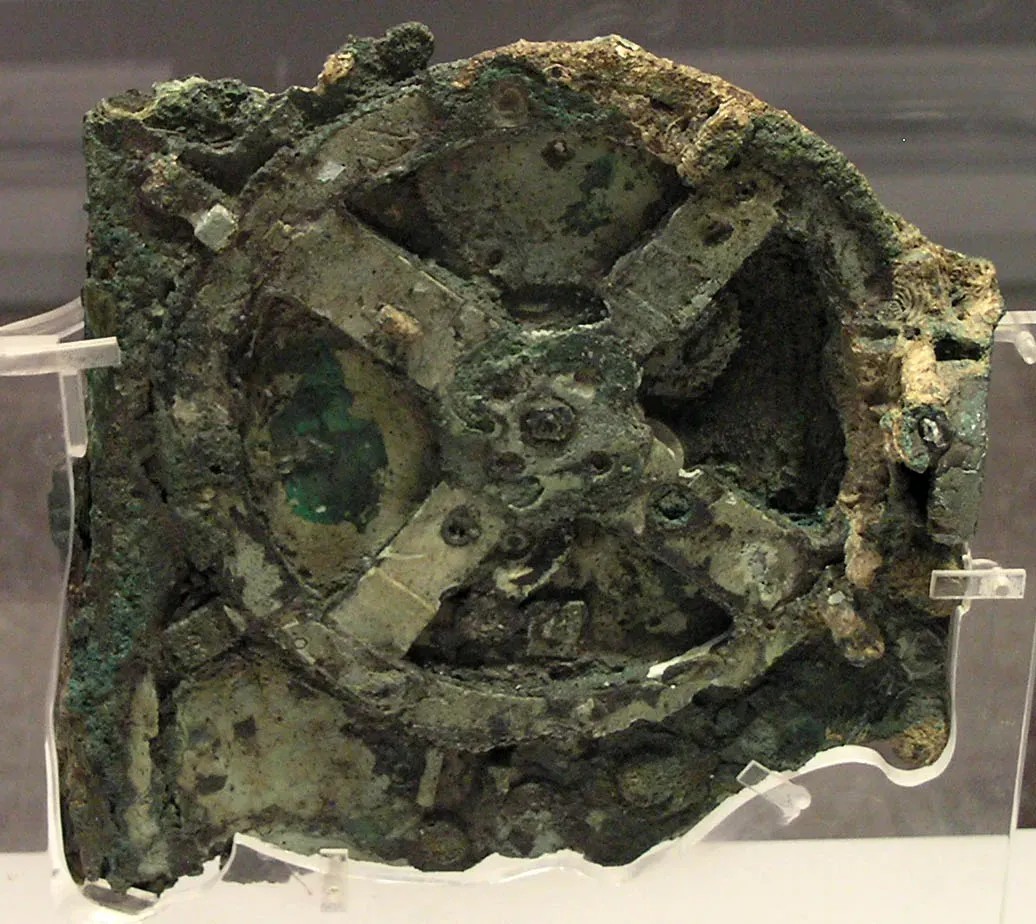
Even the legendary Antikythera Mechanism comes with messy discovery memories. Everyone agrees it came from the Antikythera shipwreck, but dive logs and later testimonies don’t line up on which part of the wreck site it actually came from. Some sponge divers retrospectively placed it in the main cargo scatter; others described retrieving it from a separate cluster of encrusted objects closer to the island’s rocky slope.
That doesn’t sound huge until you remember that wrecks can represent multiple sinking events or centuries of underwater disturbance. Later expeditions mapped the site in careful slices, but the original 1900-1901 accounts are fuzzy enough that scholars still debate whether the device belonged to the primary ship, a secondary deposit, or a disturbed context entirely. If the mechanism drifted down-slope long after the wreck, its link to specific cargo groups gets a lot less certain – which quietly undercuts every confident headline about “what kind of ship carried it.”
#10 – The Phaistos Disc’s Room-by-Room Mystery
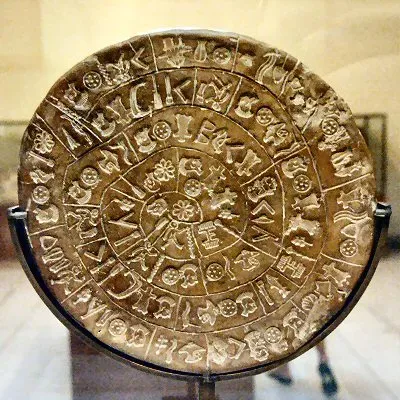
The Phaistos Disc is already famous for its undeciphered script, but almost no one talks about the fact that witnesses never agreed on exactly where inside the Minoan palace it was found. Early reports place it in a basement “cellar” room; later descriptions slide it to a magazine, or storage area; one prominent retelling just says it came from “a pit in the palace complex.”
Those sound like synonyms, but in palace archaeology, room-level precision changes everything. Different rooms carry different functions, dates, and reuse histories, and some field notes even disagree on whether the disc lay alone or beside other diagnostic finds like tablets or ceramics. The disc’s discovery context is fuzzy enough that both early-and-late dating camps can cherry-pick from it – ask three specialists exactly where the spade hit and you’ll hear three subtly different floor plans.
#9 – The Cardiff Giant’s Deliberately Vague Pit
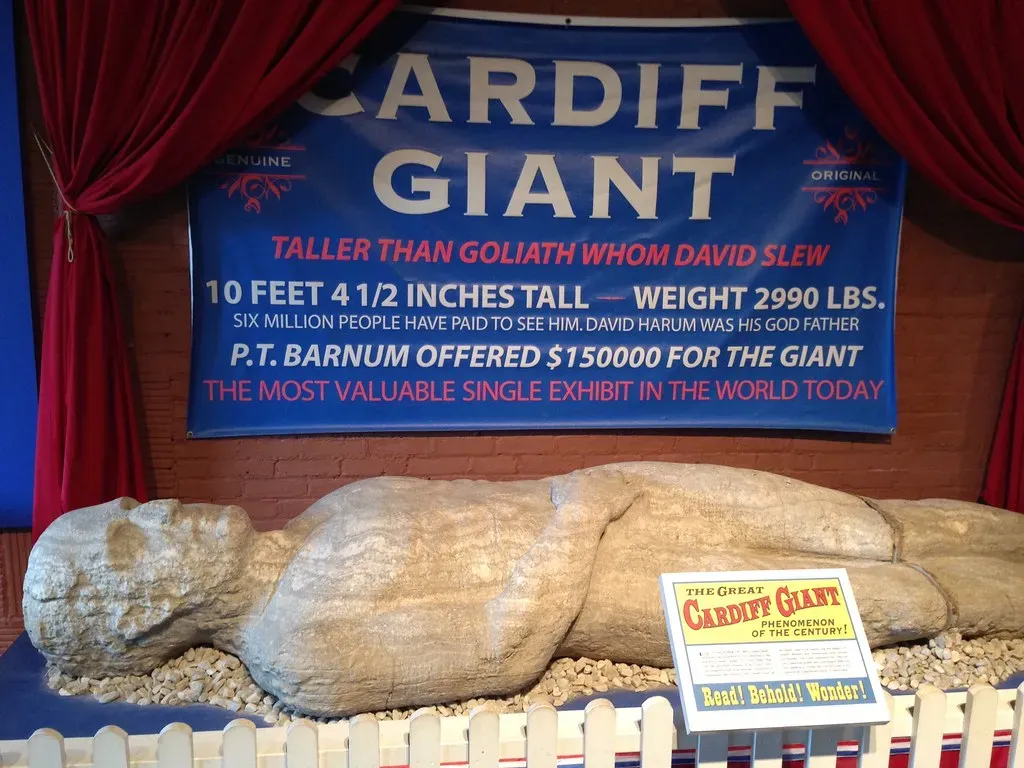
You’d think a confessed hoax would at least have a clean origin story. Instead, the 1869 Cardiff Giant – an allegedly petrified man – came with wildly inconsistent accounts of the exact spot it was “discovered.” Some witnesses swore it lay under a precise corner of a barn in Cardiff, New York. Others put it under a different part of the farm, or described the pit as closer to a road line than the surviving photos make plausible.
That wasn’t an accident – the hoaxers benefited from ambiguity. Move the pit a few meters and the soil description changes; move it again and the water table problem disappears. Locals were weirdly imprecise about depths, distances from fence posts, even which direction they dug. Real excavations obsessively log context; staged ones survive as fuzzy “it was somewhere over there” stories – and even after the confession, tour pamphlets never nailed down the exact spot, because the myth sold better than the map.
#8 – The Los Lunas Decalogue Stone’s Wandering Coordinates
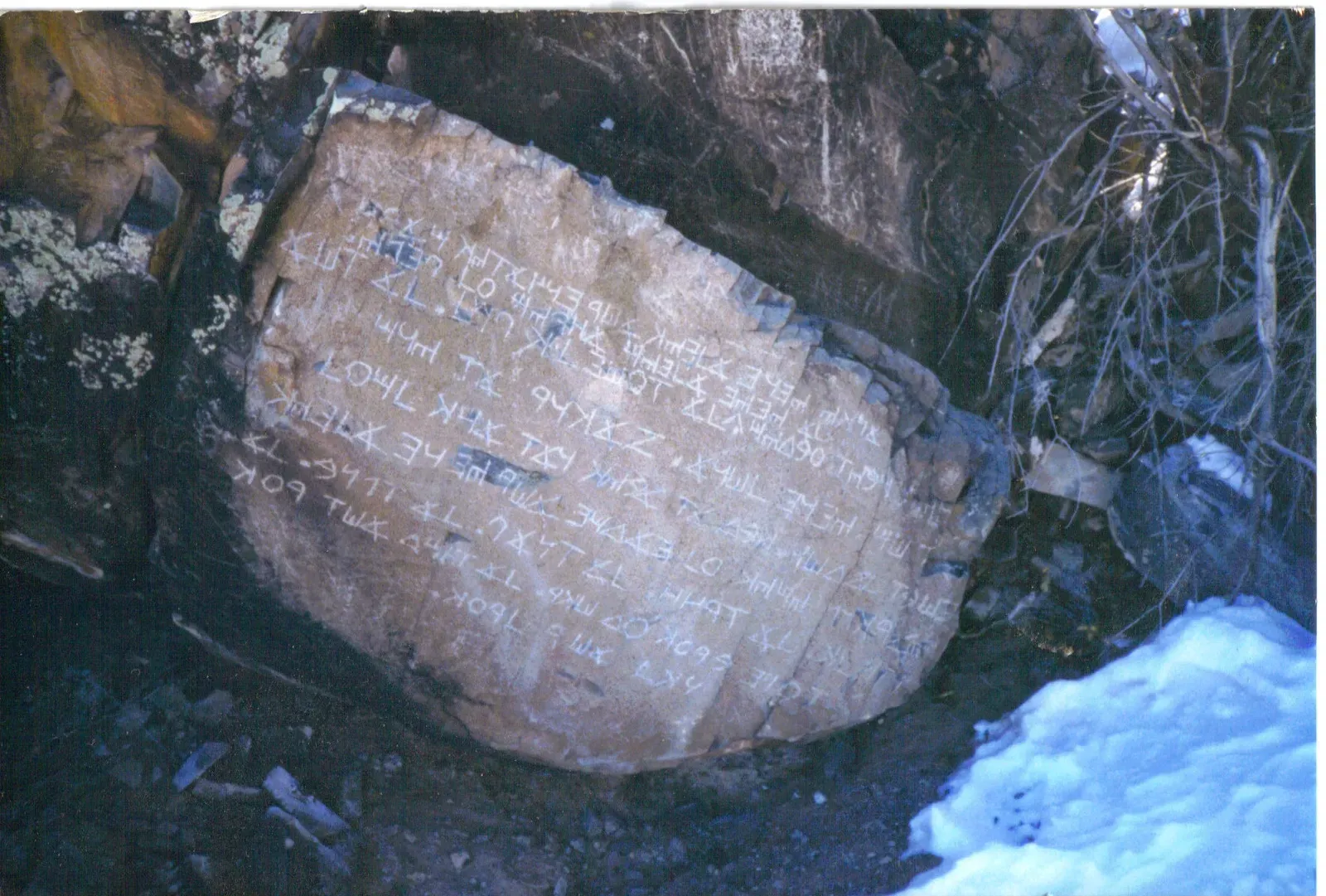
The Los Lunas Stone in New Mexico, carved with a strange version of the Ten Commandments, has been placed in more different locations by witnesses than most people realize. Guides and articles alternately describe it as near the base of Hidden Mountain, halfway up a slope, tucked in a ravine, or sitting on a prominent exposed face. Hikers who go looking often find that the mental picture they built from one account flatly contradicts what others remembered.
That matters because the stone’s age hinges on whether it could have been moved. An easily accessible position near modern tracks makes a 19th- or 20th-century forgery perfectly plausible; a partially buried setting with heavy overburden sounds far older and more untouched. Photos taken over the decades even show it in slightly different orientations and surroundings, feeding claims that it’s been relocated or re-carved. When even the hillside can’t be consistently described, any grand theory about ancient Israelites in New Mexico is standing on geological quicksand.
#7 – The Kensington Runestone’s Farm, Field, and Fence-Line Disputes
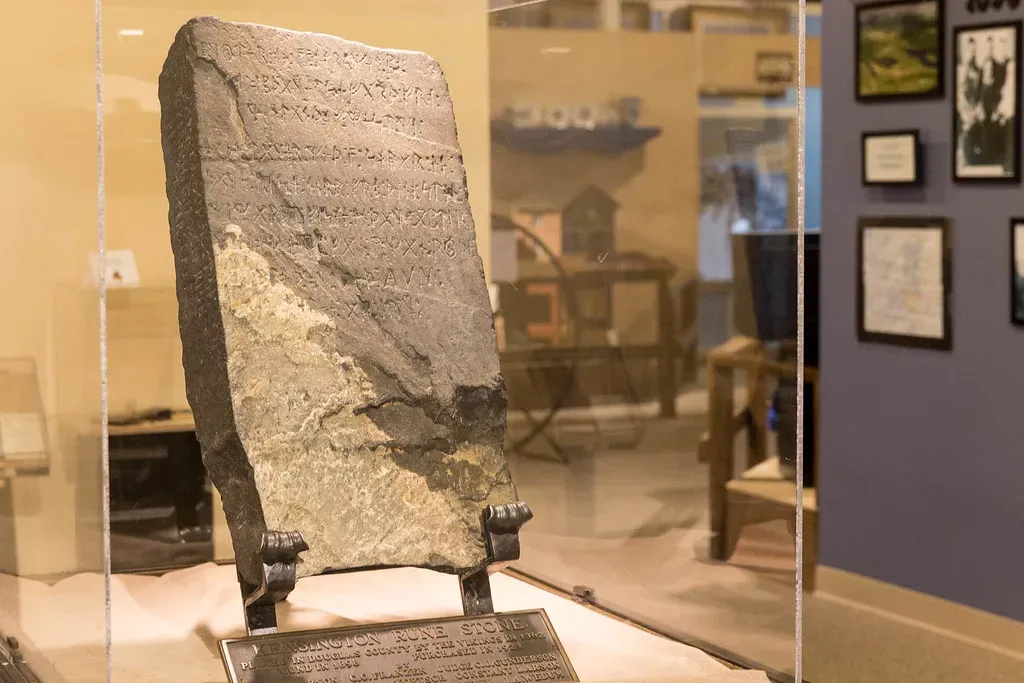
The Kensington Runestone in Minnesota is supposed to have been found in 1898, tangled in the roots of an aspen tree. Ask locals exactly where, though, and the story slides. Early retellings put it on a different part of the farm than later commemorative markers suggest, and while some versions claim it was right by a boundary fence, others describe it as well inside a cultivated area, or vaguely “on a knoll.”
Those distinctions aren’t cosmetic – they feed directly into the authenticity war. Skeptics note that if the stone sat in a fence-line or worked field, the odds of it going unnoticed for centuries plummet, so believers lean harder on the “remote knoll” versions. There are also conflicting stories about how deep the tree roots went and how tightly the stone was supposedly embraced. When tree age, fence positions, and field use all shift depending on who’s talking, you end up with a discovery that’s more folklore than stratigraphy.
#6 – Piltdown Man’s Conveniently Shifting Gravel Pit
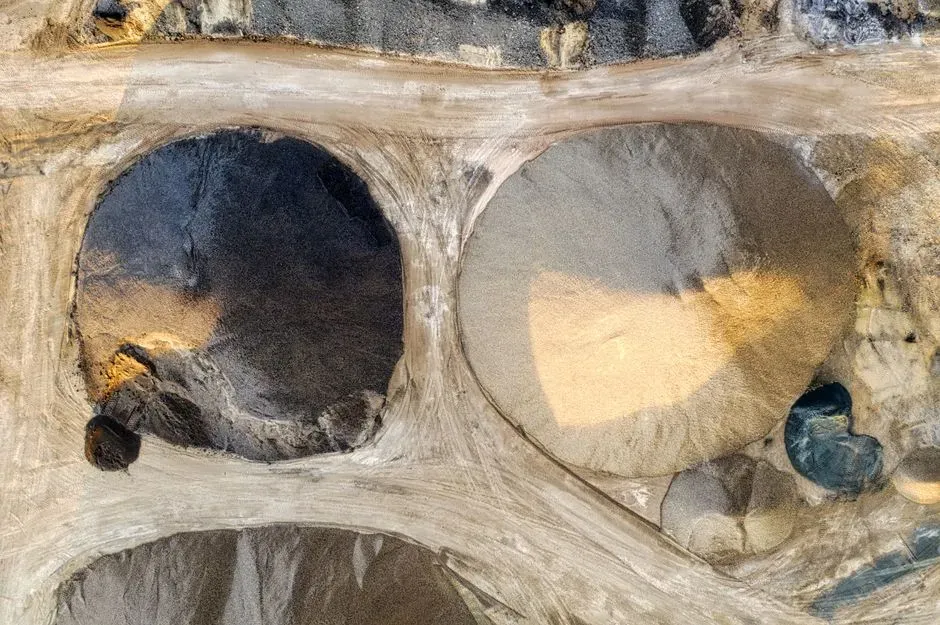
Piltdown Man – once hailed as the “missing link,” now infamous as a fraud – was allegedly unearthed from a gravel pit in Sussex, England. Even in period sources, the precise location of each fragment bounced around between accounts. Some reports place the skull and jaw fragments in the same trench; others hint they surfaced at different times, in slightly different parts of the pit.
A few worker recollections even conflict with the gentleman-scientists’ tidy narrative about exactly “where in the section” the bones lay. For a genuine evolutionary specimen, that would be a red flag; for a hoax, it’s practically a signature. The pit was real, but its internal geography was suspiciously malleable, letting the forgers retrofit convenient stratigraphy as needed. The fact that witnesses couldn’t keep the micro-location straight just underscores how loosely choreographed the whole performance really was.
Worth Knowing
- Championed by amateur collector Charles Dawson, with the first fragments unveiled in 1912
- The “skull” combined a modern human cranium with a deliberately filed orangutan jaw
- Many scientists accepted it as a genuine missing link for roughly four decades
- Exposed as a hoax in 1953 through chemical dating and microscopic tool-mark analysis
#5 – The Shroud of Turin’s Slippery First Appearance
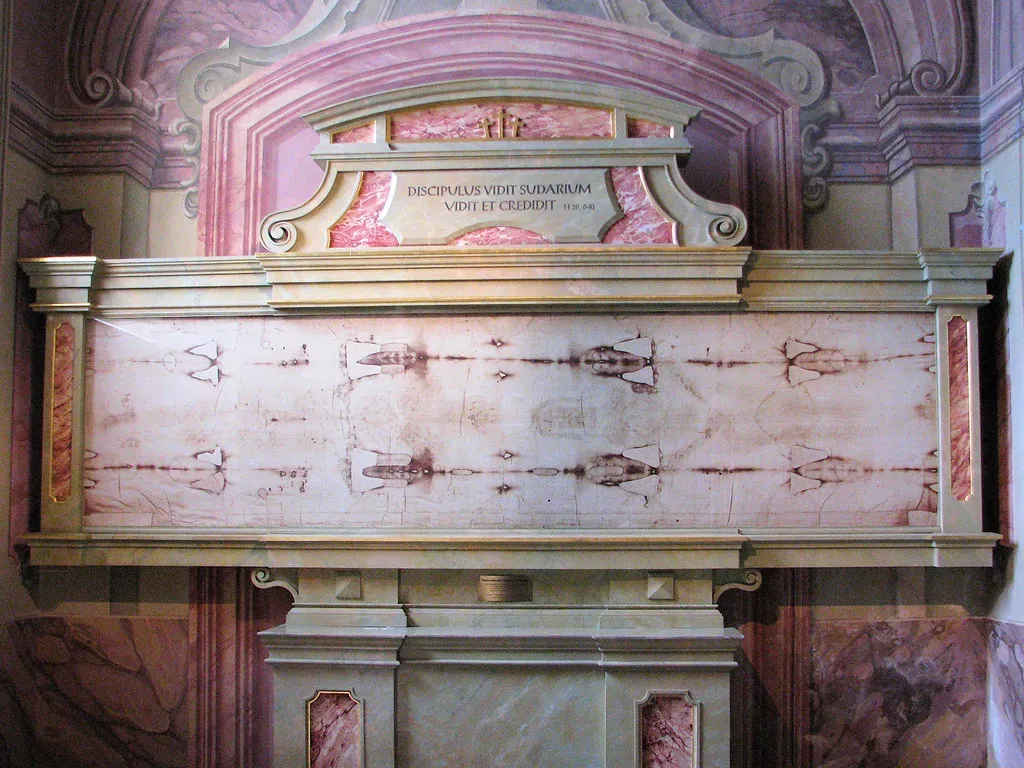
Unlike most items on this list, the Shroud of Turin wasn’t dug from soil – but its “where did this suddenly come from” story is a location puzzle all its own. Medieval documents disagree on exactly where the cloth first surfaced. Some accounts say it appeared in Lirey, France, inside a small church; others imply earlier, murkier appearances in Constantinople or even Edessa, each with its own claimed reliquary.
For an object used to argue about the literal burial cloth of Jesus, that geographic jumpiness is not a trivial footnote. Each supposed prior location comes with its own historical politics, relic economies, and possible forgers attached. If it “really” traces back to a lost Constantinople treasury, that’s one story; if its earliest solid attestation is just a French knight’s private collection, that’s another entirely. Because the trail keeps sliding between cities and shrines depending on whose chronicle you read, the Shroud’s discovery narrative functions more as devotional marketing than forensic data.
#4 – The Roswell Debris: Ranch, Arroyo, or Somewhere In Between?
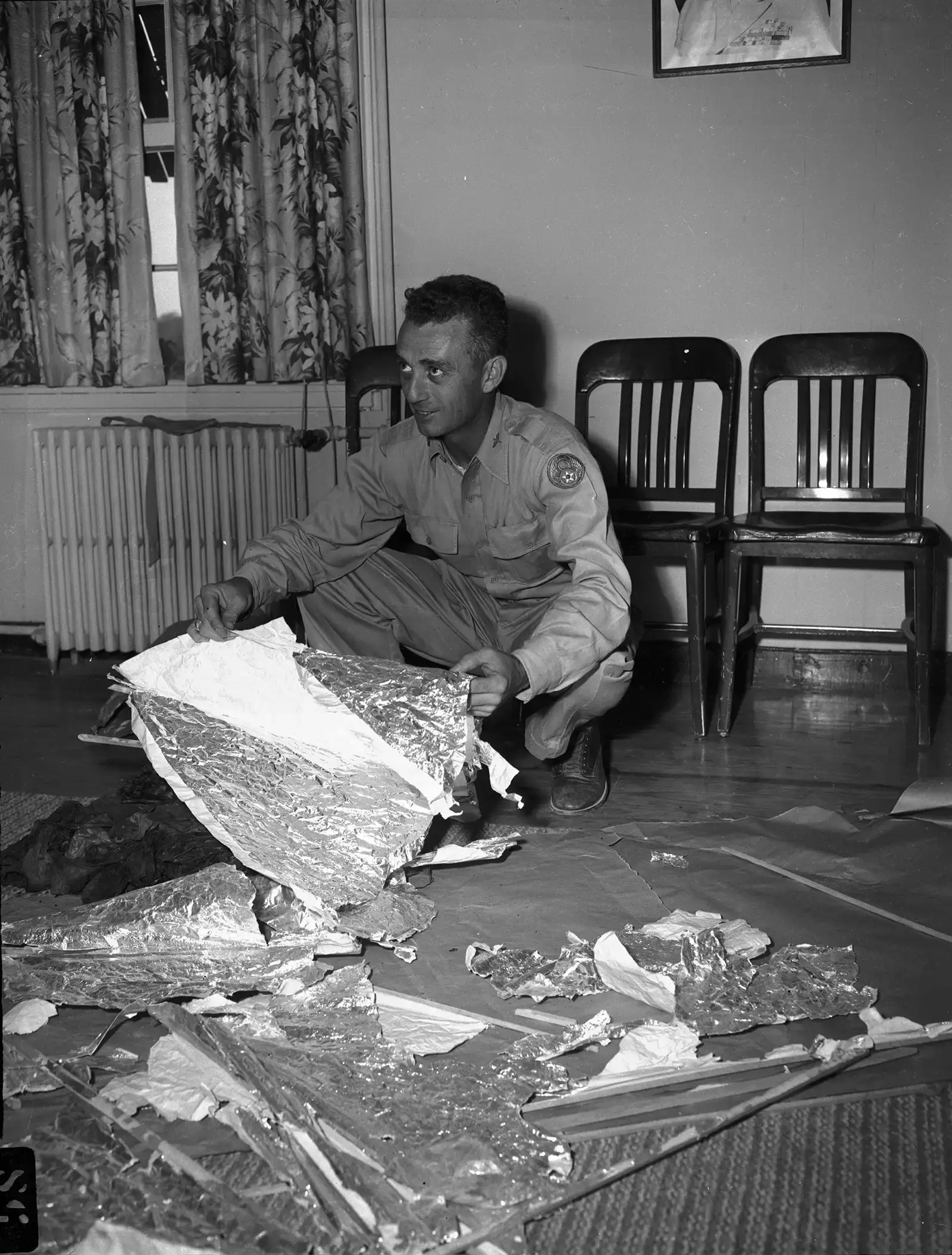
When people argue about UFOs, they rarely realize how much the whole story hangs on boring details like “which side of which pasture.” In the Roswell incident, the supposed debris from a “flying disc” was variously said to have been found in a single rancher’s field, scattered across multiple adjacent properties, gathered in an arroyo, or lying across a broad, featureless plain. Rancher Mac Brazel’s own descriptions across interviews don’t always match the memory-based sketches other witnesses offered decades later.
If the debris was concentrated in a tight area, one kind of crash – or balloon failure – scenario is plausible; if it was truly scattered over a wide swath of terrain, that suggests something else entirely. Investigators in 1947 had limited time on site and the documentation is patchy, which let UFO proponents quietly “relocate” the field in book after book to fit each new theory. When you can move a crash site a mile or two with a single anecdote, you’re not doing forensic reconstruction – you’re running a narrative franchise.
#3 – The Dead Sea Scrolls’ Cave Confusion That Still Matters
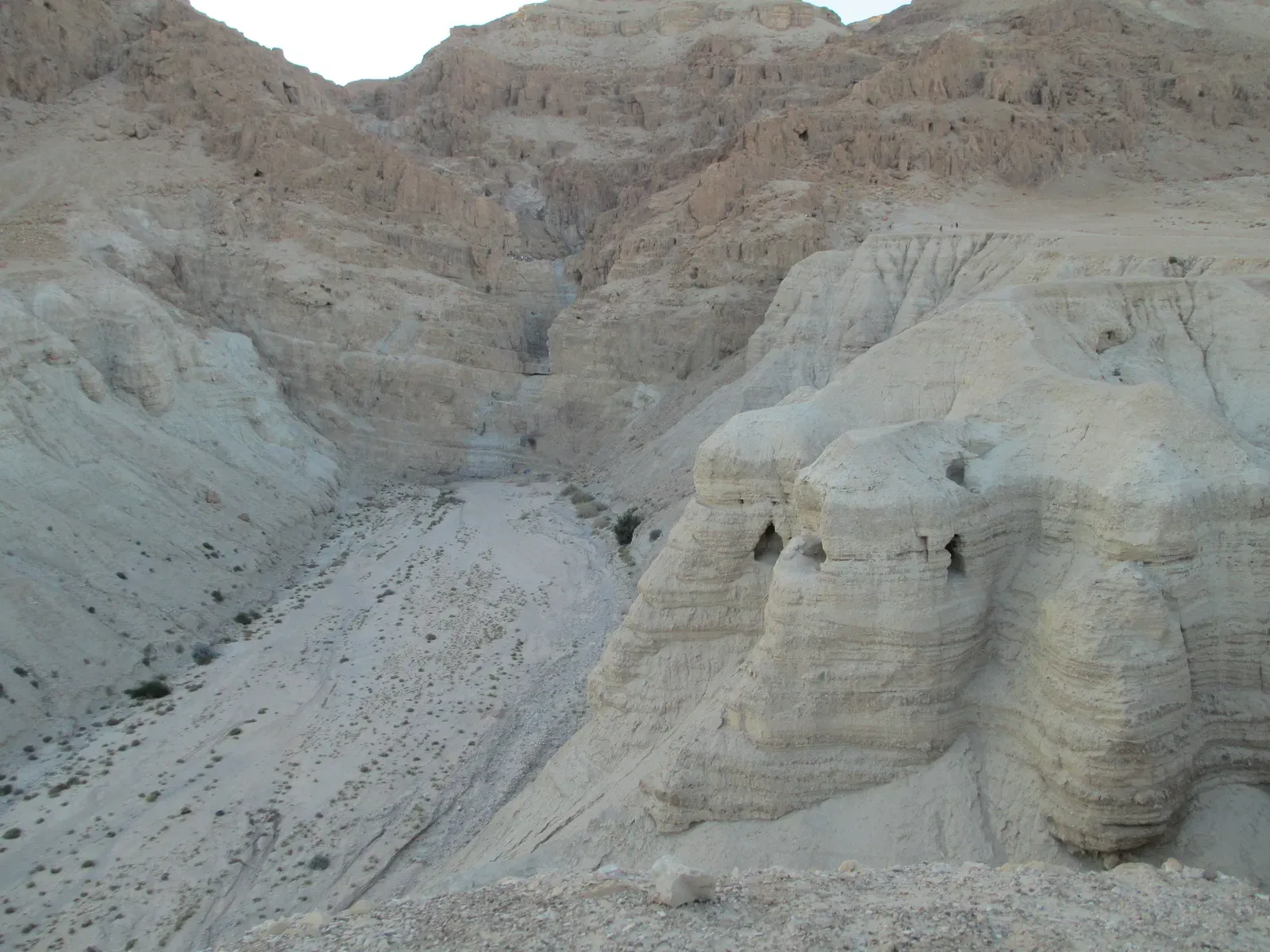
Here’s where it gets uncomfortable for serious archaeology. Even the Dead Sea Scrolls – arguably the most important manuscript find of the 20th century – have messy, sometimes contradictory location reports for certain fragments. Everyone agrees they came from caves near Qumran, but early Bedouin accounts don’t always align with the scholarly cave-number systems that came later, and dealers in Bethlehem further muddied the picture by mixing lots from different caches.
Why does that matter? Because scholars reconstruct textual families, library practices, and community history partly based on which cave a manuscript is assigned to. Move a fragment from Cave 1 to Cave 4 in your mental model and a theory of sectarian versus non-sectarian literature can flip completely. The fact that the initial witnesses weren’t trained in archaeological recording – and had strong financial incentives to blur cave origins – means some assignments will probably never be fully resolved.
At a Glance
- First scrolls found in 1946-47 by a Bedouin shepherd, Muhammed edh-Dhib, near Qumran
- Searches eventually spread across 11 separate caves between 1947 and 1956
- Roughly 981 individual manuscripts have been identified from the combined finds
- Texts range in date from about the 3rd century BCE to the 1st or 2nd century CE
#2 – Ötzi the Iceman and the Border That Moved Overnight
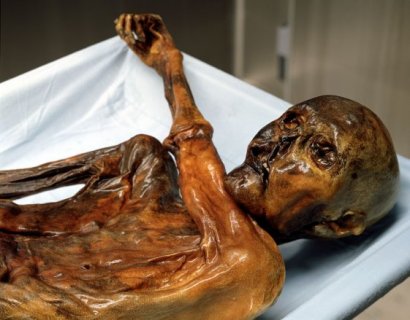
Ötzi, the Copper Age mummy found in the Alps in 1991, is one of the best-studied ancient individuals on Earth. Yet even here, witnesses initially disagreed about which side of the Austro-Italian border he was discovered on. Early reports had him in Austrian territory; later, more precise surveys shifted the coordinates and revealed he actually lay just inside Italy.
That tiny relocation had enormous consequences: national pride, museum custody, and long-term research funding all hung on a border a few dozen meters wide. Accounts also differ on how exposed the body was, and whether artefacts like his axe and quiver were scattered up-slope or down-slope by meltwater. Move a backpack a couple of meters in your mental map, and you can redraw the entire sequence of his final moments – proof that even in a textbook case, the human messiness of “where, exactly” never fully disappears.
Quick Compare
- Initial assumption (Sept. 19, 1991): Ötzi treated as an Austrian find and flown to Innsbruck for examination
- Official survey (Oct. 2, 1991): precise measurement placed the body about 92.56 meters inside Italy’s South Tyrol
- Altitude: roughly 3,210 meters, in the Tisenjoch pass of the Ötztal Alps
- Age at discovery: estimated at more than 5,300 years old
#1 – The “Solomon’s Temple” Seals and the Jerusalem Anywhere-You-Like Effect
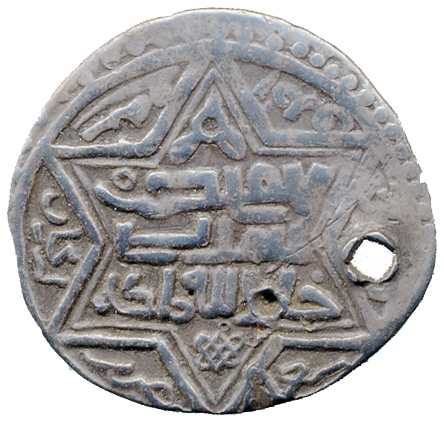
At the top of the list sits a whole class of artefacts touted as “Solomon’s Temple” seals, inscriptions, or ritual items – pieces that supposedly pin down the First Temple in stone. The recurring problem is that the discovery locations change depending on who’s writing the fundraising brochure, the auction catalog, or the apologetics tract. One seal is said in one account to have been “found in excavations near the Temple Mount,” in another to have come from “a Jerusalem antique dealer,” and in yet another to have been “unearthed by workers in a construction pit” with no coordinates offered at all.
Jerusalem’s layered, politically charged archaeology makes these location games especially dangerous. An item from a truly stratified, published context enters serious scholarly debate; an item that “somehow surfaced” from an unlogged trench or off-the-record bulldozer spoil belongs in a very different category – interesting, but archaeologically compromised. When every witness and document quietly nudges the object closer to the Temple Mount, you’re not tracking history – you’re watching it being manufactured.
The Bottom Line
Zoom out and a pattern jumps out that most people never notice: the artefacts with the loudest headlines often have the fuzziest, most contradictory discovery locations. Hammers that migrate between creek beds and cliffs, runestones whose pits can’t be pinned down, scrolls that seem to jump caves, and Jerusalem seals that drift conveniently uphill toward sacred ground – all of them show how fragile “context” really becomes once human memory and motive get involved.
The scientific rule here is brutally simple: if you can’t agree exactly where something was found, you can’t be confident what it means. Yet museums, TV specials, and even some scholars keep building big stories on wobbly coordinates. My take is blunt – any artefact with a shifting discovery location deserves a presumption of doubt, not wonder, until the paperwork catches up to the legend. Did we skip one of your favorite contested finds, or do you think one of these twelve deserves more benefit of the doubt? Say so in the comments.