Here’s an uncomfortable little secret nobody likes admitting at trade conferences: some of the smartest metallurgists, stonemasons, and structural engineers alive today will privately tell you they couldn’t pull off what a nameless bronze worker or stone carver did thousands of years ago. Not because they lack intelligence. Because they lack the hands.
We tend to assume progress is a straight line – better tools, better materials, better results, always. But when modern craftsmen actually sit down and try to replicate certain ancient objects, something strange happens. The confidence drains out of the room. What follows is a tour through twelve of those humbling moments, straight from the people who tried and failed to match them.
1. The Antikythera Mechanism’s Hand-Cut Gears That Predicted Eclipses
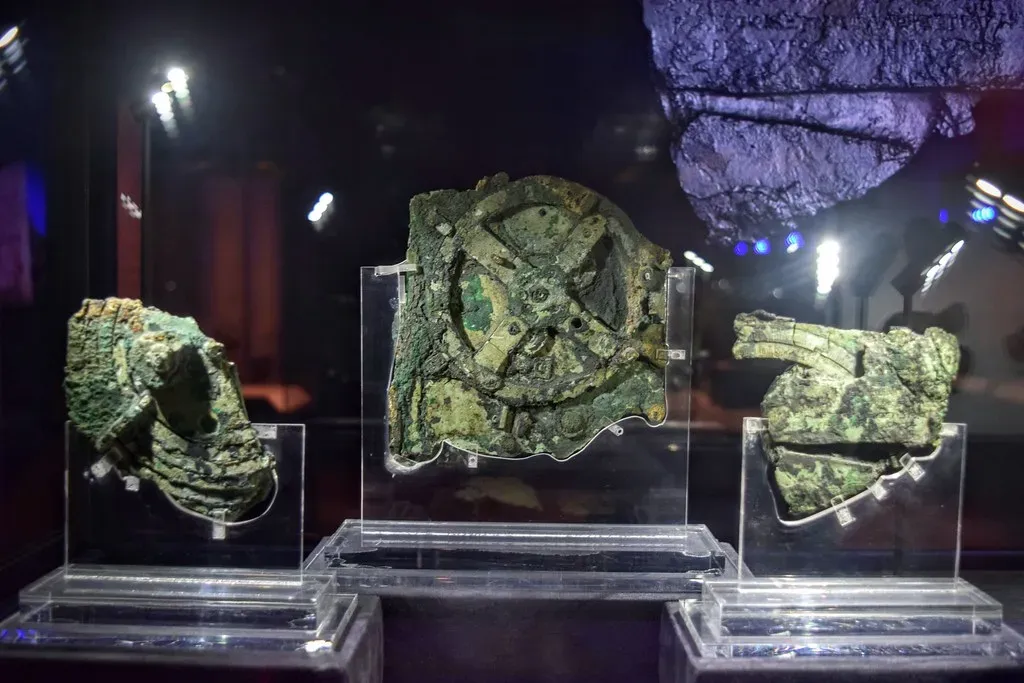
Pulled from a shipwreck off a Greek island, this corroded lump of bronze turned out to be an ancient analog computer packed with over 30 interlocking gears. Every single tooth was cut by hand – no CNC machine, no hardened steel, no laser measuring tools. And yet the gear ratios modeled lunar phases, solar eclipses, and planetary cycles with a sophistication historians usually date more than a thousand years later.
Modern watchmakers who’ve studied the mechanism admit that recreating it by pure handwork, using only period-appropriate tools, would be a brutal test of skill and patience most wouldn’t survive. The real gut-punch isn’t the visible complexity – it’s the invisible tolerances. Bronze plates had to stay perfectly flat, axles had to spin smoothly on primitive lubricants, and somewhere in that ancient workshop, a mathematician and a metalworker had to speak the exact same language. Today we’d just simulate it in software. Building it by hand is a different story entirely.
2. Roman Sea Concrete That Heals Its Own Cracks
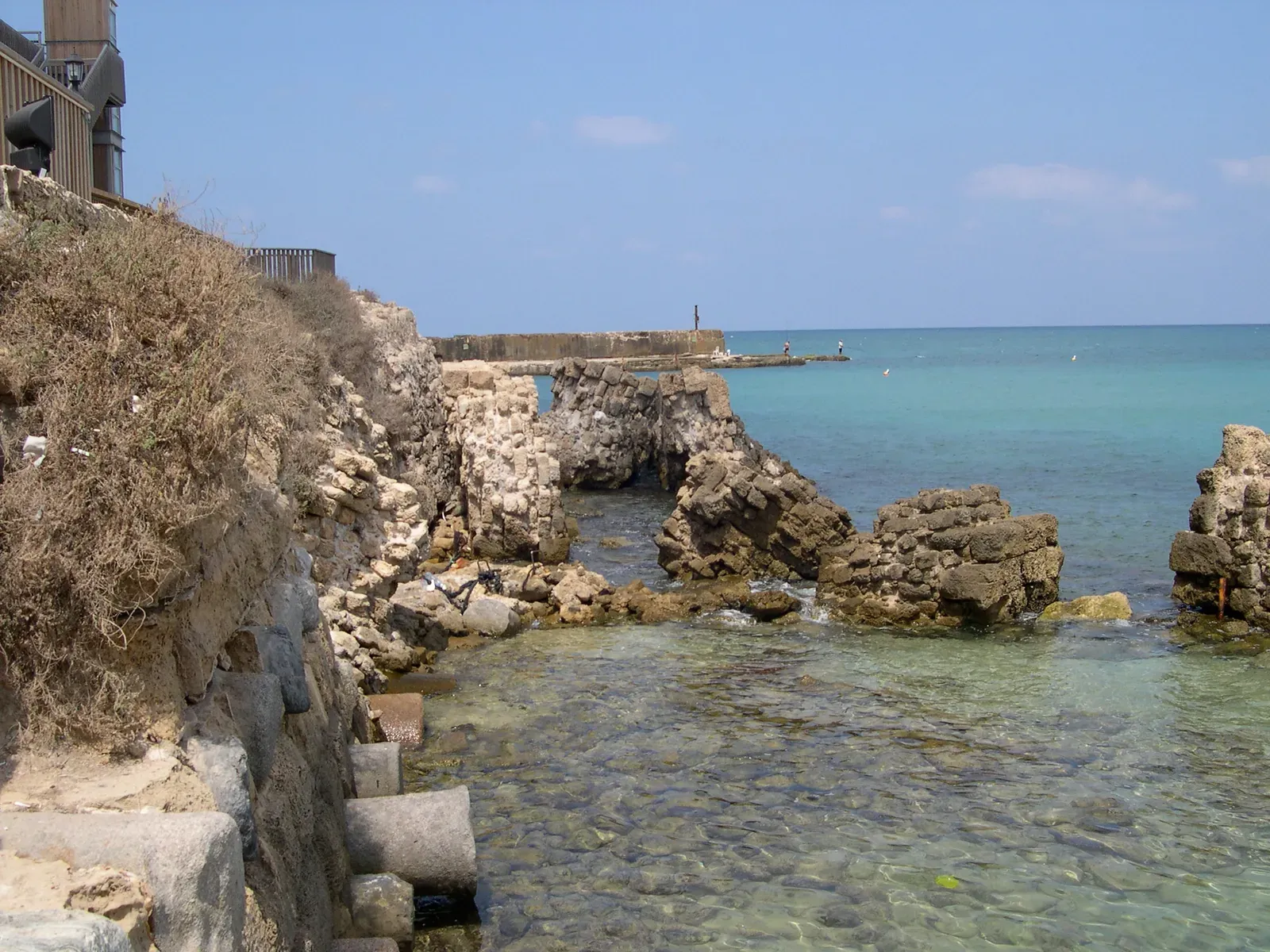
Modern builders love reinforced concrete, right up until they see what the Romans pulled off. Harbor structures at Caesarea and Portus have survived nearly 2,000 years of relentless waves and salt, while plenty of 20th-century piers are already spalling and crumbling into the tide. That’s not a coincidence – it’s chemistry most contractors today don’t even attempt.
Roman builders mixed volcanic ash with lime in a formula that, once submerged in seawater, slowly grows new minerals inside itself – literally healing tiny cracks as they form. Scientists can explain the reaction perfectly on paper. Scaling it back into practice is another matter, because our entire industry is built around Portland cement, not hand-tuned volcanic mixes. Ask a commercial crew to reproduce a Roman harbor mix and they simply can’t: wrong materials, wrong curing time, wrong economic incentives baked into every modern supply chain.
Fast Facts
- Roman harbor concrete at Portus and Caesarea has survived roughly two millennia of wave action.
- The secret ingredient was pozzolana, volcanic ash sourced near the Bay of Naples, blended with lime.
- Researchers have traced the self-healing effect to reactive lime deposits left behind by an ancient hot-mixing process.
- Most modern reinforced concrete piers show visible deterioration well within a single century.
3. Egyptian Granite Carved Smooth Without a Single Power Tool
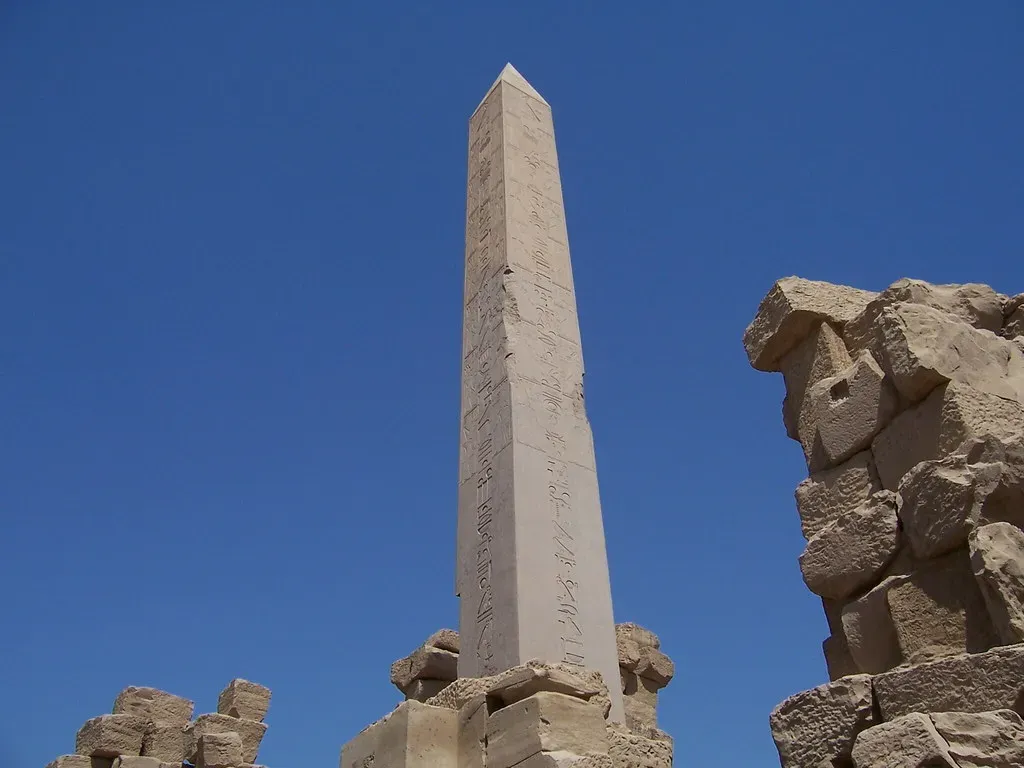
Most people picture ancient Egypt as “big blocks, simple tools.” Stone masons know better. Walk around the unfinished obelisk at Aswan and you’ll see hard granite shaped into curves and flat planes so smooth they’d normally demand diamond-tipped equipment today. Granite sits around 6-7 on the Mohs hardness scale – this isn’t soft limestone we’re talking about.
The mystery was never whether they had tools; they used pounding stones, abrasives, copper, and possibly arsenical bronze. It’s the sheer patience and manpower behind the finish. Modern contractors can absolutely match that surface quality, but only with water-cooled diamond blades and powered grinders. Carve, polish, and raise a 20-meter obelisk with nothing but rope and handwork? Every crane operator will tell you the same thing: technically possible, commercially insane.
4. Inca Walls So Tight a Razor Blade Won’t Fit Between the Stones
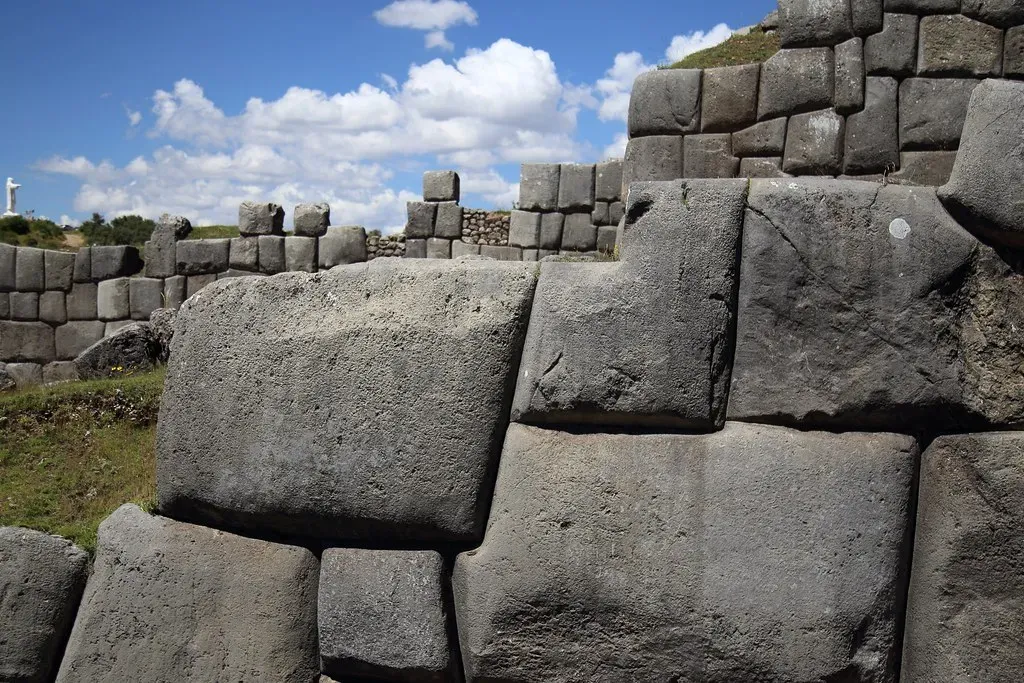
Engineers love straight lines and right angles. The Inca builders in Cusco and Ollantaytambo ignored that completely, and that’s exactly what baffles modern masons who study their work. Their walls use irregular, multi-sided blocks fitted together so precisely that you genuinely cannot slide a blade into the seams – and there’s no mortar holding any of it together.
These stones interlock like three-dimensional puzzle pieces, which is why the walls have outlasted earthquakes that flattened newer buildings around them. A modern contractor might manage a small decorative feature in this style, very slowly, at boutique prices. But at full city scale, with the same seismic performance? No standard workflow today trains crews to improvise geometric interlocks in dense stone like that. Even structural engineers admit we lean on steel and rebar where the Inca relied purely on geometric genius and muscle.
5. Damascus Steel’s Sharpness Nobody Can Fully Reverse-Engineer
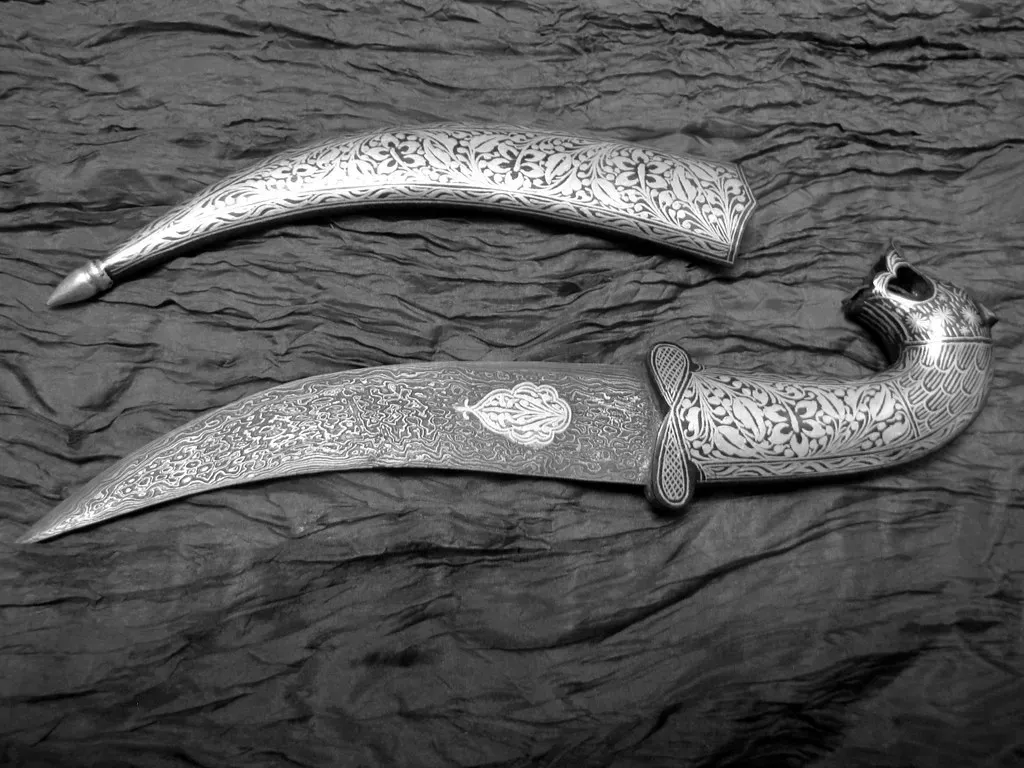
Everyone’s heard of “Damascus steel,” but the real shock is that the original wootz-based process – the one behind the legendary edge and rippling patterned surface – still isn’t fully replicated as a working craft tradition. Modern metallurgy can beat it on raw performance using alloys and vacuum furnaces. Making it the old way, consistently, with historic ores and charcoal fire? That’s another matter entirely.
Ancient smiths worked with specific ore chemistries and carbon levels, cooling the metal in cycles that created microscopic carbide banding inside the blade. Researchers today often need computer-controlled kilns and precision thermocouples just to approximate what a single skilled smith once judged by smell, color, and feel alone. That gap between lab equipment and human intuition is humbling. We can build incredible knives now – we just can’t fully speak the original language.
6. Japanese Sword Lineages Passed Down for 500 Unbroken Years

Ask a materials scientist and they’ll tell you modern steel can outperform a traditional katana in toughness and corrosion resistance. Ask a master bladesmith about the traditional process itself, though – the tamahagane smelting, the folding, the differential hardening, the polishing – and many admit it operates on a level modern manufacturing doesn’t even attempt to touch.
A single legal Japanese sword can involve dozens of specialists – smelters, forgers, polishers, scabbard makers, handle wrappers – each one mastering a tiny slice of the process over decades. The real “beyond modern skill” part isn’t any single step; it’s the continuity. Some techniques were refined through unbroken family lineages spanning 500 years, feedback loops no online tutorial can replicate. Even in Japan today, officials worry these skills will simply vanish as the last masters die without apprentices willing to endure the discipline.
7. Gothic Cathedrals Tuned Like Instruments Without a Single Computer

People assume we could easily rebuild Notre-Dame or Chartres from blueprints and modern modeling software. Structural engineers will quietly tell you: yes, but not the way the original builders did it, and not with the same tacit knowledge. Gothic masons pushed stone rib vaults and flying buttresses to their absolute limits using geometric rules they rarely wrote down – just experience, passed master to apprentice, about exactly how far a span could stretch before it cracked.
Then there’s the acoustics. Stand in a medieval choir stall and sing, and the sound blooms in a way that feels almost engineered for plainchant – because it was. Vault geometry, column placement, and material choices were shaping reverberation times centuries before anyone understood the physics behind it. We could mathematically tune a modern concert hall today, sure. Doing it purely with ropes, templates, and stone, by feel? Most modern architects lean so heavily on software that this kind of raw, embodied instinct rarely gets the chance to develop.
Quick Compare
- Medieval masons: geometric rules memorized by feel, refined through generations of trial and error.
- Modern engineers: computer modeling calculates stress before a single stone is ever cut.
- Medieval acoustics: shaped instinctively through vault height and stone choice for plainchant.
- Modern acoustics: calculated mathematically, then confirmed with digital measurement tools.
8. The Nazca Lines Drawn Perfectly Straight Without Ever Seeing Them From Above
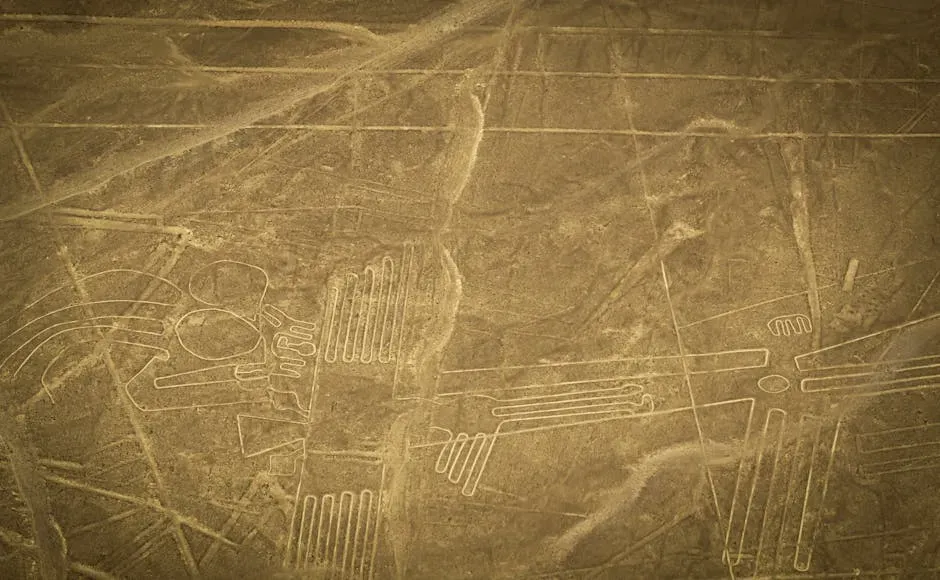
At ground level, the Nazca Lines in Peru look almost unremarkable. Then you learn some figures stretch for hundreds of meters and only make visual sense from the air – and suddenly you understand why people spent decades assuming aliens were involved. The more honest reaction from actual surveyors is simpler: this is brutally hard layout work using nothing but stakes and rope.
Long straight lines, huge animal figures, consistent proportions – all without drones, satellites, or CAD software. Try drawing a flawless hundred-meter hummingbird while standing directly on its wing, unable to see the whole shape at once. Modern artists could absolutely pull it off with GPS and aerial photography. Matching it under the original constraints is another level of spatial intuition entirely, and plenty of field archaeologists admit they’d rather re-survey the existing site than attempt to re-execute it from scratch.
9. Ancient Chinese Lacquerware Built From Thirty Hand-Cured Layers
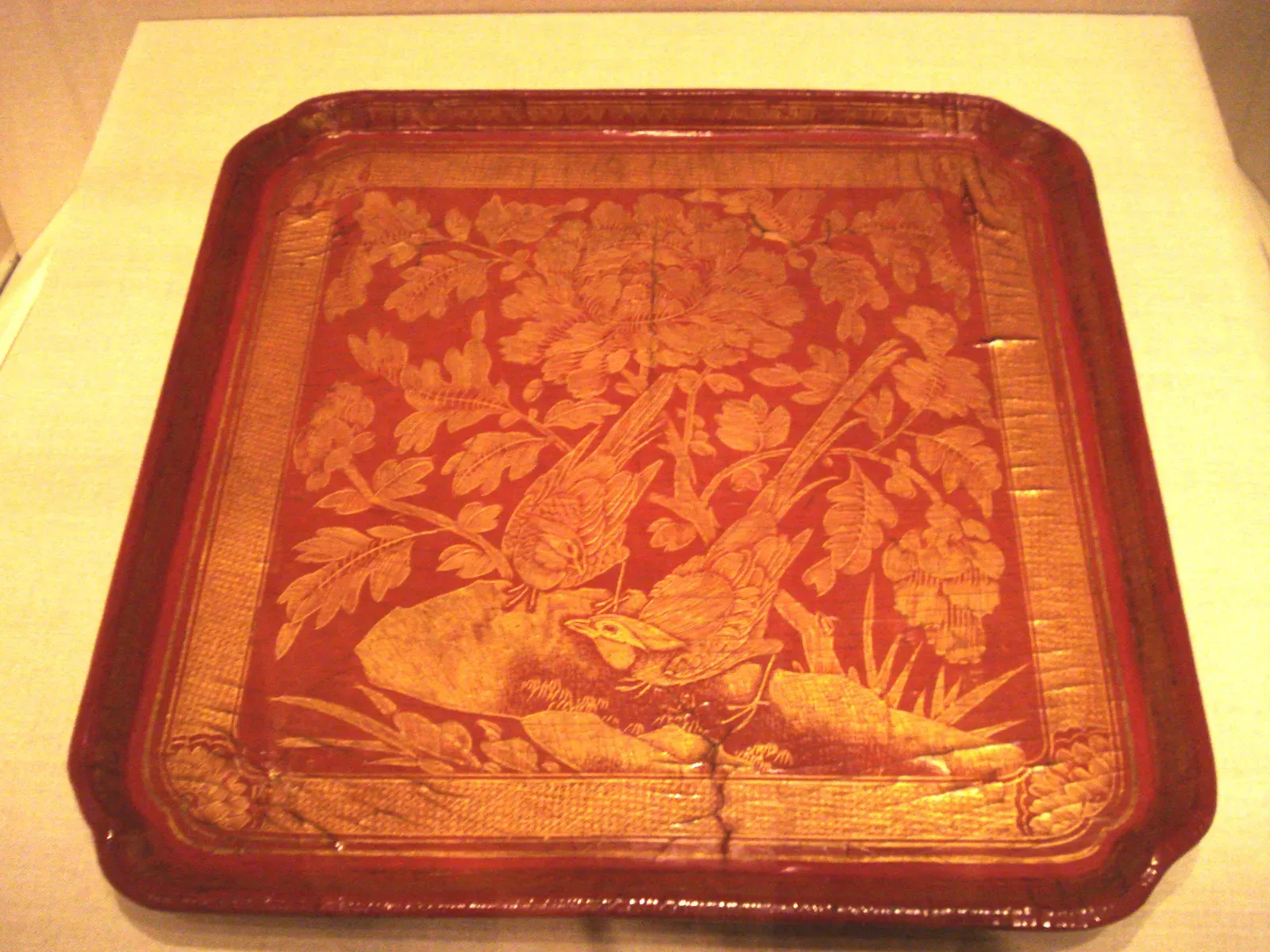
Everyone loves a glossy modern car finish, but lacquerware from China’s Qin and Han dynasties shows a level of material patience that makes contemporary painters wince. True lacquer came from the sap of the Toxicodendron vernicifluum tree, applied in dozens of ultra-thin layers, each one cured separately in warm, humid conditions before the next went on. Some surviving pieces still shine after more than 2,000 years in the ground.
Reproducing that isn’t a matter of “just paint it again.” It requires the right trees, carefully refined sap, tightly controlled curing environments, and artisans willing to work with a highly allergenic material while maintaining microscopic consistency by hand, layer after layer. Most modern lacquers are synthetic shortcuts that fake the look without the structure underneath. Ask a contemporary finisher to hand-apply thirty carved, cured layers to a curved surface and guarantee it for centuries, and you’ll get a laugh – and a very reasonable one.
Worth Knowing
- True lacquer comes from the sap of the Toxicodendron vernicifluum tree, harvested entirely by hand.
- Each layer had to cure in warm, humid conditions before the next coat could go on.
- A single finished piece could require dozens of individually cured coats.
- Some lacquerware recovered from Han dynasty tombs still retains its shine after roughly two thousand years underground.
10. Polynesian Navigators Who Crossed Oceans Using Only Their Senses

Modern sailors lean on GPS, radar, and satellite charts the moment they leave sight of land. Ancient Polynesian navigators crossed thousands of kilometers of open Pacific with none of it – just stars, ocean swells, wind patterns, bird behavior, and even the reflection of islands in distant clouds. They memorized entire “star paths” and combined that knowledge with a felt sense of wave interference vibrating through the hull of their canoe.
Could we program software to replicate the calculations? Sure. Could we train an average sailor today to feel a distant atoll through their feet? Almost certainly not. Only a small handful of revitalization projects, like the ones behind the Hōkūleʻa canoe, are actively rebuilding this knowledge – and even those navigators admit it takes years of relentless practice to internalize.
We are trying to find out who we are by going back to find out who we were.
Nainoa Thompson, Hōkūleʻa navigator
11. Shang Dynasty Bronze Vessels Cast With Paper-Thin Walls
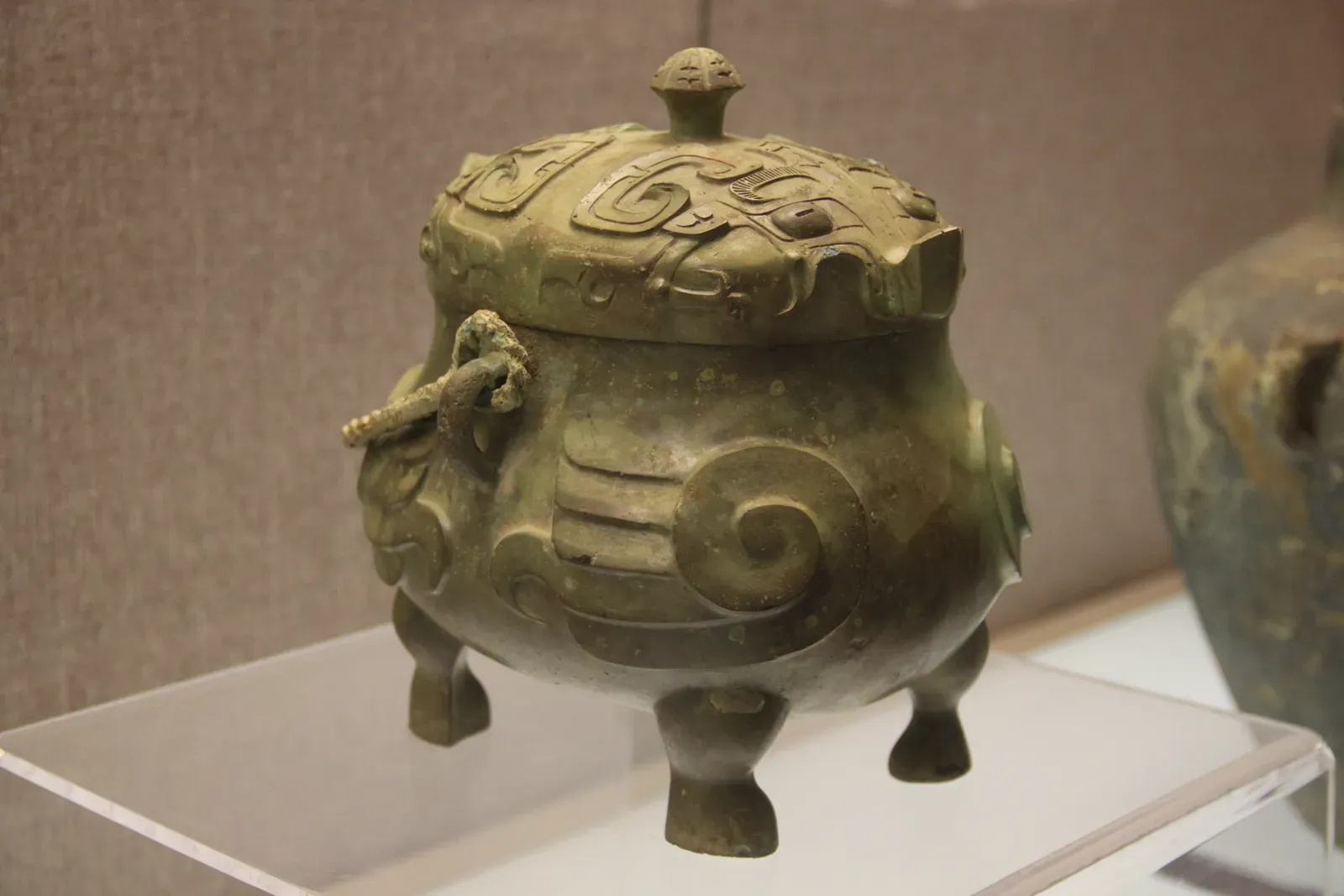
We tend to picture the Bronze Age as crude and small-scale. Then archaeologists dig up a Shang or Zhou dynasty ritual vessel weighing hundreds of kilograms, cast with razor-thin walls, crisp relief decoration, and sometimes intricate hollow legs, and that whole assumption falls apart. Pull any modern foundry manager aside and ask if their crew could sand-cast an 800-kilogram, paper-thin bronze vessel by hand, no modern alloys, no computer simulation. The laughter tends to be a little nervous.
These objects demanded advanced metallurgy, terrifyingly precise temperature control inside charcoal furnaces, and huge organized labor forces managing molds – all coordinated without a single written engineering manual. We can absolutely cast massive bronze art today, but most shops lean on standardized ingots, gas or induction furnaces, and digital models to get there. Recreating those ancient vessels under the original constraints wouldn’t be a routine commission. It would be a multi-year research project.
12. Stonehenge’s Sky-Tracking Alignments Built Without a Single Written Formula

Stonehenge has become such a tourist cliché that people forget how technically audacious it actually is. Some of these stones weigh over 25 tons and were hauled from quarries up to 150 miles away, then erected into a circle-and-lintel system whose alignments track solstices and other celestial events with real precision – centuries before anyone had a written engineering manual to reference.
We can move heavier stones today, obviously, but we throw machinery and fuel at the problem instead of crowds of workers, sledges, and log rollers across muddy terrain. Modern surveyors can set an alignment to the millimeter, but they lean on laser levels and total stations to do it. The builders of Stonehenge relied on sightlines, pegs, and generations of accumulated experience. Rebuilding the stones themselves would be easy. Rebuilding the culture, patience, and inherited sky-knowledge that placed them so precisely – that’s the part that’s genuinely gone.
At a Glance
- Some sarsen stones at Stonehenge weigh more than 25 tons apiece.
- Smaller bluestones were transported from the Preseli Hills in Wales, roughly 150 miles away.
- The circle-and-lintel layout tracks solstice sunrises and sunsets with measurable precision.
- Construction unfolded in stages over centuries, long before written engineering records existed.
The Bottom Line
Line these twelve up side by side and a pattern jumps out immediately: our gadgets got smarter, but our hands got lazier. Ancient artisans poured absurd amounts of time, apprenticeship, and embodied knowledge into a single wall, blade, or bronze bowl – resources no modern budget would ever approve.
We could technically reproduce almost everything on this list, but only by cheating the original constraints with machines, software, and global supply chains. That’s the uncomfortable truth hiding underneath all twelve of these stories: they’re not beyond modern skill because we got dumber. They’re beyond modern skill because we’ve traded patience for speed, and craft for convenience. Personally, I think that’s the real loss here – not some mystical lost secret, but an entire way of thinking with our hands that we quietly let go of. Which of these would you actually want to see revived, and which do you think are better left as proof that “progress” was never as simple as we like to pretend?