In grade school, gravity gets the “solved” treatment: an apple drops, the moon orbits, Newton wrote it down, Einstein cleaned it up, and everyone moves on. So it comes as a shock to learn that among the physicists who actually study it for a living, gravity is treated less like a finished chapter and more like an open case file. The force you feel every time you sit in a chair or drop your phone is, quietly, the most mysterious thing in all of physics.
That’s not hype. Ask a cosmologist about black holes, dark energy, or why gravity refuses to play nice with quantum mechanics, and the confident textbook tone disappears fast. What follows are 13 things about gravity that working scientists openly admit they cannot fully explain – starting with a weakness so extreme it barely makes sense.
#13 – Why Gravity Is Shockingly Weaker Than Every Other Force in the Universe

Physicists have a dry name for this embarrassment: the hierarchy problem. Electromagnetism can fling electrons around at nearly the speed of light. The strong force glues protons together with enough energy to power a nuclear weapon. Gravity, by comparison, is a joke – a cheap refrigerator magnet can lift a paperclip against the gravitational pull of the entire planet.
Run the numbers and it gets worse. The strength of gravity, tied to Newton’s constant and the Planck scale, is smaller than the other three fundamental forces by a truly absurd margin. Nobody has a confirmed reason why. Extra hidden dimensions, quantum effects that “leak” gravity elsewhere, exotic particles – they’re all guesses dressed up in math, and none of them has passed a real experimental test.
Fast Facts
- Strong force: binds protons and neutrons together; the most powerful of the four fundamental forces
- Electromagnetic force: roughly a trillion trillion trillion times stronger than gravity between two protons
- Weak force: drives radioactive decay, still dwarfing gravity by an enormous margin
- Gravity: dead last in strength, yet the only force that shapes galaxies, stars, and planets on the grandest scales
#12 – What Really Happens Inside a Black Hole (Physicists Have No Idea)
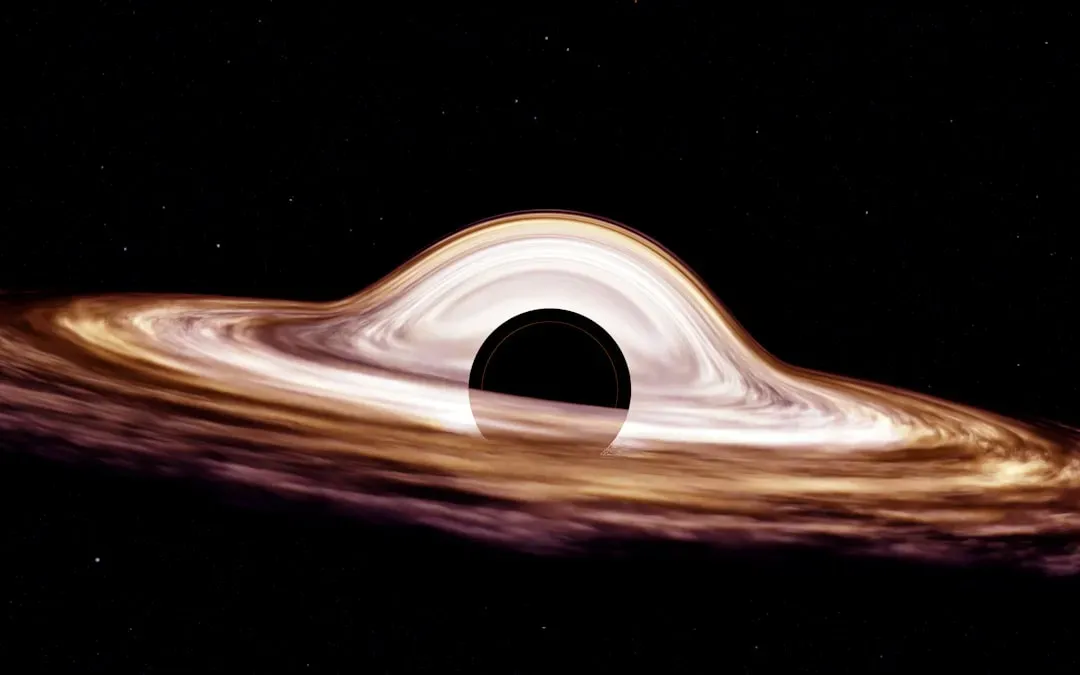
Everyone can draw a black hole: a dark sphere, an event horizon, the point of no return. Outside that boundary, Einstein’s equations perform beautifully, predicting exactly what telescopes see. Cross the horizon, though, and the honesty starts – because nobody actually knows what’s waiting at the center.
Classical general relativity predicts a singularity: infinite density crushed into zero volume, where space and time stop making sense. Infinities are physics’ way of waving a red flag. Most researchers suspect quantum gravity smooths that point into something finite, but without a tested theory of quantum gravity, that’s a hunch, not an answer. Simulations can’t see past the horizon and telescopes can’t either, so the core of every black hole in the universe remains, quite literally, off the map.
#11 – Gravity and Quantum Mechanics Refuse to Get Along
General relativity gives you smooth, elegant spacetime – planets and galaxies gliding along graceful curves. Quantum mechanics gives you a jittery mess of probabilities, uncertainty, and particles blinking in and out of existence. Individually, both theories work with terrifying accuracy. Try to merge them, and the math erupts into infinities that refuse to cancel out.
String theory, loop quantum gravity, holography, emergent spacetime – these aren’t fringe ideas, they’re the field’s best shots at a solution, and decades of work haven’t produced a single decisive experimental confirmation. Online, people talk like quantum gravity is one breakthrough away. In private, researchers will tell you they’re still arguing over which road even points in the right direction. Gravity clearly touches quantum particles – it pulls on atoms and photons just fine. How spacetime’s geometry itself goes quantum is still a blank spot on the map.
#10 – Is Gravity Even a Force – Or Just an Illusion of Geometry?
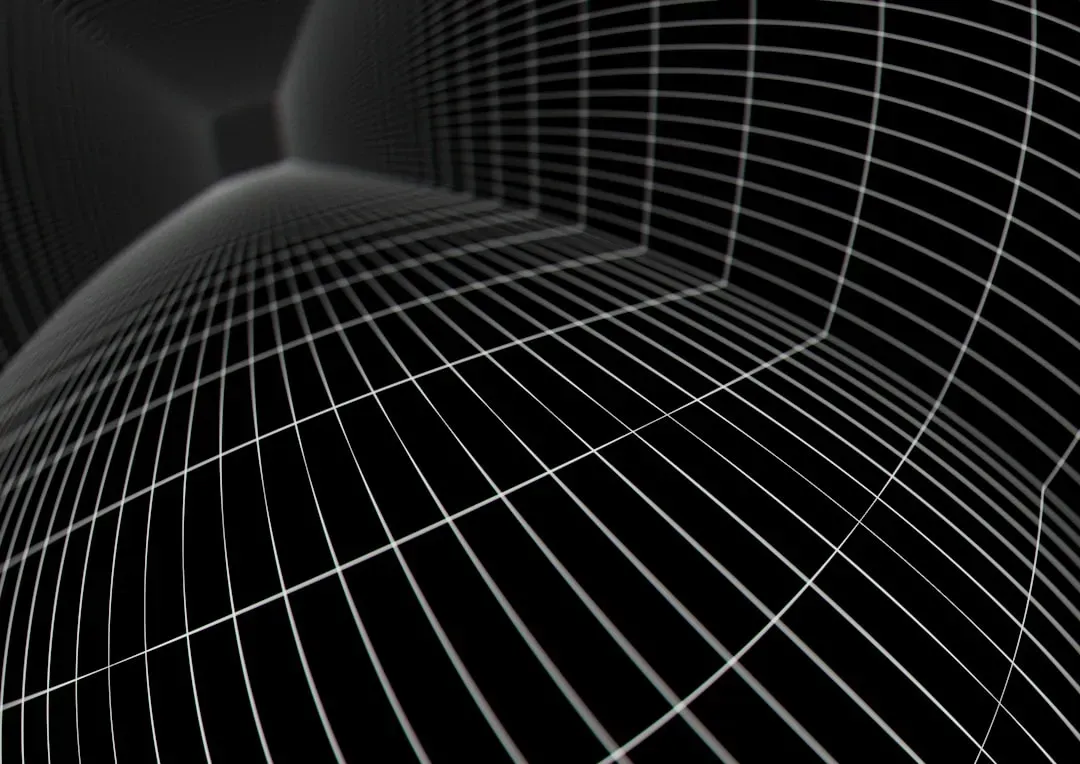
Newton called gravity a force pulling masses together. Einstein rewrote the story: gravity is the curvature of spacetime, and objects simply follow the straightest path available through that curve. It’s why astronauts float in orbit – they’re not “escaping” gravity, they’re in constant free fall.
Here’s the twist: even that elegant picture might be a stand-in for something deeper. Some physicists argue gravity is emergent, the way temperature emerges from countless jostling molecules that individually have no temperature at all. In that view, spacetime’s geometry could be a kind of illusion sitting on top of quantum information. Nobody has built an underlying theory that reproduces everything general relativity gets right and also makes new, testable predictions, so the question stands unanswered.
Spacetime tells matter how to move; matter tells spacetime how to curve.
John Archibald Wheeler
#9 – The Universe Is Speeding Up, and Nobody Knows Why (Dark Energy)
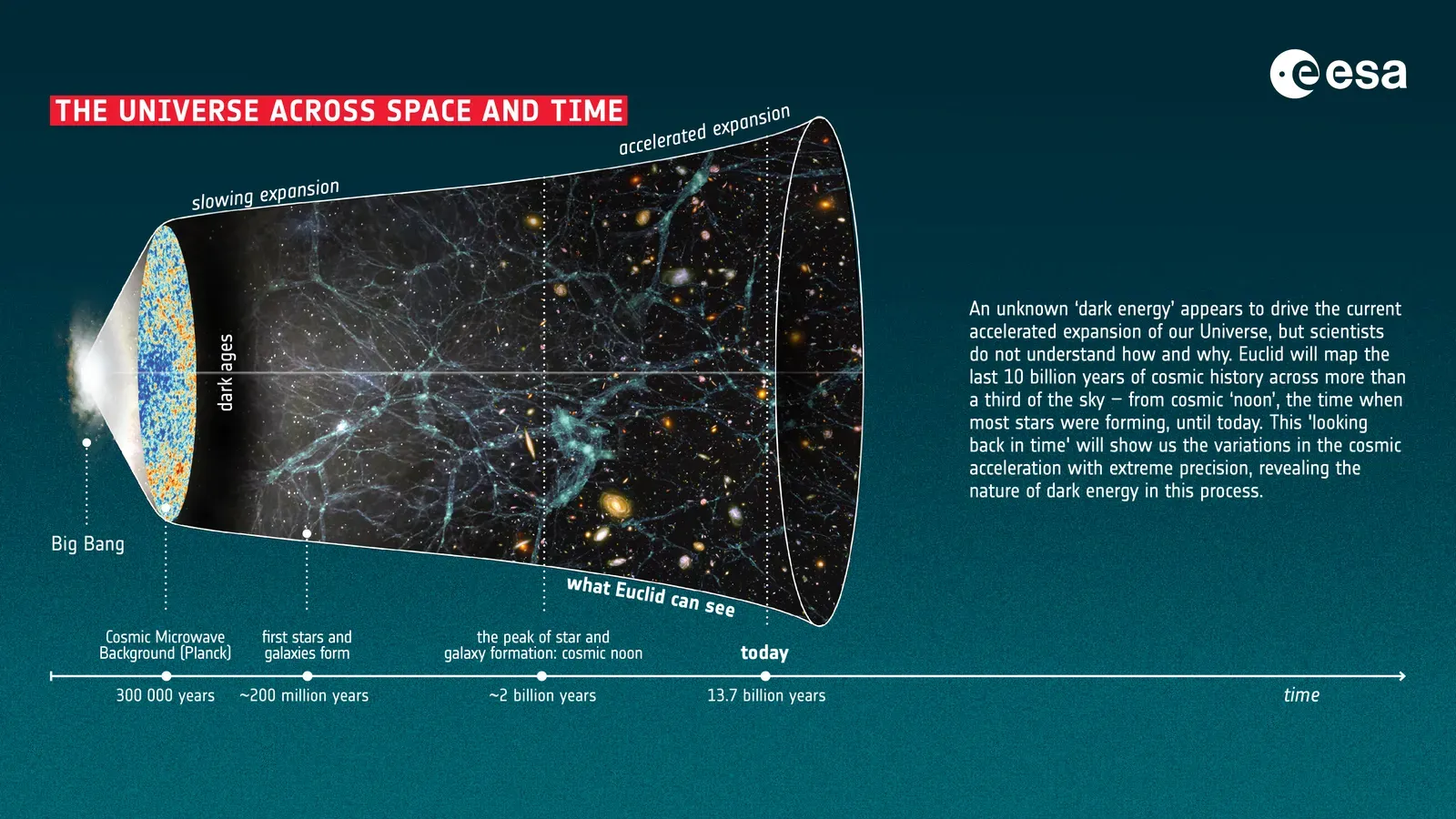
In the late 1990s, astronomers pointed their telescopes at distant supernovae expecting to confirm that gravity was gradually slowing the universe’s expansion. Instead they found the opposite: the expansion is accelerating. Something out there is acting like a repulsive form of gravity on the grandest scale imaginable.
We call it dark energy, but that name is basically a shrug wearing a lab coat. The simplest fix, Einstein’s old cosmological constant, treats it as a fixed energy density of empty space. Quantum field theory tries to calculate that same value and misses by up to 120 orders of magnitude – often called the worst prediction in the history of physics. Alternatives like quintessence or modified gravity haven’t won the argument either, leaving one of the biggest forces shaping our universe completely unexplained.
At a Glance
- Ordinary matter (stars, planets, people): roughly 5% of the universe’s total energy budget
- Dark matter: about 27%, detected only through its gravitational effects
- Dark energy: the remaining roughly 68%, driving accelerated expansion
- That means everything we can see, touch, or build a telescope out of is a small minority of reality
#8 – Gravity Keeps Pointing to Dark Matter – But We Still Don’t Know What It Is
Ordinary matter, the stuff that makes stars, planets, and people, accounts for roughly 5% of the universe’s total energy budget. Another 27% appears to be dark matter, detected purely through its gravitational fingerprints. Galaxy rotation curves spin too fast, light bends too sharply, and cosmic structures clump too neatly unless something invisible is adding its mass to the mix.
We know dark matter gravitates – that’s the whole reason we found it in the first place. What we don’t know is how it interacts with gravity under extreme conditions, or whether it’s even made of particles at all. MOND and other modified-gravity theories try to erase dark matter entirely by tweaking gravity’s rules at low accelerations, and while most cosmologists still bet on real particles, no detector on Earth has ever caught one directly. Gravity is showing us a shadow with no confirmed owner.
#7 – Does Gravity Even Have a Particle? Meet the Graviton Nobody’s Found
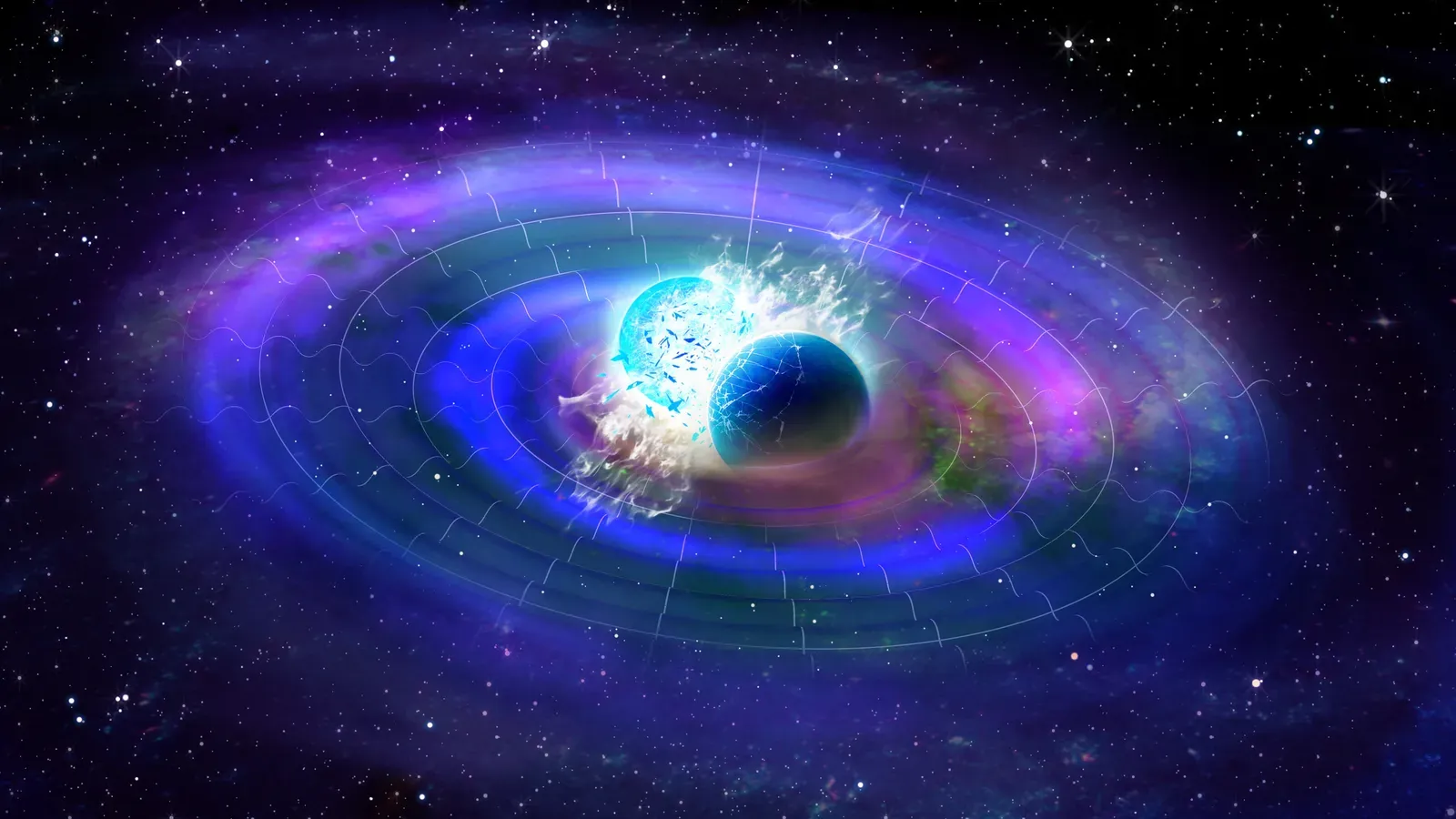
Every other force in nature has a messenger particle: photons carry electromagnetism, gluons carry the strong force, W and Z bosons carry the weak force. Gravity should logically have one too – the graviton, a hypothetical massless particle with a quirky spin of 2. The catch is that gravity is so weak that catching a single graviton in a lab is essentially impossible with any technology we can imagine building.
We’ve directly detected gravitational waves rippling out from colliding black holes and neutron stars, matching Einstein’s predictions with stunning precision. In a full quantum picture, those waves would be made of countless gravitons – but that’s an inference, not a detection. Until scientists can actually test gravity for quantum behavior like superposition and entanglement, the graviton stays a convenient character in the equations rather than a confirmed piece of reality.
#6 – What Happened at the Big Bang? Even Gravity’s Math Gives Up
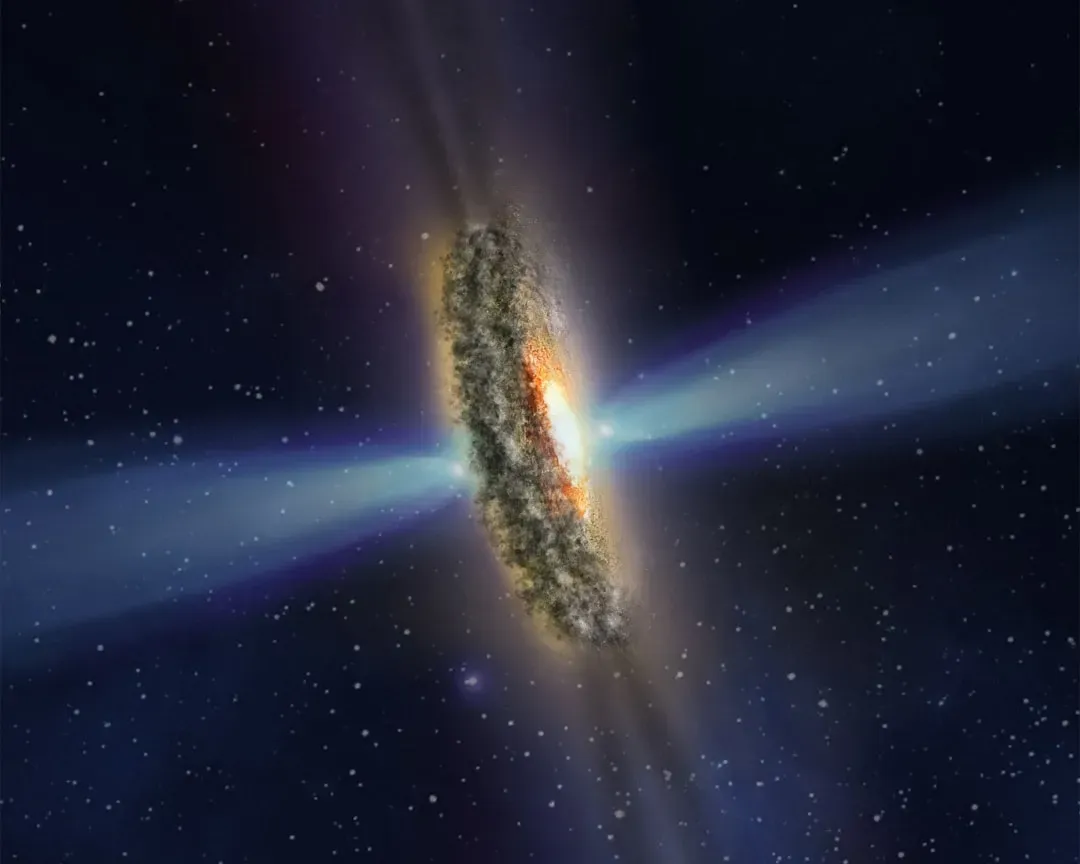
Every cosmology textbook shows the same tidy cartoon: everything crammed into a single point, then bang, expansion, galaxies, stars, us. Run general relativity backward far enough, though, and you hit another singularity – infinite density and curvature at the very start of time. Just like inside a black hole, most physicists read that not as literal reality but as proof the theory has hit a wall.
Bounce models imagine a previous universe collapsing and rebounding. Cyclic cosmologies picture endless rounds of expansion and contraction. Inflation theory proposes a burst of ultra-fast expansion that set the stage for everything after. Some quantum gravity ideas suggest spacetime has a built-in minimum size that prevents a true singularity from ever forming. The blunt truth is that our best-tested physics simply does not describe the universe’s first fraction of a second – we can trace history impressively close to the beginning, but the actual beginning remains theory, not settled fact.
Quick Compare
- Inflation: a burst of faster-than-light expansion smooths and flattens the newborn universe
- Bounce models: our universe emerges from the collapse of an earlier one
- Cyclic cosmology: expansion and contraction repeat endlessly, with no single true beginning
- Quantum gravity models: spacetime has a built-in minimum size, avoiding a singularity altogether
#5 – Does Gravity Really Travel at the Speed of Light? (Mostly, We Think)
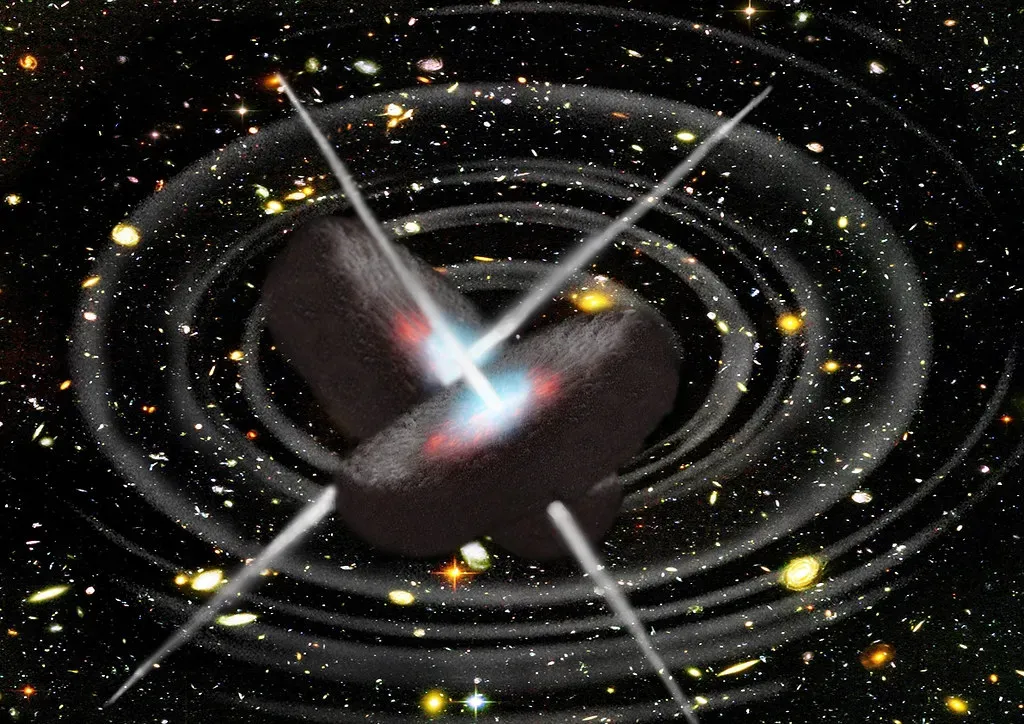
Einstein’s equations insist that changes in a gravitational field ripple outward at the speed of light, not instantly. For decades that was more of an article of faith than a measured fact. Then LIGO and Virgo started catching gravitational waves from distant collisions, and in 2017 astronomers watched one neutron star merger in both gravitational waves and light at the same time. The arrival times lined up so closely that any speed difference had to be tiny.
So where’s the catch? Most tests so far only cover certain frequencies and conditions. Some alternative gravity theories predict subtle speed differences at other energies or in different environments that we simply haven’t tested yet. If future observations ever catch even a whisper of a frequency-dependent delay, a whole graveyard of “modified gravity” theories would come roaring back to life. For now, gravity and light are locked together to extraordinary precision – but physicists know they’ve only tested a narrow slice of what’s actually possible.
#4 – Why Gravity Only Pulls – And Never Pushes (Except When It Does)
Electromagnetism can attract or repel depending on charge. Gravity, in everyday experience, only ever pulls – there’s no such thing as a “negative mass” apple that falls upward off the ground. Yet zoom out to the scale of the entire cosmos, and dark energy behaves like a repulsive form of gravity, actively pushing space apart faster and faster.
That contradiction isn’t just wordplay – it cuts to the heart of what mass and pressure actually mean inside general relativity, where pressure and stress curve spacetime right alongside energy density. Dark energy appears to carry a strange negative pressure that flips gravity’s usual behavior into a shove instead of a pull. Is that the same gravity wearing two different masks, or two unrelated phenomena we’ve lazily lumped under one name? Nobody has a clean mechanism explaining why gravitational “charge” only comes in one flavor, or whether exotic repulsive matter could exist somewhere we haven’t looked.
#3 – What Gravity Does at the Smallest Scales Imaginable Is a Total Mystery
Gravity has been tested from the orbits of planets all the way down to millimeter-scale tabletop experiments, and Newton plus Einstein win every single time. But shrink the scale down toward atoms and beyond, and the data thins out fast. Theories predict real weirdness down there – hidden extra dimensions, cracks in the inverse-square law, or entirely new forces switching on.
At the Planck length, roughly 1.6 x 10⁻³⁵ meters, quantum fluctuations of spacetime itself are expected to go wild, turning smooth space into something closer to foam. Our best equipment isn’t remotely close to probing distances that small. Does a classical trajectory even mean anything down there? Do black holes dissolve into quantum “fuzzballs” instead of sharp points? On the smallest scales physics can imagine, gravity is still an educated shrug.
#2 – The Freakish Coincidence at the Heart of Einstein’s Entire Theory
Einstein’s whole theory rests on one strange fact: inertial mass, how hard something is to accelerate, and gravitational mass, how strongly something feels gravity’s pull, are exactly the same number every time we check. That’s the entire reason a hammer and a feather hit the ground together in a vacuum. Einstein turned that coincidence into the equivalence principle and built general relativity directly on top of it.
But nobody has ever explained why it has to be true. Mach’s principle, an old idea suggesting an object’s inertia comes from the gravitational pull of all other matter in the universe, has never been formulated in a way that matches observations. Is the equality between inertial and gravitational mass a fluke, a fundamental identity, or a clue that gravity is secretly a manifestation of something else entirely about motion and energy? Experiments keep confirming the equivalence to unbelievable precision, and every new decimal place only sharpens the question instead of answering it.
Worth Knowing
- The MICROSCOPE satellite, launched in April 2016, was built to test the equivalence principle down to a precision of one part in a quadrillion using titanium and platinum test masses in orbit.
- Its final results found that the accelerations of the two test masses differed by no more than about one part in a quadrillion, turning up no violation at all.
- The mission operated from April 2016 until the satellite was deactivated in October 2018.
- Every sharper measurement so far has only confirmed Einstein’s assumption, without explaining why it’s true
#1 – Why Does Gravity Exist at All? Nobody Actually Knows
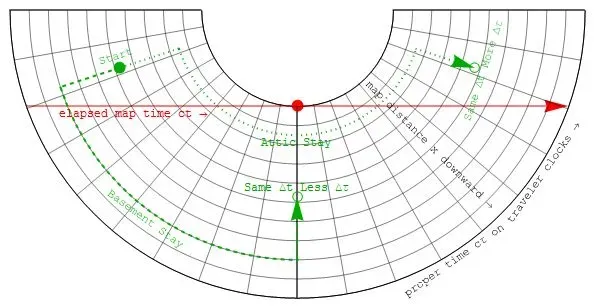
Physicists can describe gravity with astonishing precision. They write down the Einstein field equations, simulate two black holes spiraling into each other, correct GPS satellites for time dilation, and chart how light bends around entire galaxies. But describing how gravity behaves is not the same thing as explaining why it exists in the first place, and that’s the part most textbooks quietly skip past.
Why should energy and momentum bend spacetime at all? Why is spacetime flexible and dynamic instead of a fixed, static backdrop? Some modern approaches try to derive gravity from quantum entanglement, information theory, or thermodynamics, treating spacetime itself as something that emerges rather than something basic. Others call that mathematically dressed-up storytelling until it produces a real, testable prediction. The blunt truth is that nobody knows why reality chose “curved spacetime plus gravity” as its operating system instead of something else entirely.
The Bottom Line
For all the confident pop-science talk, gravity is the least tamed part of modern physics. We can launch spacecraft with it, weigh entire galaxies with it, and listen to the death screams of colliding black holes because of it. Yet the biggest questions – why it’s so weak, why it’s accelerating the cosmos, how it fits with quantum rules, and why it exists at all – remain embarrassingly open.
My honest take: gravity isn’t close to “solved,” and I’d bet against a tidy final theory arriving anytime soon – probably not before we get practical fusion power, and that’s saying something. If anything, the more precisely we measure gravity, the more the cracks show. That’s not a failure of physics; it’s the most honest thing physicists have said about it in a century. The real question worth sitting with is which of these thirteen blind spots gets solved first, and which one might force us to throw out everything we think we know about gravity.