
We like to imagine history as a straight staircase: grunting cavemen at the bottom, smartphones at the top, progress marching upward one clever idea at a time. Archaeologists keep ruining that story.
Over and over, they find proof that ancient engineers solved problems we still struggle with today – self-healing concrete, programmable machines, weapons science can’t fully reverse-engineer – and then watched those solutions get erased by war, secrecy, or plain bad luck. Some of these technologies took over a thousand years to reappear. A few still haven’t been fully recovered. Here are 14 inventions so far ahead of their time that losing them should honestly embarrass us.
#14 – The Antikythera “Analog Computer” That Shouldn’t Have Existed
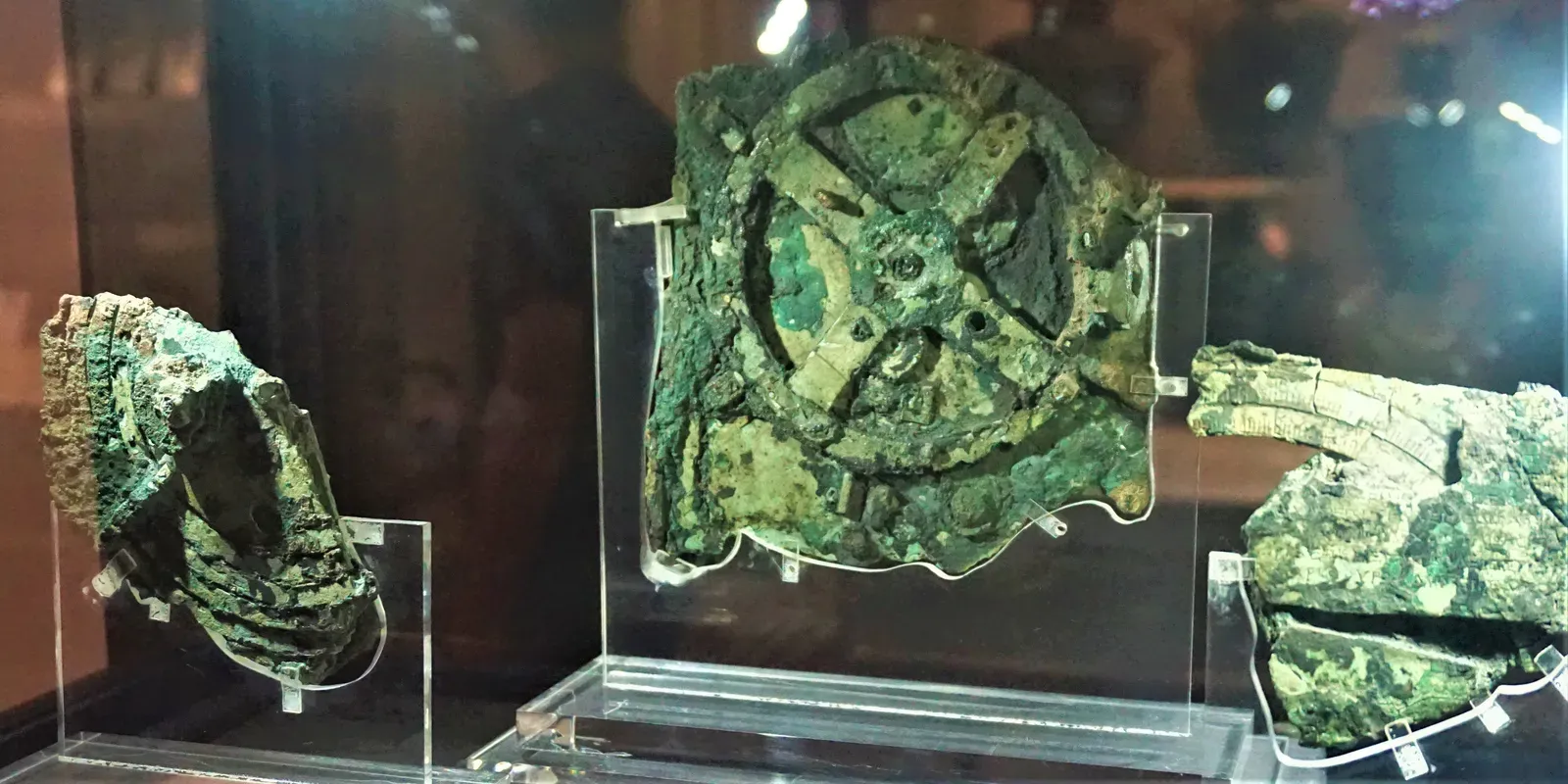
This wasn’t just an old gearbox pulled off the seafloor. It was a fully mechanical computer, built roughly 2,000 years ago, dragged out of a Roman-era shipwreck near the Greek island of Antikythera. Inside its corroded bronze shell sat at least 30 finely cut gears, engineered to predict eclipses, track planetary movement, and possibly schedule the ancient Olympic-style games. Most people picture Greeks in togas holding torches. They should be picturing someone hunched over a lathe, cutting gear teeth to fractions of a millimeter, centuries before anyone else on Earth thought to try.
What makes it genuinely eerie is that nothing like it shows up again for more than a thousand years. The gear ratios, the differential motion, the miniaturization – all of it goes quiet. Either devices like this were rare, expensive status symbols that simply didn’t survive, or we still haven’t found the rest of the family tree. Either way, our first clear evidence of complex mechanical computing appears already fully mature, then vanishes without a sequel.
Any sufficiently advanced technology is indistinguishable from magic.
Arthur C. Clarke
#13 – Ancient Greek Steam Engines Nobody Bothered to Scale
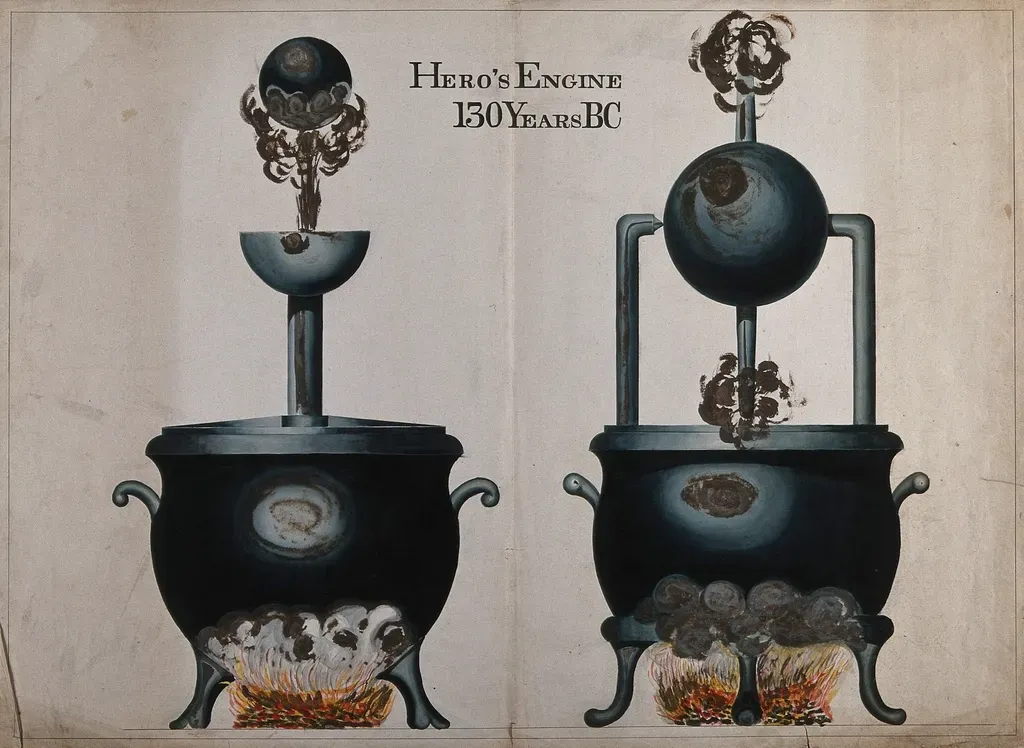
Most people assume steam power starts with smoke-belching Victorian factories. The Greeks were already boiling water for motion in the 1st century CE. Hero of Alexandria documented the aeolipile – a metal sphere that spun rapidly when jets of steam escaped through small nozzles on its sides. It looked like a temple toy. Mechanically, it was a primitive steam turbine, running on the exact same principle – heat turns to pressure, pressure turns to rotation – that would eventually power locomotives.
So why didn’t it kickstart an industrial revolution 1,700 years early? The uncomfortable answer is economics, not ignorance. Slave labor was cheap and plentiful; building coal mines and precision machinery was expensive and slow. There was zero financial pressure to scale a toy into an engine. Once the temple culture that funded this kind of tinkering faded, the detailed experimentation faded with it, and later societies had to “discover” steam power all over again as if it were brand new.
#12 – Roman Concrete That Gets Stronger the Longer It Sits in the Ocean

Modern coastal bridges start crumbling within decades. Roman harbors have been sitting in saltwater for nearly 2,000 years and are still standing. The secret is a volcanic ash-based concrete mixed with pozzolana, lime, and seawater itself. Recent analysis found something that sounds almost backwards: this concrete actually gets stronger over time, as mineral crystals like aluminous tobermorite grow inside its microcracks and effectively heal the structure from within.
Modern Portland cement does the opposite – it slowly decays when exposed to harsh marine conditions. And here’s the part that should sting a little: after Rome collapsed, this formula essentially disappeared from Western building practice. Medieval builders fell back on simple lime mortar and rubble, and the subtle seawater chemistry behind Roman piers was forgotten for well over a thousand years. It took 20th and 21st century materials scientists running lab analysis on ancient breakwaters to even begin reverse-engineering what Roman workers already knew by feel.
Fast Facts
- Roman marine concrete has held up in seawater for nearly 2,000 years
- Key ingredient: volcanic pozzolana ash, mixed with lime and seawater
- Aluminous tobermorite crystals grow inside cracks, sealing them over time
- Modern marine-grade Portland cement often needs major repairs within decades
#11 – Damascus Steel’s Vanishing Metallurgy

Pop culture oversells Damascus steel as some mystical super-metal, but the real history is impressive enough on its own. These blades were forged from high-carbon “wootz” ingots imported from India and Sri Lanka, producing swords that combined hardness, flexibility, and a distinctive rippling, watered pattern along the blade. Microscopic studies have even found carbon nanotube-like structures and unusual carbide networks inside the metal – features that gave these weapons a cutting edge European crusaders openly obsessed over.
The real mystery is why the technique simply died out. By the 18th and 19th centuries, the exact process for producing true Damascus steel was gone. Disrupted trade routes cut off the original wootz supply, deforestation choked off the fuel needed for the right furnace temperatures, and the closely guarded craft knowledge was passed down orally rather than written into manuals that could outlive their makers. Modern bladesmiths can fake the look and approximate some properties, but nobody can confidently claim they’ve fully rebuilt the original method.
#10 – Greek Fire: The Weapon That Burned on Water

Picture medieval napalm that ignites on the surface of the ocean and refuses to go out. That’s Greek Fire, the incendiary weapon the Byzantine navy used from the 7th century onward to terrify enemy fleets. Contemporary accounts describe a liquid flame sprayed through siphons mounted on ships, powerful enough to decide entire naval battles and sieges. Some accounts even describe panicked soldiers diving overboard, only to find the sea itself was burning around them.
We still don’t know exactly what it was. The formula was a closely guarded state secret, likely built from some combination of petroleum, resins, sulfur, and possibly quicklime. When the Byzantine Empire shrank and its key workshops were lost, the recipe apparently died along with the specialists who made it. Modern chemists can propose plausible versions, but no one can say with certainty they’ve actually recreated the original weapon. It’s one of the rare cases where secrecy alone was enough to erase an entire military technology.
#9 – Flexible Roman Glass and the Execution That May Have Buried It
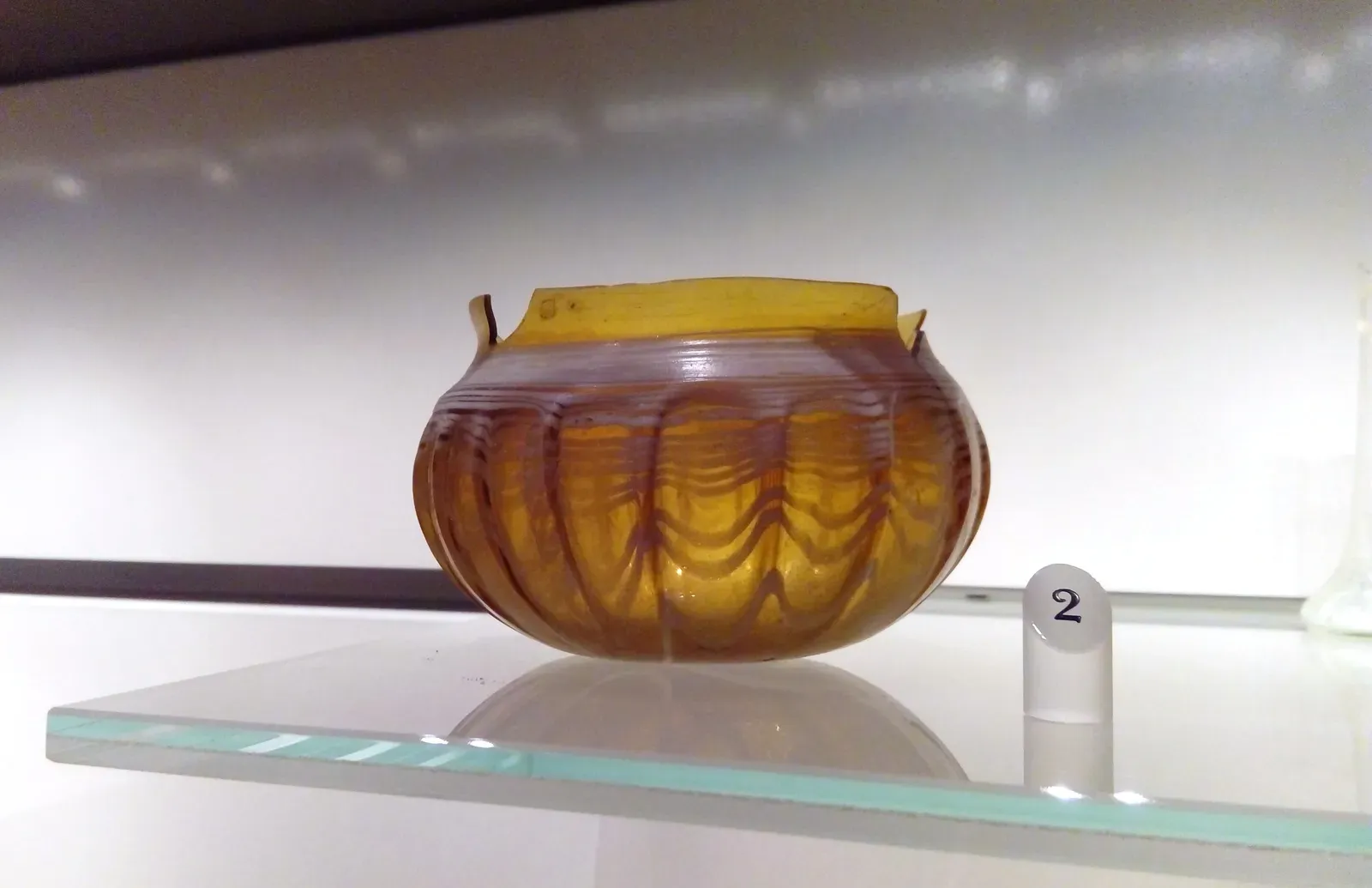
Roman writers casually mention something that sounds like a myth today: flexible glass. The most famous version of the story describes an inventor presenting Emperor Tiberius with a glass bowl that, when dropped, dented instead of shattering – and the craftsman simply hammered it back into shape on the spot. Tiberius, according to the legend, immediately panicked that this material would crash the value of gold and silver, and had the inventor executed and his workshop destroyed to bury the secret with him.
Dramatic? Definitely. But it hints at real experimental glassworking happening behind the scenes. No surviving artifact has ever been confirmed as this “malleable glass,” and plenty of historians dismiss the story as moralistic fiction rather than fact. Still, we know Romans were experimenting with unusual glass compositions, and some ancient glass really is tougher than expected. At minimum, the legend proves something interesting on its own: ancient people were already aware of – and nervous about – disruptive new materials threatening the powerful.
Worth Knowing
- The tale appears in the writings of Roman historians like Pliny the Elder
- Emperor Tiberius ruled Rome from 14 to 37 CE, the era tied to the legend
- No confirmed “flexible glass” artifact has ever surfaced from archaeology
- Some genuine ancient glass samples do show unusual durability, keeping the debate alive
#8 – The Baghdad “Batteries” Nobody Can Fully Explain
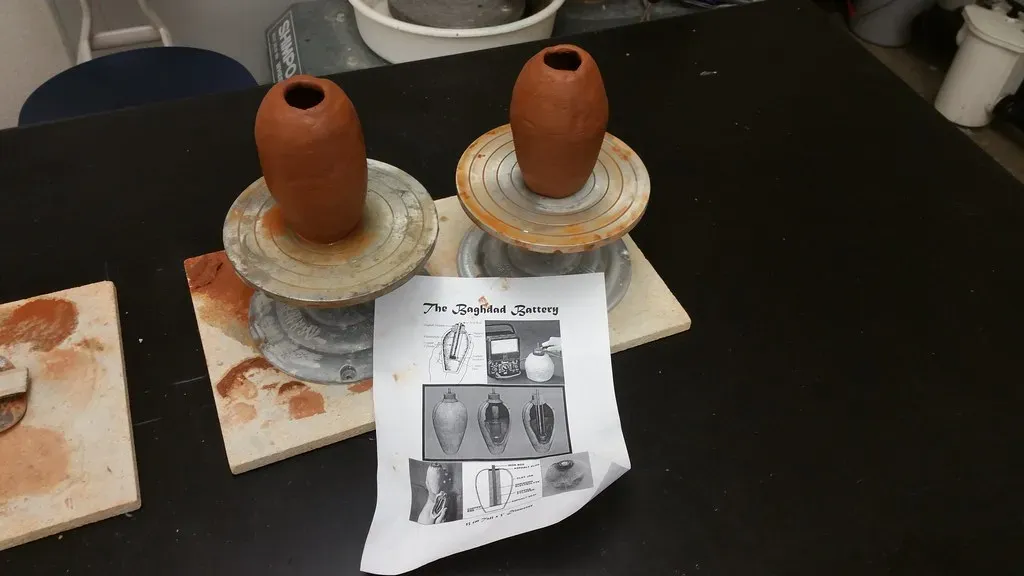
In the 1930s, archaeologists near modern-day Baghdad dug up clay jars containing copper cylinders and iron rods, dating back to the Parthian or Sassanian periods. When researchers rebuilt the setup and added an acidic liquid, it actually produced a small electrical charge, which is how these objects earned the nickname “Baghdad batteries.” The obvious question nobody can fully answer is whether ancient people actually understood – and used – what they’d built.
The mainstream view stays cautious about the possibilities, including that they were:
- Simple containers for scrolls or sacred objects
- Ordinary vessels that only accidentally resemble a battery
- Or genuinely early electrochemical cells, possibly used to electroplate thin layers of gold or silver onto other metals
The evidence for deliberate electrical use is thin but not absurd. The bigger loss here isn’t just the technology itself, it’s the missing context. Whatever workshop knowledge or instructions once existed around these jars is completely gone, leaving us with strange artifacts, no user manual, and a lot of educated guessing.
#7 – Roman “Programmable” Automata Powering Fake Miracles
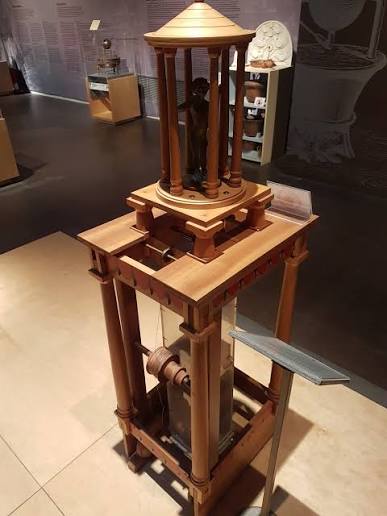
If you think automation started with industrial looms, you’re a few centuries behind. Ancient engineers like Hero of Alexandria designed mechanical theaters and automata powered by weights, water, and air pressure that could swing open temple doors on their own, animate small figurines, or perform short, timed plays. By rearranging pins and ropes inside the mechanism, operators could change the sequence of movements – a crude but genuine form of programmability, built entirely from mechanical parts.
This entire tradition faded as Hellenistic scientific culture declined. Medieval Europe held onto simple mechanical clocks, but the more playful, experimental automata described in Greek texts mostly survived only as fragments in translated manuscripts, not as working devices. It’s worth sitting with the fact that ancient priests were essentially staging fake miracles using hidden mechanical engineering, centuries before anyone imagined robotics as a real field. Once the religious and cultural shift moved away from pagan spectacle, the economic niche that funded this tinkering disappeared with it.
#6 – The Han Dynasty Seismoscope That Read Earthquakes From Hundreds of Miles Away

In 132 CE, Chinese polymath Zhang Heng reportedly built a seismoscope capable of detecting distant earthquakes before anyone nearby had felt a thing. The device was a large bronze vessel ringed with dragon-head spouts and pendulum-based internals; when a tremor hit, a ball would drop from the mouth of the dragon pointing toward the earthquake’s direction, sometimes from hundreds of kilometers away. Modern reconstructions suggest the underlying physics genuinely works.
Then the device simply disappeared from use. Political upheaval and the long churn of dynastic collapse meant detailed technical instructions were never standardized or reliably preserved. Later texts mention Zhang’s invention by name but offer no workable schematics to actually rebuild it. It took modern scientists centuries, using mechanical and eventually electronic sensors, to reach a comparable level of earthquake detection. Whether or not the original claims were slightly exaggerated, the core idea – instrumentally detecting a quake from far away – was shockingly ahead of its time.
At a Glance
- Built in 132 CE by court astronomer and inventor Zhang Heng
- Bronze vessel ringed with dragon heads pointing toward compass directions
- A dropped bronze ball indicated the general direction of a distant quake
- No working schematic survived past the Han Dynasty’s political upheaval
#5 – Mesoamerican Rubber Chemistry, Centuries Before Goodyear

Long before Charles Goodyear vulcanized rubber in the 19th century, Mesoamerican cultures were already chemically modifying natural latex to make durable, bouncy balls and flexible goods. The Olmec, Maya, and Aztec mixed latex from rubber trees with juice from morning glory vines, a combination that cross-linked the rubber’s polymers and dramatically improved its elasticity. This wasn’t blind trial and error passed off as ritual – it was empirically tuned material science, refined generation over generation.
Colonial disruption devastated far more than societies; it wiped out craft knowledge too. Written records for these rubber techniques were minimal to begin with, and the oral traditions that carried them were shattered by disease, conquest, and forced conversion. European observers marveled at the bouncing rubber balls but never bothered documenting the workshop-level details behind them. By the time Western chemists took rubber seriously, they had to rebuild the underlying chemistry almost from scratch, as if the Americas had never solved the problem at all.
#4 – India’s Zinc Distillation Trick That Outsmarted a Metal’s Chemistry

India became the earliest large-scale producer of pure metallic zinc, and the method they used to pull it off is almost sneaky in how clever it is. At Zawar in Rajasthan, archaeologists have uncovered sealed distillation retorts dating to around the 12th century, with hints of even earlier experimentation. Craftsmen heated zinc ore inside closed clay vessels so the metal vaporized before it could melt into slag, then captured and condensed those fumes elsewhere – an industrial-scale workaround for one of metallurgy’s most annoying chemical quirks.
Detailed written descriptions of the process are rare, and the technology slowly diffused, mutated, and was eventually overshadowed by later European metallurgical methods. Modern metallurgists only fully appreciated how sophisticated this system was after studying the physical ruins at Zawar directly. Entire chains of incremental, locally optimized innovation quietly disappeared under the pressure of colonial disruption and shifting trade economics, and today most metallurgy textbooks mention Zawar in a single passing sentence.
#3 – The Library of Alexandria’s Buried Science
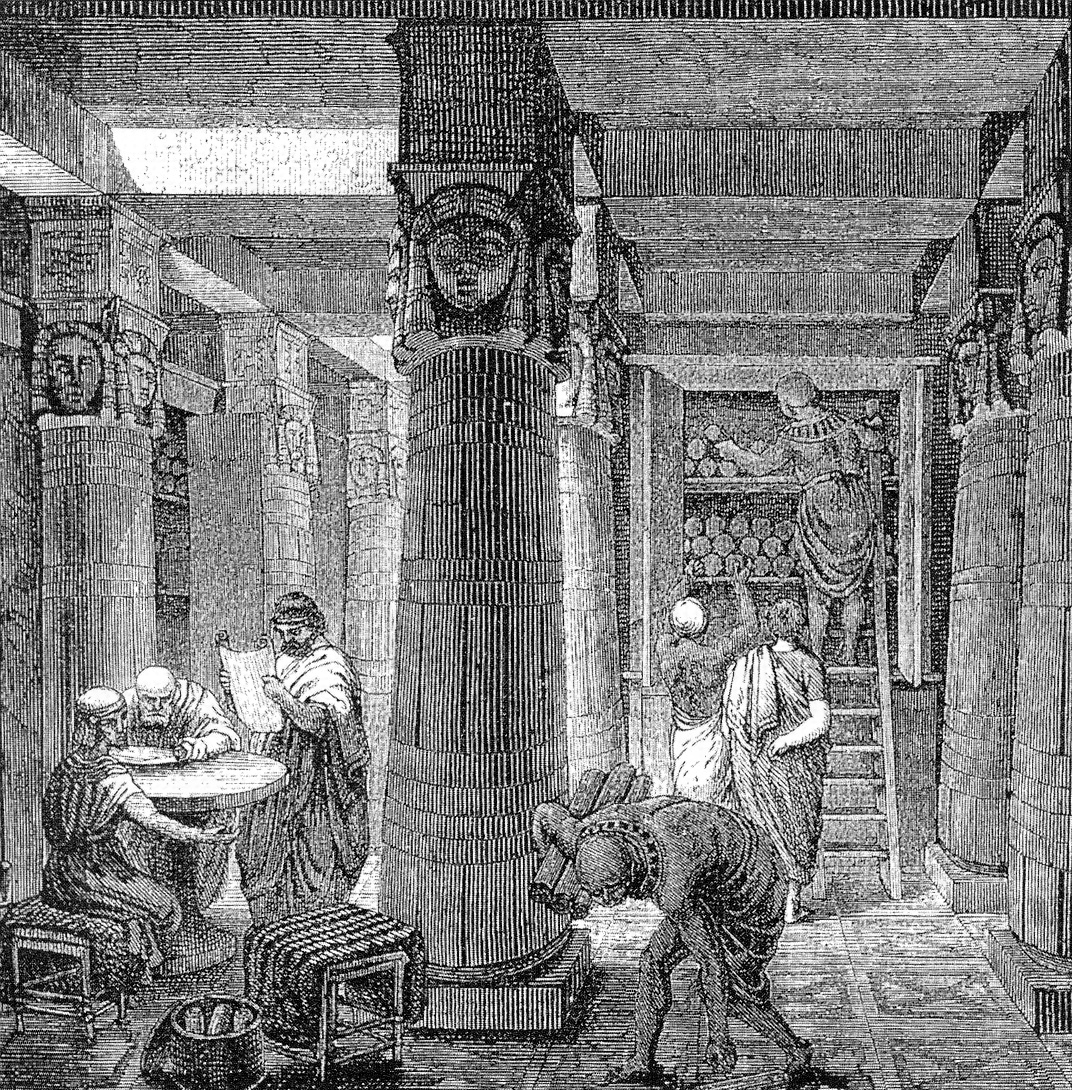
People romanticize the Library of Alexandria as a symbol of lost wisdom, but they usually underestimate just how much applied, practical technical knowledge it likely held. This wasn’t only philosophy and poetry – it hosted serious treatises on engineering, navigation, medicine, and mechanics, in an intellectual ecosystem that produced figures like Archimedes and Hero of Alexandria. Imagine thousands of scrolls covering everything from improved water-lifting devices to obscure metal alloys, most of which we will simply never see.
The library, and its later daughter libraries, didn’t vanish in one dramatic Hollywood fire. It died slowly, through neglect, political purges, and repeated damage over centuries – a slow-motion extinction of knowledge rather than a single catastrophe. Entire branches of trial-and-error engineering likely vanished along with it, leaving later generations to rediscover basic principles that had already been solved once before. When people wonder how ancient inventors managed to build something as advanced as the Antikythera mechanism, the real answer might simply be that we’re judging a civilization after we’ve already shredded most of its research archive.
#2 – Roman Hypocaust Heating That Put Medieval Europe to Shame
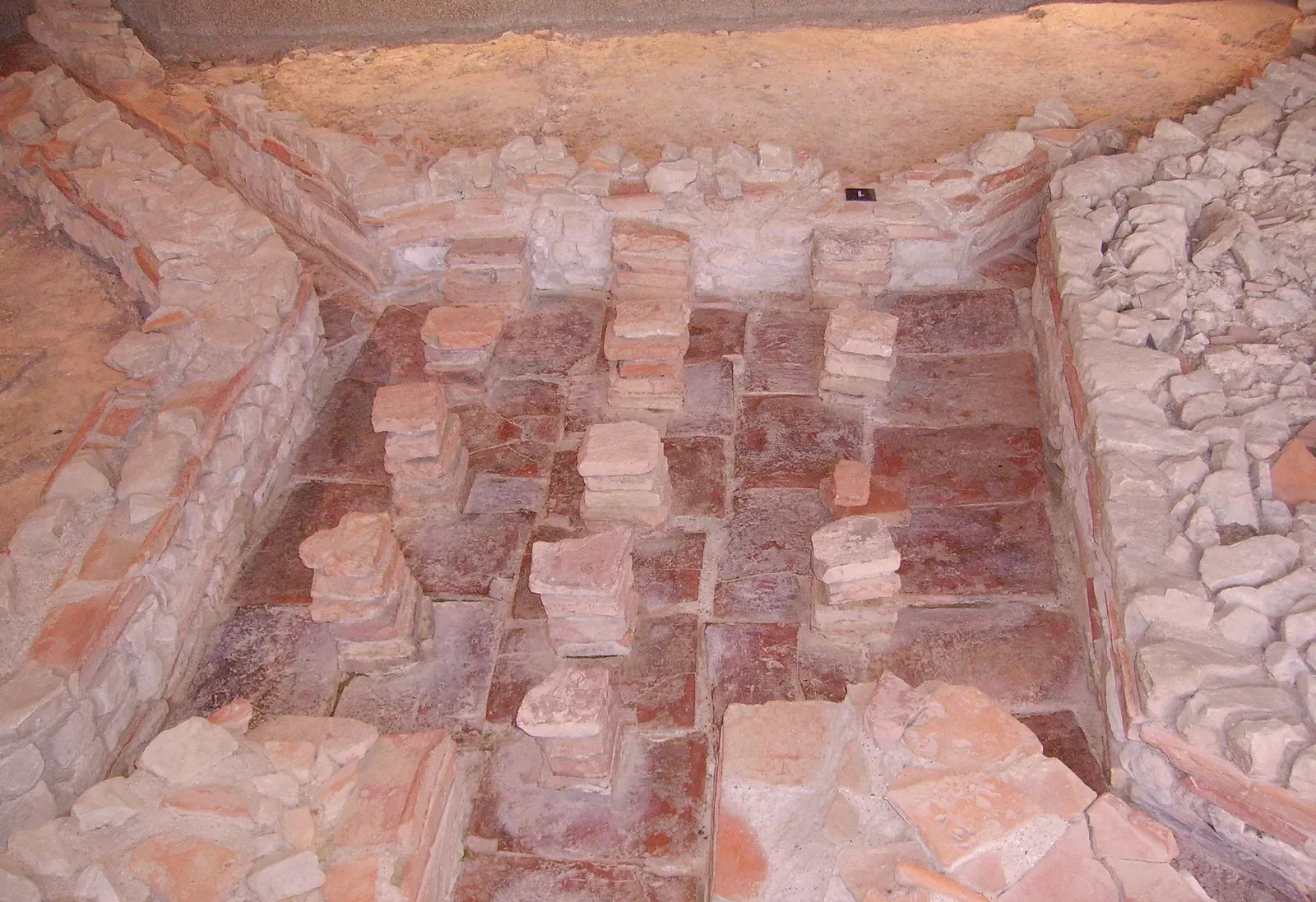
Radiant floor heating feels like a sleek, modern luxury upgrade, but Romans were warming entire villas and public bathhouses using hypocaust systems roughly 2,000 years ago. Furnaces pushed hot air beneath raised floors and through hollow flues built into the walls, heating large complexes relatively evenly. In dense Roman cities, this created something close to shared infrastructure for bathing and socializing – a kind of early district heating network.
After the Western Empire collapsed, much of Western Europe reverted to open hearths and smoky, inefficient fireplaces. Hypocausts required skilled builders, organized fuel supply chains, and centralized planning, all of which fell apart as political structures fractured. Medieval monasteries preserved a scaled-down version of bath culture, but nothing close to Rome’s original scale. Hundreds of years later, Europeans were essentially relearning how to heat buildings efficiently while literally walking through ruins that already contained the blueprint.
Why It Stands Out
- Circulated hot air beneath raised floors and through wall-mounted flues
- Warmed entire bathhouses and villas, not just single rooms
- Needed skilled labor, steady fuel supply, and centralized planning to run
- Largely disappeared from Western Europe for centuries after Rome’s fall
#1 – The Precision Stonework We Still Can’t Fully Explain
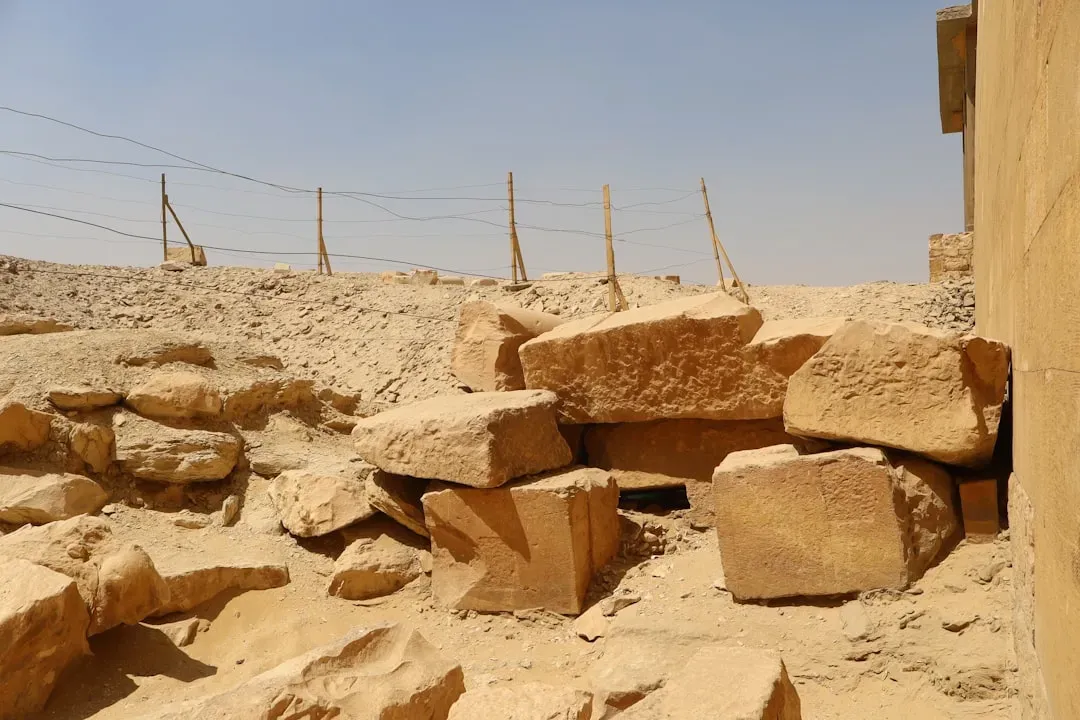
The most emotionally loaded “lost invention” on this list isn’t a single gadget – it’s an entire set of techniques. Sites stretching from Giza to Baalbek to Sacsayhuamán feature stone blocks weighing tens to hundreds of tons, cut and fitted together with a precision that still unsettles engineers today. To be clear, none of this proves aliens. What it does suggest is an entire integrated system, including:
- Quarry organization and large-scale workforce logistics
- Advanced, standardized stone-cutting methods
- Transport and lifting rigs we still argue about today
We know the basic tools existed: copper chisels, pounding stones, sledges, ropes. What’s missing is the procedural knowledge – the step-by-step operational know-how that turns basic tools into a functioning industrial process. How many workers per block? What lubricants did they use? What seasonal schedules made the logistics possible at all? Ancient builders solved these optimization problems so thoroughly that many of their monuments are still standing today, yet they left us almost no technical manuals explaining how. The real lost invention here might be institutional memory itself – vast, multi-generational project management that modern imagination has flattened down to a lazy, inaccurate image of “slaves hauling stones.”
The Bottom Line

Line these fourteen cases up side by side and a brutal pattern emerges: humanity is very good at inventing things, and remarkably bad at holding onto them. Technologies don’t usually disappear because they failed. They disappear because empires collapse, trade routes get severed, elites feel threatened by what a new material or machine might cost them, or entire cultures get violently disrupted before their knowledge can be written down. In more than one case on this list, we only found the answers again by digging through shipwrecks, garbage pits, and ruins – by accident, not by design.
The part that should actually keep you up at night isn’t ancient history, it’s the mirror it holds up to us. Roman concrete, Damascus steel, hypocausts, an entire scientific library reduced to ash and neglect – these aren’t quirky trivia facts, they’re warnings that progress is not automatic and definitely not permanent. If a handful of key infrastructures failed today, I’d bet real money that a shocking amount of our own “obvious” technology would prove just as fragile, just as poorly documented, and just as easy to lose.