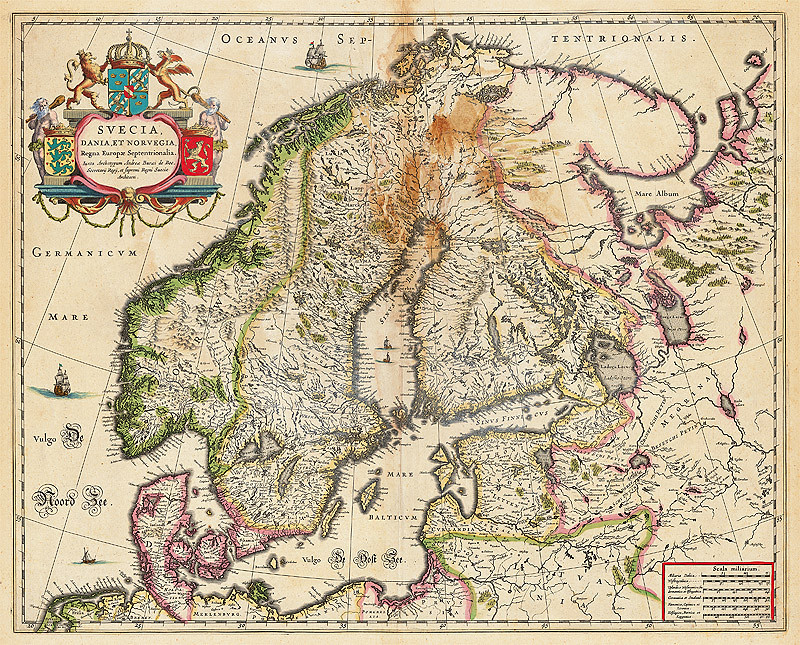

You were taught the story like it was settled science: cavemen, then farmers, then pyramids, then us. Case closed, chapter complete. Except it isn’t – sea levels alone should make you pause, because after the last Ice Age the ocean swallowed more than 400 feet of coastline, and nobody signed off on erasing that chapter from the textbook.
Here’s the uncomfortable part: the researchers who used to laugh off “lost civilization” talk are now the ones publishing the anomalies. Not proof of Atlantis. Not ancient aliens. Just inconvenient dates, drowned architecture, and quiet admissions that the current timeline is “a rough draft.” Thirteen of those cracks are below, and by the time you hit #1, you’ll understand why even the skeptics are starting to hedge their bets.
#13 – The Global Sea-Level Rise That Erased Entire Coastlines

The boldest clue isn’t buried in a pyramid. It’s hidden under 400 feet of seawater. Between roughly 20,000 and 7,000 years ago, global sea levels rose about 120 meters as the ice caps melted. That’s not a fringe theory – it’s basic geophysics taught in every earth science department on the planet.
Fast Facts
- Sea levels rose roughly 120 meters (about 400 feet) after the last Ice Age peak
- The rise unfolded over a span of roughly 13,000 years
- Entire ancient landmasses like Doggerland and Sundaland vanished beneath the waves
- Today, close to 40% of the world’s population still lives near a coastline
Here’s why that matters more than most people realize. Early complex societies almost always form on coasts and river deltas, because that’s where the food, trade routes, and fresh water are. Those exact zones – the flattest, richest, most livable land on Earth at the time – are now the parts of the map we’ve never properly searched.
Think about it in modern terms. New York, Shanghai, Mumbai, Tokyo – nearly every major city on Earth hugs a coastline. If civilization collapsed tomorrow, most of what we built would eventually sit underwater too, waiting for future divers to “discover” it and argue about who built it.
We’ve barely started surveying those drowned landscapes. But what little we’ve found already doesn’t fit the simple story – and #12 is where that stops being theoretical.
#12 – Submerged Megaliths: Architecture Beneath the Waves
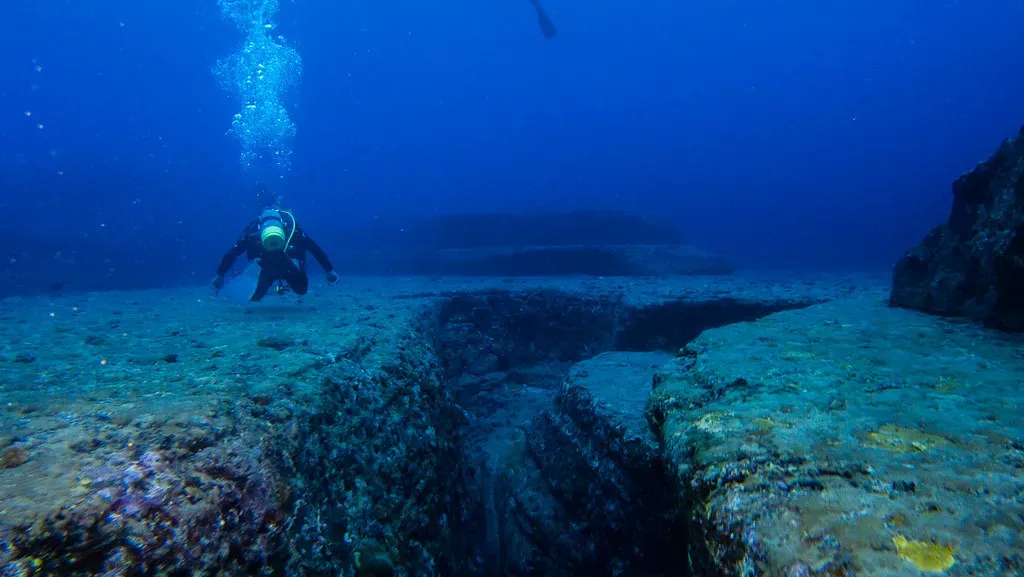
This is where the theory turns into something you can actually point a sonar at. Off the coast of India in the Gulf of Khambhat, underwater surveys and core samples have picked up rectilinear, man-made-looking structures with materials dated to roughly 9,000 years ago – long before the Indus Valley civilization was supposed to exist.
Near Japan, the Yonaguni formations show sharp right angles and stair-like terraces cut into stone beneath the waves. Most geologists still lean toward natural rock formation. But divers and a handful of researchers insist they can see tool marks and deliberate shaping that erosion alone shouldn’t produce.
Nobody serious is calling this a lost global empire. It might just be regional cultures that were more organized and technically capable than we’ve given them credit for. But the core fact stands on its own: there are human-made features on land that is now underwater, and we’ve tested only a sliver of the world’s drowned coastlines.
If the ocean is quietly hiding stone cities, what’s still sitting in plain sight on dry land? That’s exactly where #11 comes in.
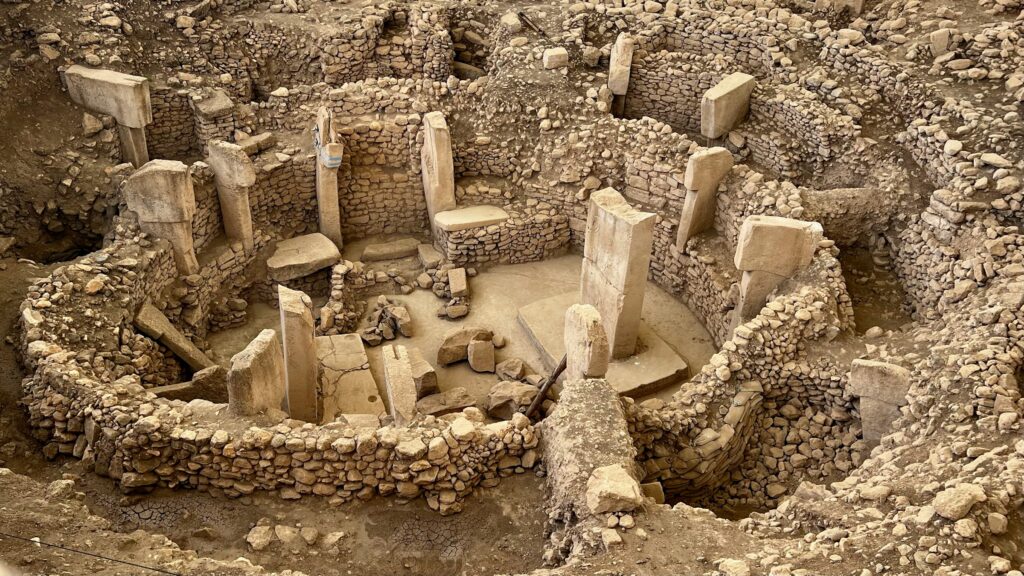
#11 – Göbekli Tepe: A Stone Temple 6,000 Years “Too Early”
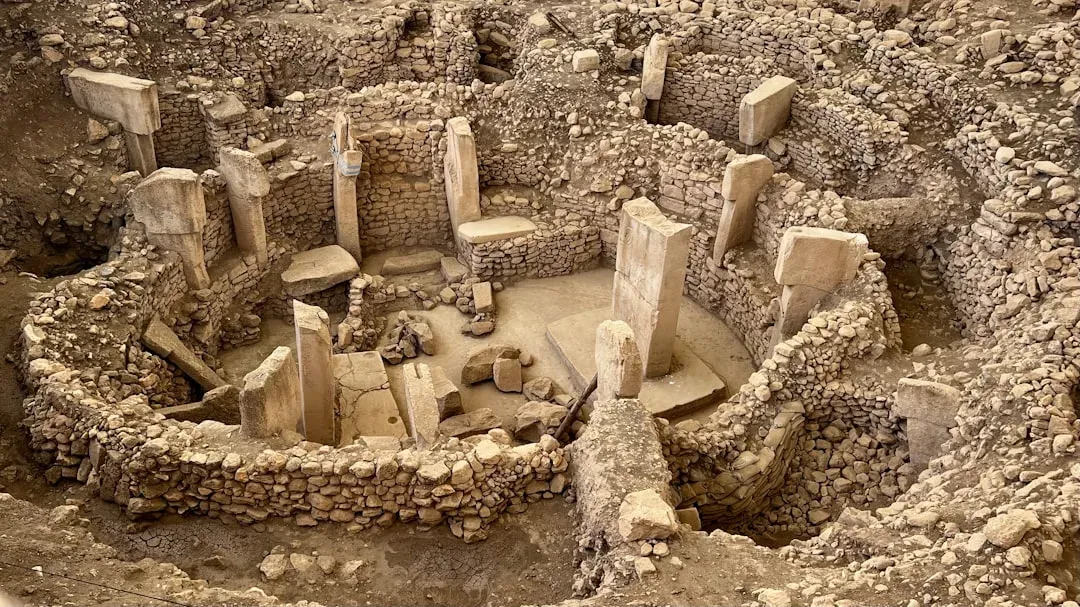
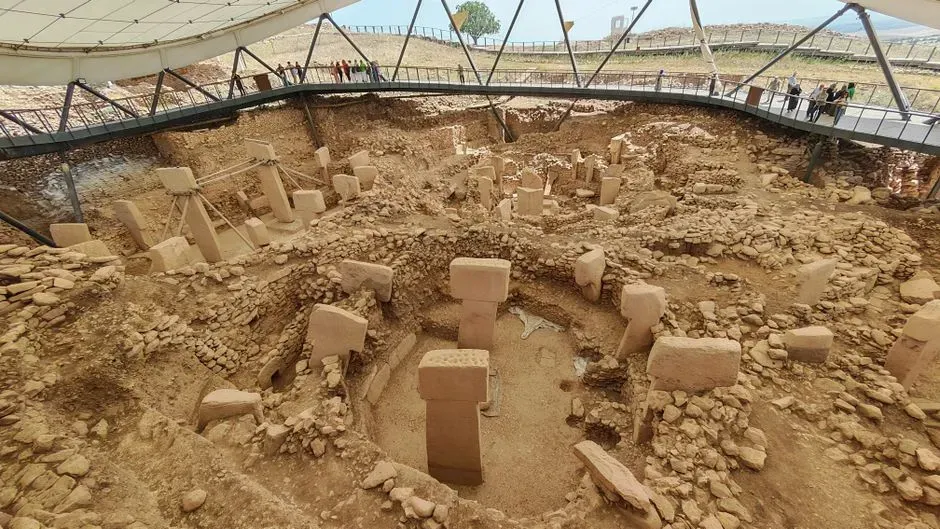
Göbekli Tepe, tucked into the hills of southeastern Turkey, technically shouldn’t exist. For decades, the rule was simple: farming comes first, cities come second, and monumental stone temples come only after both. Then archaeologists pulled back the soil and found something that broke the sequence entirely.
Massive T-shaped pillars, carved with lifelike animal reliefs and arranged in ringed enclosures, date back to around 9,600 BCE. That’s thousands of years before Stonehenge. Thousands of years before the Egyptian pyramids. And it was built by people who, according to the old model, were supposed to be simple foragers with no surplus, no specialists, and no reason to build anything permanent.
First came the temple, then the city.
Klaus Schmidt, lead archaeologist of Göbekli Tepe
There’s no writing at the site, no metal, no obvious city nearby – yet someone organized the quarrying, transport, and carving of multi-ton pillars with real artistic skill. Most archaeologists now describe the builders as “complex hunter-gatherers,” which is academic shorthand for “way more capable than our model allowed for.” Göbekli Tepe didn’t just move the timeline back a little. It shoved elaborate, monumental culture back more than 6,000 years in one discovery.
#10 – “Forgotten” Cities Hidden Under Jungle and Soil
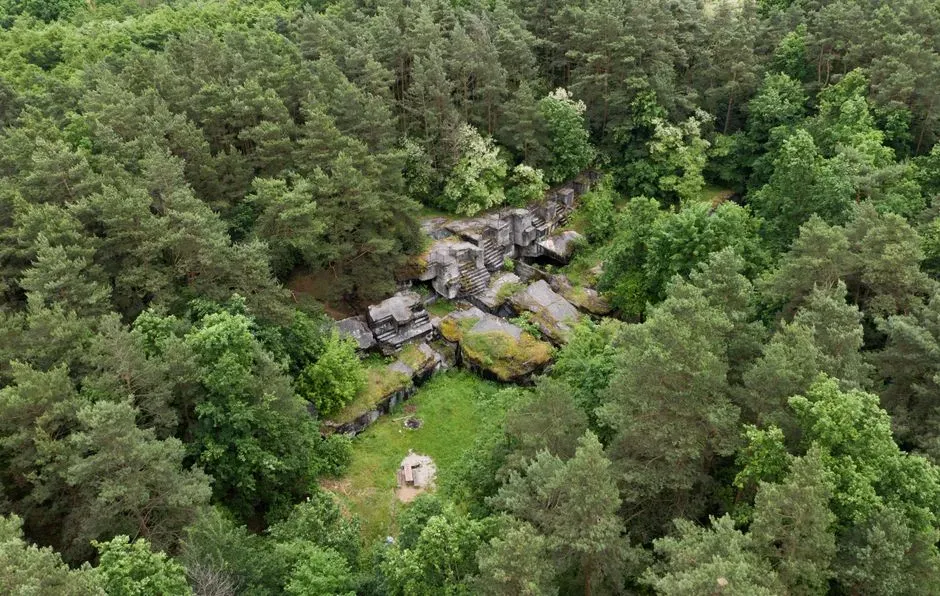
Some of the biggest “lost civilizations” weren’t small villages misfiled as myths. They were sprawling cities we simply couldn’t see – until we got the right technology to look. Lidar, airborne laser scanning that strips away vegetation on a screen, has given archaeologists something close to X-ray vision through dense forest canopy.
Flyovers across Guatemala, Mexico, and Cambodia have revealed massive grids of causeways, canals, platforms, and housing structures buried under jungle for centuries. The Maya lowlands, once pictured as scattered, modest city-states, now look like a densely interconnected urban network with sophisticated water engineering.
Here’s the part that should unsettle you: this level of urban infrastructure stayed completely invisible until a plane with the right sensor flew overhead. If industrial-scale cities can hide under vegetation for a mere 1,000 to 2,000 years, what’s still buried under sediment, landslides, and desert dust after 10,000 or 20,000 years?
Most archaeologists aren’t leaping from “lost Maya suburbs” to “Ice Age megacities.” But they are conceding, in print, that we’ve systematically underestimated how crowded and sophisticated the pre-Columbian world actually was.
#9 – Precise Ancient Megaliths That Defy the “Crude Tool” Story
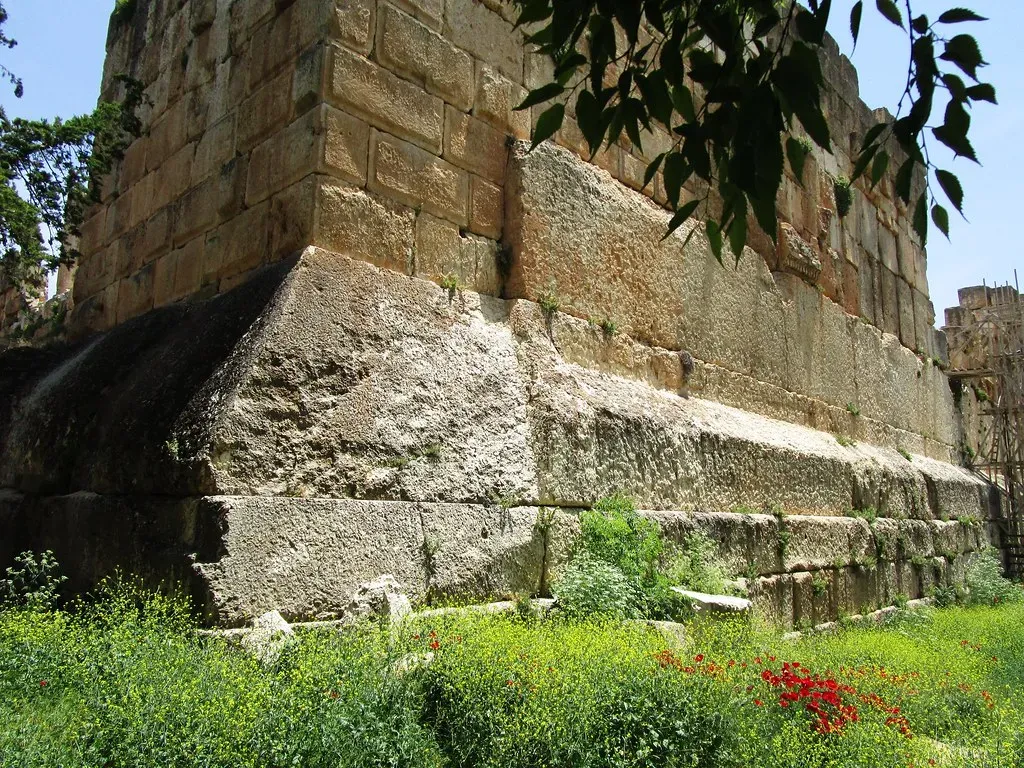
You don’t need satellite tech to spot this anomaly – some of it is towering right in front of tourists with cameras. Across Egypt, Peru, and Lebanon, builders moved and shaped stone blocks weighing anywhere from tens to hundreds of tons.
At Baalbek and the Giza Plateau, stones are cut and fitted with joints so tight you genuinely cannot slide a razor blade between them, often on uneven bedrock at odd angles. In Peru, the polygonal walls of Sacsayhuamán interlock like a hand-carved 3D puzzle, complete with curves and bevels that serve no decorative purpose except precision itself.
Quick Compare
- Baalbek, Lebanon: Trilithon blocks estimated at 800-1,000 tons each, stacked with no visible mortar
- Giza Plateau, Egypt: Average blocks around 2.5 tons, with some granite blocks pushing 80 tons
- Sacsayhuamán, Peru: Polygonal stones weighing up to roughly 200 tons, interlocked without mortar
Mainstream archaeology doesn’t reach for aliens here. It points to patient labor, copper and stone tools, ramps, and clever leverage. But engineers who’ve actually run the numbers on quarrying, transporting, lifting, and aligning stones this size admit it would strain a modern crew without heavy machinery.
Here’s the detail that rarely gets explained: later cultures, with better metal tools, frequently built rougher, sloppier stonework than their predecessors. The skill curve, in more than one place, runs backward.
#8 – Out-of-Place Knowledge: Advanced Math Written in Stone
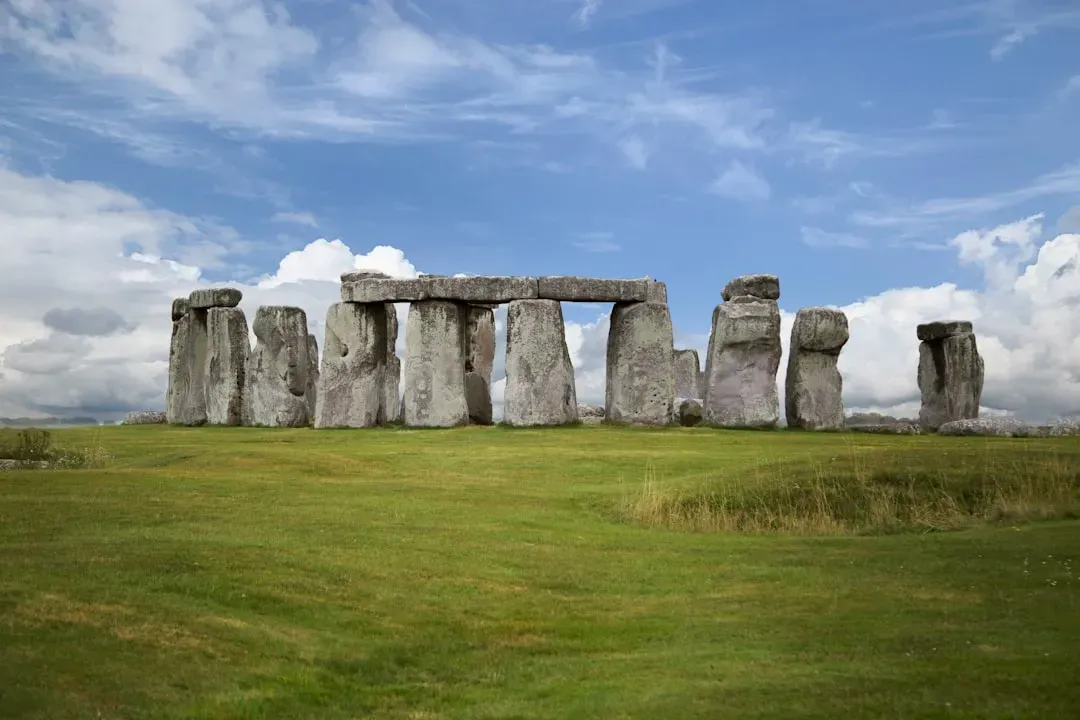
Some of the strangest evidence isn’t physical at all – it’s mathematical, hiding in plain geometry. Researchers have long noticed that certain ancient monuments encode astonishingly precise astronomical and geometric relationships for their supposed era.
The Great Pyramid’s base-to-height ratio lands uncannily close to 2π when measured a certain way. Stonehenge’s stone alignments track lunar cycles with real accuracy. At Nabta Playa in the Egyptian desert, stone circles line up with solstices and star positions dating back 6,000 to 7,000 years.
To be clear, none of this requires satellites or lasers. Patient, careful sky-watching over generations can produce this kind of precision. But the real shock is how early it appears and how coordinated it had to be – this points to specialized astronomers, intergenerational record-keeping, and an intellectual tradition we barely glimpse in the archaeological record.
Skeptics rightly warn about numerology, seeing patterns in noise where none exist. Even so, it’s now mainstream to accept that many prehistoric cultures had institutionalized astronomy and geometry. If this is what survives carved into stone, it’s worth wondering what scientific knowledge vanished along with organic materials that simply didn’t survive.
#7 – The Younger Dryas: A Climate Crash That Could Have Erased Everything
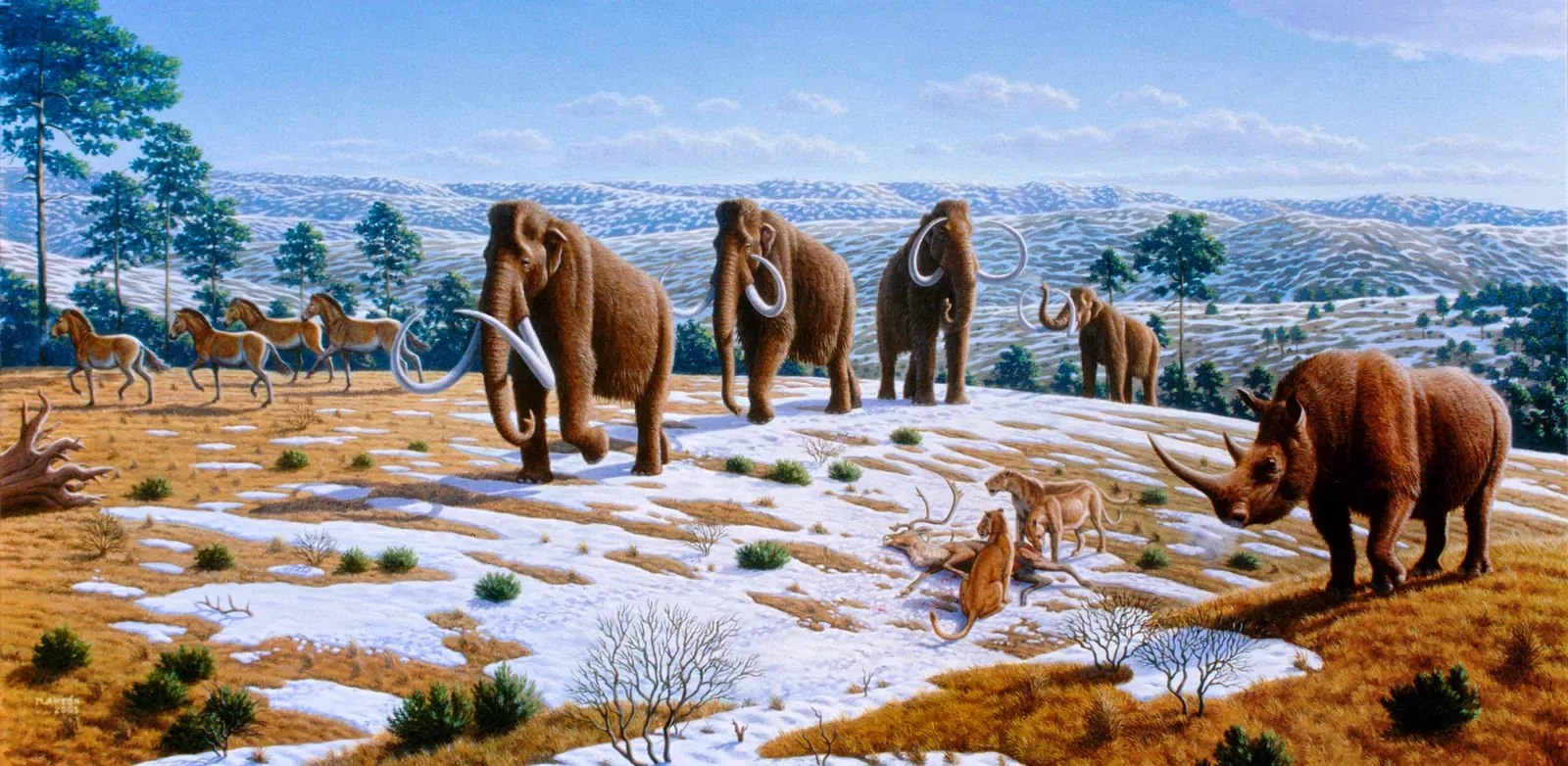
If an earlier advanced culture did exist, something had to knock it flat – and we actually have a strong candidate. Around 12,900 years ago, near the tail end of the last Ice Age, the planet abruptly plunged back into brutal cold in a period called the Younger Dryas.
In some regions, temperatures dropped dramatically within mere decades. River systems shifted course, ecosystems collapsed, and large mammal species vanished en masse. Scientists still argue over the exact trigger – meltwater floods disrupting ocean currents, volcanic activity, or possibly even an impact event – but the effect is not in dispute.
At a Glance
- Began roughly 12,900 years ago and lasted about 1,200 years
- Some regions saw sharp temperature swings within just decades
- Marked by widespread megafauna extinctions and shifting river systems
- Ended abruptly around 11,700 years ago, ushering in the modern Holocene climate
Rapid climate whiplash like this is a proven civilization-killer. Our own tightly connected societies wobble under a couple of degrees of warming spread across a century; imagine a rising coastal culture getting hit with floods, droughts, and ecological collapse within a single lifetime.
Some researchers now cautiously suggest that if any fragile, proto-urban cultures were blossoming along the coasts before this event, the Younger Dryas would have functioned like a reset button – wiping out not just the people, but nearly every visible trace they ever existed.
#6 – The Shockingly Old Dates for Human Presence in the Americas

For years, every textbook told the same clean story: humans reached the Americas about 13,000 years ago through an ice-free corridor. That story is now in pieces, and the pieces don’t fit back together the same way.
Newer dating methods and excavations have repeatedly turned up evidence of human presence in the Americas well before 13,000 years ago, with some contested sites suggesting occupation older than 20,000 or even 30,000 years. Not every claim survives peer review, but the overall trend is impossible to ignore: people were here earlier, and in more places, than the old model allowed.
Why does earlier arrival matter for the “advanced civilization” question? Because more time means more room to experiment – with agriculture, trade networks, and regional complexity, especially along fertile coastal zones that are now underwater and have never been systematically surveyed.
Most experts still see no proof of a super-advanced Ice Age American civilization. But they increasingly admit the peopling story was oversimplified, and cultural complexity in that era was likely underestimated by a wide margin.
#5 – Ancient Engineering That Feels “Too Good” for Its Era

Some ancient sites use engineering tricks that feel out of sync with when they were supposedly built. Within recorded history, you’ve got Angkor’s advanced hydraulic systems and Roman concrete so durable that modern engineers are still trying to fully replicate the formula.
Further back, certain megalithic sites show sophisticated load-distribution, foundation leveling, and seismic resistance that plenty of modern builders would respect. Some Andean walls use irregular, interlocking joints that dissipate earthquake energy far more effectively than straight-lined modern brickwork.
The standard explanation is trial and error over many generations – and that’s a fair, reasonable answer. Except trial and error usually leaves behind messy, imperfect early attempts. At several sites, the earliest surviving construction phase is already the most refined, while later additions look cheaper and less durable.
This doesn’t prove secret machines or hidden technology. It does suggest a tested engineering tradition that shows up already mature, then sometimes degrades over time – exactly the pattern you’d expect if knowledge was inherited from an earlier tradition that was partially lost.
#4 – Legends of a “Time Before” That Refuse to Disappear

It’s easy to wave off myths as pure fantasy – until you notice how strangely consistent some of them are across cultures that never met. Around the world, stories describe earlier ages of humanity destroyed by flood, fire, or ice, followed by scattered survivors who pass on fragments of lost knowledge.
In Mesoamerica, the Maya and Aztec speak of prior “suns” or worlds that ended in catastrophe. In India, the yuga cycles describe vast epochs of rise and collapse. In Greece, Plato tells of Atlantis, a sophisticated island power destroyed almost overnight.
Skeptics argue this is simply how humans process disaster – we turn trauma into myth. That’s true. But the sheer repetition of “a more advanced time, ended abruptly, followed by a simpler restart” across unconnected cultures is at least worth taking seriously as distorted cultural memory.
No credible archaeologist is dating Atlantis based on Plato alone. But more of them now openly admit that myths may encode real deep-time events – sea-level rise, comet strikes, catastrophic floods – half-remembered by survivors and ritualized into story over thousands of years.
#3 – Genetic Clues Hinting at Older, More Complex Population Histories

Archaeology digs in the dirt. Genetics digs in our cells – and it’s been turning up its own uncomfortable surprises. Ancient DNA studies have revealed multiple waves of migration, mixing, and population replacement in regions once assumed to have simple, linear histories.
Europe alone shows at least three major ancestral populations layered over the last 10,000 years. The Americas reveal unexpected genetic diversity and deep splits between groups. Some isolated populations even carry genetic signatures suggesting long-separated lineages with complicated demographic pasts.
The implication is bigger than it sounds: human populations have been splintering, meeting, trading, and reorganizing for far longer and in far more intricate patterns than the “simple clan of cavemen” cartoon suggests. That kind of population structure is exactly what you’d expect in a world of regional cultures that rose, traded, and fell – even if we haven’t found their cities yet.
Genetics alone can’t prove a civilization’s technology level. But it reinforces something important: our species had the time, mobility, and demographic complexity to support higher civilization well before the neat “start dates” printed in schoolbooks.
#2 – The Archaeological Record Is Rigged Toward What Happens to Survive
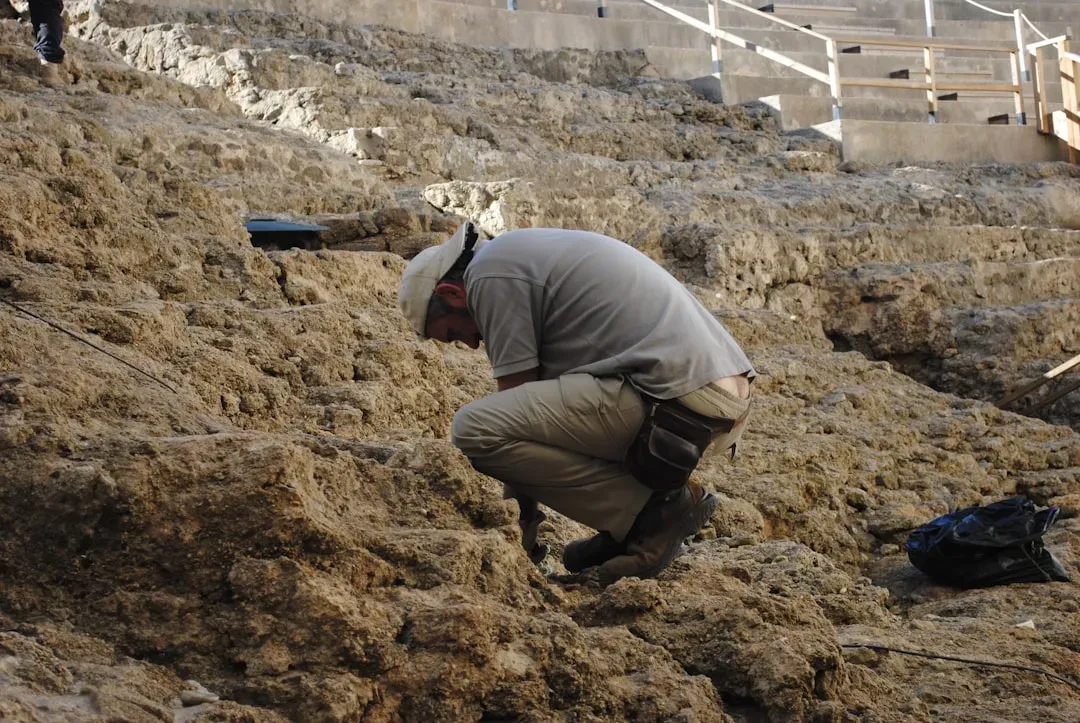
Here’s the blunt, unglamorous truth archaeologists themselves admit when you push them: our picture of deep history is tragically incomplete by design, not by conspiracy. Stone, ceramics, and certain metals survive the centuries. Wood, textiles, paper, rope, and low-grade metals rot, rust, or burn away completely.
If a prehistoric culture experimented with advanced but perishable technology, we would almost certainly never find direct evidence of it. Add erosion, tectonic shifts, scavenging, and constant human redevelopment on top of that, and you get a near-perfect recipe for selective amnesia.
Worth Knowing
- Only a small fraction of Earth’s land surface has ever been systematically excavated
- Organic materials like wood and textile rarely survive more than a few thousand years outside rare conditions
- Continental shelves exposed during the Ice Age are now underwater and largely unexplored
- Stone and ceramics dominate the record simply because they endure – not because they were the only materials used
On top of the materials problem, most digs are tiny sampling windows in a massive planet. We’ve archaeologically explored only a fraction of Earth’s land surface, and an even smaller fraction of its submerged continental shelves. If we go in expecting simple foragers, ambiguous evidence often gets interpreted that way by default.
Many archaeologists now openly repeat the phrase “absence of evidence is not evidence of absence” when discussing tech levels in deep prehistory. That’s not a concession that lost civilizations had advanced tools – but it is an honest admission that our entire data set is profoundly, structurally skewed.
#1 – The Story Inside Archaeology Itself Is Quietly Changing
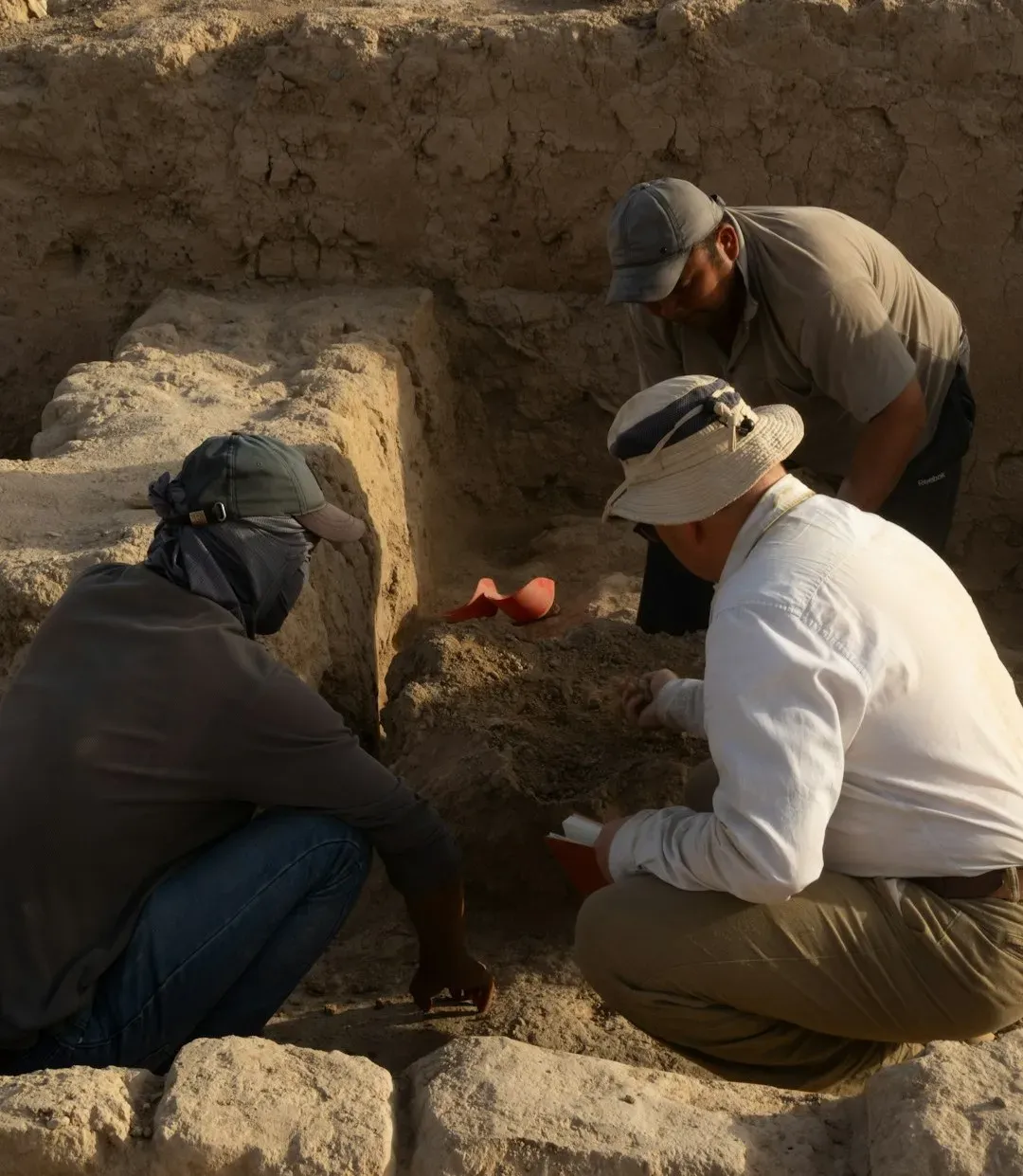
Here’s the most telling sign of all, and it has nothing to do with a single site or artifact: the narrative from inside the field is shifting in real time. A generation ago, any talk of advanced pre-Ice-Age civilizations got filed straight into fantasy, no discussion required.
Today, most archaeologists still reject the specific claims popularized by TV documentaries and fringe authors. But many now openly concede that complex, large-scale social organization began far earlier and in far more places than previously believed. Göbekli Tepe, lidar-mapped jungle cities, and pushed-back dates in the Americas aren’t fringe theories anymore – they’re published, peer-reviewed, and sitting in respected journals.
The tone has measurably shifted from “impossible” to “we need more data.” Scholars increasingly emphasize regional variability and admit that coastal, lowland, and tropical zones – prime real estate for early complexity – happen to be the hardest environments to study.
They’re also folding in climate science, genetics, and remote sensing far more than they used to, and all three point toward a messier, older, more dynamic human past than the one most of us learned in school. The experts still haven’t endorsed Atlantis. But they have started to concede that our current timeline is probably a rough draft, not a finished book.
The Bottom Line
Strip away the TV drama and stick to the actual evidence, and a pattern emerges anyway: the official story of civilization keeps getting older, messier, and less certain with every decade of new data. Submerged coastlines, an impossibly early temple at Göbekli Tepe, lidar-revealed jungle cities, engineering precision that shouldn’t exist yet, and genetic timelines stretching back further than expected all point the same direction. Humans have been capable of organized, surprisingly sophisticated societies for far longer than schoolbook dates ever admitted.
Does that prove a globe-spanning, hyper-advanced lost civilization once ruled the Earth? No. The hard, undeniable proof isn’t there, and probably never will be in the way believers want. But it does make the old “nothing important happened before 5,000 years ago” narrative look increasingly lazy, and increasingly indefensible.
Personally, I think archaeologists are right to stay cautious – and wrong when they act like the current model is settled science. We’re clearly missing chapters, maybe whole volumes. The real question isn’t whether the story will keep changing. It’s how dramatically it will change, and whether we’re ready to admit how little we actually know. Did we overstate any of these signs here – or seriously understate them? Drop your take in the comments.