
Most people assume “coincidence” is just a lazy word for pattern-hungry brains. Statistically, that’s usually true. Odds are, that eerie feeling you got when two things lined up was just your mind doing what minds do: hunting for meaning in noise.
But every so often, history hands us something that doesn’t dissolve under scrutiny. A date repeats. A name resurfaces. A man walks away from disaster after disaster like the universe forgot to collect its debt. These aren’t campfire legends – they’re documented, cross-checked, and still strange enough to make professional statisticians pause mid-sentence. Here are 14 of them, ranked from unsettling to nearly impossible.
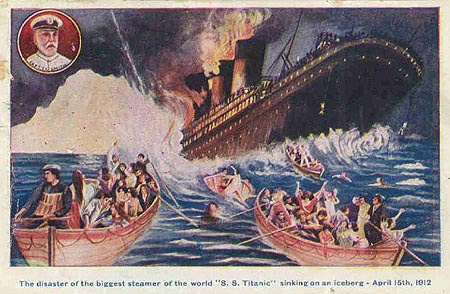
#1 – The Novel That Sank the Titanic 14 Years Early
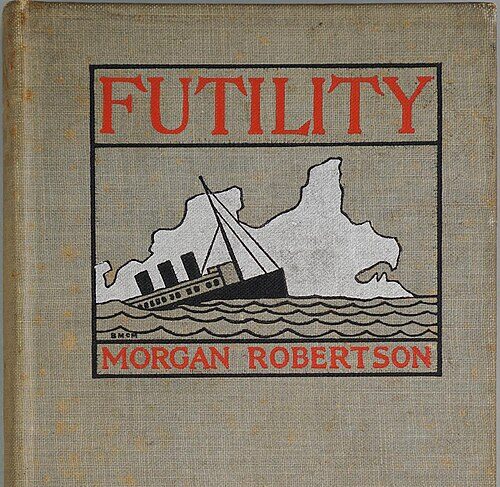
In 1898, a writer named Morgan Robertson published a forgettable little novel called Futility, or the Wreck of the Titan. Nobody paid much attention. Then, 14 years later, reality copied his homework almost line for line.
Robertson’s fictional “Titan” was nearly the same size as the real Titanic, carried a similar number of passengers, raced through the North Atlantic at reckless speed, and struck an iceberg on an April night. It didn’t carry enough lifeboats, either – exactly like the ship that would actually sink in 1912.
Quick Compare
- Length: The fictional Titan measured roughly 800 feet; the real Titanic stretched about 882 feet
- Passengers: The Titan reportedly carried close to 3,000 souls; Titanic carried roughly 2,200
- Fate: Both ships struck an iceberg during a North Atlantic crossing in April
- Lifeboats: Both were criticized for carrying far too few for everyone aboard
Skeptics point out that Robertson was simply extrapolating from the shipbuilding trends of his time – bigger, faster, “unsinkable” liners were already the industry’s obsession. That explanation works fine for one or two overlaps. It gets shakier once you stack all of them into a single story, sitting untouched in a drawer for over a decade before it stopped being fiction.
#2 – The Bullet That Waited Decades to Finish the Job

In 1893, a Texas man named Henry Ziegland broke off a relationship, and his ex’s brother didn’t take it well. He fired a shot meant to kill Ziegland – and missed, the bullet burying itself harmlessly into a tree.
Years passed. Ziegland, now an old married man with no memory of danger lurking in his backyard, decided to clear that tree using dynamite. The blast dislodged the decades-old bullet still lodged in the trunk, sending it flying with enough force to strike him in the head and kill him.
Historians still argue over the finer details of the newspaper accounts, but the bones of the story have survived over a century of retelling. One bullet, fired by one enemy, killing the same man twice – once attempted, once accidental, decades apart. Mathematicians file this under “technically possible,” then quietly admit they’d never bet on it happening again.
#3 – The Twin Brothers Killed by the Same Taxi, One Year Apart
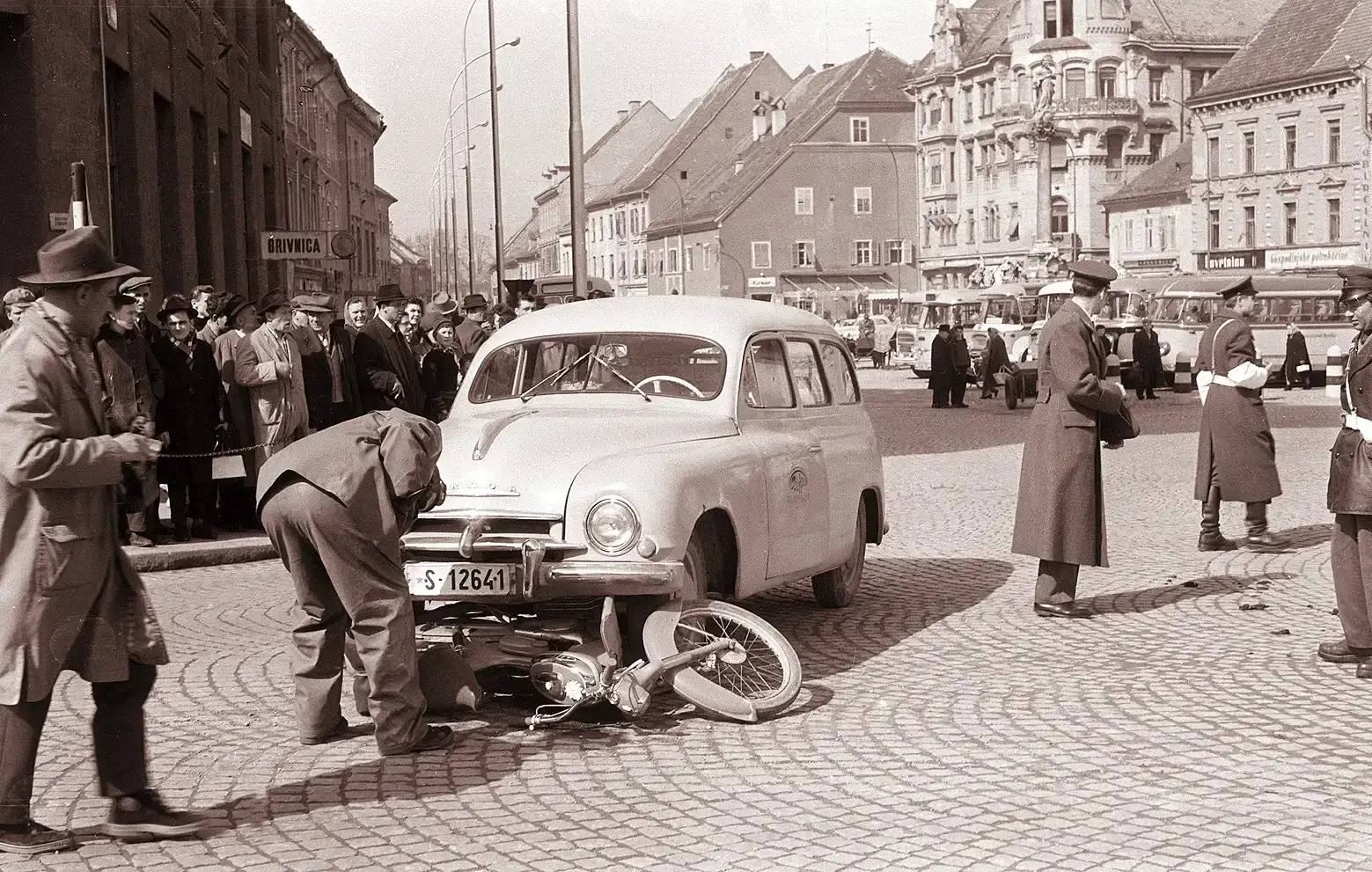
In 1975, a man riding a moped through Bermuda was struck and killed by a taxi. Awful, but not statistically remarkable – traffic deaths happen every day, everywhere.
Then, exactly one year later, his twin brother climbed onto the same moped, on the same island, and was hit and killed by the same taxi. Reports at the time claimed it was even driven by the same driver, carrying the same passenger as the first crash.
Each overlapping detail multiplies the improbability rather than adding to it. Statisticians describe this kind of layered coincidence as a “chain of dependencies” – remove any one link and the story is just a sad accident. Keep them all, and you get something that feels engineered by a universe with a very dark sense of humor.
#4 – The Boy Who Saved Churchill, Then Saved Him Again
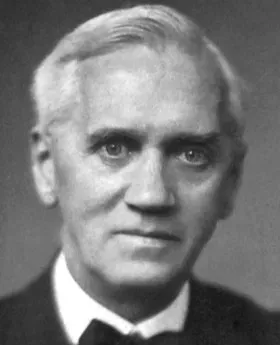
As a boy, Winston Churchill reportedly fell into a lake on a family estate and was pulled out, soaked and shaken, by the gardener’s son. That boy grew up to be Alexander Fleming – the man who would later discover penicillin.
Decades later, during World War II, Churchill developed a life-threatening infection. He was treated with antibiotics derived directly from Fleming’s discovery, and survived to lead Britain through the war’s darkest years.
Fast Facts
- Alexander Fleming discovered penicillin in 1928, almost by accident, in a London laboratory
- Fleming shared the 1945 Nobel Prize in Physiology or Medicine for the discovery
- Winston Churchill served as British Prime Minister from 1940 to 1945, guiding Britain through most of World War II
- Penicillin-derived antibiotics are credited with saving millions of lives since the 1940s
Historians debate whether the lake rescue actually happened the way it’s told, since embellishment has crept into the story over the decades. But the broader arc holds up: a farmer’s son from Scotland ends up, twice, standing between the most consequential British leader of the 20th century and death – once with his hands, once with a mold in a petri dish.
#5 – The Battlefield Bullet That “Fathered” a Child

Family trees are supposed to be shaped by romance, not ricochets. But one 19th-century medical case, taken seriously enough to be published at the time, claims otherwise.
A Civil War soldier was reportedly shot through the groin. The bullet, having passed through him, struck a woman standing nearby. Months later, she gave birth, and the attending physicians theorized – in writing, in medical journals – that the bullet had carried enough biological material between the two of them to cause a pregnancy.
Modern medicine treats this claim as essentially impossible. What’s genuinely fascinating isn’t the biology – it’s the fact that respected doctors of the era documented it as a real case rather than dismissing it outright. It’s a snapshot of how badly even trained experts want an improbable story to be true.
#6 – The Man Who Survived Two Atomic Bombs

Surviving one nuclear attack is almost unthinkable. Surviving two, on purpose, by accident of geography, sits so far outside normal probability that it barely registers as “unlikely” anymore – it’s closer to impossible.
Japanese engineer Tsutomu Yamaguchi was in Hiroshima on a business trip in August 1945 when the first atomic bomb detonated. Injured but alive, he traveled home – to Nagasaki – just in time for the second bomb to fall three days later. He survived that one too, lived with radiation sickness for years, and eventually became an outspoken advocate against nuclear weapons before his death in 2010.
I can’t understand why the world cannot understand the agony of the nuclear bombs. How can they keep developing these weapons?
Tsutomu Yamaguchi
Mathematicians can’t “solve” a story like this. They can only point at it and call it what it is: the extreme edge of a survival curve so rare it’s essentially a sample size of one.
#7 – The Hoover Dam Deaths, Exactly 13 Years Apart

Humans are pattern-seeking machines, but sometimes the pattern finds them first. During construction of the Hoover Dam, J.G. Tierney fell into the Colorado River and drowned on December 20, 1922 – long remembered as the project’s first recorded death.
Thirteen years later, to the exact day, his son Patrick Tierney died while working on the very same project, on December 20, 1935 – one of the last deaths tied to its construction. Father and son. First and last. Same calendar date, thirteen years apart.
Critics rightly note selection bias: dramatic bookends get remembered while messier data gets forgotten. But even accounting for that, a shared death date between father and son on the same monumental project is the kind of detail that makes historians double-check their sources – and then double-check them again.
#8 – The Poe Story That Predicted a Real-Life Shipwreck

In 1838, Edgar Allan Poe wrote a grim little novel called The Narrative of Arthur Gordon Pym. In it, starving shipwrecked sailors draw lots and eat a cabin boy – fictional, morbid, forgettable to most readers.
The cabin boy’s name in Poe’s story was Richard Parker. Forty-six years later, in 1884, the yacht Mignonette actually sank. Its starving crew actually drew lots. They actually killed and ate the cabin boy – whose real name was also Richard Parker.
Shipwreck cannibalism, grim as it is, wasn’t unheard of in maritime history. But the exact name, matched to the exact role, matched to a story written nearly half a century earlier, is the kind of overlap statisticians call “low-probability, high-attention”: millions of possible fictional names, and one of them walked straight into a real headline.
#9 – The 27 Club: Rock’s Deadliest Age

Jimi Hendrix. Janis Joplin. Jim Morrison. Kurt Cobain. Amy Winehouse. Five of music’s most genre-defining voices, all gone at exactly 27 years old, all under chaotic, self-destructive circumstances.
At a Glance
- Jimi Hendrix – died 1970
- Janis Joplin – died 1970
- Jim Morrison – died 1971
- Kurt Cobain – died 1994
- Amy Winehouse – died 2011
Some researchers have found a modest statistical bump in deaths among musicians in their late twenties, though not one that uniquely singles out age 27 over 26 or 28. Mathematicians argue that with thousands of famous musicians and a narrow window of peak fame and peak risk-taking, some age was always going to become “the” age – and 27 simply won the cultural lottery.
That explanation is reasonable. It’s also cold comfort against the fact that five of the most influential musicians in modern history all stopped at the same number, and an entire mythology grew out of the pattern before anyone could explain it away.
#10 – The King Who Met His Double the Day Before He Died
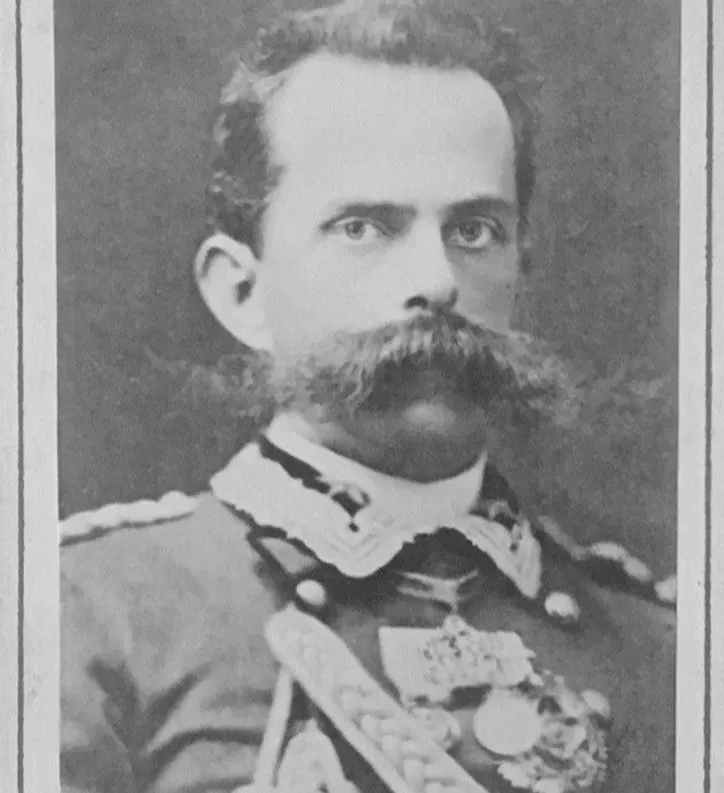
In 1900, Italy’s King Umberto I sat down for dinner at a restaurant in Monza and noticed something strange: the owner looked almost exactly like him.
The conversation that followed uncovered a cascade of overlaps neither man could explain. Both were named Umberto. Both were born on the same day, in the same town. Both had wives named Margherita. The restaurant had even opened on the exact day the king was crowned.
The next morning, the king learned his lookalike had been shot dead. Hours later, King Umberto himself was assassinated at a public event in that same city. Statisticians can point to population-scale coincidences in names and birthdates all day long – but stacking this many matches, then capping it with two synchronized violent deaths, is the kind of case that makes even skeptics go quiet.
#11 – The Lincoln-Kennedy Pattern That Refuses to Die

Most “Lincoln vs. Kennedy” comparisons floating around the internet are exaggerated nonsense, cherry-picked from lists that ignore every mismatch. But strip away the internet embellishments, and a genuinely strange core remains.
Abraham Lincoln was elected to Congress in 1846; John F. Kennedy in 1946. Lincoln became president in 1860; Kennedy in 1960 – a full century apart, on the nose. Both men were assassinated on a Friday, in their wives’ presence, by men known by three names: John Wilkes Booth and Lee Harvey Oswald. Their successors, Andrew Johnson and Lyndon Johnson, share a surname and were both Southern Democrats.
Why It Stands Out
- Elected to Congress a century apart: Lincoln in 1846, Kennedy in 1946
- Elected president a century apart: Lincoln in 1860, Kennedy in 1960
- Both assassinated on a Friday, seated beside their wives
- Both succeeded by men named Johnson, each a Southern Democrat
Skeptical mathematicians are right to point out that humans notice matches and quietly ignore the dozens of things that don’t line up. Still, the century-aligned election years aren’t folklore – they’re on the record, and they’re tight enough to keep even the debunkers a little unsettled.
#12 – The Father and Son Who Lost the Same Leg on the Same Battlefield

War produces plenty of tragic repetition, but this one reads like it was written for effect. According to Civil War battlefield reports, a Confederate soldier had his leg amputated after being struck by artillery fire – a common, brutal fate for the era.
Years later, his son, following him into the same regiment, was allegedly wounded on the same battlefield, near the same spot, by a similar cannon blast – and lost the same leg.
Documentation from this period is patchy, and the story has clearly been smoothed by generations of retelling. But family recruitment patterns and regional army units make two relatives fighting on the same ground genuinely plausible. It’s the matching injury, matching limb, and matching location that push this from “plausible family history” into “deeply uncomfortable coincidence.”
#13 – The Stewardess Who Survived Three Sinking Ocean Liners

Some people brush past history’s worst disasters like they’re dodging rain. Violet Jessop was one of them.
In 1911, she was aboard the RMS Olympic when it collided with another ship and nearly went down. She survived. In 1912, she was working aboard the Titanic when it struck an iceberg and sank in the freezing North Atlantic. She survived that too. During World War I, she was aboard the HMHS Britannic when it struck a mine and sank – and once again, she survived.
Fast Facts
- 1911: Survived a collision aboard the RMS Olympic
- 1912: Survived the sinking of the RMS Titanic
- 1916: Survived the sinking of the HMHS Britannic during World War I
- Nicknamed “Miss Unsinkable” for walking away from all three disasters
Working on ocean liners during their most dangerous era naturally raised anyone’s odds of being caught in an accident. But three separate, historically significant sinkings, with the same woman walking away from each one, turns “increased risk” into something closer to a statistical anomaly wearing a stewardess uniform. History remembers her, fittingly, as “Miss Unsinkable.”
#14 – The Man Who Cheated Death Seven Times and Then Won the Lottery

If a screenwriter pitched this plot, most studios would send it back marked “too unbelievable.” Croatian music teacher Frane Selak lived it anyway.
Over the decades, Selak reportedly survived a train derailment into a river, a plane crash that sucked him out of the door mid-flight and dropped him into a haystack, several serious car accidents, and a bus crash into a river. Then, late in life, with his near-death résumé already absurd, he won a substantial lottery jackpot.
Skeptics note that oral retellings tend to inflate over the years, and some details of his story have been challenged. Even the most conservative version, though, is still statistically ridiculous: surviving multiple catastrophic accidents across different modes of transport, and then getting handed a lottery win on top of it. Mathematicians don’t have a tidy formula for Selak. They just file him under “extreme outlier” and hope, for his sake and everyone else’s peace of mind, that he’s done testing fate.
The Bottom Line
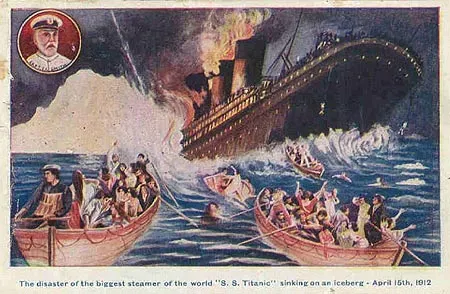
Strip away the embellished folklore and exaggerated internet listicles, and a stubborn core of these stories still refuses to behave. A novel predicting the Titanic. A man surviving two atomic bombs. A stewardess dodging three sinkings. A man cheating death seven times before hitting a jackpot. These aren’t everyday flukes – they’re statistical outliers clinging to the very edge of plausibility.
Here’s my honest take: mathematicians can model probabilities all day, but probability doesn’t erase discomfort, and it definitely doesn’t erase wonder. In a world with billions of people and an unimaginable number of moving parts, someone, somewhere, is always living out the least likely version of events. We just happened to write a few of them down.
Which one of these do you think is genuine fate, and which is overhyped folklore dressed up as fact? Make your case in the comments – I guarantee not everyone will agree with you.