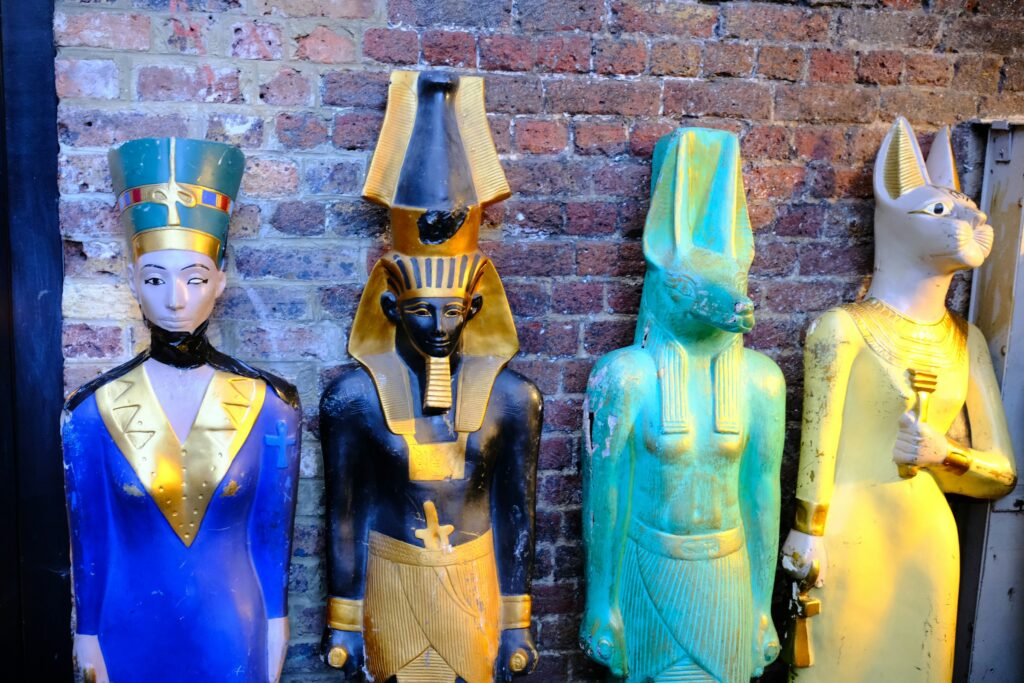

You’d think a museum basement is just overflow parking for chipped pottery and duplicate spearheads. That’s the polite version curators tell tour groups.
The real version is messier: some objects get locked away not because they’re worthless, but because nobody can safely explain what they are, how old they really are, or what admitting the truth would do to the textbooks. These aren’t internet legends dreamed up by conspiracy forums. They’re the actual, on-the-record headaches of professional archaeologists, materials scientists, and geneticists who’d rather argue about them in private than defend them under gallery lights. Here are 21 of them, starting with the one that quietly threatens to rewrite the history of ancient engineering.
#21 – The Antikythera Mechanism’s Forgotten Cousins
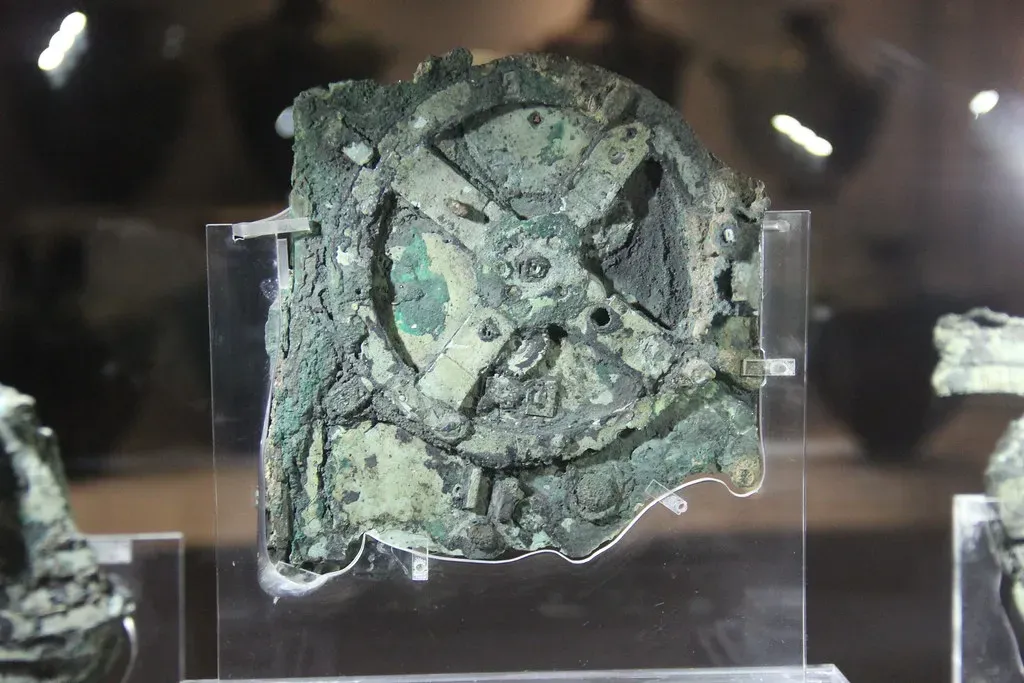
For over a century, the Antikythera Mechanism looked like a fluke. This ancient Greek device for tracking celestial cycles was treated as a one-off miracle, a freak burst of genius nobody else in the ancient world could replicate.
Then corroded gear-like fragments from other shipwrecks started turning up in storage trays. They look suspiciously similar, and curators quietly admit some might be additional precision gearworks from eras that supposedly shouldn’t have had them.
The problem isn’t just what these lumps are. It’s what they’d imply. If more complex mechanisms pre-date or run parallel to Antikythera, the “singular technological spike” story collapses, and you suddenly need a whole missing industry of ancient instrument-makers nobody wrote about.
#20 – The Ubaid “Lizard-Head” Figurines
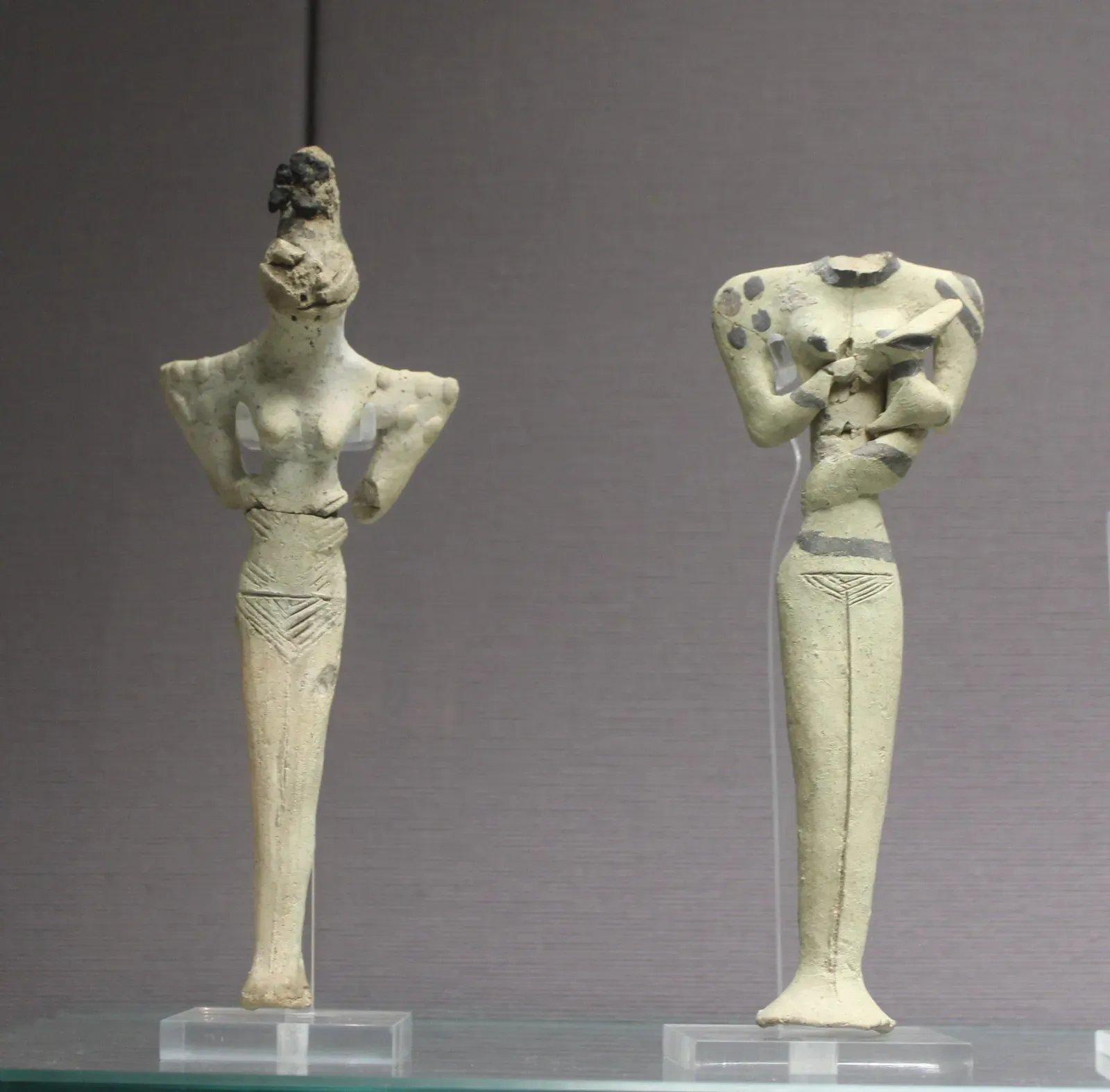
Excavations at Tell al-‘Ubaid in Iraq uncovered small clay figurines over a century ago with elongated bodies and strikingly reptilian heads. No wings, no obvious deity symbols – just big eyes, tapered snouts, and streamlined skulls that don’t match any later Mesopotamian iconography.
Curators keep most of them in drawers because every label is a trap. Call them “snake gods” and you’re speculating; call them “stylized humans” and you’re ignoring the deliberate reptilian features on purpose.
Mention that they resemble modern “alien lizard” pop-culture tropes and you lose academic credibility instantly. So they sit in climate-controlled limbo, quietly daring anyone to explain early Mesopotamian belief systems with a straight face.
#19 – The Saqqara Bird That Might Have Flown First
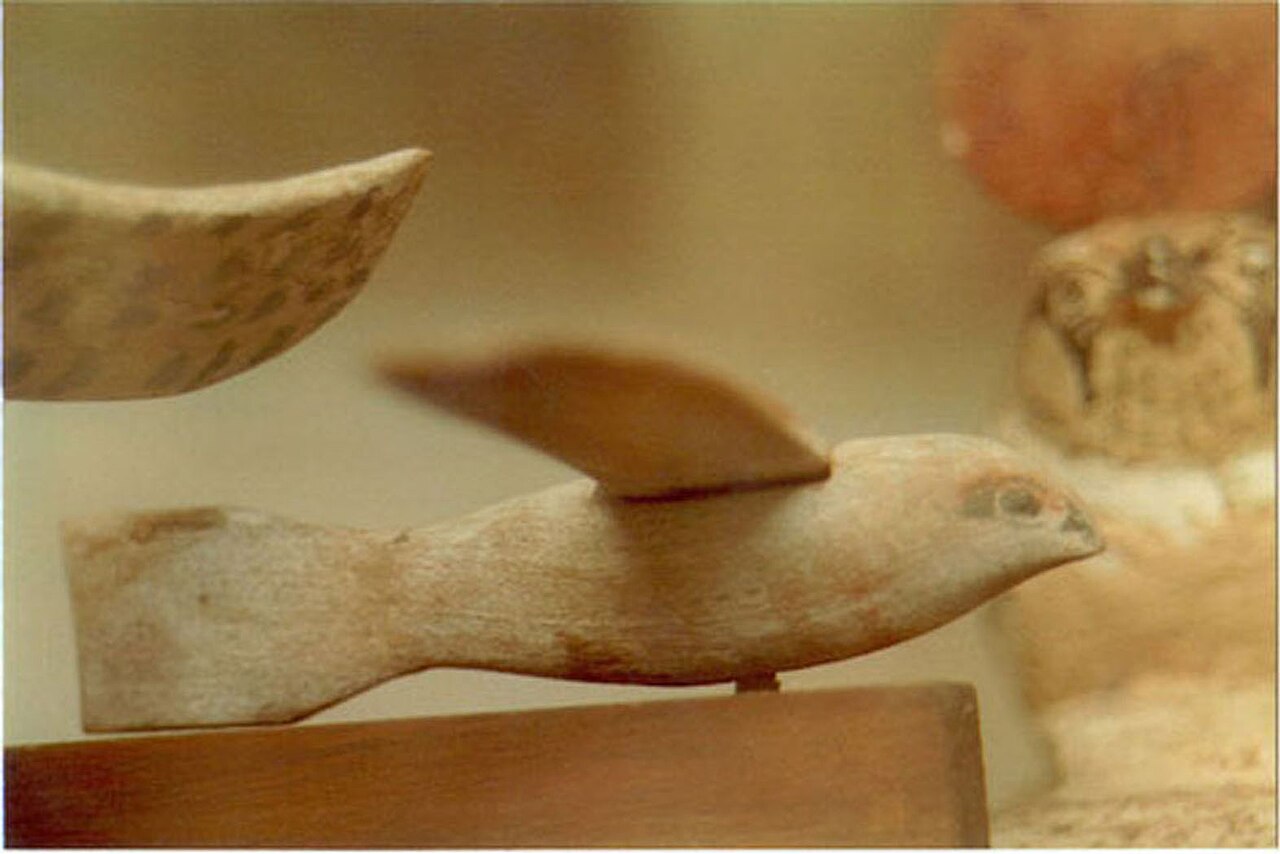
In a storage room near Saqqara, Egypt, a small wooden object carved roughly 2,000 years ago has been arguing with specialists for decades. It looks like a bird, except it has straight, glider-like wings and no carved legs – useless as a simple toy or votive object.
Engineers who’ve tested replicas say the aerodynamics are better than chance. Other researchers insist it’s just a stylized falcon that happens to glide a little when thrown, nothing more.
For curators, the fear is political, not just scientific. Label it “early aviation” and you invite pseudoscience overnight; dismiss it and you ignore that its shape is unusually tuned for stable glide. So it stays tucked away, quietly unresolved.
#18 – The Phaistos Disk and Its Unreadable Spiral
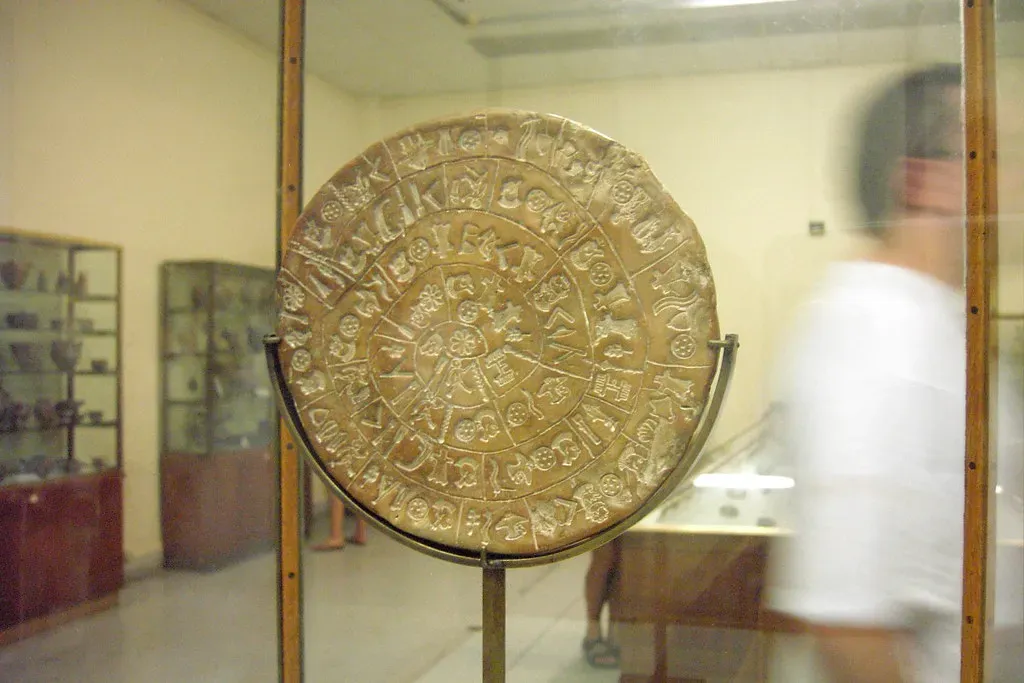
The Phaistos Disk, found on Crete in 1908, is a palm-sized clay disk stamped with 45 unique symbols arranged in a spiral. On paper it should be a dream artifact – standardized signs, clean layout, excellent preservation.
In practice it’s a nightmare. No other known object uses this exact script, meaning there’s no corpus to compare it to, no Rosetta Stone, and no way to verify any of the dozens of “translations” scholars have proposed over the decades.
Fast Facts
- Discovered on Crete in 1908, roughly palm-sized
- Stamped with 45 unique symbols arranged in a spiral
- No other artifact anywhere shares its exact script
- Dozens of translations proposed over the decades – none confirmed
Some curators suspect it’s a one-off ritual object using a private code. Others think it’s a short-lived writing experiment that died with its creators. Either way, it’s easier to sideline than to defend in a gallery case.
#17 – The Baghdad “Battery” Jars and Their Purpose Problem
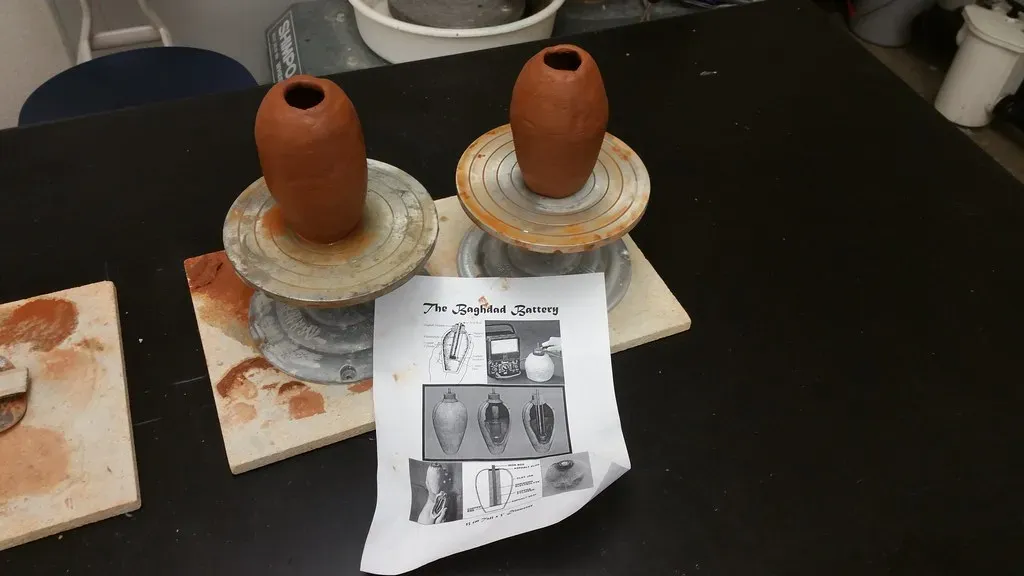
You’ve probably heard the mythic version: Parthian-era clay jars with copper cylinders and iron rods that supposedly prove ancient people had electricity. The reality is messier and, honestly, more interesting.
Some reconstructed jars genuinely show electrochemical potential. But the original discovery context is poorly documented, and no associated wiring or lighting has ever surfaced to confirm what they were actually for.
Any sufficiently advanced technology is indistinguishable from magic.
Arthur C. Clarke
Curators are stuck between bad options – promote a sensational myth, or bury a legitimate chemical mystery. Most now sit boxed in storerooms, occasionally resurfacing at conferences where the real question is function: ritual container, medicinal device, or accidental electricity nobody meant to invent.
#16 – The Longyou Caves’ Machine-Neat Walls
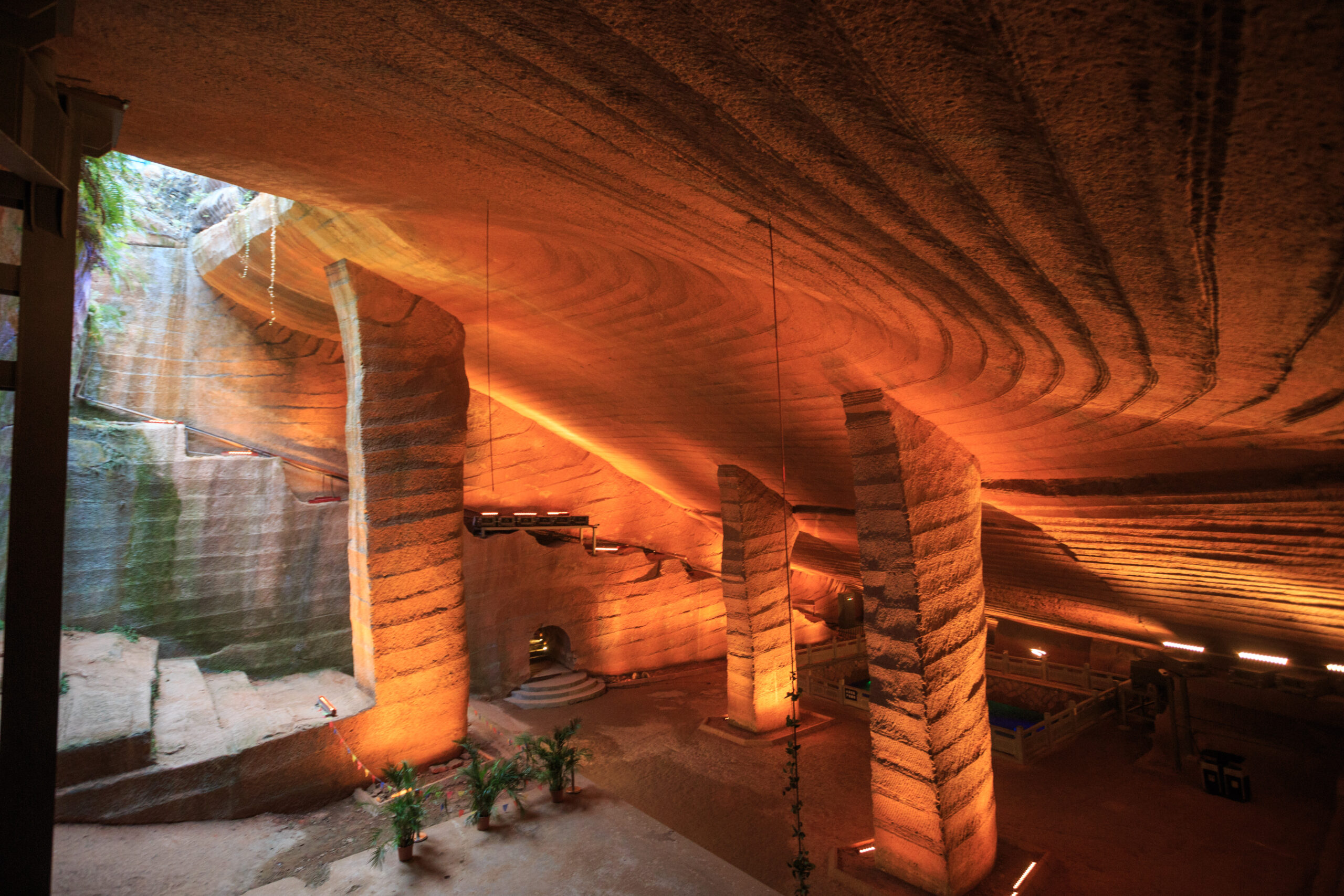
In eastern China, the Longyou Caves are vast man-made chambers carved into sandstone, discovered in the 1990s when villagers drained the ponds hiding their entrances. Every surface is etched with perfectly parallel chisel marks, as if someone used a mechanical planer instead of hand tools.
There’s no historical record of their construction, no clear purpose, and no nearby infrastructure suggesting a major quarry or underground city. Labor estimates run into tens of thousands of worker-days per chamber – for a project with zero textual or oral trace.
That’s an uncomfortable gap for institutions that like tidy timelines. When fragments or tools from the area do reach museum collections, they’re cataloged blandly, because admitting we have massive engineered spaces with no believable paperwork is a headache best kept underground – literally.
#15 – The Costa Rican Stone Spheres with No Clear Use
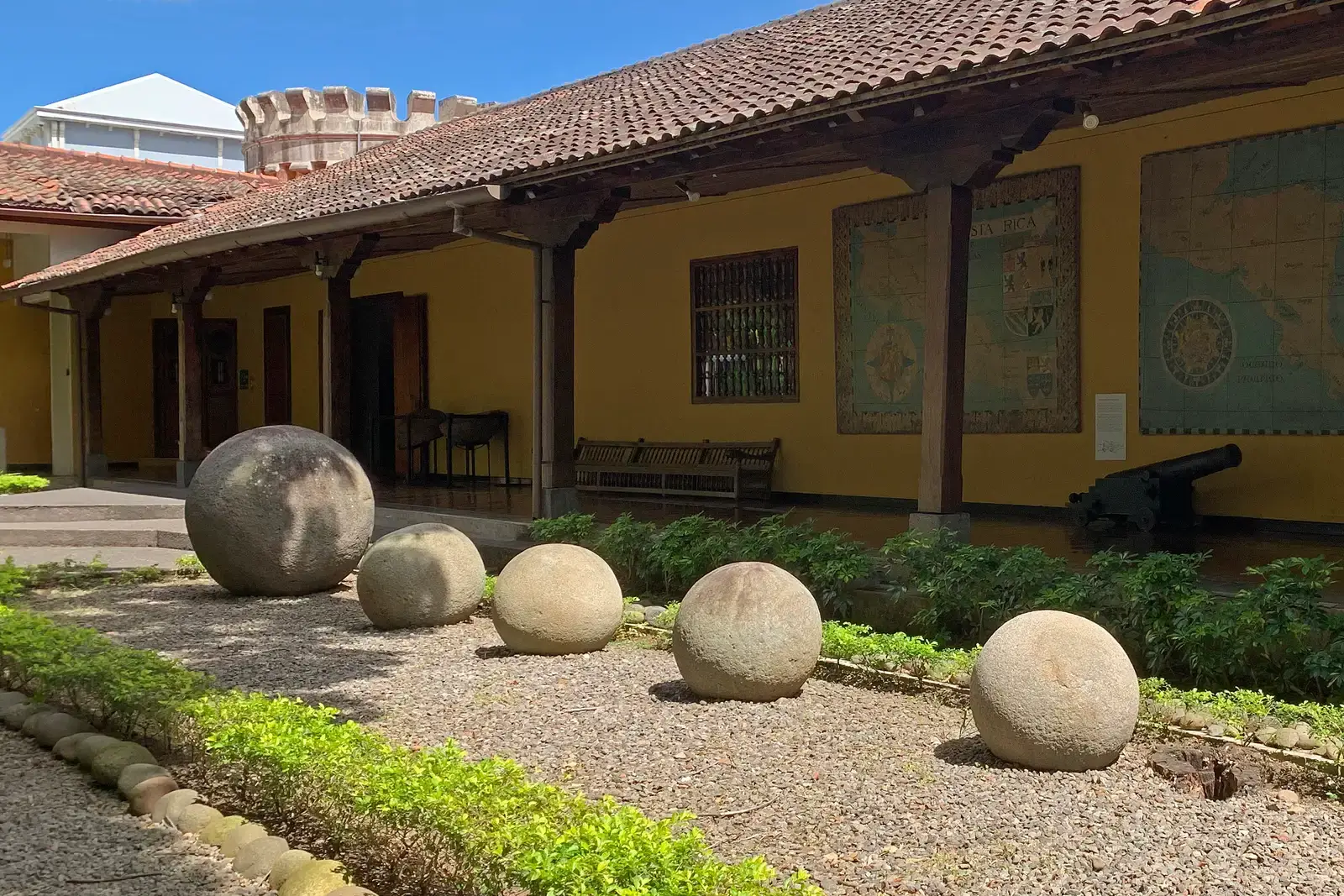
Scattered across Costa Rica’s Diquís Delta and beyond are nearly perfect stone spheres, some weighing several tons. Laser surveys and petrographic studies confirm they were intentionally shaped with remarkable precision from hard rock, likely over centuries.
Yet no tools, no explicit iconography, and no surviving texts explain why anyone bothered. Alignment theories involving stars, navigation, or status markers all exist, and all fall short of a real answer.
Museums display a handful labeled “Pre-Columbian stone spheres,” which sounds scientific but dodges the real issue. Whatever system these spheres once encoded vanished so completely that even descendant communities retain only faint echoes of it.
#14 – Roman Dodecahedra No One Can Agree On
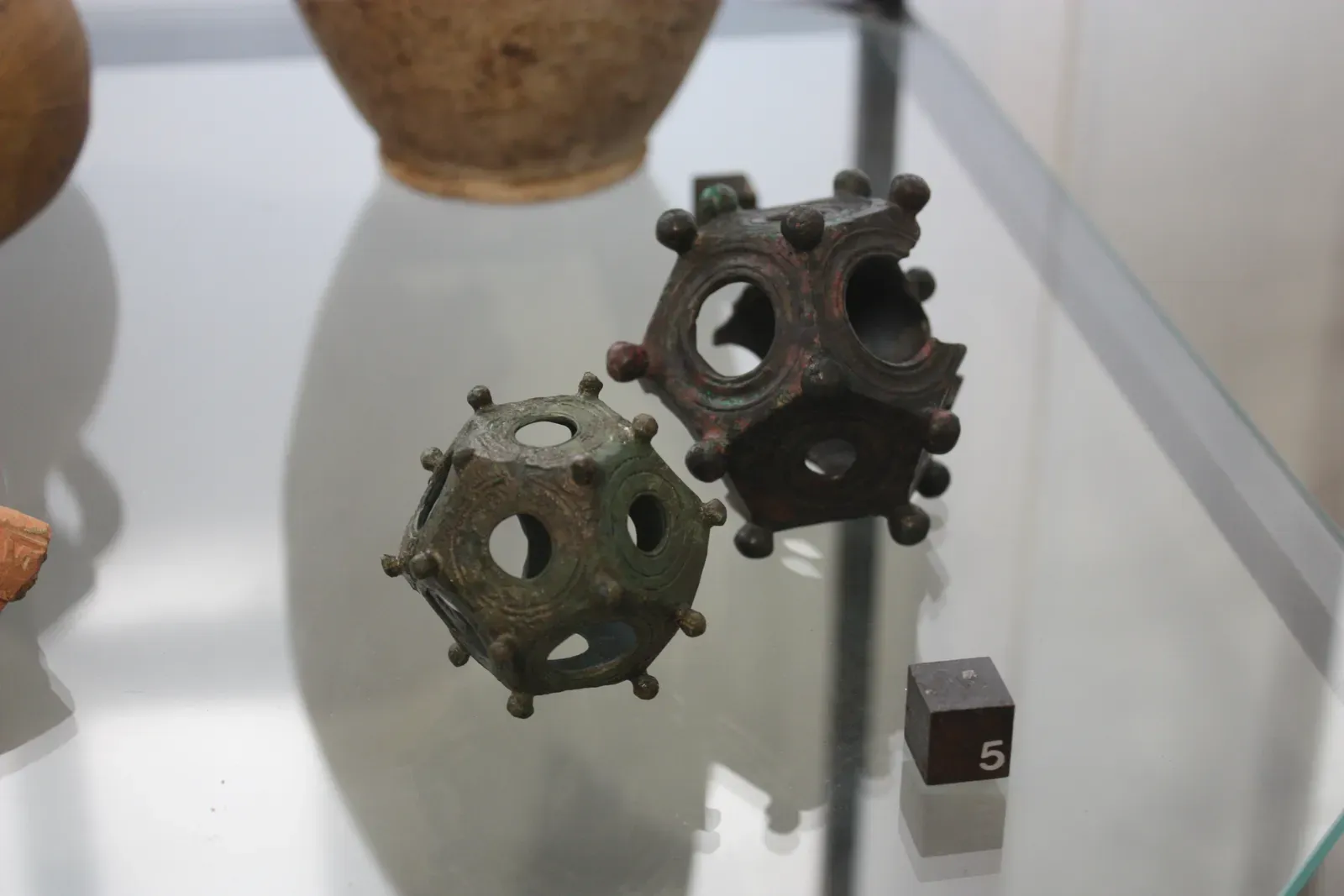
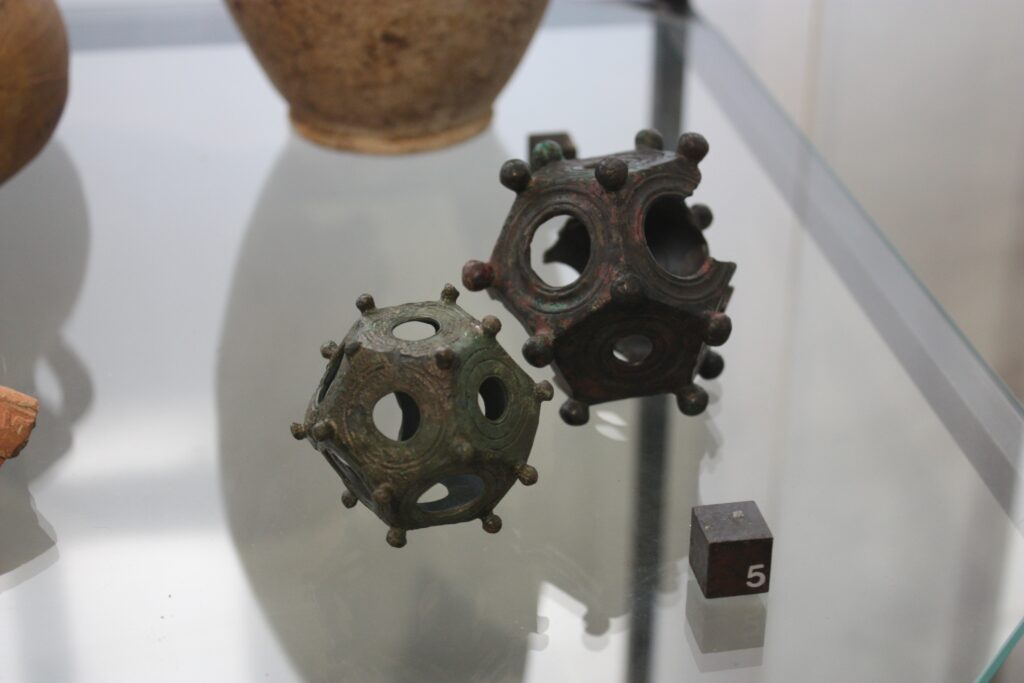
Small bronze dodecahedra with protruding knobs turn up across old Roman territories, from Britain to Hungary. They’re hollow, beautifully made, and never once mentioned in Roman texts – bizarre for an empire obsessed with lists and record-keeping.
Hobbyists have recreated them as knitting aids, range-finders, candle holders, even divination tools. Curators quietly despise them because every label feels like a guess dressed up as fact.
The more you line them up in a case, the louder the real question gets: how does something this widespread, this well-made, leave zero unquestioned written trace in one of history’s most documented civilizations?
#13 – The Nazca Trophy Heads With Anatomy That Doesn’t Add Up
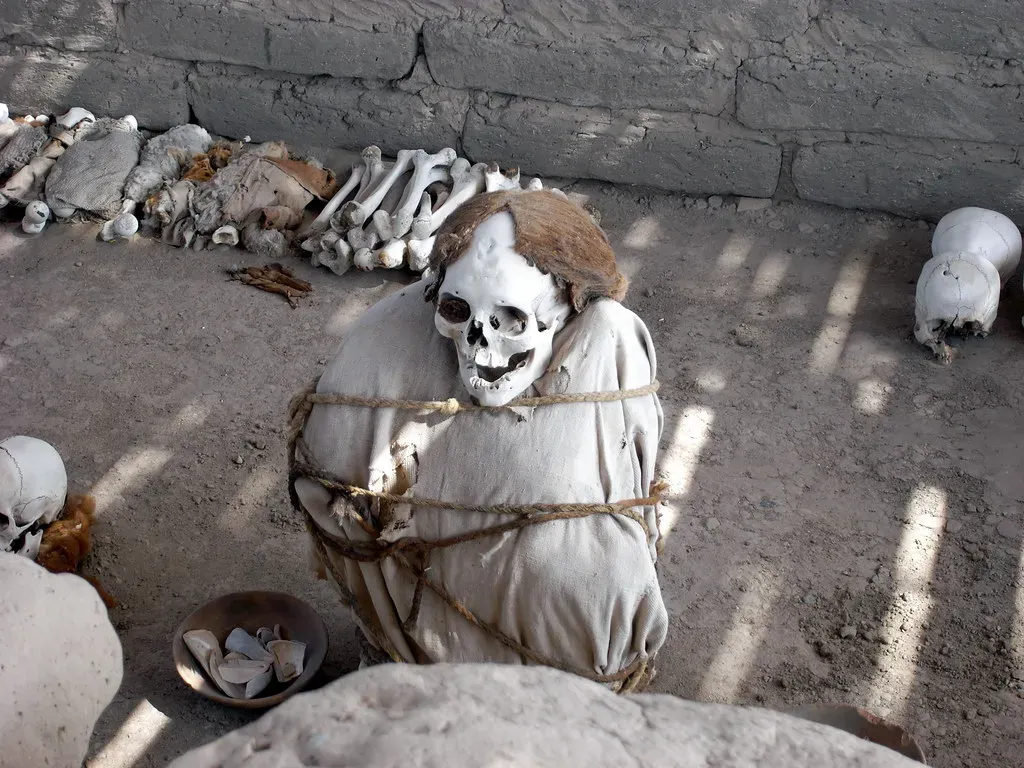
Peruvian collections and foreign museums alike house skulls from the Nazca culture, cords threaded through drilled holes. Some are clearly war trophies. Others look ritual, even reverent.
Then there are the outliers – skulls with surgically precise trepanations that actually healed, or cranial deformations that don’t match any known cultural practice in the region. These don’t fit either category cleanly.
Curators are caught between horror and caution here. Full display risks sensationalizing Indigenous remains; storage means losing a rare window into how the Nazca saw the line between person and object. The disputed cases stay locked away, available only to vetted researchers who still can’t agree on what they’re looking at.
#12 – The Mystery Metal of the Delhi Iron Pillar
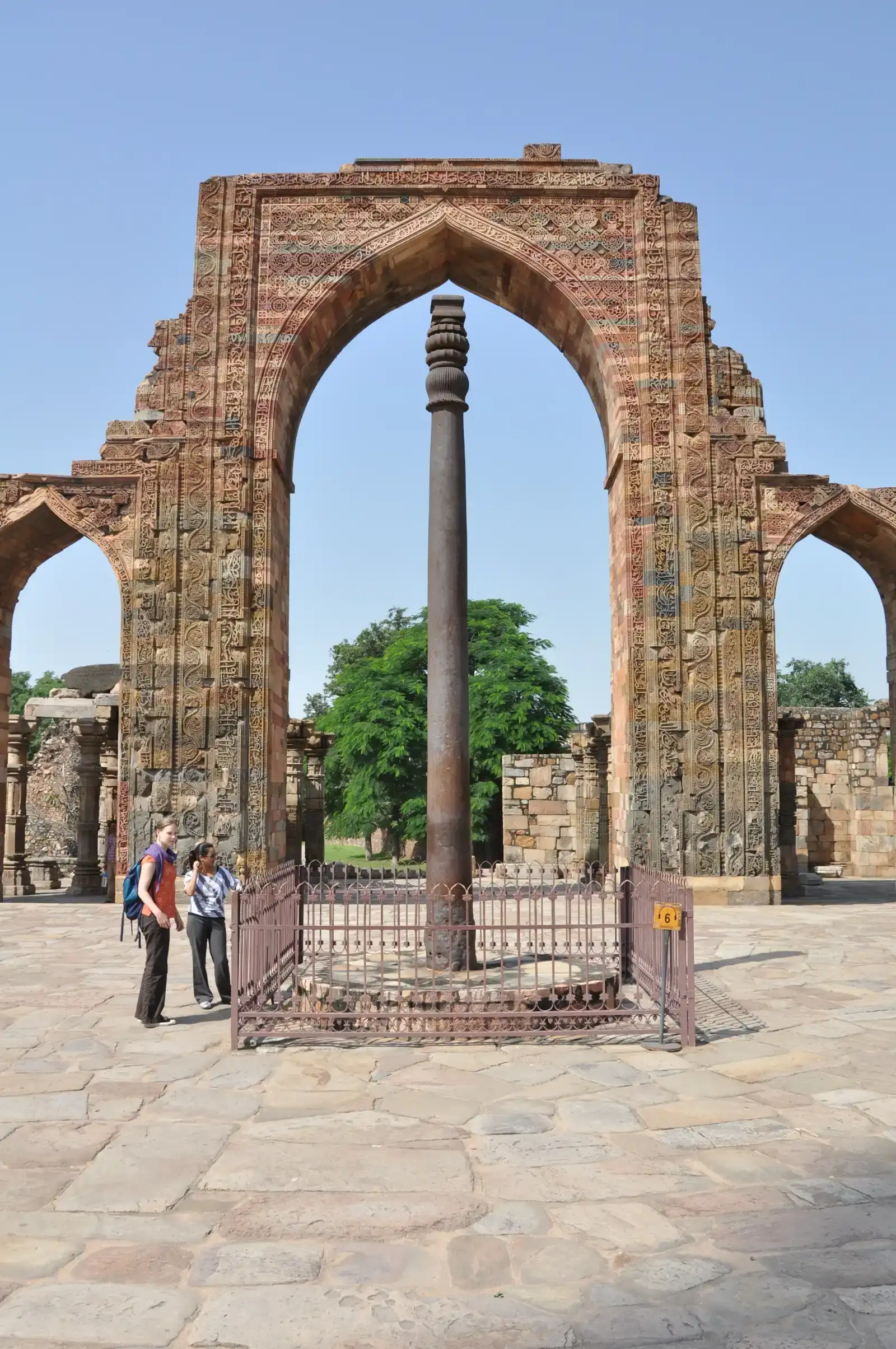
The famous Delhi Iron Pillar resists corrosion far better than a fourth- or fifth-century object has any right to. Less photogenic are the smaller iron artifacts in Indian and foreign collections showing the same anomalously stable corrosion, hinting at sophisticated slag control and phosphorus management centuries ahead of schedule.
Some test samples, sliced decades ago for analysis, still puzzle materials scientists today. They mostly stay in laboratory drawers, not glass cases.
Worth Knowing
- Standing in Delhi, dated to roughly the 4th or 5th century
- Shows almost no rust despite 1,500-plus years of outdoor exposure
- Corrosion resistance is linked to a phosphorus-rich protective layer
- Modern metallurgy only matched this chemistry centuries later
The honest explanation is uncomfortable for a Eurocentric progress story: early Indian metallurgists appear to have solved a problem that 19th-century Europe later reinvented with far more fanfare. It’s simpler for some institutions to highlight swords and statues instead.
#11 – The Tărtăria Tablets and the Proto-Writing Turf War
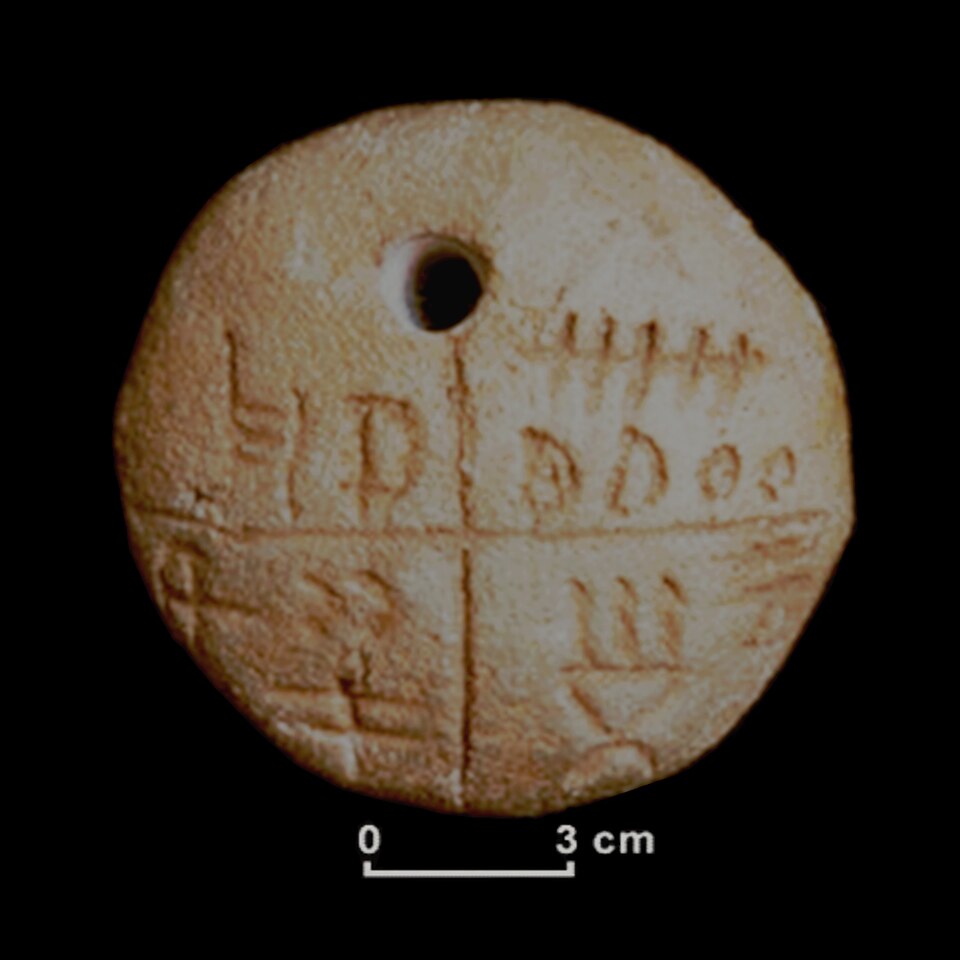
Three small clay tablets were found in a Romanian village in the 1960s, marked with incised symbols. Some resemble Near Eastern proto-writing; others appear to be entirely unique to the find.
Radiocarbon dating of associated material suggested they could predate the earliest Sumerian tablets – which, if confirmed, would flip the accepted origin story of writing itself. Critics counter that the dating is unreliable or the tablets were intrusive in their soil layer.
Call them “earliest writing” and you trigger an academic turf war overnight. Call them decorative marks and you ignore how structured the sign system genuinely looks. So they spend more time in controlled storage than in headline exhibitions.
#10 – The Coso Artifact and Its Out-of-Place Engineering
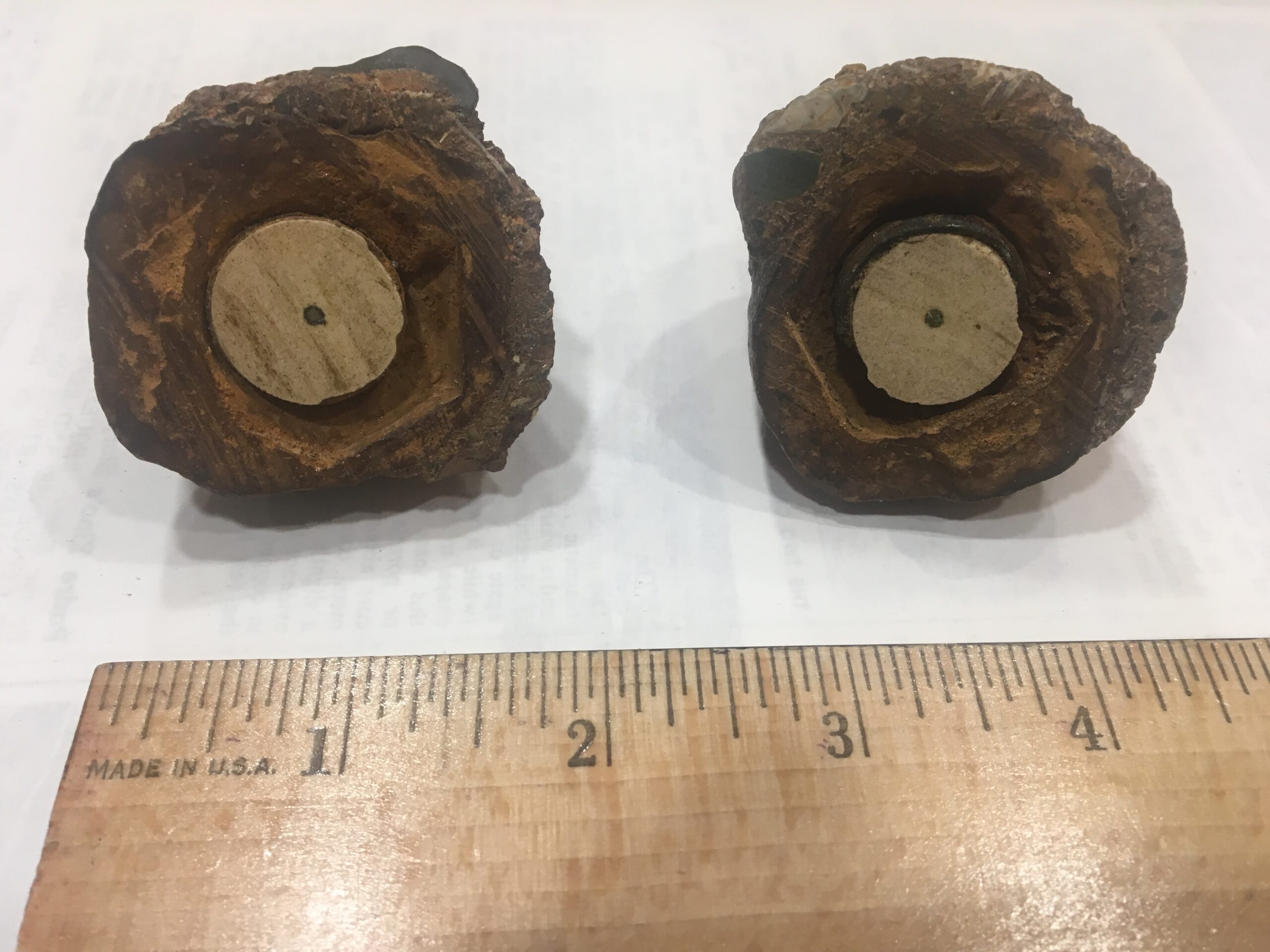
In 1961, rock collectors near Olancha, California, cracked open a geode-like concretion and reportedly found a spark-plug-like object encased inside it. Estimates of the surrounding material’s age suggested something impossibly old, which would make the industrial-looking core wildly out of place.
Skeptics argue it’s simply a modern spark plug that accreted mineral deposits over decades – a misread concretion, not a time-bending relic. That’s the more boring, more likely answer.
The real problem is chain of custody. The object bounced between private hands with almost no documentation, which poisons its scientific value regardless of what it actually is. Serious institutions want nothing to do with it, so it stays famous online and nearly invisible in professional collections.
#9 – The Voynich Manuscript’s Uncracked Script
![#9 - The Voynich Manuscript's Uncracked Script (Beinecke Rare Book & Manuscript Library, Yale University ([1])., Public domain)](https://nvmwebsites-budwg5g9avh3epea.z03.azurefd.net/dws/ce90ff544c81b02d4f3ba7a88e571e56.webp)
Housed at Yale’s Beinecke Library, the Voynich Manuscript is technically accessible, but the strangest details live in specialist scans few people ever see. It’s a 15th-century codex filled with text in an unknown script that actually passes statistical tests for real language.
Add unidentifiable plants, odd astronomical diagrams, and nude figures bathing in greenish pools, and you get a document that has broken cryptographers, linguists, and modern algorithms alike.
Displaying it prominently invites pressure for a “best current theory” – hoax, cipher, or lost language. Every camp has evidence; none has closed the case. So only select folios go on view, while the truly puzzling ink and margin anomalies stay in technical papers most visitors never read.
#8 – The Sierra Leone “Skystone” and Its Impossible Pigments
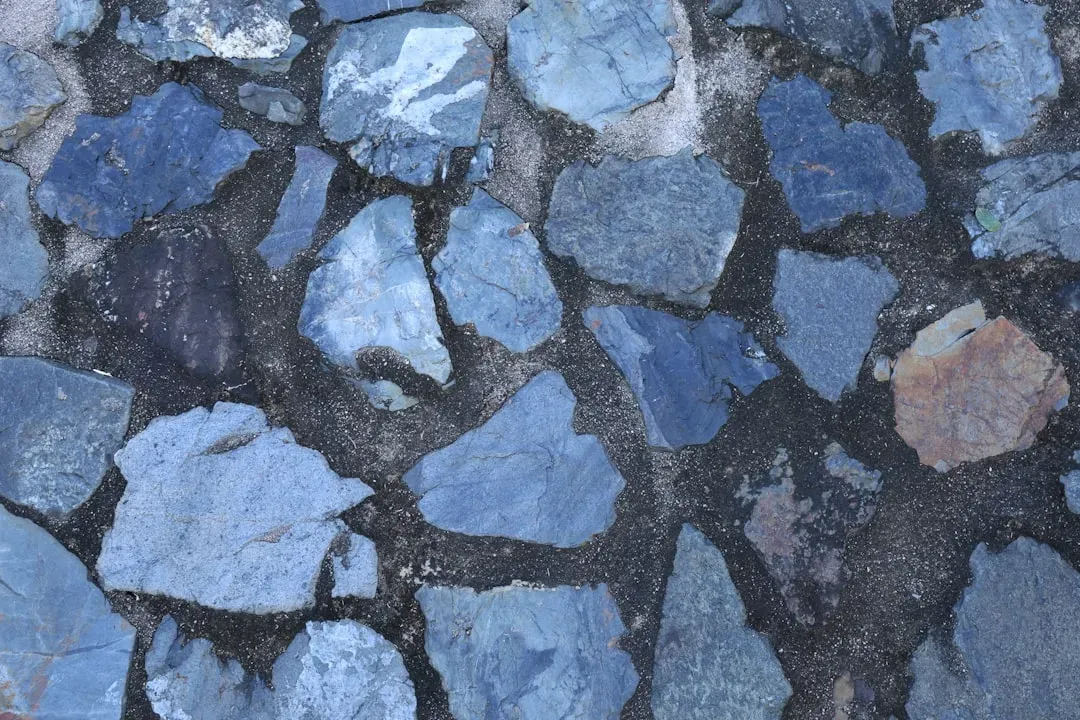
In scattered lab collections, a handful of small, polished blue stones – nicknamed “sky stones” in fringe circles – have been reported with chemical compositions that don’t cleanly match any known natural mineral assemblage. The most cited example allegedly surfaced in Sierra Leone, though the documentation trail is thin and inconsistent.
One specimen tested in an American lab showed unusual bonding between barium, carbon, and trace elements. A separate test on a similar stone contradicted that result entirely.
Without solid provenance, these stones don’t meet the bar for major display, but they’re too strange to throw away. If they turn out to be misidentified industrial waste, that’s embarrassing; if they’re genuinely engineered ancient pigments, that implies a lost technology nobody can currently reproduce.
#7 – The Shigir Idol’s Age Problem
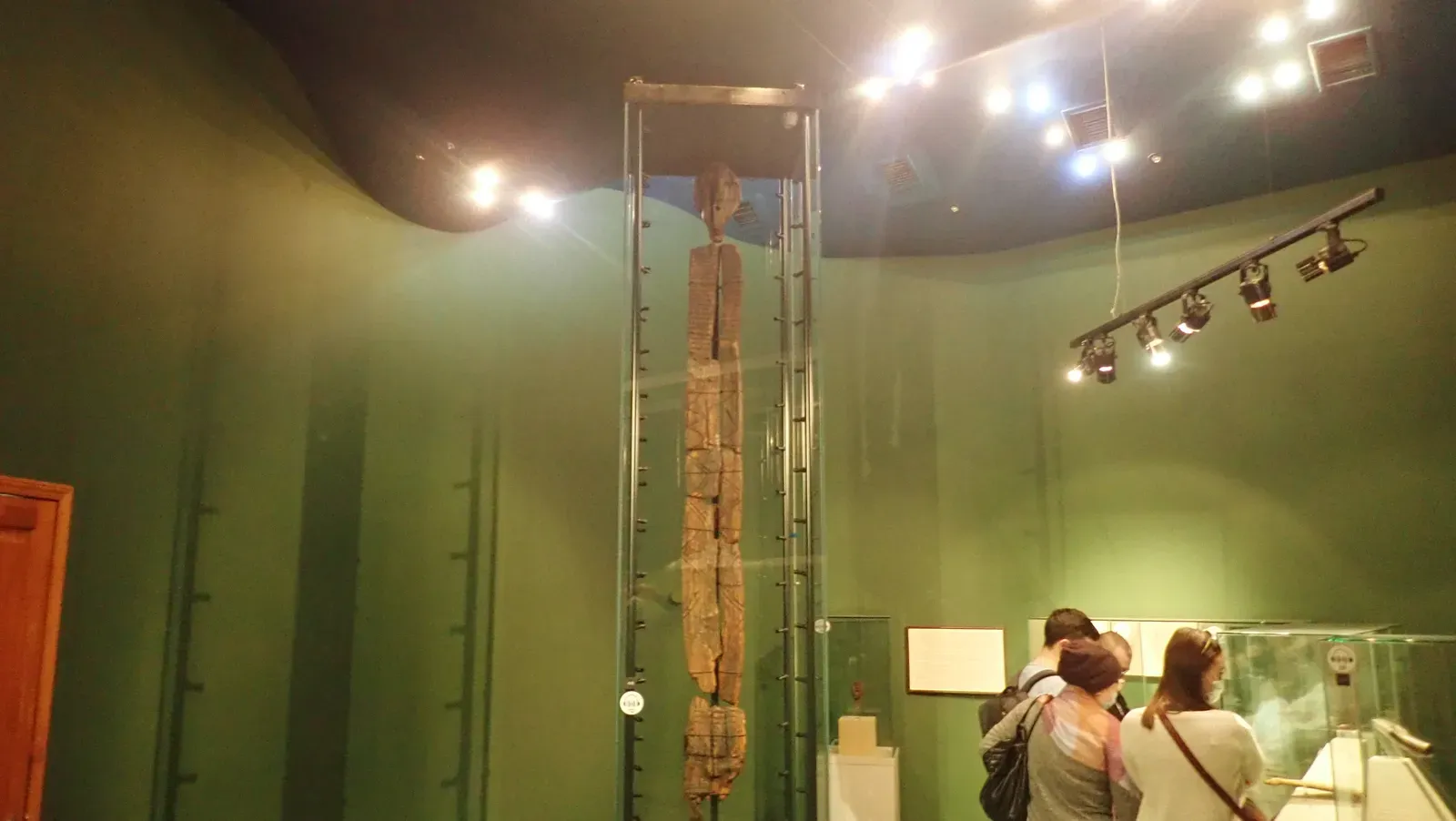
The Shigir Idol, carved from larch wood and pulled from a Russian peat bog, is covered in geometric patterns and stylized faces. It was initially dismissed as “primitive” – until improved radiocarbon dating kept pushing its age back, eventually landing past 11,000 years old.
That makes it older than Stonehenge and the Egyptian pyramids combined, which is a problem for the lazy assumption that complex symbolic art belongs to farmers, not Mesolithic hunter-gatherers.
Quick Compare
- Shigir Idol: roughly 11,000 years old
- Stonehenge: about 5,000 years old
- Great Pyramid of Giza: about 4,500 years old
- Shigir predates both monuments by thousands of years combined
Fully accepting its age and complexity means admitting European hunter-gatherers were carving meaning-dense totems while ice age memories were still fresh. That demands rewriting the “simple bands of foragers” narrative, which is exactly why related fragments still sit barely interpreted in regional museums.
#6 – The “Alien” Atacama Skeleton That Defied First Impressions
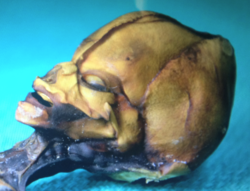
In the early 2000s, a tiny mummified skeleton nicknamed “Ata” surfaced from Chile’s Atacama Desert. It looked grotesquely non-human: an elongated skull, only 15 centimeters long, with bone development suggesting a 6- to 8-year-old child trapped in a body that size.
Conspiracy circles immediately screamed “alien.” Genetic studies later pointed clearly to human origin with severe developmental anomalies, though even those results raised new questions about mutation clusters nobody had cataloged before.
Museums want distance from Ata for good reason – grave-robbing ethics, a media circus, and unsettled medical interpretation make it radioactive. But the deeper truth stays locked in cabinets: human genetics alone can produce forms that look disturbingly “other,” no UFO required.
#5 – The “Roman” Lead Books of Jordan and Their Murky Status
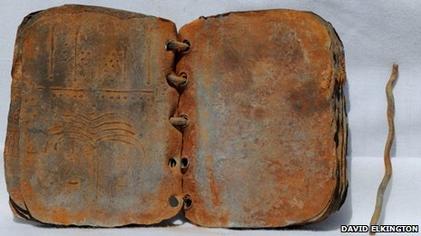
Around 2010, a cache of small lead codices allegedly surfaced in Jordan, filled with cryptic symbols and crude images of trees and faces, possibly mixed with Hebrew and Greek letters. Early claims painted them as early Christian texts; skeptics quickly flagged anomalies in the lettering and patina.
Some metallurgical tests suggest the lead itself is ancient – but old metal can be engraved at any time, so that proves nothing about the inscriptions.
Most major museums have quietly declined the books rather than risk being burned by a forgery tied to religion and national heritage. The most awkward possibility – that they’re a mix of genuinely old and modern additions – doesn’t fit a clean “real vs. fake” label, so it rarely makes the gallery cut.
#4 – The Piri Reis Map’s Ice-Free Antarctica Problem
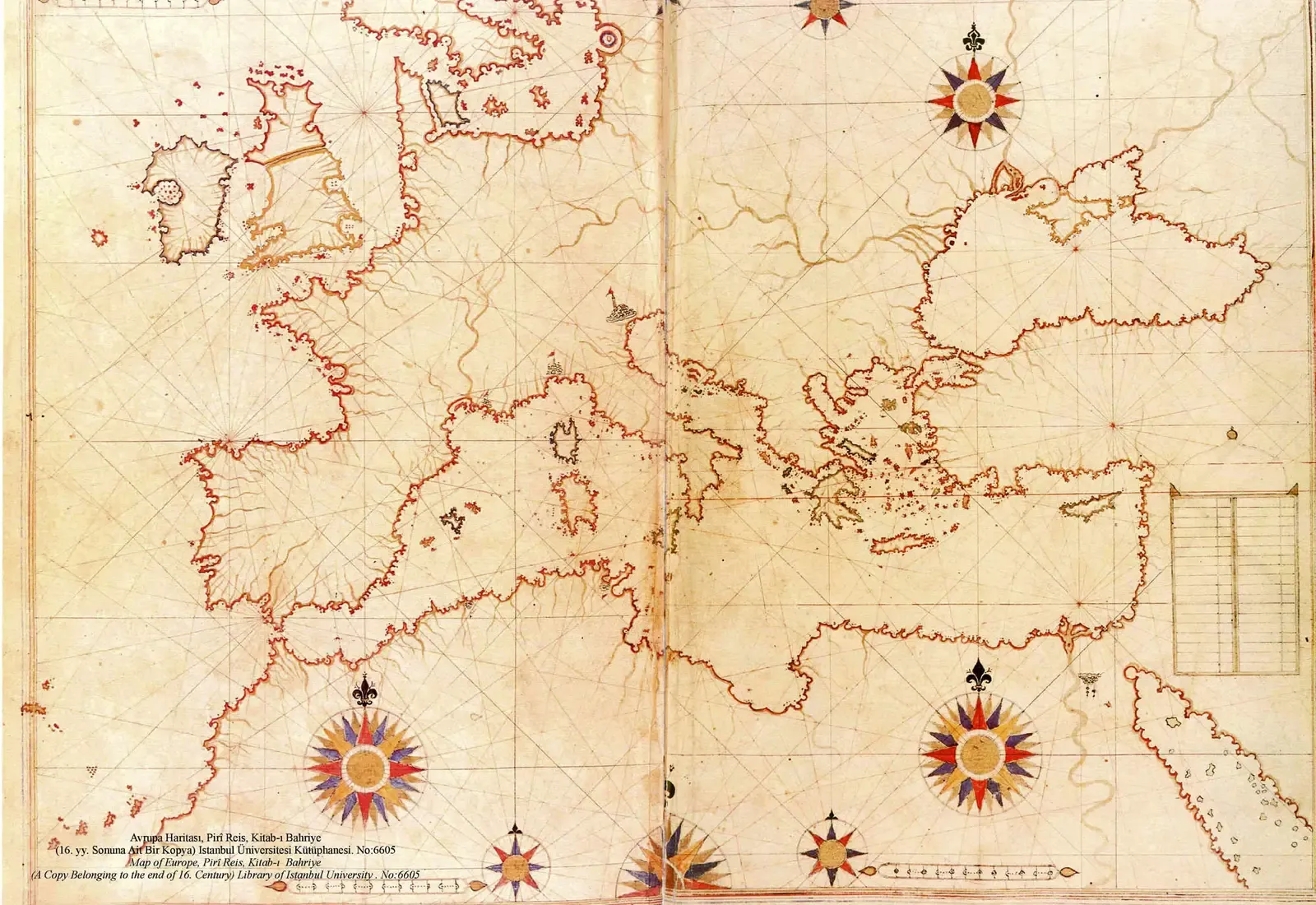
Several early modern maps, most famously the Piri Reis map, appear to show coastlines of South America and Antarctica that look oddly accurate for their era. Fringe retellings turn this into proof of a lost global civilization.
The archival reality is stranger and more mundane at the same time: cartographers clearly stitched together older sources, traveler accounts, and outright guesses. Yet a few subsections still line up with later surveys uncomfortably well.
Map curators tend to downplay the most controversial sheets, favoring artistic and political context instead. Acknowledging the precision invites a question nobody wants to own: how much ancient geographic knowledge got quietly recycled into Renaissance work, then lost again for good?
#3 – The Caves With Prehistoric Sound Engineering
Deep in European cave systems like Lascaux and Chauvet, researchers have measured something strange: the most intensely painted chambers often coincide with acoustic “hot spots” where singing or drumming resonates dramatically.
Prehistoric flutes and sound-making objects from nearby contexts often sit poorly labeled in storage, treated as curios rather than pieces of a designed sensory environment. But test the sound in situ, and the pattern stops looking accidental.
Claim that Paleolithic people engineered “concert halls” and you’re accused of romanticizing the past. Ignore the acoustics and you dismiss compelling data. So the flutes, resonators, and percussion stones mostly stay in research collections, hinting that our ancestors were choreographing sound and light long before anyone gave them credit for it.
#2 – The Gunung Padang Cores and Deep-Time Architecture
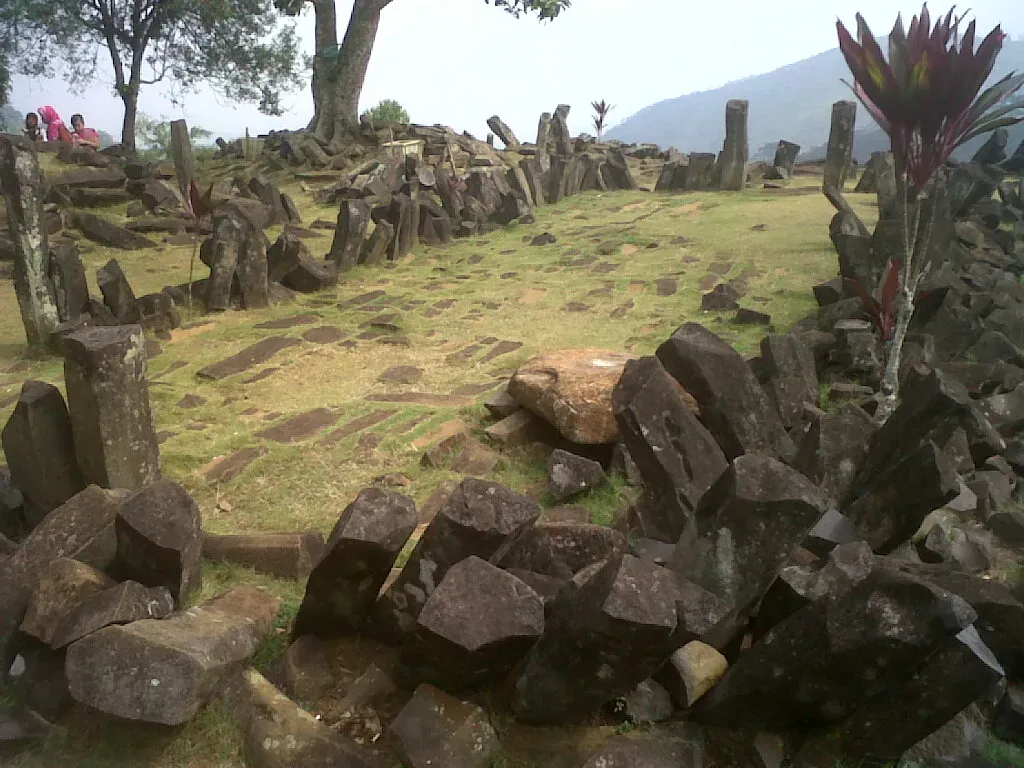
In Indonesia, the hill of Gunung Padang was long assumed to be a megalithic site built on a natural knoll. Core drilling and geophysical surveys now suggest layered stone structures extending tens of meters underground, with possible construction phases far older than mainstream Southeast Asian megalithic dates.
The deeper layers haven’t been fully excavated. Much of the evidence comes from resistivity scans and small cores – exactly the kind of data that starts academic wars instead of settling them.
At a Glance
- Location: West Java, Indonesia
- Surveys suggest layered stone structures tens of meters underground
- Some proposed construction phases predate mainstream regional dates
- Deeper layers remain unexcavated and unconfirmed
If those subsurface structures are truly artificial and as old as some dates suggest, the region’s construction timeline is off by millennia. Until full excavation happens, the potentially paradigm-shifting cores sit quietly in drawers, labeled as ordinary geology.
#1 – The Out-of-Sequence DNA Hiding in Ancient Bones

The strangest relics in this entire list aren’t shiny artifacts at all. They’re fragments of ancient DNA pulled from bones that sat forgotten in museum basements for decades.
Geneticists sequencing Neanderthals, Denisovans, and other archaic humans have occasionally turned up ghost lineages – genetic signatures that don’t match any known human group. That implies interbreeding with populations we’ve never physically identified in the fossil record.
In plain English: the genome insists someone was there, but their bones are either missing or sitting misclassified in a drawer somewhere. Curators are now quietly re-cataloging boxes of “uninteresting” bone scraps, wondering how many belong to people science doesn’t have a name for yet.
The Bottom Line
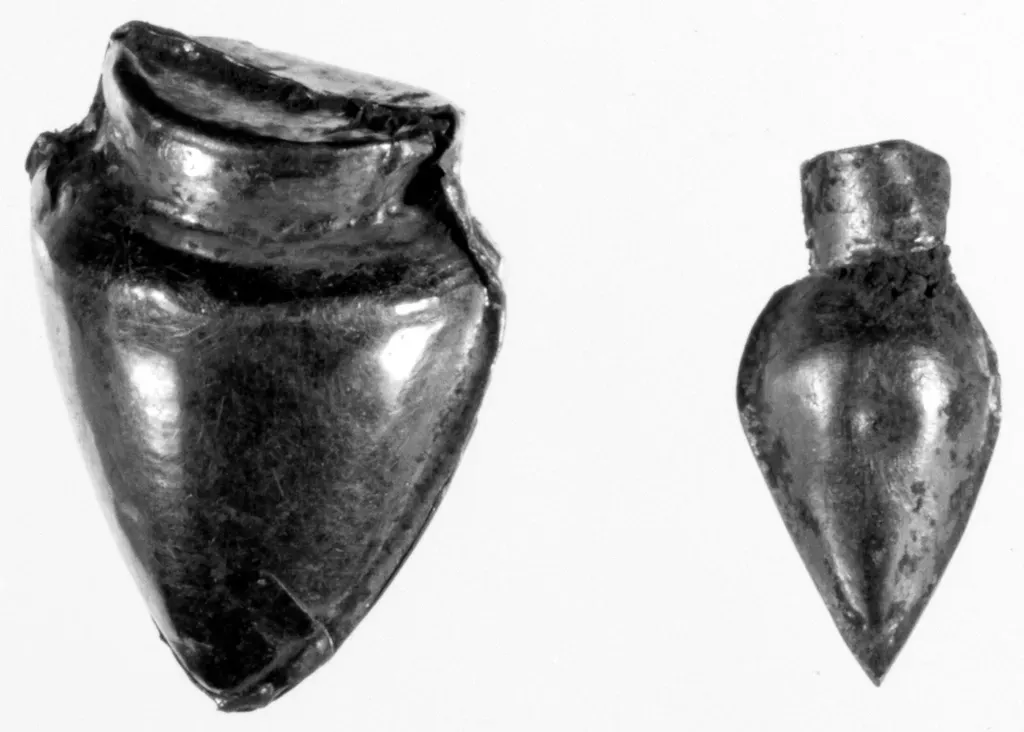
Put these 21 relics side by side and a pattern emerges that no polite museum label wants to admit out loud: our tidy story of “how civilization evolved” is held together with duct tape, funding politics, and professional caution.
Gears exist in eras that supposedly didn’t have gears. Writing might predate “the first writing.” Caves were acoustically engineered. DNA keeps insisting on ghosts with no faces and no names.
None of this proves ancient aliens or a lost global super-civilization, and I’m not going to pretend it does. What it proves is something almost more unsettling for the people who guard these collections: our data set is embarrassingly incomplete, and the confidence stamped on wall plaques is often bigger than the evidence backing it up.
If I’m being honest, the objects that deserve the harshest, brightest spotlight are the ones curators fear the most – not because they’d break the public’s trust, but because they might break the experts’ comfortable narrative first. Which of these would you drag out of storage tomorrow, and which ones do you think genuinely need more time in the dark before we’re ready for the answer?