
Look up at the right ancient wall and you might swear you’re staring at a fighter jet, a lightbulb, or a rocket capsule carved by hands that lived thousands of years before electricity, aviation, or space travel existed. That’s not clickbait exaggeration – it’s a genuine, well-documented phenomenon that has puzzled archaeologists, exasperated Egyptologists, and quietly broken the internet for decades.
Here’s the part most viral posts conveniently skip: the honest answer isn’t “ancient astronauts,” and it isn’t “gullible tourists” either. It’s something stranger – a collision between human pattern-recognition, real engineering history we’re still uncovering, and a handful of images that stay unsettling no matter how many times scholars carefully explain them away. Eleven of the strangest cases are below, ranked from merely weird to genuinely hard to shake.
#11 – The “Helicopter” Carving at Abydos, Egypt
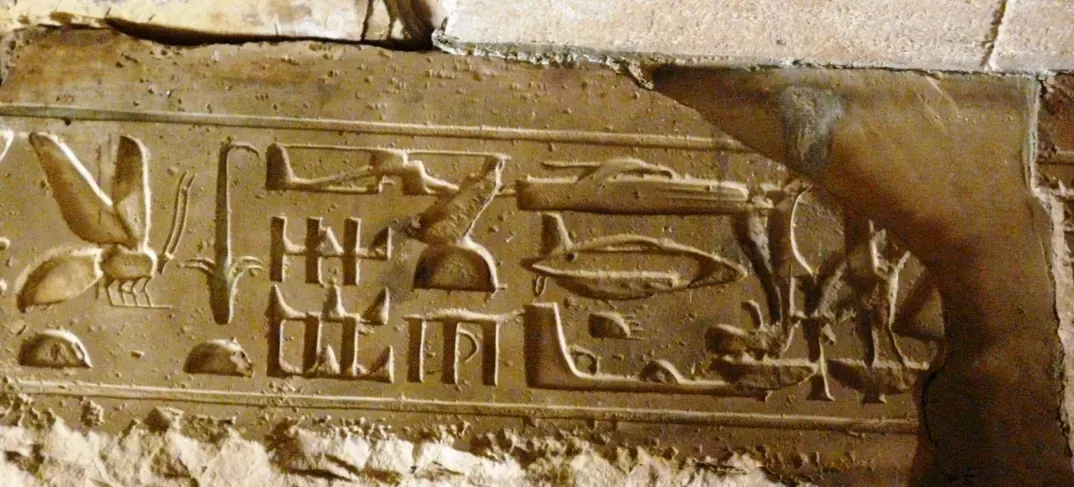
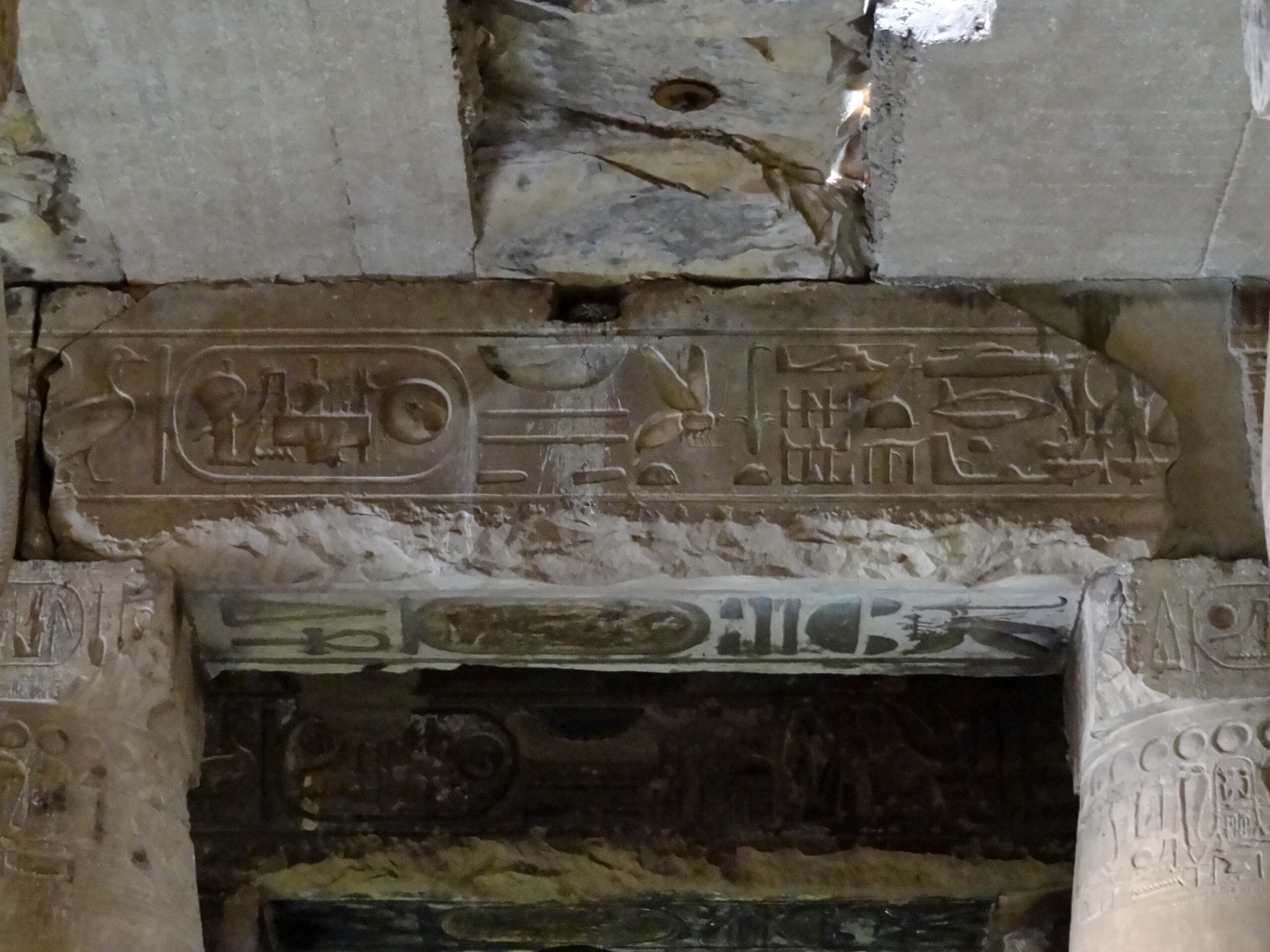
On the ceiling of the Temple of Seti I at Abydos, there’s a cluster of hieroglyphs that looks shockingly like a helicopter, a submarine, and a tank parked side by side. One photograph of this relief has launched a thousand “ancient aliens” posts, TV specials, and heated late-night arguments. Up close, the resemblance is eerie enough that even seasoned tour guides admit it makes them do a double take.
Egyptologists point to a far less exotic explanation: hieroglyphic overcarving. When later pharaohs reused older inscriptions, they carved new titles right over the old ones. Centuries of erosion blurred the layered signs into strange composite shapes – and your brain, primed by decades of movies and magazines, fills in “helicopter” where there’s really just recycled royal propaganda. Prosaic? Sure. But that hasn’t stopped this relief from going viral again and again – and compared to what’s coming at #10, it’s almost tame.
#10 – The “Lightbulb” of Dendera
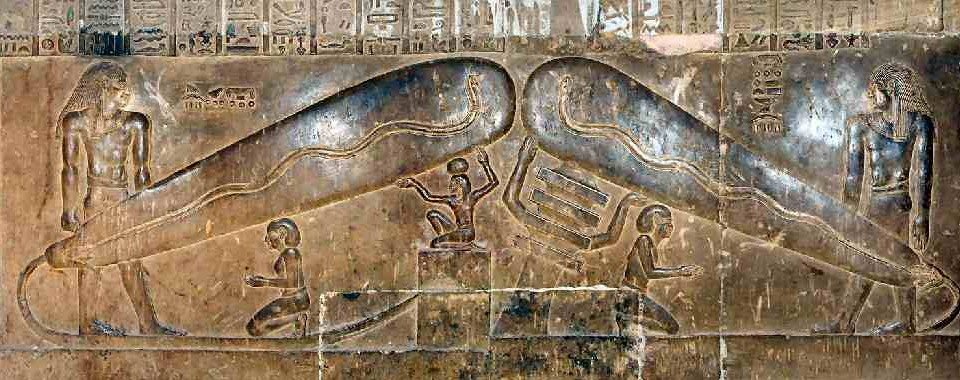
Inside the Hathor Temple at Dendera, a famous relief shows a bulb-shaped object with a thick “cable” running to a box, held aloft by a figure. To modern eyes, it looks almost exactly like a glass lightbulb with a filament glowing inside – a detail that’s become the cornerstone of entire “ancient electricity” theories. Some enthusiasts even claim Egyptians lit their tombs with giant bulbs instead of smoky oil lamps.
Mainstream Egyptology reads the scene very differently: it’s part of a creation myth, with the “bulb” as a lotus or womb-like enclosure and the “filament” as a serpent representing creative energy. No wiring, filaments, or lamp fragments have ever turned up at Dendera to support the electrical theory. Still, the image is so visually convincing that it simply refuses to die online – and if you think that’s a stretch, wait until you see what people claim about #9.
Fast Facts
- Construction on the current Hathor Temple began in 54 BCE under Ptolemy XII and was finished under later Roman emperors
- The full Dendera complex sprawls across roughly 40,000 square meters and is ranked among Egypt’s best-preserved temple sites
- The temple is dedicated to Hathor, goddess of love, music, joy, and motherhood – not power generation
- No wiring, filament fragments, or lamp remnants have ever been excavated anywhere on site
#9 – The Quimbaya “Jet Planes” of Colombia
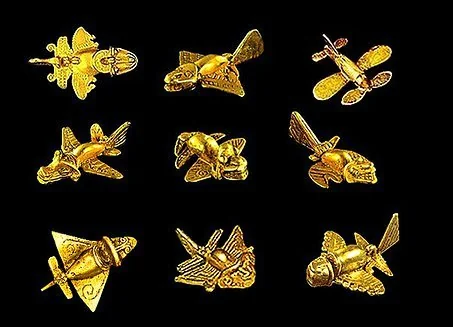
The Quimbaya gold figurines from Colombia were originally cataloged as stylized fish or insects. Then someone noticed that a few pieces look shockingly like delta-winged jet planes, complete with vertical stabilizers and what appear to be tail fins. Replicas fitted with radio-controlled motors have even been flown, which only turbocharged the mystery online.
Archaeologists insist these are zoomorphic pendants – animals rendered in exaggerated, abstract gold work, not miniature Boeing prototypes from 1,500 years ago. Ancient goldsmiths routinely stretched fins, wings, and tails purely for decorative flair. But several pieces genuinely lack obvious eyes or scales, and their proportions line up strangely well with modern airframe geometry. Coincidence, pattern-seeking brains, or something else? These tiny “planes” are nothing, though, compared to the full-sized “aircraft” people swear they see at #8.
#8 – The “Airplanes” of the Temple of Hathor Columns
At Dendera and other Egyptian sites, tourists love pointing at column engravings and declaring, “That’s a plane.” Certain long, tapered shapes with horizontal lines and wing-like protrusions really can look like aircraft silhouettes – especially cropped tight and photographed from just the right angle for social media.
Egyptologists counter that these are boats, ceremonial standards, or symbolic processional objects, softened by centuries of erosion into ambiguous outlines. There’s also a harder problem: zero archaeological trace of metal aircraft, hangars, or scrap has ever surfaced anywhere in Egypt. Even plenty of alternative-history fans quietly admit these are more “fun to imagine” than solid evidence. But when we hit #7, the controversy shifts from skies to wheels – and gets thornier fast.
#7 – Chariots and “Modern” Wheels at Karnak
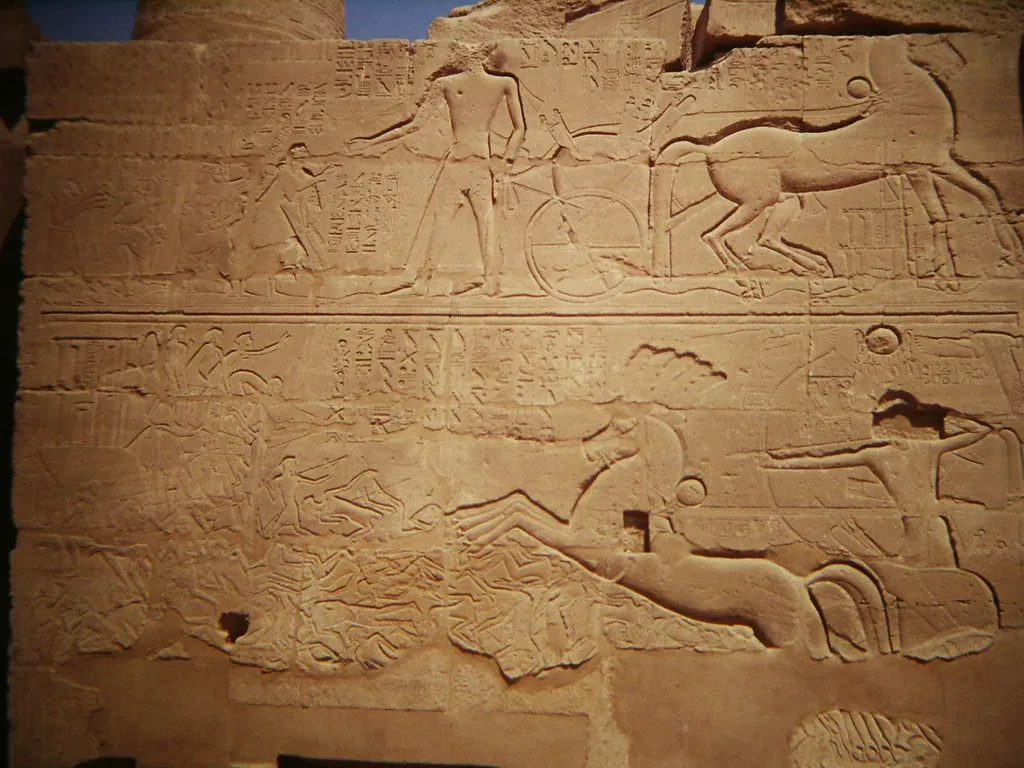
At Karnak and other New Kingdom temples, battle reliefs show pharaohs thundering into combat on razor-thin chariots with spoked wheels. Compared to the clunky solid wheels of earlier eras, spoked war chariots were once as disruptive as tanks – fast, light, and terrifying to face on a battlefield. Some carvings capture wheel and axle details so precise that enthusiasts claim they anticipate much later engineering principles.
Historians agree Egyptian chariotry was genuinely advanced – just not centuries out of place. Spoked wheels spread across the Near East right around the second millennium BCE, exactly when these reliefs appear. What’s striking is how accurately some carvings track real mechanical features: the way spokes radiate outward, the axle placement under the cab, the tension visible in the rein system. Call them “tech manuals in stone” if you want – just not time-traveling ones. The real jolt comes at #6, where critics say the math looks suspiciously too good for the era.
Quick Compare
- Solid wooden wheels: heavy, slow to turn, and dominant for centuries before New Kingdom Egypt
- Spoked wheels: a fraction of the weight, faster on turns, easier to repair in the field
- Timeline match: spoked chariot technology spread across the Near East right around the same window these Karnak reliefs were carved
- Battlefield impact: turned chariots from slow transport into fast, maneuverable shock weapons
#6 – The “Cogwheel” Reliefs of Ancient Greece and Rome
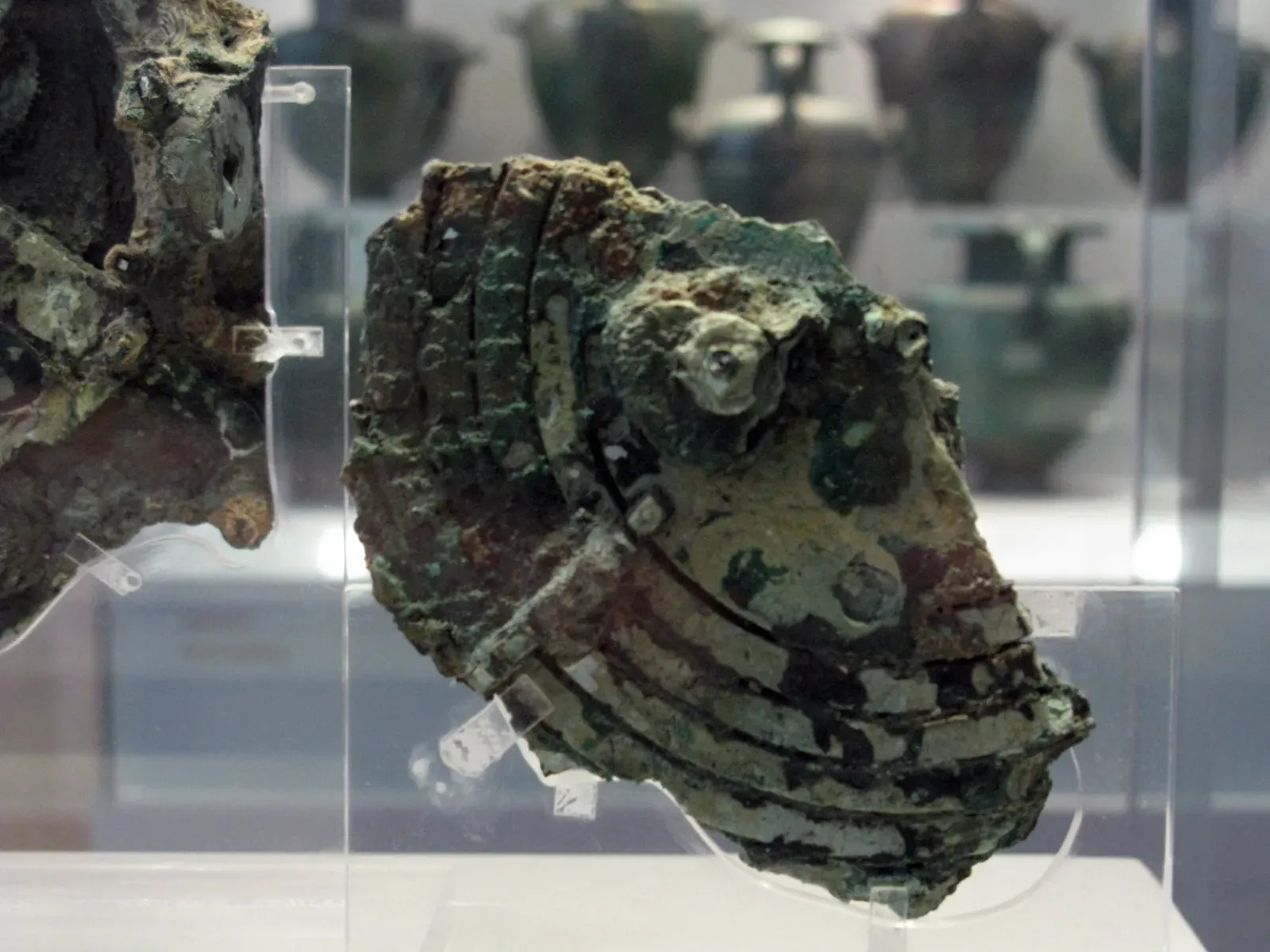
Scattered across Greek and Roman carvings are motifs that look oddly industrial – interlocking circles with teeth-like projections that some claim resemble meshing gears centuries before clockwork technology supposedly existed. Paired with real finds like the Antikythera mechanism, it’s tempting to see these carvings as evidence of a much wider gear culture than history books admit.
Classical scholars push back hard here. Geometric rosettes and decorative circles were everywhere in antiquity, and our gear-saturated modern brains are primed to see “cogs” in patterns that were never meant to be mechanical. The Antikythera device, they argue, proves advanced gearwork existed as a rare, elite instrument – not an industrial standard people carved into temple walls. Still, when certain patterns are lined up against real gear trains, the alignment is unnervingly neat. And if you think that’s controversial, #5 drags South American carvings into a debate about rockets.
#5 – The “Rocket Man” of Palenque, Mexico

The sarcophagus lid of the Maya ruler Pakal at Palenque might be the single most over-interpreted carving on Earth. In the mid-20th century, a popular author claimed the image shows Pakal seated inside a rocket capsule, hands on the controls, flames blasting beneath him. The idea of a 7th-century Maya astronaut exploded into pop culture – and it’s never fully gone away.
Maya epigraphers can barely hide their frustration with this one. The lid has been meticulously decoded: it shows Pakal falling into, or rising from, the underworld, framed by the sacred World Tree and celestial symbols. The “flames” are stylized roots. The “controls” are glyphic text and ritual objects, not a dashboard. Yet the rocket reading survives because the visual rhyme with a launch sequence is genuinely, uncomfortably strong to modern eyes. And #4 only piles on more “astronauts.”
Worth Knowing
- Pakal the Great ruled Palenque for decades in the 7th century CE, one of the longest reigns in the Maya world
- His sarcophagus lid was uncovered inside the Temple of the Inscriptions, reached by a hidden staircase sealed for over a thousand years
- Glyphs carved around the lid name Pakal directly, tying the scene to a real, identifiable ruler rather than an anonymous “pilot”
- The World Tree, the underworld god, and celestial bands are recurring Maya symbols found on other monuments, not unique to this lid
#4 – “Astronaut” Figures in Mesoamerican and Andean Art
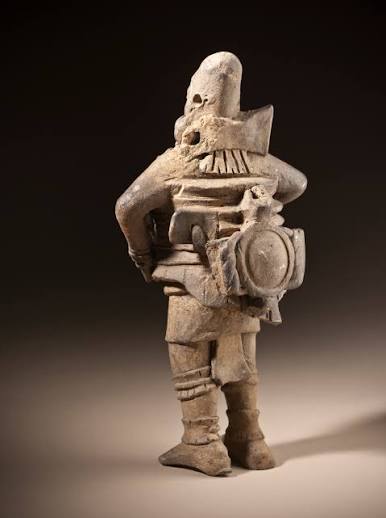
From Mesoamerican murals to Andean textiles, people love sharing images of figures in bulky suits with helmets, tubes, and visor-like faces – instantly labeled “ancient astronauts.” Stripped of context and cropped tight for maximum shock value, they really do resemble sci-fi space suits more than ceremonial headdresses to an untrained eye.
Anthropologists explain that the “helmets” are elaborate headdresses or ritual masks, and the “tubes” are serpents, feathers, or bloodletting instruments used in sacred ceremonies. These figures weren’t ordinary people; they were gods, priests, or mythic hybrids rendered in a dense symbolic language. The problem is that once your brain has seen NASA imagery, it defaults to that template every time. Some of these carvings stay visually uncanny even after you know the scholarly explanation – which is exactly why the debate refuses to die. But the weirdest “machines” on this list aren’t even humanoid, as #3 proves.
#3 – The “Gears” and “Drills” in Mesopotamian Reliefs
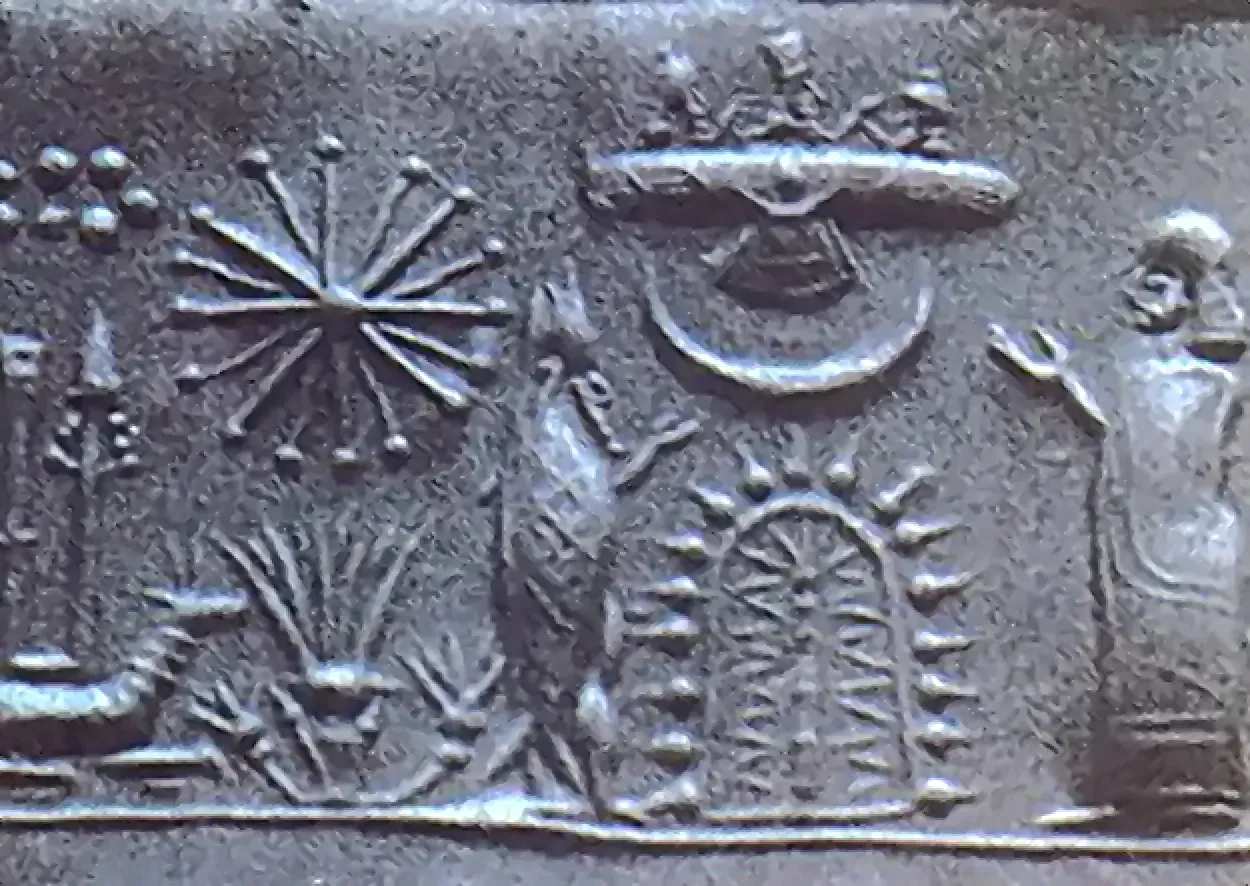
In several Mesopotamian reliefs, researchers and internet sleuths alike have zeroed in on disk-like objects with radiating lines or spirals. On a modern screen, they can look remarkably like rotating drill heads, toothed wheels, or spinning flywheels. Add nearby carvings of workers holding tools, and it’s easy to sketch out a ready-made “ancient workshop” narrative.
Assyriologists usually file these under ceremonial or symbolic objects – shields, rosettes, stylized suns, ritual emblems. But the line between “ritual” and “technical” is blurrier in the ancient world than we like to admit; a plumb line, after all, was both a sacred symbol of cosmic order and a genuinely practical tool. The real tension isn’t one smoking-gun carving – it’s a pattern suggesting ancient elites understood leverage and mechanical advantage better than we give them credit for. When you reach #2, even cautious scholars admit something genuinely strange is going on.
#2 – What the Antikythera Mechanism Forces Us to Rethink
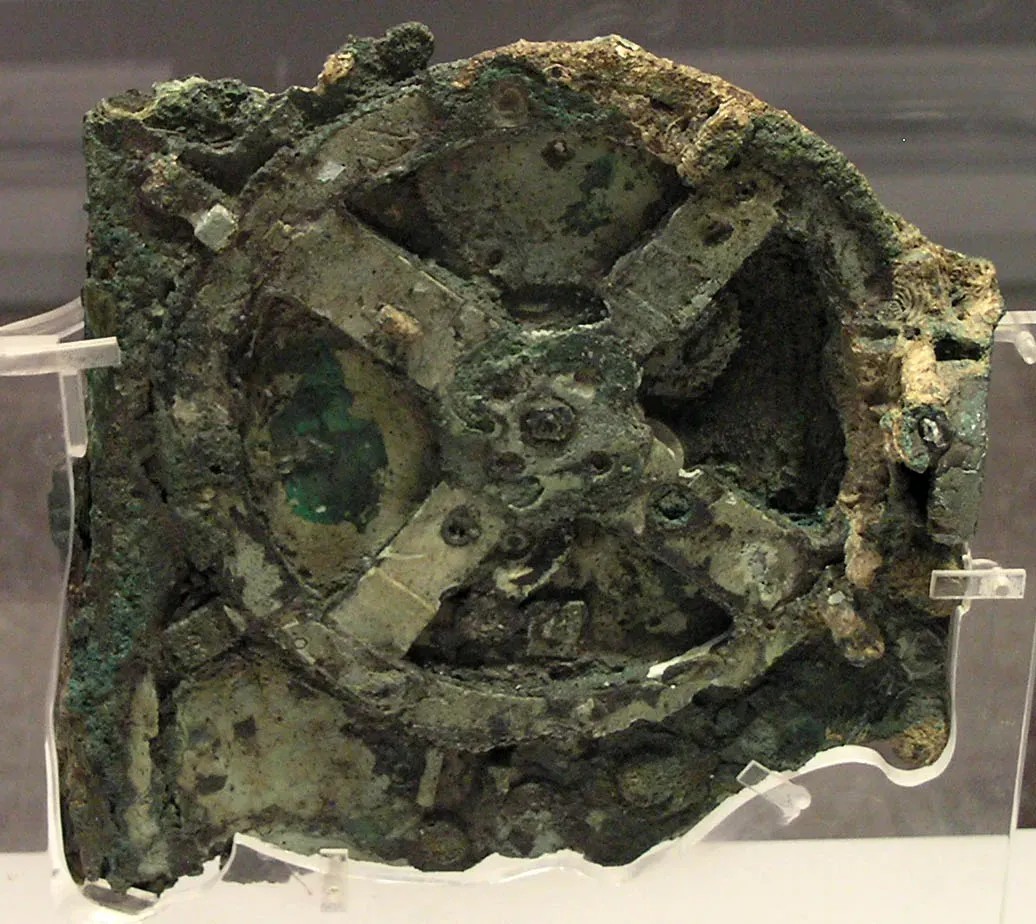
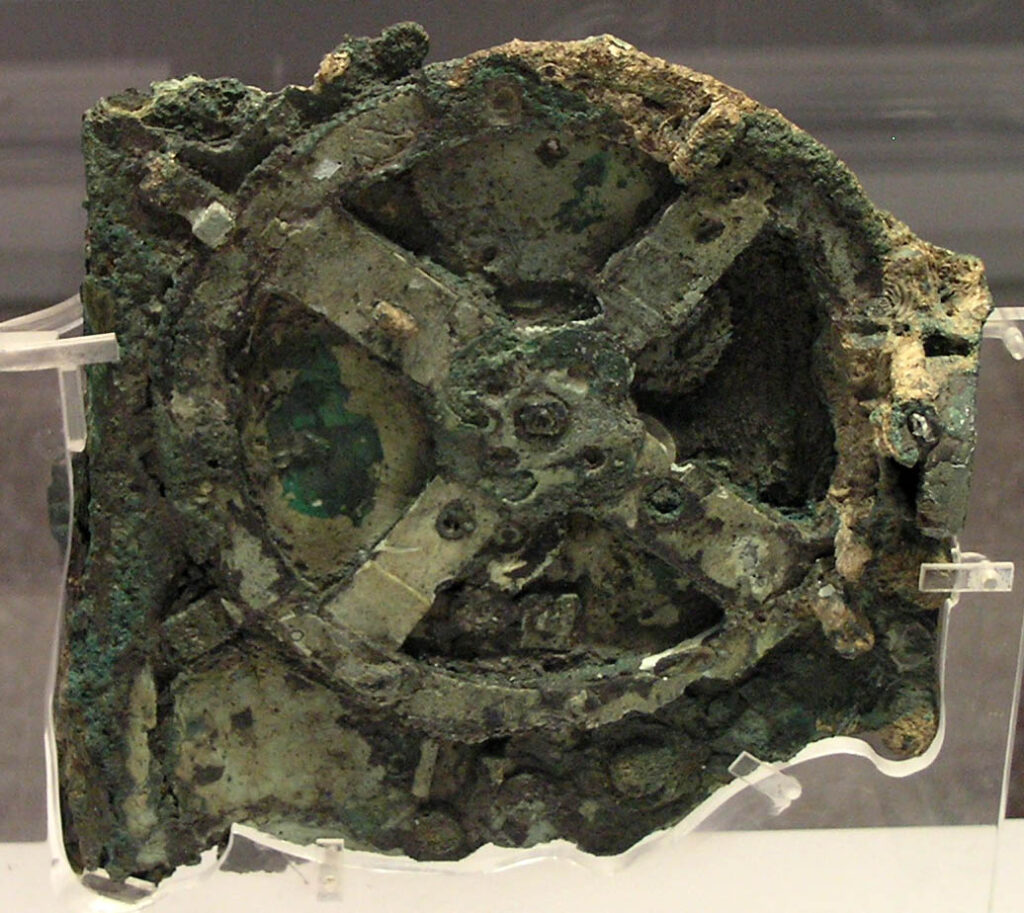
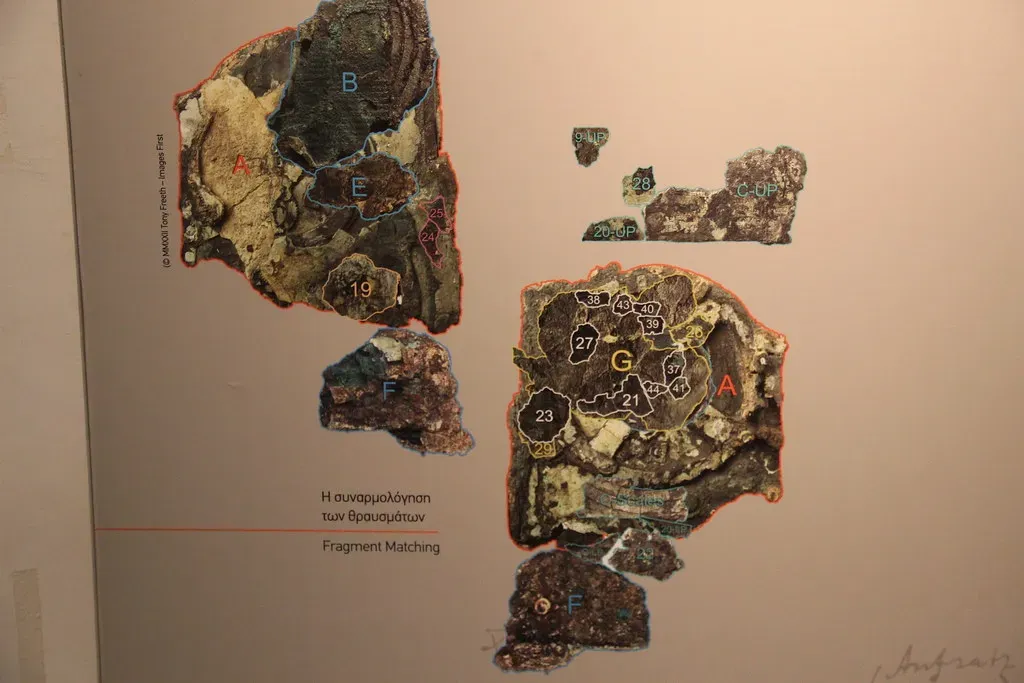
The Antikythera mechanism itself isn’t a carving, but its discovery rewrites the rules for how we read ancient imagery. This 2nd-century BCE Greek device packed in dozens of precision bronze gears to track astronomical positions – engineering so advanced that for decades, many historians simply refused to believe its date was real. If something this sophisticated survived by pure accident, what else have we already dismissed?
Suddenly, reliefs showing craftsmen holding compasses, toothed patterns, and boxy “chests” covered in markings take on a sharper, more technological edge. It doesn’t mean every gear-like motif hides a secret analog computer – but it does mean writing them all off as “just decoration” is probably lazy scholarship. The mechanism proves precision engineering existed far earlier than textbooks once claimed.
At a Glance
- Discovered in 1901 by sponge divers exploring a shipwreck off the Greek island of Antikythera
- Contains at least 30 interlocking bronze gears packed into a case roughly the size of a shoebox
- Dated to around the 2nd century BCE, making it roughly 2,000 years old
- Could track the sun, moon, and five known planets, and even predict eclipses years in advance
Any sufficiently advanced technology is indistinguishable from magic.
Arthur C. Clarke
That line was written about the future, but it applies just as well looking backward. And it raises an uncomfortable question heading into #1: how many carvings we casually wave away today will look obvious once we finally dig up the missing machines?
#1 – When Ancient Carvings Look Too Modern: Pattern, Coincidence, or Something We’re Missing?

The most unsettling entry on this list isn’t a single carving – it’s a pattern. Across wildly different cultures, unrelated by geography or era, there are clusters of images that look uncannily like machinery we didn’t build until modern times: aircraft silhouettes, bulb-like containers, gear trains, even piston-like assemblies. Any one of them, alone, is easy to explain away as coincidence or symbolism.
As a set, though, they’re genuinely hard to dismiss. Here’s the uncomfortable middle ground most experts won’t say out loud in public: ancient artists absolutely could stumble onto shapes that mirror later technology just by following function or aesthetic logic – a form that moves well through air or water tends to get rediscovered again and again. At the same time, the Antikythera mechanism and advanced ancient metallurgy prove we consistently underestimate what ancient engineers were capable of. So are these carvings “proof” of lost high-tech civilizations or visitors from elsewhere? No. Are they proof we still carry blind spots about ancient ingenuity? Absolutely – and that’s exactly why people keep arguing about them at 2 a.m. on internet forums.
The Bottom Line
Strip away the YouTube thumbnails and breathless captions, and a harsher truth remains: not one of these carvings, on its own, proves forgotten aircraft, hidden power grids, or secret space programs. Every single case has a sober, text-based explanation rooted in language, religion, and known tools of the time.
But it’s just as naive to assume ancient people were too primitive to experiment with genuinely complex mechanics. The Antikythera mechanism alone should have permanently humbled that assumption. My honest take? The real mistake was never believing in lost machines – it’s assuming our current picture of ancient technology is finished. It isn’t, and these carvings are the itch that proves it.