
You’ve probably heard “mysterious artefact” thrown around so many times it’s lost all meaning – usually shorthand for either an obvious fake or slam-dunk proof of some lost civilization. Neither is true nearly as often as people think.
What’s actually happening is stranger, and a lot less comfortable: a growing list of famous objects has quietly slipped out of their old museum labels and into a new one – “unknown.” Not fake. Not confirmed. Just unknown, after real lab work tore apart the story everyone was so sure of.
Sometimes the object is exactly what it claims to be, but the age is wrong by centuries. Sometimes the material doesn’t match the culture it’s supposedly from at all. And sometimes the data comes back so strange that curators have to rewrite the placard from scratch, admitting they genuinely don’t know what they’re looking at.
Here’s what happened when careful testing, skeptical researchers, and more than a few red-faced institutions actually looked closely – starting with an Egyptian “toy” that behaves suspiciously like an aircraft.
#13 – The Saqqara “Bird” That Wouldn’t Behave Like a Toy
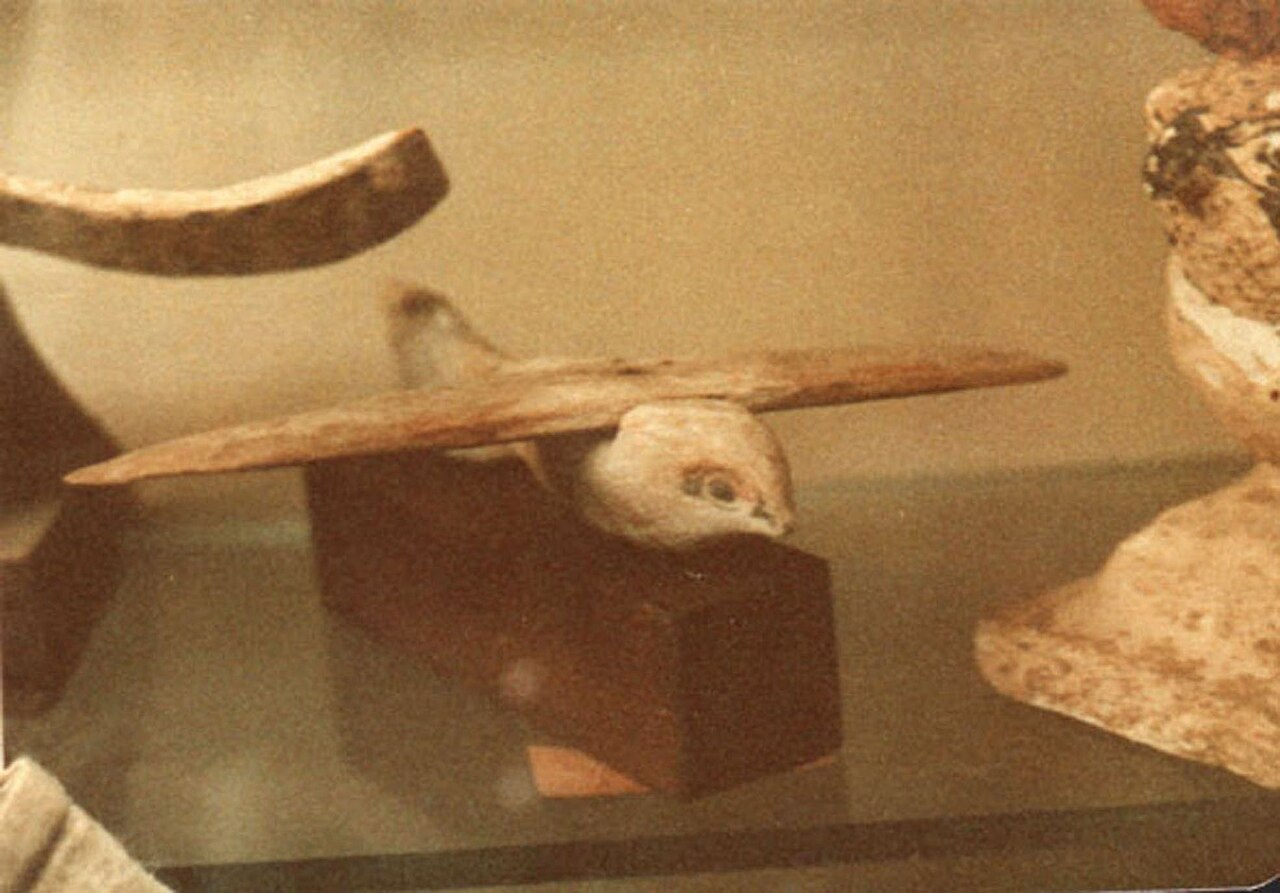
For decades, this small wooden figure from Egypt’s Saqqara necropolis got a shrug of a label: child’s toy, maybe a ceremonial ornament. Nothing special. Then someone finally bothered to actually test it properly.
When aerodynamics researchers scanned and modeled the shape, they found something odd. The bird has a surprisingly accurate airfoil cross-section, closer to a glider wing than a random carving, and its center of mass sits right where you’d want it for stable flight.
Here’s the twist, though: the tail is all wrong for anything that actually needs to fly, and there’s no real evidence it ever left the ground. The wood and pigment date broadly to the Ptolemaic period, but that only tells you when – not why.
Some engineers still argue it’s an early, half-accidental stab at gliding design. Most Egyptologists think that’s wishful thinking dressed up as science. Either way, museum text quietly dropped the “model airplane” language for something far more honest: purpose unknown. Compared to what happened to the Roman dodecahedrons next, that’s barely strange.
#12 – The “Roman Dodecahedrons” That Refused Every Simple Explanation
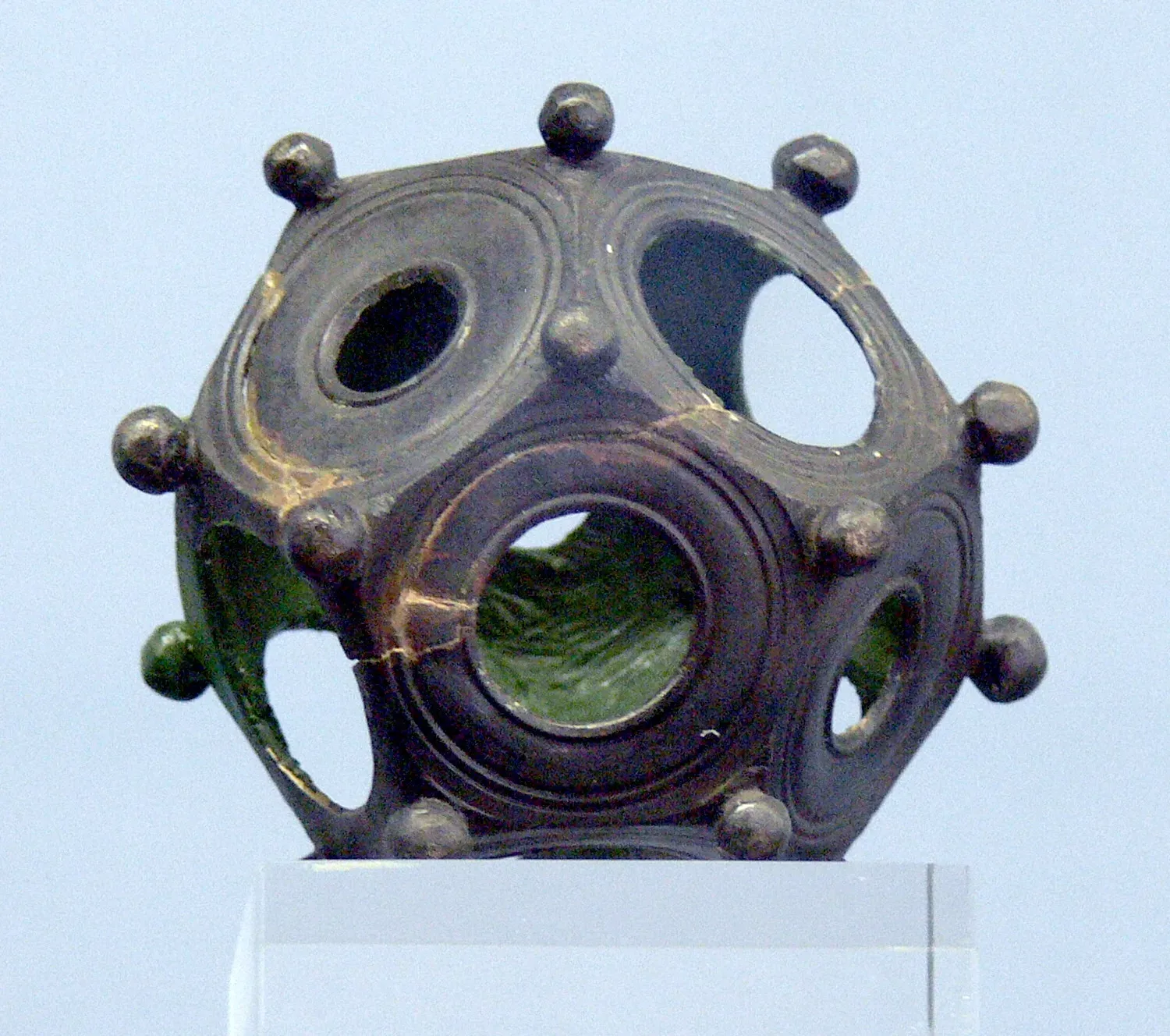
You’ve seen the photos: hollow bronze objects with twelve flat faces, circular holes of different sizes, and little knobs sticking out of every corner. Guidebooks used to hand out confident guesses like candy – candlestick holders, measuring tools, maybe children’s toys.
Then experimental archaeology showed up and ruined the fun. Researchers checked dozens of them for soot residue and found no consistent burn patterns at all, which pretty much kills the candlestick theory on the spot.
Fast Facts
- Roughly 130 dodecahedrons have been unearthed across the former Roman Empire, most measuring between 4 and 11 centimeters across
- Not one has ever turned up in Italy, Rome’s own heartland, despite nearly three centuries of digging
- The objects are concentrated almost entirely in Gaul, Germania, and Roman Britain, with the most recent notable find made in England in 2023
- No Roman text, inscription, or artwork mentions them at all – the historical record is completely silent
The metal composition and casting quality also vary wildly from piece to piece, which points to small, independent workshops rather than any standardized military or civic tool. Try using one as a measuring device and you hit a wall fast – no two are the same size, and the holes don’t line up in any consistent ratio.
Modern craftspeople have built exact replicas and field-tested them for months. You can force a dodecahedron into almost any role you like, but nothing fits cleanly or repeatedly. Academic catalogues have largely given up guessing, settling instead for a phrase that’s honest but deeply unsatisfying: function unknown. The Antikythera mechanism’s hidden gears take weird to a whole new level.
#11 – The Antikythera “Extra” Gears That Broke the Planetarium Story
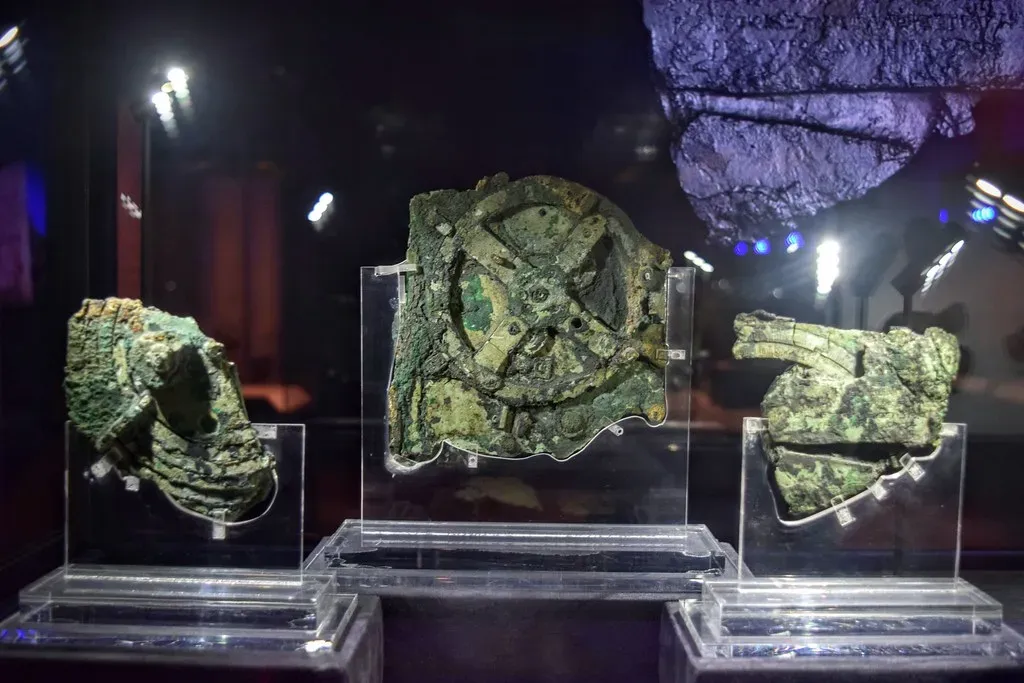
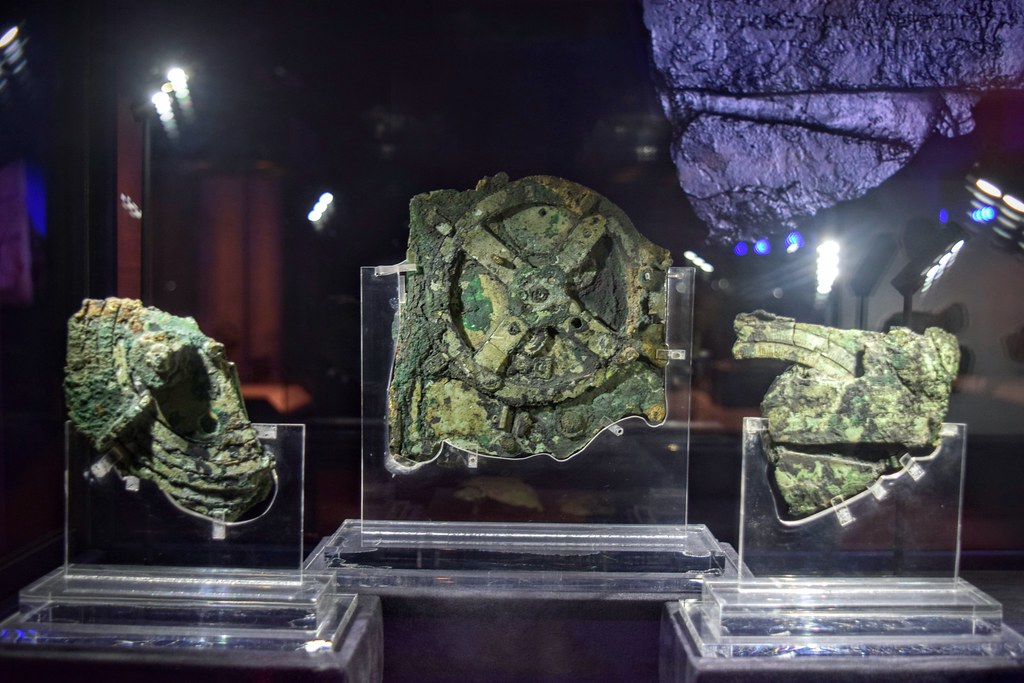
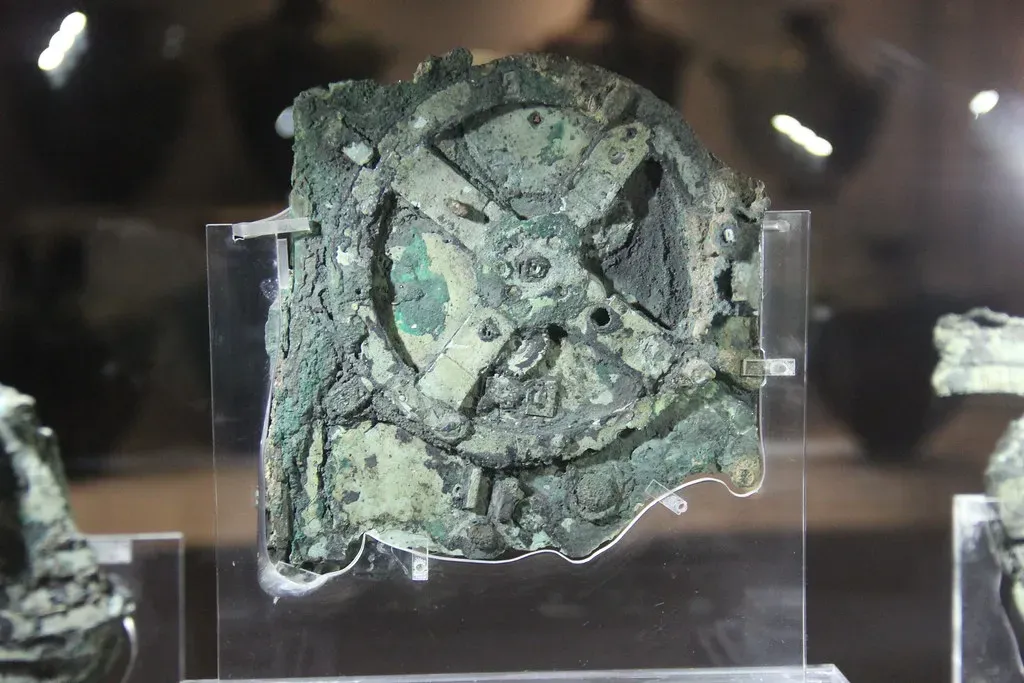
The Antikythera Mechanism went from shipwreck curiosity to the world’s most famous ancient computer. Early on, the story was tidy: it’s basically a mechanical planetarium, showing the movement of planets and stars. Case closed, or so we thought.
Then high-resolution 3D X-ray scans wrecked the neat version of events. Researchers found hidden inscriptions and extra gear fragments that simply don’t fit the original reconstruction anyone had agreed on.
Some of the newer gear-train models suggest calculations far more complex than a simple planetarium – including lunar anomalies and eclipse prediction, which is more sophistication than most historians assumed Greek engineers had access to at the time. The alloy and tool marks confirm it’s genuinely ancient, but entire sections of the device are still missing, and nobody can say with confidence what they did.
As the digital models got sharper, older “definitive” museum replicas quietly became obsolete overnight. The official story shifted from “we know what this machine did” to something far more humbling: we understand part of it, and the rest remains genuinely unknown. Nothing, though, beats what testing did to the Baghdad batteries.
#10 – The Baghdad “Batteries” That Won’t Consistently Produce Power
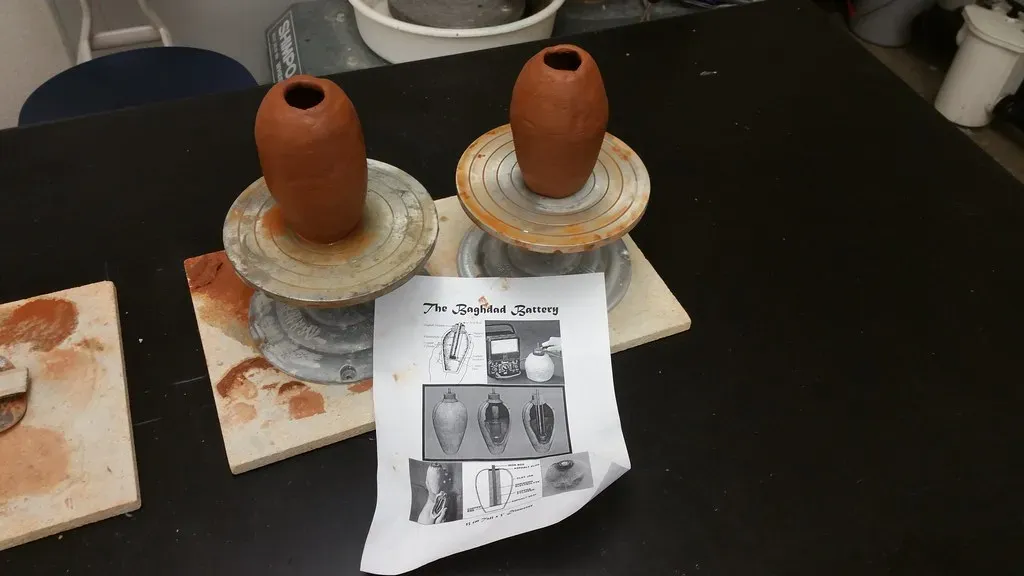
The so-called Baghdad Batteries – ceramic jars stuffed with a copper cylinder and an iron rod – were hyped for years as proof that ancient Mesopotamians had cracked electricity. Documentaries repeated the claim so often it started to sound like fact.
Then controlled lab testing threw cold water on the whole story. Replicas filled with acidic liquid can produce a small voltage, sure, but the output is weak, inconsistent, and not obviously useful for electroplating or lighting anything.
There’s zero textual evidence anyone in that era intended electrical use, and many of the original jars show none of the corrosion patterns you’d expect from repeated electrolyte contact. Some don’t even have all three components present together in the ground – the “battery” assembly is partly a modern reconstruction.
Residue studies now suggest these vessels may have simply held scrolls or other organic material, not acid. Several museums have quietly walked back the “ancient battery” label, swapping it for something far less exciting but far more accurate: vessels of uncertain function. The Piri Reis map hides an even messier secret.
#9 – The Piri Reis Map Layers That Don’t Match the Legend
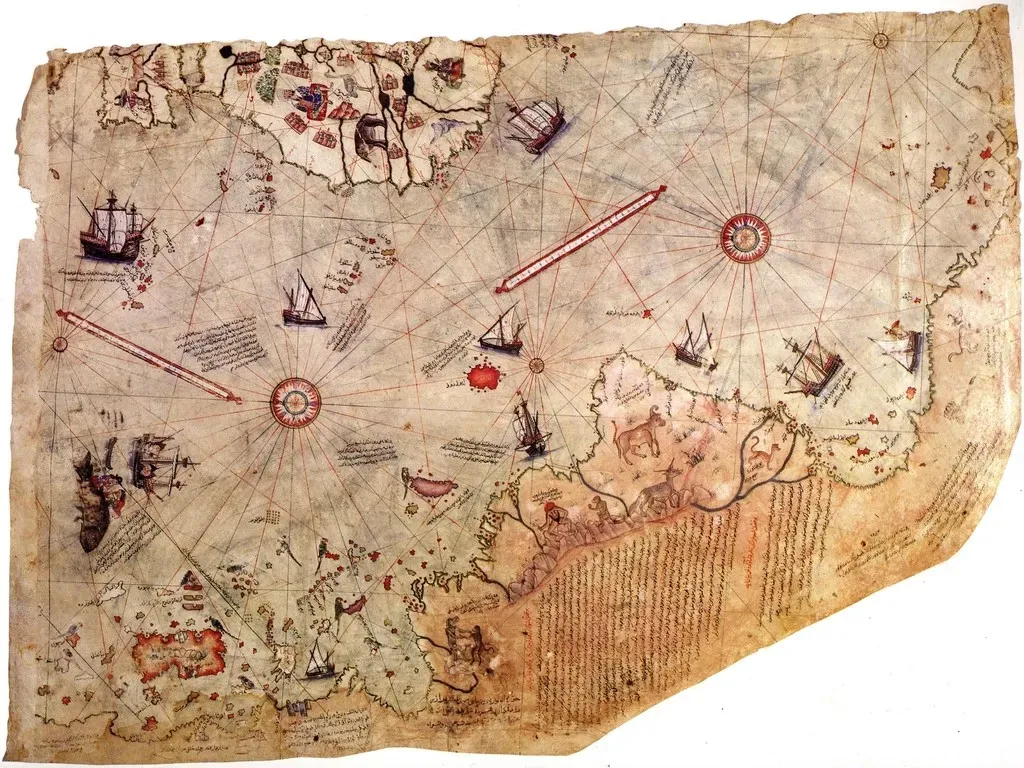
The Piri Reis map, drawn by an Ottoman admiral in 1513, has been waved around for decades as proof of lost, impossibly advanced cartography – even alleged evidence of an ice-free Antarctica mapped centuries before anyone should have known it existed.
Rigorous analysis of the inks, pigments, and source charts quietly dismantled the myth. When historians compared its coastlines to verified early-modern maps, they found most of the “mystery” sections align cleanly with known 15th-century Portuguese and Arabic charts, not some vanished pre-Ice Age survey.
The famous “Antarctic” coastline turns out to be South America, badly distorted and rotated – a common cartographic error for the period, no exotic projection math required. Ink and parchment testing pins the whole document firmly to the early 1500s.
But the map still has genuine unsolved quirks: mismatched distances, cryptic notes about “southern lands,” and coastal features nobody can fully identify. The wild Antarctica claims collapsed, but experts now openly admit the map is a patchwork built from sources we still can’t fully trace. The Costa Rica stone spheres make even map mysteries look tame.
#8 – The Costa Rica Stone Spheres That Defied Simple Tool Marks

Those huge, almost eerily round stone spheres scattered across Costa Rica’s Diquís Delta were once written off as decorative status pieces for local elites. Later, a tidier story took over, claiming we’d fully figured out how and why they were made.
Detailed studies made things messier, not clearer. Petrographic analysis showed the spheres were carved from different local stones, some hauled long distances – impressive engineering, but not supernatural.
At a Glance
- Over 300 spheres have been documented across the Diquís Delta and nearby Isla del Caño
- Sizes range from just a few centimeters up to more than 2 meters in diameter, with some weighing over 15 tons
- Most were carved from gabbro, a dense volcanic rock, using stone tools between roughly 500 and 1500 CE
- Four Diquís sites were named a UNESCO World Heritage Site in 2014, cementing their cultural importance without ever settling their original purpose
Close inspection of the surface tool marks revealed a mix of pecking, grinding, and polishing that doesn’t fully match any single known technique used in the region. Some spheres are near-perfect; others are only roughly round, hinting at multiple workshops or traditions working across different eras.
Older claims that the spheres formed precise astronomical alignments or global navigation grids didn’t survive testing either – some lineups look intentional, others look accidental or the result of modern repositioning. Archaeologists now call them sociopolitical or ceremonial markers, while openly admitting the full symbolic system behind them is still a black box. The Kensington Runestone’s contradictions are almost comical.
#7 – The “Viking” Kensington Runestone That Refuses to Fully Confess
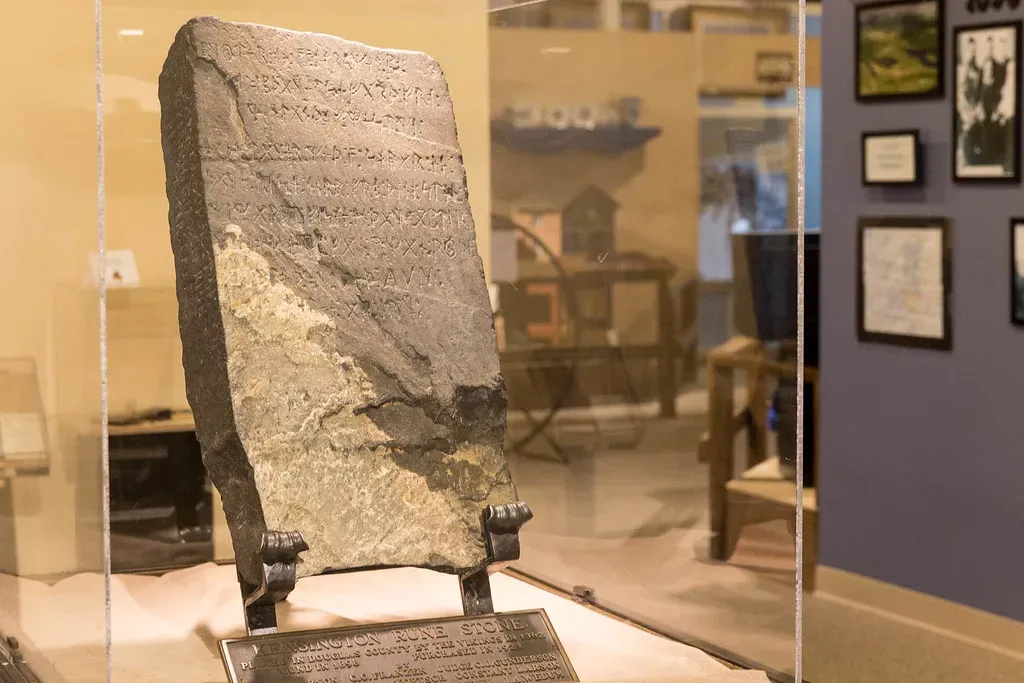
The Kensington Runestone, reportedly dug up in Minnesota in 1898, has spent over a century bouncing between two extremes: proof of medieval Norse explorers deep in America, or an obvious 19th-century hoax. Neither camp has ever fully won.
Petrographic analysis confirms the stone itself is local, which settles nothing. Weathering patterns only add confusion: some experts argue the carved surfaces show more erosion than a 19th-century inscription should have, while other specialists insist the opposite is true.
The linguistics are just as tangled. Parts of the runic text genuinely resemble 14th-century forms, while other elements echo modern Scandinavian spelling quirks straight out of the 1800s. Recent research has pulled some scholars away from the “cartoonish forgery” theory, but it hasn’t proven a 1300s origin either.
The result is deeply unsatisfying for anyone who wants a clean answer: several specialists now say it’s neither easily debunked nor securely authentic. Museum labels have gone hedged and non-committal, calling it “unproven” or “contested” rather than a confirmed Viking relic. The Shroud of Turin’s dating fiasco is on another level entirely.
#6 – The Shroud of Turin’s Dates That Refuse to Line Up Cleanly
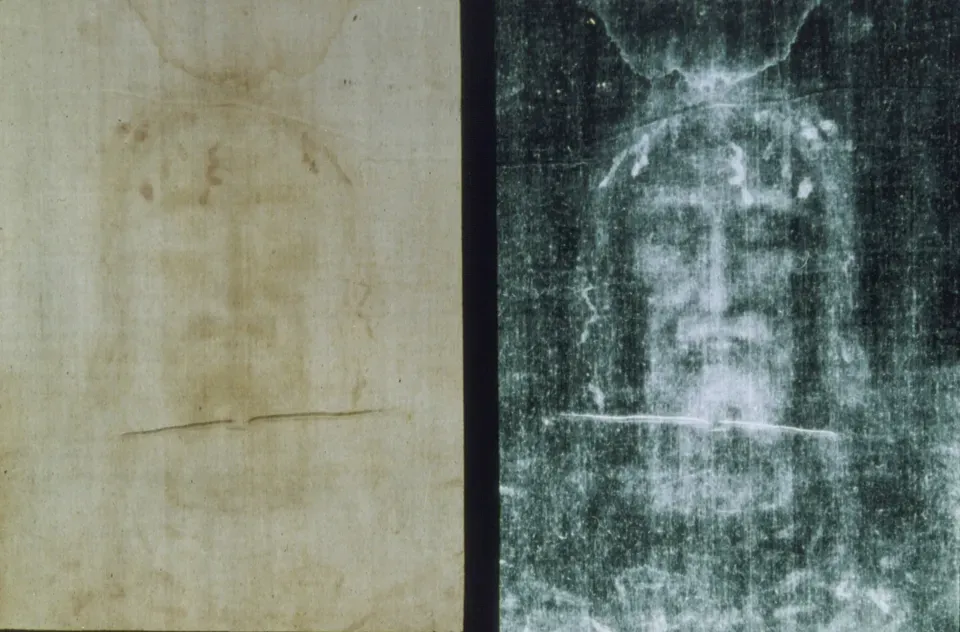
The Shroud of Turin, claimed by believers to be the burial cloth of Jesus, went through radiocarbon testing in 1988. The results dated the fabric to the Middle Ages, and for years that was treated as the final word – case closed, mystery solved.
Then statistical re-analysis and microscopic study complicated the verdict considerably. Later work on the exact sampled corner suggested possible contamination, rewoven fibers, and a mix of thread ages in the specific section that was tested back in 1988.
That doesn’t prove the shroud is 1st-century. It does mean one test on one small patch can’t responsibly settle the age of the entire cloth, which is a very different claim than “debunked.”
“Extraordinary claims require extraordinary evidence.”
Carl Sagan
Spectral analysis of the image itself also failed to support simple paint or pigment theories – the image has an odd superficial quality with no clear brush strokes, though it’s not technically impossible by medieval standards. Some labs have quietly shifted their language from “debunked relic” to “object of uncertain origin with medieval fabric evidence.” New testing has been proposed repeatedly and heavily restricted every time. Nothing tops what happened when scientists put the crystal skulls under a microscope.
#5 – The “Crystal Skulls” That Broke Under the Microscope
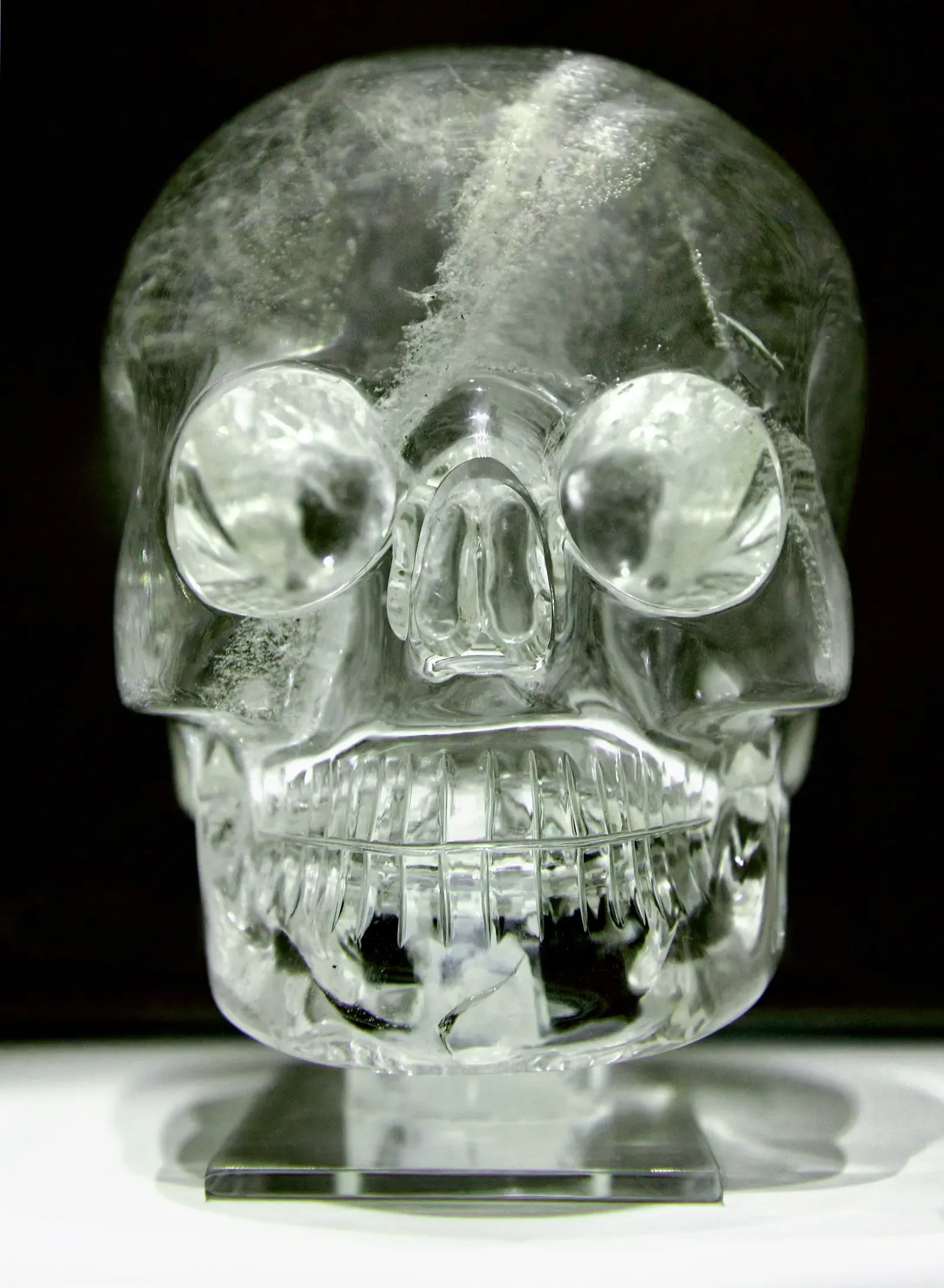
For years, crystal skulls sitting in major museum collections were presented – or at least allowed to be imagined – as ancient Mesoamerican masterpieces dripping with mystical significance. Then someone finally put one under real magnification.
Electron microscopy and tool-mark analysis revealed symmetrical rotary wheel cuts and abrasive marks consistent with 19th and 20th-century lapidary techniques, not anything a pre-Columbian carver could have produced by hand.
Some skulls even showed marks matching modern silicon carbide abrasives – a material that simply didn’t exist in pre-Hispanic Central America. Chemical testing of the quartz traced it back to European sources, not local ones. The carvings were real. The claimed culture and era were not.
Rather than quietly protecting the myth, several institutions reclassified their skulls outright, swapping “Aztec” or “Maya” for “of uncertain origin, likely modern.” Some visitors accused museums of caving to skepticism, which is almost funny given that the hard data did exactly the opposite. The footprint fiasco is even messier.
#4 – The “Fossilized” Human Footprints That Fell Apart on Dating
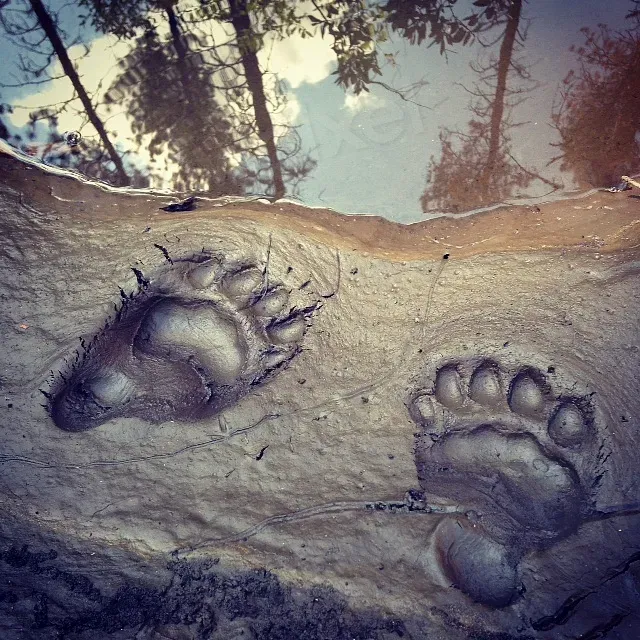
Around the world, controversial footprint sites – where humans supposedly walked alongside dinosaurs or left impossibly ancient tracks – have periodically exploded across headlines. Fringe books swore they’d rewrite the history books entirely.
Geologists and dating labs quietly moved in and dismantled most of the excitement. Improved stratigraphic mapping and radiometric dating showed the surrounding sediments were far younger or older than originally claimed, which shatters any human-dinosaur overlap story outright.
Worth Knowing
- The famous Paluxy River “man tracks” in Texas, once cited as human footprints beside dinosaur trackways, were reclassified as eroded and re-carved dinosaur prints
- Genuinely authenticated trails, like the roughly 3.6-million-year-old Laetoli footprints in Tanzania, remain solidly dated and widely accepted
- Stratigraphic and radiometric dating are now considered essential before any footprint claim is taken seriously by mainstream science
- A handful of disputed sites are still labeled ambiguous rather than confirmed or fully debunked
At some sites, the “prints” turned out to be erosional features, deliberate carvings, or simply misidentified animal tracks. Thin-section microscopy exposed modern tool work on rock that was already hardened long before any human touched it.
Not every site got a tidy resolution, though. A handful of footprint-like impressions remain genuinely controversial because the dating bands are too broad and the shapes too ambiguous to call either way. Those specimens moved from bold headline claims to cautious catalog language: ambiguous trace features, origin unknown. The Voynich Manuscript’s ink tells its own strange story.
#3 – The Voynich Manuscript Inks That Solved One Mystery, Not the Big One
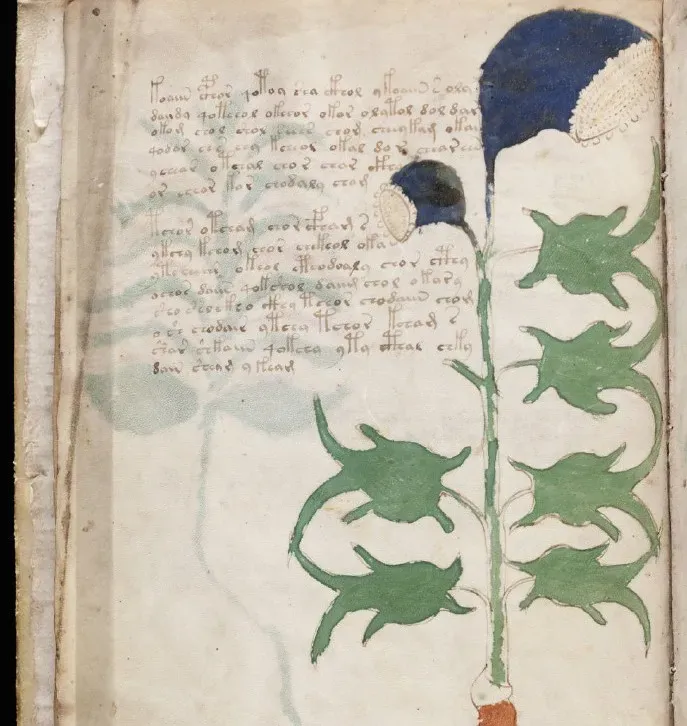
The Voynich Manuscript is basically the internet’s favorite mystery book: an unknown language, bizarre botanical drawings, naked figures soaking in odd tubs. Early theories ranged from clever hoax to actual alien script.
Chemical testing narrowed the field without closing the case. Radiocarbon dating of the vellum lands solidly in the early 1400s, and ink analysis shows a composition entirely consistent with genuine medieval recipes, which pretty much kills the “modern forgery on old parchment” theory.
Spectral imaging even revealed erased and revised sections, hinting at a real working draft rather than a rushed, single-pass prank. So the recent-hoax theory is largely dead in the water.
What refuses to die is the code itself. Linguistic and statistical analysis shows word-frequency patterns that resemble natural language, yet no proposed decipherment has ever survived peer review. Experts now treat it as an authentic 15th-century artefact whose script and content remain genuinely, officially unknown. The out-of-place metal objects get even weirder.
#2 – The “Out-of-Place” Metal Objects That Turned Out to Be Weirder Than Fake
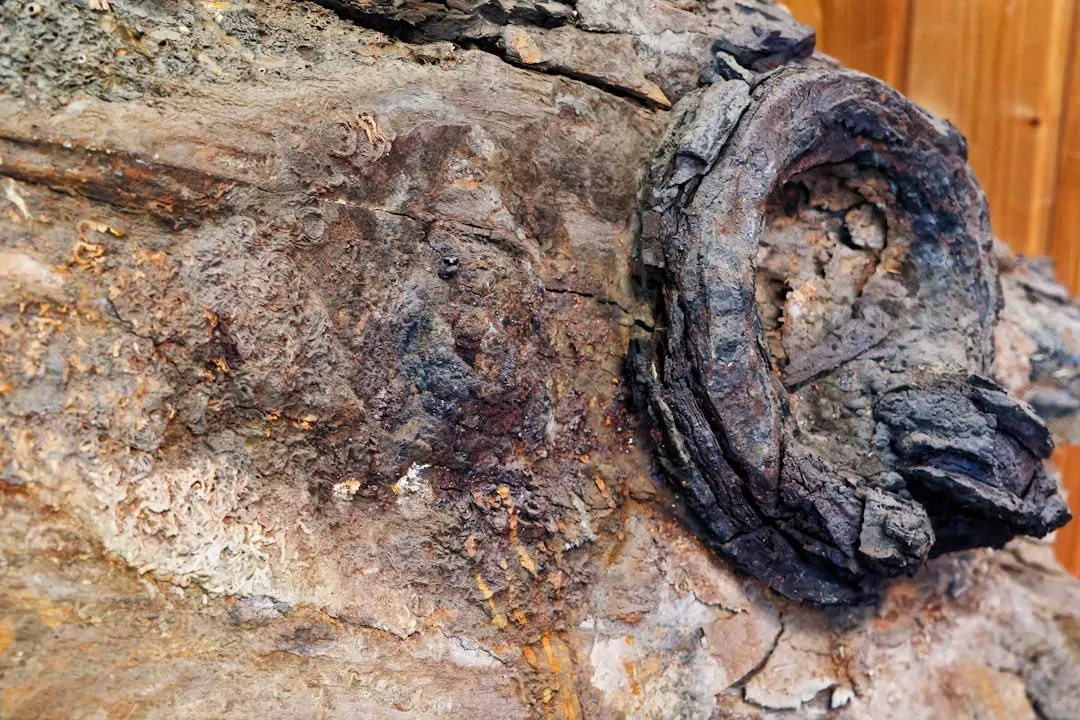
Every few years, photos circulate of metal objects supposedly pulled out of coal seams or solid rock – instant proof, according to some corners of the internet, of ancient high-tech civilizations. Most get dismissed fast as hoaxes or sloppy reporting.
But in the legitimate cases where labs were actually allowed to test the objects, the picture got stranger rather than simpler. Metallurgical analysis often shows alloys and manufacturing features entirely consistent with modern or early-industrial technology, even though the surrounding matrix looks like far older, undisturbed sediment.
In several well-documented instances, geologists identified that “solid rock” as a secondary concretion or old fill layer, not untouched deep strata at all. The object was real and modern. The claimed geological context was simply wrong.
A few cases, though, still sit in a genuine gray zone – the discovery conditions are poorly documented but not obviously fraudulent, and the original stratigraphy is too messy to reconstruct by today’s standards. These end up filed in technical papers as “unprovenanced metal artefacts,” no longer labeled impossible, just origin and context unknown. And then there’s the most unsettling case of all.
#1 – The “Alien” Implants That Didn’t Match Any One Story

This is probably the most emotionally loaded category on the list: small metallic or composite objects surgically removed from people who genuinely believe they were abducted by non-human entities. Early sensational claims described impossible alloys and objects that supposedly emitted strange radio signals.
More careful testing produced an answer almost nobody involved actually wanted. In many examined cases, standard pathology techniques identified mundane explanations – splinters, glass shards, surgical debris, and ordinary metals the patient never realized had gotten embedded under their skin.
Isotope ratios and metallurgical signatures matched everyday industrial sources, not exotic off-world materials. Some objects did show biological encapsulation consistent with a long-term foreign body sitting in tissue – just nothing remotely extraterrestrial about it.
Why It Stands Out
- Most examined “implants” turn out to be splinters, glass fragments, or ordinary industrial metal, not exotic alloys
- Isotope and metallurgical testing can often trace the material straight back to everyday manufacturing sources
- A small number of samples are simply too degraded or contaminated for any conclusive lab result
- The stronger the chain of custody and testing rigor, the more mundane the final finding tends to be
A handful of samples were too degraded or contaminated to characterize decisively, landing in a frustrating inconclusive pile. The pattern was hard to ignore: the more rigorous the lab and chain of custody, the less extraordinary the results tended to get. Because a few objects still resisted neat categorization, some practitioners quietly swapped “alien technology” for a far more careful phrase – foreign objects of uncertain origin. The implants never validated the abduction stories. They just didn’t hand skeptics a clean, boring explanation for every single case either.
The Bottom Line
Across all thirteen of these cases, the real pattern isn’t tidy debunkings or smoking-gun proof. It’s that serious testing keeps destroying the overconfident stories people build around objects – on both sides of the argument.
Crystal skulls turned out modern, but the Voynich Manuscript proved genuinely medieval. The Shroud looks younger than believers want, yet stranger and less settled than strict skeptics once claimed. Some “out-of-place” artefacts collapse the moment new dating touches them; others stay stubbornly, permanently unresolved.
Here’s the uncomfortable part nobody likes to say out loud: museums, documentaries, and social media all love certainty, because certainty gets clicks. The lab almost never gives it. Instead, it quietly reclassifies things as “unknown,” which is far less shareable but far more honest.
That gap – the space left over after our favorite theories fall apart – is where the real mystery actually lives. So which of these thirteen still feels genuinely unexplained to you, and which one do you think we’re just refusing to let go of?