

We tend to imagine tigers as the ultimate loners: silent, hidden, and perfectly content to prowl through their forests and grasslands with no one but themselves for company. That image is powerful, but modern animal science is quietly complicating it. When you look a little closer, the story of tiger solitude starts to look less like cold isolation and more like a delicate, often invisible web of social awareness.
In other words, tigers might be far more tuned in to one another than their solitary reputation lets on. From subtle scent marks to rare but intense social gatherings, these cats navigate complex relationships without ever forming a “pride” like lions do. Once you see how much social information is flowing through a tiger’s world, the idea of them as total loners begins to feel outdated – almost like judging someone’s social life just by how often you see them at parties.
The Myth of the Completely Lonely Tiger

There is a comfortable simplicity in calling tigers solitary and leaving it at that, as if they were introverts who simply opted out of social life altogether. For a long time, that was basically the story: tigers hunt alone, sleep alone, patrol alone, and mate briefly, so people assumed there was not much more to say. But “solitary” in animal behavior does not mean socially blind; it only means individuals do not live in stable, cohesive groups.
When biologists use the term, they are talking about how an animal organizes its daily life, not whether it notices or cares about others of its kind. In practice, a solitary species can still maintain territories, track rivals, and make complex decisions based on who is nearby. In that sense, calling tigers solitary without nuance is like saying someone is single and assuming they have no emotional ties, exes, neighbors, or family drama shaping their choices.
Territories as Invisible Social Maps

One of the clearest signs that tigers are not socially indifferent is how precisely they carve up and share space. Adult tigers hold territories that overlap in sex-specific ways: males often span the ranges of several females, while females defend smaller core areas where they raise cubs. These patterns are not random; they show an animal paying close attention to where others are and where it can fit into a shifting mosaic of claims.
In this territorial world, every boundary is a kind of silent conversation. A tiger deciding whether to push its territory line a little farther is, in effect, making a choice about competing with a neighbor it may never physically see. The map of scent marks, trails, resting spots, and hunting paths becomes a living record of who has passed through and who belongs where, a social network drawn not in messages on a screen but in scratches on trees and traces in the undergrowth.
Scent Marking: The Tiger’s Social Media Feed

If tigers had a social media platform, it would be their scent marks. They spray urine, rub their cheeks and bodies on trees, and scratch deeply into bark, leaving chemical and visual signatures that can last for days or even longer. Other tigers can learn a surprising amount from these marks: the sex of the animal, whether it is mature, if a female might be receptive to mating, and roughly how recently it passed by.
This scent-based communication lets tigers keep track of one another without constant face-to-face encounters, which reduces the risk of dangerous fights. A male can detect that another male is encroaching and decide whether to challenge or avoid, while a female can signal readiness to mate without standing in the open waiting. From a distance, it looks like a forest with a single big cat moving through it; up close, it is more like a neighborhood bulletin board constantly updated with who is around, who is interested, and who should be avoided.
Acoustic Signals and Nighttime Conversations

Beyond scent, tigers also use sound to stretch their social reach across thick vegetation and large distances. The deep roars people recognize can travel several kilometers under good conditions, acting as both a territorial announcement and a way to locate potential mates. Scientists have found that tigers can distinguish individuals by their vocal patterns, much like we recognize a friend’s voice on the phone.
Not all communication is dramatic roaring, though. Tigers also use softer chuffing sounds at close range, growls in tense moments, and a range of more subtle noises that carry emotional and social information. At night, in particular, calling back and forth allows them to coordinate movements, avoid surprise encounters, and judge the strength or confidence of a neighbor. For an animal we like to imagine as wrapped in silence, their world may be filled with occasional, strategically timed conversations that shape who meets whom and when.
When Solitary Tigers Do Choose Company

Most of the time, adult tigers keep to themselves, but field observations have shown that they can sometimes be unexpectedly flexible. In resource-rich areas, such as places with abundant prey or concentrated water sources, multiple tigers are occasionally seen sharing space and even feeding at the same kill. These temporary gatherings do not turn them into a group-living species, but they show that the “never together” stereotype is too rigid.
Under certain conditions, especially where human pressure is high and territories are compressed, tigers may tolerate more overlap simply because there is no other choice. That tolerance itself is a form of social adjustment, a way of negotiating crowded landscapes without constant deadly fights. When several tigers manage to be in the same area without chaos, it suggests they are reading one another’s signals carefully and making decisions that balance hunger, risk, and opportunity.
Family Bonds: Mothers, Cubs, and Young Adults

The most obvious social side of tigers appears in the relationship between mothers and their cubs. Tiger mothers invest intensely in raising young, nursing, protecting, and teaching them to hunt over many months. During this period, their “solitary” life is actually a small, tight-knit family unit with constant contact, physical closeness, and rich emotional exchanges, from play to discipline.
Even when cubs become subadults and start to disperse, there can be a lingering familiarity between related individuals whose territories partially overlap. Some studies suggest that related males or females may be less aggressive toward one another than toward strangers, hinting at recognition and a different level of tolerance. It is not a cozy extended-family gathering like in some primates, but it is also not a clean emotional break; the echoes of those early bonds can subtly influence how these cats relate to their neighbors.
Cognitive Demands of a “Solitary” Social Life

Navigating a world full of other powerful, potentially dangerous individuals demands serious mental skills, even if you rarely stand face to face with them. A tiger has to remember who its neighbors are, where they tend to roam, and how they respond to challenges. It also needs to interpret a flood of sensory information – scents, sounds, tracks – into a coherent mental picture of its social landscape.
This kind of social awareness is not as flashy as group coordination in wolves or cooperative hunting in lions, but it can be just as complex in a quieter way. You could think of it as playing chess without ever seeing your opponent, only their moves on the board. That hidden cognitive load challenges the idea that tigers live simple, emotionally empty lives just because they prefer solitude most of the time.
Human Misconceptions and the “Tough Loner” Story

People have a soft spot for the tough loner archetype, whether in movies, books, or wildlife documentaries, and tigers fit that image almost too perfectly. That story is appealing because it feels clean and heroic, but it can flatten a living, breathing animal into a stereotype. When we see tigers only as ruthless, self-sufficient loners, we risk overlooking the subtler parts of their lives: fear, curiosity, cautious interest in others, and even brief moments of companionship.
Those misconceptions matter, because they shape how we treat the species and what we think they need from us. If we assume that tigers are emotionally hardened and indifferent to one another, we might underappreciate how disruptions to their territories, sudden crowding, or the loss of key individuals could ripple through their social world. The loner story can be comforting, but it is also a way of not having to admit that these animals might have inner lives more complicated than we once thought.
Conservation: Why Social Awareness Matters for Survival

Modern tiger conservation is not just about counting individuals; it is about understanding how they use space and relate to each other across fragmented habitats. If wildlife managers ignore the social structure of territories and the subtle ways tigers communicate and avoid conflict, they may unintentionally force too many animals into too small an area. That can lead to increased fights, higher stress, and a breakdown of breeding patterns, even when the raw numbers look hopeful on paper.
By appreciating the social awareness behind a supposedly solitary species, conservation teams can plan corridors, protected zones, and translocations more wisely. Moving one tiger into a new area is not simply adding a number; it is dropping a new personality into a web of relationships, rivalries, and histories written in scent and memory. In that sense, understanding their hidden social lives is not a luxury – it is a basic requirement if we want wild tigers to persist rather than merely survive in shrinking patches of land.
Rethinking Solitude: A More Honest View of Tiger Lives
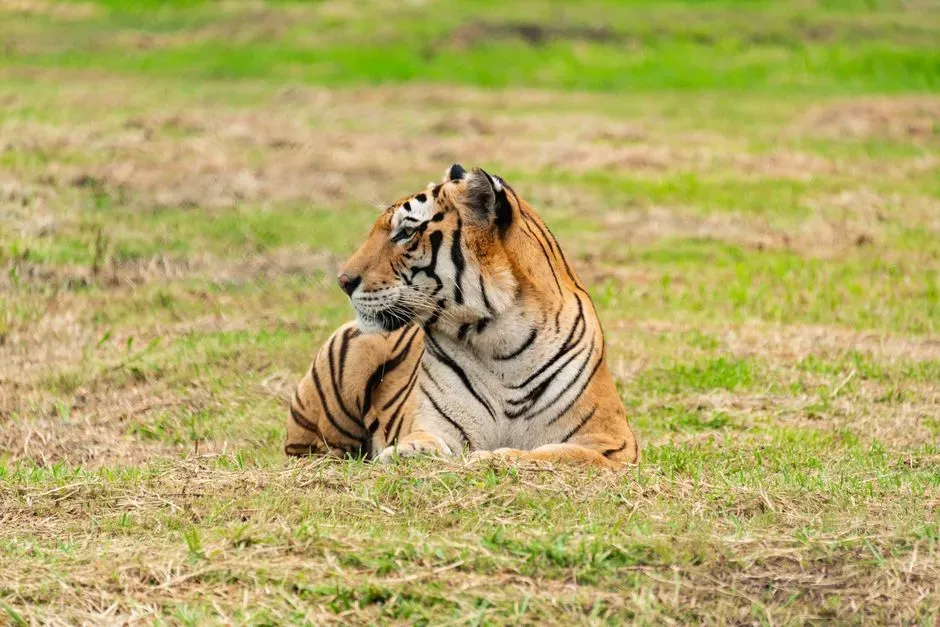
When you step back and put all this together, the word “solitary” starts to feel too thin to capture what is really going on in a tiger’s life. Yes, they hunt alone and do not form stable groups like lions, but their days are threaded with traces of others: scent marks to decode, distant roars to interpret, old memories of neighbors, and careful decisions about where to walk and when to stay hidden. Their solitude is active, vigilant, and constantly shaped by the presence of other tigers they may rarely see up close.
In my view, clinging to the idea of the tiger as an emotionally empty loner does them a disservice. It makes it easier to ignore their needs and harder to empathize with what is at stake when a forest is fragmented or a dominant individual is lost. A more honest view accepts that tigers are both solitary and socially aware, both independent and interconnected through subtle, often invisible ties. Once you see them that way, as complex beings managing a quiet but demanding social world, it is hard to go back to the old myth – and it raises a question worth sitting with: how many other “loners” in nature are we still misunderstanding in the exact same way?