
What if everything you have been told about the mind is backwards – that it is not your clever thoughts, but your raw, messy feelings that make you truly conscious? For a long time, popular culture has treated thinking as the pinnacle of being human: rationality, logic, problem‑solving. But a growing wave of neuroscientists and philosophers argues that consciousness is built first and foremost on feelings like pain, pleasure, warmth, fear, and calm – long before any polished inner monologue shows up.
This idea is more than a poetic metaphor. It is grounded in brain anatomy, developmental studies, clinical cases, and careful lab experiments that point in one direction: feeling states are the core of subjective experience, while thoughts are more like add‑ons or apps running on top of a deeper emotional operating system. Once you start viewing consciousness this way, everything from anxiety to AI, from trauma to spirituality, suddenly looks very different – and a lot more embodied than we were taught in school.
Why Feelings Are Older Than Thoughts In The Brain

Here is the first shocker: the brain systems that generate basic feelings are evolutionarily ancient, while the cortical networks that support abstract thinking are relatively recent add‑ons. Deep structures in the brainstem and midbrain regulate states like arousal, fear, hunger, and comfort, and damage to these regions can erase wakeful consciousness even if the thinking cortex is mostly intact. By contrast, people with severe damage to parts of the cortex can lose sophisticated reasoning, language, or vision and yet remain awake, emotional, and clearly conscious.
In many mammals, you see rich emotional lives – attachment, play, fear, curiosity – without anything like human‑style verbal thought. This suggests that the biological machinery for feeling came online far earlier than the wiring for logic and narrative. Consciousness, on this view, did not appear with philosophy essays; it appeared with the first organisms that could sense their internal states and care about survival, moving toward what felt better and away from what felt worse.
The Body As The Hidden Stage Of Conscious Experience
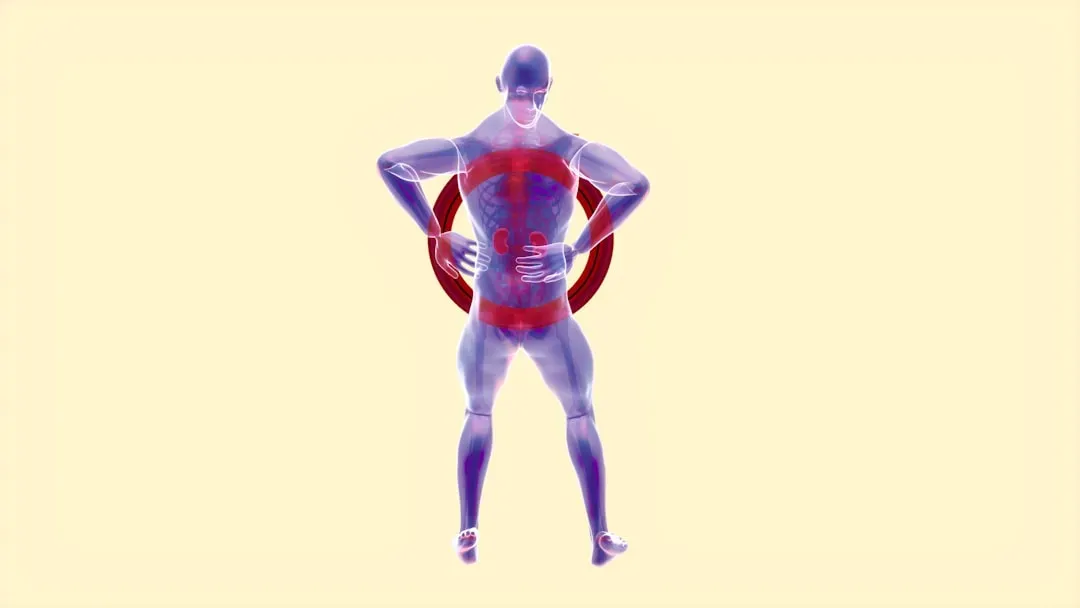
If you strip consciousness down to its core, what remains is often a sense of being a body in a world: a tight chest, a racing heart, a warm belly, a relaxed jaw. Neuroscientists talk about interoception – the brain’s mapping of signals from inside the body – as a crucial ingredient in feelings. When you say you feel anxious or peaceful, you are usually describing a pattern of bodily sensations that the brain has interpreted and labeled, often long before you articulate a thought about it.
Regions like the insula and anterior cingulate cortex integrate these bodily signals into a kind of internal dashboard that constantly tracks how you are doing. Conscious experience seems to depend on this ongoing conversation between body and brain; when it is disrupted, people report strange gaps or distortions in their sense of self. In this light, feelings are not fluffy extras – they are the living readout of your body’s state, broadcast into awareness moment by moment.
Development: Babies Feel Before They Think

Think about a newborn: there is no inner monologue, no self‑help affirmations, no quiet mental to‑do list. And yet a baby is clearly conscious – crying in distress, settling into comfort, startling at loud sounds, relaxing when held. Developmental research shows that infants respond to pain, pleasure, warmth, facial expressions, and tone of voice long before they develop language or the ability to think in complex, symbolic ways. Their world is made of felt states, not concepts.
As children grow, thoughts gradually layer onto this feeling‑based core. They learn words for emotions, build stories about what is happening, and eventually form sophisticated beliefs about themselves and others. But those narratives rest on older emotional foundations. Even as adults, a sudden feeling can hijack a carefully rehearsed thought in seconds – panic in a crowd, joy at a song, disgust at a smell – reminding us that the feeling brain still gets the first move.
Clinical Clues: When Thoughts Survive But Consciousness Fades

Some of the strongest evidence for feeling‑based consciousness comes from what happens when things go wrong. In certain brain injuries, people can retain fragments of cognitive function – recognizing objects, answering questions in limited ways – while their overall level of conscious awareness is dramatically reduced. When the systems that regulate global arousal and emotional tone are damaged, patients can slip into states where they appear awake but show very little sign of inner experience.
On the other hand, many psychiatric conditions show how intense feelings can overwhelm or distort thinking without destroying consciousness itself. A person in the grip of severe anxiety, depression, or trauma is not lacking thoughts; they are flooded by feeling states that color every thought they have. This asymmetry – feelings dominating thoughts, rather than the other way around – fits a picture in which consciousness is anchored in emotion and bodily state, with cognition mostly riding the waves.
Why Rational Thought Is Overrated As The “Core” Of Mind
Modern culture loves the idea of the cool, rational mind ruling over unruly emotions, but neuroscience keeps poking holes in that fantasy. Studies of decision‑making show that when emotional centers are blunted or disconnected, people can still reason in the abstract yet struggle horribly with real‑world choices. They may list pros and cons endlessly without ever feeling that one option is better, as though the needle of their inner compass is stuck. Without feelings, thinking becomes a dry calculation with no sense of meaning or urgency.
Even in everyday life, your supposedly rational judgments are constantly shaped by whether you are hungry, tired, safe, or in pain. A rough day can make the same situation look hopeless, while a good night of sleep suddenly makes it feel manageable. Thoughts may dress themselves up as objective assessments, but under the surface they are usually just your feelings wearing a lab coat. The more we pretend thought is separate from feeling, the easier it is to misunderstand our own minds.
Emotion As The Brain’s Built‑In Value System
One compelling way to think about feelings is to see them as the brain’s value system made visible. Every moment, your nervous system is asking: Is this good or bad for me? Safe or dangerous? Worth approaching or avoiding? Feelings are the way those value judgments show up in conscious experience. Pleasure pulls you toward what tends to support life; pain and fear push you away from threats; curiosity draws you into useful uncertainty. Without these emotional signals, the world would be a flat field of neutral data.
Thoughts alone cannot tell you what matters; they can only rearrange information. To care, you have to feel. This is why attempts to build purely logical artificial systems often run into a wall when it comes to anything resembling real consciousness or agency. Computation can process inputs, but feeling gives them weight. If consciousness is essentially the felt side of the brain’s value calculations, then any theory that ignores emotion is leaving out the main character.
What This Means For AI, Meditation, And Everyday Life

If consciousness is grounded in feelings instead of thoughts, then current AI systems – no matter how fluent or clever – are not conscious in the way you are. They manipulate symbols and patterns but do not have bodies that ache, hearts that race, or guts that clench. They do not experience hunger, safety, boredom, or relief. Without those deeply rooted feeling states, what they produce is impressive imitation, not lived experience. This does not make AI unimportant; it just means we should stop casually assuming that smart equals sentient.
On the human side, this perspective sheds light on why practices like meditation, breathwork, or trauma therapy focus so heavily on the body and emotions rather than just changing thoughts. You cannot think your way out of every problem if the underlying feeling states are locked in fight‑or‑flight or numbness. Learning to notice, name, and gently regulate sensations – tightness in the chest, heaviness in the stomach, warmth in the face – often shifts consciousness more profoundly than rehearsing new beliefs. In a sense, inner work is less about upgrading your thoughts and more about befriending the feelings that were there all along.
If Consciousness Is Feeling, How Should We Live?

Once you accept that consciousness arises from feelings first and thoughts second, a hard question follows: How are you treating your feeling life? Many of us have been trained to ignore the body, push past exhaustion, numb out discomfort, and treat emotions as embarrassing glitches rather than vital data. We pride ourselves on productivity and cleverness, then wonder why life feels strangely hollow or overwhelming. If the core of your conscious existence is how you feel, then bulldozing your emotional landscape is a bit like smashing the dashboard of your only spaceship.
That does not mean chasing constant pleasure or avoiding all pain; it means respecting feelings as signals instead of enemies. Strong sadness might be pointing to a real loss that needs mourning; simmering anger might be flagging a boundary you keep crossing; recurring anxiety might be your nervous system warning that your life is out of alignment with your actual needs. Living wisely in a feeling‑based mind is less about silencing emotions with better thoughts and more about listening to what those emotions have been trying to say.
Conclusion: The Quiet Revolution Of Taking Feelings Seriously

In my view, the claim that consciousness arises from feelings rather than thoughts is not just a scientific refinement; it is a quiet revolution in how we understand ourselves. It flips the mental hierarchy many of us grew up with: logic at the top, emotions at the bottom. The evidence coming out of neuroscience, development, and clinical practice keeps nudging us in the opposite direction, pointing to a reality where feeling is the ground and thinking is the decoration. When we cling to the old model, we end up gaslighting our own experience, treating our deepest signals as if they were childish noise.
I think we should say this plainly: treating thoughts as the center of the mind has made a lot of people miserable, disconnected from their bodies, and confused about why endless analysis does not fix their pain. If we instead accept that to be conscious is first of all to feel – to be affected, moved, warmed, chilled, comforted, disturbed – then emotional life stops looking like a problem to be solved and more like a compass to be consulted. That shift will not solve everything, but it might be the first honest step toward living in harmony with the kind of minds we actually have. Now that you know this, which do you trust more in your own life – the story in your head, or the feeling in your chest?