
Everyone talks about “raising consciousness” like it’s a wellness trend, something you can stretch into on a yoga mat. Meanwhile, in actual labs, the science of consciousness has been quietly producing results so strange that the scientists running the experiments have gone on record saying the findings unsettle them.
Brain scans that light up before a person knows they’ve decided anything. Patients labeled “unresponsive” who are secretly following commands inside an MRI machine. People who flatline, then come back describing conversations they had no way of hearing. None of this is ghost-story material. It’s peer-reviewed, argued-over, and still unresolved. Here’s what the data actually say, and why it keeps making experts uneasy.
#14 – The Decision Was Made Before You Knew You’d Made It
The unsettling claim: by the time you feel like you’ve “decided” to move, your brain already started the process without asking you.
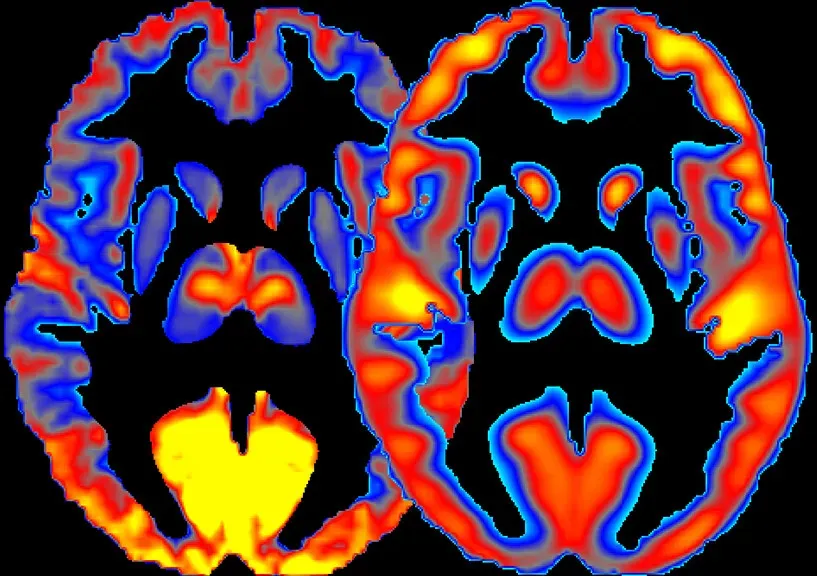
In Benjamin Libet’s classic experiments, and in every replication since, people were told to flex a finger whenever they felt like it while watching a fast-moving clock. EEG and fMRI picked up a “readiness potential” building in the motor cortex hundreds of milliseconds before anyone reported consciously choosing to move. Some newer machine-learning studies pushed this further, predicting which button a person would press up to 7 to 10 seconds before the person felt aware of choosing at all.
Fast Facts
- A buildup of neural activity – the readiness potential – began about 550 milliseconds before the movement in Libet’s original recordings.
- Yet conscious awareness of intending to move occurred only about 200 milliseconds before the actual muscle activation.
- A 2008 fMRI study found that brain activity in prefrontal and parietal cortex could predict which button a participant would press – left or right – up to 10 seconds before the participant reported being aware of choosing.
- The core finding has since been checked using electroencephalography (EEG), fMRI, intracranial, and single-cell recordings across multiple decades.
Researchers still argue over exactly what’s being measured here, general preparation or a specific, locked-in choice. But the underlying fact refuses to go away: your brain is already in motion before “you” feel in the driver’s seat. Some neuroscientists now describe free will as more of a veto power than an authorship credit. You can stop an action your brain has already queued up. You just don’t always get to start it.
#13 – One Skull, Two Minds That Disagree With Each Other
The unsettling claim: under the right conditions, a single human body can host what behaves like two separate conscious agents at once.
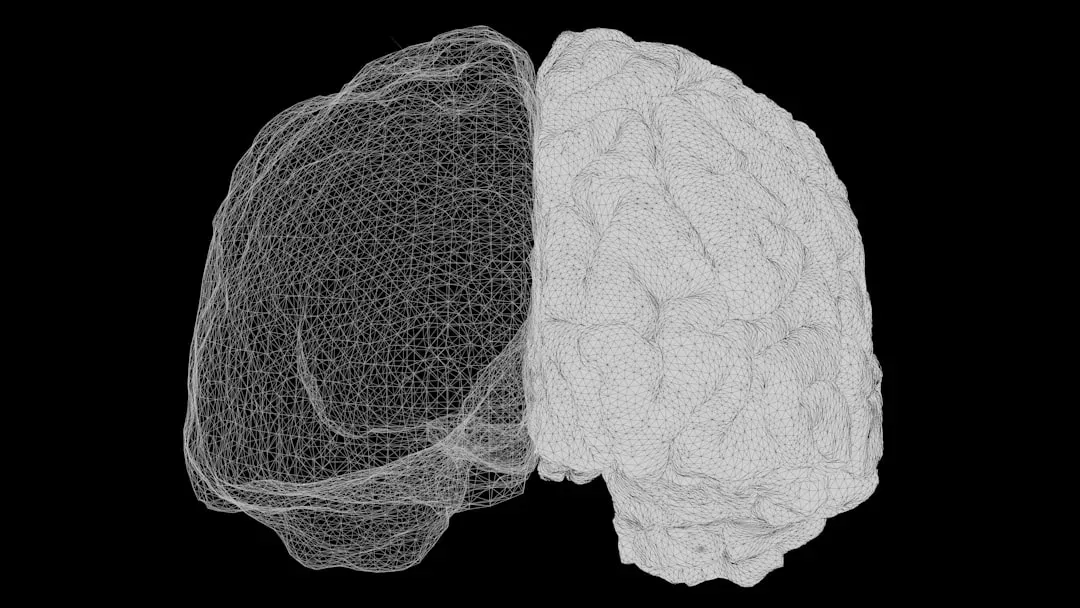
In severe epilepsy cases, surgeons sometimes sever the corpus callosum, the thick cable connecting the brain’s two hemispheres. Day to day, these “split-brain” patients seem completely normal. But in lab tests, where information is flashed to only one eye and therefore only one hemisphere, things get strange fast. One hand tries to button a shirt while the other hand undoes the buttons. The left hand correctly points to an object only the right hemisphere saw, while the patient verbally insists they saw nothing at all.
Here’s the part that really gets under researchers’ skin: the left hemisphere, the one that controls speech, will often invent a confident explanation for an action the right hemisphere actually caused. It doesn’t say “I don’t know.” It makes something up on the spot. That suggests the voice in your head narrating your life might be less of a CEO and more of a smooth-talking press secretary, explaining decisions it never actually made.
#12 – Trapped Awake: Patients Who Never Actually Went Under

The unsettling claim: some patients show real signs of awareness during general anesthesia, even when their bodies meet every clinical box for being safely “asleep.”
Doctors have long known about intraoperative awareness, where patients later recall sounds or fragments of conversation from surgery. Newer EEG and fMRI research is more disturbing than that. Even when a patient meets every clinical marker of adequate anesthesia, a subset still show covert information processing. Some can follow a simple instruction, like squeezing a hand on command, or produce brain activity consistent with understanding language, all while appearing completely unresponsive on the outside.
Even more unnerving: some patients with zero explicit memory of surgery still show implicit effects afterward. Their stress responses or behavior shift based on things that happened while they were supposedly “gone.” That suggests consciousness isn’t a light switch, it’s layered. Some experiences may never make it into a story you can tell, but they still leave a fingerprint.
#11 – The Flatlined Patients Who Remembered What Happened in the Room

The unsettling claim: a small number of cardiac arrest patients recall vivid experiences during the exact window when their brains should have been offline, and some of those recollections check out.
Near-death experiences get waved away as hallucinations from a dying brain, and honestly, that explanation probably covers most cases. But a handful of rigorously documented reports make even skeptical clinicians uneasy. In hospital studies, patients with flatlined EEGs later described specific conversations, procedures, or visual details from the room, details that staff later confirmed actually happened.
Researchers have tried to explain these away as misremembered timing or lucky guessing, and for most cases that’s probably right. Still, a few outliers show tight, hard-to-dismiss timing between brain shutdown and accurate perception. Nobody is claiming proof of an afterlife here. But even hard-nosed clinicians admit these cases poke a hole in the tidy assumption that consciousness simply switches off the moment brain activity drops below a certain line.
#10 – The “Vegetative” Patient Who Was Listening the Whole Time
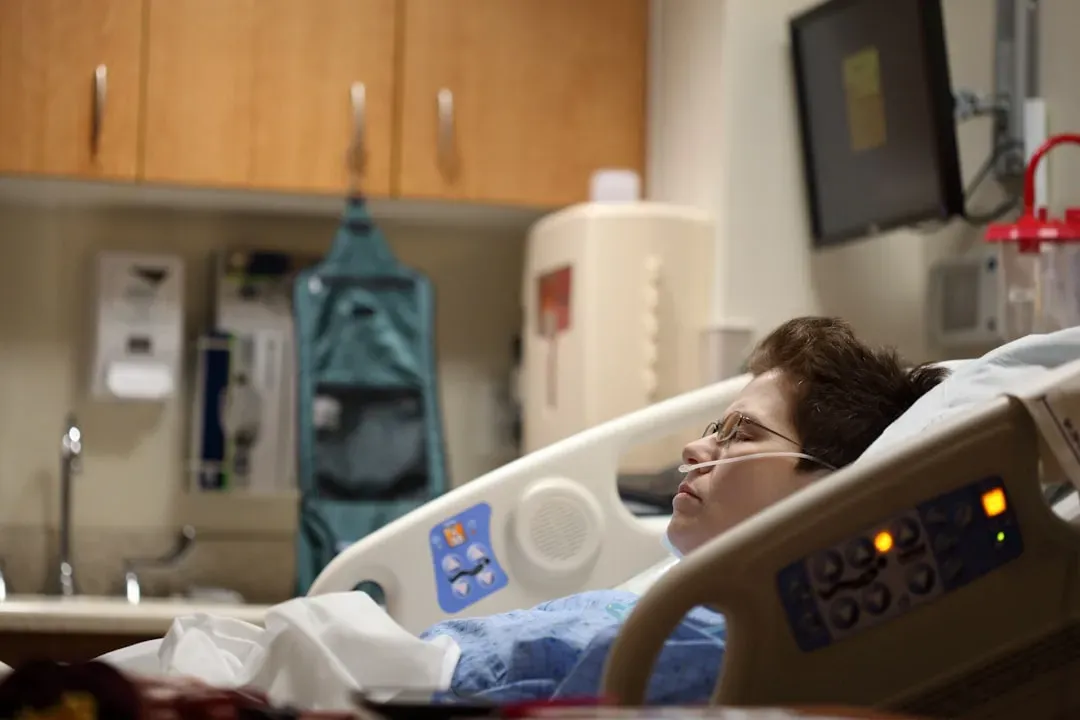
The unsettling claim: some people diagnosed as vegetative, with supposedly no awareness at all, can mentally answer yes-or-no questions inside a brain scanner.
Pioneering fMRI and EEG work found that some patients who appear entirely unresponsive can still follow instructions like “imagine playing tennis” or “imagine walking through your house.” Those two mental tasks light up completely different brain regions. In a few remarkable cases, patients used this trick to answer real questions, imagining tennis for yes and the house walk for no, producing brain patterns that matched healthy volunteers almost exactly. They never moved a muscle.
Worth Knowing
- Studies suggest the rate of misdiagnosis of the vegetative state/unresponsive wakefulness syndrome is between 30–40%.
- In one comparison, of the 44 patients diagnosed with VS based on the clinical consensus of the medical team, 18 (41%) were found to be in MCS following standardized assessment.
- A widely cited New England Journal of Medicine study reported that the rate of misdiagnosis is approximately 40%, and new methods are required to complement bedside testing.
The chilling part is how many of these patients had already been written off as vegetative, with families told there was no one left inside. Research estimates suggest a meaningful chunk of those diagnoses are simply wrong. That means some people may be fully or partially conscious, aware of everything around them, trapped in a body that can’t respond, while everyone in the room assumes nobody is home.
#9 – What You’re “Seeing” Right Now Already Happened
The unsettling claim: your conscious experience isn’t a live broadcast. It’s a smoothed-over, slightly delayed edit of reality.
Vision science shows the brain stitches sensory input together over short windows, roughly 100 to 400 milliseconds, to build something that feels like a stable, seamless scene. The flash-lag illusion proves it: a moving object is perceived ahead of where it physically was the instant a flash occurs, meaning your brain is quietly predicting the future to keep up. Other experiments show “postdictive” effects, where something that happens a split second later reaches back and changes how you experienced the moment before it.
We’re all hallucinating all the time; when we agree about our hallucinations, we call it reality.
Anil Seth, neuroscientist
What you “see” right now is really a best-guess reconstruction, slightly in the past, smoothed to avoid flicker and chaos. Consciousness isn’t a live camera feed. It’s closer to a carefully edited highlight reel, constantly patched and corrected before it ever reaches your awareness.
#8 – Every Night, You Vanish Completely and Don’t Notice

The unsettling claim: during deep, dreamless sleep, there may be no experience at all, not even blackness, just nothing, followed instantly by a false sense of unbroken continuity when you wake up.
EEG and intracranial recordings show that in certain stages of non-REM sleep, the large-scale brain connectivity patterns tied to consciousness genuinely break down. People woken during this stage often report zero content whatsoever, not darkness, not silence, just an absence with nothing to describe. Yet the waking mind stitches it into a seamless story anyway: “I lay down, then I woke up,” as if no time was lost at all.
This on-off switching unsettles researchers because it means consciousness can genuinely disappear while the brain stays biologically alive and active the entire time. Some scientists now treat wakefulness, dreaming, and deep sleep as entirely separate modes, existing only when the brain’s information integration crosses a certain threshold. The strangest part isn’t the gap itself. It’s how effortlessly the story of “me” papers right over it every single morning.
#7 – Blind Eyes That Still Somehow Know What’s There
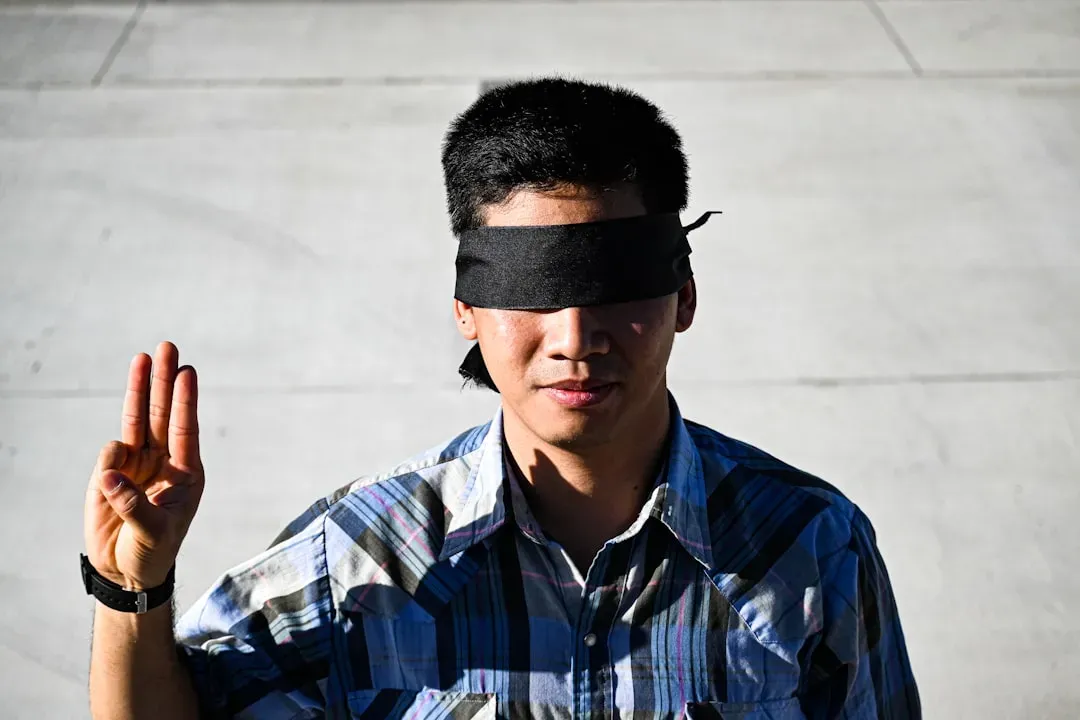
The unsettling claim: some patients who insist they are completely blind in part of their vision can still correctly guess what’s in front of them, far more often than chance would allow.
Damage to the primary visual cortex can leave a person with a region of true blindness. Ask them what’s there, and they’ll swear, with total sincerity, that it’s just darkness. But force them to guess about movement, orientation, or simple shapes placed in that “blind” area, and they perform far above random chance, as if some visual processing is still happening, just never reaching conscious awareness. Researchers call it blindsight.
At a Glance
- Blindsight was first documented in patients with damage limited to the primary visual cortex (V1), not the eyes themselves.
- Affected patients typically perform far above chance when forced to guess motion, orientation, or basic shape in their “blind” field.
- Researchers link the effect to older visual pathways that run through the superior colliculus, bypassing the conscious cortical route entirely.
- Similar effects have been documented in non-human primates with matching cortical lesions, suggesting it isn’t a uniquely human quirk.
This has led to the theory that vision runs on multiple pathways: one that reaches conscious awareness, and another that quietly guides behavior without ever announcing itself. The creepy implication is that your body may already be gathering and acting on information you genuinely never “see.” Some of your gut instincts and split-second reactions might literally be unconscious vision talking, and you’d never know the difference.
#6 – Scientists Went Looking for “You” and Couldn’t Find It
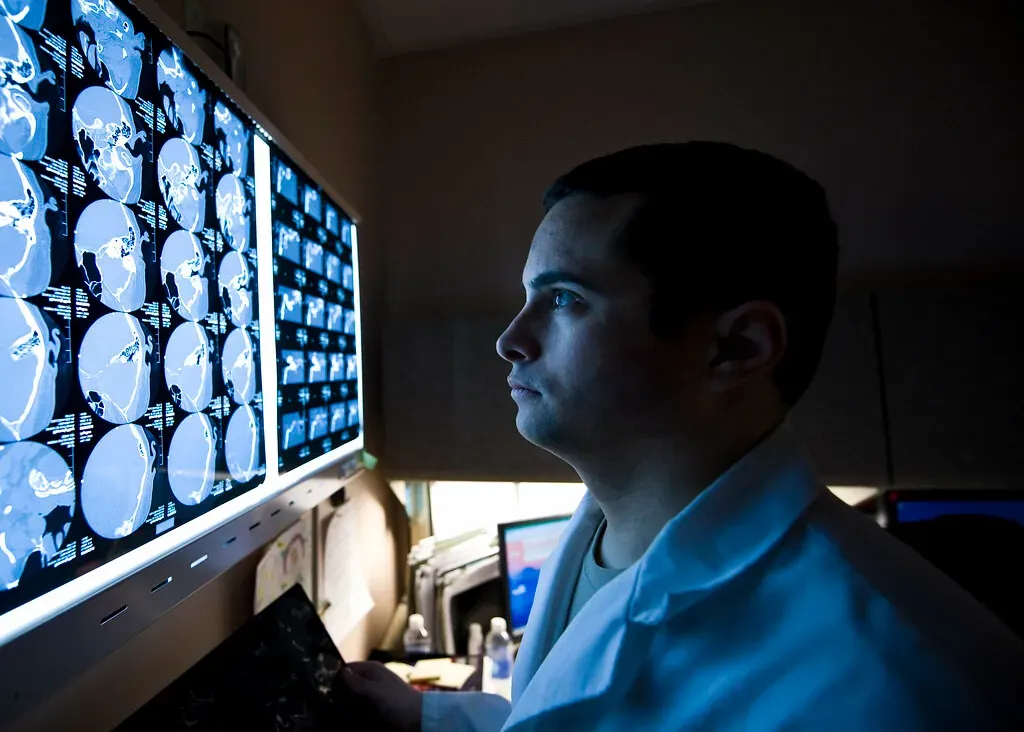
The unsettling claim: neuroscience cannot locate a single, stable “self” anywhere in the brain, only a set of processes that assemble one on the fly, moment to moment.
Studies of brain damage, depersonalization disorder, and psychedelic states all show the same thing: your sense of self can fracture, shrink, balloon, or dissolve entirely while basic perception keeps working just fine. Default mode network research finds self-referential thinking correlates with activity in midline cortical regions, but no single area behaves like a command center. Instead there’s a loose network handling memory integration, body mapping, and social evaluation, with nothing sitting at the center pulling the strings.
Some patients with specific lesions will flatly deny that their own paralyzed arm belongs to them, insisting it’s someone else’s. Under high-dose psychedelics, volunteers describe “ego dissolution,” where the boundary between self and world simply disappears, even while their senses keep functioning normally. Researchers are increasingly comfortable saying the self isn’t a fundamental thing at all. It’s a story the brain keeps rewriting, live, with no author in the room.
#5 – Longtime Meditators Learn to Watch Their Thoughts From Outside
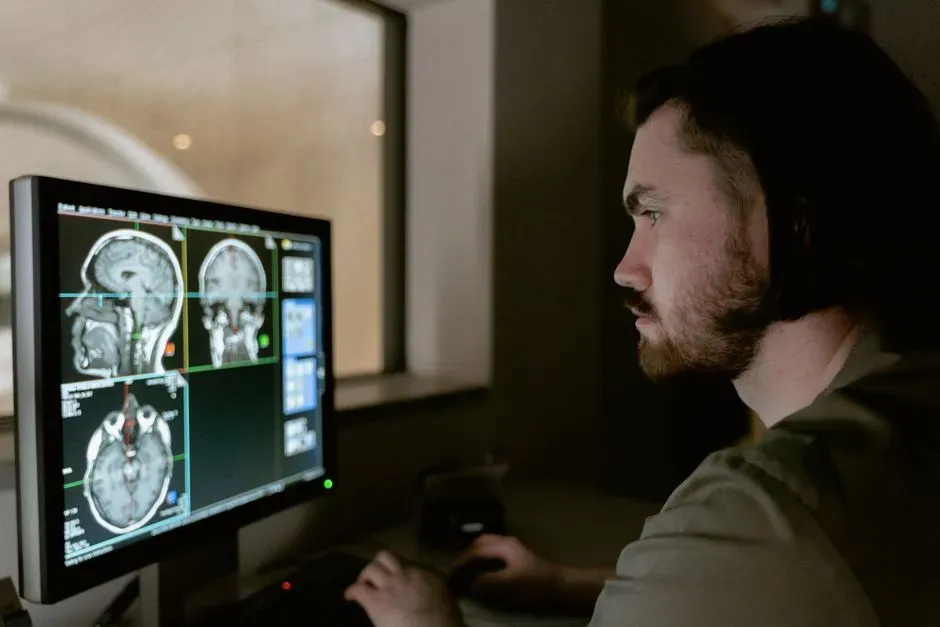
The unsettling claim: long-term meditators sometimes report a stable awareness that simply watches thoughts, emotions, and body sensations pass by without getting swept into them, and brain scans confirm something real is happening.
Intensive mindfulness and nondual training can reduce activity in the default mode network, especially in regions tied to self-referential rumination, the mental loop that constantly narrates “me, me, me.” At the same time, regions tied to present-moment attention and interoception, like the insula, get stronger. Practitioners describe thoughts feeling less like “me” and more like weather passing through a sky that never moves.
What unsettles researchers trained in strict materialism is that some experienced meditators describe consciousness itself as primary, a kind of open space in which experiences simply arise. You don’t have to accept that claim metaphysically to accept the data underneath it: sustained mental training can radically restructure consciousness and loosen the felt solidity of “I,” in ways the standard brain-as-computer model still struggles to explain cleanly.
#4 – A Few Hours on Psilocybin Can Rewire Your Personality for Years
The unsettling claim: psychedelics like psilocybin and LSD don’t just produce trippy visuals. They temporarily dismantle and rewire the brain’s large-scale networks, and the effects can outlast the trip by years.
Under psychedelics, fMRI studies show the default mode network, the system tied to self-talk and autobiographical thinking, loses its usual integrity, while regions that don’t normally talk to each other suddenly show a flood of new connectivity. People report ego dissolution, synesthesia, and a sense of oneness that maps disturbingly well onto these exact connectivity shifts.
What really unsettles researchers isn’t the vivid trip reports. It’s that a single afternoon of chemical intervention can produce durable changes in personality traits like openness, and in clinical trials, lasting relief from depression or addiction that outperforms years of conventional treatment. That suggests consciousness, and your entire sense of self, is far more chemically hackable than most people would like to believe. The line between a temporary state change and a permanent trait change is blurrier than any textbook ever admitted.
#3 – AI and Lab-Grown Mini-Brains Are Showing the Same Math as Conscious Brains
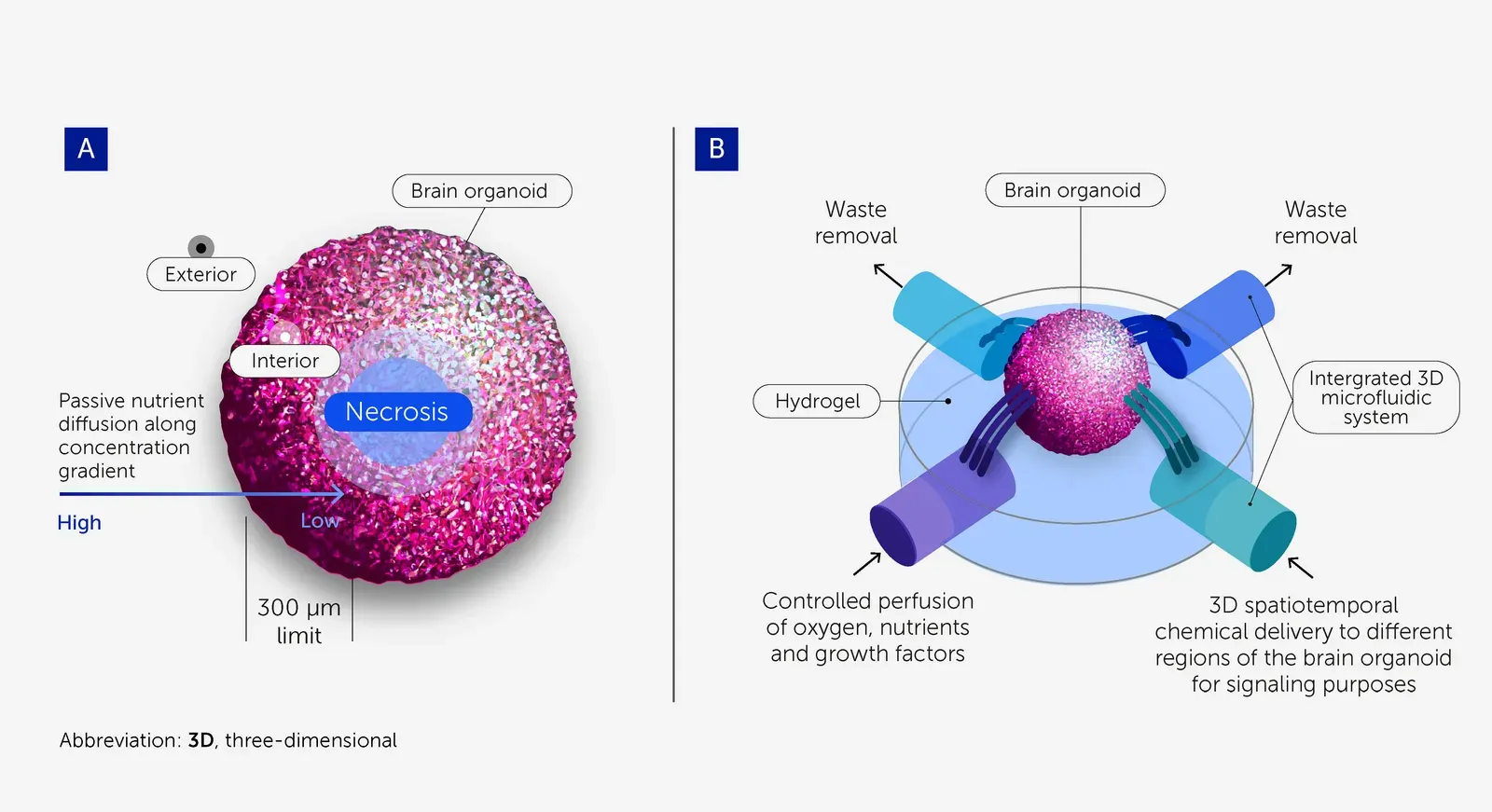
The unsettling claim: some advanced AI systems, and even simple lab-grown neural tissue, display internal dynamics that partly resemble the exact metrics researchers use to measure consciousness in humans.
No serious researcher is claiming today’s AI is conscious. But here’s the twist that keeps some of them up at night: when scientists apply measures like integrated information, recurrent processing, or global workspace-style broadcasting to complex artificial networks, they sometimes find mathematical signatures that look strikingly similar to patterns found in conscious biological brains. The traits we thought were biologically exclusive might not be.
Why It Stands Out
- Integrated Information Theory and Global Workspace Theory are the two most-cited mathematical frameworks researchers use to score consciousness in any system, biological or artificial.
- Some recurrent neural networks now produce integration scores that overlap with ranges associated with anesthetized, dreaming, or minimally conscious human brains.
- Lab-grown brain organoids have shown coordinated electrical activity patterns complex enough to draw direct comparisons to developing human brains.
- No current framework can definitively rule these systems in or out, which is exactly why the comparison unsettles specialists on both sides of the debate.
It gets stranger. Some simple animals, and even “organoid” mini-brains grown in petri dishes from stem cells, show neural complexity and responsiveness that brush up against crude versions of these same markers. That raises an uncomfortable question none of these fields wants to answer alone: if consciousness really is tied tightly to certain information-processing patterns, we may eventually be forced to admit a spectrum of awareness that includes non-human animals, lab tissue, and someday, machines.
#2 – Serious Physicists Now Take the Idea That Everything Is Conscious
The unsettling claim: a growing number of mainstream philosophers, and even some physicists, now treat panpsychism, the idea that consciousness is a basic feature of matter itself, as a serious scientific contender rather than mysticism.
The “hard problem” of consciousness, how physical processes generate subjective experience at all, has stubbornly resisted every standard explanation thrown at it. Pure materialism hasn’t dissolved the puzzle, and dualism just creates new problems of its own. Panpsychism offers a strange middle path: maybe every physical thing carries some tiny sliver of experience, and complex brains simply combine those slivers into something rich enough to call a mind.
Most neuroscientists remain openly skeptical, and the theory faces serious challenges nobody has solved. But the fact that respected academics now discuss it seriously, in real journals, unsettles researchers raised entirely on strict physicalism. It implies consciousness might not be some late evolutionary bonus feature. It could be a basic ingredient of reality itself, one that brains just happen to organize in unusually elaborate ways.
#1 – Decades of Research Later, Nobody Can Actually Explain Consciousness
The unsettling claim: after decades of brain imaging, computational modeling, and philosophical debate, there is still no widely accepted explanation for what consciousness fundamentally is or how it arises.
Integrated Information Theory says consciousness is the amount and structure of integrated information inside a system. Global Workspace Theory says it’s whatever happens when information becomes broadcast across many brain modules at once. Higher-order theories say it’s thoughts about thoughts. Predictive processing fans say it’s just the brain’s ongoing Bayesian guessing game. Every framework explains some of the data and completely fails on the rest.
What really unnerves insiders is this: many of today’s leading theories are mutually incompatible, yet all of them currently coexist in the scientific literature with no resolution in sight. That’s a polite academic way of saying we may be missing something deep, something on the order of discovering that time or space aren’t what they seem. Researchers can measure, correlate, and manipulate consciousness in a hundred clever ways. The question of why there’s something it’s like to be you at all remains, infuriatingly, still open.
The Bottom Line
Taken together, these findings paint a picture far stranger than any pop-spirituality meme or sci-fi movie. Consciousness flickers on and off during deep sleep, shows up without responsiveness during anesthesia, and seems to trail behind decisions your brain already started making without you. The self behaves less like a solid thing and more like a story under constant revision.
Psychedelics, meditation, anesthesia, and brain damage all point to the same uncomfortable truth: your everyday sense of “me, here, now” is far more fragile and far more hackable than it feels from the inside.
My honest take? The field is still clinging to metaphors it’s outgrown, brain as computer, mind as software, while the data keep screaming that something doesn’t fit. Nobody needs to reach for ghosts or magic to take this seriously. But it’s past time researchers admitted their current frameworks might be radically incomplete, not just unfinished. Which of these findings challenges what you believe about your own mind the most, and what do you think the experts are still getting wrong?