
You probably think an illusion is just a party trick – a bent spoon, a spinning wheel, something you can shake off once you know the secret. That’s not what’s happening here.
Modern perception research has quietly reached a much stranger conclusion: your brain isn’t misreading reality now and then. It’s constantly inventing pieces of it, on purpose, in ways that don’t disappear even when you know exactly how the trick works. Psychologists have started treating these distortions as genuine, hard-wired features of how humans experience the world – not glitches, but load-bearing parts of the system. Here are 11 of them, and by the end, the idea of a single “real you” watching it all might feel a lot shakier.
#11 – Color That Exists Only in Your Head

Your screen can’t display it. Your paint set can’t mix it. And yet, under the right lab conditions, you can genuinely see colors that have no physical basis at all. Scientists call them “impossible colors” or “subjective colors,” and they show up when experimenters push the brain’s color channels past their normal operating limits.
Here’s the part that should unsettle you: your visual system was never reading color directly off the world in the first place. It’s comparing signals between cone types, and when that comparison gets pushed off-balance, perception slips into territory physics never signed off on. The checker-shadow illusion proves the same point on easy mode – identical gray squares look like two different shades depending on the shadow around them. Color scientists are blunt about it now: color isn’t a property of objects, it’s something your brain builds and hands to you as if it were fact.
Fast Facts
- The checker shadow illusion was published by Edward H. Adelson, professor of vision science at MIT, in 1995, and it demonstrates the context-dependent nature of human color perception.
- Despite looking like different shades, the two labeled squares are of identical brightness, meaning they’d be printed or displayed with the exact same pixel values.
- Close cousins like the Cornsweet illusion and the Chubb illusion use the same trick of surrounding context to make identically colored regions look different.
- Your eyes only have three cone types, yet your brain reports millions of perceived colors by constantly comparing signals between them.
#10 – Motion You Swear Is There (But Isn’t)
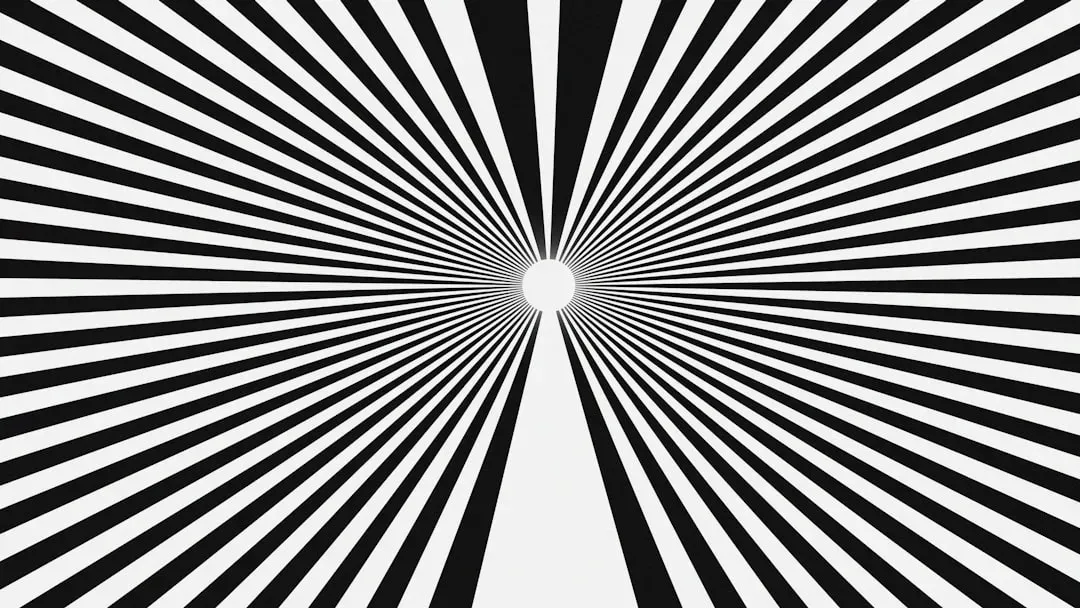
You’ve stared at one of those static images online that seemed to shimmer, crawl, or spin – no animation, no GIF, just shapes and contrast lines arranged to hijack your motion detectors. Psychologists don’t file these under “cheap internet tricks” anymore. They’re textbook proof that motion, like color, is something your brain infers rather than directly senses.
The waterfall illusion takes it further: stare at flowing water for a while, look away, and stationary objects will appear to drift upward for several seconds. That’s not your eyes malfunctioning – it’s motion-sensitive neurons recalibrating in real time. And here’s the twist that catches people off guard: the sharper your motion perception is in everyday life, the more intensely these illusions tend to fool you. Being good at seeing movement makes you easier to trick, not harder.
#9 – Straight Lines That Bend Themselves
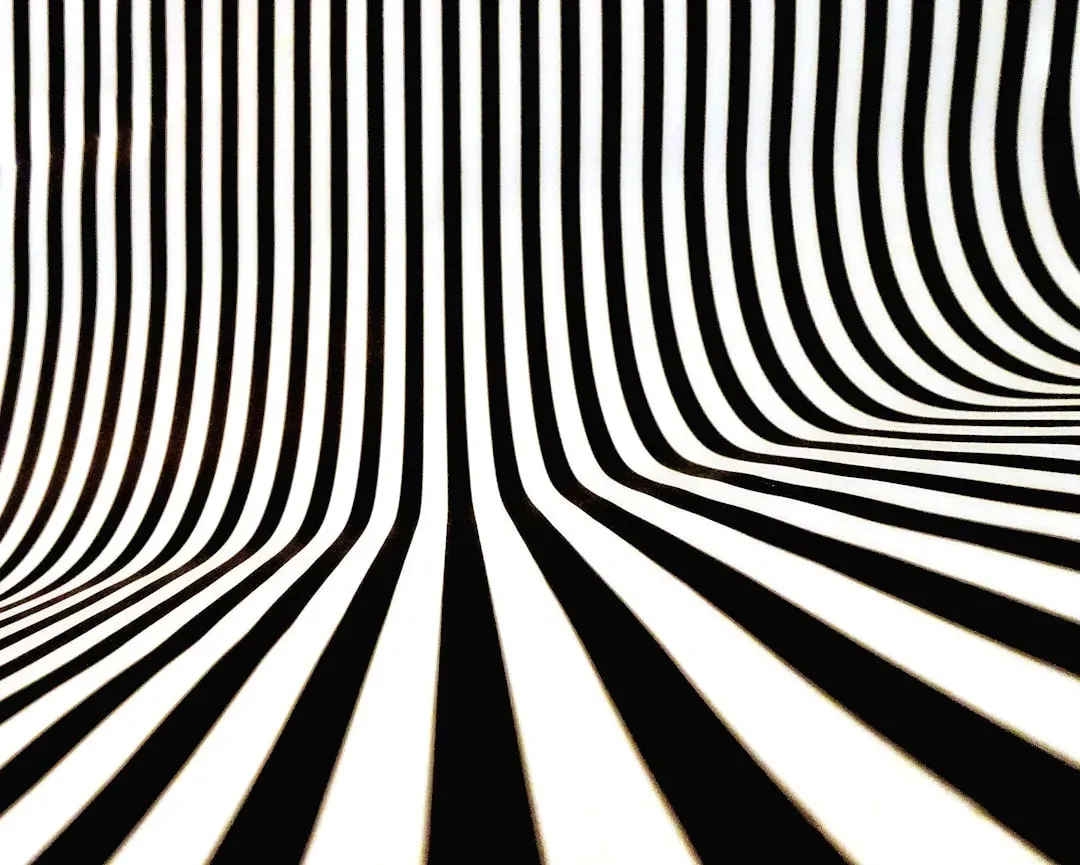
The Müller-Lyer illusion is the one you probably learned in a psychology textbook and dismissed as a novelty: two identical lines look wildly different in length just because of arrowheads pointing in or out at the ends. Researchers no longer treat it as a party trick. They treat it as proof that your brain cannot look at a simple line without silently calculating depth and context underneath it.
In the real, three-dimensional world, this habit is actually useful – it’s how you avoid perceiving people as shrinking when they walk away from you. But flatten that same wiring onto a page, and it backfires spectacularly, manufacturing length that simply isn’t there. Interestingly, people raised outside heavily “carpentered,” rectangular architecture show the illusion less strongly, though it never fully disappears. The lesson isn’t that some cultures see reality more clearly. It’s that human vision was never built to be a measuring tool in the first place.
Quick Compare
- Classic 1960s view: A cross-cultural study using the Müller-Lyer illusion found Western participants more susceptible to it than Zulu pastoralists and San foragers, seemingly supporting the idea that carpentered, rectangular environments create the illusion.
- Newer 2025 challenge: A 2025 study pushed back hard, showing the illusion affects a wide range of animals and people with no exposure to carpentered environments at all, hinting it may be hardwired rather than learned.
- Guppies, monkeys, horses, parakeets, and lizards have all been shown to fall for it too.
- It even persists when the classic arrow-tipped lines are swapped for curves, dot clusters, or faces.
#8 – Phantom Faces in Random Noise

If you’ve ever seen a face in a cloud, an electrical outlet, or the front grille of a car, you’re not being fanciful – you’re doing exactly what your brain evolved to do. Psychologists call it pareidolia, and far from being a quirky glitch, many now treat it as the default setting of the social brain. Missing a real face nearby was dangerous for your ancestors; seeing a few extra fake ones cost nothing.
Brain imaging backs this up in a genuinely surprising way: the same face-selective brain regions light up for a “face” spotted in an object as for an actual human face, just somewhat weaker. Your brain isn’t quietly dismissing these as shapes – it’s promoting them into real social candidates worth paying attention to. That’s why a shadow on a security camera or a scorch mark on toast can feel so convincing. Physically, there’s no face there. To your brain, it’s a reasonable, even cautious bet.
#7 – Time That Stretches and Snaps Back
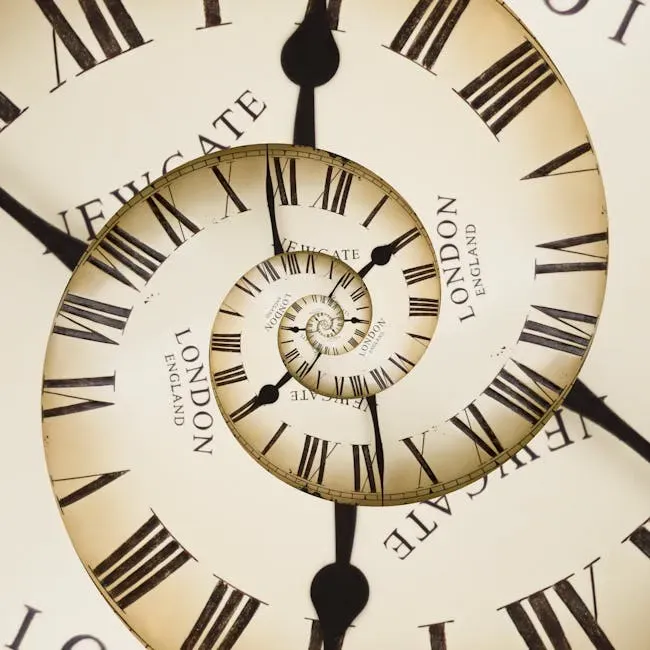
Physics insists a second is a second. Your nervous system disagrees constantly. Look at a clock the moment you glance over, and the second hand can appear to freeze for a beat longer than it should – the stopped-clock illusion. A surprising sound or image in a sequence of identical ones will also seem to last longer than its neighbors, even when every stimulus is exactly the same length.
The culprit is attention. When something unexpected happens, your brain floods the moment with extra processing, and that surge in mental effort gets mistranslated as extra elapsed time. It’s the same mechanism behind the “everything went slow motion” feeling during a car accident or a near-miss – not the world actually slowing down, just your brain dumping enormous bandwidth into encoding every detail. You never experience raw, present-tense time at all. You experience a rolling, editable prediction of it.
#6 – The Invisible Gaps Your Brain Refuses to Admit
Here’s the uncomfortable one: you can miss enormous, obvious changes in a scene right in front of you if they happen during a blink, a flicker, or a brief visual disruption. It’s called change blindness, and its more extreme cousin, inattentional blindness, is why people can stare directly at something and not register it if their attention is locked elsewhere – yes, that includes the famous invisible gorilla walking through a basketball game.
What makes this genuinely unsettling isn’t the missing detail itself. It’s that your brain refuses to admit anything is missing. Most of your visual field isn’t captured in sharp detail at any given moment – your brain fills in the gaps with assumed continuity it never actually recorded, and hands you the illusion of a seamless, high-resolution world. The scandal researchers keep circling back to isn’t that you miss things. It’s the rock-solid confidence you feel that you didn’t.
At a Glance
- In the original study, participants watched two teams passing a ball and were told to count the passes made by the team in white shirts – midway through, a person in a gorilla suit walked through, stopped, beat its chest, and walked off.
- Believe it or not, there’s roughly a 50 percent chance a viewer misses the gorilla entirely.
- The effect is called inattentional blindness – it’s not a vision problem, it’s an attention bottleneck.
- Follow-up work has found the same blind-spot pattern in trained professionals scanning images for anomalies, not just casual viewers.
#5 – The Voice in Your Head That Always Thinks It’s Right

Not every illusion is visual. Psychologists also track cognitive illusions, distortions in how confident you feel about what you know. One of the sharpest is the “illusion of explanatory depth”: ask someone how a zipper or a toilet actually works, and they’ll say sure, easy – until you ask them to explain it step by step, and the confidence collapses in real time.
Memory runs the same con. Most people are certain their vivid, emotional memories are accurate recordings, when research shows they’re reconstructive guesses, quietly rewritten a little each time you recall them. This isn’t trivia – it shapes eyewitness testimony, political certainty, and the personal stories you tell about your own life. The point isn’t that nothing is real. It’s that the feeling of certainty is itself a manufactured product, and it can be measured, manipulated, and sometimes corrected.
#4 – The Body You Feel Isn’t Fully Yours

“This is my body” feels like the most basic fact a person can hold. Experiments like the rubber hand illusion suggest otherwise. Stroke a fake rubber hand in sync with a person’s real, hidden hand for a few minutes, and most participants start to flinch when the rubber hand is threatened – their brain has partially adopted it as “me.”
Modern VR setups push this even further, placing a person’s viewpoint outside their own body or inside a mannequin. When the visual and touch cues line up convincingly enough, people report genuinely feeling as though they’ve relocated into another body, or are floating just behind themselves. Milder, spontaneous versions of this show up clinically as depersonalization and out-of-body experiences. The emerging consensus is genuinely strange: bodily ownership isn’t a fixed fact about you. It’s a live, moment-to-moment illusion your brain maintains by stitching together vision, touch, and expectation – and it can be hijacked.
#3 – Seeing the World Through Your Beliefs
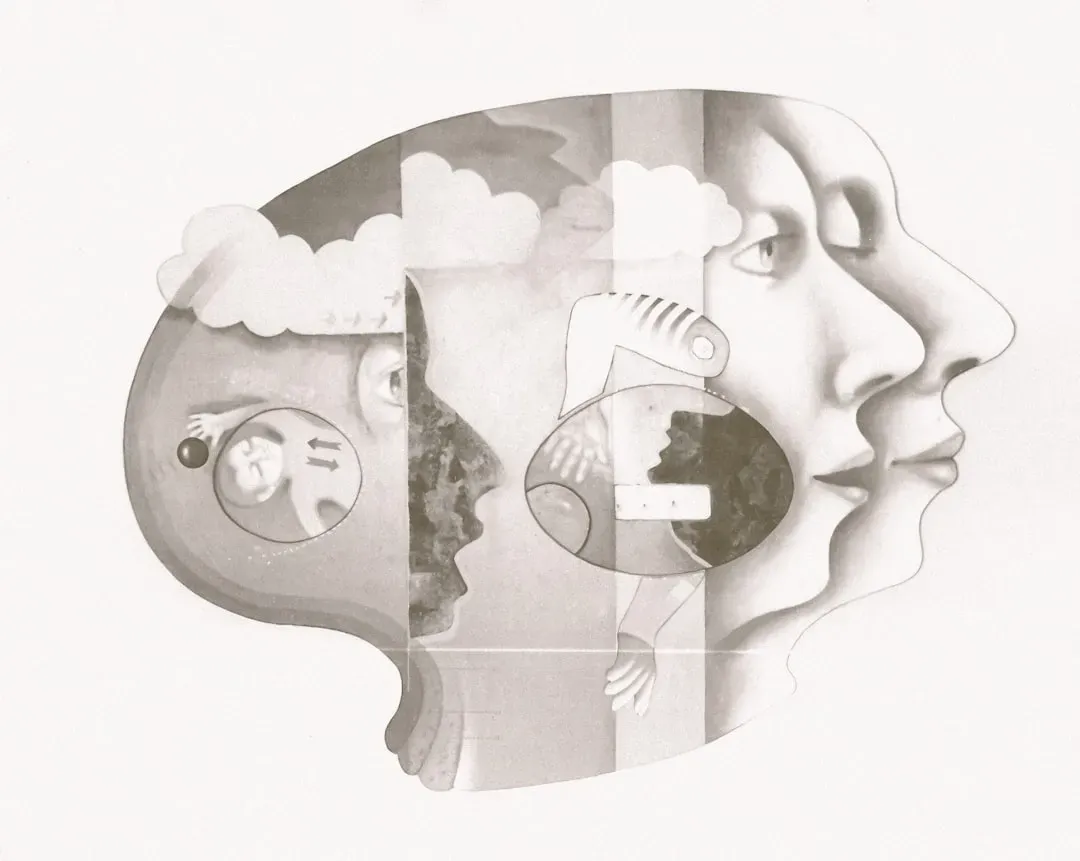
We like to assume perception comes first and belief follows. Increasingly, the research says the opposite is also true: what you already believe can directly reshape what you see. This is “top-down” influence, and it’s not subtle. In studies on ambiguous social behavior, people watching the identical video will genuinely perceive an action as hostile or harmless depending on their existing loyalties – not just interpret it differently, but experience it differently.
Even basic visual judgments aren’t immune. Studies on priming and “perceptual set” show your brain leans hard on prior expectations to make sense of noisy, ambiguous input. That’s efficient most of the time, but it’s also exactly why illusions strike hardest when the world doesn’t match what you were primed to expect. Perception was never a neutral camera quietly recording events. It’s a belief-tuned inference engine, and it produces sincerely felt illusions whenever expectation and data collide.
#2 – The Feeling That Someone Is Behind You

Plenty of people quietly admit to this one: alone in a room, they suddenly feel a presence behind them, despite knowing full well no one is there. It’s not necessarily supernatural. Neuroscientists now classify many “felt presence” experiences as body-and-space illusions, close cousins of the rubber hand effect, triggered when your brain’s internal map of where “you” are gets slightly out of sync with touch, movement, or expectation.
In lab settings, researchers have actually induced a “shadow person” sensation using robotic devices that introduce a delay between a person’s movement and the feedback they receive from it. Volunteers don’t describe it as a vague hunch – they describe it as eerily, specifically real. This doesn’t disprove anyone’s spiritual experiences, but it does show that the raw feeling of “someone else is here” can be manufactured by nothing more than a small glitch in how your brain tracks its own body.
Worth Knowing
- A team led by Olaf Blanke at EPFL analyzed patients suffering from a “feeling of a presence” and then built a robot capable of instilling that same sensation in healthy volunteers.
- Blanke described it as arising “under normal conditions, simply through conflicting sensory-motor signals.”
- Several participants reported a strong sensation of invisible people nearby, on average counting two and as many as four at once.
- Two volunteers found the experience so disturbing they asked researchers to stop the experiment entirely.
#1 – The Stable, Continuous “You”

Here’s the illusion many psychologists now quietly treat as the biggest of all: the sense that there’s a single, stable “you” sitting behind your eyes, calmly observing everything. This isn’t philosophy for its own sake – it’s a hard empirical claim, and the data are messier than most people would like. When researchers probe moment-to-moment brain activity, they find fragmentation everywhere: memory, decision-making, body ownership, and your narrated life story are handled by separate systems that don’t always agree with each other.
Clinical cases make this impossible to ignore. In dissociative states, entire memories or abilities can feel severed from “who I am.” In split-brain patients, two competing sets of preferences can emerge from the same skull at the same time. Your brain isn’t a single CEO issuing orders from the top – it’s closer to a coalition government, messy and constantly renegotiating. That coalition is extraordinarily useful; it’s what keeps your behavior coherent and your social life functional. But a growing number of cognitive scientists now argue the capital-S Self is less a fixed thing and more an ongoing story your brain keeps rewriting so reality feels stable enough to actually live inside.
We’re all hallucinating all the time; when we agree about our hallucinations, we call it reality.
Anil Seth, neuroscientist
The Bottom Line
Taken together, these eleven cases add up to something far more radical than “optical tricks.” Color, motion, time, other people, your own body, even your sense of a unified self – none of it arrives as raw data. It’s all best-guess construction, assembled so smoothly that you mistake the guess for the ground truth.
That’s the real illusion running underneath all the others: the unshakable confidence that what you experience is simply what is. Psychologists aren’t claiming nothing is real. They’re saying your access to reality is filtered through a predictive, story-obsessed organ that was built for survival, not accuracy. You’re living inside a curated hallucination that happens to work well enough, most of the time, to fool you completely.
Which of these eleven is hardest for you to sit with – and honestly, do you even want to see past it?