
Most people assume museum basements are full of neatly labeled relics, complete with tidy placards explaining exactly what an object is and how it was used. They’re not. Tucked behind glass cases in some of the world’s most respected institutions sit pieces that have stumped professional archaeologists, historians, and metallurgists for decades – sometimes centuries. No inscriptions. No matching artifacts. No historical record that even mentions they exist.
Curators quietly admit plenty of these objects are catalogued as simply “unknown,” because, frankly, nobody has cracked them. We dug up 14 pieces still sitting in that uncomfortable gray zone – including one so strange the museum housing it has never issued a single definitive statement about what it actually is. Here’s what museum insiders actually say about the ancient objects still defying explanation.
#14 – The Cochno Stone’s Carved Code
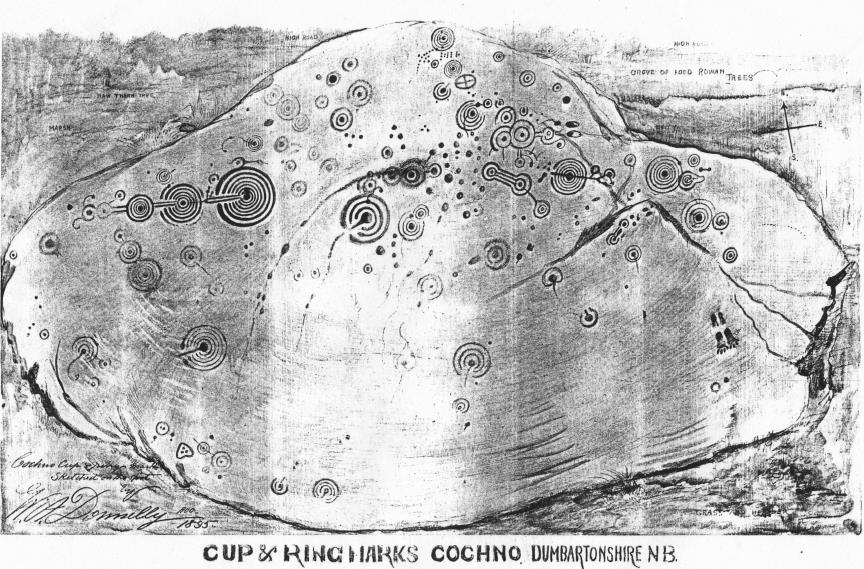
A massive slab of rock in Scotland is covered in over 90 carved circles, and nobody agrees on why.
The Cochno Stone is a flat outcrop near Glasgow decorated with what archaeologists call “cup-and-ring” marks – concentric circles pecked into the stone during the Neolithic or early Bronze Age, roughly 5,000 years ago. Researchers have counted upward of 90 individual carvings on a single surface, making it one of the densest concentrations of this rock art anywhere in Britain. The site was so puzzling that in the 1960s it was actually painted over and later buried under soil to protect it from vandalism and weather, which only deepened its mystery.
Fast Facts
- Location: a flat rock outcrop near Glasgow, Scotland
- Carvings: more than 90 cup-and-ring marks pecked into the surface
- Estimated age: Neolithic to early Bronze Age, roughly 5,000 years old
- Protective history: painted over and buried under soil in the 1960s
- Leading theories: star maps, territorial markers, fertility symbols, ritual gathering points
Theories about the markings range from star maps and territorial boundaries to fertility symbols and ritual meeting points. Some researchers argue the rings once held pigment or offerings; others think they were purely symbolic, marking sacred ground with no practical function at all. Without written Neolithic records, any interpretation is essentially educated guesswork carved into stone.
#13 – The Diquís Stone Spheres of Costa Rica

Hundreds of nearly perfect stone spheres sit scattered across southern Costa Rica, and archaeologists still can’t fully explain who made them or exactly why.
Some of these granodiorite balls weigh several tons and measure over six feet across, yet they’re shaped with a precision that seems almost mechanical for a pre-industrial society. Carved sometime between 300 BCE and 1500 CE by peoples of the Diquís culture, the spheres were likely quarried far from where they were eventually placed, meaning someone moved multi-ton stones across difficult terrain without wheels or draft animals. That transportation puzzle alone has generated more debate than the spheres’ actual meaning.
Most archaeologists now believe the spheres marked status or lined ceremonial pathways leading to elite residences, based on excavation patterns showing they were often arranged in rows or geometric formations. But no inscriptions survive to confirm this, and looting throughout the 20th century destroyed much of the original context that could have settled the question. The spheres are now a UNESCO World Heritage site, protected but still only partially understood.
#12 – The Saqqara Bird’s Impossible Wings
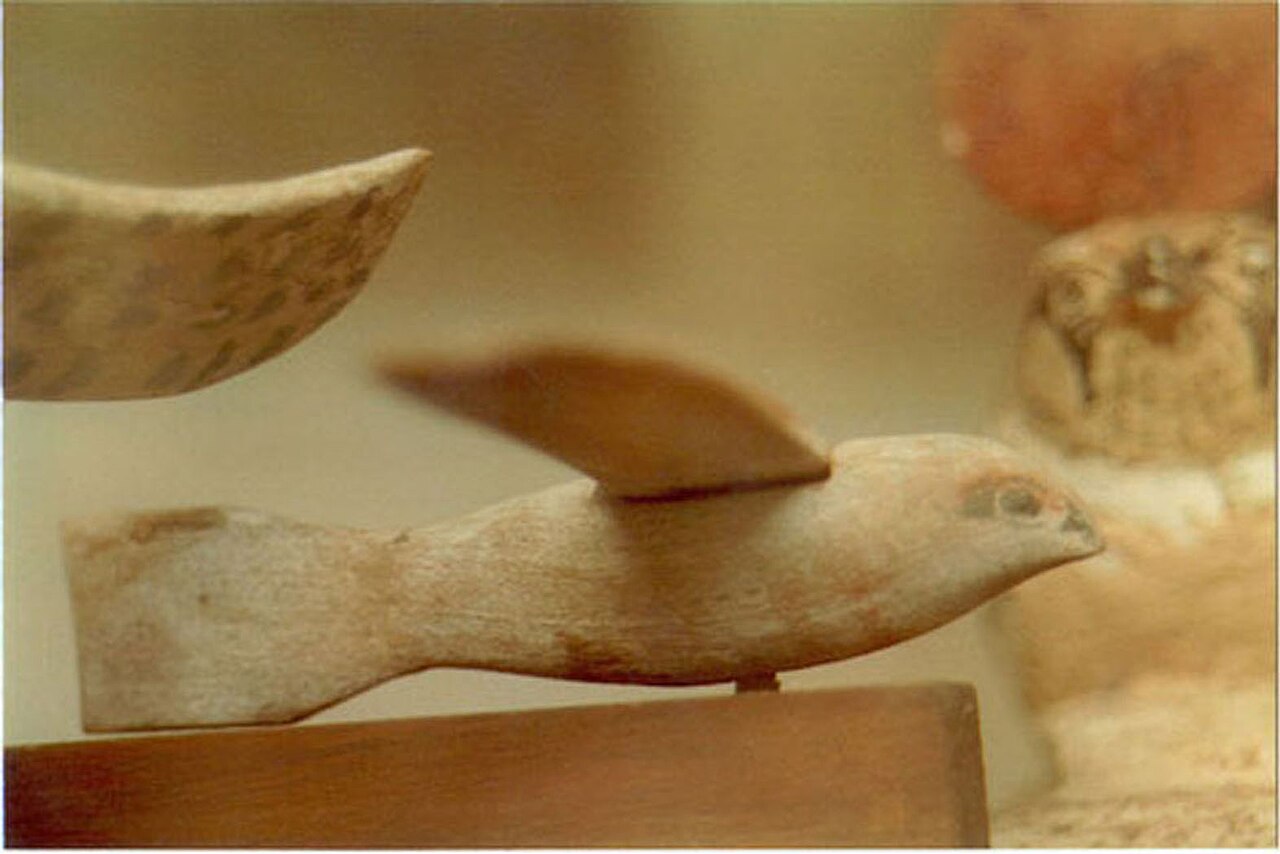
A small wooden carving from an Egyptian tomb has divided Egyptologists for over a century, and some still won’t rule out the wildest theory.
Discovered in 1898 in the tomb of Pa-di-Imen near Saqqara, the object is a compact wooden figure with wings but, oddly, no legs and a tail shaped more like a rudder than a bird’s feathers. Mainstream Egyptologists classify it as a votive object, possibly a stylized falcon representing the god Horus, or even a decorative weathervane-style piece placed among burial goods. That would make it fairly ordinary – except for one detail that keeps the debate alive.
Some aviation enthusiasts insist the proportions mimic a modern glider more than any bird species on Earth, sparking decades-long claims that ancient Egyptians understood aerodynamic principles far earlier than history credits them. Most archaeologists reject this outright, pointing out there’s zero evidence of powered or unpowered flight technology anywhere else in Egyptian culture. Still, the museum housing it has never issued a single definitive statement settling what the carving actually represents.
#11 – Japan’s Goggle-Eyed Dogū Figurines
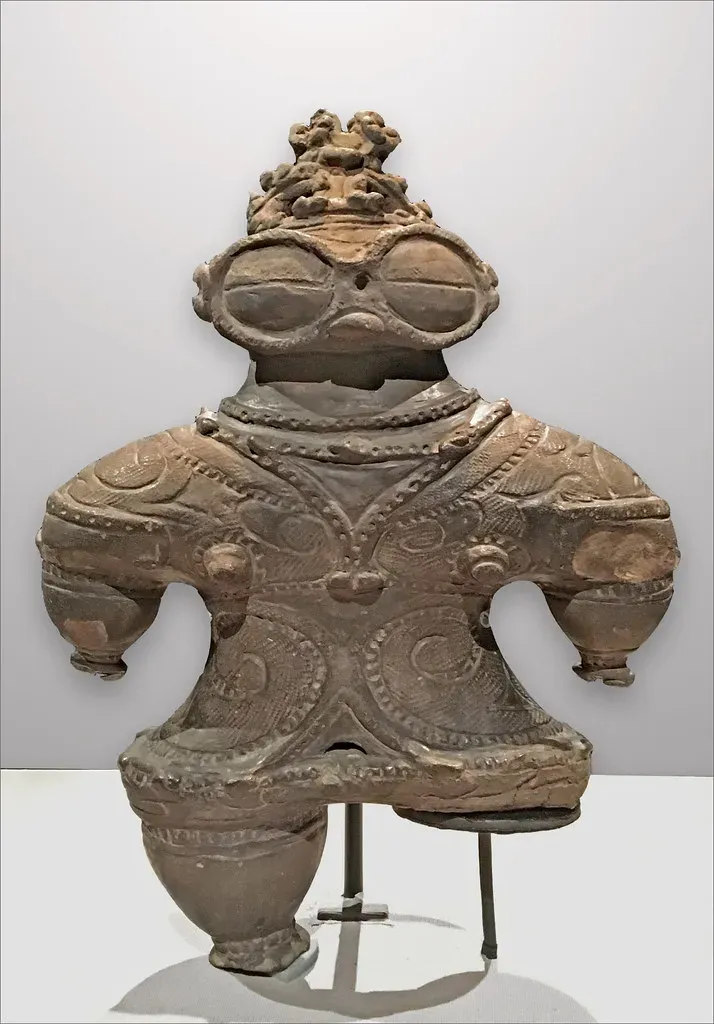
Thousands of small clay figures with enormous, exaggerated eyes have been unearthed across Japan, and their exact purpose remains a genuine puzzle.
Made by the Jōmon people – a hunter-gatherer culture that thrived in Japan for thousands of years before rice farming arrived – dogū figurines often feature bulging “goggle” eyes, wide hips, and elaborate patterned bodies. Many were deliberately broken before being buried, which is one of the strangest and most consistent patterns archaeologists have documented. Deliberate breakage suggests ritual destruction rather than accidental damage, but nobody can say for certain what ritual that was.
Leading theories suggest the figures represented fertility symbols, spirit vessels used to absorb illness or misfortune before being smashed and discarded, or ancestor effigies tied to specific ceremonies. Because the Jōmon left no written language behind, every interpretation relies entirely on archaeological pattern-matching rather than direct evidence. Museums displaying dogū figurines almost always hedge their placards with words like “possibly” and “likely,” because certainty simply isn’t available.
#10 – China’s Mysterious Longyou Caves
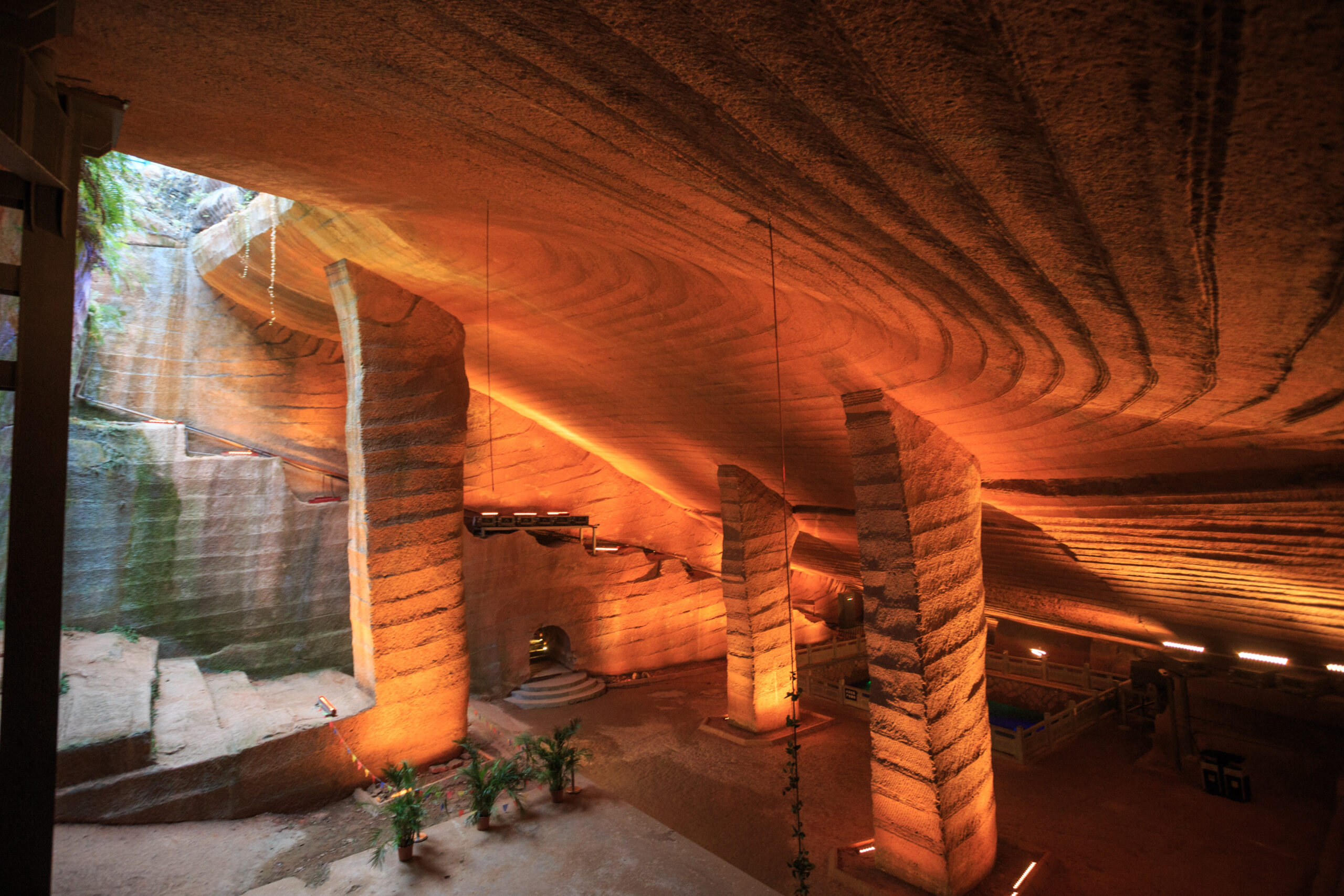
An enormous network of hand-carved caves in eastern China sat completely unknown to modern scholars until local villagers pumped the water out in 1992.
The Longyou Caves consist of two dozen massive underground chambers carved directly out of solid siltstone, some large enough to hold hundreds of people, with walls and ceilings covered in precise, evenly spaced chisel marks. What makes the site genuinely baffling is that there is no historical record – no inscription, no regional legend, no dynasty chronicle – that mentions their construction, despite the staggering amount of labor required to hollow them out. Estimates suggest excavating even one chamber would have taken years of continuous work by a large crew, yet nobody can identify who ordered it or why.
At a Glance
- Location: eastern China, hidden underground for centuries
- Rediscovery: local villagers pumped out floodwater in 1992, exposing the chambers
- Scale: roughly two dozen carved chambers, some large enough to hold hundreds of people
- Missing evidence: no artifacts, tool fragments, or burial remains found inside
- Leading guesses: ancient quarry, military hideout, or royal tomb – none confirmed
Local officials have proposed everything from ancient quarries to military hideouts to royal tombs, but excavated chambers contain no artifacts, no burial remains, and no tool fragments left behind to help date them precisely. The uniformity of the chisel marks has even led some engineers to argue the technique doesn’t match any documented ancient Chinese carving method. Until someone finds a written reference or matching site elsewhere, the caves remain officially unexplained.
#9 – The Gundestrup Cauldron’s Identity Crisis
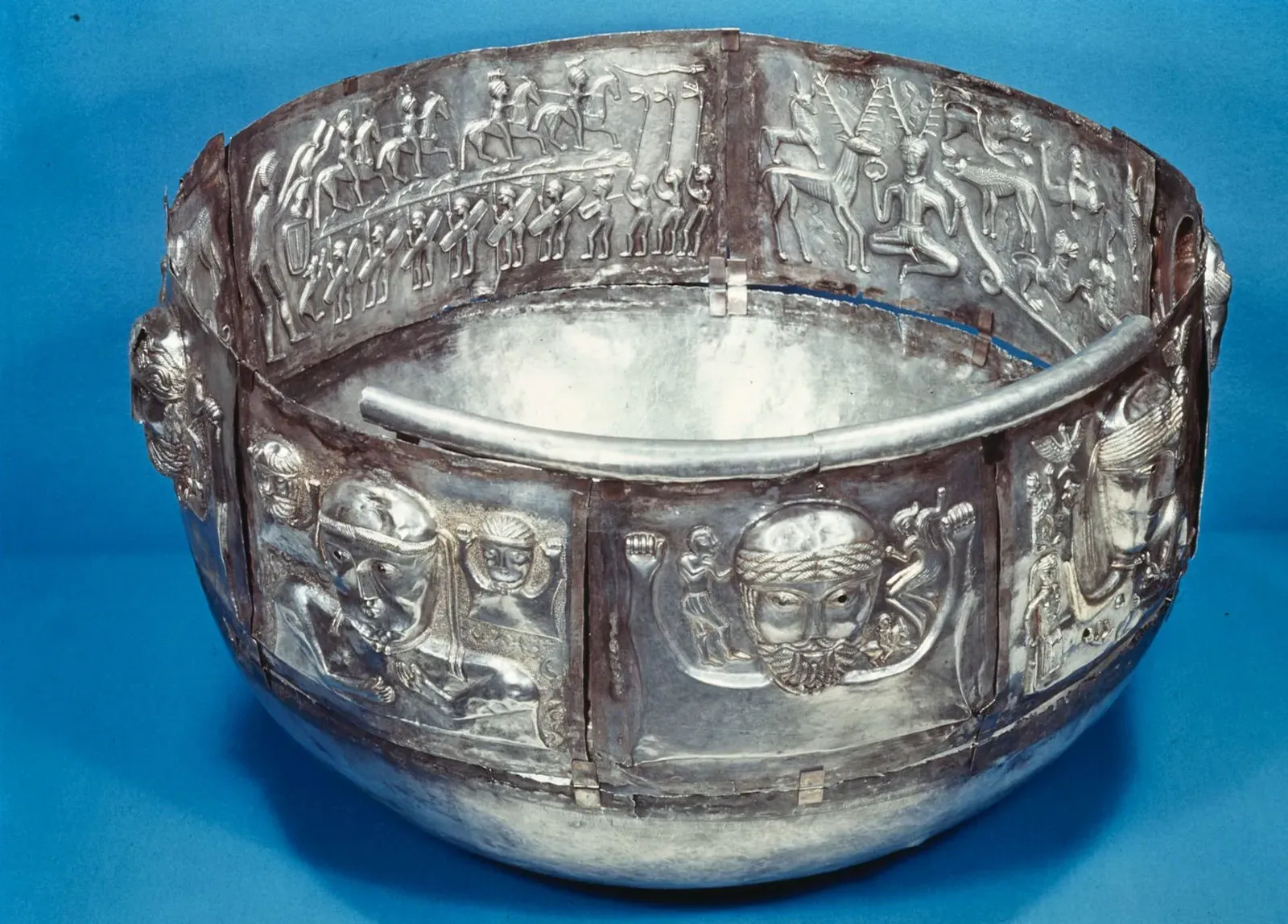
A silver vessel pulled from a Danish peat bog in 1891 is so stylistically confused that experts still argue about which ancient culture even made it.
The Gundestrup Cauldron is decorated with intricate panels showing gods, warriors, and mythical animals, and it was clearly built for ceremonial rather than everyday use given its weight and craftsmanship. The problem is that its imagery doesn’t cleanly match any single known culture: some panels echo Celtic mythology, while others resemble Thracian religious art from the Balkans, thousands of miles away. That contradiction has fueled a decades-long tug-of-war among historians over its true origin.
One leading theory suggests Thracian silversmiths crafted the cauldron using imagery borrowed from Celtic tribes, possibly as a commissioned piece or diplomatic gift that eventually made its way north to Denmark, where it was deliberately dismantled and buried. Others argue it was created locally by artisans influenced by trade contact with southeastern Europe. Without a signature, inscription, or matching workshop ever identified, the debate over who actually built it remains unresolved more than a century after its discovery.
#8 – Egypt’s Puzzling Disc of Sabu
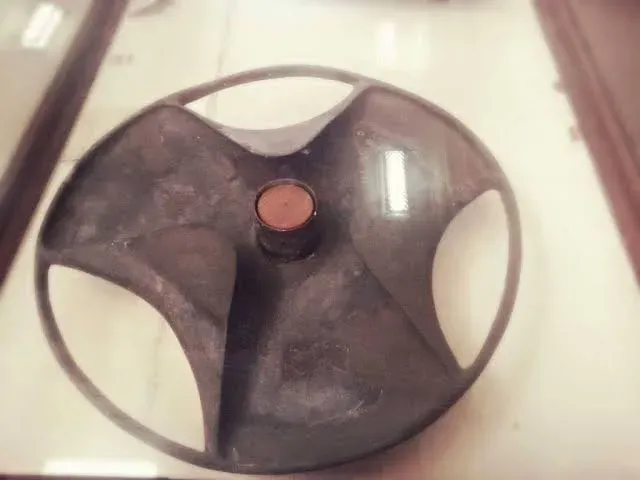
A thin, three-lobed stone disc found in an Egyptian tomb over a century ago still doesn’t have an agreed-upon function, and some of the guesses sound more like science fiction than archaeology.
Discovered in 1936 in the tomb of a nobleman named Sabu near Saqqara, this schist disc dates to roughly 2900 BCE – making it one of the oldest unexplained objects on any museum shelf. Its shape is unusual: three curved lobes extend from a central raised section, and the whole piece is remarkably thin and delicately worked for stone from that era. Nothing else resembling it has ever turned up at another Egyptian site, leaving archaeologists with a single, isolated data point to work from.
Conventional theories suggest it functioned as a ceremonial vessel, a stand for another object, or possibly a specialized tool related to grinding or mixing substances during religious rites. Fringe theories have gone further, suggesting it resembles a mechanical part or even a gyroscope-like device, though mainstream Egyptologists dismiss this due to the complete absence of supporting technology from the period. The disc remains locked in the Egyptian Museum in Cairo with no updated consensus in nearly 90 years.
#7 – Sanxingdui’s Alien-Looking Bronze Masks
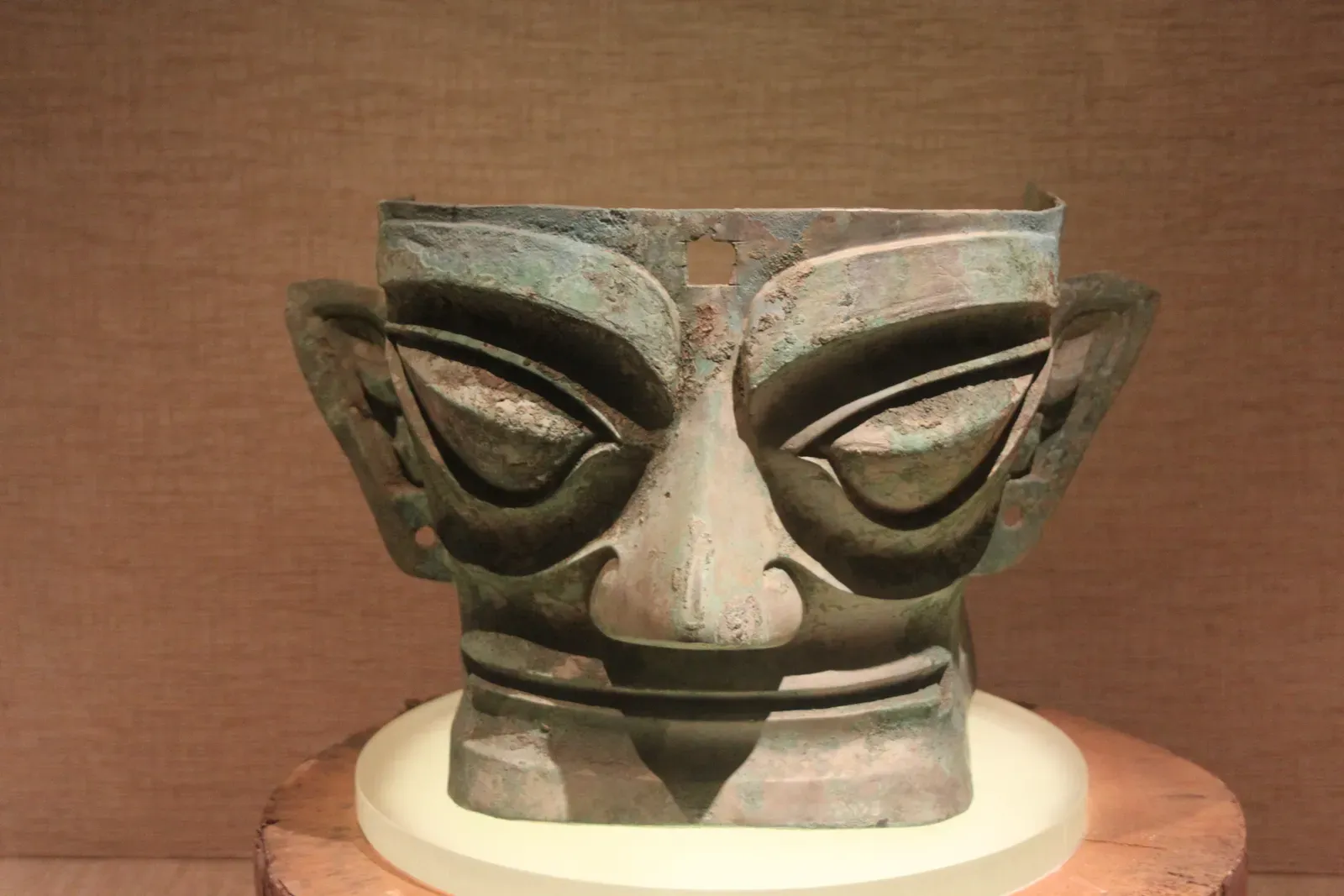
A farmer accidentally uncovered a lost Bronze Age civilization in China in 1929, and the bronze faces it left behind still don’t fit anywhere in the historical record.
The Sanxingdui site in Sichuan Province has produced staggering finds since major excavations began in 1986, including giant bronze masks with bulging, cylindrical eyes and ears the size of dinner plates. One of the largest masks measures over four feet wide, making it the largest bronze mask ever recovered anywhere in the world, and none of it resembles other Bronze Age Chinese artistic traditions.
The artifacts belong to a previously unknown Bronze Age civilization, and there are no texts or historical records at the site – or at any neighboring location – that mention it. Archaeologists believe the objects were deliberately shattered, burned, and buried in ritual pits, though why an entire civilization would destroy its most valuable religious treasures remains genuinely unclear. Even the reason the Shu kingdom vanished is still debated, with some researchers pointing to earthquakes or landslides as the likely culprit.
#6 – Russia’s Ancient Shigir Idol
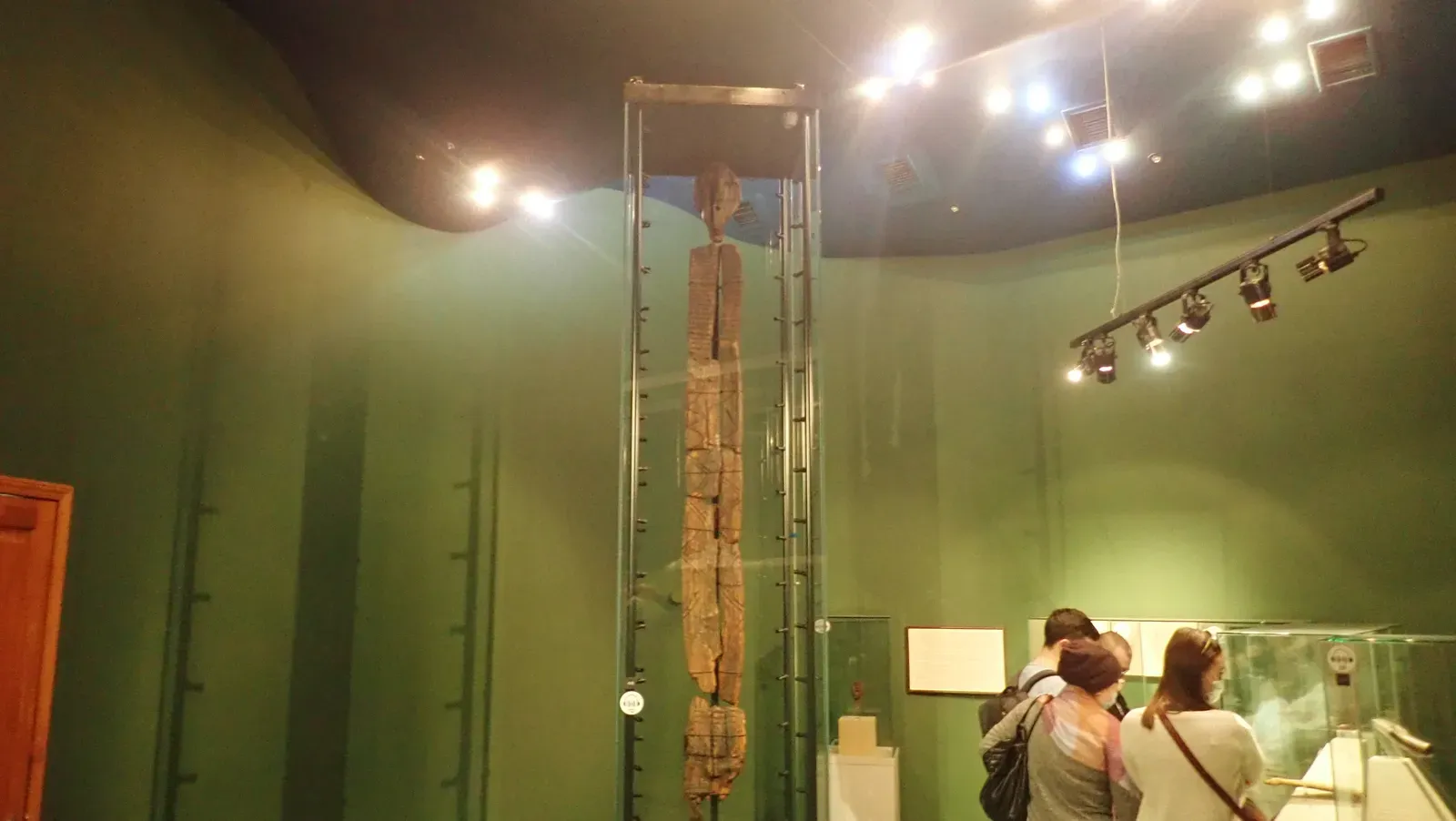
Deep in a Ural Mountains peat bog sits the oldest known wooden sculpture on Earth, and the symbols carved into it have never been translated.
The Shigir Idol is a tall wooden figure covered from top to bottom in carved geometric patterns, zigzags, and faces, unearthed by gold miners in the 19th century and later dated using advanced techniques to a period far older than researchers initially assumed. Peat bogs preserve organic material exceptionally well due to their low-oxygen environment, which is the only reason this fragile wooden artifact survived long enough to be studied at all. Its age alone puts it thousands of years before Stonehenge or the Egyptian pyramids, making it a genuine outlier in the archaeological timeline.
The carved patterns are organized in distinct horizontal bands running up the figure’s body, leading some researchers to suggest they encode information – possibly a creation myth, a map of the cosmos, or instructions passed between hunter-gatherer generations. Others argue the carvings are purely decorative and tied to shamanic ritual rather than any kind of “readable” system. Without a related artifact to compare it against, the Shigir Idol’s carvings remain a closed book.
#5 – Colombia’s Golden “Airplanes”
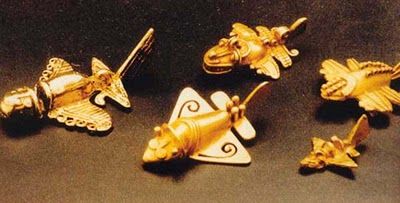
A set of tiny gold pendants from Colombia has sparked one of archaeology’s most persistent arguments, and even trained scientists have landed on wildly different conclusions.
The Quimbaya people, known for their exquisite gold craftsmanship and symbolic designs, produced artifacts that continue to fascinate scholars over five centuries later, most of which are ritual pieces, adornments, and ceremonial treasures. But a small subset of these pendants look strikingly different. Known popularly as the “Quimbaya airplanes,” they appear to exhibit features such as wings, stabilizers, vertical tails, and streamlined bodies – shapes that seem less avian and more engineered.
According to the mainstream view, these objects are zoomorphic pendants or pins, representing birds, fish, insects, or other animals common in their culture, created for burial or decorative purposes. Yet replica models of the pendants scaled up and tested in wind tunnels have reportedly demonstrated genuine aerodynamic properties, which is exactly the detail that keeps this debate alive decades after it started. Skeptics counter that these are zoomorphic representations of insects and catfish with sucker mouths, and the wings would be in an incorrect position from an engineering point of view. No museum has definitively closed the case either way.
#4 – The Baghdad Battery’s Shocking Secret
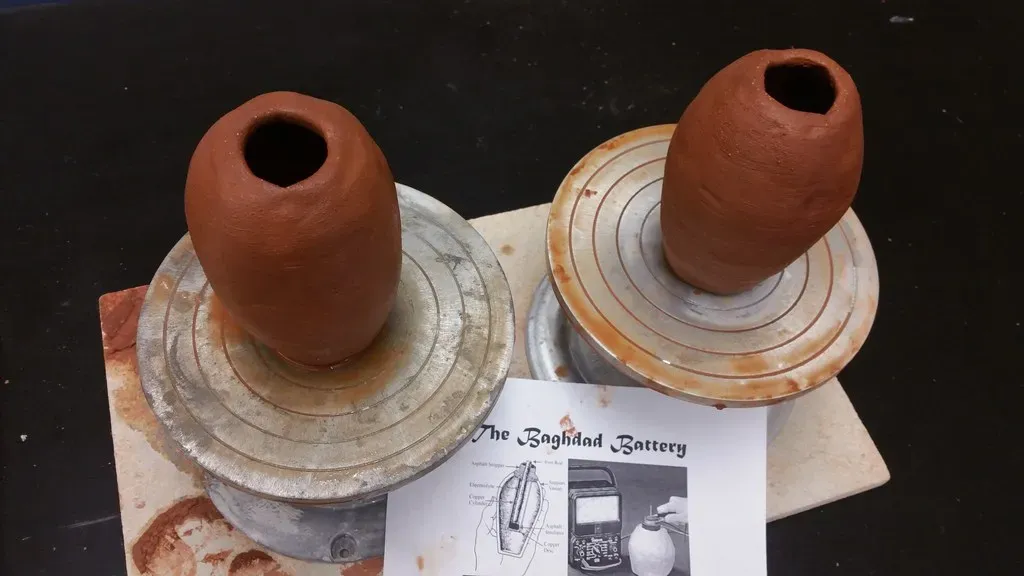
A clay jar pulled from Iraqi ruins in 1936 looks disturbingly like a modern battery, and mainstream science still hasn’t agreed on whether that’s a coincidence or a revelation.
The artifacts commonly referred to as the Baghdad Battery consisted of several unglazed ceramic vessels containing a copper cylinder sealed with bitumen and an iron rod inside, which led the director of the Iraq National Museum to suggest these pieces might have functioned as galvanic cells. When researchers built working replicas using an acidic liquid like vinegar or lemon juice, the assembly generated approximately 0.5 to 2 volts of electric potential – comparable to a modern lemon battery. That means a 2,000-year-old clay pot can technically produce usable electricity, a detail that has made this one of archaeology’s most argued-over artifacts.
The catch is that generating voltage in a lab doesn’t prove ancient use. The electroplating theory is particularly disputed due to the lack of definitive archaeological evidence supporting the existence of electroplating knowledge during the Baghdad Battery’s era. There is no electroplated object known from this period, and the claims are widely rejected by archaeologists, who lean toward far more mundane explanations like scroll storage or ritual containers. The original jar disappeared entirely after looting during the 2003 Iraq War, meaning it can never be re-examined with modern tools.
#3 – The Phaistos Disc’s Unbreakable Code
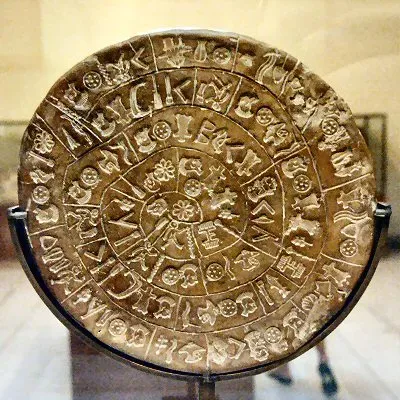
A small clay disc found on Crete in 1908 contains the only known example of its writing system anywhere on Earth, and that fact alone may make it permanently unsolvable.
Discovered in the Minoan palace of Phaistos on Crete, this small clay disc carries a mysterious spiral of stamped symbols unlike anything else found in the ancient world, dating to around 1700 BCE, yet its purpose and meaning remain unknown. What makes the disc especially fascinating is its unique set of 45 distinct signs, pressed into soft clay with stamps, suggesting a form of prehistoric printing – arguably the world’s earliest known typesetting, centuries before Gutenberg. No other object anywhere has ever shown the same script, which is precisely why every decoding attempt has failed to gain lasting acceptance.
The Phaistos Disc offers one document, in an unknown language, with no parallel text – which is, in cryptographic terms, nearly impossible to solve under those conditions. A widely publicized 2014 claim that researchers had translated over 90% of the symbols as a prayer to a mother goddess drew heavy criticism, since critics noted the proposed readings relied on assumptions about the underlying language that cannot be independently verified from the disc alone. Unless archaeologists discover a matching inscription elsewhere, the disc’s message may stay locked forever.
#2 – The Roman Dodecahedra Nobody Can Explain
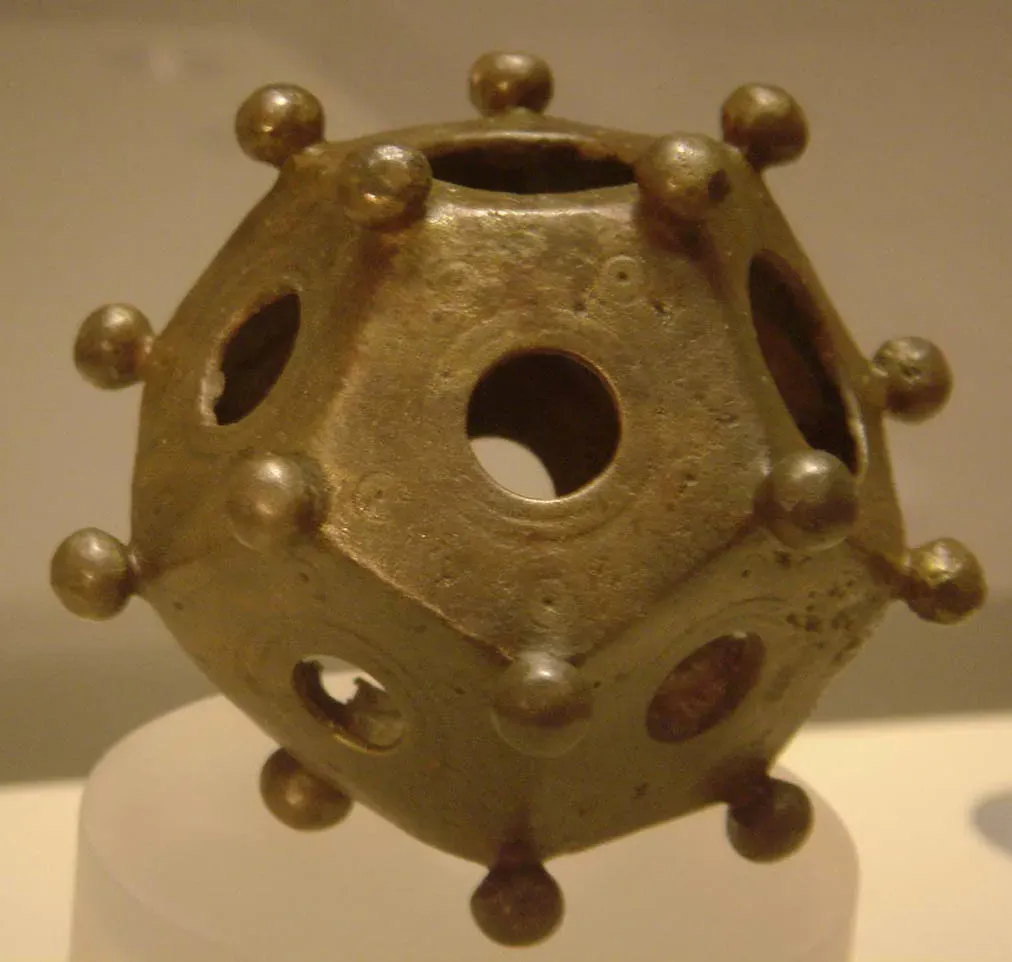
Over a hundred bronze objects scattered across the old Roman Empire share an identical, elaborate design, and nearly 300 years of study still hasn’t produced a single confirmed answer.
Roman dodecahedrons have baffled archaeologists since 1739, when the first example of the 12-sided bronze object was discovered in the English Midlands, and at least 120 examples have since been discovered across the northwestern provinces of the Roman Empire. Each one shares a similar hollow structure: twelve pentagonal faces, twenty knobbed corners, and holes of varying sizes cut into every side. Not a single Roman text, painting, or mosaic ever once mentions them, which is remarkable given how meticulously the Romans documented daily life.
Quick Compare
- Ritual or religious object – fits burial-site discoveries, but no supporting texts exist
- Surveying or range-finding tool – geometrically plausible, but no calibration markings have ever been found
- Glove-knitting gauge – hole sizes roughly match finger widths, but no matching fabric fragments survive
- Dice, toy, or game piece – simple explanation, but oddly elaborate craftsmanship for casual play
- Decorative or ceremonial piece – the safest guess, favored by many curators for lack of a better alternative
There are no historical records or depictions of them in ancient art, and archaeologists have recovered dodecahedrons from the graves of men and women, in coin hoards, and even in refuse heaps – meaning a blanket explanation has never held up. Researchers have suggested they may have been used as weapons, decorations, candlestick holders, range finders, measurement devices, children’s toys, dice, craftsman’s samples, or spools for knitting gloves, and none of those theories has ever gained majority acceptance. It’s genuinely rare for archaeology to have this much physical evidence and this little consensus.
#1 – The Antikythera Mechanism’s Final Missing Piece
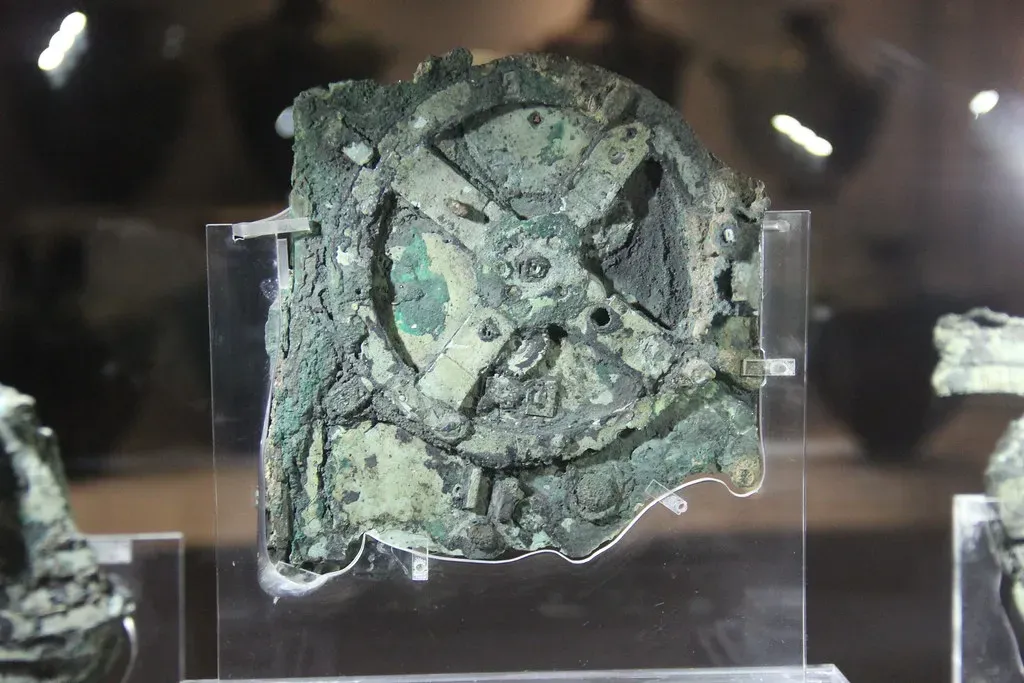
Most people assume this one is solved. It isn’t – not entirely, and that’s exactly why it deserves the top spot.
Pulled from a Greek shipwreck in 1901, the Antikythera Mechanism is widely regarded as the world’s first known analog computer, a bronze device packed with dozens of interlocking gears designed to track astronomical cycles, eclipses, and calendar dates with astonishing precision. Decades of X-ray imaging and painstaking reconstruction have revealed much of how it worked, which is genuinely one of archaeology’s great triumphs. But roughly a third of the mechanism’s original gears were never recovered, and researchers still debate the exact function of at least one dial believed to track planetary positions.
Worth Knowing
- Recovered from a shipwreck near the Greek island of Antikythera in 1901
- Built from dozens of interlocking bronze gears used to track eclipses and calendar cycles
- An estimated one-third of its original gear system was never recovered
- No comparable device from antiquity has ever been found anywhere else
- Experts still debate the exact function of at least one dial, possibly tied to planetary positions
No comparable device from antiquity has ever been found, meaning there’s no second example to compare parts against or confirm competing theories about missing components. Some scholars argue the device represents a unique, one-off masterpiece; others insist it points to a lost tradition of Greek mechanical engineering we simply haven’t found physical evidence for yet. Either way, the “solved” ancient computer still hides real secrets behind its corroded bronze teeth.
The Bottom Line
Here’s the uncomfortable truth: museums love certainty, but archaeology rarely delivers it. From Roman dodecahedra to Chinese bronze masks, the objects on this list share one thing – more physical evidence than explanation. Frankly, the “expert consensus” placards you read in museums are often just the least-contested guess, not proven fact. That should bother more visitors than it does.
Ancient people weren’t primitive; we’re the ones missing the context, language, and records they never needed to leave behind for us. Some of these mysteries will probably fall in our lifetime – a lucky dig, a matching inscription, a new imaging technique nobody’s tried yet. Others, like the Phaistos Disc’s one-of-a-kind script, might just stay locked forever no matter how good our tools get. That’s the real story hiding under the glass: not tidy answers, but honest, stubborn not-knowing.