

Think about this for a second: right now, as you casually read this line, a tiny organ weighing roughly as much as a small grapefruit is burning through a wildly disproportionate chunk of your daily energy budget. Your brain is only about one fiftieth of your body mass, yet it hogs roughly about one fifth of the energy you eat and breathe in. That is an outrageous metabolic price tag for something that, at least on the surface, mostly feels like it is just helping you scroll, worry, and remember where you left your keys.
What makes this even stranger is that scientists still cannot give a fully satisfying, detailed account of what most of that energy cost is actually paying for. We know some of the big picture answers – keeping neurons charged up, resetting them after firing, maintaining the delicate chemistry of brain tissue – but when you zoom in, a lot of the day-to-day energy use remains mysterious. It is like paying an enormous utility bill every month and only being able to explain a fraction of the charges: the lights, the fridge, the Wi‑Fi – and then a giant foggy category labeled “other.”
The Brain’s Energy Paradox: Tiny Organ, Huge Bill

On average, an adult human brain accounts for only about two percent of total body mass, yet it consistently uses roughly about one fifth of the body’s resting energy. That number is surprisingly stable across different cultures, diets, and lifestyles, which suggests it is not just a quirk of modern living. It looks more like a deep design feature of how human brains evolved to work. Even when you are lying on the couch doing “nothing,” your brain is spending energy at a pace that would be shocking for almost any other organ.
To put it in perspective, if your whole body spent energy like your brain does, you would probably have to eat like an elite endurance athlete just to break even. No other organ pulls this kind of metabolic rank. Your muscles can briefly skyrocket their energy use during a sprint, and your digestive system has its own spikes after big meals, but the brain is more like a luxury appliance running on high all day, every day, whether you are solving equations or just daydreaming.
Why Neurons Are So Expensive to Run
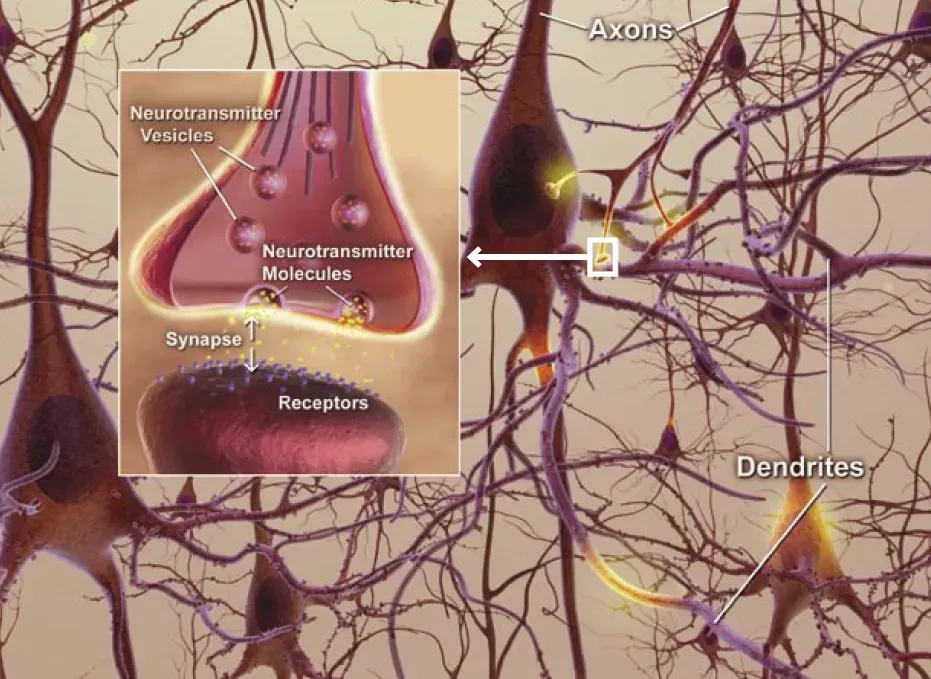
A big part of the cost comes from how neurons communicate. Every time a neuron fires, it rapidly flips the electrical charge across its membrane and then painstakingly restores that balance using molecular pumps that shove ions back where they came from. Those pumps burn through energy in the form of ATP – the cellular equivalent of cash – like a high-speed commuter blowing through fuel on a daily highway drive. Even at rest, neurons are quietly maintaining these gradients, which is like keeping a battery fully charged at all times.
On top of that, neurons are not isolated; they sit in an intricate web of synapses, with each connection requiring its own machinery to release, recycle, and respond to chemical signals. Maintaining synapses, refreshing neurotransmitter supplies, and repairing wear and tear in the membrane and proteins all cost energy. Imagine running a huge, never-fully-off social network of tiny messaging stations and servers; even when no big “event” is happening, just keeping the infrastructure online is expensive.
The Resting Brain Is Not Actually “Resting”
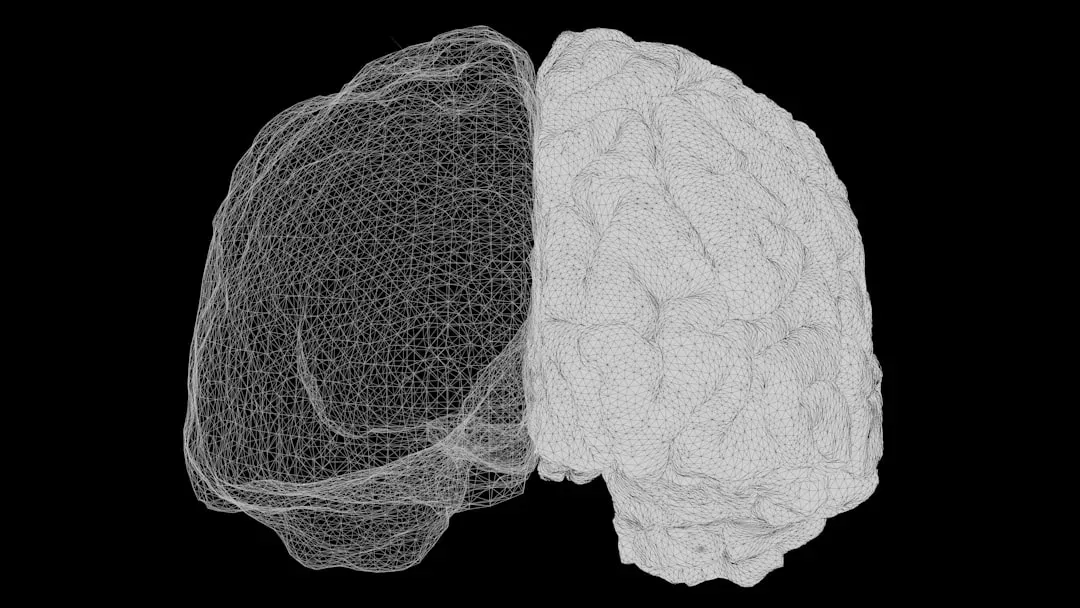
One of the most surprising discoveries in modern neuroscience is that the brain uses almost as much energy when you are not doing anything obvious as when you are deep in thought. Functional brain scans show that the difference in energy use between solving a tough problem and simply staring at a blank screen is actually pretty modest. That suggests that what we think of as “thinking” is just a small tweak layered on top of a huge baseline of ongoing activity that is always there, humming in the background.
This background activity is not random noise. Networks like the so‑called default mode system light up when your mind wanders, when you think about yourself, others, and possible futures. It is as if, in your supposed downtime, your brain is quietly running simulations, updating internal models of the world, and replaying memories. That ongoing modeling may be where a big chunk of the mysterious energy goes – into constant prediction and internal storytelling that you only occasionally notice.
Hidden Costs: Glia, Maintenance, and Housekeeping
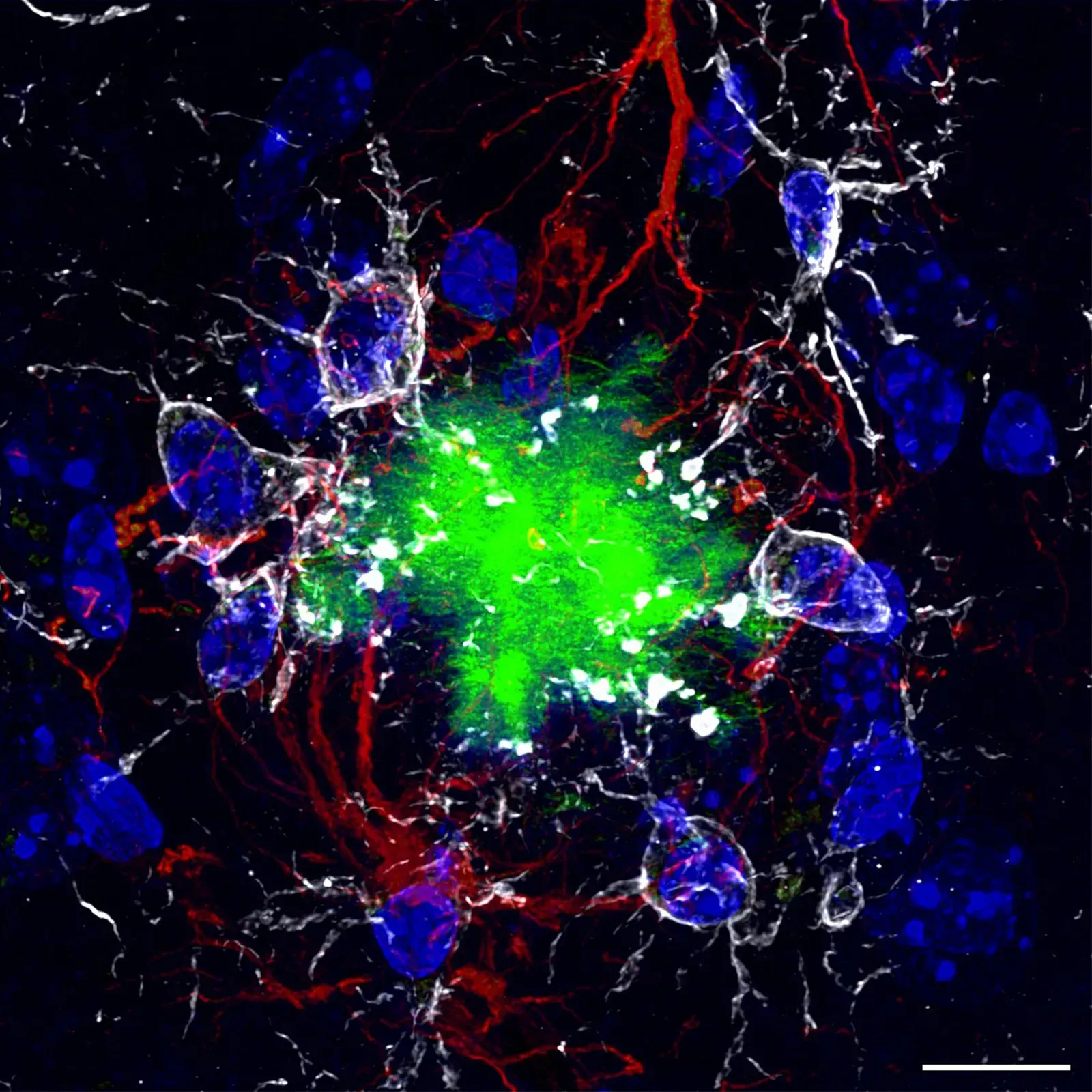
When people picture the brain, they usually imagine neurons, but there is an entire supporting cast of glial cells that are also metabolically active. Astrocytes regulate blood flow, recycle neurotransmitters, and help control the chemical environment between neurons. Microglia act like tiny immune cells, scanning for trouble and cleaning up debris. These cells may not get the spotlight, but they are constantly working behind the scenes, and that work costs energy every second of the day.
Beyond active signaling, there is the mundane but crucial task of cellular maintenance. Proteins need to be synthesized and replaced, damaged components must be tagged and broken down, and the delicate structure of axons and dendrites has to be preserved across decades. It is a bit like the hidden cost of running a big old house: the heating and lights are just the start; there is also ongoing plumbing, patching leaks, repainting, and replacing worn-out parts. In the brain, that invisible upkeep never really stops.
Memory, Learning, and the Price of Plasticity
Another suspect for this massive energy bill is plasticity – the brain’s ability to adapt, learn, and rewire. Changing the strength of a synapse or growing new connections is not free. It involves turning genes on and off, reorganizing receptors, reshaping spines, and sometimes extending or retracting branches of neurons. All of that structural and biochemical work consumes resources. Learning may feel like an abstract mental act, but biologically it is a construction project.
What is striking, though, is that scientists still do not have clear, precise numbers for how much of the total energy budget plasticity accounts for. We know that intense learning and development, especially in childhood, are metabolically demanding, and that the growing brain is an enormous energy sink. But even in adults, where overall brain structure is more stable, there is constant low-level adjustment happening. It is as if your brain is endlessly fine-tuning a massive, living soundboard – and nobody has fully itemized what that constant tuning costs.
The Mystery of “Dark Energy” in the Brain
Neuroscientists sometimes talk about a kind of “dark energy” in the brain – not in the physics sense, but as a metaphor for energy use that is clearly there but not fully explained by known tasks. If you tally up energy for obvious things like signaling, synaptic activity, and maintenance, you still end up with a portion that is hard to tie to specific, well-understood functions. It is like tracking your spending and realizing that a large part of your budget is going to vague, uncategorized transactions that you do not quite remember making.
One possibility is that a lot of this “dark” cost reflects constant, silent computation that does not map neatly onto the tasks we measure in experiments. The brain might be continuously compressing information, predicting incoming sensory input, and subtly adjusting control of the body in ways that do not show up as dramatic, task-evoked bursts on a scan. In other words, the mystery energy could be the price of being an always-on prediction engine, rather than a device that only comes alive when you consciously decide to think.
Evolution’s Gamble: Is This Energy Use Really Worth It?
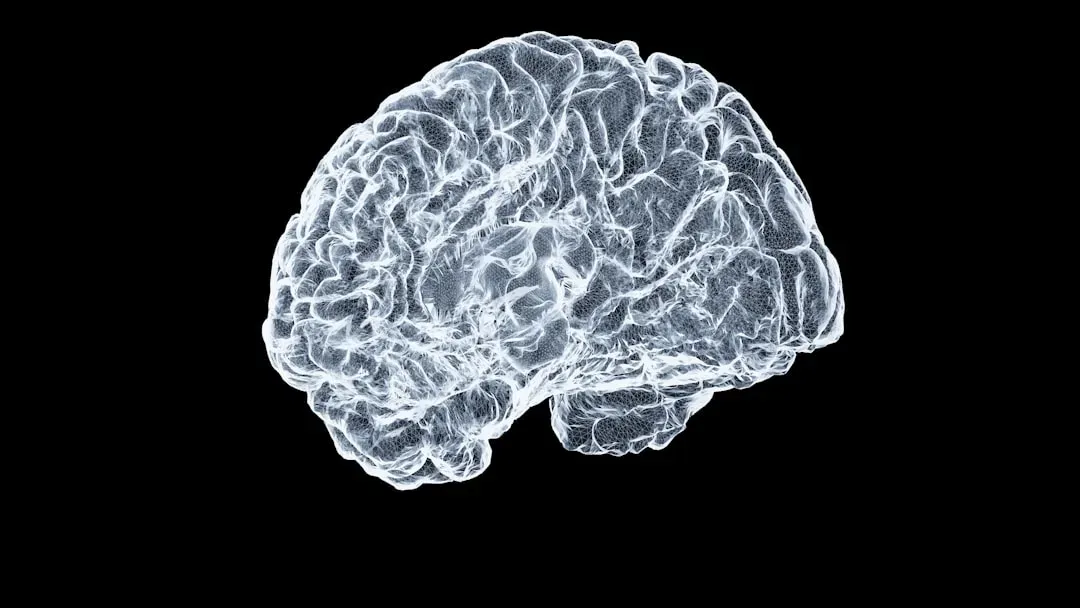
From an evolutionary perspective, this L‑shaped energy curve is a risky bet. A brain that uses such a large share of the body’s fuel leaves less to support muscle, immunity, or surviving periods of famine. For our ancestors, carrying such an expensive organ would only pay off if it delivered serious advantages: better social coordination, more flexible problem‑solving, and the ability to navigate complex environments. The fact that our lineage doubled down on big, hungry brains suggests that the payoff was enormous over long timescales.
Still, it is striking how little we can say, in a detailed, mechanism-by-mechanism way, about how all that energy translated into survival. We can tell broad stories about tools, language, and cooperation, but not a clean accounting diagram that goes from glucose to specific cognitive benefits. In a sense, we are walking around with the evolutionary equivalent of a luxury sports car under the hood, while still arguing about what most of the dashboard buttons actually do and why the fuel consumption is so extreme.
Brains vs. Computers: Why Energy Efficiency Is Misleading

People often compare the brain to a computer and assume that we should be able to trace its energy use in the same tidy way we track processor load or memory usage. But that analogy falls apart quickly. The brain is not a neat set of separate components; signaling, storage, and processing are all mashed together in a tangled living tissue. Neurons and glia interact chemically and electrically, with feedback loops that blur any simple map between a given function and a given watt of power.
Ironically, though, when you compare energy used per useful computation, the brain is almost absurdly efficient. Modern supercomputers can simulate small fragments of brain activity, but they often use far more power to do so than a real brain running at full complexity. That contrast makes the unexplained energy usage even more tantalizing. We are looking at a system that is both incredibly thrifty at the level of individual operations and yet globally extravagant, and we still do not fully understand where the balance between those two realities comes from.
What the Mystery Says About the Limits of Neuroscience
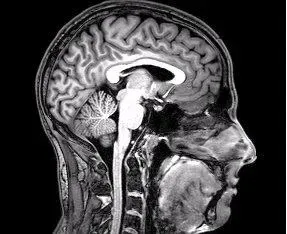
To me, the fact that we cannot neatly explain the brain’s energy budget is not a minor bookkeeping issue; it is a sign that our theories are still missing something big and structural. We have gorgeous images, clever experiments, and endless data, but if we cannot say where most of the energy is going, then we do not really understand what the brain is doing all day. It is a bit like claiming to understand a city’s economy while having no clear picture of where most of the money is actually changing hands.
In my view, this should be humbling but also exciting. The energy question forces neuroscience to confront its blind spots: our tendency to focus on flashy tasks in lab settings, our habit of treating “rest” as a neutral baseline, and our lingering overconfidence in the brain–computer metaphor. The uncomfortable truth is that our brains are burning through a massive amount of fuel for reasons that are still only partly mapped. That mystery is not a small detail to clean up later; it is a loud signal that we are still at the early stages of really grasping what a brain is.
Conclusion: An Overpriced Organ – or an Understood One?

When you strip it down, we are all walking around with an organ that devours a wildly large slice of our energy just to keep doing whatever it is doing in the background. We can account for some of that cost with familiar ideas – ion pumps, synapses, glial support, plasticity – but a big piece remains stubbornly vague. I think that should make us suspicious of any confident story claiming to have “solved” the brain. If we cannot reliably track what most of the energy is buying, then we are probably still missing large pieces of the puzzle about what the brain is really up to.
My own opinion is that the mystery energy is the price of being a creature that is constantly predicting, imagining, and re‑editing reality, even when we feel idle. That constant inner simulation may be why we are capable of art, science, anxiety, and late‑night overthinking – and also why our brains run hot even on a quiet day. Instead of seeing this as a flaw, I see it as a reminder that our inner lives are deeper and stranger than any tidy theory we currently have. The next time you feel mentally tired for “no reason,” maybe the real question is not why your brain is using so much energy, but what quiet work it is doing that you cannot yet see. Would you have guessed that so much of your daily fuel is being spent on thoughts you do not even know you are having?