
You know that strange feeling when something suddenly “clicks” in your mind? One moment you are staring at a word you can’t quite read or a shape you can’t quite place, and the next moment it pops into awareness as if a light just turned on. For decades, scientists have tried to capture that exact switch from not-knowing to knowing, from unconscious processing to fully conscious experience. Now, researchers are closing in on a specific neural signature that seems to mark that crossing point, and it all unfolds in less than a second. You are living through a time when consciousness science is moving from philosophy into measurable, testable biology. Instead of only asking what consciousness feels like from the inside, scientists are now tracking what it looks like from the outside, on brain scans and electrode recordings. As you’ll see, the story is still evolving and far from complete, but there is enough solid evidence to make one thing clear: your brain does something distinct and dramatic right at the moment the lights of awareness come on.
The Shocking Speed of Your Conscious Mind
If you blink, you miss it. The shift from unconscious to conscious perception often happens in a few hundred milliseconds, shorter than the time it takes you to snap your fingers. When you see a briefly flashed image, hear a faint sound, or suddenly “get” a joke, your brain races through layers of processing before you’re even aware anything happened, and only near the end of that chain do you actually feel the experience. You might assume consciousness is slow and reflective, something that only arrives after careful thought, but your brain is constantly deciding which bits of incoming information get promoted into awareness at incredible speed. Most of what hits your eyes, ears, and skin never makes it into conscious experience at all. You notice only the tiny fraction that crosses a threshold, and this new research is about what your brain does exactly at that threshold crossing.
From Hidden Processing to the “Aha” Moment

Think about the last time you saw an image that suddenly “flipped” in your mind: maybe you were staring at a blurry object and then, suddenly, your brain recognized it as a face. Before that flash of recognition, your brain was already analyzing edges, colors, and motion completely outside your awareness. You were processing the information, but you didn’t yet know that you were processing it. The big question scientists have chased is: what changes when you move from this hidden, unconscious processing to the explicit “I see it” or “I know it” moment? You can think of your brain like a busy backstage crew that sometimes decides to raise the curtain. Lots of work is happening behind the scenes, but only when enough of it lines up in the right way does the show go on in your conscious theater. The new neural signature appears to be the brain’s “curtain rising” event.
How Scientists Catch the Brain in the Act
To capture this fleeting transition, scientists use clever experiments that let your brain see things without “you” seeing them, and then compare those to moments when you do become aware. You might be shown an image for such a brief time, or masked so heavily, that you later say you saw nothing, even though your brain still responded to it. In other trials, the very same kind of image, presented just a little more clearly or for a fraction of a second longer, suddenly becomes visible to you. While you are doing this, researchers record your brain activity using tools like electroencephalography (EEG), magnetoencephalography (MEG), or functional MRI. These measurements do not read your thoughts, but they show patterns of electrical and blood-flow changes as your brain processes information. When they line up all those trials side by side and compare the “I saw it” moments to the “I saw nothing” moments, distinct differences emerge. That is where this neural signature of consciousness starts to stand out.
The Neural Signature: A Burst That Echoes Through the Brain
Again and again, studies have found that when you become consciously aware of a visual image, your brain generates a widespread burst of activity that travels across distant regions, not just in the early visual areas at the back of your head. This is different from the earlier, more local responses that happen even when you remain unaware. Those early signals show that your brain registered the stimulus, but they do not guarantee that you will consciously perceive it. The suspected “signature” is a later, coordinated wave that seems to reflect information becoming globally available to multiple brain systems at once. You can imagine a quiet conversation suddenly being broadcast over the loudspeakers of a stadium. Before that broadcast, only a small group is “in the know.” After it, everyone can act on the same information, and that shared availability is what many researchers think consciousness is built on. The neural signature looks a lot like that stadium-wide broadcast.
Timing Is Everything: Why It Happens in Under a Second
When you look closely at the timing, your brain’s first reaction to a stimulus usually kicks in within the first tenth of a second. This early stage involves sensory processing that can happen without any conscious experience at all. Even if you swear you never saw the image, your brain still shows a quick, local response that proves the information entered the system and triggered some processing. The candidate neural signature for conscious perception shows up later, often a few hundred milliseconds after the stimulus, yet still well under one second. This delay makes sense if you think of your brain needing time to evaluate, amplify, and share the information widely enough to reach awareness. You can feel impatient when your phone takes a second to load a page, but your brain, doing far more complex work, typically needs only a fraction of that time to decide whether a stimulus is important enough to cross the threshold into your conscious field.
What This Means for Free Will, Attention, and “You”
Discovering a concrete neural signature for consciousness can feel unsettling, because it forces you to confront the idea that your sense of “I” may emerge from coordinated brain activity rather than sit above it. If your brain starts processing events before you are aware of them, and only later crosses a threshold into consciousness, you have to ask what that means for free will and decision-making. Are you choosing, or are you becoming aware of choices already brewing underneath? At the same time, this view can be oddly empowering. You can think of consciousness as your brain’s way of integrating and broadcasting the most relevant information for flexible, deliberate behavior. Your attention, your values, and your habits all influence what gets pushed over that threshold. You are not just a passive observer; you are constantly training the system that decides what enters the spotlight of your awareness and what stays in the dark.
Why a Single Signature May Never Tell the Whole Story
It is tempting to imagine one perfect neural marker that always and only appears when you are conscious of something, like a neat on–off switch in the brain. Reality seems more complicated. Different kinds of experiences – seeing a picture, feeling pain, recalling a memory – may rely on overlapping but slightly different patterns of brain activity. What researchers call a “neural signature” is probably more like a family of related patterns than a single, rigid code. Because of this, you should treat bold claims about a definitive fingerprint of consciousness with caution. The most solid evidence so far points to global coordination, long-distance communication, and a late burst of integrated activity as key features. That still leaves open many questions, especially about how content, emotion, and self-awareness fit in. The science is progressing fast, but it is not finished, and staying skeptical of overly simple answers will keep you closer to the truth.
How This Research Could Shape Medicine and Technology
You might wonder why any of this matters beyond intellectual curiosity. In medicine, being able to detect a reliable neural signature of consciousness could transform how doctors assess patients who are minimally responsive or locked-in, such as those in coma-like states. If you can tell whether someone has even a flicker of awareness, you can change how you treat them, communicate with them, and make decisions about their care. In technology and artificial intelligence, understanding the neural signature of conscious access helps you think more clearly about what it would mean for a system to be truly aware. You may see algorithms that can mimic certain aspects of this global broadcasting, but that does not automatically mean they have subjective experience the way you do. The more you understand about how human brains generate conscious states, the more careful and grounded your conversations about conscious machines can become.
The Ongoing Mystery You Carry in Your Head
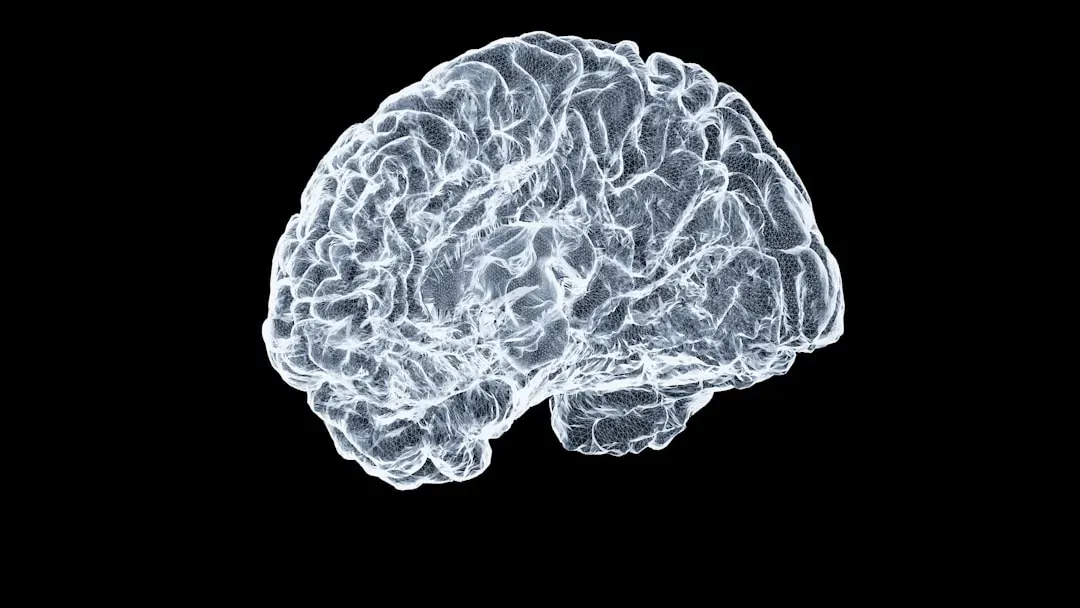
When you step back, there is something quietly astonishing about knowing that the flash of awareness you feel – the instant a song lyric makes sense or a hidden image reveals itself – corresponds to a measurable pattern of activity racing through your brain in under a second. You are not just drifting through experiences; your nervous system is constantly deciding, at lightning speed, what to allow into your inner world. This neural signature is like a trace of that decision in action. Yet even as science pins down these signatures, the mystery of what consciousness feels like from the inside remains. No brain scan can fully capture the warmth of a memory, the sting of embarrassment, or the relief of understanding something at last. You sit at the crossroads of biology and experience, where millisecond-level bursts of neural activity turn into the story of your life. Knowing that, you might ask yourself: the next time something suddenly “clicks” in your mind, will you think differently about what just fired in your brain?