
If you have ever stared at the ceiling at night and thought, “Why is there something it feels like to be me?”, you have accidentally wandered into one of the deepest puzzles in existence. You are not just asking how your brain works; you are asking why any of this inner experience shows up at all, why there is a world of color, pain, music, and memory unfolding inside your head instead of just silent computation.
This is what people now call the hard problem of consciousness, and it has resisted centuries of attacks from the sharpest minds in both philosophy and science. The more you learn about it, the weirder it gets. The leading theories do not make consciousness simpler or tamer; they make your everyday sense of self start to look like a carefully staged magic trick.
You Live Inside a Mystery: What Makes the “Hard Problem” Hard
When you touch a hot stove, you can trace the physical story pretty easily: nerves fire, signals race into your spinal cord and brain, muscles jerk your hand away. You can picture the whole chain like a detailed engineering diagram. But then there is a completely different kind of fact: it hurts. There is a raw, burning, awful feeling that seems to belong to a private inner world only you can access.
The hard problem is the gap between those two stories. You can, in principle, explain every neuron, every spike of electricity, every chemical exchange, and still not see why any of that should give rise to the taste of chocolate, the color red, or the ache of grief. You are not just asking, “How does the brain process information?” You are asking, “Why does information processing light up from the inside instead of staying dark?”
Why Brains Are Not Enough: Easy Problems vs. the Impossible-Sounding One
You might think neuroscience is about to sweep this all away, but the more you look, the more you realize that many “big” brain questions are actually the easy ones. You can, at least in principle, figure out how you focus attention, how your eyes and brain team up to recognize faces, how you store memories, and how you decide to move your hand. These are still brutally difficult in practice, but they are the kind of thing you can imagine solving by collecting enough data and building better models.
Consciousness looks different. You can map every region that lights up when you see a face or hear a melody and still be left with the same nagging question: why is there an inner movie at all? You could build a robot that mimics every outward behavior you show, answering questions, laughing, flinching, and insisting it feels things, yet you would still wonder whether there is something it is like to be that robot. The hard problem keeps pulling you back to this gap between what brains do and what it feels like from the inside.
You as a Data Storm: The Brain as an Information Engine
One influential idea tells you to stop obsessing over the “inner glow” and look at the structure of information in your brain. At any moment, billions of neurons are firing in patterns that integrate sights, sounds, memories, and expectations into a single, unified state. Some researchers argue that this integrated information is not just correlated with consciousness; it actually is what your conscious state consists of at that moment.
On this view, you are not a ghost in a machine, you are what happens when a physical system organizes information in a very specific, tightly connected way. When that structure is rich enough and deeply unified, you get the familiar, seamless sense of being you, here, now. The strange twist is that by this logic, other systems that integrate information in similar ways could also be conscious, even if they look nothing like a human brain. Suddenly, consciousness starts to seem less like a human specialty and more like a surprising pattern that could, at least in principle, show up in other places.
The World as a Hallucination You Agree On
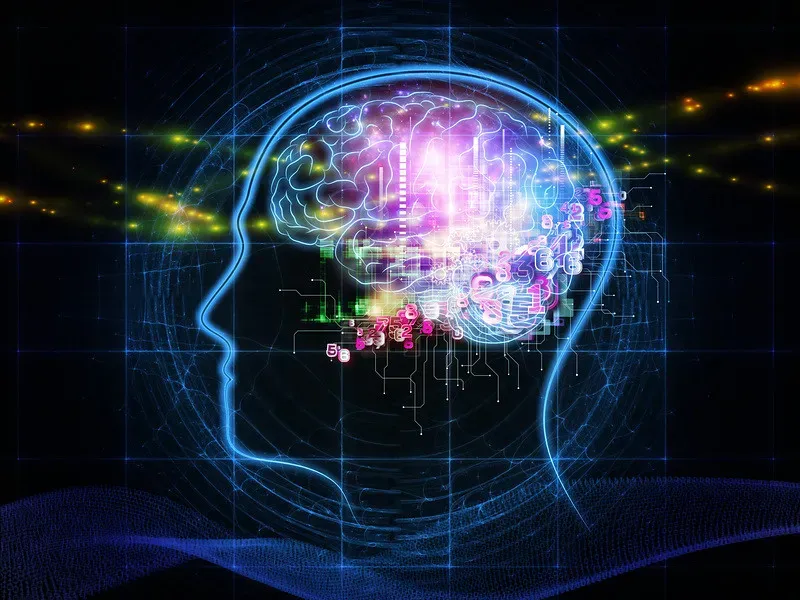
Another leading theory asks you to see your conscious world as a controlled hallucination. Your brain is not passively receiving reality; it is actively guessing what is out there and constantly updating those guesses with incoming signals. You never experience raw data from your senses. You experience the brain’s best prediction of what is causing those signals, painted over your visual field, your body, and your sense of time.
Here, consciousness is what it feels like to run this ongoing prediction game from the inside. When your brain’s model lines up well with the world and with other people’s models, you call it reality. When it drifts too far, you call it illusion, dream, or psychosis. This way of thinking does not magically solve the hard problem, but it makes you see that even your most basic experiences – like the color of your own hands or the sound of your own voice – are built on layers of educated guesswork rather than direct contact with the outside world.
Are You in a Cosmic Club? The Radical Idea of Consciousness Everywhere
Sometimes you run into a view that sounds so bizarre you want to dismiss it immediately, but it has a strange pull. One of these is the idea that consciousness might be a fundamental ingredient of reality, not something that pops out only when brains get complicated enough. On this picture, you are not standing in a blank, mindless universe accidentally fizzing into awareness; you are more like one particular focus of awareness in a universe that has mental aspects all the way down.
This does not mean you should imagine a rock having the same sort of inner life that you have. Instead, you are invited to think that even very simple systems might have unimaginably faint, basic forms of experience, and complex brains like yours are just one elaborate arrangement in a wider field of consciousness. The appeal here is that you no longer have to explain how mind bursts out of pure dead matter, because matter and mind were never completely separate in the first place. The cost is that reality becomes far stranger than the solid, mechanical picture you probably grew up with.
You as a Useful Fiction: When the Self Is Just a Story
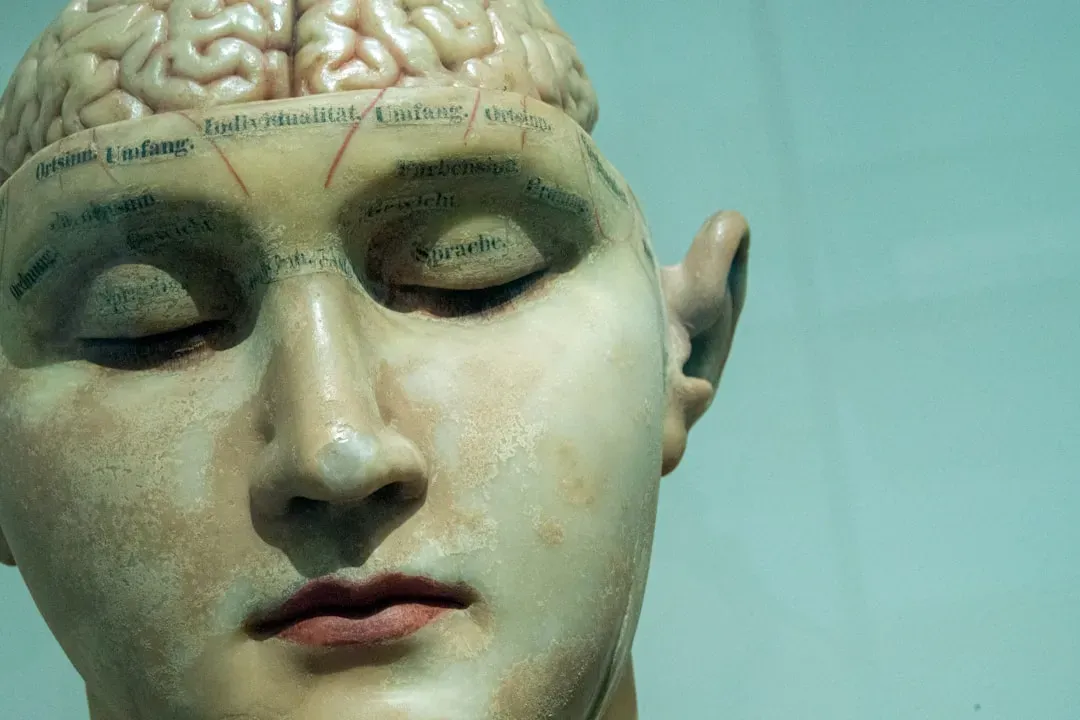
At some point, you may realize that the problem gets even sharper when you focus on the one thing that feels most obvious: your own sense of self. You feel like there is a central “I” sitting behind your eyes, watching, choosing, and owning your thoughts and feelings. But as you dig into psychology and neuroscience, you find scattered systems handling perception, memory, and control, with no obvious single place where a true you lives.
Some thinkers lean into this and tell you that the self is, at least partly, a convenient narrative your brain keeps updating. You are a story that your brain tells itself to make sense of your body and your behavior over time, like a character that keeps being written and revised. That does not make you fake or unimportant, any more than it makes a novel meaningless. It just means that what feels like a single, solid inner owner of experience might be more like a constantly adjusted label glued onto a swirling process.
When Science and Experience Collide: What Experiments Can and Cannot Tell You
You might hope that clever experiments will eventually crack the hard problem, and they do take you surprisingly far. Brain imaging can show you which patterns light up when you are aware of an image versus when you are not, even if the stimulus is the same. Careful studies of anesthesia, coma, and disorders of consciousness can track when awareness seems to fade, return, or change shape, teasing out the physical signatures of being conscious at all.
But even the smartest experiment always circles back to the same sticking point: you only know there is something it feels like from the inside because you can report it. You cannot directly step into someone else’s experience; you only ever see behavior, brain activity, and self-reports. That means the most fundamental part of the puzzle – the raw existence of subjective feeling – never quite becomes just another data point. You are left with a tension between objective measures and private experience that no lab technique has fully bridged.
Living with an Unsolved Riddle: Why the Hard Problem Still Matters to You
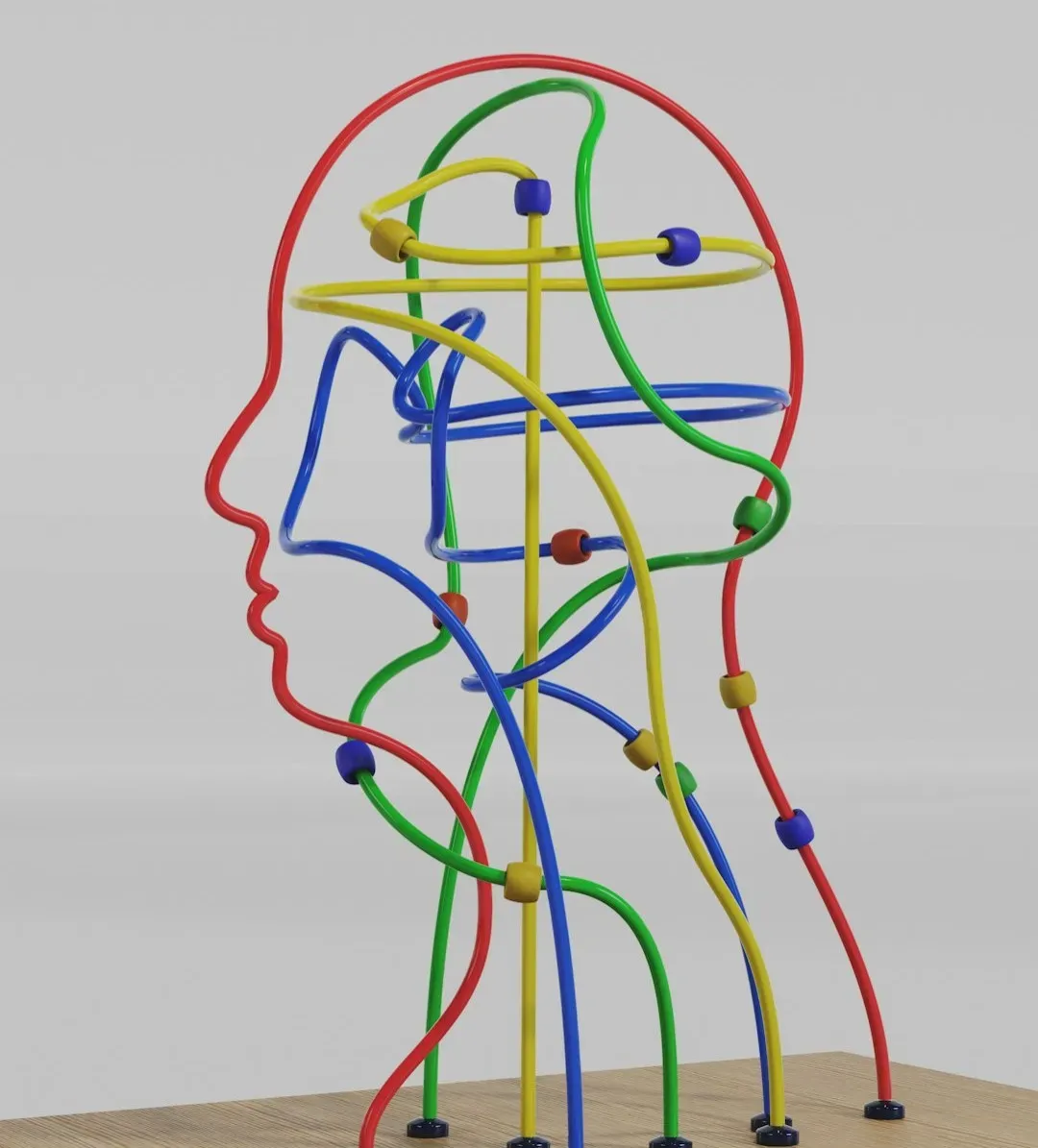
It is tempting to shrug and say the hard problem is a philosopher’s game, far removed from your everyday life, but it quietly shapes how you think about everything. Your views on free will, moral responsibility, animal welfare, and the future of artificial intelligence all sneak in assumptions about who or what can have conscious experiences like suffering, joy, hope, or fear. Every time you wonder whether a sophisticated AI really feels anything, you are bumping into this riddle again.
At the same time, the mystery can be oddly liberating. Realizing that nobody has a complete answer – despite centuries of effort – gives you permission to explore your own perspective without pretending the question is already settled. You can treat your own consciousness not just as a background fact, but as the most intimate, astonishing phenomenon you have direct access to. In a universe full of unknowns, the sheer fact that there is something it is like to be you, right now, might be the strangest thing of all.
In the end, you are standing in the middle of a problem that may never fully dissolve, but that does not make it any less worth wrestling with. You carry the evidence of consciousness with you everywhere, in every sensation and thought, even if you cannot pin down how it fits into the fabric of reality. So the real question you are left with is not just whether the hard problem will ever be solved, but what you will do with the mystery of being aware while you still have the chance – what would you bet on, if you had to choose right now?