
You probably think of history as a straight line: one thing happens, then another, and cause follows effect like dominoes. But when you zoom out across thousands of years, something stranger appears. Again and again, you see different cultures, with no real contact, moving in the same direction at roughly the same time – inventing similar tools, reshaping power, or reimagining the universe in ways that echo across continents. You might expect that these parallels are just coincidence, but when you stack them side by side, patterns start to emerge. Climate shocks ripple across regions, population pressures build, trade routes rewire, and suddenly distant societies seem to turn the same historical corner together. As you read through these seven moments, watch for that rhythm underneath the surface: separate civilizations, similar pressures, and surprisingly synchronized leaps.
The Birth of Cities: Mesopotamia and the Indus Valley Around 3000 BCE
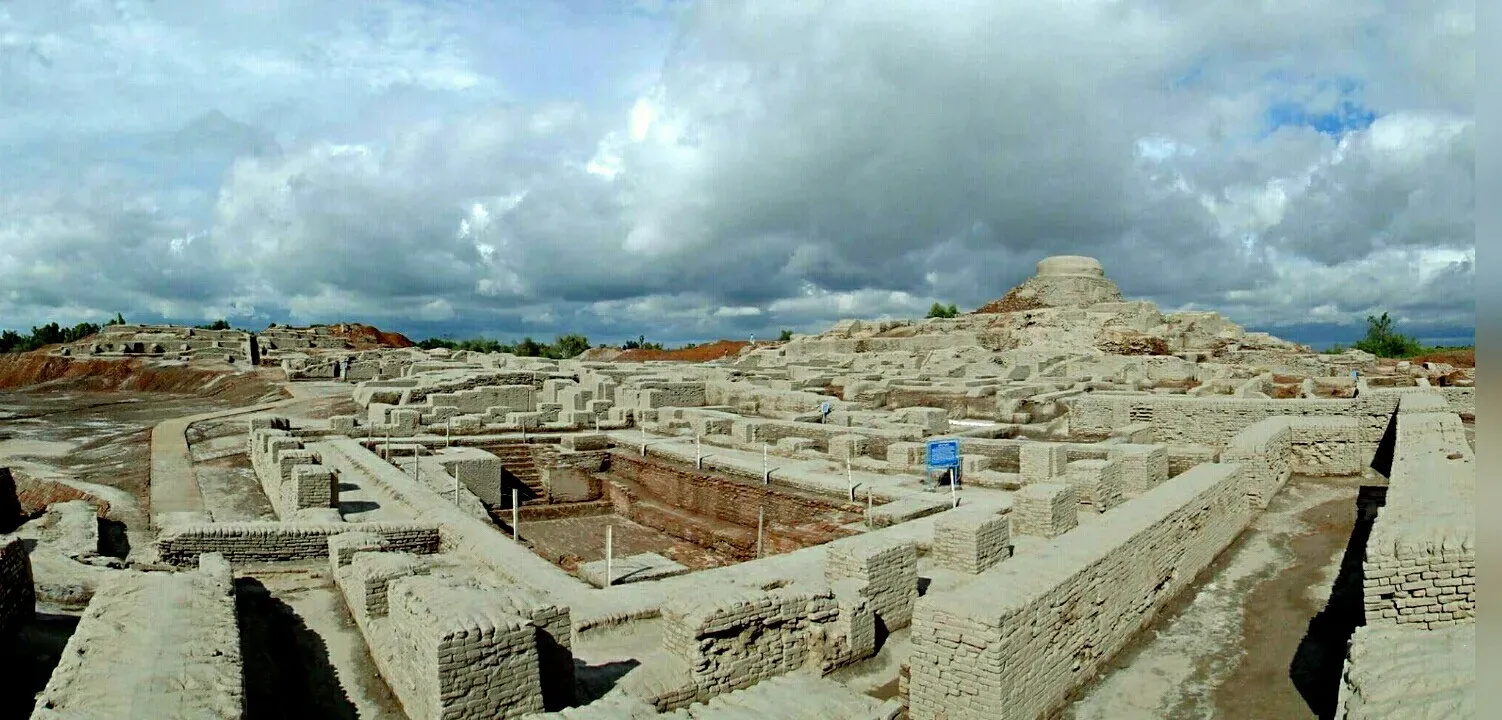
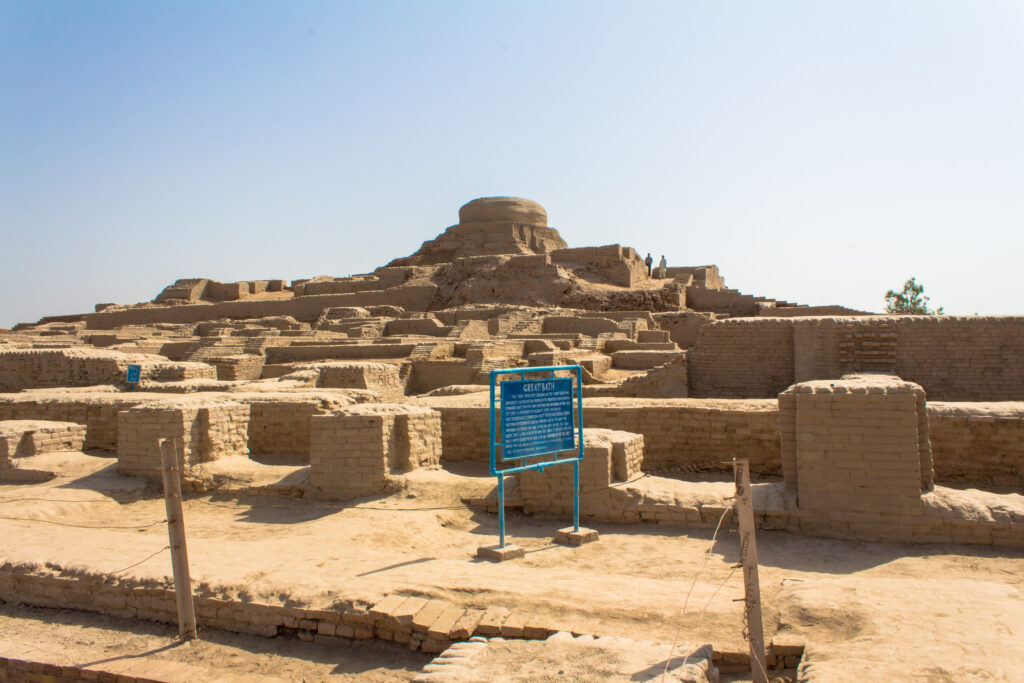
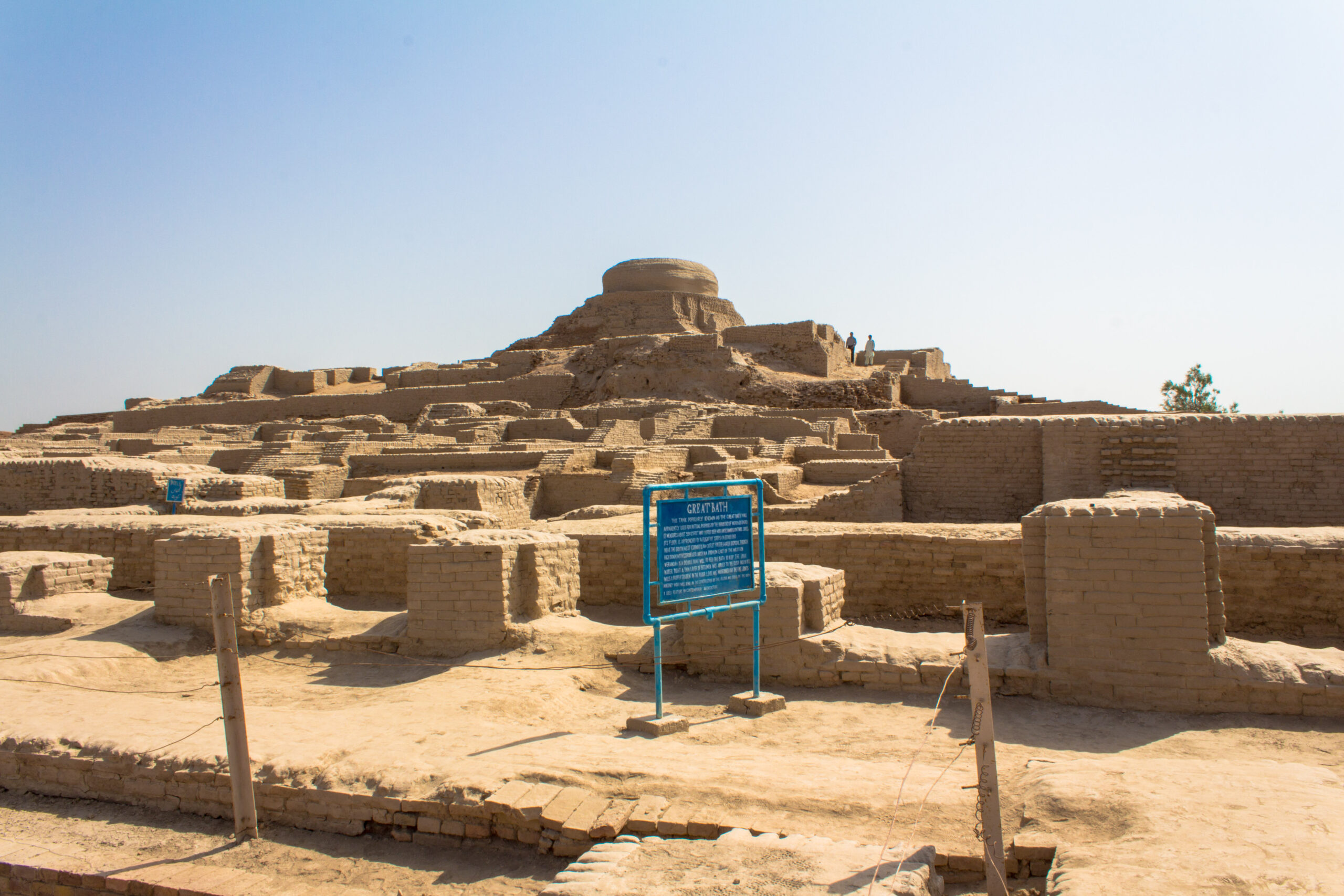
If you could time-travel to around 3000 BCE, you’d see something remarkable happening in two places that had no direct contact: the river plains of Mesopotamia and the Indus Valley. In what’s now Iraq, cities like Uruk and Ur were taking shape with monumental temples, specialized crafts, and early forms of writing. At almost the same time, along the Indus and its tributaries, cities like Mohenjo-daro and Harappa were rising, complete with gridded streets, drainage systems, and standardized weights. You’re looking at two independent experiments in large-scale urban life, both born out of similar pressures. In each region, farmers had already tamed river floods enough to produce food surpluses, which pulled people into denser settlements. You see elites trying to manage labor, resources, and belief systems at a scale that had never existed before. There’s no evidence these civilizations were directly copying each other; instead, they were both responding to the same underlying logic of rivers, harvests, and growing populations by inventing the city.
Parallel Writing Systems: Cuneiform in Mesopotamia and Hieroglyphs in Egypt
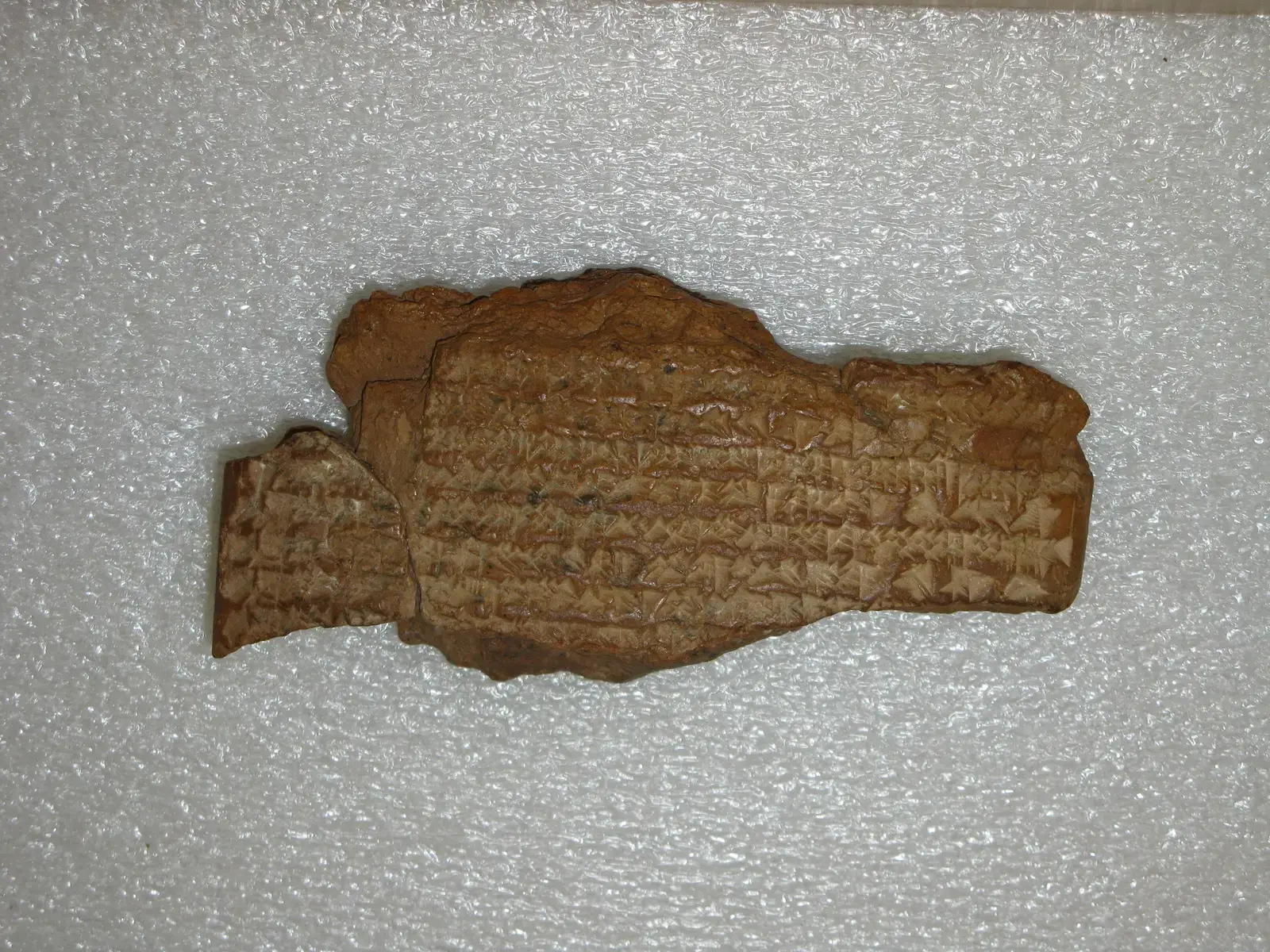
Just as cities were settling into place, another astonishing coincidence appeared: two entirely separate writing systems. In southern Mesopotamia, by roughly the late fourth millennium BCE, you see clay tablets with cuneiform signs used to track grain, labor, and offerings. Around the same broad window, in the Nile Valley, you see the emergence of Egyptian hieroglyphs carved on labels, monuments, and tombs, anchoring identity and authority in a new, durable way. You’re watching two cultures, without sustained direct contact at this point, stumble onto the same idea: that sound, speech, and thought can be frozen into symbols. The purposes overlapped too. In both places, writing first served accounting, administration, and royal or temple power – more about tracking and controlling than about literature. You can think of it as the ancient version of two companies, in different countries, independently inventing spreadsheets when their business suddenly gets too complicated to run on memory alone.
Bronze Age State Collapse: Eastern Mediterranean and Early Chinese Crises
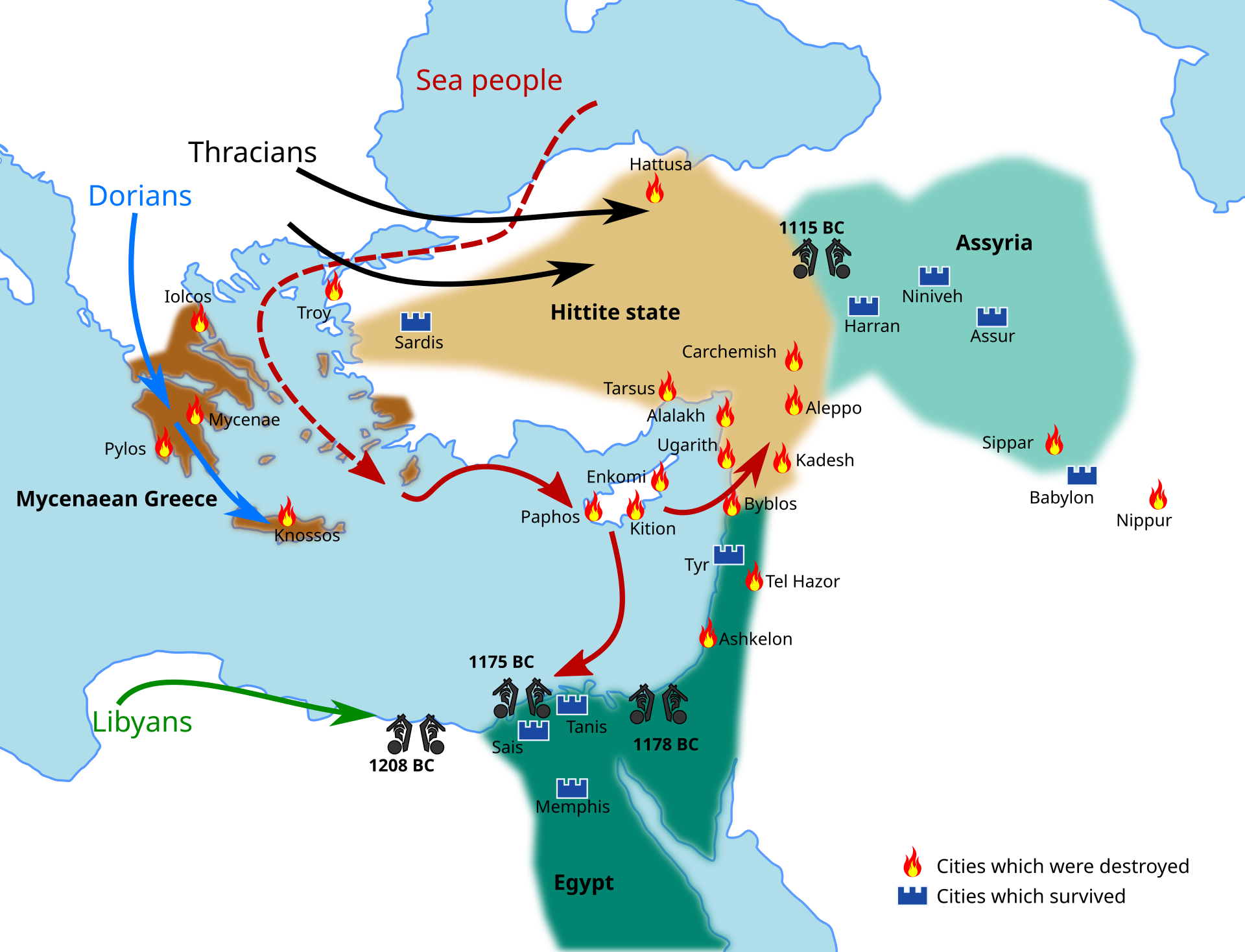
Jump forward to around the late second millennium BCE, and you hit one of the most dramatic historical shocks you’ll ever encounter. In the eastern Mediterranean, major Bronze Age powers – including the Mycenaean kingdoms, Hittite Empire, and several Levantine cities – crumbled or were severely weakened in a period of turmoil often linked with droughts, migrations, and internal revolt. Palaces burned, trade routes faltered, and literacy and monumental building shrank in scope. Around a similar broad timeframe, though not in an identical year, early Chinese states in the late Shang era were under stress from shifting power centers and environmental demands. You see changes in settlement patterns and military pressure, with new groups challenging established elites. While China did not experience the same degree of state disappearance as the Mediterranean did, you still see a dramatic reshaping of political structures and regional dominance. You’re seeing something important here: multiple societies, far apart and not directly coordinating, being jolted by climate variability, resource strain, and overextended elites. The pattern is that complex, centralized systems, when pushed past a certain threshold, become fragile at roughly the same stage of development. It’s less a coincidence and more a reminder that every big hierarchy has a breaking point, whether you’re looking at palace economies or modern bureaucracies.
The Axial Age: Simultaneous Spiritual Revolutions Across Eurasia
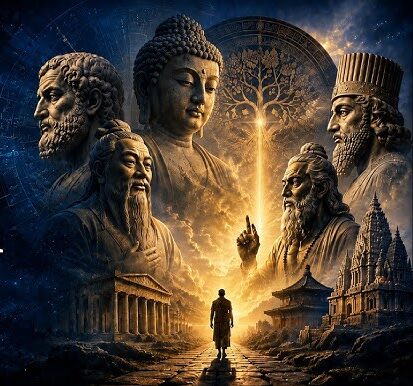
Between roughly the middle of the first millennium BCE and the early centuries that follow, you walk into what scholars often call the Axial Age – a period when multiple regions, with limited or no deep contact, began asking radical new questions about meaning, ethics, and the nature of reality. In the eastern Mediterranean, Greek thinkers were exploring reason, logic, and natural philosophy in new ways. In South Asia, you see the rise of major philosophical currents within early Hindu traditions and Buddhism. In China, you see Confucian and Daoist thought taking shape and wrestling with order, virtue, and the cosmos. From your vantage point, it looks like a world waking up all at once. People in very different societies began doubting old rituals and turning toward more introspective, universal, and ethical ideas: how to live well, what justice is, and whether the visible world is the deepest layer of reality. What unites these movements is not shared text or communication, but shared conditions: growing cities, powerful but unstable states, frequent wars, and rising social complexity. When life feels precarious and interconnected, people everywhere seem to start hunting for bigger, more durable frameworks to make sense of it all.
Imperial Peaks: Rome and Han China at the Turn of the Common Era
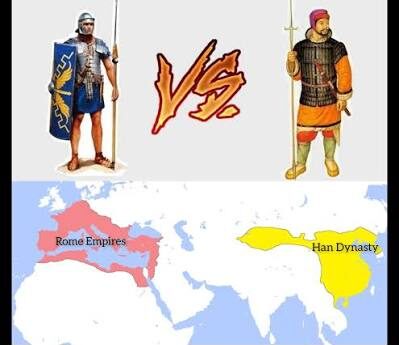
Now picture the first centuries of the Common Era. On opposite ends of Eurasia, you have two massive imperial systems reaching comparable peaks: the Roman Empire around the Mediterranean and the Han dynasty in China. They did not run into each other in any direct political sense, and yet both were stitching together huge, multiethnic territories with roads, laws, taxation, and bureaucracies that would define “empire” for millennia. If you put yourself in that world, you’d see similar patterns playing out. Both empires invested heavily in infrastructure – roads, canals, and communication systems – to move troops, goods, and information quickly. Both wrestled with frontier threats, internal power struggles, and the challenge of integrating diverse peoples under a shared political identity. You’re essentially watching two distant laboratories converge on similar solutions: standardized law, organized armies, written administration, and a shared cultural narrative that justified rule over enormous distances.
New World and Old World State-Building: Classic Maya and Early Medieval Europe
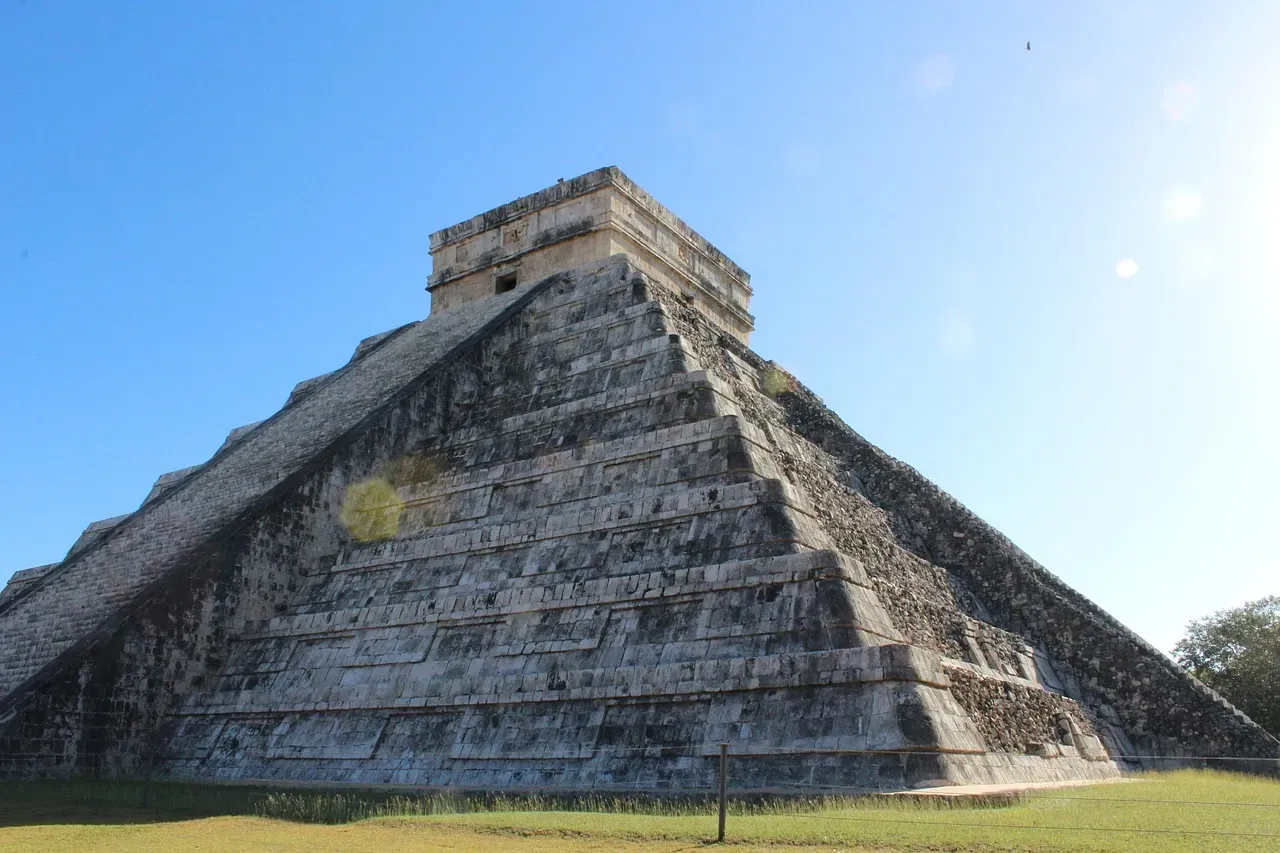
Fast-forward again and shift your gaze to roughly the first millennium of the Common Era. In Mesoamerica, Classic-period Maya city-states like Tikal, Calakmul, and Palenque were flourishing, building stepped pyramids, codifying calendar systems, and waging ritualized wars. Meanwhile, in post-Roman Europe, the early medieval world was slowly reorganizing itself into new kingdoms and power centers, such as the Frankish realms, that were trying to fill the vacuum Rome had left behind. You might think these two worlds had nothing in common, and in terms of direct contact, they didn’t. But from a distance, you can see a similar transition: societies experimenting with how to rebuild or refine complex political systems after earlier upheavals. Both regions saw intensified monument building tied to elite authority, religious symbolism woven tightly into politics, and competition among rival centers that pushed innovation in administration, warfare, and cultural display. It’s another reminder that when human groups climb back from fragmentation, they often reassemble power in surprisingly recognizable ways.
Industrial Echoes: Britain’s Industrial Revolution and Meiji Japan’s Rapid Modernization
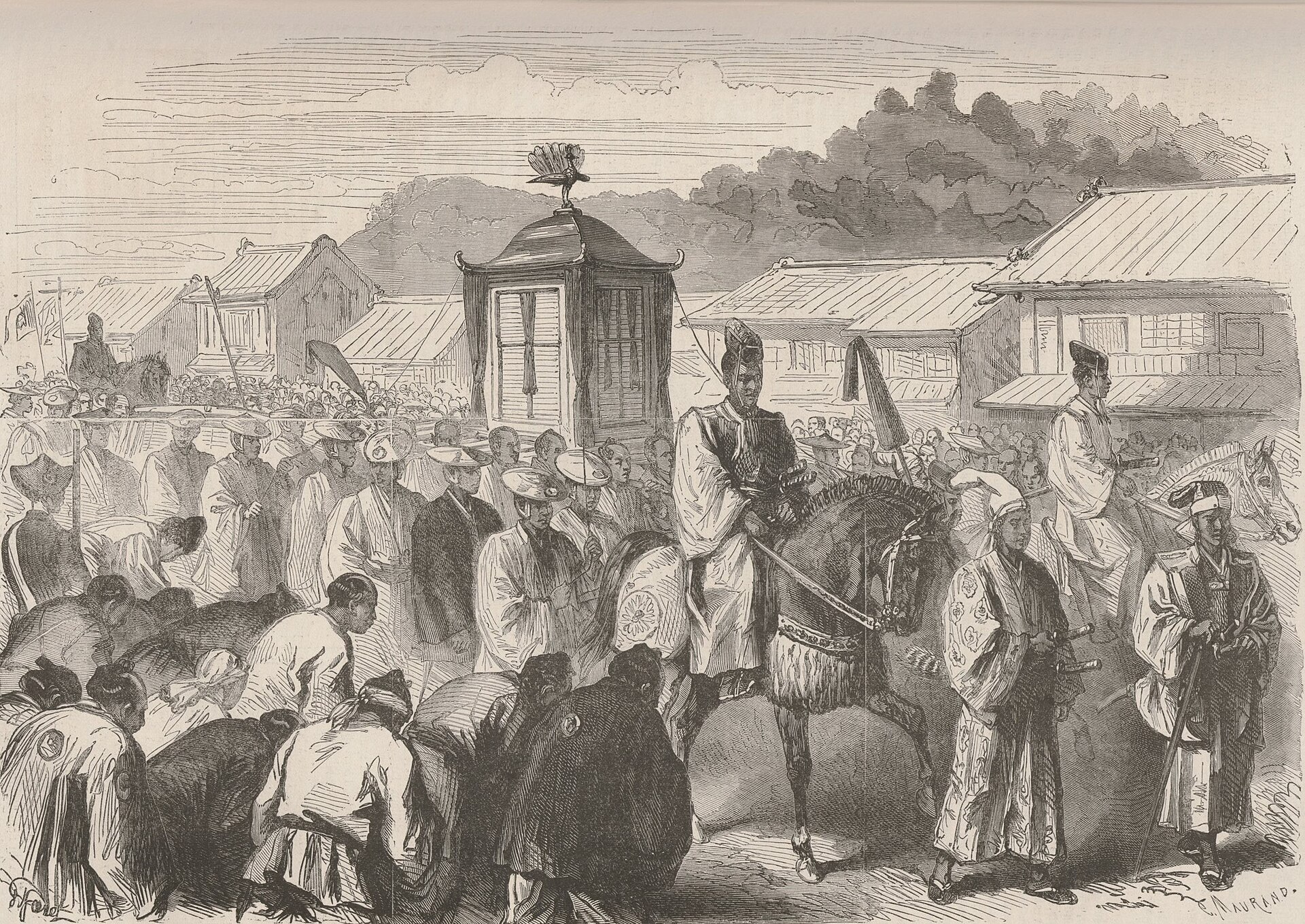
Finally, move into the past two centuries, where the parallels become easier for you to track. In the late eighteenth and nineteenth centuries, Britain spearheaded the Industrial Revolution: mechanized textile production, steam power, coal-driven factories, railways, and urbanization on an unprecedented scale. Factories and smokestacks transformed landscapes and lifestyles, and the economic gap between industrial and non-industrial countries widened rapidly. Now look at Japan in the late nineteenth century under the Meiji government. After centuries of relative isolation, Japanese leaders pushed through a frantic, deliberate modernization project: railways, factories, Western-style education, conscription armies, and centralized bureaucracy. While Japan had more contact with industrial powers than earlier cases in this article, what stands out is how it independently recreated a full industrial and administrative system in a compressed timespan, not by copying piece by piece but by reimagining its whole structure to survive in a changing world. When you compare these two transitions, you see a broader pattern: once technology and global pressures reach a certain level, societies either industrialize fast or risk being dominated. Both Britain and Japan were responding to competition and opportunity, but they also show that similar institutional “packages” – factories, schooling, centralized states, mass conscription – tend to appear together when a society crosses that industrial threshold.
The Pattern Beneath the Coincidences: How Separate Cultures Keep Syncing Up
As you step back from these seven moments, you start to see something deeper than coincidence. Different civilizations, across 5,000 years, repeatedly hit similar milestones – cities, writing, philosophical reflection, empire-building, collapse, rebuilding, and industrialization – under similar types of pressure. When populations grow, resources strain, trade expands, or threats rise, societies in isolation still tend to move in parallel directions, because the menu of workable solutions is smaller than you might think. For you, the big takeaway is that history is less like a set of isolated stories and more like an echoing pattern of responses to shared human challenges. Climate shocks, technological breakthroughs, and demographic changes act like invisible drumbeats that many societies, even without contact, end up dancing to. So when you look at today’s world – with its simultaneous debates about inequality, technology, and the environment – it’s worth asking yourself: are you watching the next synchronized turning point take shape, and if so, what role will you choose to play in it?