
You probably grew up assuming that serious surgery only became possible in the last few centuries, once scalpels were shiny and stainless steel. But when you look closer, you start to realize something unsettling: ancient doctors were often doing things you thought belonged purely to modern hospitals. For a long time, many historians treated the most dramatic passages in old medical texts as exaggerations or even myth. Then archaeologists started digging up the tools those authors described in unnerving detail. Once you see a bronze trepanation drill, a set of Roman obstetric forceps, or an Indian rhinoplasty knife in a museum case, the written stories snap into focus. Suddenly, what sounded like legend becomes a step‑by‑step surgical manual. As you walk through these nine texts, you’re not just learning history; you’re watching the exact moment when “that can’t be real” quietly turns into “oh, they really did that.” —
The Sushruta Samhita: Plastic Surgery and Hundreds of Surgical Tools
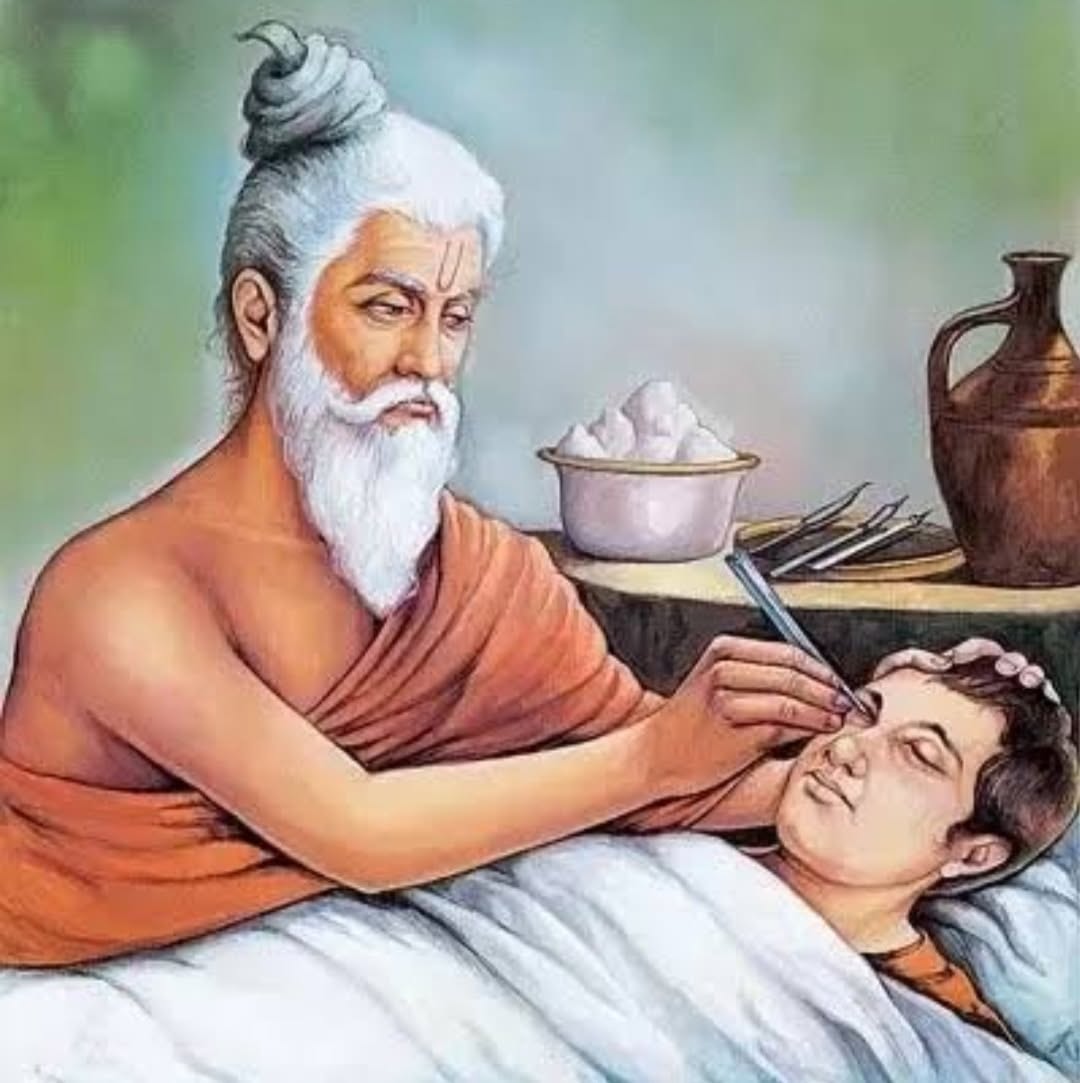
If you’ve ever heard someone claim ancient surgeons in India were doing nose reconstructions, you might have rolled your eyes. Yet when you open the Sushruta Samhita, you find entire sections where you are told how to perform complex operations, from cataract removal to reconstructive surgery, supported by long lists of specific tools. Modern analyses of this text point out that it describes roughly a hundred or more distinct instruments – hooks, forceps, scalpels, saws – each with a defined shape and purpose, not just vague “knives” and “blades.” ([worldhistory.org](https://www.worldhistory.org/sushruta/?utm_source=openai)) For a long time, many scholars outside South Asia treated these descriptions as more theoretical than practical, suspecting that the level of detail was literary flourish. Then archaeologists and historians started matching those written shapes to actual metal instruments, including endoscope‑like devices and specialized probes from early Indian sites and later surgical collections that clearly follow the same designs. When you realize that these tools were real objects in a surgeon’s hand, the text stops being a curiosity and becomes something closer to a surgical textbook written far ahead of its time. ([pmc.ncbi.nlm.nih.gov](https://pmc.ncbi.nlm.nih.gov/articles/PMC3452414/?utm_source=openai)) —
Celsus’ De Medicina: Cataract Surgery That Sounded Impossible
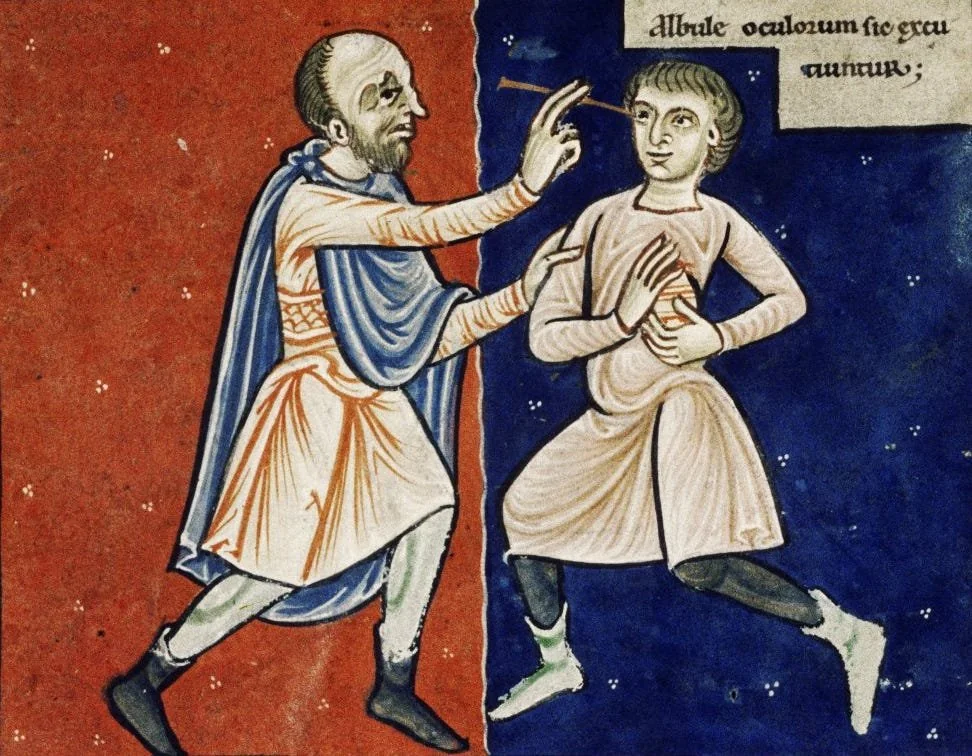
Imagine reading an ancient Roman author calmly instructing you to push a cloudy lens out of a patient’s line of sight with a fine instrument inserted into the eye. If you’re used to thinking of Rome as a world of herbal remedies and bloodletting, Celsus’ description of cataract couching in De Medicina feels almost unreal. For years, many readers quietly assumed that such delicate work was more aspiration than routine practice, or that the tools involved were fantasy. ([pmc.ncbi.nlm.nih.gov](https://pmc.ncbi.nlm.nih.gov/articles/PMC7729313/?utm_source=openai)) Excavations in Roman sites across Europe changed that picture. Archaeologists began finding fine bronze and iron surgical kits in graves and houses: slender needles, sharp probes, and couching instruments that match the form and function implied in Celsus’ text. Studies of ancient ophthalmic surgery now link these physical finds directly to the written instructions, showing that you are not looking at literary bravado but at a real, if risky, eye operation carried out with surprisingly sophisticated tools. ([pmc.ncbi.nlm.nih.gov](https://pmc.ncbi.nlm.nih.gov/articles/PMC7729313/?utm_source=openai)) —
The Hippocratic Corpus: Skull Drills and Bone‑Lifting Devices

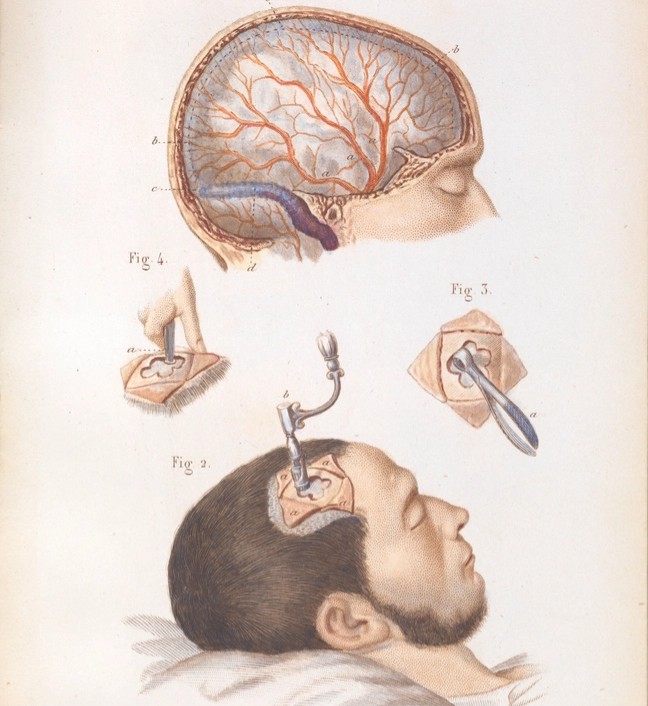
When you first encounter the Hippocratic texts on head injuries, you might be struck by how coolly they describe opening the skull. You’re told where to drill, when to avoid sutures, how to raise depressed bone fragments, and what tools you should use to do it. For a long time, some historians read these as idealized procedures – more like intellectual exercises from a school of thought than recipes anyone dared to follow on living patients. ([en.wikipedia.org](https://en.wikipedia.org/wiki/History_of_surgery?utm_source=openai)) Archaeology has been steadily eroding that doubt. Across Europe and the Mediterranean, you now see trepanned skulls with clean, controlled holes and clear signs of healing, alongside bronze trephines, elevators, and bone tools that align closely with the descriptions you find in the Hippocratic corpus. At Celtic and other Iron Age sites, for example, specialized cranial tools have been identified that would have let you perform exactly the kind of operations those texts outline, right down to scraping versus drilling techniques. ([livescience.com](https://www.livescience.com/archaeology/2-300-year-old-tool-used-for-skull-surgery-unearthed-at-celtic-settlement-in-poland?utm_source=openai)) —
Ancient Trepanation Treatises: From Ritual Suspicions to Real Neurosurgery
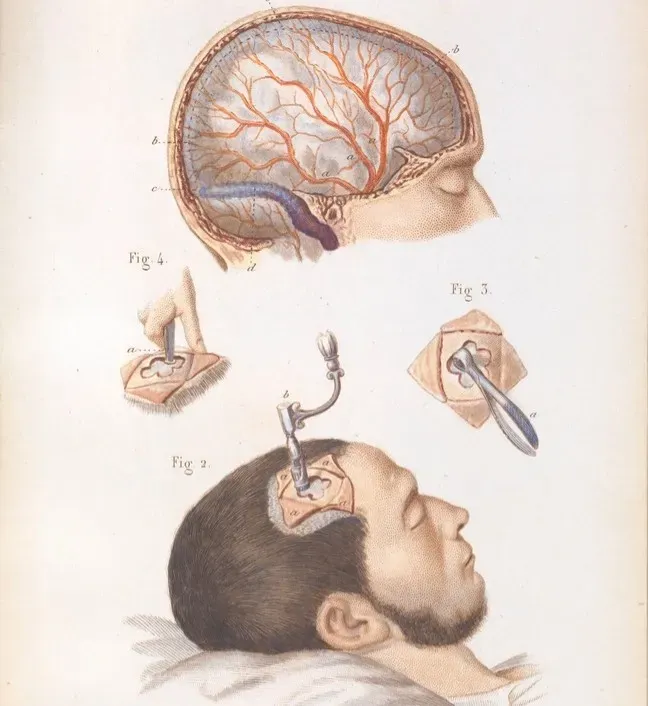
If someone told you people were having holes deliberately cut into their skulls five thousand years ago and surviving, you might assume they were talking about ritual or superstition, not medicine. Early discussions of trepanation in both classical and later texts often sounded so extreme that many modern readers assumed the authors were embroidering rare or symbolic acts, not documenting a widespread surgical practice. ([en.wikipedia.org](https://en.wikipedia.org/wiki/Trepanning?utm_source=openai)) Then you start looking at the bones. Neolithic and Bronze Age burials from Europe, Asia, and the Americas have produced hundreds of skulls with carefully shaped openings, smooth edges, and bone regrowth that prove people lived long after the procedure. At the same time, archaeologists have uncovered scraping tools, drills, and cutting blades whose wear patterns and shapes are consistent with repeated cranial work. Once you put the texts and the artifacts side by side, you’re forced to admit that what you are seeing is not isolated ritual drama but a durable, technically skilled tradition of skull surgery. ([en.wikipedia.org](https://en.wikipedia.org/wiki/Trepanning?utm_source=openai)) —
Galen and Roman Surgical Manuals: Multi‑Tool Kits That Look Strangely Modern
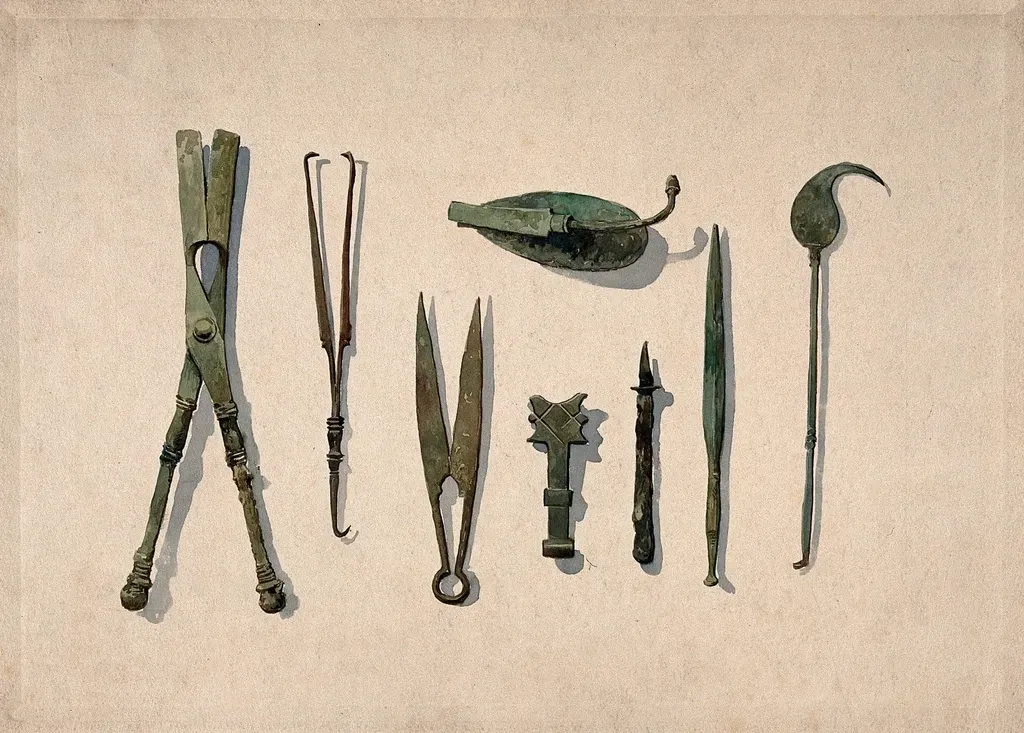
When you read Roman medical writers like Galen, you are led through procedures for setting fractures, opening abscesses, and operating on the urinary tract, often supported by references to specific instruments. To a skeptical modern eye, the sheer variety of named tools – hooks, dilators, forceps, specula – can look like scholarly overcomplication rather than a description of a real doctor’s tray. It is easy to imagine the author piling on technical terms to sound impressive. ([en.wikipedia.org](https://en.wikipedia.org/wiki/History_of_surgery?utm_source=openai)) But graves of Roman physicians across the empire have yielded compact surgical sets that feel eerily familiar if you’ve ever seen a modern operating room. In Hungary, Italy, Turkey, and elsewhere, archaeologists have uncovered bronze and iron scalpels with replaceable blades, hinged forceps, delicate probes, and even vaginal specula whose mechanisms still work. When you lay these tools next to the written catalogues in Roman medical texts, you realize you are not looking at rhetorical ornaments; you are looking at the hardware that made those procedures routine enough to be written up in confident detail. ([upload.wikimedia.org](https://upload.wikimedia.org/wikipedia/commons/3/3b/Greco-Roman_and_Arabic_bronze_instruments_and_their_medico-surgical_use_%28IA_arabicgrecoroman00holtrich%29.pdf?utm_source=openai)) —
Byzantine and Late Antique Gynecologic Texts: Forceps and Specula in the Ground
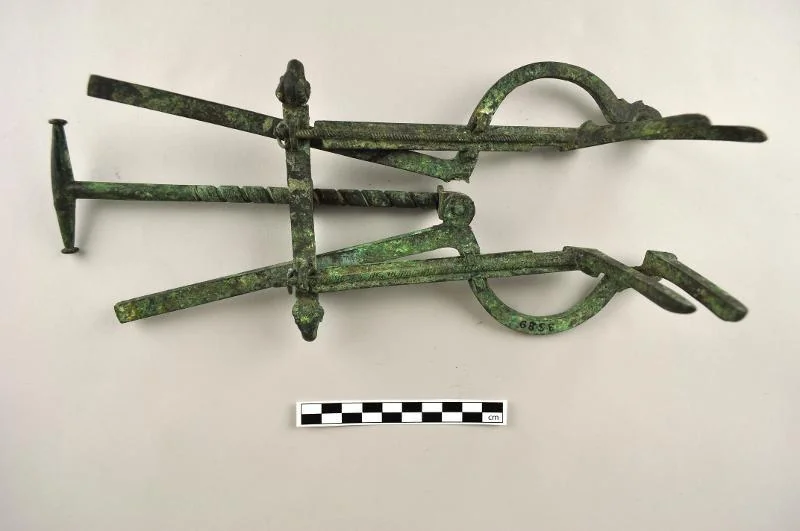
Descriptions of women’s health procedures from the late antique and Byzantine world can feel almost too invasive and technically demanding to be real. You are told about examining the cervix with expanding instruments, extracting fetuses in dire emergencies, and performing internal treatments that clearly require more than just a midwife’s hands. For a long time, that level of intervention led many readers to suspect the texts were more theoretical than practiced, or at least extremely rare. Then digs in sites from the eastern Mediterranean to the Balkans started turning up gynecologic instruments that are hard to reinterpret as anything else. Bronze and iron specula with screw mechanisms, specialized hooks, and obstetric forceps mirror procedures described in surviving texts from Greek and later medical writers. The physical wear on these objects tells you they were not ceremonial; they were used, repeatedly, in ways that fit the written instructions with uncomfortable precision. ([upload.wikimedia.org](https://upload.wikimedia.org/wikipedia/commons/3/3b/Greco-Roman_and_Arabic_bronze_instruments_and_their_medico-surgical_use_%28IA_arabicgrecoroman00holtrich%29.pdf?utm_source=openai)) —
Ayurvedic Surgical Sections Beyond Sushruta: Paracentesis and Internal Procedures
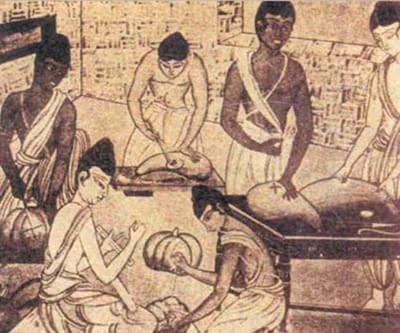
Even within India, many people treated the more dramatic surgical passages in classical Ayurvedic literature as part of a proud but partly symbolic heritage. When you read step‑by‑step descriptions of draining fluid from the abdomen, probing deep wounds, or accessing internal cavities with specialized needles, it can feel like an idealized picture of what a perfect surgeon might do in theory. Without instruments, it is easy to dismiss such passages as philosophical more than practical. ([ijhsr.org](https://www.ijhsr.org/IJHSR_Vol.11_Issue.3_March2021/IJHSR010.pdf?utm_source=openai)) Recent reevaluations have connected those texts to very real tools. Scholars working with museum collections and archaeological finds have catalogued long, fine needles, trocars, cannulas, and blunt probes crafted to match the dimensions given in the Sanskrit descriptions. Studies of specific operations, such as paracentesis for abdominal dropsy, have shown how the instruments named in the texts correspond closely to reconstructable devices that would let you carry out the procedure as described. Once again, the metal on the table forces you to read the old verses as technical guidance rather than heroic storytelling. ([pmc.ncbi.nlm.nih.gov](https://pmc.ncbi.nlm.nih.gov/articles/PMC3452414/?utm_source=openai)) —
Egyptian Medical Papyri: From “Magic” Spells to Proven Surgical Toolkits
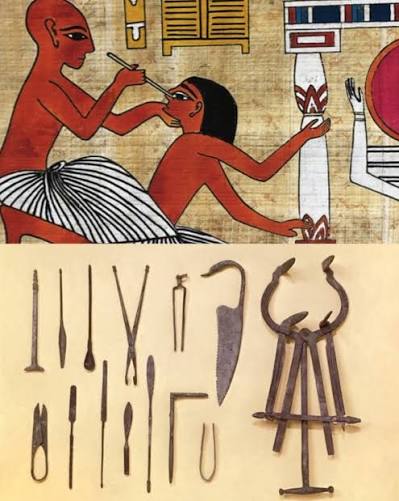
When you first meet Egyptian medical papyri in translation, they can sound like a strange mix of spells, prayers, and home remedies. It is tempting to file them away as mostly mystical, especially when they touch on procedures that sound surprisingly hands‑on: stitching wounds, manipulating dislocations, treating jaw fractures, or cutting into abscesses. For a long time, the more invasive passages were easy to downplay in favor of the obviously magical parts. ([en.wikipedia.org](https://en.wikipedia.org/wiki/History_of_surgery?utm_source=openai)) Excavations in temples, tombs, and settlements have steadily complicated that picture. Archaeologists have unearthed copper and bronze blades, probes, needles, and clamps from Egyptian contexts that line up well with the blunt‑but‑practical interventions the papyri mention. Carved reliefs that appear to show instrument trays, combined with actual tool finds, give you a bridge between the text and a physical surgical culture. You begin to see that when the papyri tell you how to treat a compound fracture, they are not merely invoking the gods; they are expecting you to pick up a very real set of tools and get to work. ([en.wikipedia.org](https://en.wikipedia.org/wiki/History_of_surgery?utm_source=openai)) —
Medieval Islamic Surgical Manuals: Complex Instruments No One Believed Were Real
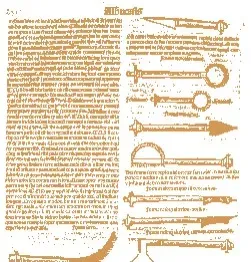
When you read medieval Islamic surgical works, such as the richly illustrated manuals produced in Al‑Andalus and the wider Islamic world, you are confronted with pages and pages of specialized instruments. You’re shown hooks with unusual curves, multi‑part catheters, dental tools, cautery irons, and elaborate devices for operations on the bladder and ear. For a long time, some European historians quietly suspected that many of these tools, especially the more complex ones, were idealized drawings – a wish list rather than a real inventory. ([en.wikipedia.org](https://en.wikipedia.org/wiki/History_of_surgery?utm_source=openai)) Yet as archaeologists and historians of medicine have gone through collections from Spain, North Africa, and the Middle East, they have identified actual metal instruments that match those drawings and the accompanying text almost one‑to‑one. Bladder stone extraction tools, fine ear probes, and intricate cautery irons have turned up in contexts that make it clear they were meant for use, not display. When you realize that the manuals were effectively cataloguing tools that already existed in surgeons’ hands, your view of medieval surgery shifts from speculative to intensely practical. The old suspicion that these books were mostly theory no longer holds once the metalwork is sitting in front of you. ([en.wikipedia.org](https://en.wikipedia.org/wiki/History_of_surgery?utm_source=openai)) —
Conclusion: When the Tools Refuse to Let You Look Away
Once you’ve seen how often the dirt under a trowel confirms what looked like wild claims in an old manuscript, you start reading ancient medical texts differently. Instead of assuming people in the past only dabbled at the edges of the body, you begin to recognize that they were often pushing into territory you assumed belonged to modern surgery: drilling skulls, reconstructing faces, operating on eyes, and intervening deep inside the abdomen. The instruments those texts describe are no longer props in a story; they are the missing half of a conversation between a writer who knew what a knife could do and a craft tradition that quietly made it possible. If there’s a lesson for you here, it’s that your default skepticism about the technical abilities of earlier cultures often says more about your assumptions than about their reality. Archaeology keeps pulling scalpels, drills, forceps, and specula out of graves and workshops, and each one forces you to revisit passages that once felt like fiction. The next time you find yourself doubting an ancient description because it seems “too advanced,” it might be worth pausing and asking: is the problem with the text, or with what you expect the past to be capable of?