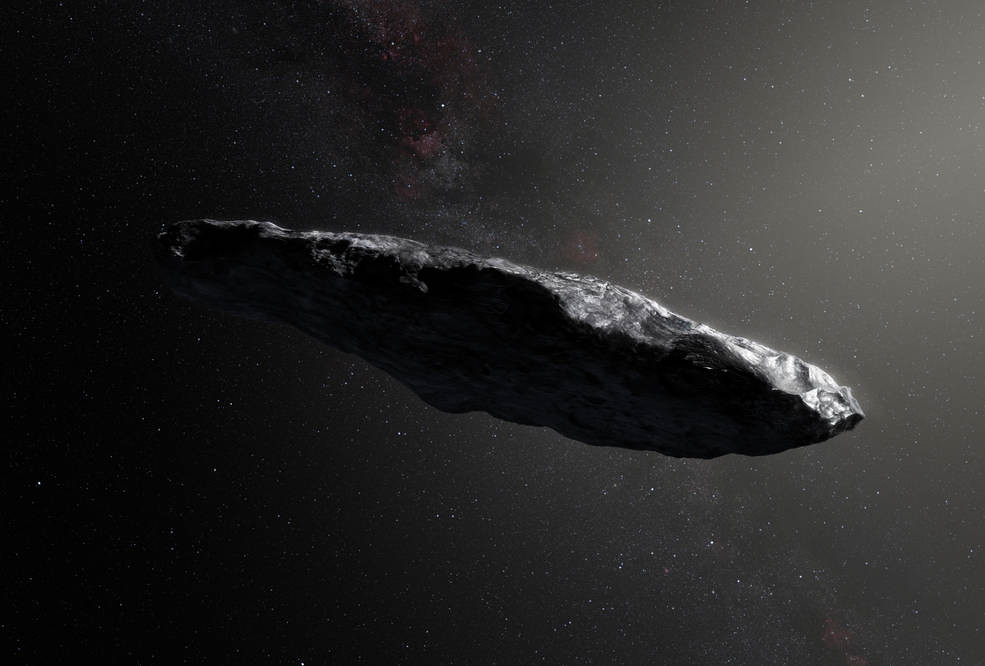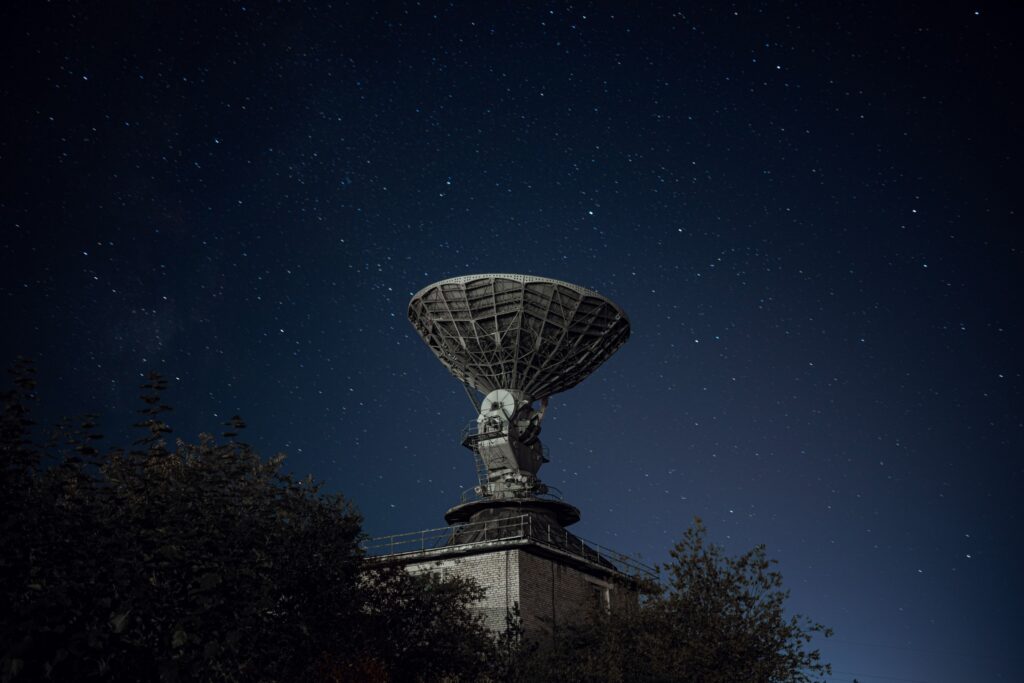

Every so often, the universe taps us on the shoulder with a signal so strange that even our best instruments and brightest minds shrug and say: no idea. These moments sit at the edge of what we understand about physics, technology, and cosmic noise. They are measured, logged, written up in serious papers, and then quietly left to haunt the footnotes of astronomy.
This is not about wild claims or secret alien messages hidden in dusty archives. It is about very real, officially documented signals from space that do not yet fit neatly into any known category. Some have likely mundane explanations hiding just out of reach; others remain stubbornly weird. In every case, though, they remind us that the sky is less “solved” than we like to pretend.
The Wow! Signal: A 72-Second Mystery That Refused To Repeat
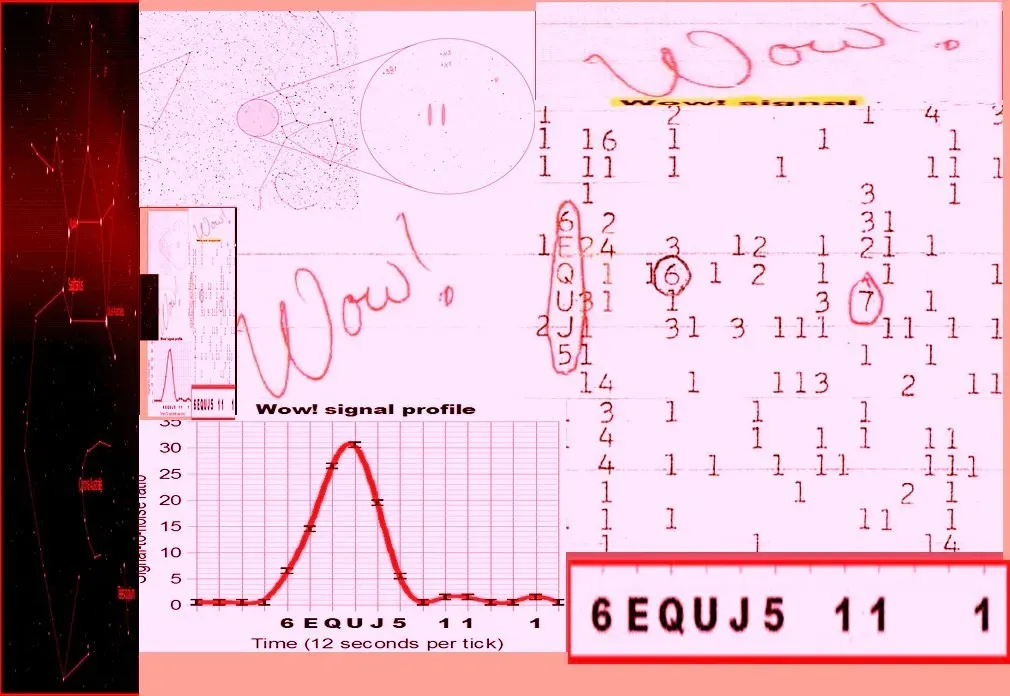
In August of 1977, a radio telescope in Ohio picked up a narrowband signal so clean and intense that the astronomer on duty circled it on the printout and wrote a single word beside it: wow. The signal matched the kind of frequency SETI researchers expected might be used by a technologically advanced civilization, and it came from a patch of sky with no known human transmitters. It lasted for just over a minute, rose and fell like a real source crossing the telescope’s field of view, and then vanished.
Decades later, the Wow! signal is still officially unexplained. Astronomers have gone back to the same region of sky again and again using better equipment and wider frequency ranges, but nothing identical has ever turned up. Various ideas have been floated, from comets to Earth-based interference to an unknown astrophysical event, yet none has been confirmed in a way that satisfies the data. The result is a kind of scientific itch: a beautiful, tantalizing outlier that refuses to either prove extraordinary or collapse into the ordinary.
The Lorimer Burst: The First Fast Radio Burst That Changed Everything
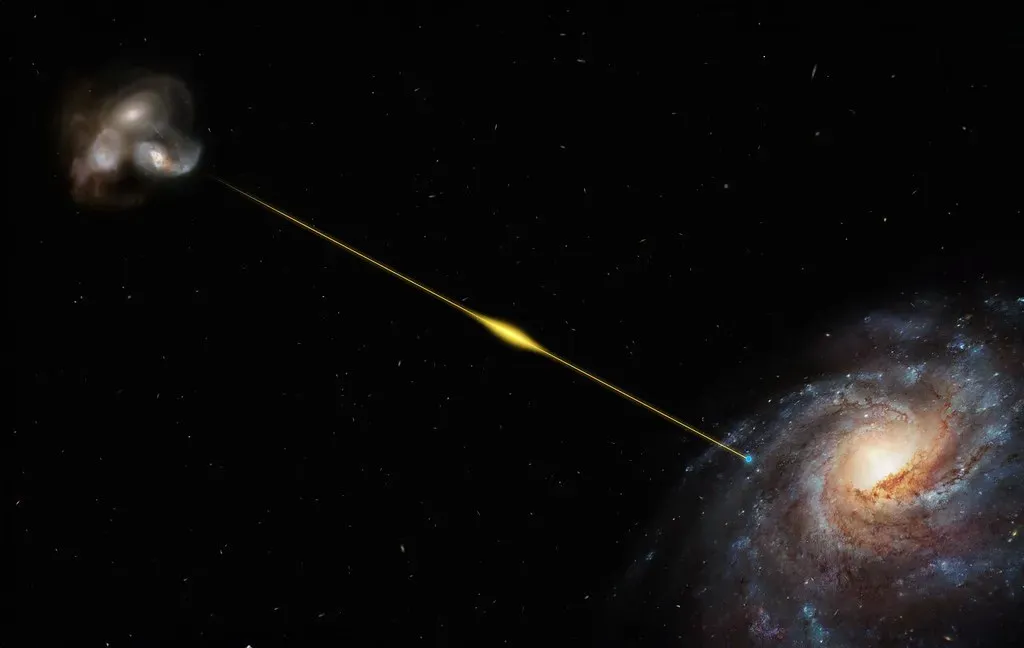
In 2007, while sifting through archival data from the Parkes radio telescope in Australia, astrophysicist Duncan Lorimer and his team found something nobody expected: a single, incredibly bright millisecond flash at radio wavelengths from far outside our galaxy. The pulse was so strong and so short that, at first, it looked like some kind of glitch. But the way the signal was smeared across frequencies showed it had traveled through vast amounts of intergalactic plasma, suggesting an origin billions of light-years away.
That strange one-off detection, now known as the Lorimer burst, kicked off the entire field of Fast Radio Burst (FRB) research. Today, astronomers have cataloged hundreds of FRBs, some of which repeat and some of which remain stubbornly one-time events. While several models exist – from magnetars to exotic compact objects – no single explanation convincingly covers every observed behavior. The Lorimer burst itself has never reappeared, and whether it was a “typical” FRB or something even stranger is still an open question hanging over the field.
Perseus Cluster’s Eerie “Whale Song” Radio Emission
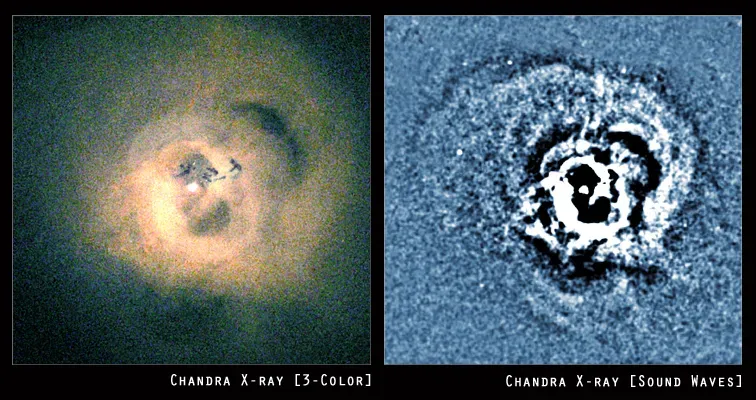
When astronomers turned powerful X-ray and radio eyes toward the Perseus galaxy cluster, they found huge ripples propagating through the hot gas surrounding its central black hole. Converted into sound, those ripples correspond to an extraordinarily low note, far below human hearing, that has been described as the deepest known sound in the universe. It is not a simple tone but a complex, droning pattern of waves etched into space by some long-lived and energetic process.
We know that active supermassive black holes can pump energy into their surroundings, blowing bubbles in the gas and sending pressure waves outward. What makes Perseus puzzling is the persistence and structure of these waves on such gigantic scales. The detailed mechanism that keeps driving and shaping those oscillations over hundreds of millions of years is not fully understood. The result is a sort of cosmic whale song echoing through a cluster of galaxies, formally documented, mapped, and still partially mysterious.
The SHGb02+14a Signal: A Narrowband Whisper With No Clear Source
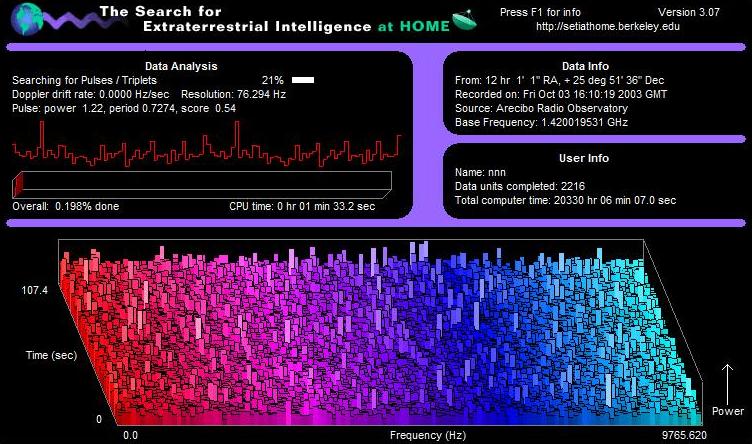
In the early 2000s, a faint but intriguing radio signal was repeatedly flagged in data analyzed by the SETI@home project, the crowdsourced effort that let volunteers help search telescope data for patterns. The candidate, tagged with the unglamorous label SHGb02+14a, was a narrowband signal near the so-called “water hole” region of the radio spectrum – a prime hunting ground for artificial transmissions. It appeared more than once, enough to raise eyebrows, but always too weak and inconsistent to make a definitive claim.
What made SHGb02+14a so difficult was that it did not clearly behave like ordinary interference, yet it also lacked the stable, repeatable pattern that would be expected from a transmitter, human or otherwise. Its apparent drift in frequency suggested a moving source, but efforts to pin down its origin failed. Eventually, it joined the small but frustrating list of “interesting but inconclusive” detections that remain in official logs as unexplained. For SETI researchers, it is a reminder that the border between noise and signal is often foggier than we would like.
Uncatalogued One-Off Fast Radio Bursts That Never Came Back
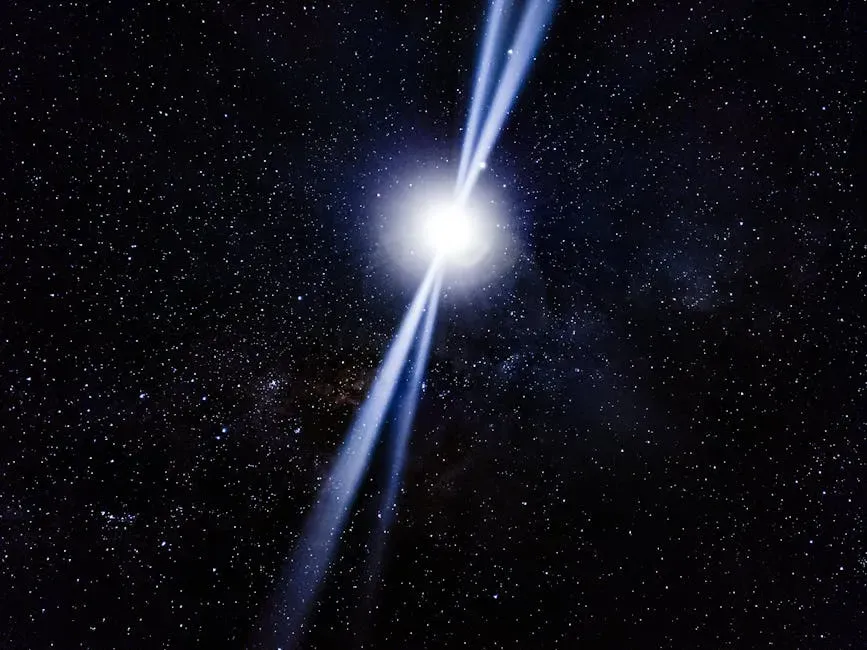
Most people who have heard about Fast Radio Bursts know the famous repeaters – sources that flash again and again, allowing astronomers to localize them and study their environments. But sprinkled throughout the literature are single FRBs detected once, with no repeat seen despite extensive follow-up. These one-off bursts are fully documented events, complete with timestamps, dispersion measures, and instrument details, yet they remain lonely data points in vast catalogs.
Some researchers argue that all FRBs probably share similar origins and that one-offs are simply sources that repeat too rarely or too faintly to be spotted again. Others suspect that there may be multiple populations: some linked to catastrophic events like stellar mergers that occur only once, others tied to repeating magnetar flares. For specific one-off bursts, though, the story stops at the original detection. Each stands as a small, precise question mark: something undeniably real that left no trail to follow.
The Galactic Center Radio Transient GCRT J1745–3009
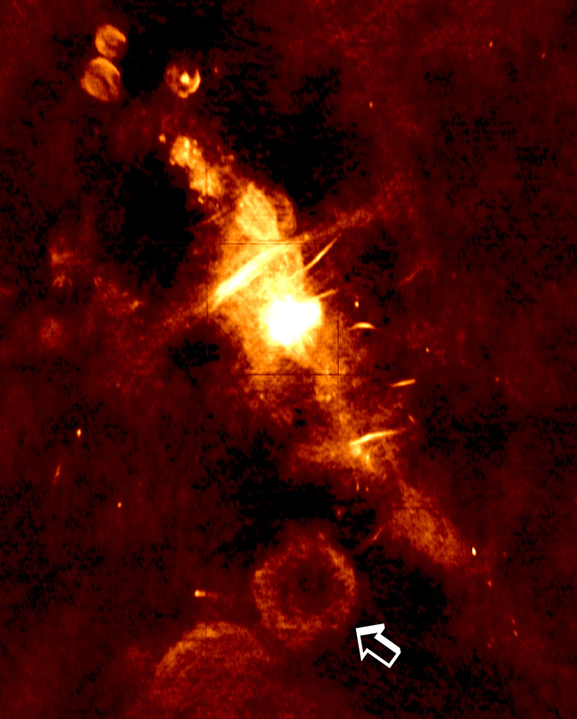
In the early 2000s, astronomers surveying the region near the center of our galaxy found a bizarre radio transient that switched on and off in a pattern unlike anything they had seen before. Designated GCRT J1745–3009, the object produced intense radio bursts lasting about ten minutes, repeating roughly every hour for a period, and then disappearing from view. It was not associated with any obvious counterpart in other wavelengths like visible light or X-rays.
Several ideas have been floated to explain GCRT J1745–3009: an exotic type of neutron star, a highly magnetized white dwarf, or some new class of coherent radio emitter. But none of those ideas neatly accounts for the observed brightness, periodicity, and silence outside the bursting episodes. Follow-up campaigns have occasionally seen it flare again, but not predictably enough to dissect its behavior fully. For now, it sits in the literature as a genuine outlier among radio transients, a system we know is doing something dramatic but do not yet know how.
The Mysterious Long-Burst Gamma-Ray Events With No Obvious Counterpart
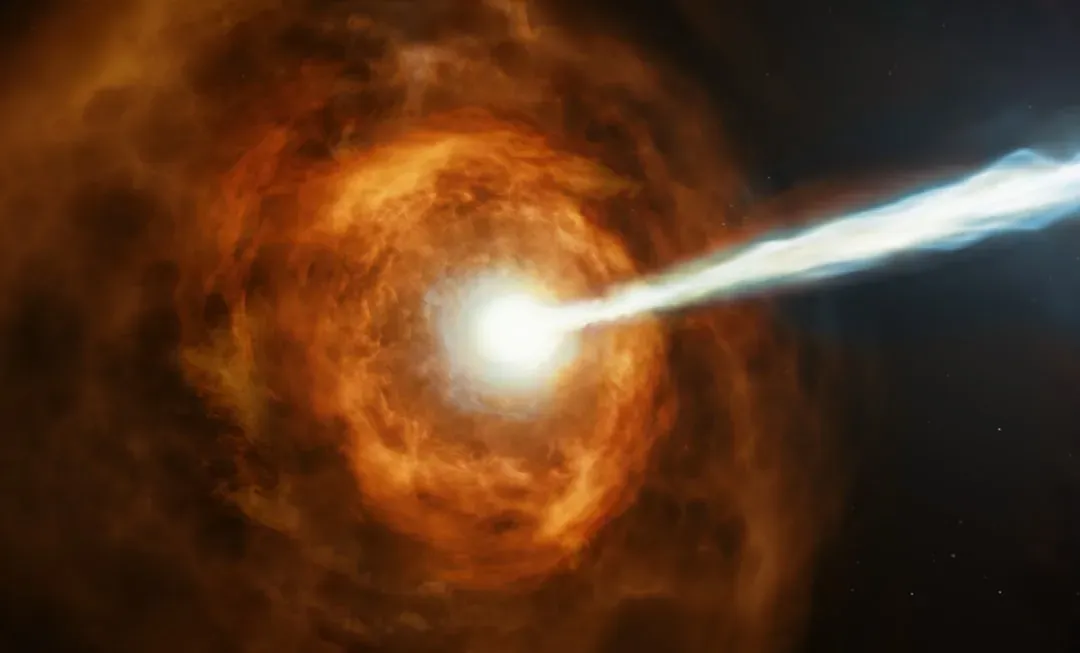
Gamma-ray bursts are among the most energetic events in the universe, and many have known or at least plausible origins like collapsing massive stars or merging neutron stars. But buried in catalogs are certain long-duration gamma-ray events that defy easy categorization. Some of these show unusual energy distributions, strange temporal structures, or a lack of the expected afterglow in X-ray, optical, or radio bands, leaving astronomers with very little to work with beyond the initial high-energy spike.
For individual events, the official record may list them as “unclassified” or “peculiar,” which is a polite way of saying “we saw it but have no clear idea what produced it.” Theories range from odd angles of viewing standard explosions to entirely different kinds of catastrophic events, like magnetar hyperflares or rare black-hole interactions. The honest reality is that for a subset of these bursts, the data are sparse and the models stretched. These signals are not ignored; they simply sit on the shelf labeled “incomplete story,” waiting for more clues from future missions.
The Early “Peryton” Radio Blips That Did Not Fit Any Known Pattern
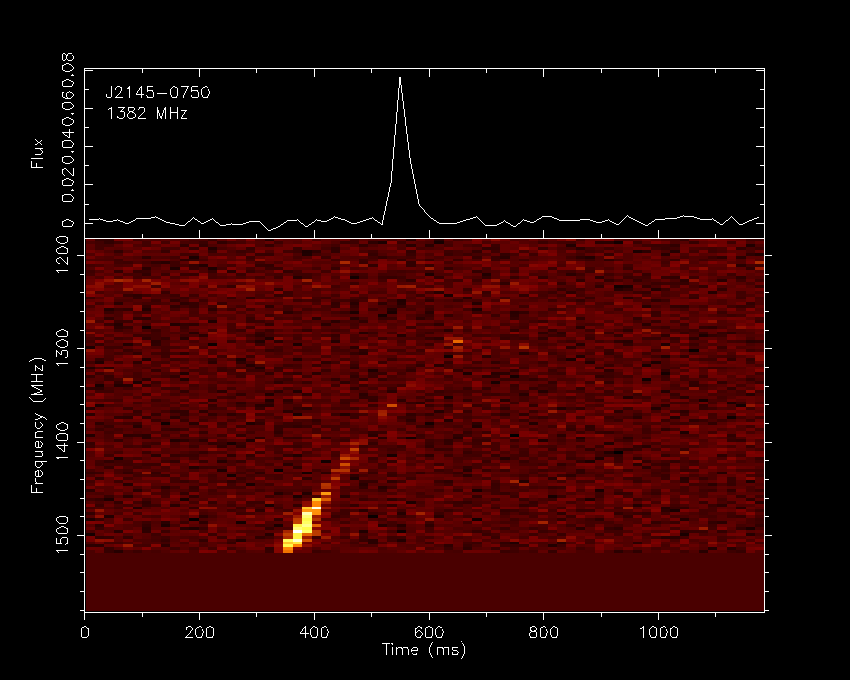
Before scientists realized that many so-called perytons at the Parkes telescope were caused by microwave ovens on-site, there existed a period when these short, chirped radio pulses seemed genuinely puzzling. They resembled dispersed cosmic signals in some ways but had properties that did not line up cleanly with any known astrophysical source. For a while, they looked like potential cousins of the Lorimer burst, hinting at a strange and nearby cosmic phenomenon.
Once part of the peryton population was traced to human activity, it was tempting to dismiss the entire set as solved. But some detections in various observatories did not map neatly onto that explanation, and a few remain hard to classify even today. The episode is a good example of why astronomers are wary: sometimes the universe looks weird because we are seeing reflections of our own technology, and sometimes something weird stays on the ledger even after the obvious culprits are eliminated. Those leftover signals live in a gray zone of “likely terrestrial, not conclusively proven,” which is not a very satisfying category for anyone.
Unidentified Narrowband Signals Near Known Exoplanet Systems
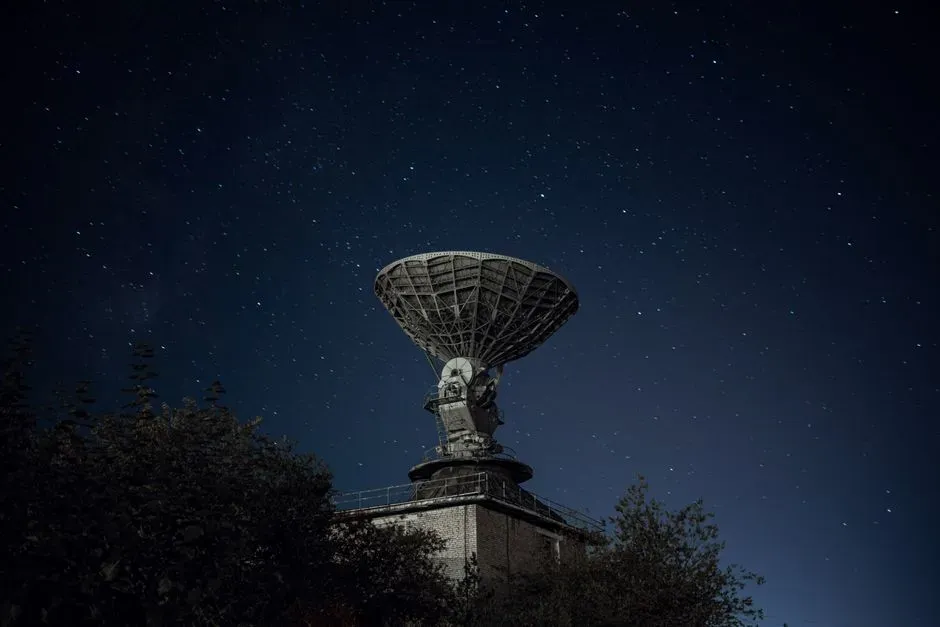
As radio observatories have started taking targeted looks at star systems known to host exoplanets, a few narrowband signals have cropped up that briefly raise hopes before sliding back into mystery. These are generally detected as single, faint spikes in a specific frequency that appear during a pointing at an exoplanet host and then vanish on re-observation. They are carefully logged, cross-checked against known satellites and interference sources, and, in some cases, still lack a solid mundane explanation.
The frustrating reality is that one-off narrowband features are incredibly hard to interpret. A drifting satellite, a reflection from aircraft, or obscure military hardware can mimic the appearance of a distant transmitter. At the same time, if anyone ever did detect a genuinely artificial signal from another civilization, the very first sign might well look like a single, unexplained spike in the noise. So these detections occupy a strange limbo: fully documented, officially unexplained for now, but not strong enough to claim anything extraordinary. They are the cosmic equivalent of hearing a faint knock on the wall once and never again.
The Persistent Cosmic Radio Background That Seems Too Bright
When instruments like the ARCADE balloon experiment measured the radio sky at certain frequencies, they found a diffuse glow that seemed brighter than all known populations of galaxies and radio sources could account for. This excess background is not a sharp, obvious “signal” in the way a burst or narrowband tone is, but it is a systematic, repeatable feature of the data that refuses to fit nicely into existing models of the universe’s radio output. It is as if the cosmos is humming a little louder than expected in a low, steady voice.
A number of explanations have been explored: perhaps there are far more faint radio galaxies than we think, or some unknown population of early-universe objects contributing to the glow. More exotic ideas invoke new physics or particles that would release radio emission as they interact. So far, nothing has closed the gap convincingly, and the excess remains an officially acknowledged puzzle. It is not flashy, but in some ways it is more important than any single burst: if we are miscounting the background light of the universe, there may be entire chapters of cosmic history we have only glimpsed as a vague brightening of the noise floor.
Conclusion: The Universe Is Louder, Stranger, and Less “Solved” Than We Admit
What ties these ten signals together is not aliens or conspiracy or some secret thread connecting them behind the scenes. It is the simple, humbling fact that our instruments keep picking up things we do not fully understand, even after decades of increasingly sophisticated surveys. For every press release that neatly ties a transient to a black hole or a neutron star, there are oddballs that never make the headlines because the honest answer is just: we do not know yet. Personally, I find those loose ends far more thrilling than a tidy narrative.
There is a temptation to force every mystery into one of two boxes: either it is ordinary noise we have not fully explained, or it must be extraordinary intelligence calling from the dark. The reality is much messier and, in my view, much more interesting. The cosmos is under no obligation to produce signals that match our categories or our expectations. It is likely that some of these unexplained events will eventually turn out to be mundane once we have better data, and a few may open doors onto entirely new physics or astrophysical phenomena. Until then, they sit there, quietly documented in the literature, daring us to build better ears and ask better questions. Which of these puzzles would you secretly love to see solved in your lifetime?