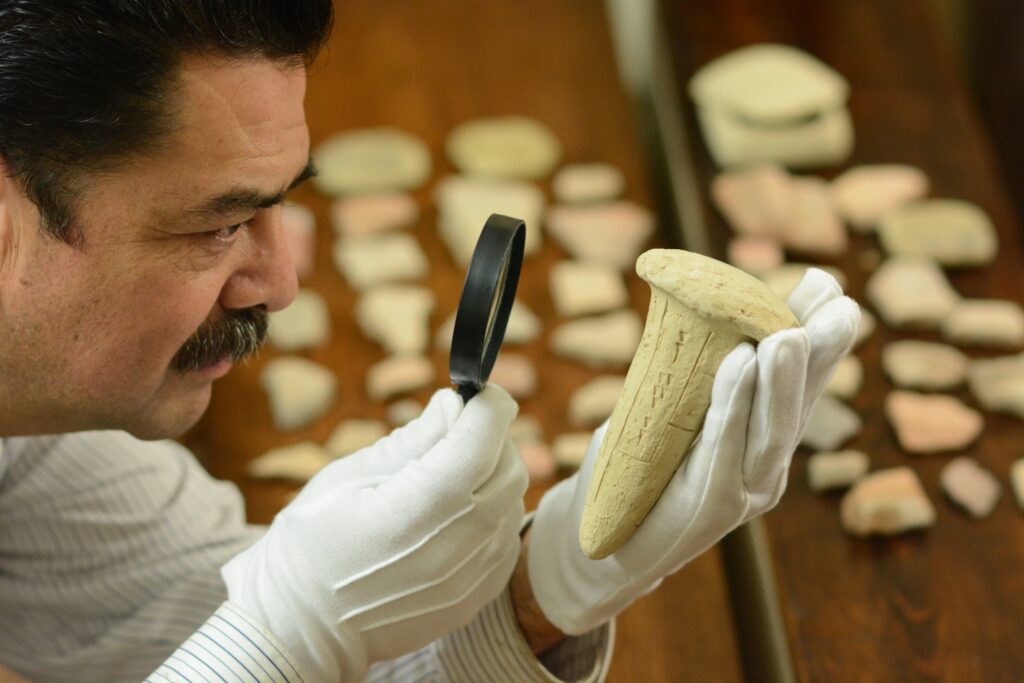

Most people picture archaeology as decades of careful digging with a trowel, a grid map, and a research grant that took years to secure. Turns out, some of history’s biggest breakthroughs happened because someone tripped over a rock, dug a well during a drought, or lobbed a stone at a lazy goat.
No PhDs. No five-year excavation permits. Just dumb luck colliding head-on with secrets that had been buried for thousands of years. From a shepherd’s bad aim to a farmer’s desperate search for water, these accidents didn’t just uncover objects – they rewrote entire chapters of human history in a single afternoon. Here’s what actually happened, according to the archaeologists and historians who had to scramble and make sense of it.
#13 – A Mountain Hike That Rewrote the Copper Age
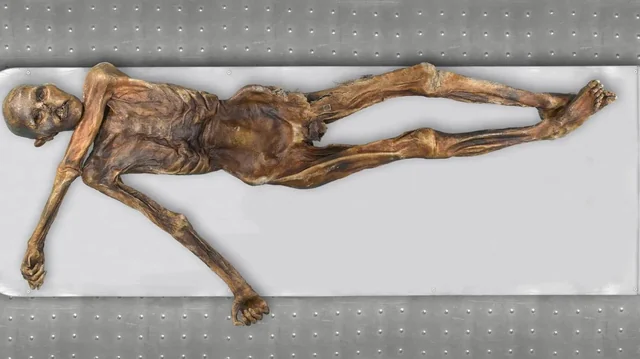
Two German tourists were hunting for a shortcut down a melting glacier in 1991 when they spotted something poking out of the ice. Helmut and Erika Simon assumed it was a lost mountaineer, and so did the authorities who arrived to recover the body. Only when researchers noticed the copper axe, the tattoos, and the leather clothing did anyone suspect they weren’t looking at a modern death at all.
The corpse, nicknamed Ötzi, turned out to be the oldest naturally preserved human mummy ever found in Europe – a 5,300-year-old Copper Age man with an arrowhead wound suggesting he was murdered, not just frozen. His stomach still held his last meal. Before Ötzi, scientists reconstructed Copper Age Europe from pottery shards and educated guesswork. This one body handed them an entire toolkit, wardrobe, and even his own gut bacteria – proof that sometimes the biggest breakthrough is the one nobody was looking for.
Fast Facts
- Found in 1991 in the Ötztal Alps on the Austrian-Italian border
- Roughly 5,300 years old, from the late Copper Age
- Died from an arrow wound to the shoulder, likely bled out
- Carried a rare, high-value copper axe – a status symbol at the time
- Body preserved dozens of tattoos, among the oldest ever found on human skin
#12 – A Metal Detector Hobbyist Stumbles Onto a Warlord’s Treasure
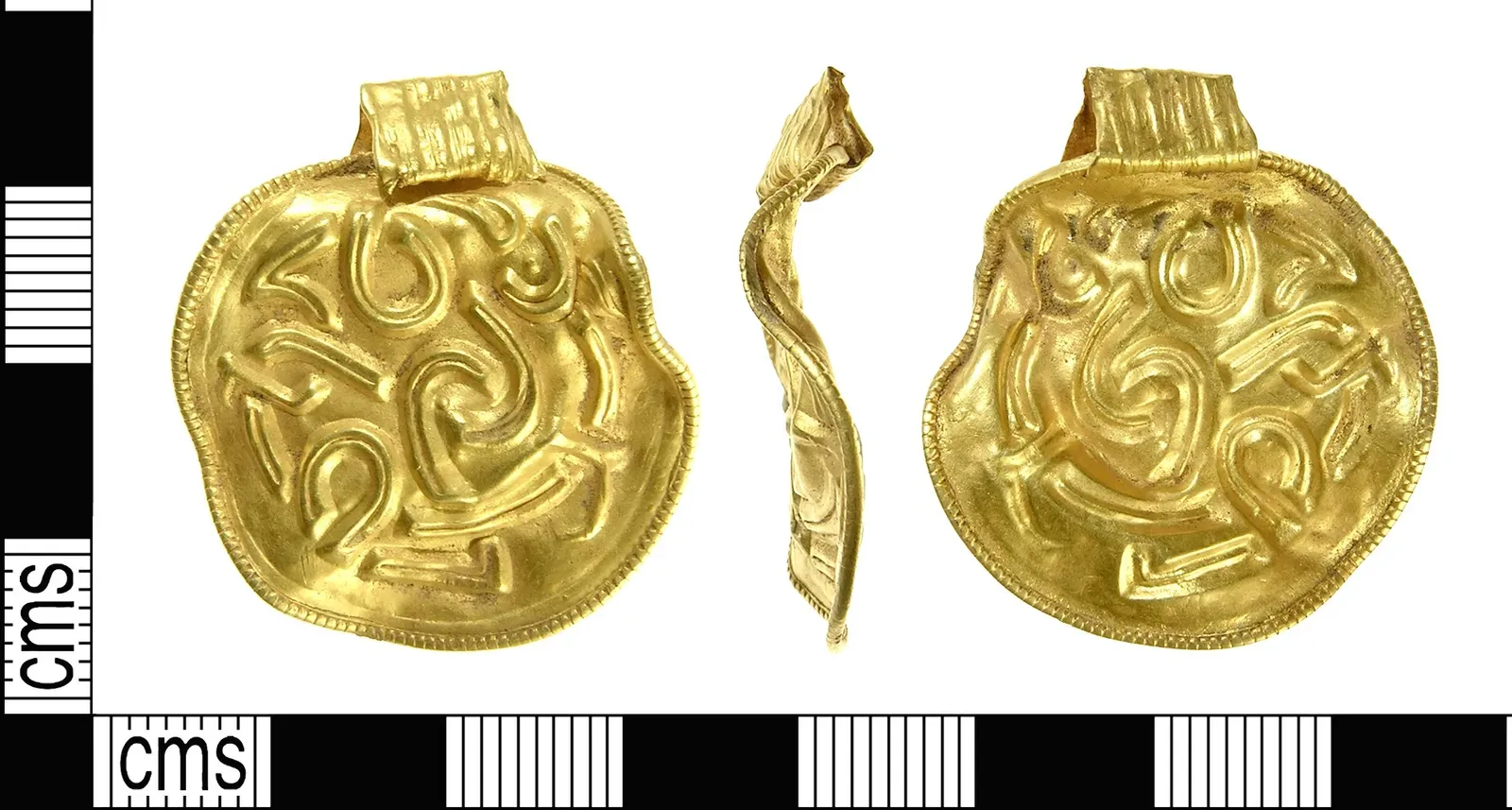
Terry Herbert was a retired man scanning a recently ploughed Staffordshire field in 2009, hoping for spare change or a stray belt buckle. Instead, his metal detector started screaming and wouldn’t stop. Over five days, he pulled more than 3,500 pieces of gold and silver metalwork out of the dirt, nearly all of it military hardware – sword hilts, helmet fragments, and battle fittings from Anglo-Saxon England.
Experts confirmed it as the largest hoard of Anglo-Saxon gold ever discovered, dating to the brutal warfare of the 7th century. Most people assume early medieval England was culturally primitive, all mud and superstition. This hoard argues the opposite – the craftsmanship on these fittings rivals anything produced in Byzantium. Many historians now believe it was war booty stripped from a defeated army rather than a buried treasure, a detail that still sparks arguments among archaeologists today.
#11 – The King Found Under a Parking Lot
![#11 - The King Found Under a Parking Lot (‘The king in the car park’: new light on the death and burial of Richard III in the Grey Friars church, Leicester, in 1485, taken from [1], CC BY 4.0)](https://nvmwebsites-budwg5g9avh3epea.z03.azurefd.net/dws/c44785634cf78ae9c3712a95a9c8bed5.webp)
For more than 500 years, nobody knew where England’s most controversial king was actually buried. Richard III died in battle in 1485, and historical records claimed his body was buried at a friary that later vanished under the streets of Leicester. In 2012, researchers made an educated guess about where that friary once stood – and it happened to be underneath a municipal parking lot.
On the very first day of digging, in the very first trench, they uncovered a skeleton with a curved spine and battle wounds matching historical accounts of Richard’s death. DNA testing later confirmed the identity beyond doubt. What unsettles some historians is how close it came to never happening – the trench could easily have missed the grave by a few feet. Some scholars now argue the odds were so long that the discovery owes more to luck than to method.
#10 – Chinese Quarry Workers Sold Human Fossils as ‘Dragon Bones’
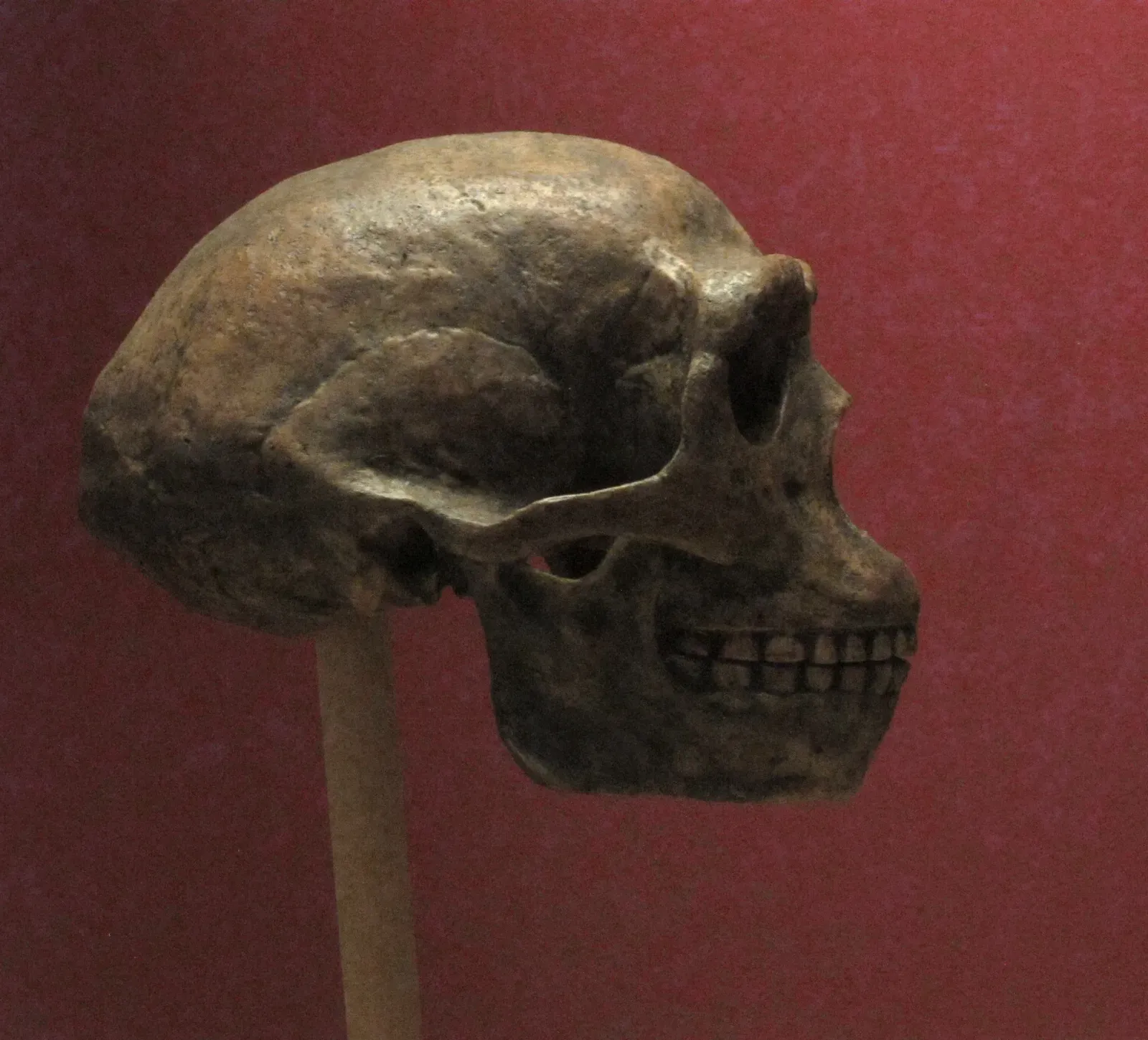
For years, local workers near Beijing dug up strange bones and sold them to pharmacies as ground-up ‘dragon bone’ medicine, never realizing they were destroying evidence of human evolution one sale at a time. In the 1920s, a Swedish geologist heard rumors about a fossil-rich cave system at Zhoukoudian and decided to investigate the site quarrymen had quietly been mining for years.
What scientists eventually excavated became known as ‘Peking Man’ – a population of Homo erectus that lived in the region hundreds of thousands of years ago, evidence that locals had unknowingly been selling to herbal medicine shops before a single researcher ever set foot on the site. The fossils themselves were later lost during World War II, which makes the original excavation records some of the most valuable paleontological documents in existence. Sometimes game-changing science starts in a marketplace stall, not a laboratory.
#9 – A Well Digger Struck an Ancient Theater by Accident
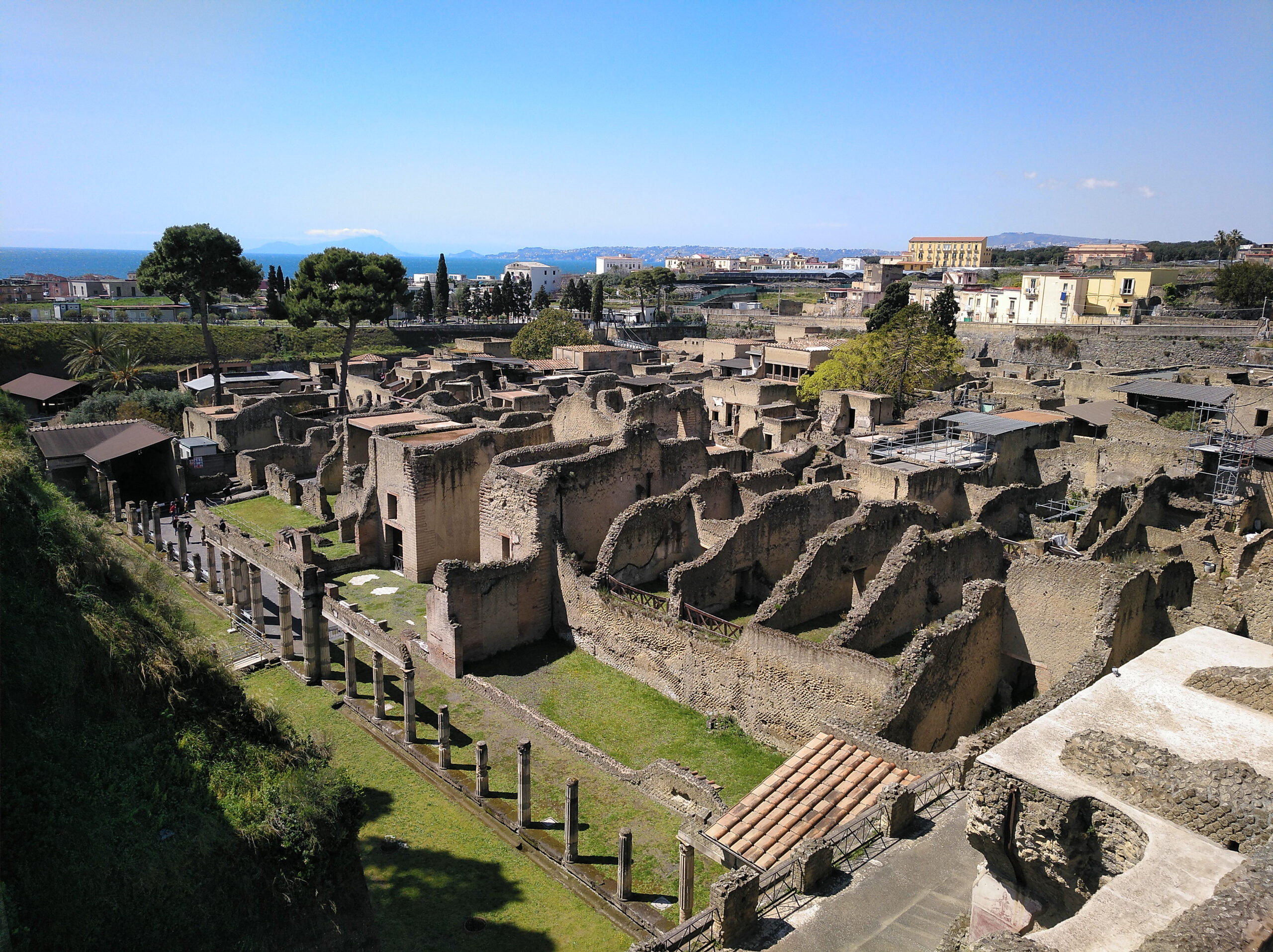
In 1709, laborers near Naples were digging a simple water well for a European prince when their shovels struck solid marble far underground. They had no idea they’d just broken into the seating of an ancient Roman theater.
The site turned out to be Herculaneum, a wealthy Roman town buried under volcanic material during the catastrophic eruption of Mount Vesuvius in 79 AD – exposed by a random well-digging project after sitting untouched for over 1,600 years. Herculaneum eventually yielded even more than its sister city Pompeii in some respects, including carbonized furniture, preserved food, and an entire private library of scrolls that scholars are still trying to unroll using modern imaging technology. Many archaeologists secretly consider it more valuable than Pompeii, even though Pompeii gets all the tourist traffic – an opinion that tends to start arguments at dinner parties.
Quick Compare
- Discovery: Herculaneum surfaced by accident in 1709; Pompeii was found decades later, in 1748
- Burial method: Herculaneum was sealed by dense volcanic mud, preserving wood, cloth, and food; Pompeii was covered mainly by ash and pumice
- Size: Pompeii was the much larger city; Herculaneum was smaller and wealthier per capita
- Crowds today: Pompeii draws far heavier tourist traffic, while Herculaneum stays comparatively quiet
#8 – A Little Girl Pointed at the Ceiling and Broke Archaeology’s Biggest Assumption
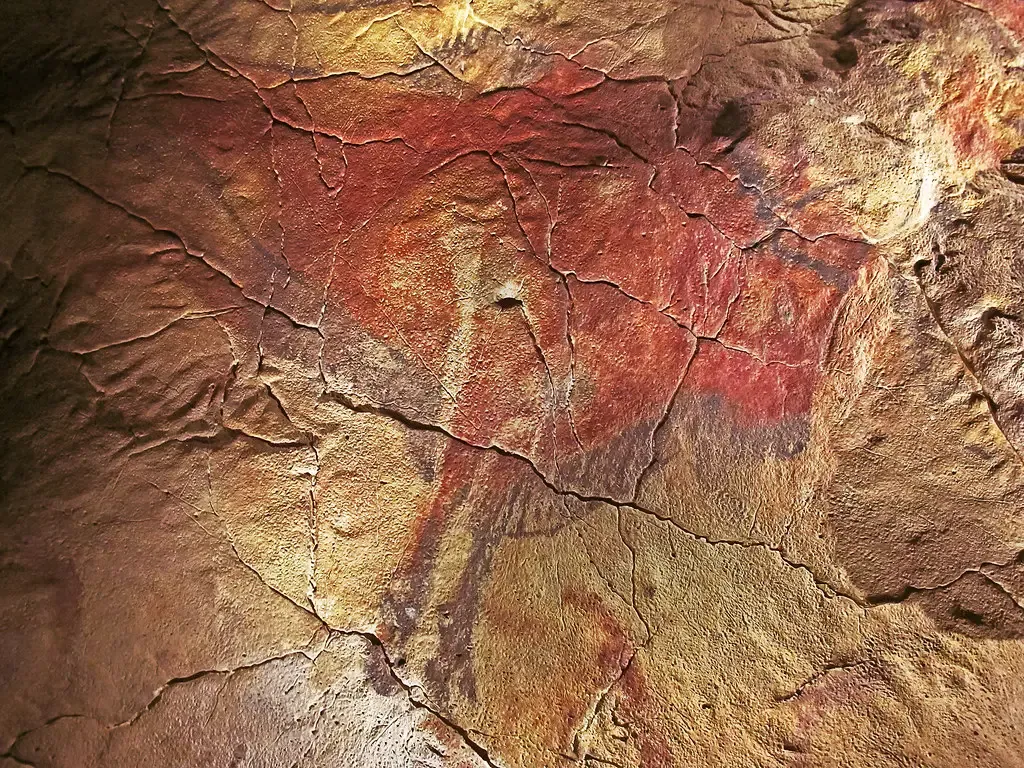
In 1879, landowner Marcelino Sanz de Sautuola brought his young daughter Maria into the Altamira cave in northern Spain while he searched the ground for artifacts. Maria looked up, not down, and spotted vivid, multicolored bison painted directly above them.
When Sautuola presented the paintings to the scientific community, most experts flatly refused to believe Stone Age humans were capable of such sophisticated art, publicly accusing him of faking them – and he died before the work was finally validated decades later. It took until 1902, after similar paintings turned up in France, for the scientific establishment to admit prehistoric humans possessed real artistic skill. This case remains one of archaeology’s most humbling lessons: sometimes the experts are the last ones to see what’s right in front of them.
#7 – A Landowner’s Hunch Uncovered a Sunken Ghost Ship
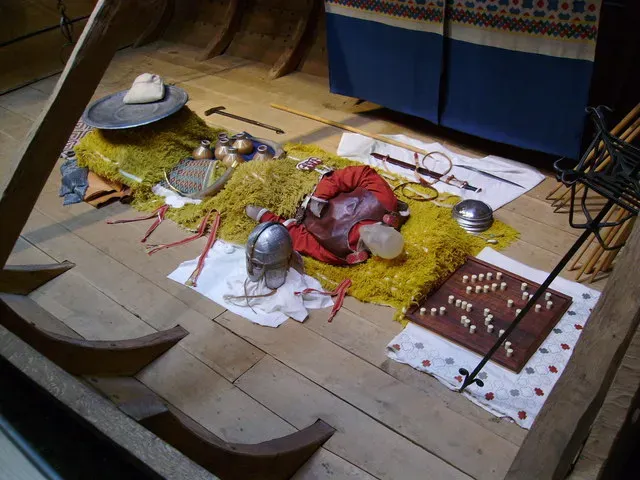
In 1939, landowner Edith Pretty asked self-taught archaeologist Basil Brown to poke around some odd grassy mounds on her Suffolk estate. Most people assumed the mounds held minor Bronze Age remains, if anything at all – the site had likely been ignored by grave robbers for centuries.
Instead, Brown uncovered the rotted-away outline of an entire Anglo-Saxon ship, its full 90-foot shape preserved as a ghostly imprint in the soil, along with one of the richest treasure hoards ever found in Britain, believed to belong to a 7th-century king. The find single-handedly destroyed the outdated idea that early medieval England was a cultural backwater. Sutton Hoo proved Anglo-Saxon craftsmen were producing gold and garnet work sophisticated enough to rival continental Europe.
#6 – A Water Boy’s Foot Found a Buried Pharaoh
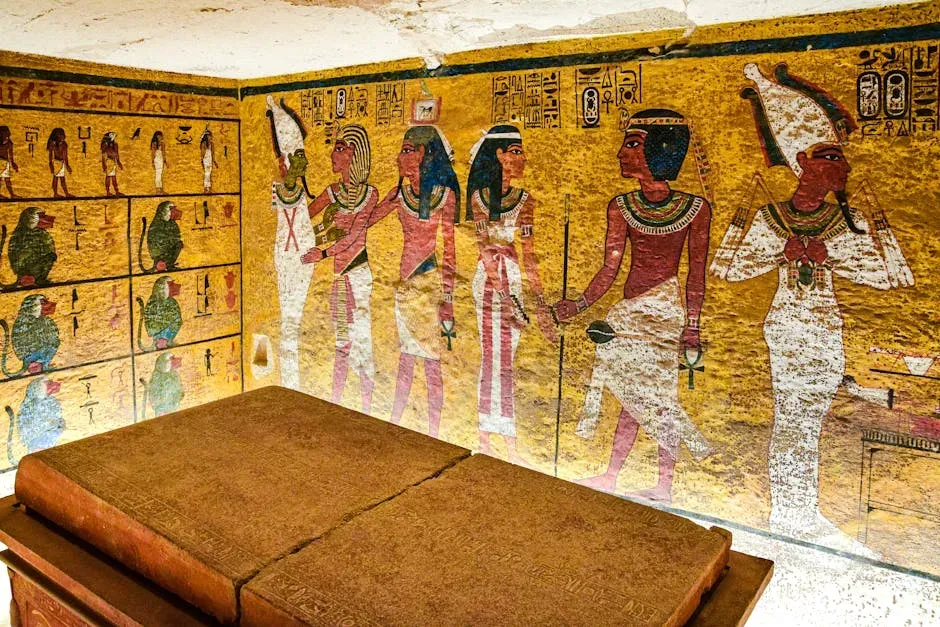
By 1922, archaeologist Howard Carter had spent years searching the Valley of the Kings for Tutankhamun’s tomb, funded by an increasingly impatient financier who was ready to pull the money. According to the most repeated version of the story, a young water carrier setting up a jar stand in the sand accidentally uncovered a stone step cut into the bedrock.
That single step led to a sealed staircase, and eventually to one of the only pharaonic tombs ever found almost completely intact – nearly every other royal tomb in the valley had already been looted centuries earlier. The treasures inside, including the boy king’s iconic gold mask, became the defining archaeological sensation of the 20th century. Many historians now suspect the ‘accidental’ water boy detail may be partly embellished for drama, but the underlying find remains just as staggering.
Can you see anything? … Yes, wonderful things.
Howard Carter, describing his first look into Tutankhamun’s tomb
#5 – Farmers Digging for Water Found an Emperor’s Buried Army
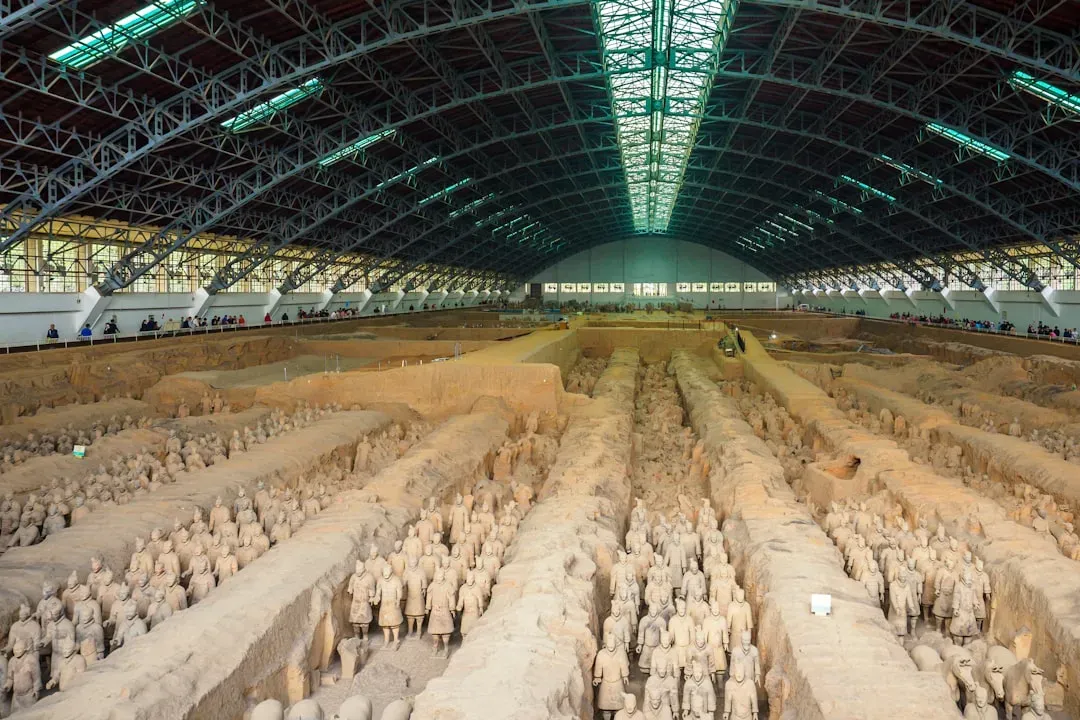
In March 1974, in the middle of a brutal drought, farmers near Xiyang Village just wanted a working well. At about 3 meters down they hit a layer of charcoal and strangely red soil. Past 4 meters, one farmer unearthed a life-sized pottery head, which villagers first assumed was a ‘Pottery God.’
Soon they were pulling up bronze arrows, crossbows, and fragments of armored pottery figures – pieces of an underground army built to guard the tomb of Qin Shi Huang, China’s first emperor, that had sat untouched for over two thousand years. There are no historical records describing it, which only adds to the mystery of what is now the largest and most important tomb site in China. Even decades later, less than 1 percent of the emperor’s tomb has actually been excavated, which means the biggest secrets might still be sitting underground, waiting.
#4 – A Runaway Dog Led a Teenager Into a 17,000-Year-Old Art Gallery
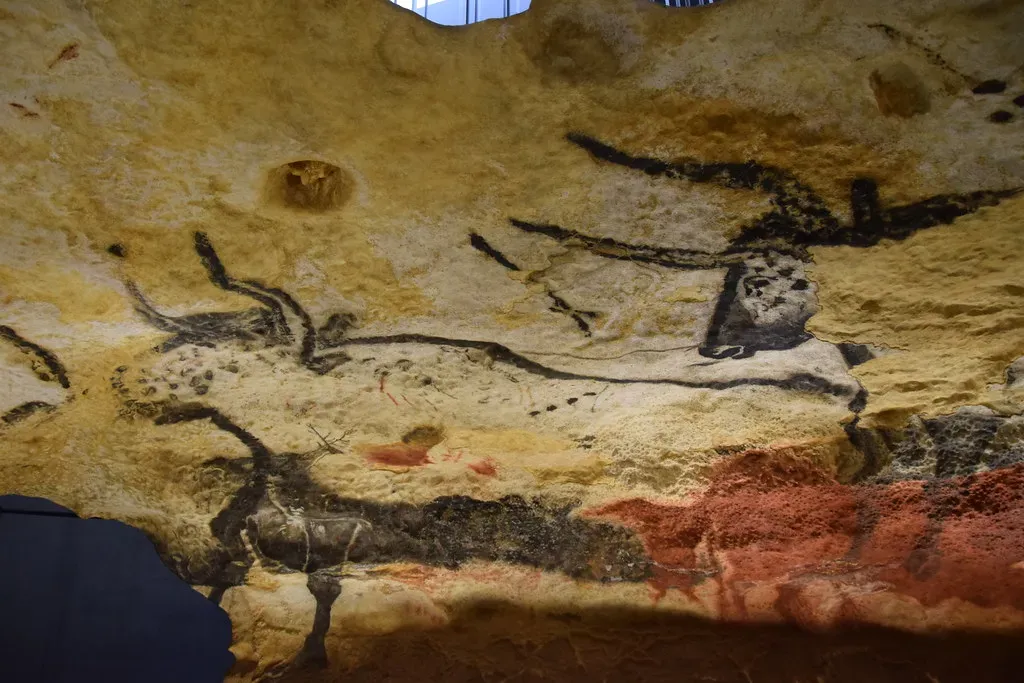
On this day in 1940, near Montignac, France, a dog named Robot disappeared down a hole during a Wednesday afternoon walk. His owner and three friends followed him down a narrow entrance into a cavern none of them knew existed.
What waited in the darkness below was the Lascaux cave, containing roughly 600 painted figures and nearly 1,500 engravings, hidden beneath a French hillside for millennia and shocking the art world the moment it surfaced. Before Lascaux, the assumption was that early humans barely scratched crude symbols onto rock walls. This cave forced historians to admit prehistoric people were capable of genuine artistic planning and vision, not just survival instinct.
#3 – Sponge Divers Found an Ancient Computer Nobody Believed Was Possible
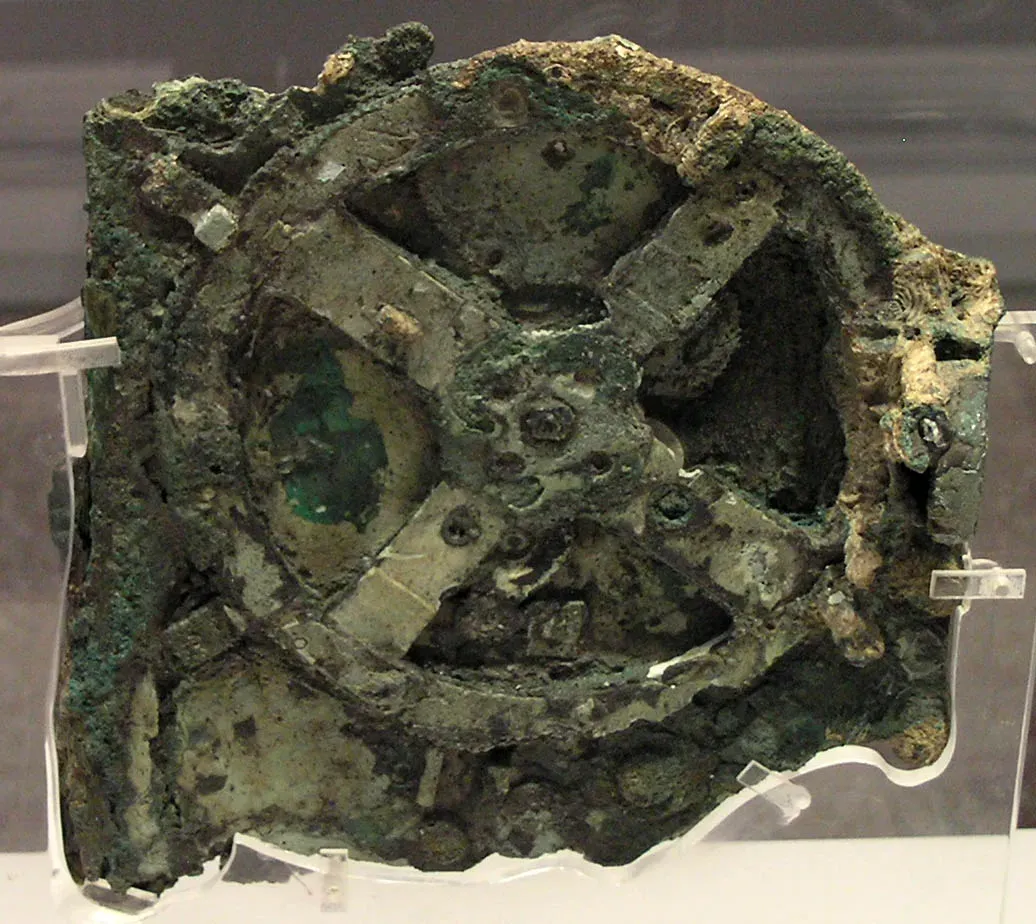
In 1900, a crew of Greek sponge fishermen got caught in foul weather and took shelter near Antikythera, an island between mainland Greece and Crete. Among the shipwreck debris they hauled up was an unremarkable lump of corroded bronze, about the size of a shoebox, that sat in the National Archaeological Museum in Athens for another year before anyone gave it a second look.
Archaeologist Valerios Stais eventually noticed a gear wheel embedded in what everyone had assumed was a piece of rock – and that corroded lump turned out to be a hand-cranked bronze device, built around 100 BC, capable of predicting solar and lunar eclipses and tracking the four-year cycle of the ancient Olympic Games. Nothing of comparable mechanical complexity would appear anywhere on Earth for the next 1,400 years. Most historians assumed ancient Greek technology peaked with simple levers and pulleys; this single device suggests otherwise, and some researchers now argue we still haven’t found the full extent of what the ancient world was capable of building.
Why It Stands Out
- Housed roughly 30 or more precision bronze gears inside a case barely larger than a shoebox
- The device is described as the oldest example of an analogue computer used to predict astronomical positions and eclipses decades in advance, and could also track the four-year cycle of the ancient Olympic Games
- Sat unrecognized in a museum collection for roughly two years before anyone spotted the embedded gear
- No comparably complex geared machine is known to have existed again until well over a thousand years later
#2 – A Bored Shepherd Threw a Rock and Found the Oldest Bible Fragments on Earth
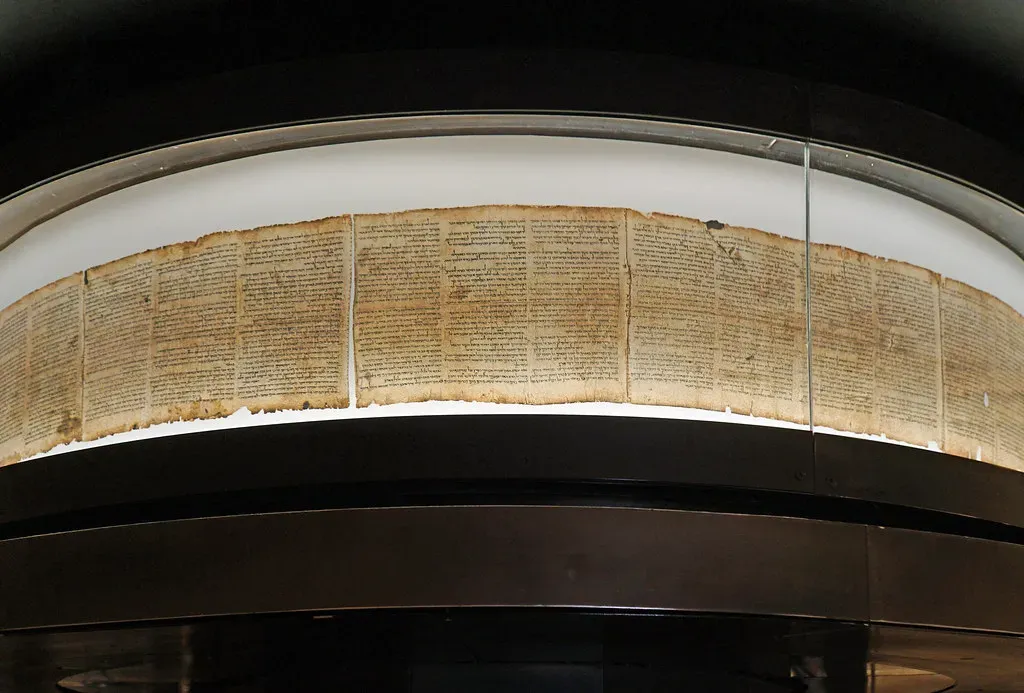
Looking for a lost goat is not usually how you make the most important religious discovery of the 20th century, but that’s exactly what happened between late 1946 and early 1947. Muhammed edh-Dhib, a shepherd boy of the Ta’amireh Bedouin tribe, was searching for a stray goat near Qumran when he tossed a rock into a cave. Instead of hitting rock or goat, he heard it strike pottery.
Inside were several clay jars containing seven ancient scrolls – the first pieces of what turned out to be the Dead Sea Scrolls, dating to about the time of Jesus and eventually numbering over 900 different manuscripts found across 11 caves. The scrolls forced scholars to reexamine centuries of assumptions about how faithfully biblical texts had been copied and preserved. Some of the shepherds reportedly sold the earliest scrolls for shockingly little money before anyone understood their value, a detail that still makes historians wince.
#1 – Soldiers Building a Fort Wall Accidentally Unlocked a Dead Language
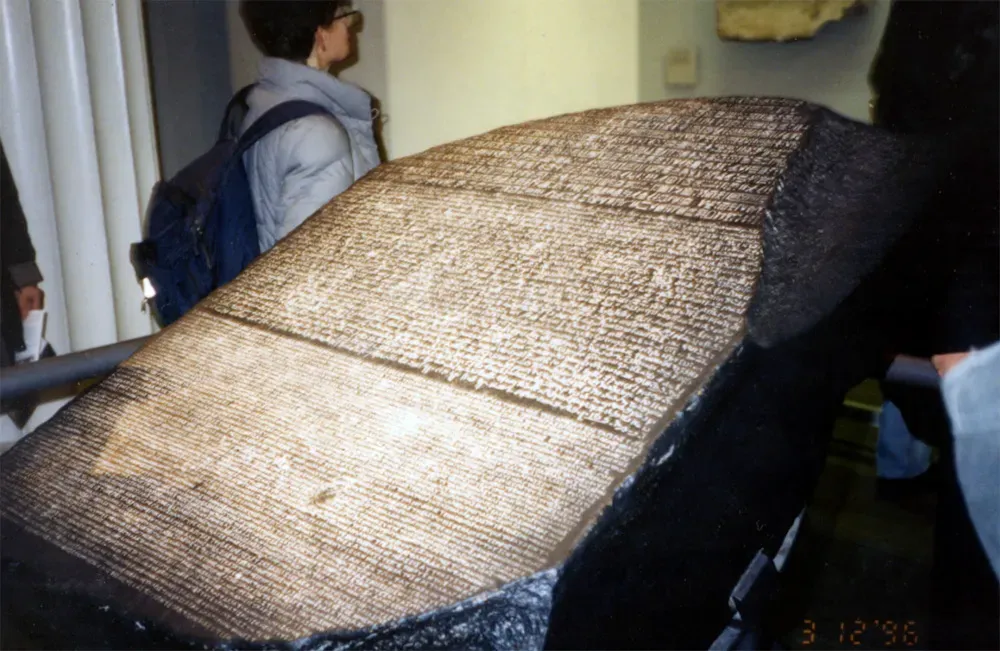
Napoleon’s army wasn’t looking for archaeology in 1799. They were reinforcing a crumbling fort wall near the Nile Delta town of Rosetta when they knocked part of it down and unearthed a 44-inch-long, 30-inch-wide slab of black granodiorite. French army officer Pierre-François Bouchard was the one who noticed it wasn’t just rubble.
Bouchard recognized that the stone carried the same message written in three different scripts – Greek, hieroglyphics, and demotic – handing scholars the exact key they’d been missing for 1,400 years. It took one artifact, two generations of scholars, and roughly two decades to actually crack the code. French Egyptologist Jean-François Champollion eventually succeeded, using the Greek text as his translation guide. Without that accidental wall demolition, we might still be unable to read a single word ancient Egyptians ever wrote about their own civilization.
The Bottom Line
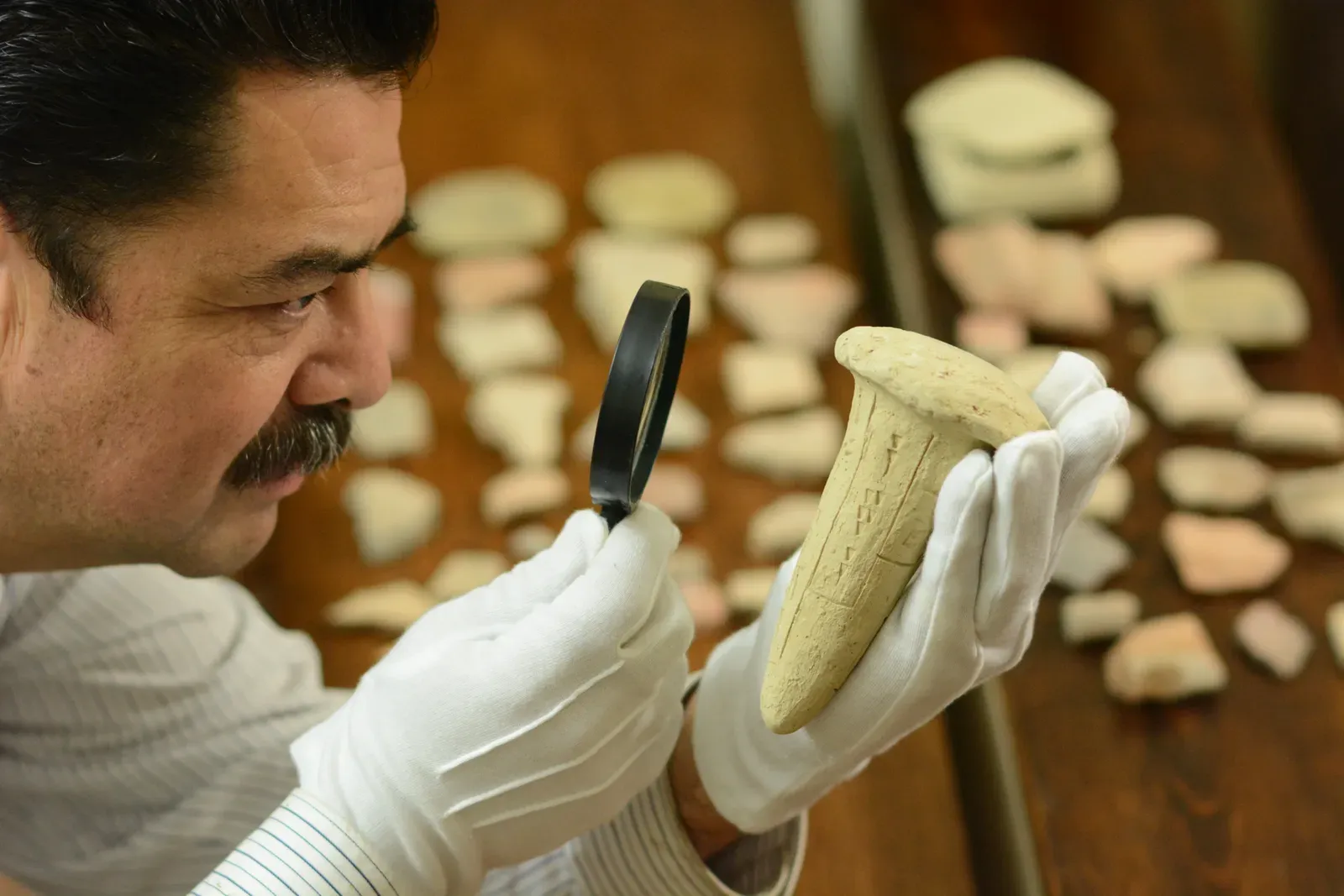
None of these discoveries came from a research grant or a five-year excavation plan. They came from bad luck, worse aim, and one extremely persistent dog. A shepherd’s rock cracked open the Dead Sea Scrolls. A drought-driven well uncovered an emperor’s buried army. A soldier’s fort wall accidentally decoded an entire ancient language.
If there’s one uncomfortable truth here, it’s that professional archaeology, for all its funding and technology, still owes an enormous debt to farmers, shepherds, and bored teenagers with dogs. Maybe the next great discovery isn’t waiting in a lab. Maybe it’s waiting under someone’s backyard well, and nobody digging it even knows what they’re standing on yet.