
Most people assume that if an ancient wonder exists, you can eventually walk up and touch it. You can’t. Right now, dozens of the planet’s most significant archaeological sites sit behind steel doors, military checkpoints, flood barriers, and government-issued restriction orders – some closed for decades, others never opened to a single tourist.
It’s not always a conspiracy. Sometimes it’s mold. Sometimes it’s a border dispute. Sometimes it’s a granite box nobody can explain. Either way, what’s been sealed off tells a stranger story than what’s on display. Here’s what’s actually behind the barricades at 27 of the most significant ancient sites on Earth – and why officials would rather disappoint tourists than risk losing these places for good.
#27 – Skara Brae’s Vanishing Neighbors, Scotland
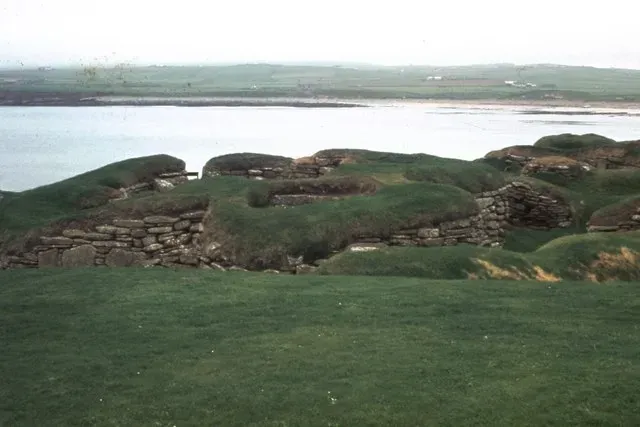
The most complete Stone Age village in Western Europe is losing a battle with the ocean, and entire sections around it stay roped off because of it.
Skara Brae, on Orkney’s coast, has survived roughly 5,000 years underground, only to be exposed by a storm in 1850. Today, coastal erosion is eating the shoreline so fast that Historic Environment Scotland restricts access to surrounding dune areas and monitors the site constantly. Archaeologists believe undiscovered structures nearby are being lost to the sea faster than they can be excavated. Walking paths keep visitors on a narrow, controlled loop specifically so nobody disturbs what’s left.
The unsettling part is that Skara Brae was only one house cluster in a much larger settlement. Ground-penetrating radar surveys have hinted at additional buried structures just beyond the visitor barriers, but excavation funding and erosion timelines rarely align. That means large parts of this Neolithic village may simply wash away, unseen and unrecorded. That vanishing coastline is calm compared to what’s happening at #26.
#26 – Knossos Palace’s Sealed Reconstruction Zones, Crete
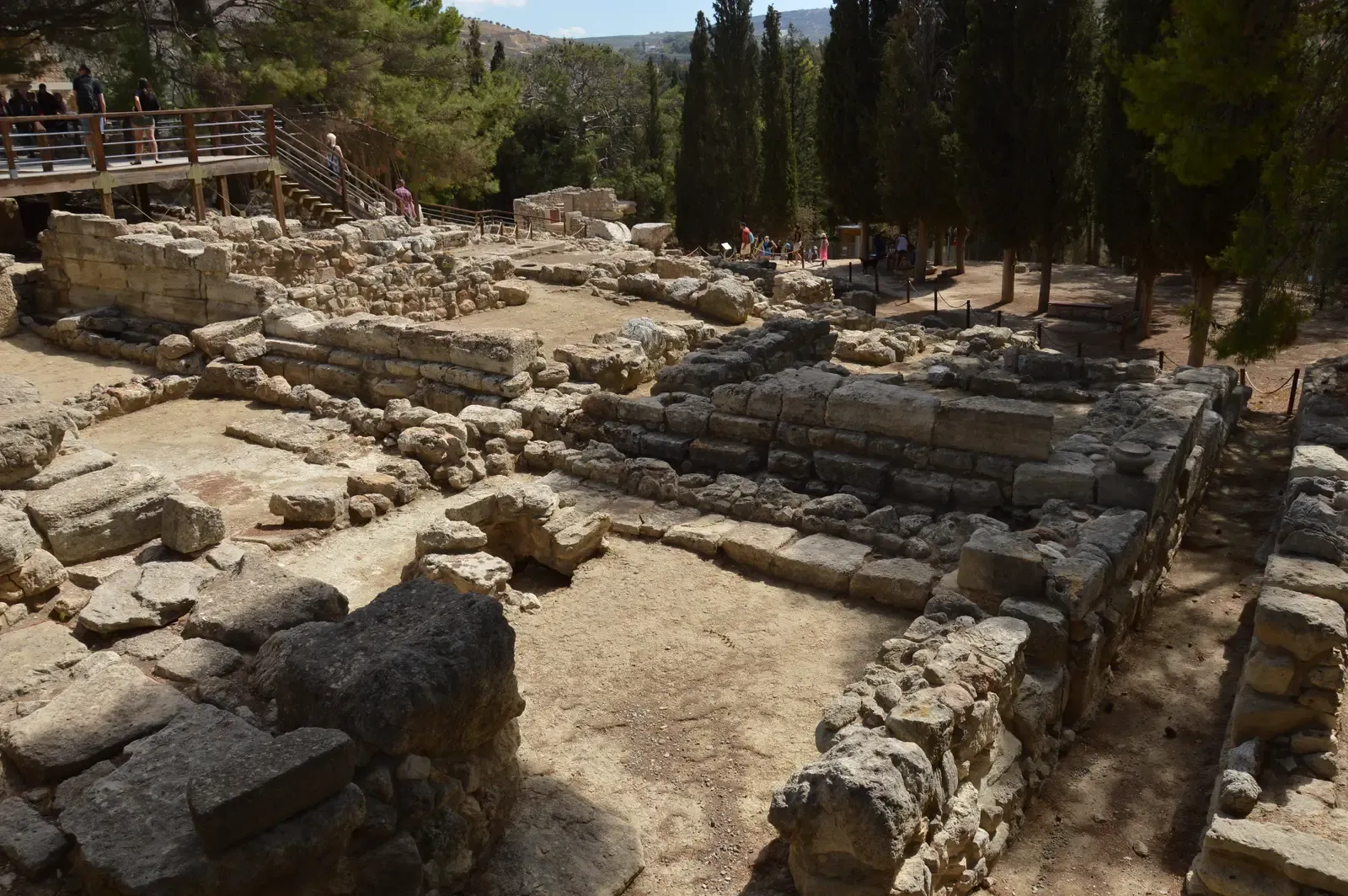
The “Palace of Minos” that tourists photograph today is partly a 20th-century guess, and the real, untouched sections are kept away from foot traffic.
British archaeologist Arthur Evans rebuilt sections of Knossos in the early 1900s using concrete and his own interpretation of Minoan design – a decision still debated by archaeologists today. Because of that controversy, and because the palace’s original mudbrick and gypsum construction is fragile, several original excavation trenches and storage magazines remain fenced off from general visitors. Some of the palace’s oldest, unrestored corridors are only accessible to researchers with written permits.
What’s kept behind those fences matters because it’s the difference between fact and reconstruction. The unrestored zones preserve the actual Bronze Age building techniques, without Evans’ concrete additions layered on top. Comparing the open, rebuilt courtyards to the closed, original ruins is like reading two different versions of the same ancient story. Compared to that, #25 has a much rowdier problem: the jungle itself is trying to eat the ruins.
#25 – Angkor Wat’s Structurally Unstable Towers, Cambodia
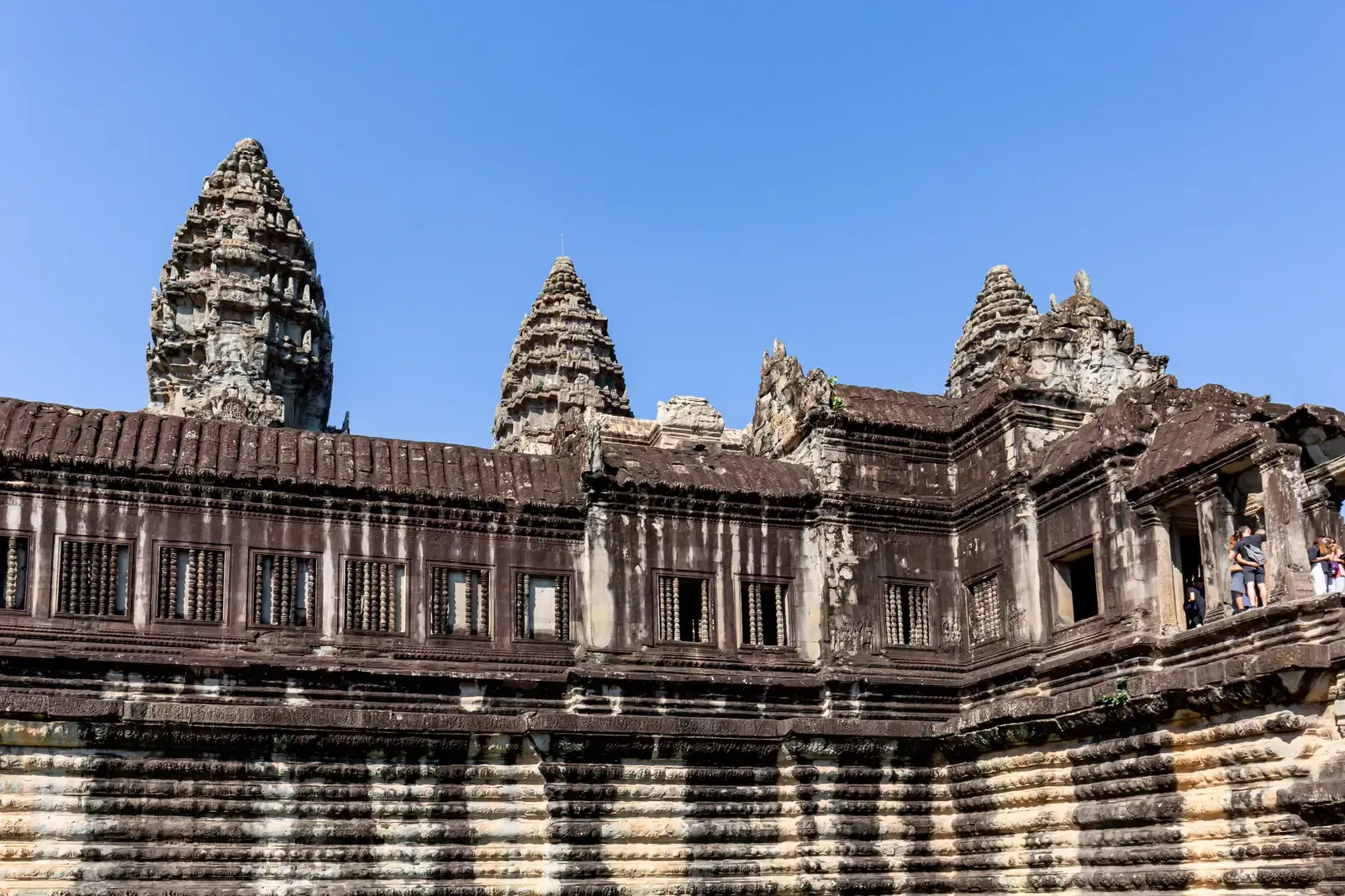
Not every corner of the world’s largest religious monument is safe to enter, and Cambodian authorities know it.
Several inner sanctuaries and upper towers within the greater Angkor Wat complex have been closed at various points due to erosion, tree-root damage, and structural instability, particularly at sites like Ta Prohm and Beng Mealea, where sandstone blocks shift as centuries-old fig and silk-cotton tree roots grow through the walls. Entire temple sections have partially collapsed in the last century, and conservators quietly close unstable areas rather than announce it loudly to tourists.
The jungle isn’t just scenery here – it’s actively demolishing the architecture in slow motion. Restoration teams from multiple countries work behind barriers, stabilizing stone that could shift with the next heavy monsoon season. Much of what visitors see is a carefully managed illusion of permanence. Even that slow collapse looks tame next to what’s buried inside #24.
#24 – Silbury Hill’s No-Climb Zone, England
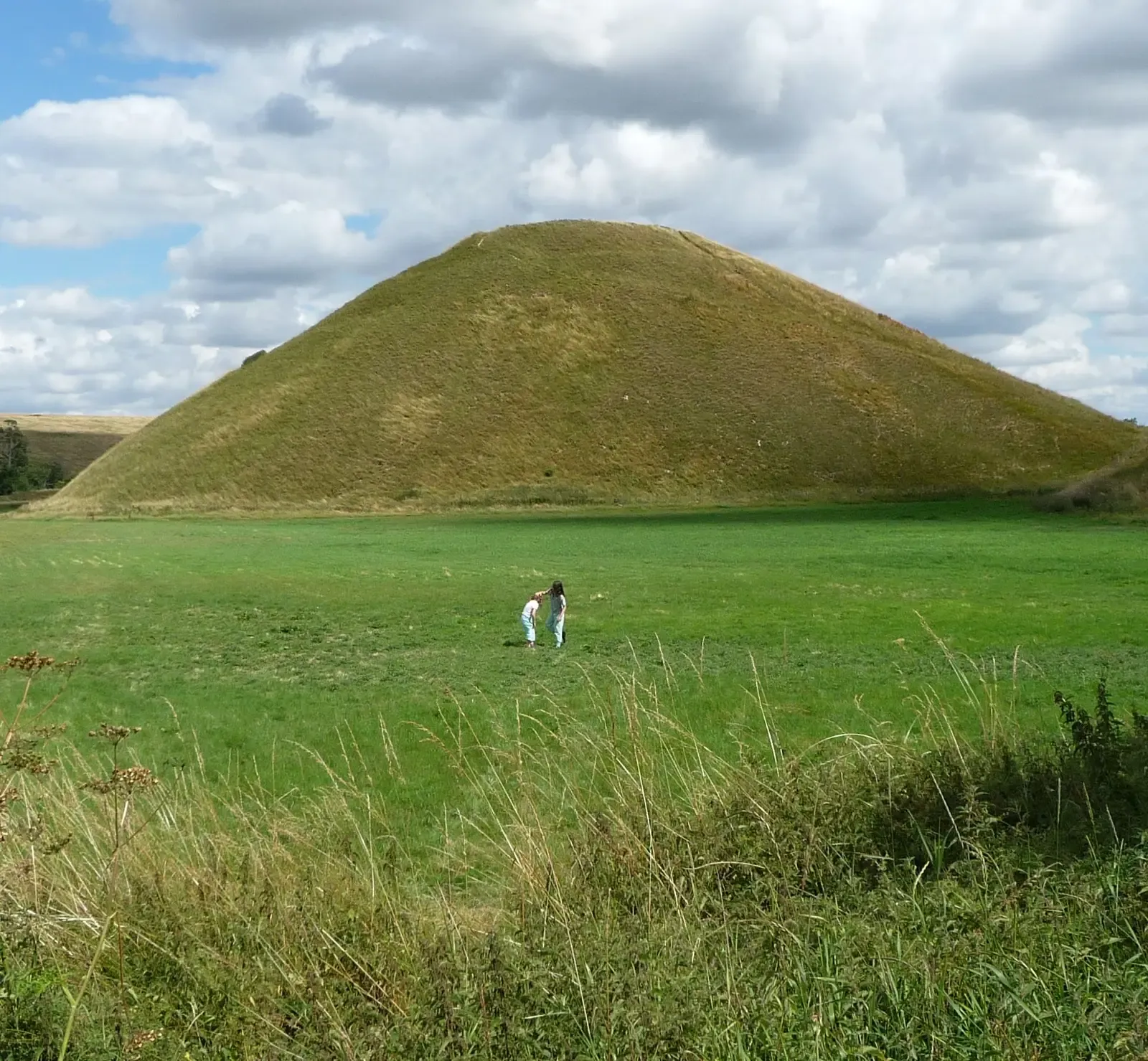
Europe’s largest prehistoric mound has been officially off-limits to climbers for years, and English Heritage isn’t budging.
Silbury Hill, near Avebury in Wiltshire, is a chalk mound roughly 4,400 years old, and its exact purpose has never been settled – burial mound, ceremonial platform, and calendar marker are all theories still debated. Erosion from decades of visitors scrambling up its slopes caused visible damage, prompting a permanent climbing ban. Engineers even discovered internal tunnels and shafts dug by 18th- and 19th-century treasure hunters, some of which had to be filled with over 1,000 tonnes of chalk to stop the hill from collapsing inward.
That detail rarely makes it into travel brochures: this ancient monument nearly caved in on itself because of amateur digging centuries ago. The repair work, completed in phases through the 2000s, was one of the largest structural stabilization projects ever performed on a prehistoric earthwork in Britain. Aboveground erosion is one thing. What’s sealed underground at #23 is another story entirely.
Fast Facts
- Roughly 4,400 years old – Europe’s largest prehistoric mound
- Purpose still debated: burial site, ceremonial platform, or calendar marker
- Climbing permanently banned after decades of erosion damage
- Treasure-hunter tunnels required over 1,000 tonnes of chalk backfill
- Major stabilization project completed in phases through the 2000s
#23 – Chavín de Huántar’s Underground Galleries, Peru
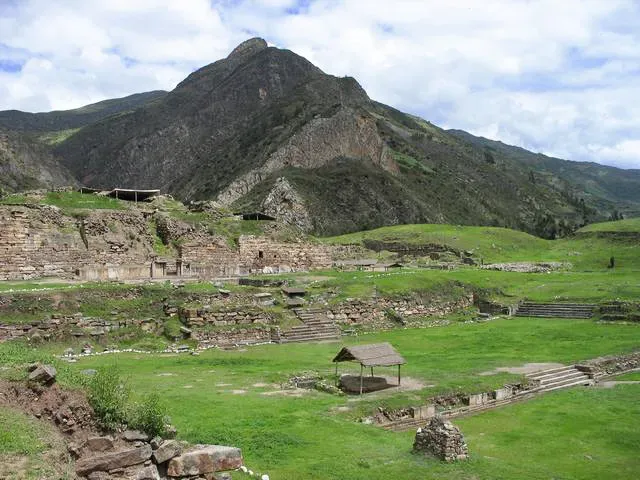
Beneath this 3,000-year-old temple complex in the Peruvian highlands lies a labyrinth of stone corridors that most visitors never see.
Chavín de Huántar is famous for the Lanzón, a carved granite monolith standing inside a pitch-black underground gallery. But the site contains dozens more tunnels and chambers, many still being mapped, and several remain closed due to instability, flooding risk, or ongoing excavation. Researchers have found evidence that ancient priests used the acoustics and darkness of these tunnels deliberately, likely to disorient visitors during ceremonies.
Peru’s Ministry of Culture restricts access to newer tunnel discoveries until they’re structurally reinforced, meaning some of the most psychologically fascinating parts of the site are simply not open. What was once a ritual space designed to control human perception is now controlled by concrete supports and archaeological permits instead. Strange as that sounds, #22 might be the hardest mystery on this entire list to explain away.
#22 – The Longyou Caves’ Unexplained Origin, China
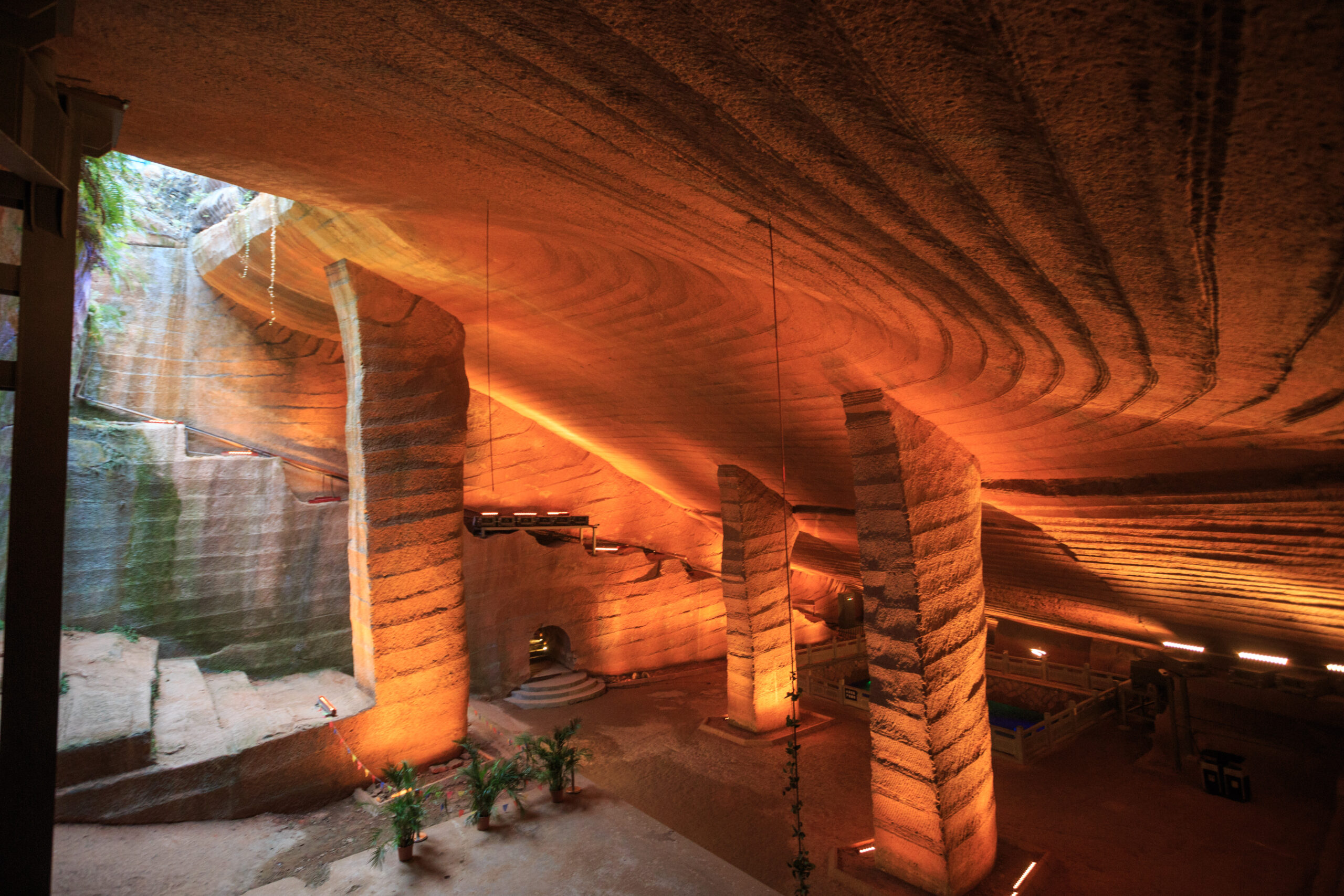
Twenty-four massive man-made caverns were discovered in 1992, and nobody has ever found a written record explaining who built them or why.
The Longyou Caves in China’s Zhejiang province are carved entirely from siltstone, with chisel-mark patterns covering every wall and ceiling in a fine, consistent grid. No historical documents, inscriptions, or local legends mention their construction, despite the sheer scale of excavated rock involved. Several of the caverns remain closed to general tourism because water levels and structural surveys are still ongoing decades after their rediscovery.
Estimates suggest the excavated volume would have required an enormous, coordinated labor force working over a long period, yet ancient Chinese records from the region are silent on the project. That silence is what keeps researchers coming back, and why certain chambers stay sealed off pending further study. Silence in the historical record is one kind of mystery. Scattered megaliths are another, and #21 has plenty.
#21 – Puma Punku’s Off-Limits Excavation Trenches, Bolivia
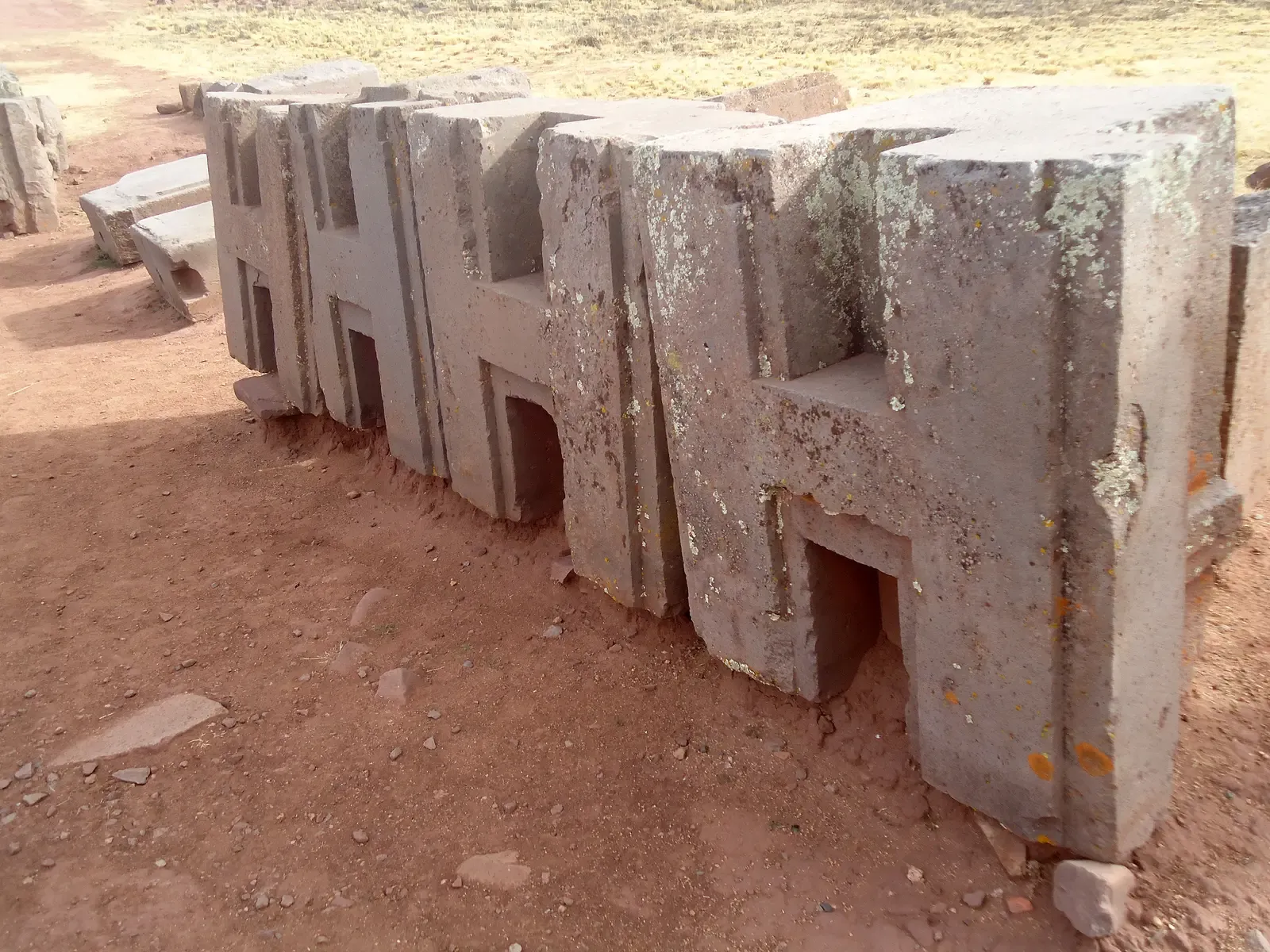
Some of the most precisely cut stone blocks in the ancient world sit at this Bolivian site, and large sections remain fenced away from casual visitors.
Puma Punku, part of the larger Tiwanaku complex near Lake Titicaca, features H-shaped andesite and sandstone blocks cut with such precision that some interlocking edges show almost no measurable gaps. Because the site has suffered from looting and unregulated digging in the past, Bolivian authorities restrict excavation zones and limit public wandering to marked pathways. Many of the largest blocks were deliberately scattered, suggesting the structure was either destroyed by later peoples or an earthquake, and archaeologists are still piecing together its original layout.
The restricted trenches matter because they hold the clues to reconstructing what Puma Punku actually looked like standing. Right now, tourists see a field of scattered megaliths – impressive, but incomplete. What’s behind the fencing is the ongoing attempt to solve that puzzle. Puma Punku’s puzzle is patient. #20’s danger is immediate – one wrong step and the damage is permanent.
#20 – Nazca Lines’ Forbidden Ground, Peru
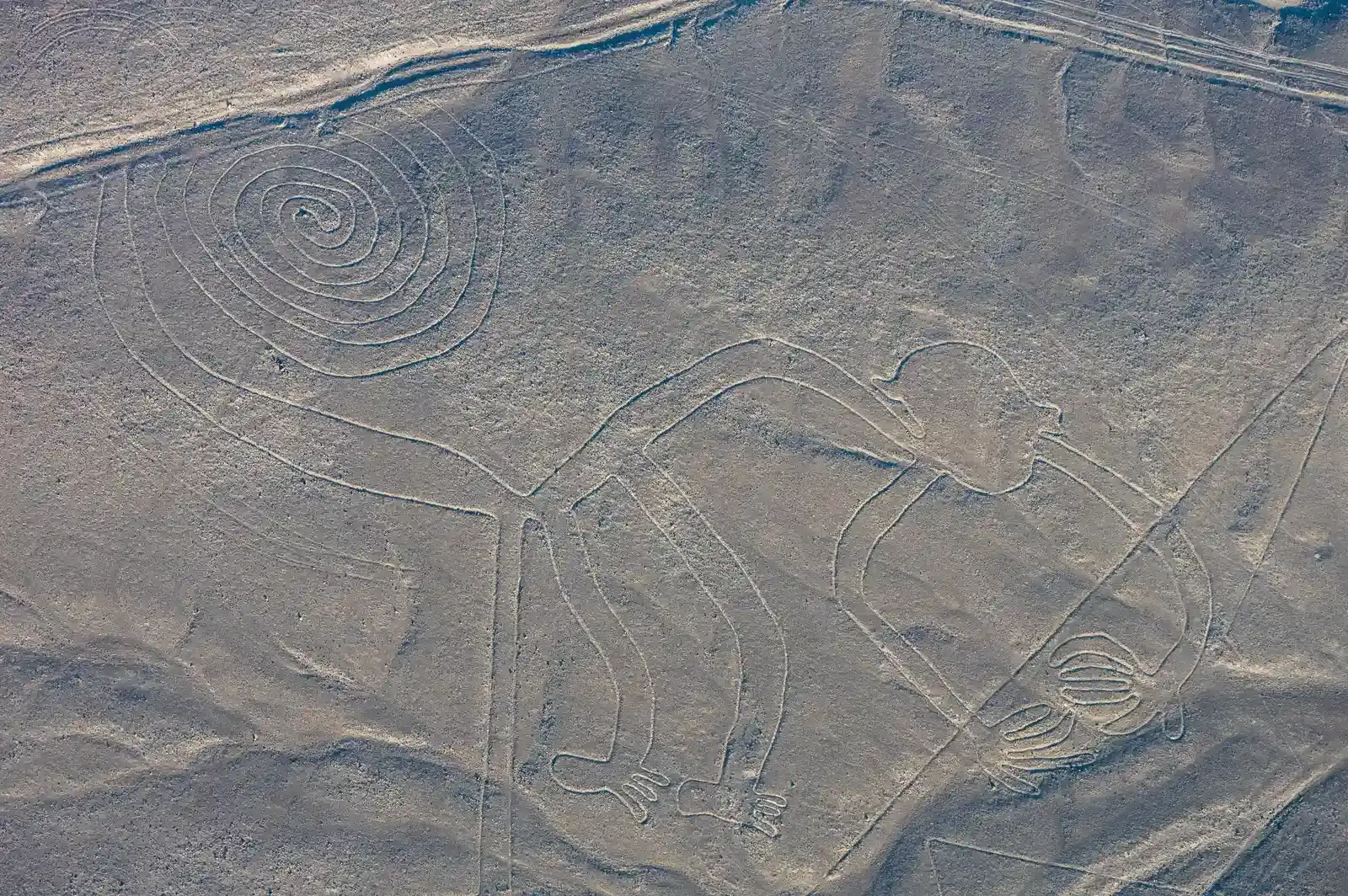
You are not allowed to walk on the desert plateau where the famous giant geoglyphs are etched, and Peru enforces that rule aggressively.
The Nazca Lines, created between roughly 500 BCE and 500 CE, are so fragile that even light foot traffic can permanently damage lines that took a light scraping of the desert’s dark surface layer to create. Peruvian authorities restrict ground access almost entirely, funneling tourists to observation towers or paid overflights instead. In 2014, environmental activists caused lasting damage to the hummingbird geoglyph in minutes simply by walking across it during a publicity stunt.
That incident forced even tighter restrictions across the whole protected zone. Today, drone flights and satellite mapping are the primary tools researchers use to study new lines, precisely because human boots on the ground pose more risk than benefit. The desert itself has become the checkpoint. Above ground, a single footprint can ruin history. Below ground at #19, the danger is just staying alive.
#19 – Derinkuyu’s Sealed Depths, Turkey
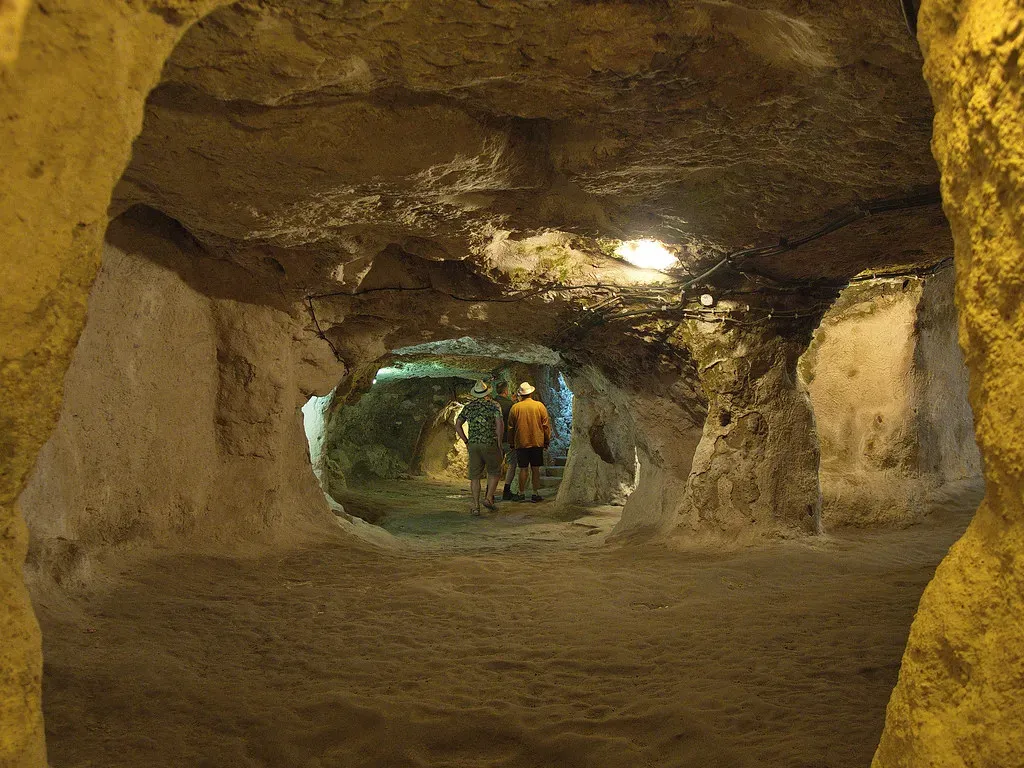
An entire underground city built to hide thousands of people from invaders has sections that remain closed even to modern tourists.
Derinkuyu, in Turkey’s Cappadocia region, descends roughly 60 meters underground through carved tunnels, ventilation shafts, wells, and rolling stone doors designed to block invaders from inside. Only a fraction of the known network is open to visitors; deeper levels are closed due to structural risk, poor ventilation, and ongoing surveys. Estimates suggest the city could have sheltered up to 20,000 people along with their livestock and food stores for extended periods underground.
Archaeologists believe Derinkuyu connected to other underground cities in the region through long tunnels, some of which have never been fully mapped. The combination of low oxygen, unstable rock, and unexcavated passageways keeps large parts of this subterranean maze permanently off the public tour route. That underground maze is unnerving, but #18 proves you don’t need depth to trigger a lockdown – just one bad camera crane.
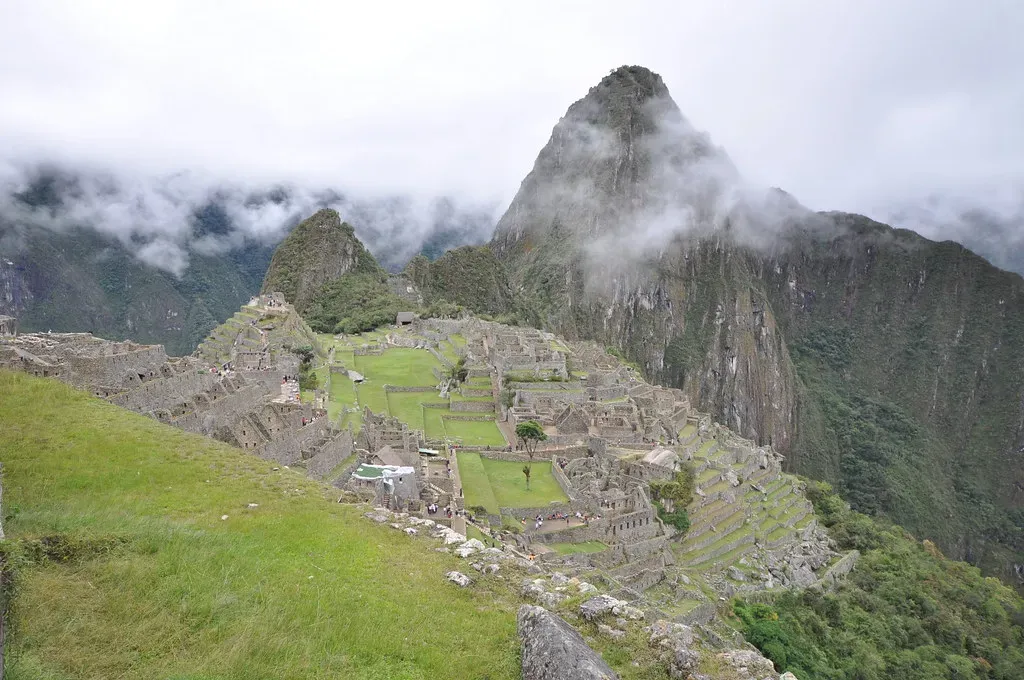
#18 – Machu Picchu’s Roped-Off Sundial, Peru
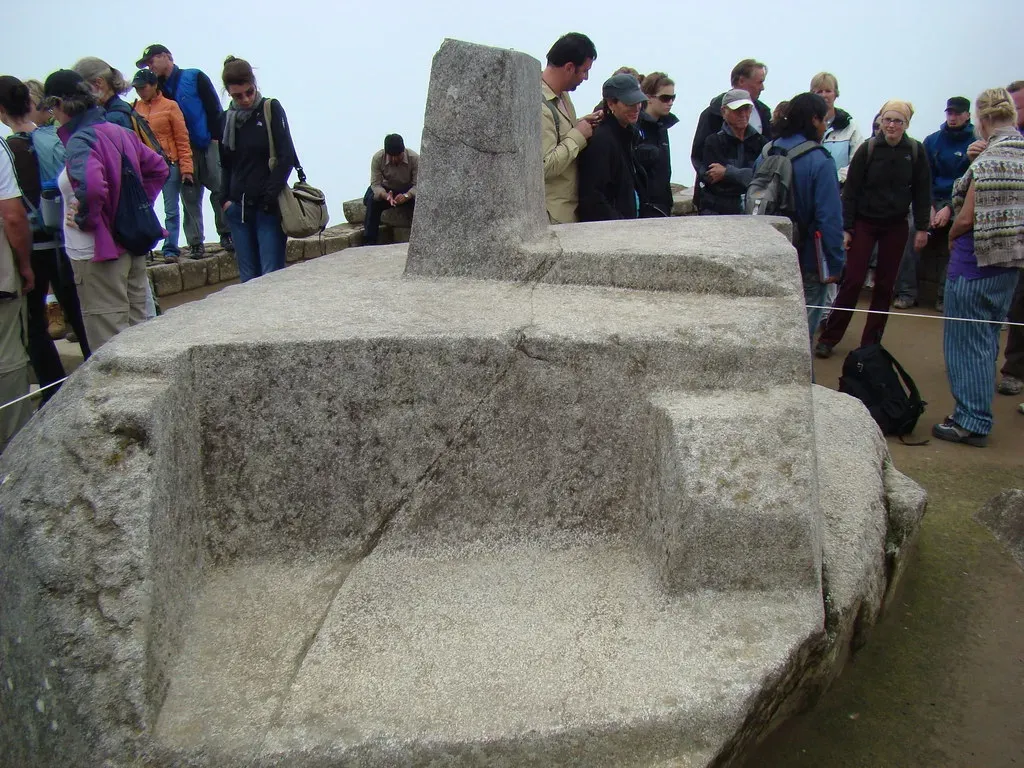
The Intihuatana Stone, believed to be an Incan astronomical instrument, is one of the most heavily guarded objects at Machu Picchu, and tourists can no longer touch it.
After a 2000 filming incident cracked a corner of the stone during a beer commercial shoot, Peruvian officials permanently roped off the Intihuatana and stationed guards nearby. The stone is thought to have functioned as a solar calendar, marking solstices with shadow alignments precise enough to guide agricultural planning. A single accidental chip from a falling camera crane changed public access policy for one of the Inca Empire’s most sacred surviving objects.
Beyond the stone itself, several outlying sectors of Machu Picchu remain closed on rotation to allow grass and stonework to recover from tourist erosion. Peru’s cultural ministry now caps daily visitor numbers and rotates circuit routes specifically to protect zones that were previously open every day. One cracked stone changed the rules at Machu Picchu. A string of deaths and injuries did the same at #17.
At a Glance
- Intihuatana Stone roped off after a 2000 filming accident chipped it
- Believed to function as a solar calendar tracking solstice shadows
- Daily visitor numbers now capped by Peru’s cultural ministry
- Outlying sectors close on rotation to let stonework and grass recover
- Guards now stationed permanently near the stone
#17 – Chichen Itza’s Banned Climb, Mexico
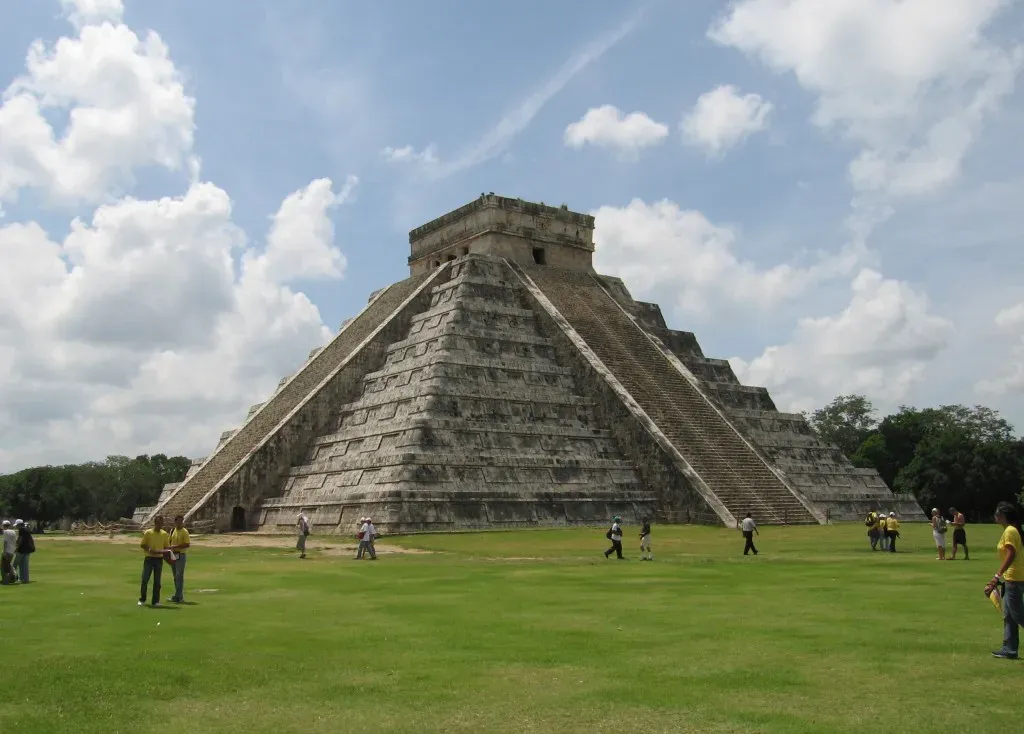
Climbing the Temple of Kukulcán was a bucket-list ritual for decades, until Mexico shut it down for good in 2006.
The pyramid’s steep, narrow steps caused repeated injuries and deaths over the years, and preservation concerns about wear on the 1,000-year-old limestone finally forced a permanent ban. Visitors can now only view the pyramid from the base. Divers exploring the sacred cenote nearby have recovered human remains and offerings believed to be tied to ritual sacrifice, but recreational diving in the cenote itself remains tightly restricted to licensed archaeological teams.
The site’s real secrets may lie beneath it rather than on top of it. Ground-penetrating radar has revealed cave systems and possibly a hidden cenote underneath the pyramid’s foundation, but excavation into that space is carefully controlled to avoid destabilizing the structure above. Chichen Itza’s ban came from real danger. #16’s restrictions come from something messier: a fight over whether there’s anything to protect at all.
#16 – The Bosnian “Pyramid” Dig Ban, Bosnia and Herzegovina
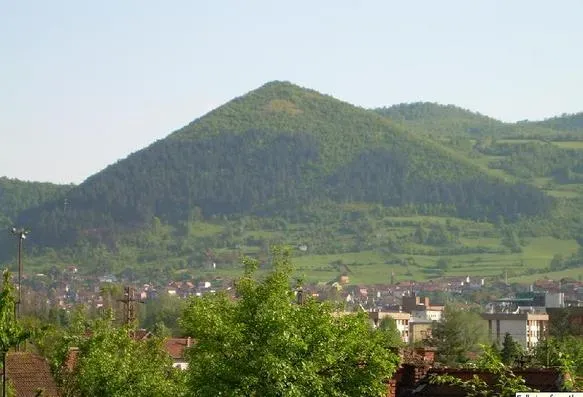
A hill outside Visoko has divided the archaeological community for nearly two decades, and official excavation permits remain a contentious, restricted battleground.
Semir Osmanagić first claimed the hill, called Visočica, was an ancient pyramid in 2005, a claim the vast majority of professional geologists and archaeologists reject, pointing to natural sedimentary rock formations that only resemble a pyramid’s shape. Despite that consensus, tunnels beneath the site – known as Ravne – continue to be dug and promoted to tourists, while independent scientific access to verify or dispute the underlying geology stays limited. Mainstream geological surveys have consistently found no evidence of artificial construction beneath the hill’s surface.
The controversy persists precisely because access to conduct fully independent, peer-reviewed excavation has been restricted by the site’s private management. That gap between public fascination and scientific gatekeeping is what keeps this one simmering. That fight is local. #15 covers an entire continent, and the rules there make Visoko’s dispute look small.
#15 – Antarctica’s Treaty-Locked Interior
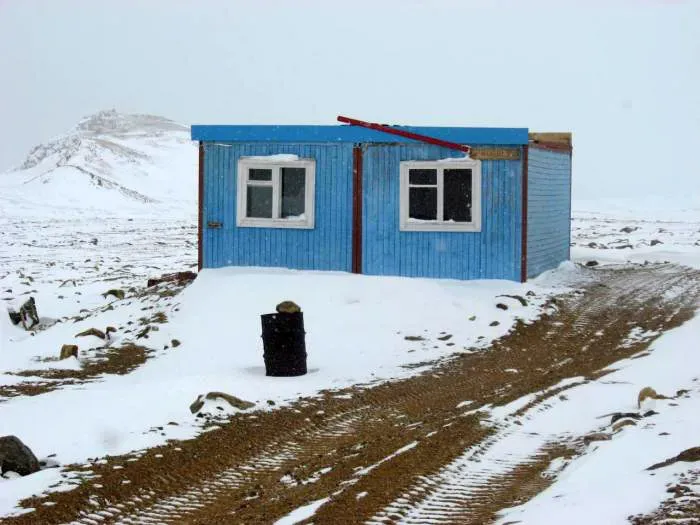
The coldest continent on Earth holds structures and territory almost nobody outside a small research community has ever seen firsthand, and international law keeps it that way.
The Antarctic Treaty System, signed in 1959 and expanded since, restricts virtually all unauthorized access to the continent, reserving it for scientific research under strict environmental and logistical controls. Any human-made structures, including old whaling stations, historic exploration huts, and remote research outposts, fall under heavy protection and permit requirements. No tourist, journalist, or independent researcher can simply travel to most of Antarctica’s interior without government-level clearance and months of planning.
This isn’t about ancient civilizations frozen in ice – that’s internet speculation, not evidence. It’s about a genuinely restricted landmass where access is legally gatekept more tightly than almost anywhere else on Earth, protecting both fragile history and fragile ecosystems. Antarctica’s gatekeeping is about geopolitics and ice. #14’s is about something far older, and far more sacred.
#14 – The Vatican’s Underground Necropolis, Rome
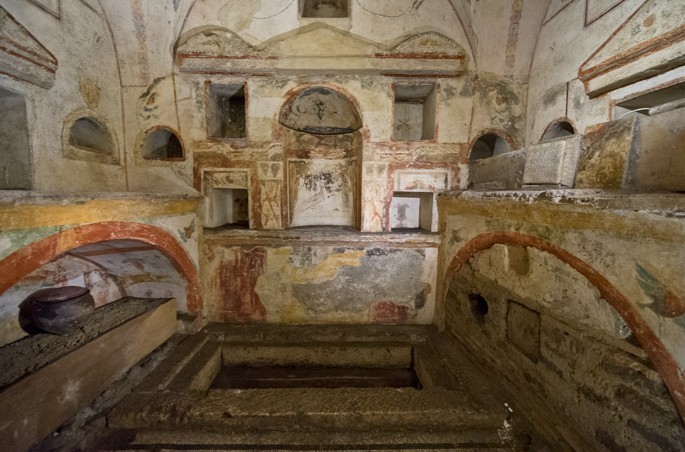
Beneath St. Peter’s Basilica lies a Roman-era burial ground that the public can only see by booking months in advance through a separate, tightly controlled office.
The Scavi excavations reveal a pagan and early Christian necropolis dating to the 1st and 2nd centuries CE, including what the Vatican identifies as the traditional burial site of St. Peter himself. Access is limited to small guided groups, no children under 15, and strict no-photography rules, unlike the general basilica above it. The excavation was kept largely secret from the public for over a decade after being ordered by Pope Pius XII in the 1940s, with findings only formally announced years later.
That slow, cautious release of information wasn’t accidental. Vatican archaeologists wanted certainty before making claims about apostolic remains, given the historical and religious weight involved. Even now, the site’s fragile plaster frescoes and narrow passageways mean visitor numbers stay small on purpose. The Vatican guarded its secret for over a decade. Up in the Andes, #13 hides its secrets in plain sight – scattered by an empire that tried to erase them.
#13 – Sacsayhuamán’s Restricted Megalithic Zones, Peru
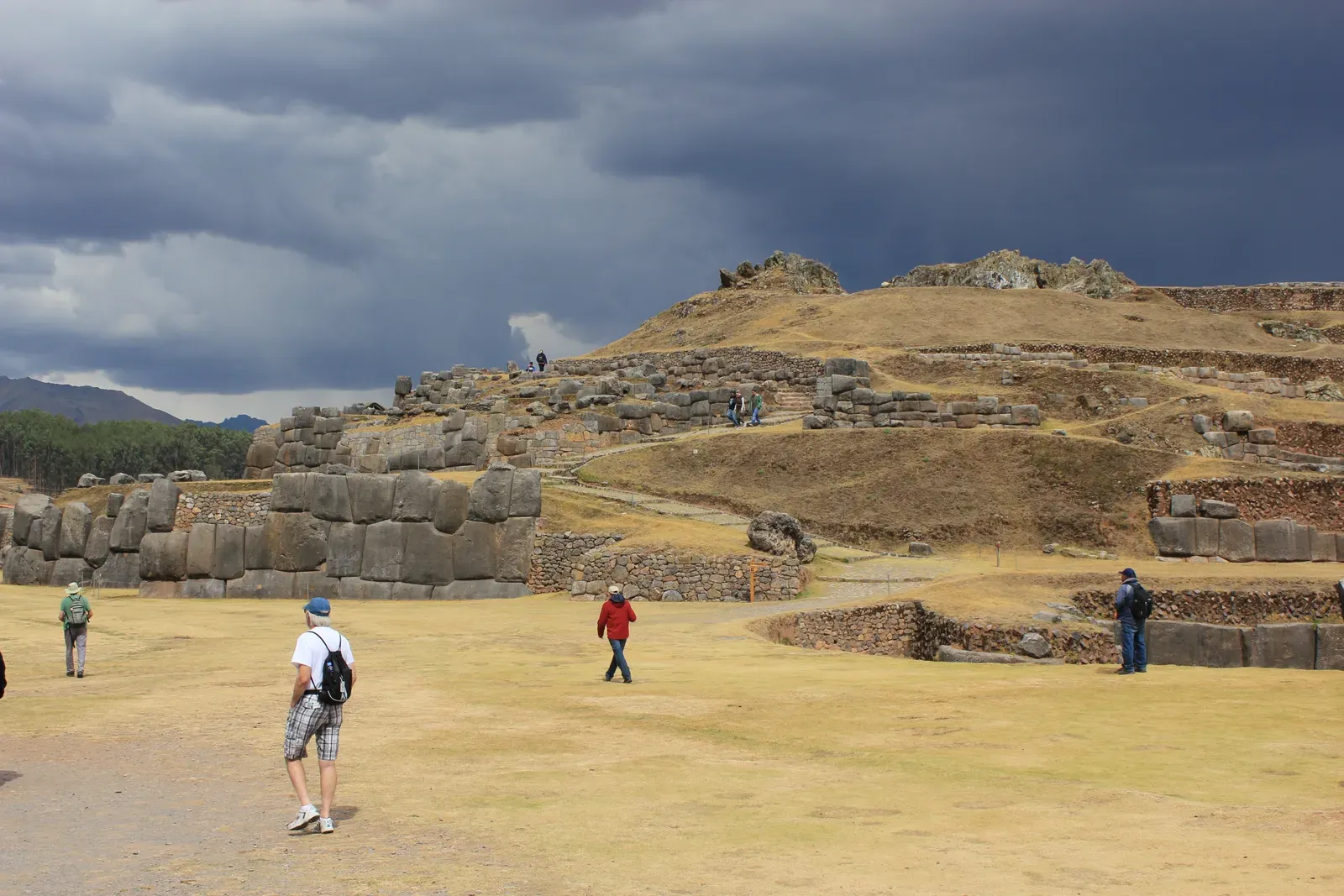
Above Cusco sits a fortress of stones so massive and precisely fitted that some blocks weigh more than 100 tons, and several sections are fenced away from general foot traffic.
Built by the Inca, likely in the 15th century, Sacsayhuamán’s zigzagging walls interlock without mortar, and the largest stones show almost no visible gaps despite their irregular shapes. Restoration and erosion-control zones limit where visitors can walk, especially near unstable retaining walls still being stabilized. Much of the original structure was dismantled by Spanish colonizers, who reused the smaller stones to build churches and homes in Cusco, leaving only the megaliths too large to move.
That destruction is why so much of what remains is roped off today – conservators are protecting what survived deliberate demolition centuries ago. The precision stonework visitors do get to see is genuinely just a fragment of a much larger complex. Spain destroyed what it could reach at Sacsayhuamán. At #12, the ancient builders may have buried their own temple on purpose.
#12 – Göbekli Tepe’s Buried Majority, Turkey
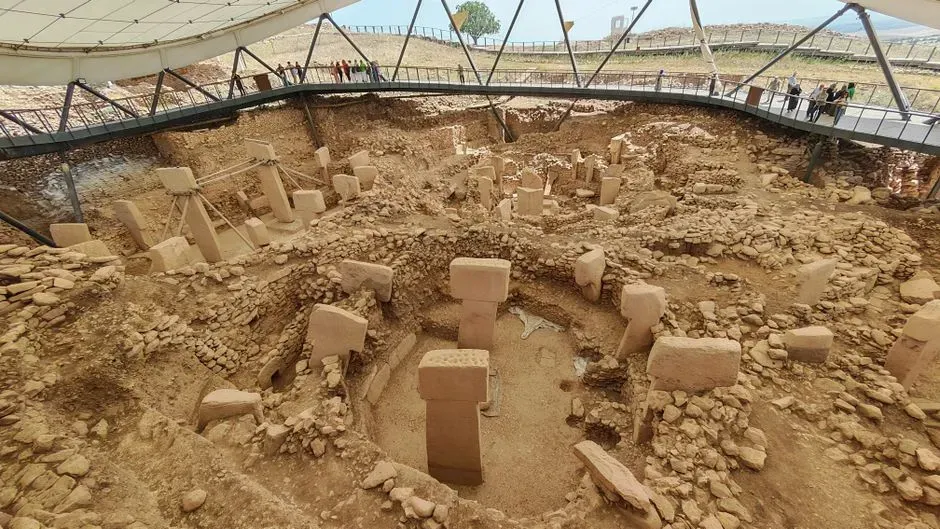
Widely called one of the oldest known temple complexes on Earth, most of Göbekli Tepe is still underground, and it’s staying that way on purpose.
Dated to roughly 9600 BCE, thousands of years before Stonehenge or the Egyptian pyramids, the site’s massive T-shaped limestone pillars carved with animal reliefs rewrote assumptions about when organized religious structures first appeared. Only a small fraction of the total site has been excavated; geophysical surveys suggest dozens more enclosures remain buried across the hill. Archaeologists have deliberately chosen to leave most of the site unexcavated, partly to preserve it for future technology and partly because backfilling was originally used by its ancient builders to bury the structures themselves.
First came the temple, then the city.
Klaus Schmidt
That last detail is the strangest part – the people who built it seem to have intentionally buried their own temples. Nobody knows exactly why. Until better preservation methods and funding exist, most of Göbekli Tepe will remain exactly where its builders apparently wanted it: underground. That mystery is thousands of years old. #11’s restriction is a lot more recent – and a lot more avoidable.
#11 – Stonehenge’s Off-Limits Inner Circle, England
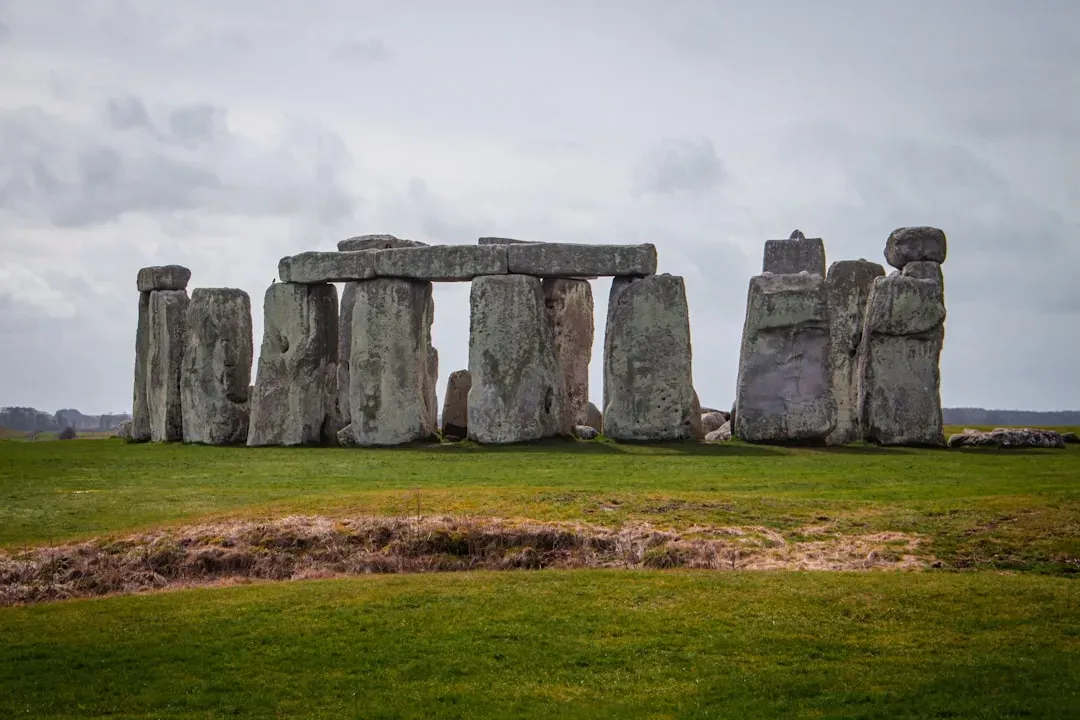
Regular visitors to Stonehenge are kept behind a rope line well outside the stones, and only a select few ever get to stand among them.
English Heritage restricts general access to a perimeter path around the monument to prevent erosion and vandalism of the roughly 5,000-year-old sarsen and bluestone circle. Special “stone circle access” visits exist, but they’re limited to small pre-booked groups, typically outside normal hours, and cost significantly more than standard entry. Only during the summer and winter solstice celebrations is the public allowed to walk freely among the stones, a tradition tied to modern Druidic and Pagan observances rather than ancient practice.
That restriction exists because decades of unrestricted access in the mid-20th century led to graffiti, chipped stones, and even people climbing the megaliths for photos. The rope line isn’t bureaucratic overcaution – it’s damage control from a period when the monument nearly wasn’t protected at all. Rope lines and ticket caps are one kind of barrier. At #10, the barrier might be supernatural.
#10 – Nan Madol’s Cursed Reputation, Micronesia
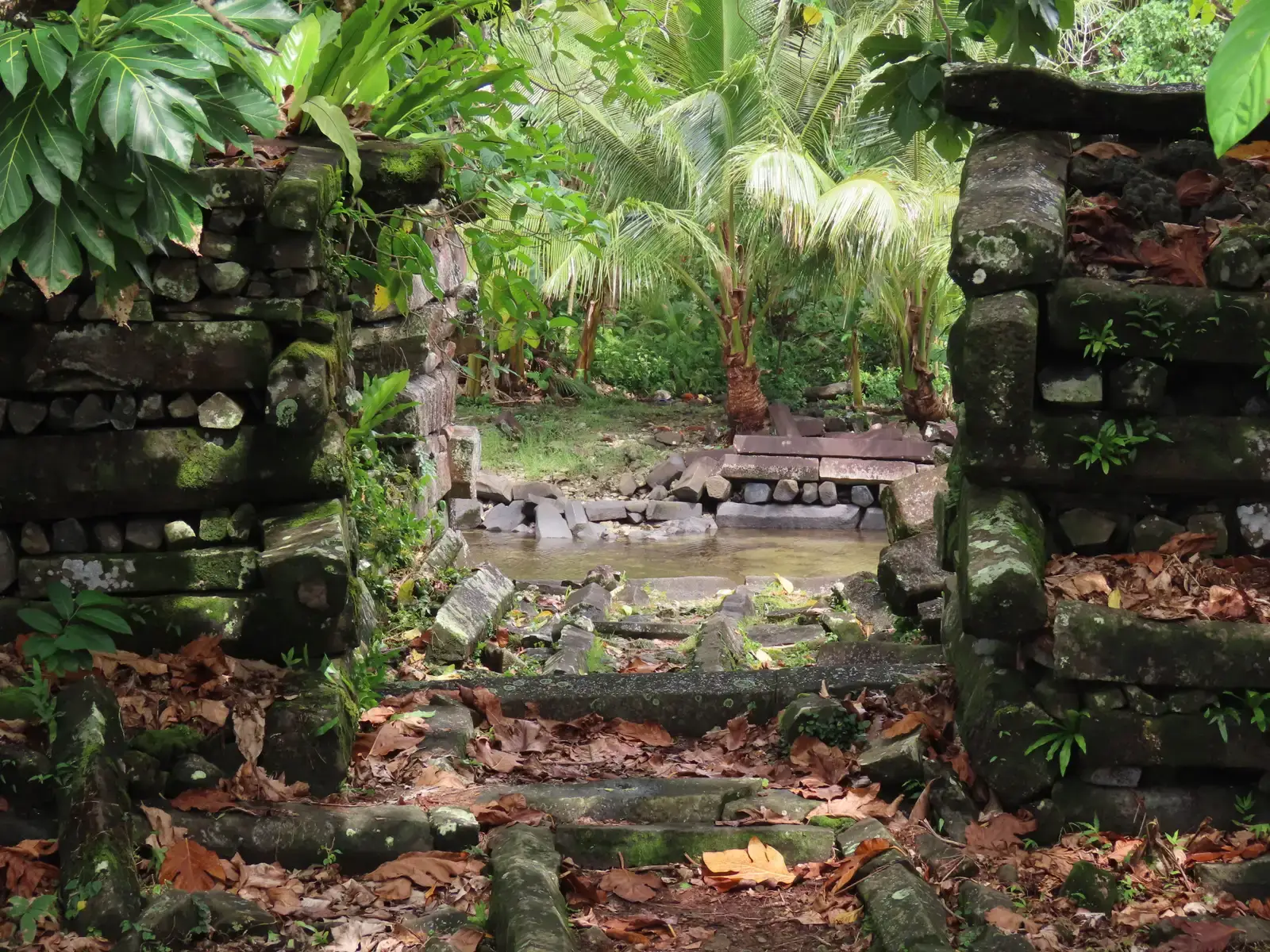
A city of stacked basalt logs built on a coral reef in the Pacific remains one of the least-visited ancient sites on Earth, partly because locals actively avoid it.
Nan Madol, on Pohnpei, consists of nearly 100 artificial islets connected by canals, built from massive basalt “logs” some weighing multiple tons, with no known quarry-to-site transport method fully agreed upon by researchers. Local Pohnpeian tradition holds the site is guarded by spirits, and many residents will not enter certain sections after dark or without ritual permission. UNESCO added Nan Madol to its endangered heritage list in 2016 due to mangrove overgrowth actively swallowing large portions of the ruins.
That combination – cultural taboo plus physical decay – means large stretches of the city are neither formally restricted by government order nor easily accessible in practice. Nature and belief are doing what fences do elsewhere. Most of Nan Madol simply isn’t seen by outsiders, full stop. Local superstition is one obstacle. At #9, it’s a regional conflict standing between you and the stones.
#9 – Baalbek’s Military-Adjacent Restrictions, Lebanon
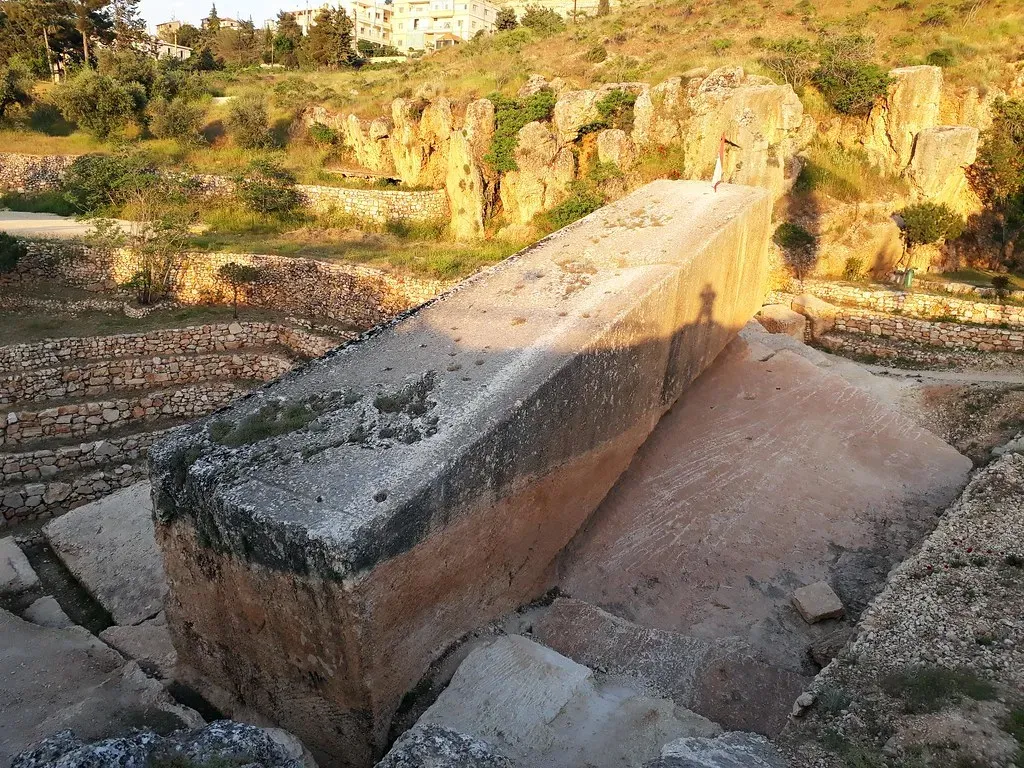
Home to some of the largest cut stones ever used in ancient construction, Baalbek sits in a region where security concerns limit how freely tourists and researchers can move.
The site’s Roman-era temple complex includes the Trilithon, three limestone blocks each weighing an estimated 800 tons, quarried and moved using methods still debated by engineers. Because Baalbek is located in Lebanon’s Bekaa Valley, an area affected by regional political tensions, travel advisories and security conditions have periodically restricted or discouraged public access far more than site preservation rules alone would require. A nearby quarry contains an even larger unfinished stone, estimated around 1,000 tons, abandoned mid-extraction for reasons nobody has definitively explained.
That abandoned megalith is the real mystery here – proof of ambition that outpaced ancient capability, or evidence of a technique lost to history. Either way, seeing it in person has never been simple, and regional instability keeps it that way. Baalbek’s mystery is a stone nobody finished moving. #8’s mystery is a city that’s dying and nobody wants to speed it up.
Worth Knowing
- Trilithon blocks each weigh an estimated 800 tons
- Nearby quarry holds an unfinished stone estimated around 1,000 tons
- Site sits in Lebanon’s Bekaa Valley, an area affected by regional tensions
- Security conditions periodically restrict tourist and researcher access
- Engineers still debate how the massive blocks were originally moved
#8 – Mohenjo-daro’s Slow, Guarded Decay, Pakistan
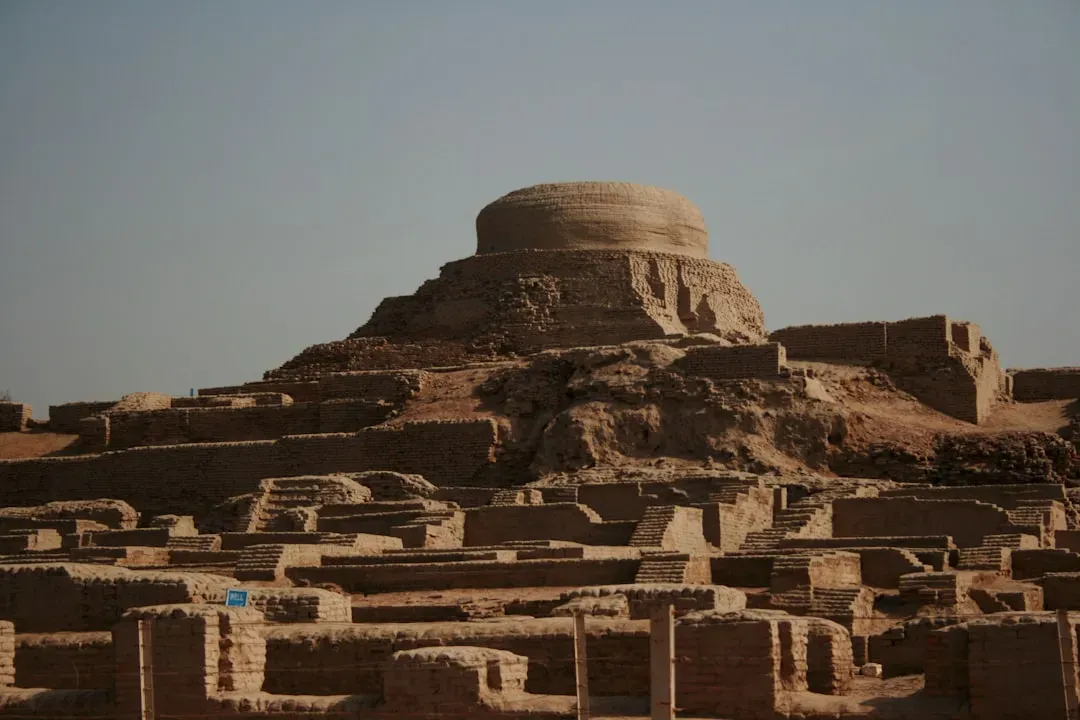
One of the world’s oldest planned cities is disintegrating in real time, and Pakistani authorities restrict excavation to slow the damage rather than accelerate discovery.
Built around 2500 BCE by the Indus Valley Civilization, Mohenjo-daro featured advanced drainage systems and grid-planned streets, but salt efflorescence from groundwater is steadily destroying the exposed brickwork. Archaeologists deliberately halted large-scale excavation decades ago, reasoning that unexcavated sections buried under soil are safer than exposed ones crumbling in open air. Roughly two-thirds of the ancient city remains deliberately unexcavated, buried as a preservation strategy rather than left for lack of interest.
That’s a rare case where restriction is the preservation method itself – burying history to save it from the air. Security conditions in the surrounding region add another layer of access limits for international researchers. What’s left exposed continues to erode a little more with each passing year. Mohenjo-daro is being buried to save it. What was buried at #7 was never meant to be found at all.
#7 – Teotihuacan’s Sealed Underworld Tunnel, Mexico
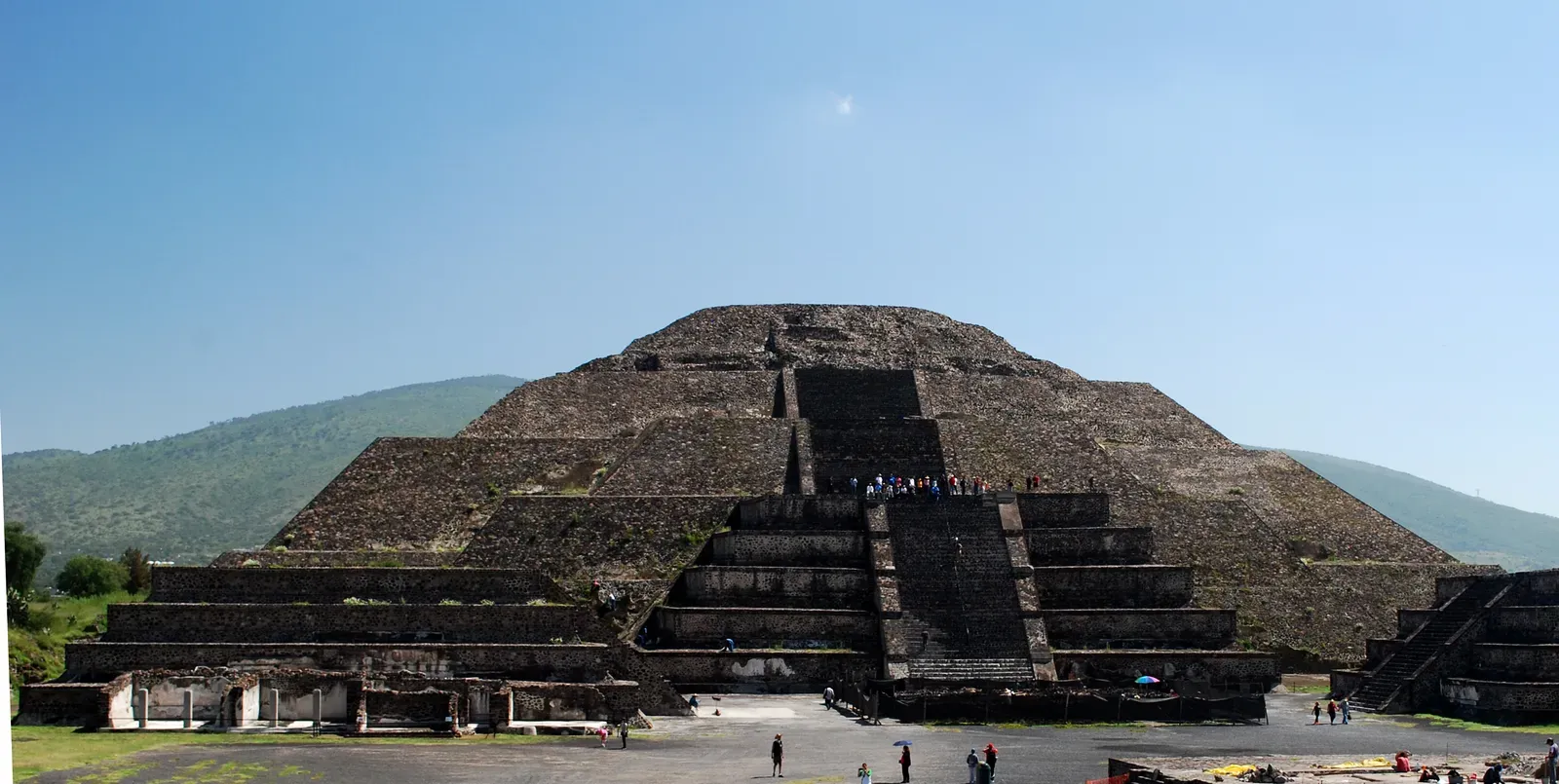
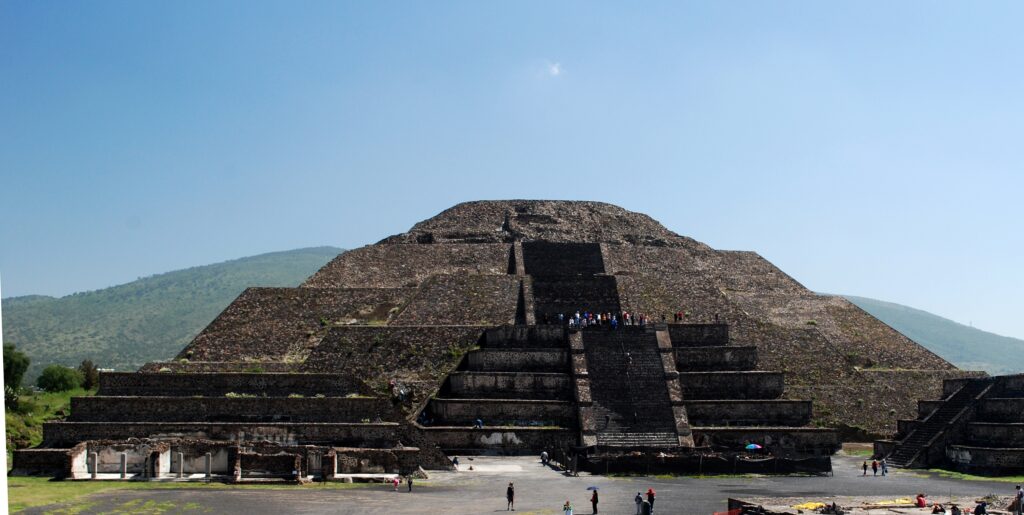
Beneath the Pyramid of the Feathered Serpent lies a tunnel discovered in the early 2000s, and the public has never been allowed inside it.
Archaeologist Sergio Gómez identified the tunnel using ground-penetrating radar, eventually revealing a chamber filled with thousands of ritual objects, including mercury deposits, carved figurines, and what researchers believe may symbolize an underworld journey. Excavation took years due to the tunnel’s instability and the delicate nature of the artifacts inside. Liquid mercury pooled in the chamber may have been used to represent an underworld river or lake, a symbolic detail unlike anything found at other Mesoamerican sites.
The tunnel remains closed to tourists, with access limited strictly to archaeological teams working under Mexico’s National Institute of Anthropology and History. Structural risk alone would justify the closure, but the sheer research value of an undisturbed ritual deposit makes the case even stronger for keeping it sealed indefinitely. That underworld tunnel is sealed for research. #6 is sealed because there’s almost nowhere to stand once you’re inside.
#6 – The Hypogeum’s 80-Person Daily Cap, Malta
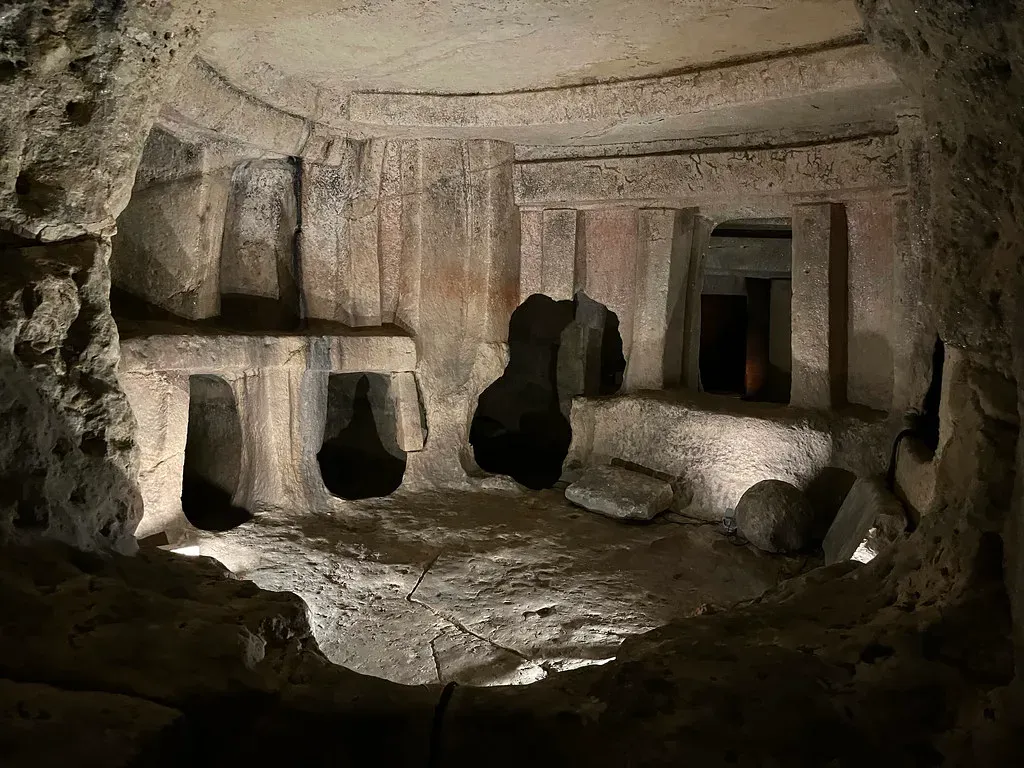
This is the only known prehistoric underground temple on Earth, and getting inside it is harder than getting into most modern government buildings.
Access is strictly limited to just 80 visitors per day. The Ħal Saflieni Hypogeum, carved from local limestone across three underground levels, was used over a span of many centuries, up to c. 2500 BC. After decades of tourism damaged its delicate microclimate, officials conducted a conservation project that also included the closure of the site for 10 years between 1990 and 2000. Today, only ten people per hour are allowed inside, and tickets routinely sell out months ahead.
Even with modern climate controls installed, Heritage Malta hasn’t loosened the cap since reopening. It is believed that close to 7000 bodies were buried inside the Hypogeum, making it as much a mass grave as a temple. That combination of scale, fragility, and mystery is exactly why so few outsiders will ever set foot inside. Malta caps its visitors at 80 a day. Egypt’s #5 doesn’t need a cap – the Nile does the restricting for them.
#5 – The Osireion’s Permanent Flood Barrier, Egypt
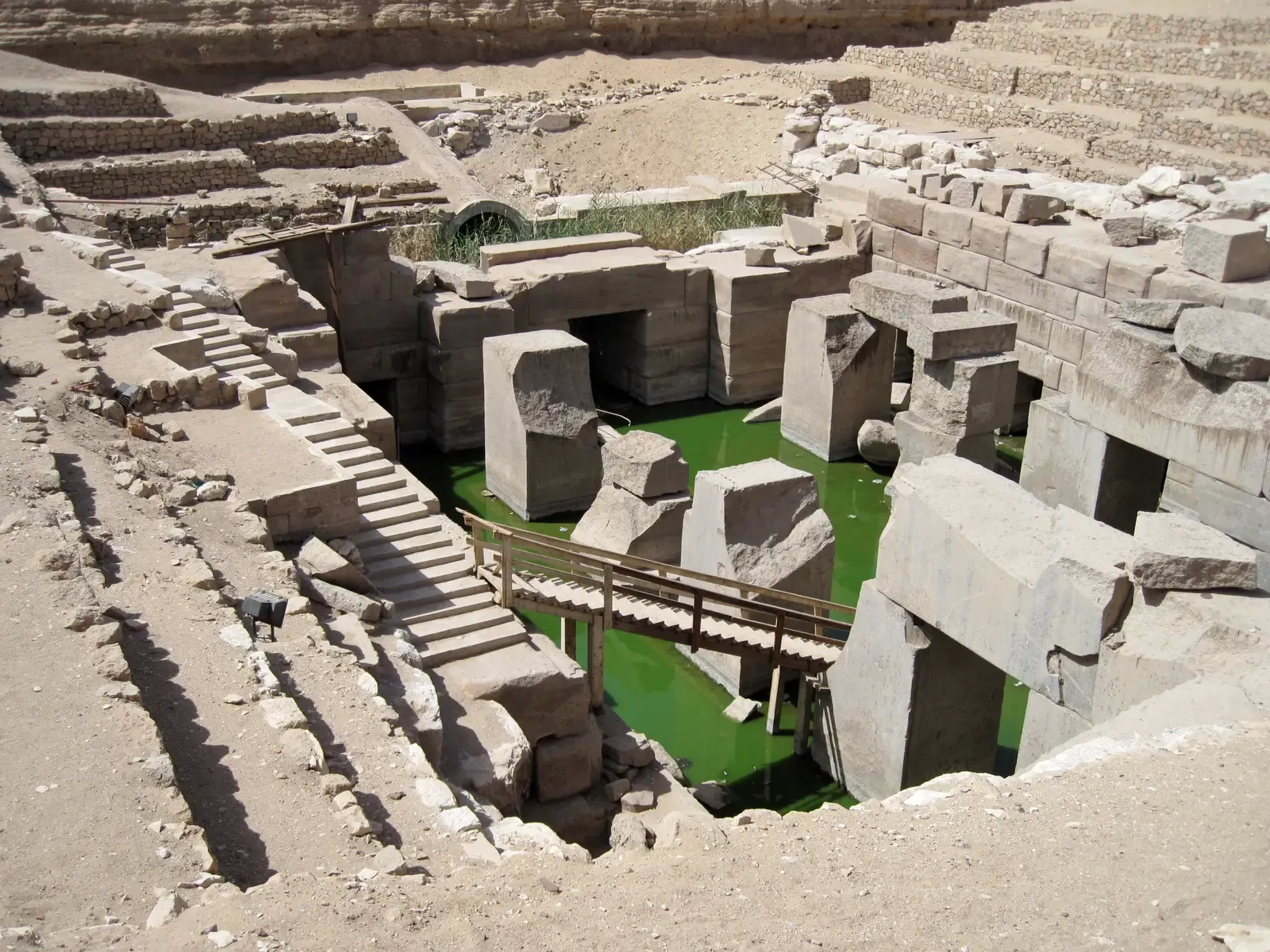
Hidden behind the Temple of Seti I at Abydos sits a structure so unusual that Egyptologists still argue over who really built it, and almost nobody gets to go inside.
The entire structure is closed to visitors, making inspection of the funerary and ritual texts carved on its walls impossible, though visitors can view it from a distance behind Seti’s temple. The Osireion’s construction using massive granite blocks initially led some researchers to suspect it predated Seti I’s reign, though it has now been dated to Seti’s reign and is usually interpreted as a cenotaph to Osiris. The structure sits partially submerged for most of the year, with water levels rising and falling based on the Nile’s underground aquifer.
That flooding isn’t a maintenance failure – it may echo the building’s original symbolic design, representing the primordial waters of Egyptian creation myth. Either way, the practical result is the same: rising groundwater keeps this chamber largely inaccessible, decade after decade, regardless of how badly researchers want a closer look. The Osireion floods on nature’s schedule. #4’s mystery is what’s missing, not what’s flooding.
#4 – The Serapeum’s Empty Granite Boxes, Egypt
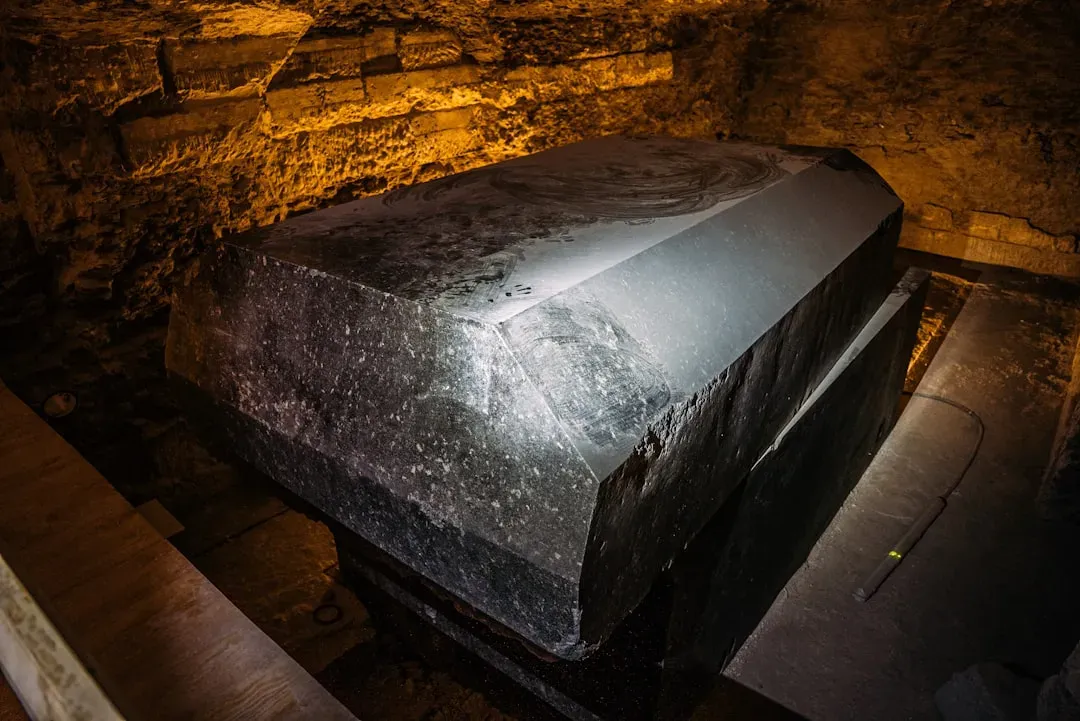
Inside a network of tunnels beneath Saqqara sit two dozen massive stone boxes, most already empty when discovered, and the mystery of what happened to their contents has never been resolved.
When French archaeologist Auguste Mariette excavated the Serapeum in 1850, he found galleries built for the burial of sacred Apis bulls, but the now-famous granite boxes, many of which were already empty when first opened, immediately raised questions that still haven’t gone away. Each coffer was carved from single blocks of granite hauled from quarries hundreds of miles away, with lids that together can weigh close to 100 tons. One sealed box was so difficult to open that Mariette’s team resorted to dynamite, only to find it empty as well.
Public access to the deeper galleries remains restricted, with visitor viewing limited to controlled walkways near one accessible box. The precision of the carving, paired with the total absence of remains inside most boxes, keeps this one of Egypt’s most quietly debated sites among researchers who rarely get extended access to study it firsthand. Empty granite boxes raise questions nobody’s answered. In Spain, #3 raises a different kind of question: how few people can you let inside before the art disappears anyway.
#3 – Altamira’s Five-Person Weekly Waitlist, Spain
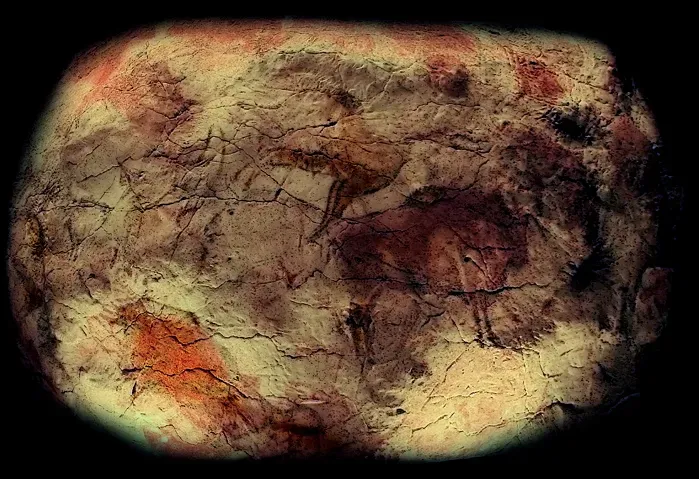
Spain’s “Sistine Chapel of Paleolithic Art” allows so few visitors that the waiting list has been effectively closed for over two decades.
Discovered in 1868, the cave complex became a tourist magnet and by the 1970s received 3,000 visitors a day, a volume that ultimately doomed public access. Body heat and breath from tourists caused mold and discoloration on paintings estimated to be 14,000 to 20,000 years old, forcing repeated closures throughout the 1980s, 1990s, and 2000s. Since 2002, entry to the real cave has been limited to just five people per week, for a single 37-minute visit, under strict lighting and clothing protocols.
Nearly everyone who visits Altamira today sees the Neocave, a meticulously built replica beside the museum. The original remains almost entirely sealed off, a decision Spanish conservators consider non-negotiable after watching earlier reopening attempts trigger new bacterial growth within years. Altamira’s five-person cap is strict. #2 makes that number look generous.
#2 – Lascaux’s Steel Doors and Cameras, France
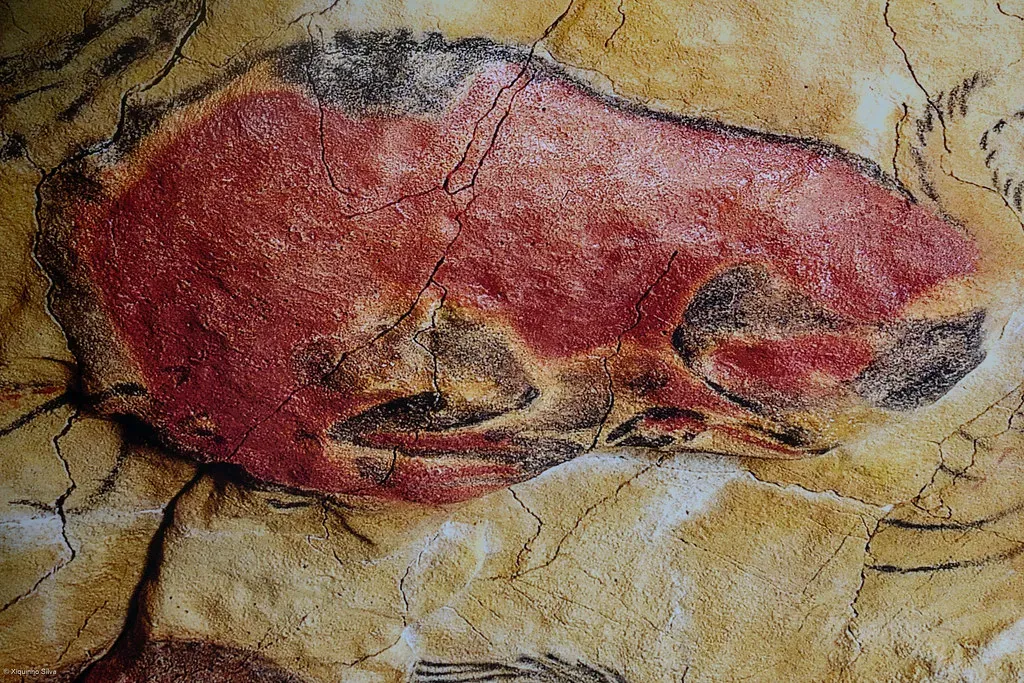
France’s most celebrated prehistoric cave has been locked away from the public for over sixty years, guarded like a vault rather than displayed like a monument.
Such was the cave’s popularity, approximately 120,000 visitors flocked here every year after its 1948 opening, but the human traffic proved catastrophic. In 1963, the Lascaux Cave closed its doors to the general public, and became a protected UNESCO World Heritage Site under close surveillance, with steel doors and security cameras. Only a handful of specialist researchers are allowed inside each week, and even they follow strict decontamination protocols before entering.
The paintings, some 17,000 years old and depicting bison, stags, cattle, equines, and other large animals, earned the cave its “Sistine Chapel” nickname. Four separate full-scale replicas have since been built to satisfy public demand without risking the originals again, an admission that the real cave may simply never reopen. Lascaux has been locked for sixty years. #1 has been locked for over four thousand – and we still don’t know what’s fully inside.
#1 – The Great Pyramid’s Unopened Voids, Egypt
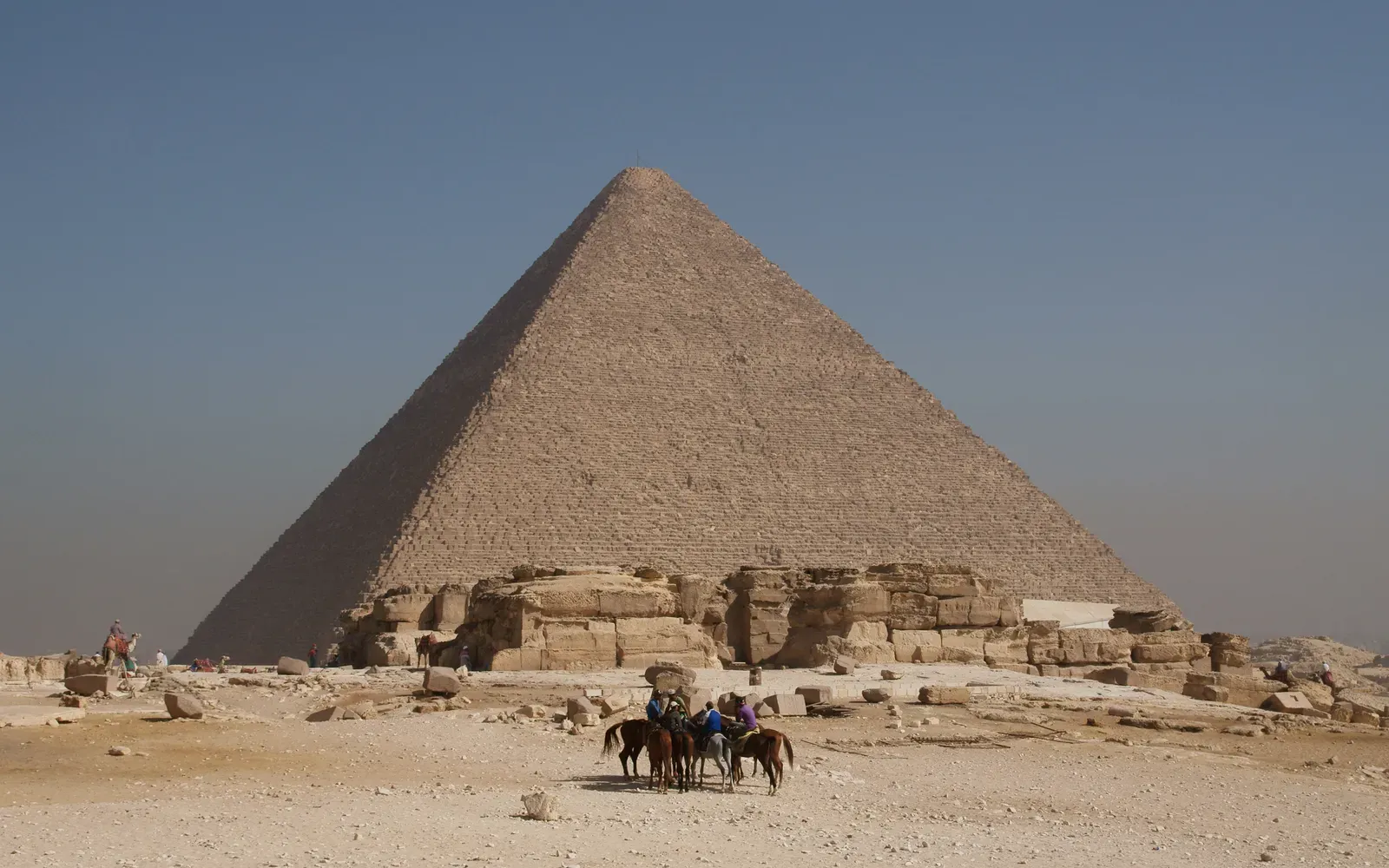
After more than 4,500 years, the Great Pyramid of Giza still contains at least one large hidden space that no human has entered in the modern era.
In 2017, an international team using cosmic-ray muon detection technology identified a massive void above the Grand Gallery, later nicknamed the “Big Void,” roughly the size of a passenger jet’s fuselage, with no known entrance from inside the pyramid. Egyptian antiquities officials have deliberately restricted physical drilling or invasive exploration, favoring slower, non-destructive scanning methods to avoid damaging the structure while researchers try to determine what the space actually is. Nobody currently knows whether it’s a construction gap, a ceremonial chamber, or something entirely unaccounted for in the historical record.
That uncertainty, sitting inside the most photographed monument on Earth, is the perfect closing case for this entire list. We’ve mapped the moon in more detail than we’ve mapped the inside of a structure sitting in plain sight in Giza. Access remains tightly controlled specifically because nobody wants to be the team that damages the answer before it’s found.
Why It Stands Out
- Void discovered in 2017 using cosmic-ray muon detection technology
- Nicknamed the “Big Void,” roughly the size of a passenger jet’s fuselage
- No known entrance has been found from inside the pyramid
- Officials favor slow, non-destructive scanning over drilling
- Purpose remains completely unknown – gap, chamber, or something else
The Bottom Line
Nearly every site on this list wasn’t hidden by conspiracy – it was hidden by damage, decay, instability, or plain human error, from carbon dioxide ruining 17,000-year-old paintings to a beer commercial cracking a sacred Incan stone. The uncomfortable truth is that public access and preservation are often direct opposites, and most governments have quietly chosen preservation, even when it disappoints millions of tourists a year.
If there’s one opinion worth stating plainly: sites like Lascaux and Altamira prove that some wonders are genuinely safer locked away than shared, no matter how much backlash that decision generates online. Which of these restricted sites would you actually want to see opened up? Drop your pick in the comments.