

If you have ever put on a song and felt your entire mood shift in seconds, you are not imagining it or being dramatic. Under the surface, your brain is lighting up in patterns that can literally carve new pathways over time. Neuroscientists have spent decades peeking into people’s heads while they listen to music, and the picture that has emerged is surprisingly concrete: the tracks in your playlists do not just “influence” you in a vague way, they can help sculpt the physical wiring of your brain.
That sounds huge, but it does not mean one sad song ruins your life or one “study” playlist turns you into a genius. Instead, it means that the habits you build around music – how often you listen, what you listen to, and what you are doing while you listen – can nudge your brain’s structure slowly but steadily. Think of music as a kind of daily brain workout: you might not feel each individual rep, but over months and years, the changes add up. And once you understand how this works, you can start using music a lot more intentionally.
Your Brain Treats Music Like a Full‑Body Workout

When you press play, your brain does not just light up in one little “music center” and call it a day. Instead, you recruit a whole network at once: areas for hearing, movement, attention, memory, emotion, and even prediction start firing together like an orchestra tuning up. This kind of coordinated activity is exactly what drives neuroplasticity, the brain’s ability to rewire itself based on repeated experience.
Every time you listen, neurons that fire together are more likely to wire together, strengthening their connections. Over time, this can increase the efficiency of the networks involved, a bit like carving a smoother, faster path through a forest you keep walking through. You might feel that as songs getting more emotionally powerful, as rhythms feeling more natural, or as your ability to focus with certain music quietly improving in the background.
Musicians’ Brains Show How Deep the Changes Can Go

If you want proof that music can physically reshape a brain, you can look at trained musicians. Repeatedly, brain imaging studies have found that people who have practiced instruments for years often show measurable differences in regions involved in hearing, movement, and motor control compared with non‑musicians. These changes are not just about talent; they reflect thousands of hours of practice pairing sound, touch, and precise timing.
Here is the part that matters for you: those changes did not require any special brain at the start, just repeated musical engagement over time. You might not be spending four hours a day on violin scales, but your daily habits still add up. Even learning a few chords on a guitar, singing regularly, or practicing simple rhythms can nudge your auditory and motor systems to adapt, making them more sensitive, more coordinated, and more tuned to the details of sound.
The Songs You Love Shape Your Emotional Circuits

You have probably felt that some songs almost plug directly into your emotions, flipping you from stressed to calm or from flat to intensely nostalgic. That is because music has a direct line to your brain’s reward and emotion systems, including areas that process pleasure, anticipation, and emotional memory. When a song gives you chills, that rush is tied to activity in these deeper circuits, not just the “thinking” parts of your brain.
Over time, repeatedly pairing certain sounds with specific emotional states can strengthen those links. A soothing playlist you use for winding down can gradually become a powerful cue for relaxation, helping your brain slip more quickly into a calmer mode. On the flip side, if you always blast high‑stress, aggressive tracks while you are already overwhelmed, you can condition yourself to lean into that tension. You are not stuck either way, but it does mean your emotional playlists are actively training your brain in the background.
Rhythm and Melody Can Tune Your Attention and Focus

You might have noticed that with the right playlist, boring work suddenly becomes more bearable and sometimes even easier. That is not just a vibe; your attention systems are responding to predictable patterns of rhythm and melody. Steady, moderately complex music can help stabilize your arousal level, making it less likely that your mind bounces between distraction and sluggishness.
On a deeper level, your brain continuously tries to predict what comes next in a piece of music – when the beat will land, when a phrase will end, when a melody will resolve. This ongoing prediction trains timing and expectation systems that overlap with attention and working memory. When you let yourself really listen, instead of just having songs as background noise, you give those circuits a workout, and with repetition, the pathways they rely on can become more efficient.
Repetition Turns Music Into Mental “Shortcuts”
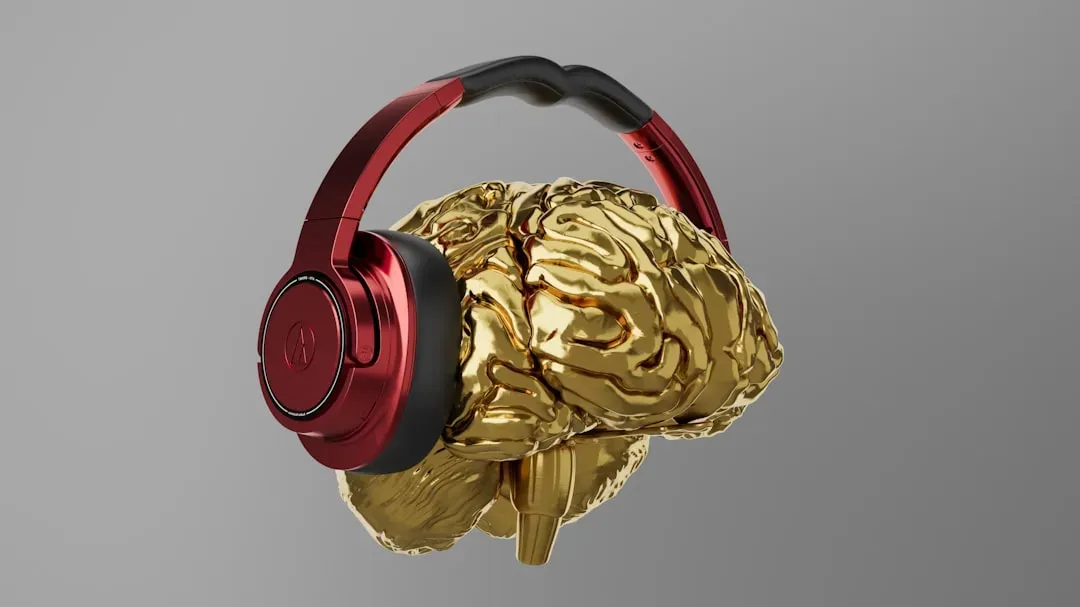
Think about the songs you know so well you can sing them even if someone cuts the speakers. That fluency is a visible sign of how repetition reshapes your brain. Each replay strengthens the encoding of the song’s structure – its rhythm, chord progression, and melodic patterns – until your brain can anticipate entire sections before they arrive. This is why familiar tracks can feel so comforting: your prediction machinery gets to be right over and over again.
Those predictions are not just abstract; they are carried by physical connections between neurons that have fired together many times. The more often you rehearse the same sequence, the more quickly and automatically your brain runs it. That is why a favorite song can become a kind of mental shortcut into a certain mood or mindset. You are not just remembering the tune; you are re‑activating a whole pattern of activity that has been carved into your neural wiring through repetition.
Learning an Instrument Supercharges Structural Change

Listening to music reshapes your brain, but actively making music pushes that process into another gear. When you play an instrument or sing, you are combining fine motor control, auditory feedback, timing, and often visual cues like reading sheet music. You are constantly correcting errors, adjusting your movements, and aligning with a beat or harmony, which forces your brain to coordinate multiple systems at once.
Over years, that intense, repeated coordination can lead to structural differences you can actually measure, such as thicker or more connected regions in areas that handle sound and movement. Even if you never become a professional, you still benefit from the training. Picking up a new instrument in adulthood, even at a slow and clumsy pace, gives your brain fresh reasons to rewire itself, helping maintain flexibility that often declines with age.
Music Can Support Memory and Protect an Aging Brain

Have you ever noticed that you can remember lyrics from years ago more easily than what you had for breakfast last Tuesday? Music is unusually sticky for your memory because it combines rhythm, melody, emotion, and often personal meaning into a single package. Each of those elements adds another hook for your brain to grab onto, making it easier to store and retrieve information tied to songs.
As you age, regularly engaging with music may help keep memory circuits active. Learning new songs, exploring unfamiliar genres, or even just paying attention to details you usually gloss over – like bass lines or background harmonies – can challenge your brain in a gentle but real way. You are effectively asking your brain to keep encoding patterns, comparing them to what it already knows, and updating its internal library, which can support cognitive resilience over time.
Your Playlists Can Influence Stress, Sleep, and Recovery

Music does not only live in your head; it reaches into your body through your nervous system. Calmer, slower tracks can help reduce your heart rate, lower muscle tension, and encourage deeper breathing, especially when you pair them with a quiet environment and intentional relaxation. Over time, using certain songs as part of a wind‑down routine can train your brain and body to shift toward rest more quickly when those sounds appear.
You can also use more energizing music to prime your body for movement, whether it is a workout, a walk, or even just getting through a sluggish afternoon. Rhythmic, upbeat tracks can help synchronize your movements, making physical tasks feel easier and more coordinated. By repeatedly pairing specific types of music with particular states – relaxation, exertion, focus – you teach your nervous system to respond more efficiently, which is another subtle form of reshaping.
Using Music Intentionally to Sculpt Your Own Brain

Once you realize that your listening habits are quietly training your brain, you can start to treat your playlists less like random background noise and more like tools. You can build different “brain modes” with music: one set of tracks that reliably calms you, another that helps you lock in for deep work, another that gets you moving when you feel stuck. Over time, those associations become stronger and faster, giving you easier access to the states you want.
You do not need perfect science to get started; you just need to notice how specific songs actually make you feel and function in real life. If you pay attention and adjust based on your own experience, you turn your daily listening into a low‑effort way to support your emotional health, your focus, and your resilience. Instead of music being just something that fills silence, it becomes one of the simplest levers you have for nudging your brain in the direction you care about.
Conclusion: Your Brain Is Listening Even When You Forget You Are

Every time you put on a song, your brain is doing far more than idly passing the time. It is lighting up networks for emotion, movement, memory, and attention, strengthening some connections and letting others fade, shaping how easily you slip into certain moods or mindsets. You might experience that as a favorite track soothing you after a long day or a driving beat helping you grind through a tough task, but underneath, tiny physical changes are adding up.
You do not have to overhaul your entire musical taste or treat every playlist like a science experiment. You just need to remember that your brain is always listening and learning, especially from the sounds you repeat most often. If you start choosing even a little more intentionally – leaning into music that supports how you want to feel and function – you are already reshaping your own neural soundtrack. With that in mind, what will you decide to let your brain practice hearing tomorrow?