
You probably know that strange jolt: your eyes snap open, the room is quiet, and the digital clock glows 3:33 AM. When it happens once, you shrug it off. But when it happens over and over, you can’t help feeling like something deeper is going on, almost as if your body knows a secret your mind can’t quite grasp.
From a neuroscience perspective, that feeling isn’t entirely wrong. Your brain and body run on timing systems that are far more precise and sensitive than you usually notice. When you keep waking at the exact same time, that pattern is rarely random. It’s often your circadian rhythm and internal sensors reacting to subtle cues, stress signals, or environmental changes long before you consciously register anything at all.
Your Internal Clock Is More Precise Than You Think

You walk around every day with a master clock quietly ticking away inside your brain. It sits in a tiny region called the suprachiasmatic nucleus, which constantly keeps track of time based on light, hormones, and your daily routines. You might feel like you just fall asleep and wake up whenever, but under the surface, this clock is setting predictable windows when you’re most likely to wake up, even in the middle of the night.
When you keep waking up at 3:33 AM, your internal clock has likely carved that time into a kind of “wake-up hotspot.” Maybe your bedtime, your last screen exposure, or your dinner time shifted at some point, and your clock adjusted in a way you didn’t notice. Over several nights, your brain can become so good at anticipating this time that you snap awake with eerie precision, as if you had set an alarm you never remember creating.
Micro-Arousals: Tiny Wake-Ups You Never Notice

All night long, your brain doesn’t actually stay in deep sleep. You drift through cycles, moving from light sleep to deep sleep to rapid eye movement sleep and back again. At certain points, you naturally enter lighter stages of sleep where you’re more likely to partially wake up for a second or two. Most of the time, you roll over and never remember any of it.
If one of those light-sleep moments tends to land near 3:30 AM in your current routine, your brain might start linking that timing with full wakefulness. Add a small cue – like a noise, a body sensation, or a racing thought – and that micro-arousal gets upgraded into a full wake-up. Because your sleep cycles are fairly regular, that means the wake time can become oddly consistent, which is why you might keep seeing that same 3:33 AM on your clock.
Stress, Anxiety, and the 3 AM Brain Shift

You might notice that your 3:33 AM awakenings show up more when you’re worried, overwhelmed, or emotionally stretched thin. That’s not your imagination. Stress hormones like cortisol follow a daily rhythm, usually staying lower at night, then rising as morning approaches. When you’re stressed, that rhythm can become skewed so the rise starts earlier or spikes more sharply than usual.
Your body might start nudging you awake when this stress-related hormonal bump collides with a light phase of sleep. At that hour, your thinking brain is less able to rationalize worries, so they tend to feel darker and heavier. You wake up, check the time, and see 3:33 again. After a few nights, your brain begins to expect that awakening, creating a self-reinforcing cycle where stress primes you to wake at that exact moment even more.
Your Senses Keep Working While You Sleep

Even when you’re asleep, your brain never fully shuts the world out. Your hearing, your sense of temperature, even your awareness of movement and pain keep feeding data into deeper parts of your brain. Most of that information never makes it into full consciousness, but it still influences your heart rate, your breathing, and your chances of waking up.
If some subtle cue tends to show up around the same time each night – like a neighbor leaving for an early shift, your heater kicking on, a pet moving around, or even a slight change in outside light – your sleeping brain can detect it before you do. Over time, your nervous system can start “anticipating” that cue, lifting you closer to wakefulness just before or as it happens, so you open your eyes and catch that exact same time glowing on the clock.
Your Body’s Internal Sensors May Be Flagging Something

Your brain constantly monitors your internal state: blood pressure, breathing patterns, oxygen levels, pain, and even digestion. If something keeps dipping out of your usual range at night – like mild sleep apnea events, nighttime reflux, or a racing heartbeat – your nervous system is wired to pull you toward wakefulness to keep you safe. You might feel like you “just woke up for no reason,” but underneath, your body could be sounding a quiet alarm.
When those internal disruptions cluster at a certain point in your sleep cycle, they can line up with the same clock time again and again. For example, if you tend to hit a deeper phase of sleep about three hours after bedtime and your breathing becomes unstable then, you may repeatedly wake at roughly the same clock time. If you notice gasping, chest tightness, intense dreams, or feeling unusually drained during the day, your 3:33 awakenings might be your body’s way of asking you to pay closer attention.
Pattern-Seeking: Why 3:33 Feels So Uncanny
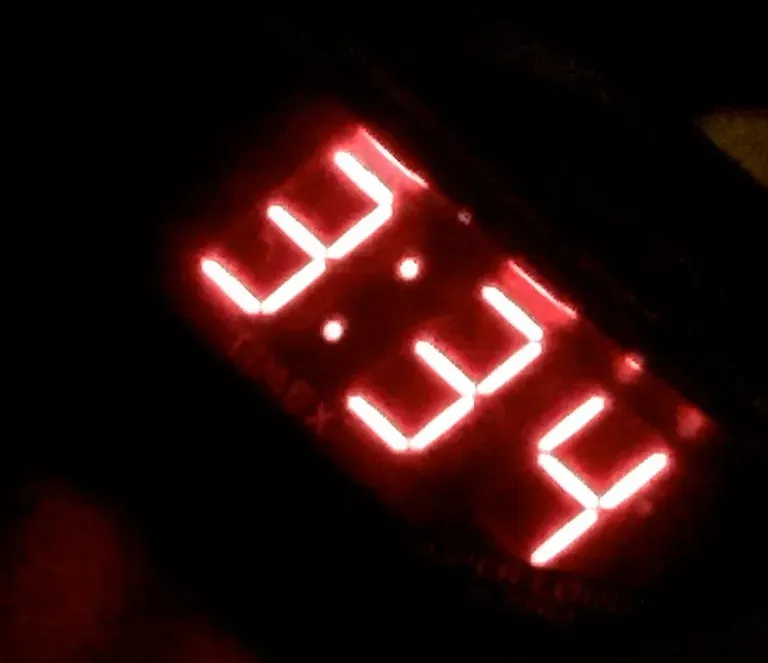
Your brain is built to notice patterns, especially ones that feel meaningful or eerie. Seeing 3:33 on the clock stands out because the numbers line up in a way that feels almost symbolic. The human mind loves symmetry and repetition, so your memory is more likely to latch onto those moments and forget about the times you woke at 3:27 or 3:41 and rolled over without looking.
Once you start paying attention, confirmation bias kicks in: you notice and remember every time you hit 3:33 and skip past the times that don’t match. That doesn’t mean the pattern is fake – your internal rhythm may truly be clustering your wake-ups around that time – but your sense of how perfectly consistent it is can be exaggerated. In other words, your body might be sending subtle timing signals, and your pattern-loving brain is amplifying how mysterious they feel.
When You Should Take Repeated 3:33 AM Wake-Ups Seriously

Waking at 3:33 AM a few times, especially during a stressful week, usually isn’t a sign of anything sinister. But if this becomes a long-term pattern and you’re also dragging through your days, napping often, or fighting headaches and brain fog, it’s worth treating your nightly wake-up as a useful symptom rather than a spooky coincidence. Your circadian rhythm might be clashing with your habits in a way that keeps your sleep fragmented.
You’ll want to pay closer attention if your middle-of-the-night awakenings come with chest discomfort, trouble breathing, a pounding heart, panic, or intense nightmares. In that case, your internal monitoring systems could be interrupting your sleep to keep you out of danger. Talking with a healthcare professional or sleep specialist can help you figure out whether there’s an underlying sleep disorder or health issue that your conscious mind has been missing but your body has been flagging again and again at 3:33.
What You Can Do to Reset the Pattern

If you’re tired of that creepy 3:33 AM rendezvous with your alarm clock, your best move is to work with your circadian system instead of fighting it. Start by anchoring your days with consistent wake times, plenty of morning light, and a fairly steady bedtime. Cut back on bright screens and heavy meals in the two to three hours before you go to sleep, so your internal clock gets a clear signal that the night phase has begun.
When you do wake at 3:33, try not to turn it into a dramatic event in your mind. Keep lights low, avoid checking your phone, and focus on slow, steady breathing or a simple mental exercise, like gently counting your exhales. If you lie awake worrying, keep a small notebook by the bed and jot down thoughts so your brain feels like it can safely let them go. Over a few weeks, these small shifts can teach your brain that this time of night is no longer for vigilance and wakefulness, but for deeper, uninterrupted rest.
Conclusion: Listening to What Your Nights Are Telling You

When you keep jolting awake at exactly 3:33 AM, it can feel almost supernatural, like the universe is sending you a cryptic message. In reality, your body and brain are probably doing something even more impressive: running complex timing systems, scanning your environment, and monitoring your internal state with a level of sensitivity your conscious mind rarely appreciates. Your circadian rhythm may be picking up on patterns – stress, habits, noises, internal changes – that you haven’t yet connected in daylight.
Instead of brushing off those wake-ups or fearing them, you can treat them as data. They’re clues about how your sleep, your stress, and your daily routines are lining up – or colliding. If you start listening, experimenting with small changes, and seeking help when something feels off, those mysterious 3:33 AM awakenings can shift from unsettling to empowering. So the next time your eyes snap open at that familiar time, you might ask yourself: what is your body trying to tell you that your waking mind hasn’t noticed yet?