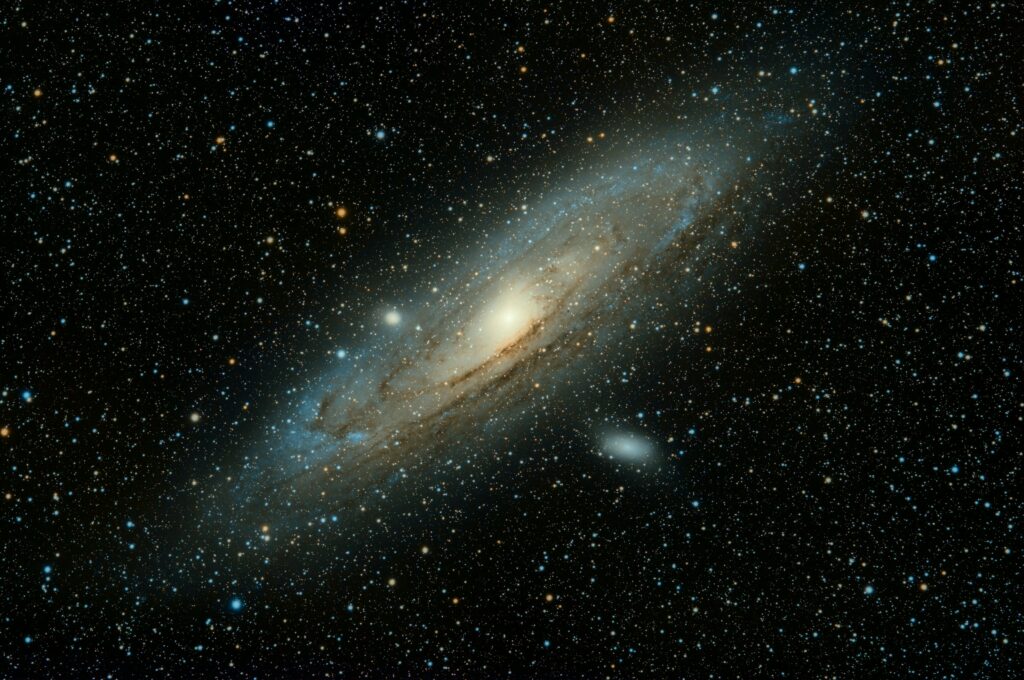
Stand outside on a dark night, look up, and it feels like you’re seeing everything. Galaxies, stars, and faint smudges of light seem to stretch forever, as if the sky is a glass window onto the whole cosmos. But modern cosmology quietly drops a bombshell: what we can see – the observable universe – is almost certainly a tiny bubble in a vastly larger reality we will never reach.
Even more unsettling, that larger reality may not just be more of the same. There are serious scientific ideas suggesting that far beyond our cosmic horizon, space could be governed by different physical constants, different kinds of particles, maybe even different numbers of dimensions. Our familiar laws of physics might be a local rulebook, not the master code of everything.
Why the Observable Universe Has an Edge at All
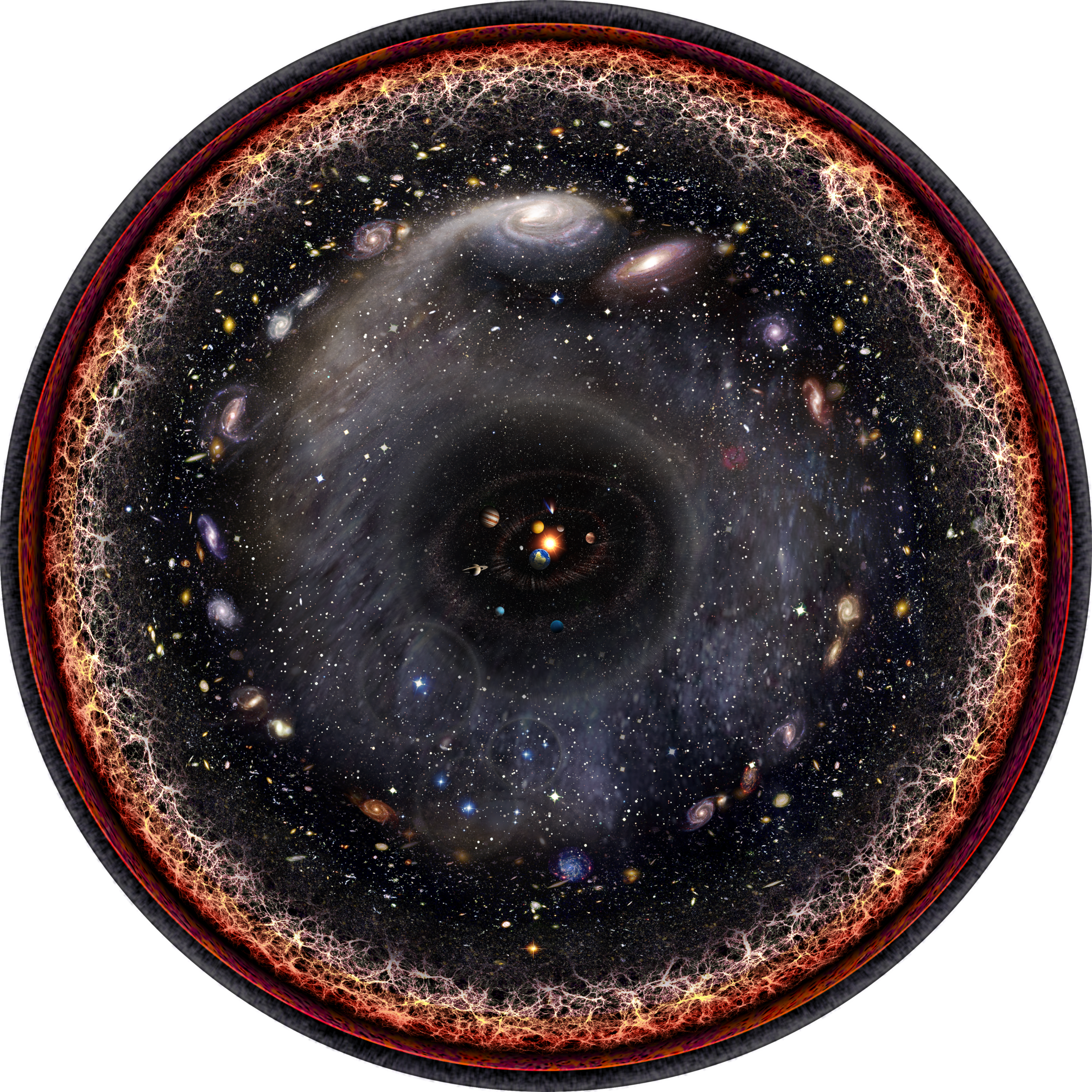
It sounds strange to say the universe has an “edge” when most of us were taught that space goes on forever. The key is that the edge we talk about in cosmology is not a wall in space, it’s a limit in time: we can only see light that has had enough time to reach us since the Big Bang, roughly about thirteen and a half billion years ago. Because space itself has been expanding during that time, the distance to the farthest galaxies we can in principle observe today is much larger than that simple age number suggests.
Right now, the radius of our observable universe – the farthest distance from which light could have reached Earth since the beginning – is on the order of dozens of billions of light years. Beyond that boundary, there may be countless galaxies, stars, and structures that exist but have never been able to send light or gravitational signals to us. This “edge” is really a cosmic horizon, like the line where the ocean meets the sky; it marks the limit of what we can see, not the limit of what is actually there.
The Universe Beyond Our Horizon: More of the Same, or Something Else?
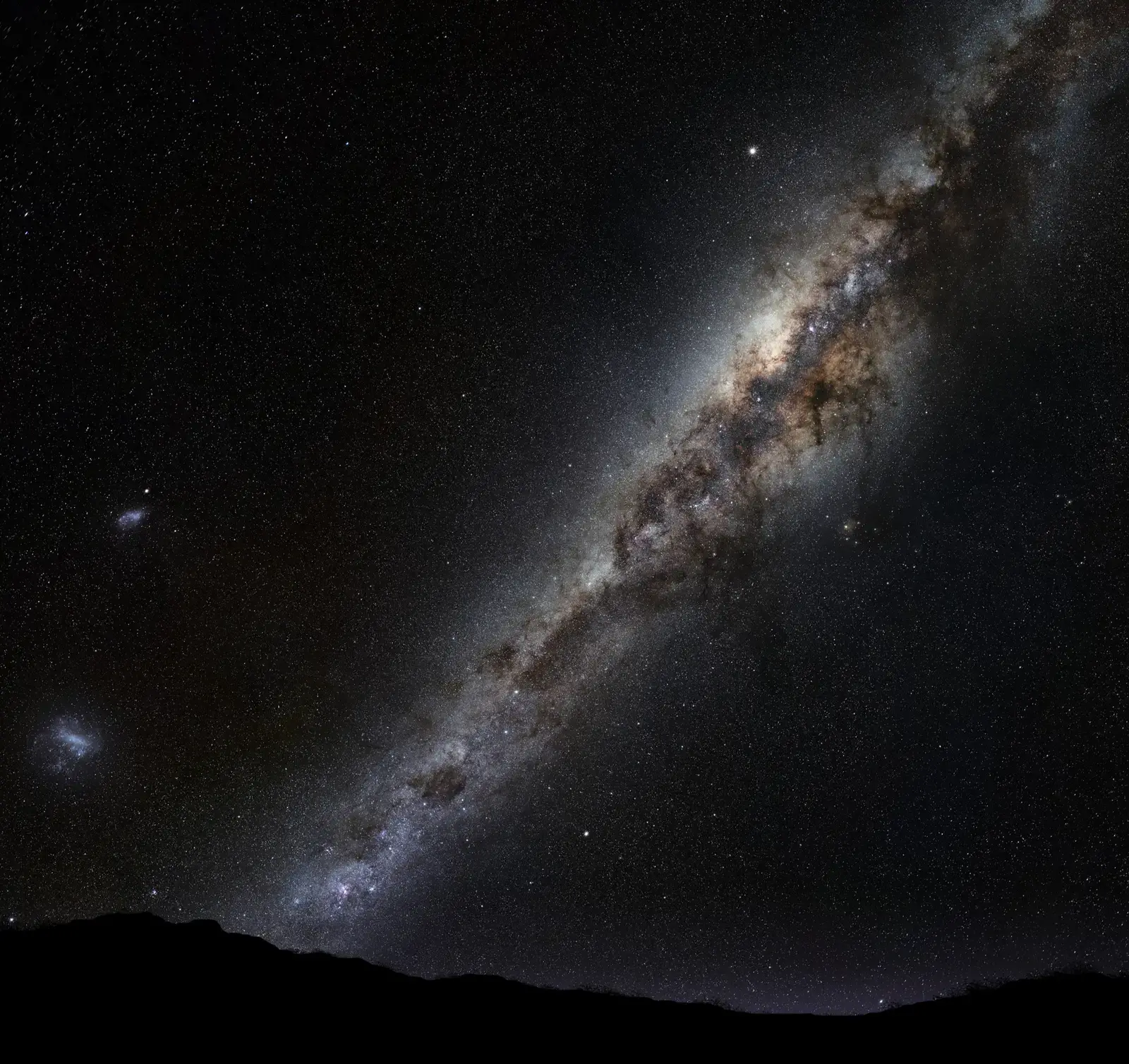
On the most conservative view, the unobservable universe is just like the part we can see, repeated over and over beyond our horizon. In this picture, space is extremely large – maybe even infinite – and filled with the same mix of dark matter, dark energy, galaxies, and radiation, following the same physical laws we test in laboratories. Our observable patch would then be like one little neighborhood in a sprawling, uniform city that keeps going beyond the fog.
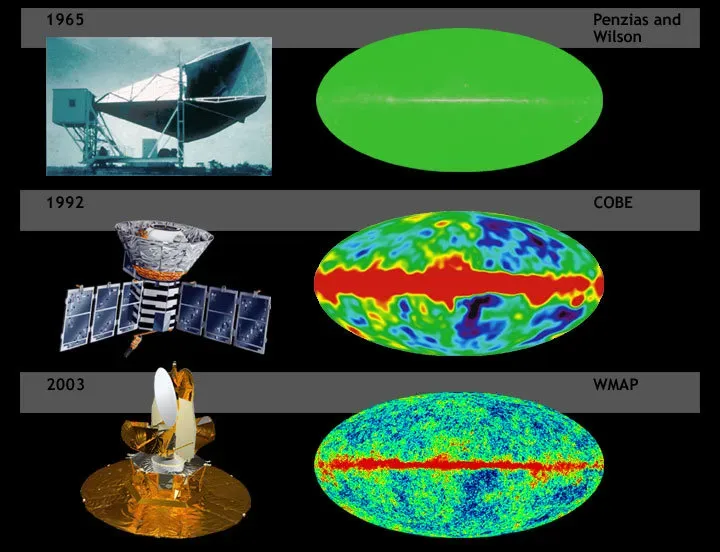
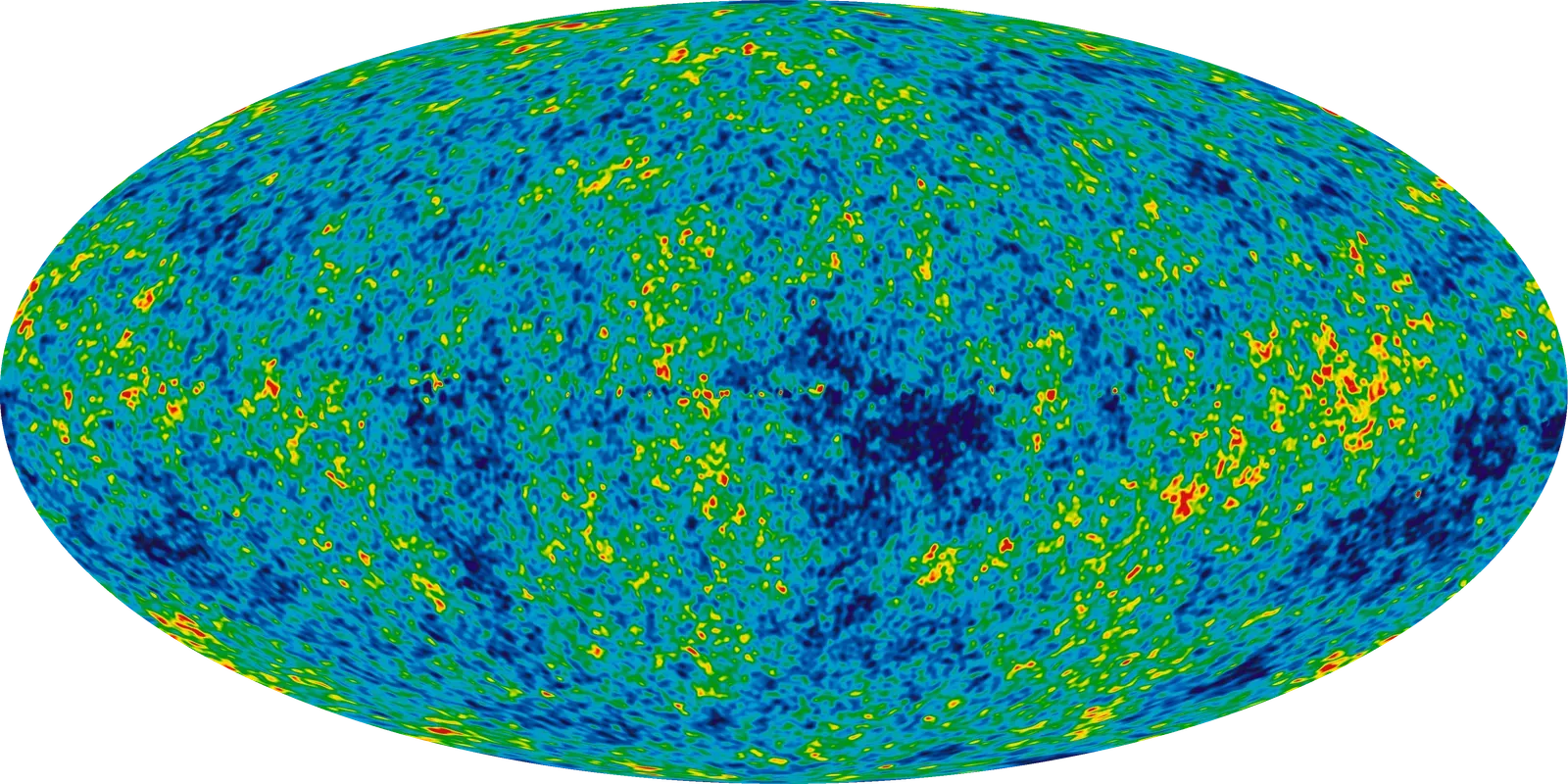
But there is no law that forces reality to be that simple. The data we have – the smoothness of the cosmic microwave background, the large-scale distribution of galaxies, the success of general relativity – tell us a lot about our region and its close surroundings. They say almost nothing about what happens unimaginably far away. Once you move beyond what light could ever have reached us, nature is not required to keep playing by the same script, and that opens the door to some of the most radical ideas in modern cosmology.
Cosmic Inflation and the Birth of Other “Patches”
One of the biggest clues that our observable universe might be just a piece of something larger comes from the theory of cosmic inflation. According to this idea, in the earliest fraction of a second after the Big Bang, space itself underwent a brief but staggering growth spurt, expanding faster than any speed limit that applies to objects moving through space. This blows up a tiny, quantum-sized region into something large enough to become our entire observable universe.
In many versions of inflation, that explosive expansion does not end everywhere at once. Some regions stop inflating and become “normal” universes like ours, while other regions keep inflating, spawning even more patches, potentially without end. You can picture it like a pot of water on the stove where bubbles of boiling water form and grow in the still-hot liquid. Our observable universe would be one such bubble, and beyond it there could be other bubbles, completely cut off from us, that emerged from different quantum fluctuations and perhaps settled into different patterns of physics.
Changing Constants: When Physics Turns Local
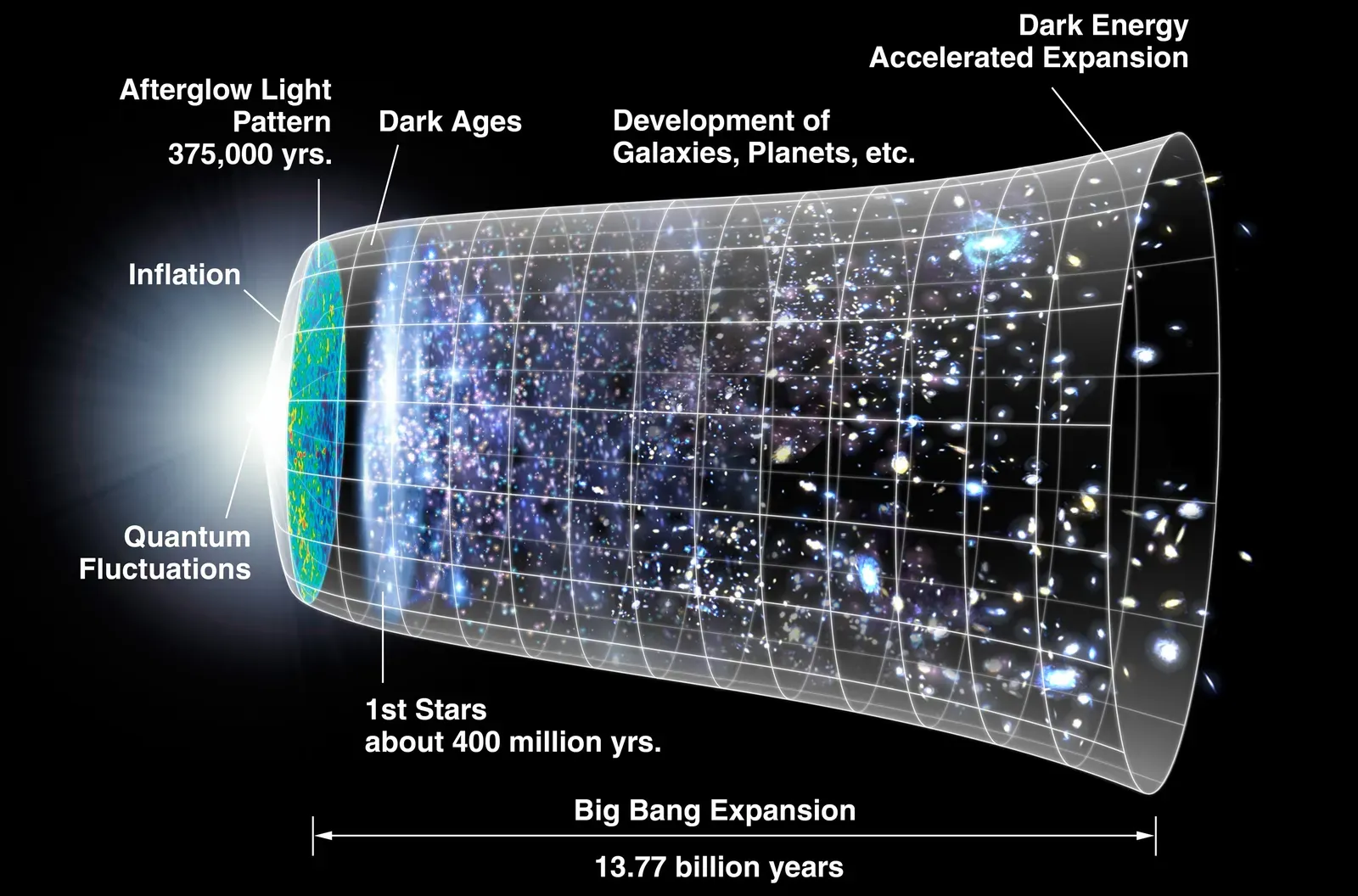
Here’s where things get really mind-bending. Many fundamental quantities in physics – the strength of gravity, the mass of the electron, the rate at which the universe expands – appear as “constants” in our equations. We often talk about them as if they’re fixed properties of reality. But several speculative frameworks, including certain versions of string theory and inflationary cosmology, allow these constants to vary from region to region, depending on how fields settled or how extra dimensions curled up during the early universe.
In that case, what we call the laws of physics may actually be more like local bylaws: robust and reliable within our patch, yet not necessarily enforced in distant parts of the cosmos. Imagine walking through a vast continent where every city has slightly different traffic rules, currencies, and even building materials. From inside one city, it is easy to mistake the municipal code for universal truth, until you realize there is no cosmic police making every region match.
Multiverse Ideas: From Bold Speculation to Careful Science
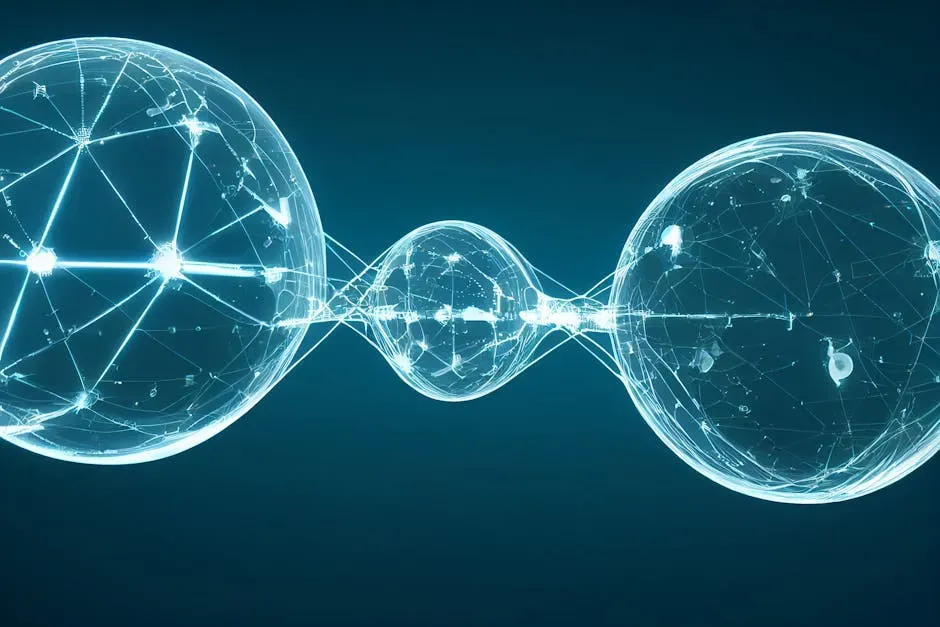
When people hear that the universe beyond our observable horizon might follow different rules, the word “multiverse” tends to jump out, sometimes with more hype than care. Physicists actually mean several different things by that term. One version, rooted in eternal inflation, envisions a huge inflating background giving rise to many bubble-like regions, each with its own set of physical parameters. Another version appears in quantum mechanics, where some interpretations describe branching histories rather than separated spatial regions.
Crucially, not all of these ideas are equally testable, and scientists argue intensely about which versions deserve to be called serious physics versus philosophical speculation dressed in math. Some inflationary models, for instance, predict specific patterns in the cosmic microwave background or the distribution of galaxies that we can try to observe. Others retreat forever beyond our observational reach. In my view, the only multiverse ideas worth getting excited about are the ones that either constrain what we see in our own patch or could, in principle, be ruled out by better data.
Could Different Laws of Physics Ever Show Themselves Here?
If regions beyond our observable horizon obey different rules, you might wonder whether any trace of that strange physics can leak into our world. In the simplest inflationary stories, the answer is probably not: those other patches are separated by distances so enormous that no particle, signal, or spacecraft could ever cross from one to another. Each bubble is its own self-contained universe, and the edge between them keeps receding faster than even light can chase.
However, more exotic scenarios imagine rare events where bubbles collide, leaving subtle signatures in the cosmic microwave background or in the large-scale structure of galaxies. So far, searches for such scars have not turned up anything conclusive. There are also speculative models in which extra dimensions or variable constants leave faint fingerprints in the way gravity behaves or how fundamental particles interact. I think the sober summary is this: if deviations from our familiar laws exist nearby in the cosmic landscape, they would have to be extremely well hidden, because our measurements within the observable universe already constrain them very tightly.
Why Our Patch Seems Perfect for Life – and What That Might Mean
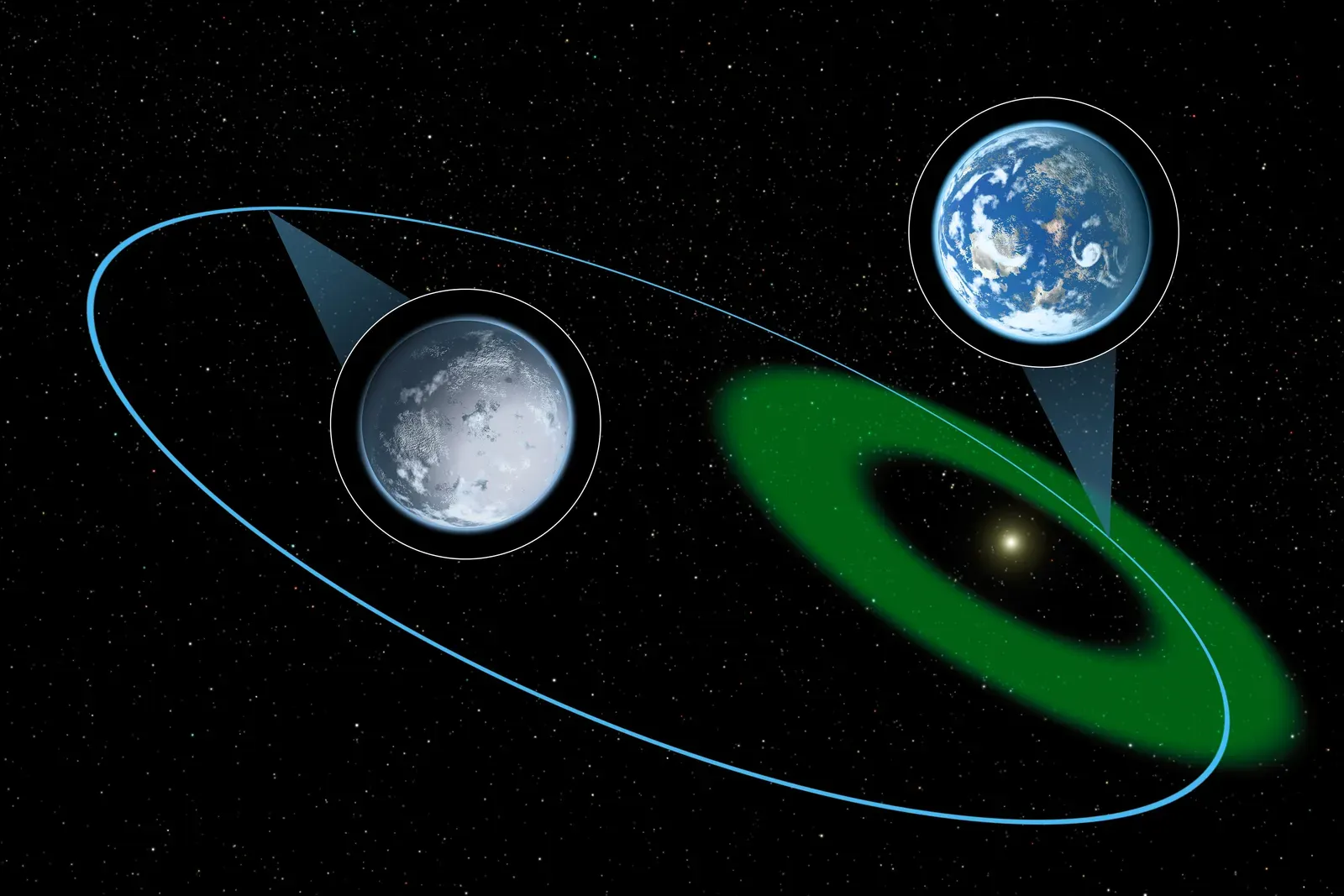
Another reason physicists take the idea of differing laws seriously is something that feels uncomfortably like cosmic coincidence. The physical constants in our region appear to sit in ranges that are remarkably friendly to the existence of long-lived stars, complex chemistry, and eventually life. Small changes in some of these numbers could make stars burn out too fast, prevent atoms from forming the elements we are made of, or cause the universe to recollapse or disperse too rapidly for anything interesting to happen.
If there is an enormous larger reality where different patches inherit different constants, then it is not shocking that we find ourselves in a region where the rules just happen to allow observers to evolve and ask questions. This is sometimes called an anthropic perspective: out of an ocean of possible cosmic neighborhoods, we naturally wake up in one that is bio-friendly. Personally, I find that explanation less satisfying than a deeper, single-law theory that forces the values we see, but until such a theory convincingly appears, the “many patches, many laws” picture remains on the table.
Living with an Edge We Can Never Cross
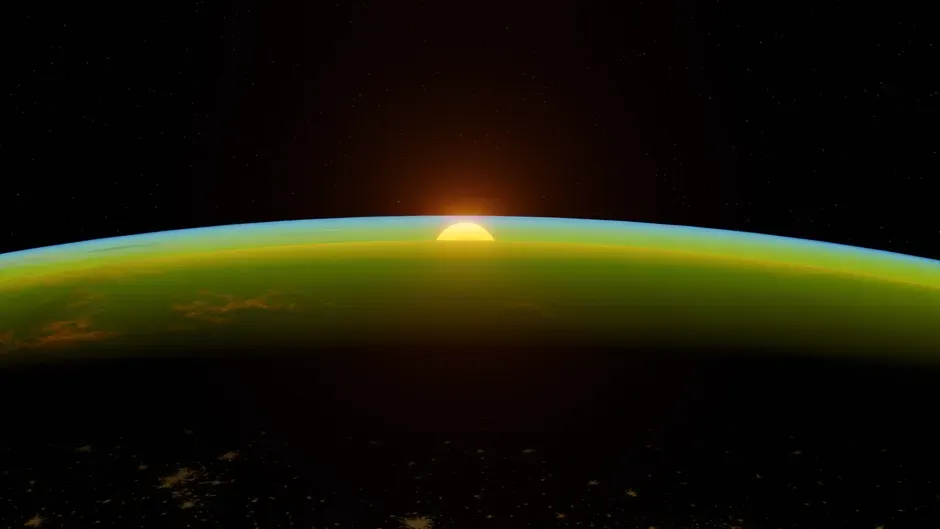
There is something emotionally unsettling about knowing that most of the universe – maybe almost all of it – lies forever beyond what we can see or touch. Our instruments keep getting better, mapping galaxies farther out, measuring ancient light more precisely, but the horizon is not a problem of technology. It is woven into the structure of spacetime. No matter how long we wait, new regions will slip beyond reach as dark energy drives accelerated expansion, and some galaxies we can see today will eventually fade from view.
In a sense, cosmology is teaching us a kind of intellectual humility. The laws of physics we painstakingly uncover in laboratories and telescopes may be exquisitely accurate descriptions of our cosmic neighborhood, yet still only a local chapter in a much thicker book. For me, the mature stance is not despair but curiosity: appreciating that we are reading from the middle of the story, fully aware there are pages we will never turn, and still determined to make sense of every line we can see.
Conclusion: The Universe Is Bigger Than Our Laws, and That’s a Feature
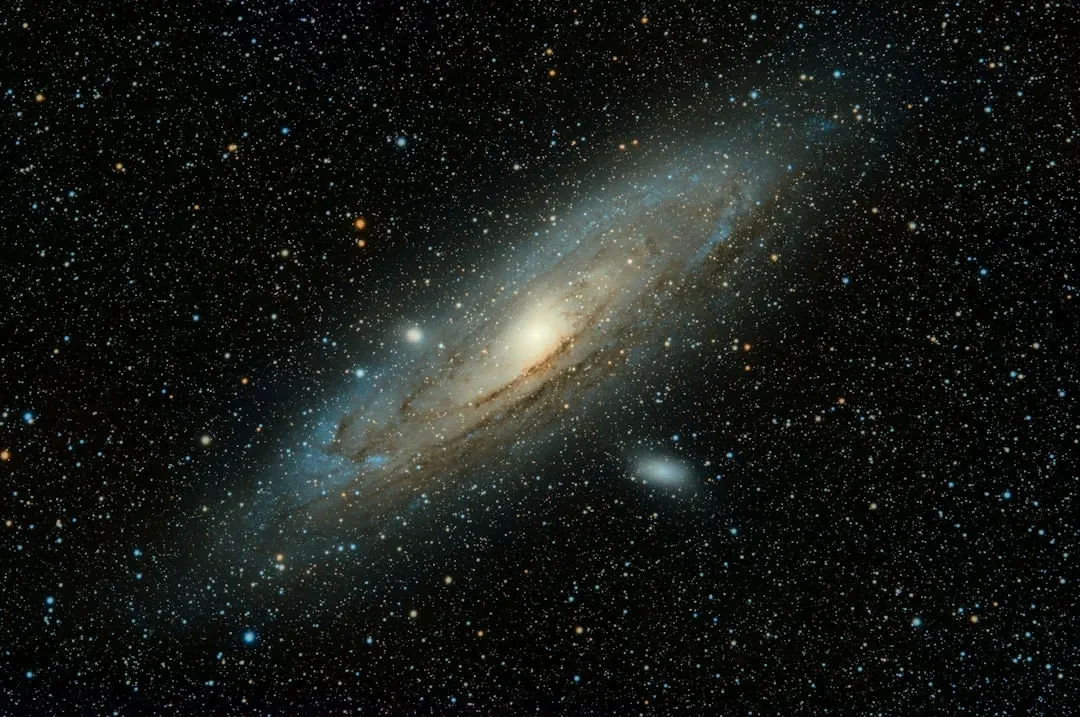
If the observable universe is just a small patch in a much larger cosmic quilt, then our cherished laws of physics might be less like universal commandments and more like regional customs that happen to work astonishingly well where we live. That does not make them less real or less powerful; it just means we should resist the temptation to assume they reign everywhere with no exceptions. I think that is an invigorating thought, not a threatening one, because it forces us to separate what we truly know from what we only hope is true.
My own opinion is that the universe beyond our horizon almost certainly exists and may well host regions where the effective laws look different, but I’m equally convinced that we should only elevate such ideas when they sharpen our predictions about the part we can actually test. Speculation is fun; confrontation with data is what turns it into science. In the end, the “edge” of the observable universe is less a hard boundary and more a mirror, reflecting our current limits back at us and daring us to push them. When you look up at the night sky now, can you really shake the feeling that the rules you know might be only one way the cosmos chooses to play the game?