
There is a reason we reach for words like “stung” or “crushed” after someone cancels plans without explanation or a friend group quietly stops including us. For a long time that language felt like exaggeration, a poetic shorthand for something that was really just disappointment. Brain imaging research over the past two decades has complicated that assumption in a way that is genuinely hard to dismiss.
What researchers found when they scanned people in the middle of being excluded was not a metaphor. It was measurable activity in a part of the brain long associated with the raw, distressing quality of physical pain. That finding has quietly reshaped how scientists talk about loneliness, heartbreak, and the sting of being left out, and it is worth understanding exactly what the evidence does and does not show.
The Cyberball experiment that started it all
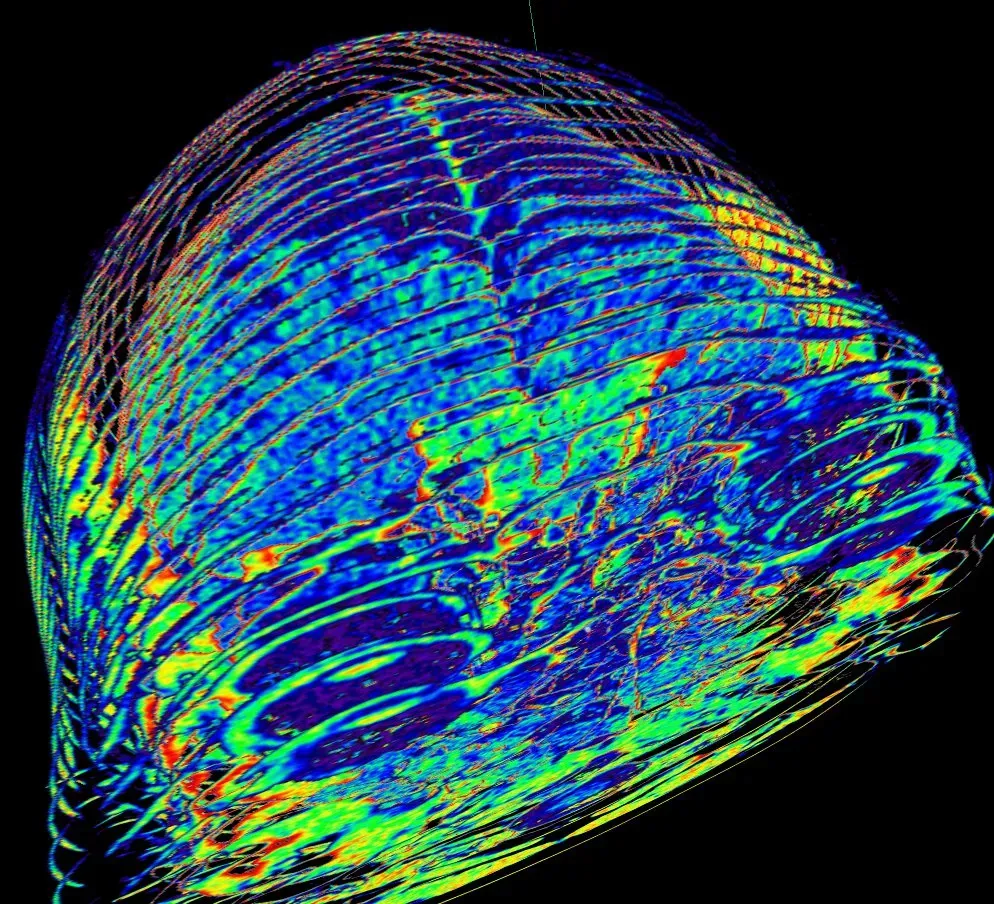
The most cited piece of evidence comes from a 2003 study led by social psychologist Naomi Eisenberger at UCLA, published in the journal Science. Participants lay in an fMRI scanner while playing a simple virtual game called Cyberball, tossing a ball back and forth with two other players who were actually computer programs. Partway through, the other players stopped passing the ball at all, leaving the participant to watch the game continue without them.
A neuroimaging study examined the neural correlates of social exclusion and tested the hypothesis that the brain bases of social pain are similar to those of physical pain, with participants scanned while playing a virtual ball-tossing game in which they were ultimately excluded, and the anterior cingulate cortex was more active during exclusion than during inclusion and correlated positively with self-reported distress. A separate brain region, the right ventral prefrontal cortex, also lit up, and its activity appeared to dampen the distress signal rather than amplify it. Social exclusion activates the same regions as physical pain, a part of the brain called the anterior cingulate cortex that responds to pain lighting up according to how strongly the players reported feeling the rejection.
Meet the dACC, the brain’s shared alarm bell
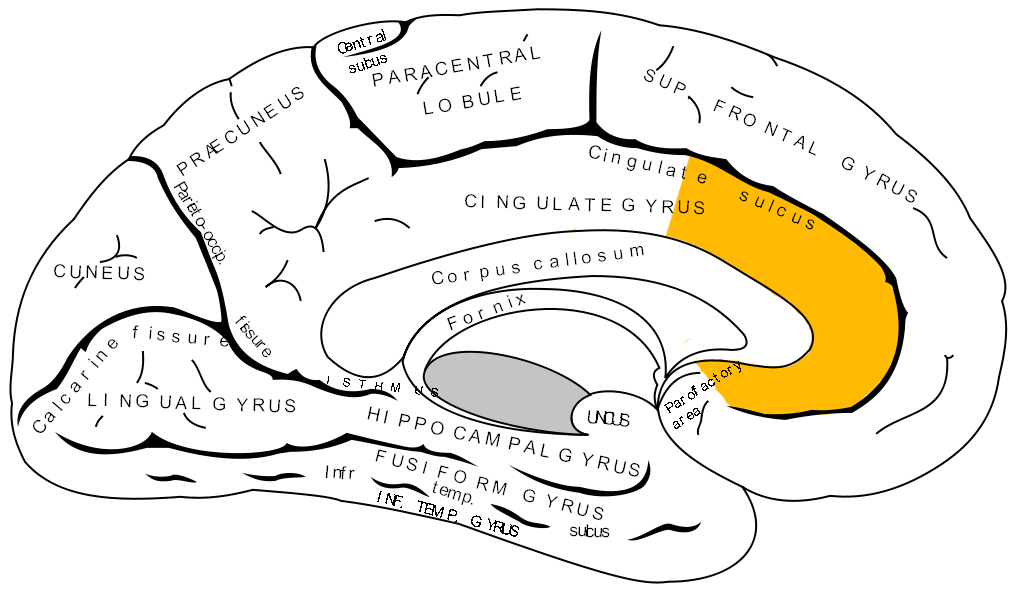
The specific region at the center of this story is called the dorsal anterior cingulate cortex, or dACC, tucked deep in the middle of the brain. Many fMRI studies have shown that the distressing unpleasant feelings of physical pain are processed in the dorsal anterior cingulate cortex and the anterior insula. This is not the part of the brain that registers where an injury is or how sharp it feels. It is the part that registers how much an injury bothers you emotionally.
That distinction matters because it explains why the pain of exclusion feels distressing rather than located somewhere specific in the body. Several lines of evidence suggest that the dorsal anterior cingulate cortex is involved in the affectively distressing components of both physical and social pain, and for decades neurosurgeons have performed cingulotomies, a targeted lesioning of this region, to treat intractable chronic pain, with patients reporting they can still feel the pain but it no longer bothers them. In other words, this brain region seems to be less about sensing harm and more about caring that harm happened at all, whether that harm is a burn on the skin or a friend walking away.
Why “broken heart” was never just a figure of speech
Long before brain scanners existed, languages across cultures had already settled on physical pain vocabulary to describe social loss. Numerous languages characterize social pain, the feelings resulting from social estrangement, with words typically reserved for describing physical pain, and it has been suggested that in mammalian species the social-attachment system borrowed the computations of the pain system to prevent the potentially harmful consequences of social separation. That is a striking idea. It suggests the overlap researchers found in brain scans was hiding in plain sight in the way we talk, long before anyone thought to look for it in neural tissue.
A 2011 study pushed this even further by looking at people who had recently gone through an unwanted breakup. When rejection was powerfully elicited, by having people who recently experienced an unwanted breakup view a photograph of their ex-partner while thinking about being rejected, areas that support the sensory components of physical pain became active, with the overlap between social rejection and physical pain demonstrated by comparing both conditions in the same individuals using fMRI. That finding went a step beyond the earlier Cyberball work, suggesting that intense enough emotional pain can reach into brain regions normally reserved for the physical sensation of injury, not just its emotional aftertaste.
The Tylenol experiment nobody expected

If social and physical pain share circuitry, a logical next question follows almost immediately. Could a common over-the-counter painkiller dull emotional pain the same way it dulls a headache? Psychologist Nathan DeWall at the University of Kentucky decided to test exactly that, working alongside Eisenberger’s team.
DeWall and colleagues investigated this connection through two experiments, and in the first, 62 healthy volunteers took 1,000 milligrams daily of either acetaminophen or a placebo, reporting each evening how much social pain they experienced using the Hurt Feelings Scale, a measurement tool widely accepted by psychologists. Hurt feelings and social pain decreased over time in those taking acetaminophen, while no change was observed in subjects taking the placebo. A follow-up scanning experiment backed this up at the neural level. After taking 1,000 to 2,000 milligrams of acetaminophen daily for three weeks, participants reported significantly lower levels of social pain in daily life and showed reduced neural activation in both the dorsal anterior cingulate cortex and anterior insula to social rejection scenarios.
How touch and connection act as a natural painkiller

If a pill can dampen the pain circuit shared by rejection and injury, it stands to reason that human connection might do the opposite job just as effectively, soothing that same circuit through entirely different means. Research on hand-holding backs this up in a fairly direct way. A well known hand-holding study found that when married women were threatened with electric shock while in an fMRI scanner, holding their husband’s hand significantly attenuated activation in threat-related brain regions including the anterior cingulate cortex and prefrontal cortex.
The effect is not just about physical touch in the abstract either. It seems to depend heavily on who is doing the touching. In experimental contexts with adults, pain relief associated with handholding is more effective when the support giver is a romantic partner rather than a stranger or a mechanical device. That detail is oddly reassuring. It suggests the brain is not just responding to physical contact, it is responding to the meaning behind it, which lines up neatly with the idea that social bonds and physical comfort run through overlapping wiring.
Not every scientist is convinced of the full overlap
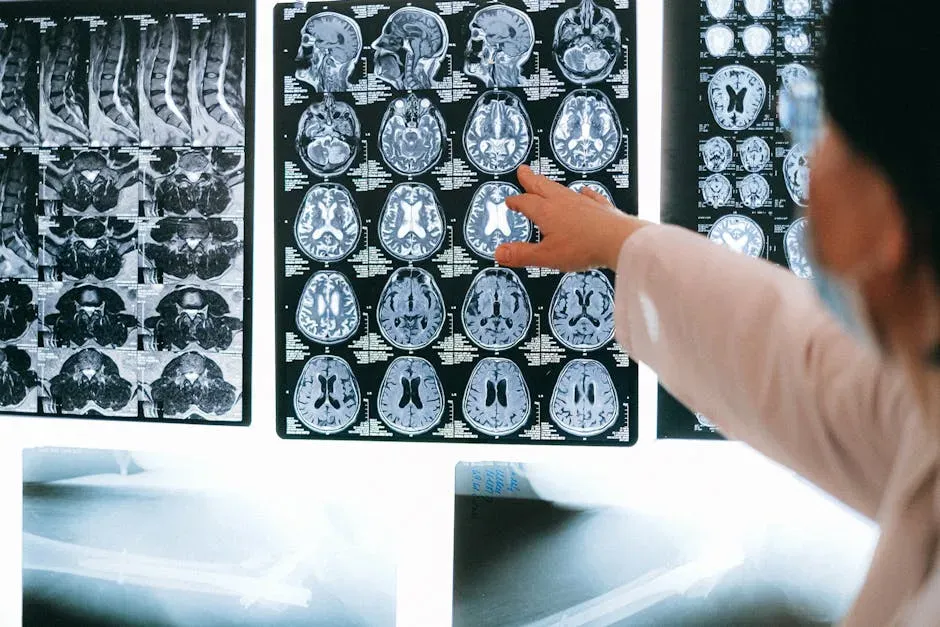
It would be misleading to present this as a settled matter with no pushback, because it is not. Some researchers have raised real questions about how much the original findings actually prove. Subsequent research has led to a vigorous debate regarding the relation between the neural substrates of physical and social pain, and while it is clear that social processes can result in activation of structures that overlap with the physical pain matrix, more recent data have called into question both the extent of this overlap and whether it is specific to the experience of rejection.
A more recent replication attempt added further nuance to the picture. Eisenberger’s study has faced significant criticism, and apart from the low replicability of the original dACC finding, critics have argued that activations could be related to general conflict detection or expectancy violation processes rather than social pain specifically. That is an important caveat. The dACC does a lot of jobs in the brain, and some of what looks like “social pain” activation might partly reflect surprise or a broken expectation rather than pain itself.
An evolutionary shortcut millions of years in the making

None of this happened by accident, according to the researchers who study it. The leading explanation is that social bonding literally repurposed an older survival system rather than building a new one from scratch. The social attachment system in humans may have evolved by piggybacking directly onto the physical pain system to promote survival, and to the extent that social separation threatened human survival, feeling hurt by separation may have offered an adaptive edge.
This makes a certain amount of evolutionary sense once you think about it from the perspective of a vulnerable infant or an isolated early human. Being cut off from the group was not just an emotional setback, it was a genuine threat to survival, on par with an injury that needed immediate attention. Because human young are unable to defend or feed themselves, maintaining social connections from an early age was critical for survival. Borrowing the pain system to flag social danger, rather than inventing a separate one, may simply have been the more efficient design.
Final thoughts
What strikes me most about this research is not the neat headline version, that rejection “hurts like a broken bone.” It is the messier, more honest version underneath it: a shared brain region, real but imperfect overlap, and legitimate scientific disagreement about how far that overlap extends. That nuance does not make the finding less interesting. If anything, it makes it more trustworthy, because science that acknowledges its own limits tends to hold up better than science that oversells itself.
Where I land on this is fairly simple. Even the more cautious researchers agree that some real neural overlap exists between social and physical pain, and that alone is enough to change how we treat the people around us. Being left out is not a minor inconvenience to shrug off, and it is not weakness to be bothered by it. It is, at least in part, your brain doing exactly what it evolved to do.