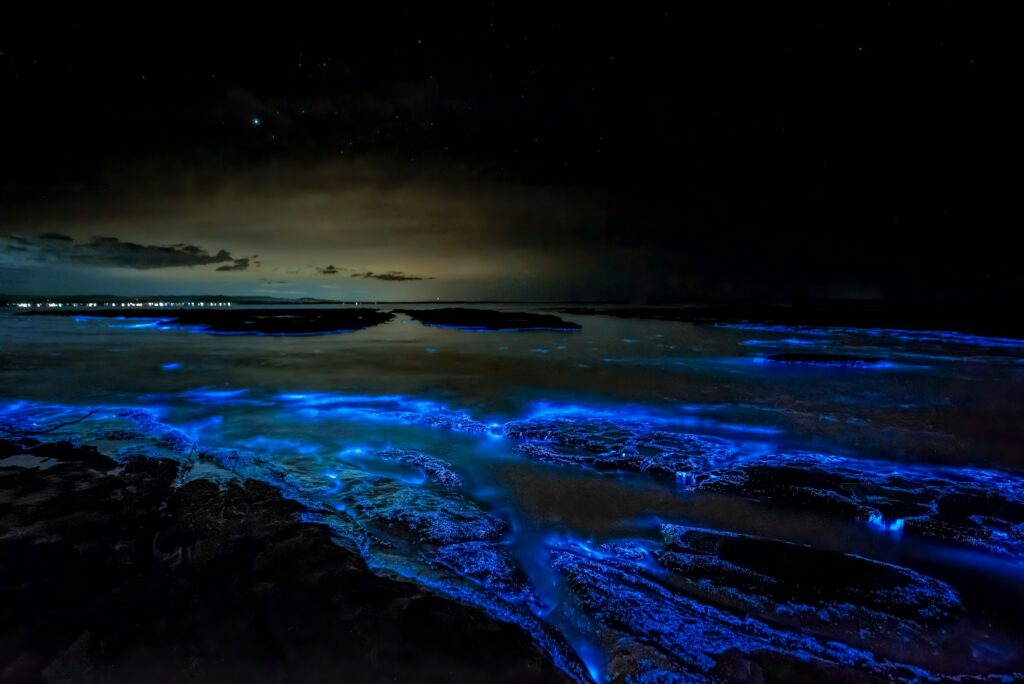
There’s something deeply unsettling about watching the ground itself light up in the dark. No neon signs, no spotlights, just the earth glowing back at you like it knows a secret. Across the United States, there are pockets of beach, forest, mine, and desert where, after midnight, the land shimmers, flickers, or even burns with an eerie radiance.
Some of these places are famous, others are tucked down backroads locals whisper about, but they all raise the same haunting question: what on earth is going on beneath your feet? Geologists do have answers – some mundane, some mind‑bending – but standing there at night, watching sand sparkle or rocks fluoresce like alien artifacts, the science only makes it stranger. Let’s walk through eleven of the most remarkable spots where the ground glows and dig into what seems to be lurking underneath.
1. Mosquito Bay, Puerto Rico (And Other Bioluminescent Bays)
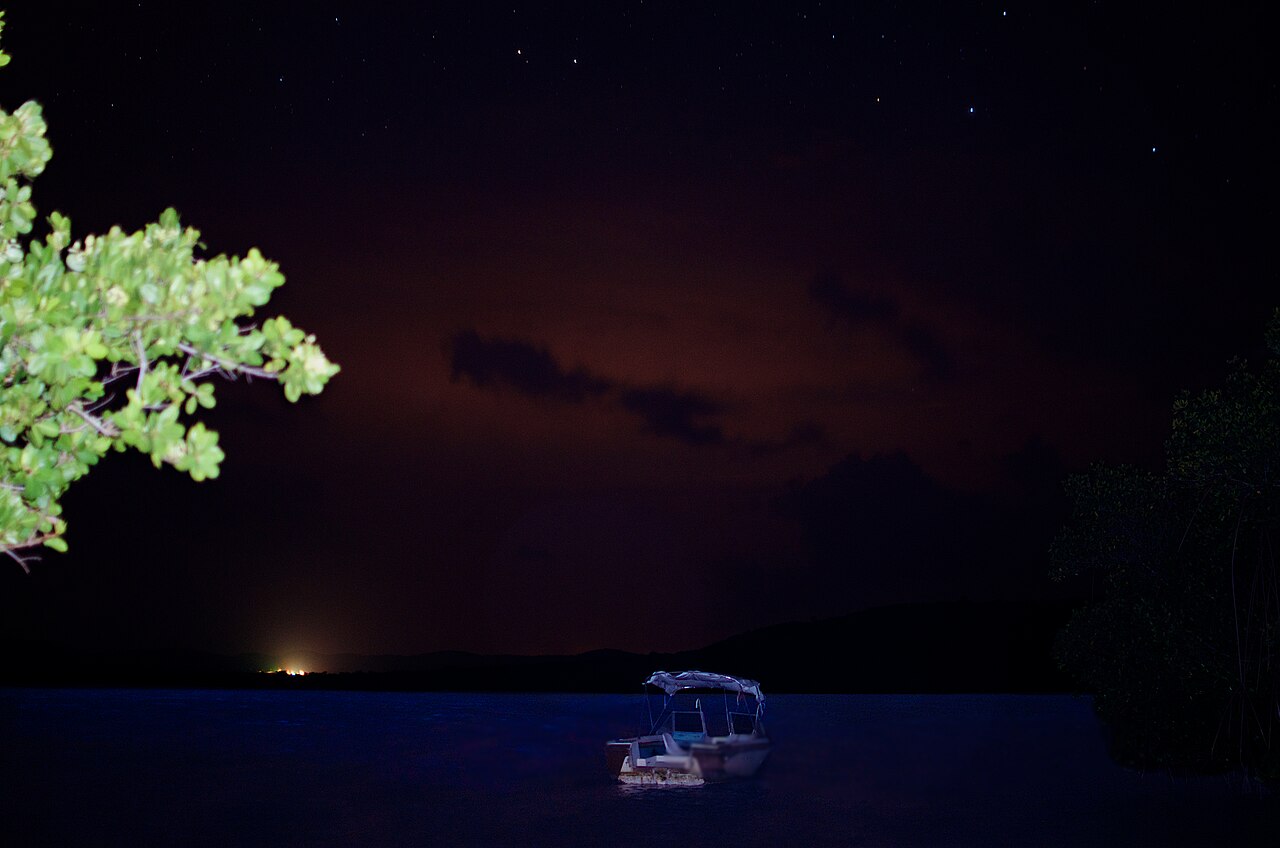
Imagine taking a midnight kayak out and every paddle stroke makes the water explode into electric blue light. That’s what happens in Mosquito Bay on Vieques, often called the brightest bioluminescent bay in the world. A similar effect can be seen in places like Laguna Grande in Fajardo and the bay at La Parguera, where the glow is strong enough on dark nights that your wake looks like liquid lightning.
Geologists and marine scientists point to dense populations of microscopic organisms called dinoflagellates as the culprits. These tiny plankton light up when disturbed, a natural chemical reaction driven by compounds in their cells. The bays’ bowl‑like geology, restricted circulation, warm shallow water, and nutrient‑rich mangrove surroundings help trap and concentrate them, turning the seafloor and water column into a kind of living, glowing soup. It feels magical on the surface, but underneath, it’s really about the right basin shape, sediment chemistry, and still water letting life pile up until the night literally sparks.
2. Florida’s Bioluminescent Lagoons and Glowing Shores
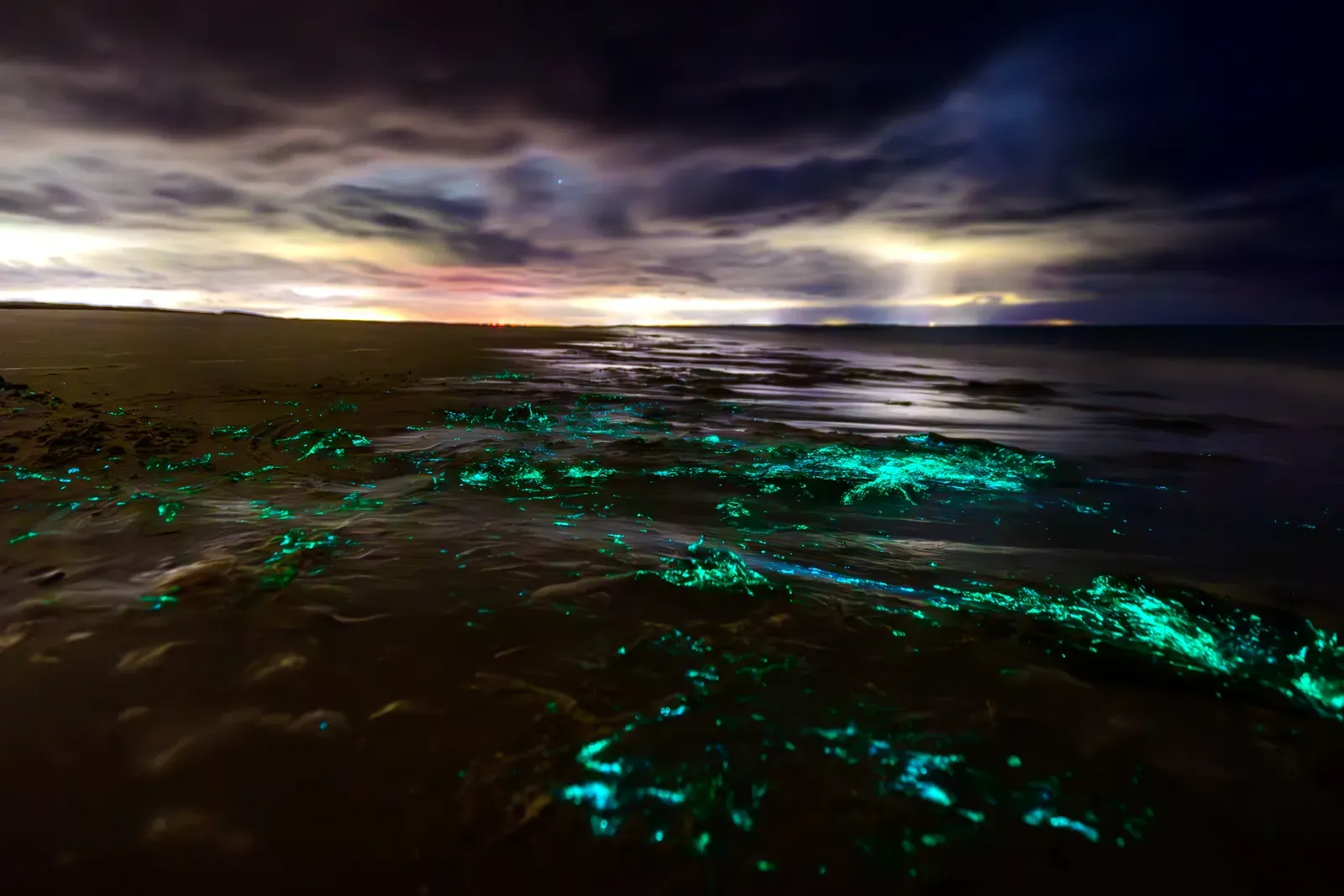
On Florida’s Space Coast – especially around the Indian River Lagoon, Banana River, and Mosquito Lagoon – the water and even the wet sand along the shore can suddenly glow when you drag your feet or swirl your hand after dark in the warm months. Locals talk about “glitter beaches,” where every step kicks off a blue‑green sparkle that feels more like a CGI effect than real life. Watching fish streak under the surface looks like someone is drawing with light just below your toes.
Again, marine biologists and geologists blame a combination of biology and coastal geology. The shallow, semi‑enclosed lagoons, fine sediments, and limited flushing act like a giant petri dish. In summer, warm water and calm nights let bioluminescent dinoflagellates and sometimes glowing comb jellies bloom to high concentrations. The underlying silt and muddy sand stabilize these calm conditions, and the gentle slope of the lagoon floor keeps everything shallow enough for sunlight during the day, feeding the organisms that will flare up after midnight. It is less a mystery and more a perfect, if fragile, convergence of basin shape, sediment, and seasonal conditions.
3. Oregon’s “Glowing Sand” Beaches
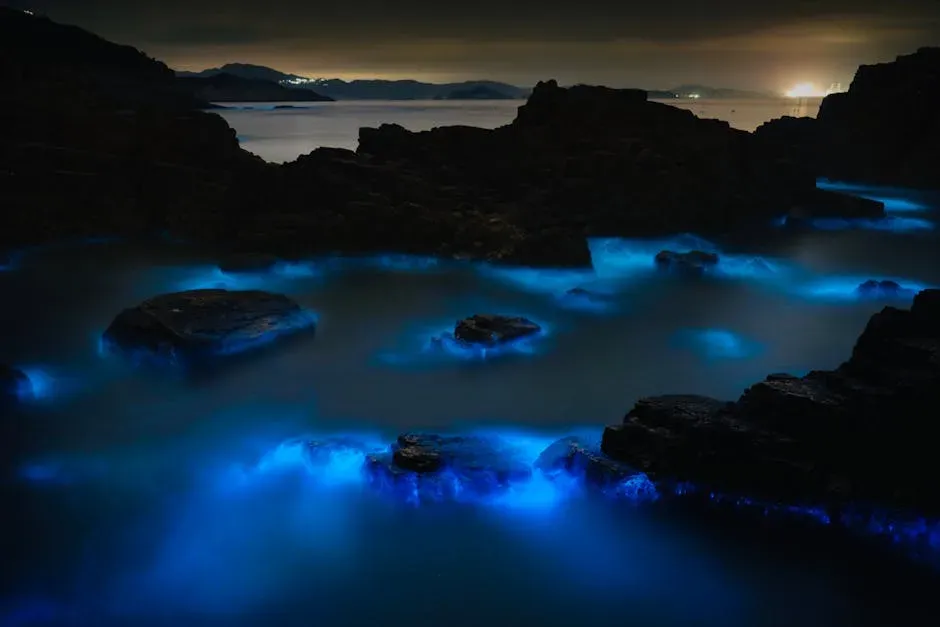
Walk some of Oregon’s beaches on the darkest nights, especially along stretches of the central and northern coast, and you might see sand grains flash underfoot, like tiny sparks bursting with every step. It doesn’t look like a steady glow; it’s more of a nervous, staccato glitter that appears when you scuff or stamp along the tide line. It feels almost like the beach is answering back, one footprint at a time.
Here, the glow usually comes from bioluminescent organisms clinging to grains of sand in the swash zone, combined with the optical quirks of certain minerals in the sand. The cold, nutrient‑rich upwelling along the Pacific Northwest favors plankton blooms, including species capable of brief flashes of light when they are jostled. Mixed in with that, Oregon’s sands can contain feldspar and other light‑colored minerals that reflect and enhance faint light, making the brief biological flashes easier to see. The sea floor offshore, shaped by submarine canyons and headlands, funnels nutrients and currents that support these blooms, turning stretches of shoreline into twitchy bands of living light when conditions line up.
4. Great Smoky Mountains’ “Firefly Forests” and Faintly Glowing Floors
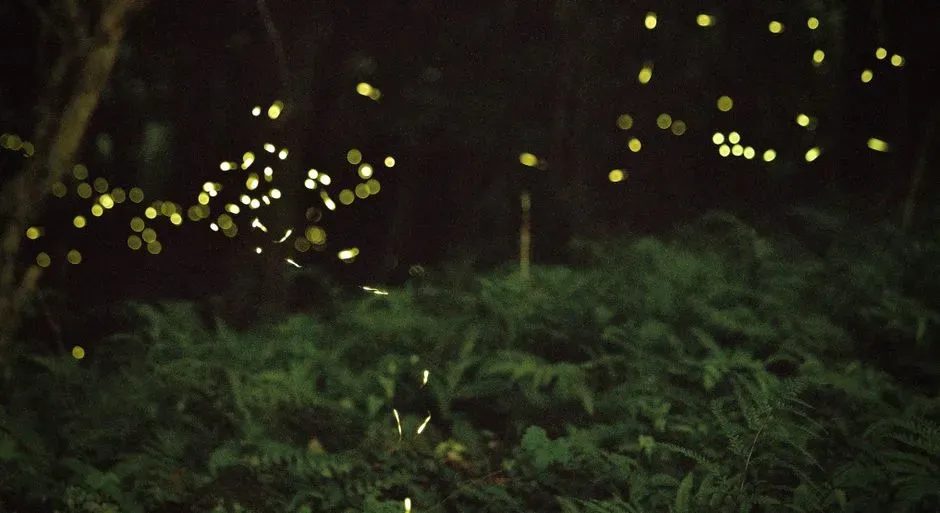
People travel from all over the world to see the synchronous fireflies of Great Smoky Mountains National Park, where thousands of insects pulse in eerie unison on late spring and early summer nights. While the real stars are in the air, the forest floor sometimes seems to shimmer faintly – light catching on damp leaves, moss, and soil, creating the impression of a low, otherworldly glow just above the ground. In the darkest hollows, the ground can feel like a dimly lit stage for that incredible light show.
Geologists and ecologists point to the Smokies’ unique combination of ancient, heavily weathered rocks, rich acidic soils, and consistently moist microclimates. Thick layers of organic matter and moss hold water, reflecting and scattering light from fireflies and sometimes from tiny bioluminescent fungi or bacteria that thrive on decaying logs and leaf litter. Beneath that surface is a deep, fractured bedrock of old sedimentary and metamorphic rocks, feeding seeps and springs that keep the forest floor damp and cool. The result isn’t a strong, independent glow like you see in labs, but a subtle, amplified shimmer created at the intersection of biology, soil chemistry, and a very soggy, very old mountain landscape.
5. New Jersey’s Glowing Tides and Coastal Marsh Edges
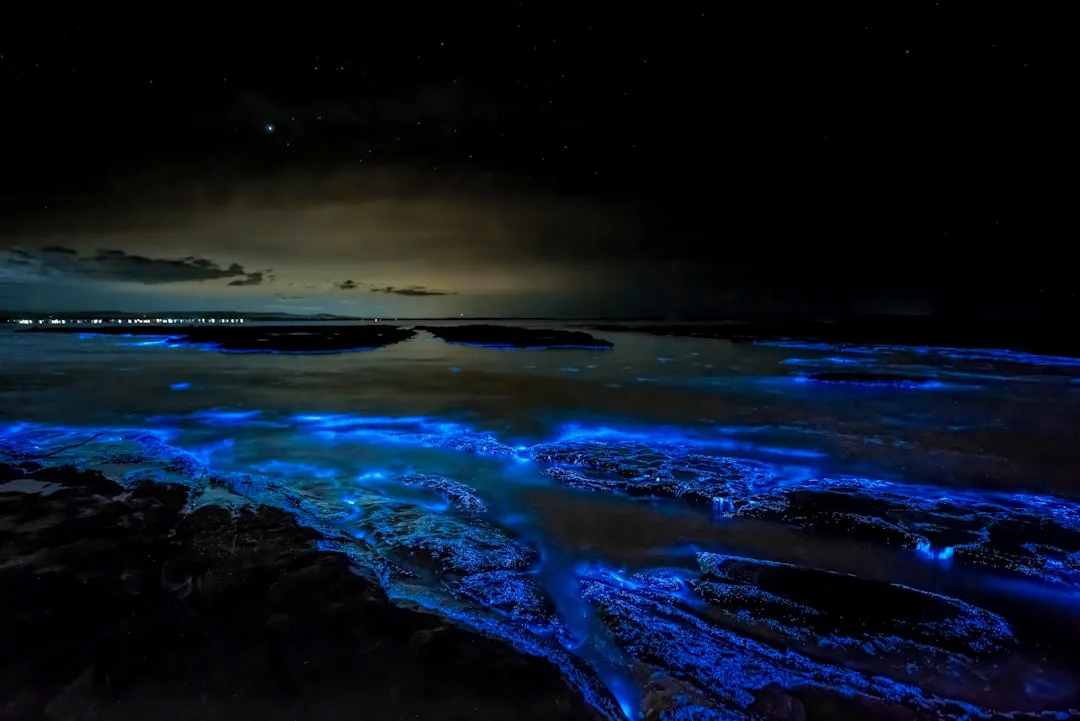
On summer nights along parts of the New Jersey shore – especially in calm back bays and salt marsh creeks – the water and muddy banks can suddenly flare when a boat wakes the surface or someone drags a hand just below. It’s not as famous as Florida’s lagoons, but locals know that on the right nights, the tidal channels light up with ghostly, dotted streaks. Standing on a dock, you can sometimes see each fish as a glowing outline darting through the black water.
The underlying mechanism is familiar: dense blooms of bioluminescent dinoflagellates, supported by nutrient‑rich waters and relatively sheltered inlets. What makes the geology matter here is the low‑lying coastal plain, composed largely of soft sediments deposited over many thousands of years as sea levels rose and fell. Those muds and sands form shallow, sluggish estuaries where water can linger, stratify, and warm up, letting plankton reach high densities. The marsh peat underneath acts like a slow‑release fertilizer, seeping organic nutrients into the water and feeding the very organisms that turn these channels into glowing, living veins at night.
6. Centralia, Pennsylvania: A Town on Fire Beneath Your Feet
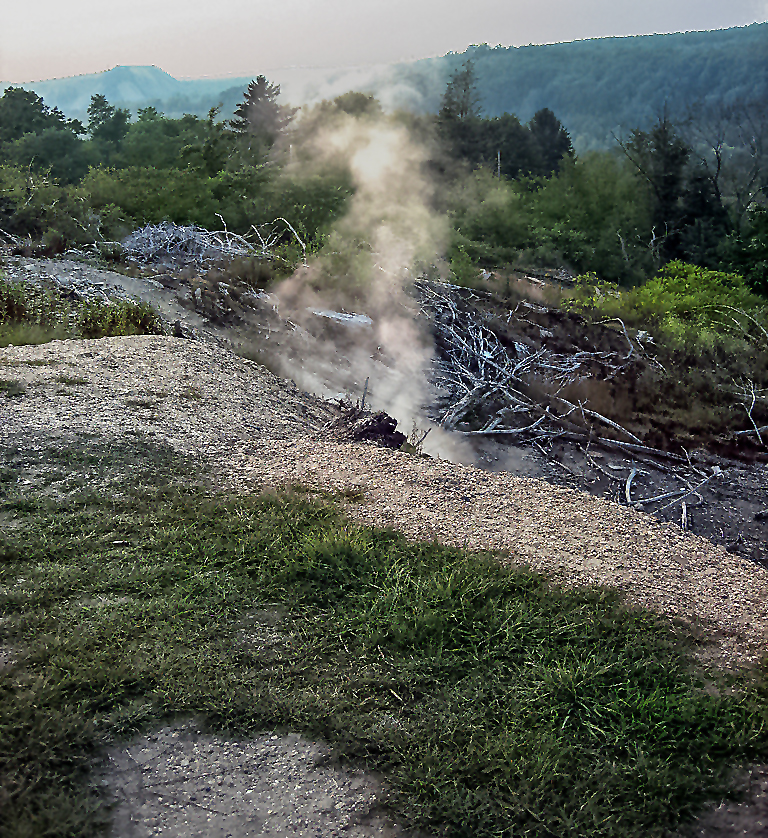
If the glowing beaches feel magical, Centralia feels like a warning. In this near‑abandoned Pennsylvania town, the ground does not sparkle blue; it smolders red and orange deep below, thanks to a coal mine fire that has been burning underground since the early nineteen‑sixties. At night, or on cold days, steam and wisps of smoke rise from cracks in the earth and old roadways, and some spots have been hot enough to melt shoes and deform asphalt.
Here, geology is the main actor, not just the stage. Centralia sits atop layers of bituminous coal, part of Pennsylvania’s rich Appalachian coal fields. At some point, an exposed seam caught fire – likely via a nearby trash burn – igniting the coal within old mine workings. That fire spread through a maze of tunnels and fractured rock, effectively turning the underground coal bed into a long‑lived, low‑oxygen furnace. The glow is mostly invisible from the surface now, but the heat, gases, and occasional fiery fissures are a stark reminder of how a carbon‑rich rock layer, once disturbed and exposed to oxygen, can transform from a resource into an underground inferno that could smolder for centuries.
7. The Burning Coal Seam of Centralia’s Cousins: Hidden Fires in the West
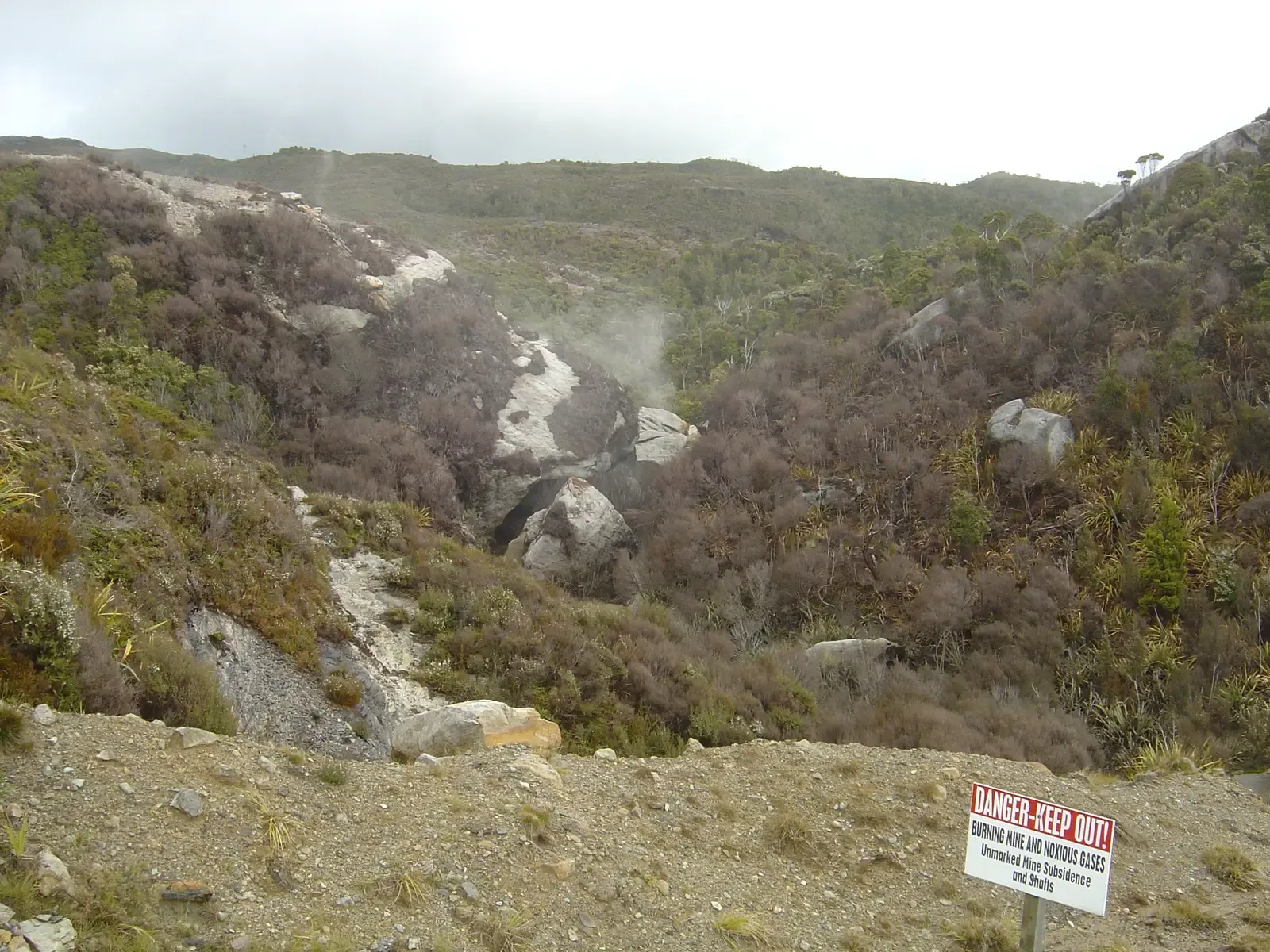
Centralia is the famous one, but the United States has other underground coal seam fires, particularly in western states like Colorado and Wyoming. Many of these burn far from towns, hidden under scrubby hillsides or remote badlands. At night, in winter, you might see eerie glows from vent cracks or patches of bare ground where snow refuses to stick because the soil is unnaturally warm.
Geologists studying these hidden fires trace them to the same basic process: coal seams exposed at the surface or cut by old mining operations slowly oxidize, dry out, and can spontaneously ignite or be lit by surface fires. Once burning, the fire can travel along the coal bed, following fractures and faults in the rock. Overburden collapses above the burning seam create sinkholes and vents, allowing gases and heat to escape and sometimes lighting up the immediate area with a dull orange glow. It is a brutal example of how a seemingly solid hillside can actually be a thin shell over a moving, burning front in the geology below.
8. Fluorescent Rocks in Franklin and Sterling Hill, New Jersey
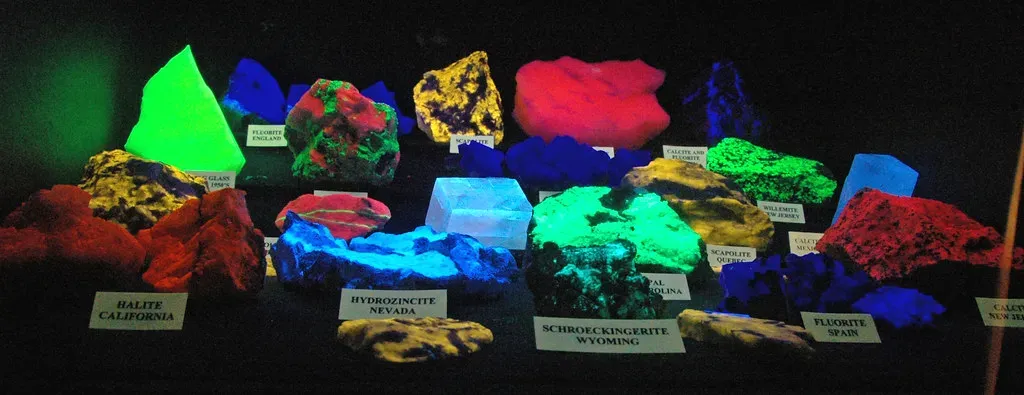
Walk into a dark mine tunnel in Franklin or Sterling Hill, New Jersey, flip on a strong ultraviolet lamp, and the walls explode into color – fiery reds, neon greens, and icy blues glowing from the rock itself. On the surface, rock piles and loose stones can look dull and gray by day but turn into glowing treasure when lit at night with the right wavelength of light. It is one of those places that makes you realize how incomplete daylight really is.
These mines sit on a deposit famous among geologists and collectors for its unusual assemblage of fluorescent minerals, including varieties of calcite, willemite, and others. The glow does not come from heat or ongoing biological activity but from trace elements and defects in the crystal structure of the minerals that absorb ultraviolet energy and re‑emit it as visible light. The underlying ore body formed from ancient seafloor sediments and hydrothermal activity, later metamorphosed and squeezed by tectonic forces. What you are seeing in that glow is the fingerprint of deep, slow geological processes – chemistry locked into stone that only reveals itself when we shine just the right kind of light onto the ground.
9. The Blacklight Desert: Fluorescent Minerals in the American Southwest
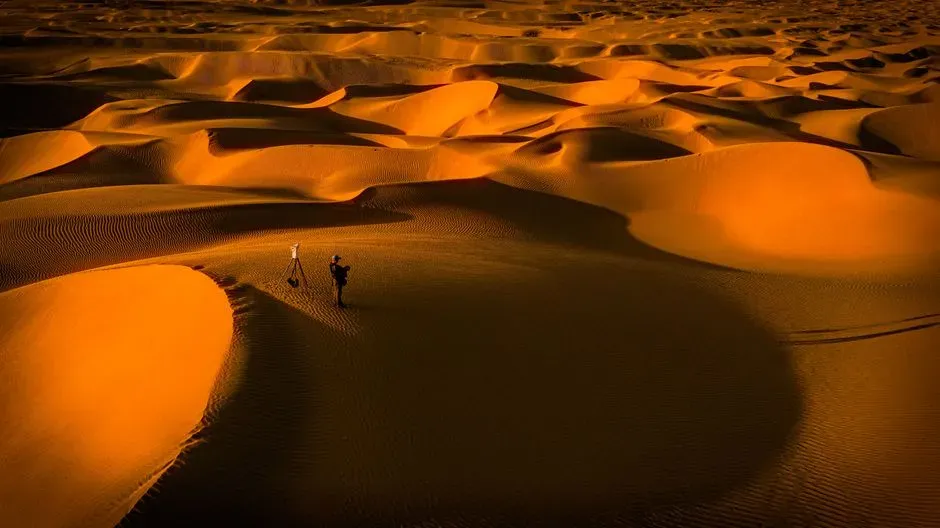
Roam certain parts of the Arizona, Nevada, or Utah desert with a good ultraviolet flashlight after midnight and the landscape suddenly changes. Plain‑looking gravels start to reveal fluorescent fragments: pebbles that glow green, pink, or orange; veins in boulders that light up as if traced with neon. To the naked eye under the sun, it is all just beige rock and dust. Under UV at night, the ground turns into a scatter of secret signals.
Geologists attribute this to a mix of minerals that are either inherently fluorescent or contain impurities that cause fluorescence, such as some varieties of calcite, fluorite, scheelite, and even certain feldspars. The arid climate and sparse vegetation help by leaving a lot of bare rock exposed rather than hidden under soil or plants. The underlying geology – ancient volcanic fields, hydrothermal veins, and sedimentary layers laced with mineralizing fluids – created pockets where these fluorescent minerals could crystallize. The glow itself is not strong enough to see without a UV source, but once you bring that artificial “midnight sun,” the desert floor tells a much more colorful story about its geologic past.
10. “Fairy Fire” and Glowing Fungi in Appalachian Forests
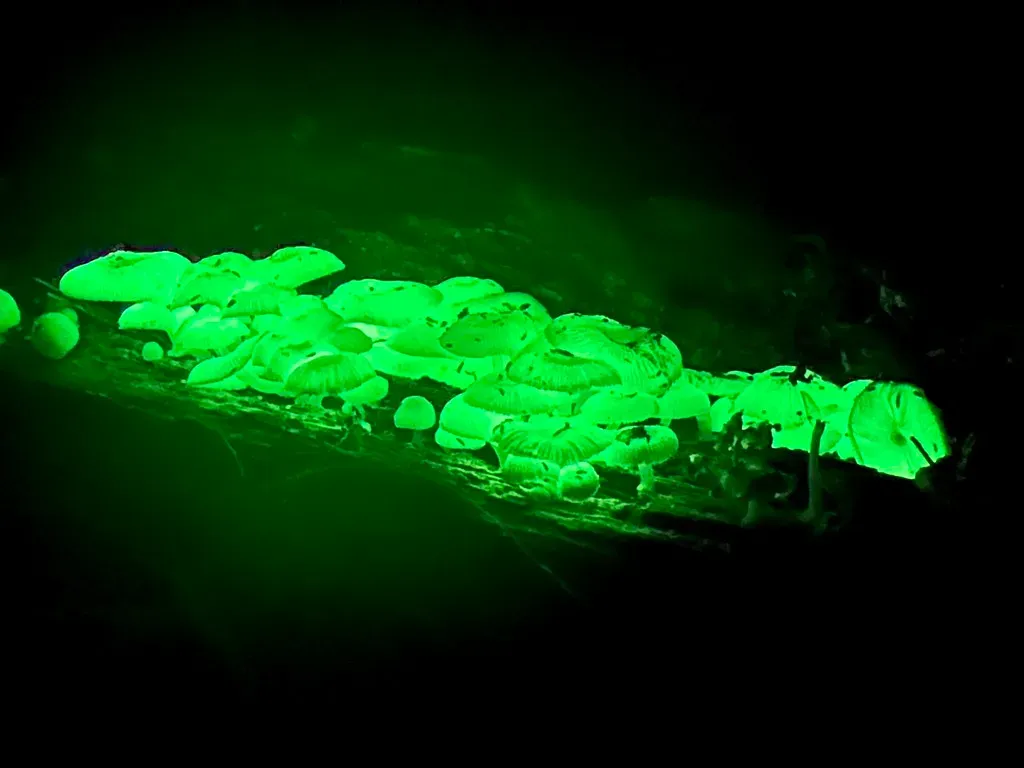
Far from cities, in humid Appalachian forests stretching from the Carolinas up toward New England, hikers sometimes report faint greenish glows on rotting logs and leaf‑strewn ground. It is not dramatic – more of a ghostly haze or tiny spots of light you only notice after your eyes fully adjust. Standing in that darkness, with just a few dots of eerie light at your feet, you start to feel like the forest is quietly breathing around you.
This phenomenon is usually linked to bioluminescent fungi and occasionally glowing bacteria that colonize decaying wood and leaf litter. The Appalachian region’s geology, with its old, weathered bedrock and thick, acidic soils, supports dense hardwood forests that constantly generate fresh deadwood. Moist microclimates in ravines and north‑facing slopes keep that organic material damp, perfect for fungi that use chemical reactions in specialized cells to emit a low, steady light. The rocks underneath – ancient shales, sandstones, and metamorphic layers – are not glowing themselves, but they shape the slopes, water flow, and soil chemistry that allow this dim, living “ground glow” to take hold.
11. Radioactive Glow and Phosphorescence: Uranium Country in the West
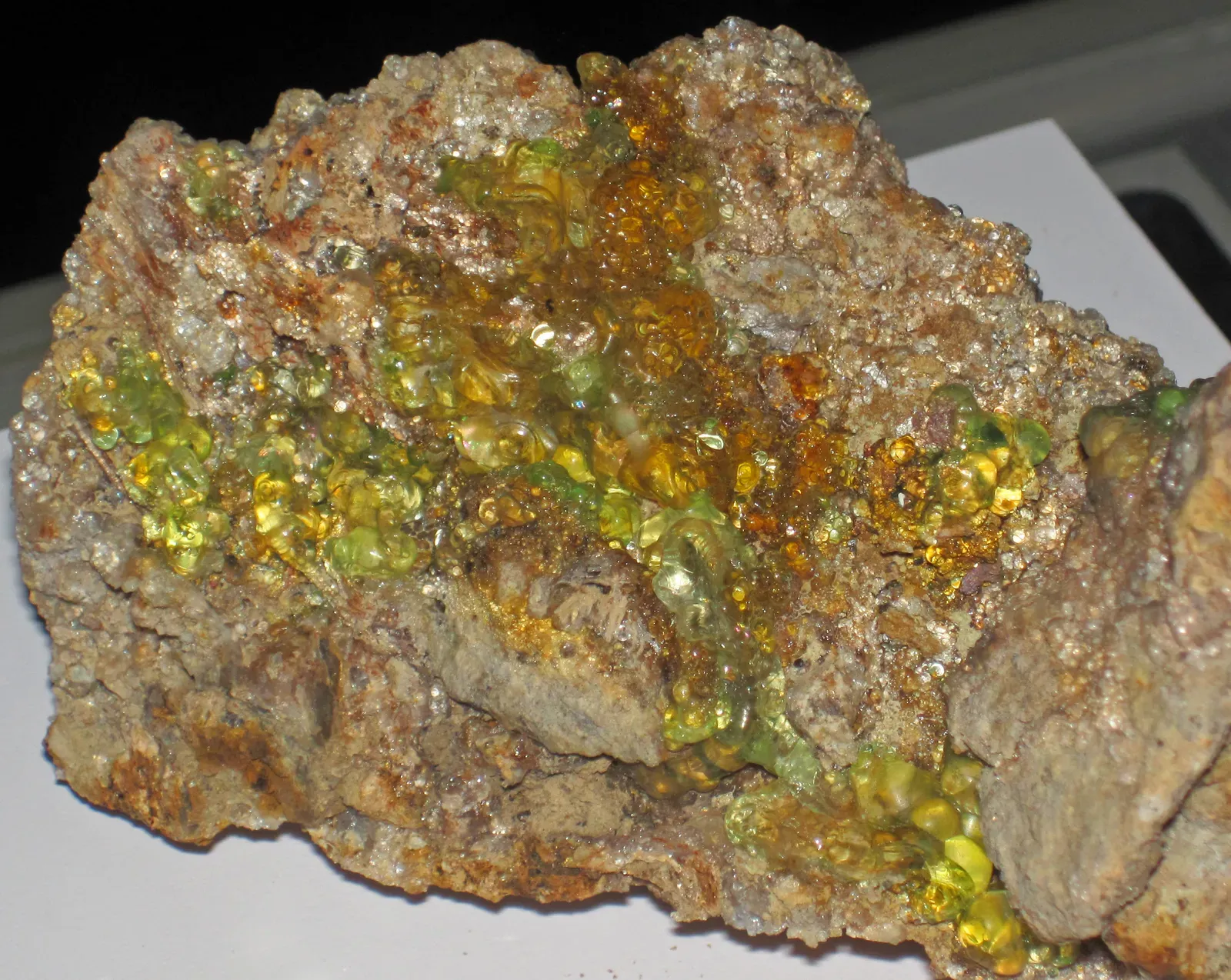
In parts of the western United States – think old uranium mining districts in states like Utah, Colorado, or New Mexico – there are stories of faint glows in mine adits, waste rock piles, or tailings at night. In reality, strong visible glowing from radioactivity alone is rare and often exaggerated, but there are real, subtle effects you can pick up with sensitive cameras or under certain lighting conditions. The idea that the ground itself is quietly charged with invisible energy is unsettling enough that just being there after dark feels different.
Geologists explain that most uranium‑bearing minerals emit radiation but not obvious visible light. However, some associated minerals can be fluorescent or phosphorescent, showing a soft glow under ultraviolet or in response to radiation‑induced defects in their crystal lattices. The broader geology at these sites usually involves ancient sandstones, volcanic ash layers, or limestone beds where mineral‑rich fluids once moved through, concentrating uranium and other elements in particular horizons. What lies underneath is a complex mosaic of ore bodies and altered rock; any glow is more like a whisper of their unusual chemistry than a blazing signal you can see from miles away. Still, few places feel more literally charged than standing over rock that quietly sets off a Geiger counter while the stars burn overhead.
Conclusion: When the Dark Makes the Earth Honest
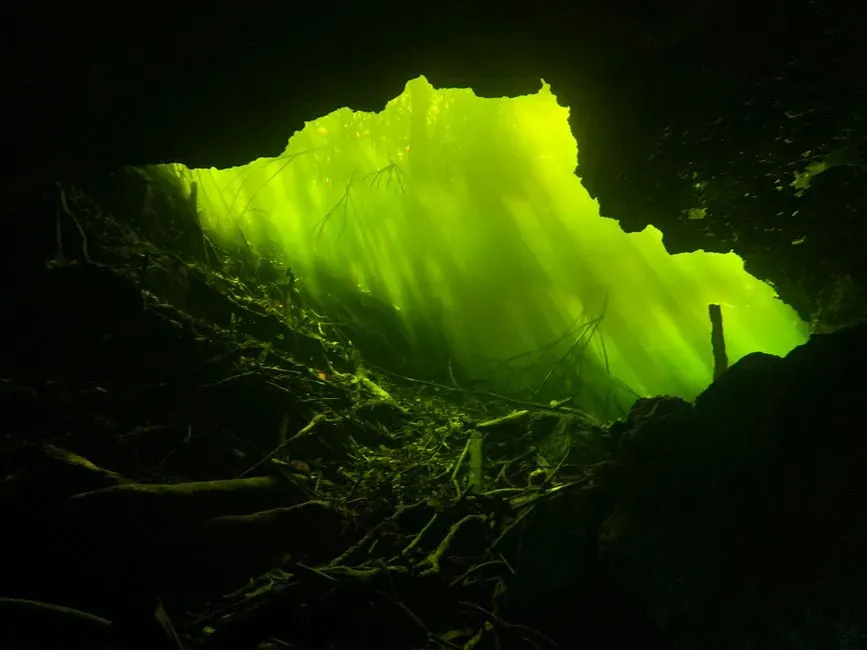
What struck me as I dug into these places is how often the glow is not a single, dramatic mystery, but a conversation between geology, chemistry, and life. Bioluminescent bays need the right basin shape and sediments; glowing fungi depend on thick forest soils laid over ancient bedrock; fluorescent rocks only make sense once you understand the deep, high‑pressure histories written into their minerals. The ground is not just passively sitting under us; it is reacting, leaking, burning, and shining in quiet ways that we usually miss until the lights go out.
If anything, the eerie glow after midnight is a reminder that the earth is weirder and more alive – literally and figuratively – than our daytime eyes admit. Geologists can explain the mechanisms, and they should, but I think there is value in letting some of that strangeness hit you before you reach for the explanation. Next time you are near a dark beach, a quiet forest, or an old mine district, you might wonder: if you turned off every artificial light and gave your eyes time to adjust, what hidden glimmers under your feet would finally come out of hiding?