Imagine standing in the quietest room ever built and being told it is deafeningly loud – just at a pitch so low your ears will never know. That is, in a nutshell, what modern cosmology is saying about the universe. Space is not truly silent; it is humming with a cosmic note that stretches so far down the musical scale it might as well be eternity’s bass line.
This “sound” does not come from speakers or vibrations in air, but from ripples frozen into the oldest light we can see: the cosmic microwave background, or CMB. When cosmologists say they have “recorded” the universe’s sound, they mean they have translated subtle patterns in that ancient light into something our human brains can grasp. The wild part? That note sits about fifty‑seven octaves below the lowest tone you could ever hear – lower than any instrument can play, lower than any subwoofer could dream of touching.
The Universe Once Rang Like a Bell
Here’s the surprising twist: in the very early universe, sound was not a metaphor, it was literal. When the universe was just a few hundred thousand years old, it was a hot, dense soup of particles and light tightly coupled together, more like a glowing fluid than empty space. In that plasma, pressure and gravity played tug‑of‑war, setting up waves – compressions and rarefactions – just like sound waves traveling through air or water.
Think of the young universe as a cosmic bell that had been struck once at the Big Bang and then kept vibrating. Those vibrations echoed as gigantic acoustic waves stretching across regions larger than entire galaxies. We are not talking about gentle ripples across a pond; these were waves on a scale so immense that even light needed hundreds of thousands of years to cross them. To modern cosmologists, those waves are the key to decoding what the universe is made of and how fast it is expanding.
How Do You “Record” a Sound from Ancient Light?
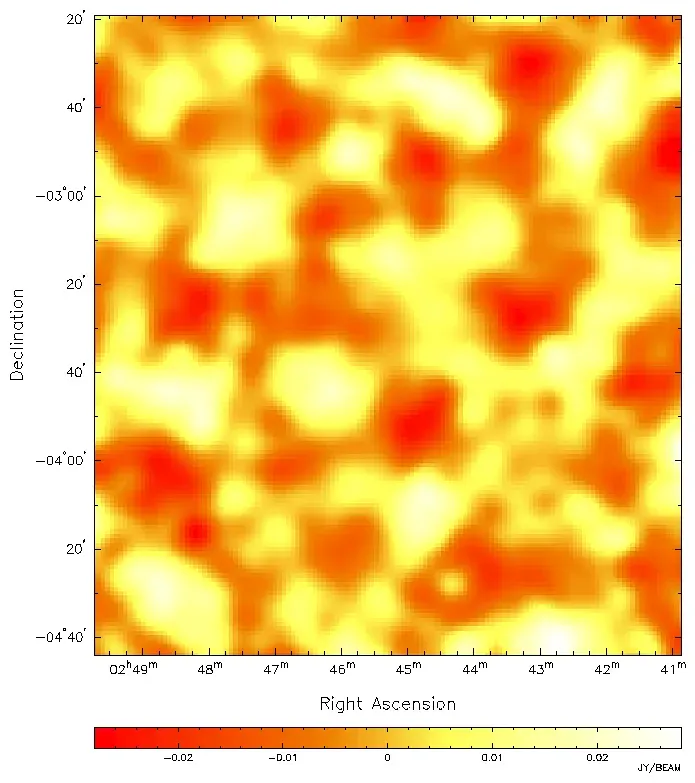
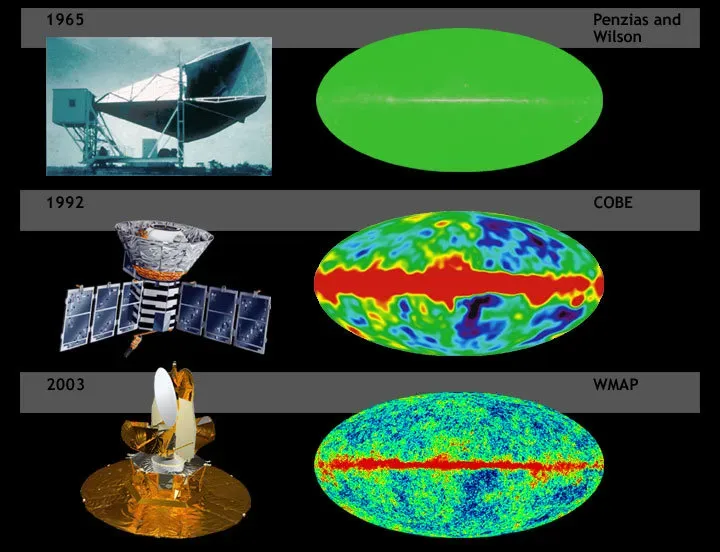
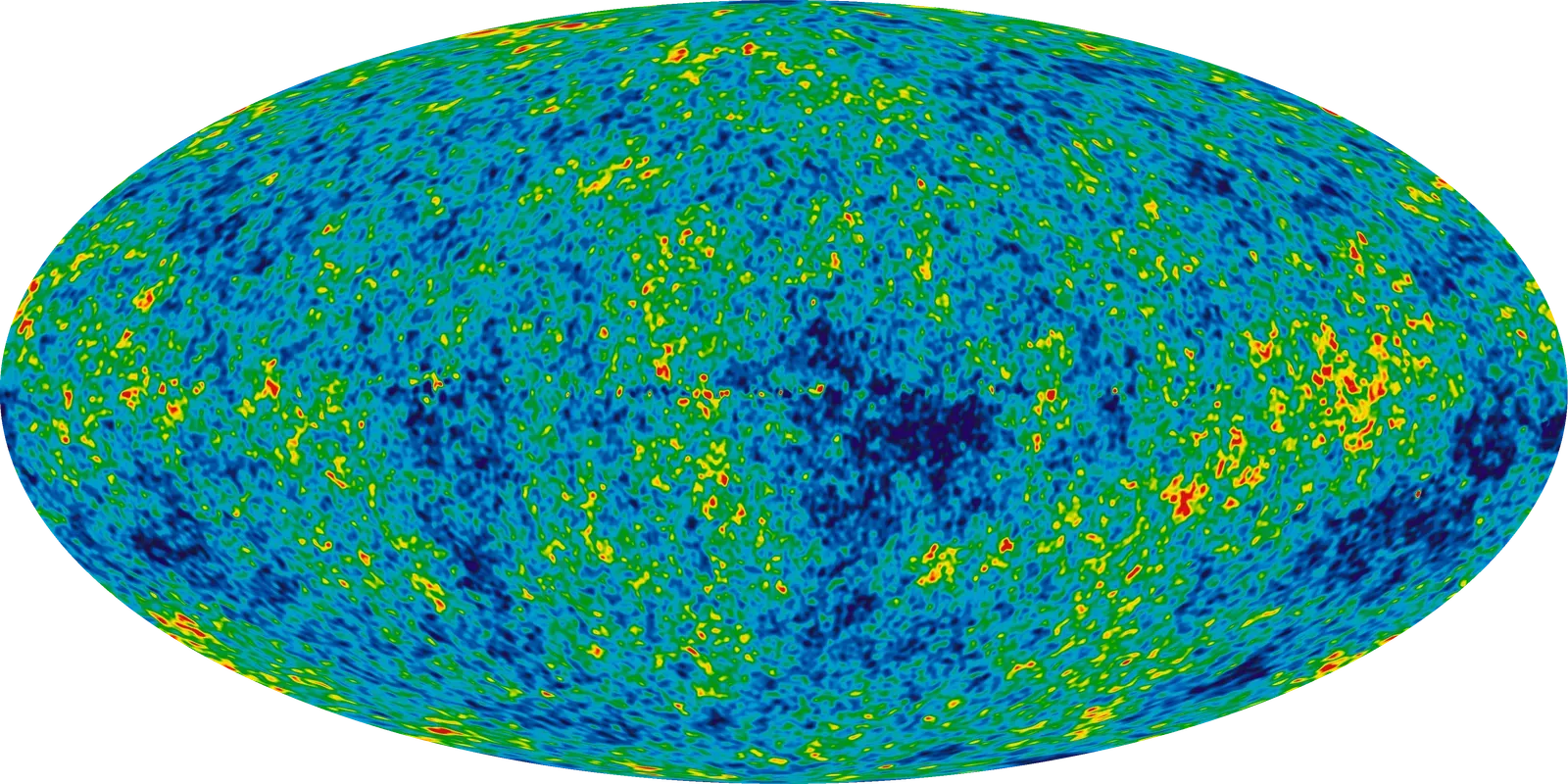
Of course, we do not have microphones from 13‑plus billion years ago. What we do have is the oldest light still visible: the cosmic microwave background, a nearly uniform glow bathing the entire sky. Embedded in that glow are tiny variations in temperature and density, like faint speckles just a few parts in one hundred thousand brighter or dimmer than average. Those speckles are the fossil record of the early universe’s sound waves, frozen in place when the plasma cooled enough for light to travel freely.
Satellites like COBE, WMAP, and Planck mapped those variations with ridiculous precision, turning the sky into a kind of acoustic fingerprint. Cosmologists then took the power spectrum of those fluctuations – essentially, how much “wiggle” exists at different angular scales – and converted that into equivalent sound frequencies. When people say the universe’s sound has been “recorded,” they mean that the underlying oscillations in that old light have been translated into frequencies we can compare with notes on a musical scale, even though the original waves never passed through human ears.
The Note That Is 57 Octaves Too Low for Human Ears
Human hearing, at best, ranges from about twenty cycles per second to maybe twenty thousand in a very young, very lucky ear. The main acoustic mode of the early universe – the one tied to the largest scale sound wave – corresponds to a frequency that is staggeringly smaller, so slow that its full oscillation takes longer than a human lifetime, and in some descriptions, far longer than the current age of the universe. Translating that into music language lands you roughly fifty‑seven octaves below the faintest low note you could hear.
To put that into perspective, dropping by one octave cuts frequency in half. Do that once or twice and you get a note you can still recognize. Do it dozens of times and you hit a region where “pitch” becomes basically meaningless to human intuition. By the time you are talking about more than fifty octaves, you are not dealing with a sound in any everyday sense. You are dealing with an unimaginably slow rhythm imprinted on the fabric of space itself. That is the note cosmology is pointing at: an absurdly deep, almost philosophical kind of bass.
Why Space Is Not Silent, But We Still Hear Nothing
There is an awkward detail people sometimes gloss over: sound, as we usually define it, needs a medium – something like air, water, or a solid – to carry vibrations. Empty intergalactic space is incredibly close to a vacuum, nowhere near dense enough to carry ordinary sound waves the way our ears need them. So when you hear that the universe has a sound right now, it is not that space is roaring and we just forgot to turn up the volume on our headphones.
What cosmologists really mean is that the early universe, when it was dense and hot, absolutely did carry genuine pressure waves, and those waves left permanent fingerprints in the CMB and in how galaxies are distributed today. We can read those fingerprints, do the math, and figure out what frequencies those waves correspond to. In that sense, the universe’s “sound” survives as a coded message in light and matter, not as something vibrating your eardrum. The silence you feel when you look up at the night sky is real for your senses, but it is not the whole story.
Turning the Cosmic Hum into Something We Can Play
Scientists and science communicators have not been able to resist the temptation to turn these cosmic vibrations into literal audio. By scaling the frequencies up – compressing time massively – they can shift those ultra‑low oscillations into a range we can actually hear. The process is a bit like taking a slowed‑down video and speeding it up so it looks normal again, except here we do it with waves from the early universe instead of vacation footage.
When those rescaled sounds are played back, you often get eerie drones, rising and falling tones, and weird, otherworldly harmonies. None of that is exactly what the universe “sounds like” in a purist sense, because we are manipulating the data to squeeze it into human perception. But it is an honest, if heavily adapted, translation. It is like creating a musical remix of raw scientific numbers to give our brains a more intuitive feel for something that would otherwise only live in equations and sky maps.
What This Cosmic Note Reveals About the Universe
The cool thing is that this is not just a cosmic fun fact; those primordial sound waves are exquisitely sensitive to what the universe is made of. The detailed pattern of peaks and troughs in the CMB power spectrum tells us how much ordinary matter exists, how much dark matter was present, and how much dark energy is driving cosmic expansion. The specific “pitch” structure of those waves even helps pin down the universe’s overall age and geometry, down to surprisingly tight margins.
In other words, the universe’s inaudible note is not just poetic, it is diagnostic. It acts like a health check on the cosmos, a kind of full‑body scan burned into the sky. Personally, I find it far more compelling than a lot of overhyped buzzwords: this is physics at its most beautiful and blunt. The universe rang, cooled, and quieted, and in the aftermath of that ringing we can read off the recipe list for everything from galaxy clusters to the atoms in your coffee.
The Strange Comfort of a Universe with a Voice
There is something strangely emotional about knowing that the universe had a literal acoustic childhood and that we can still decode its long‑faded songs. It makes our usual talk about “the void” feel incomplete. Instead of a cold, empty nothing, we are living in the stretched‑out echo of an ancient symphony that started before there were stars, planets, or anything like us to listen. It is as if the cosmos left a voice message billions of years long, and only now are we finally figuring out how to hit play.
I think this matters not just as science trivia, but as a shift in how we see ourselves. We often treat space as a silent backdrop for human drama, when in reality our drama unfolds inside the tail end of a vast, resonant process that shaped everything we know. You are not just stardust, you are also part of a fossil sound wave, gently arranged by pressure ripples from an era so early we barely have words for it. That is both unsettling and oddly comforting, like realizing you have been part of a cosmic orchestra all along without knowing your instrument.
Conclusion: The Universe’s Deep Note and What We Choose to Hear
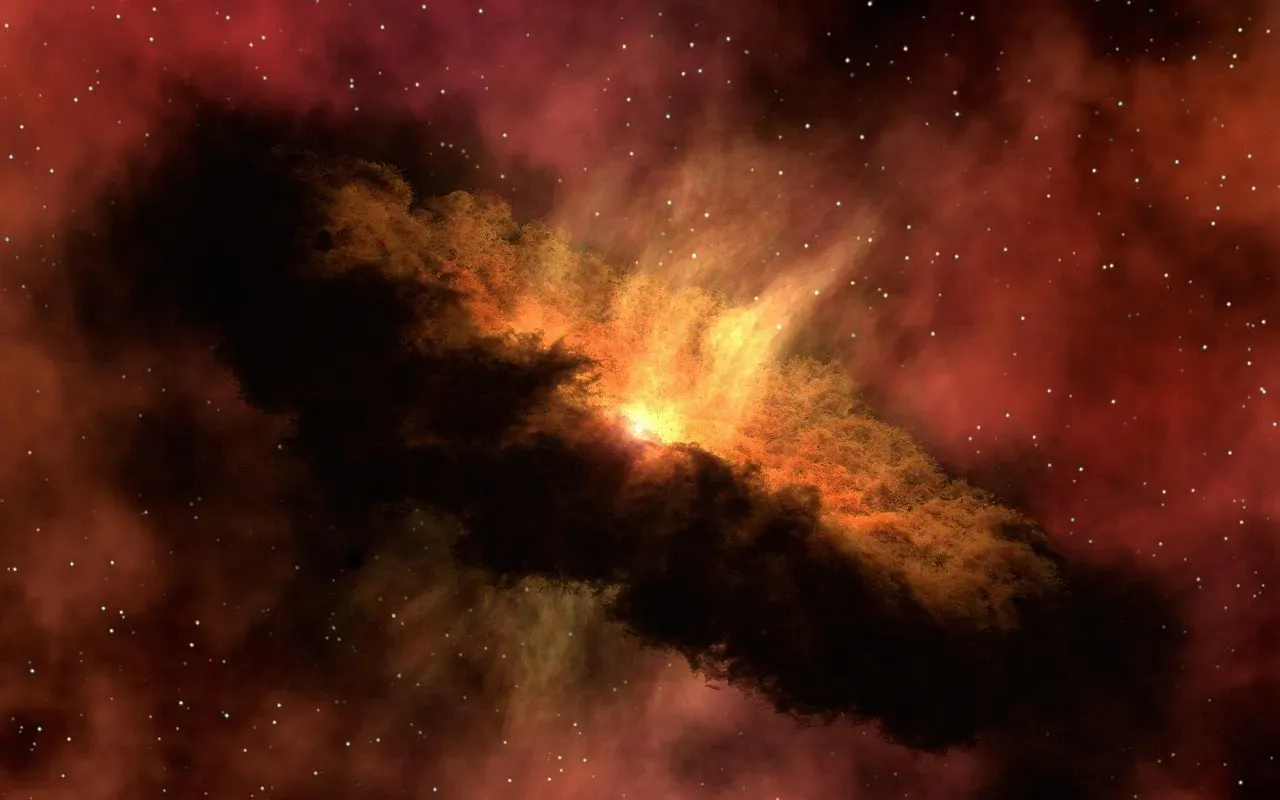
Here is my blunt opinion: the fact that the universe carries a note fifty‑seven octaves below human hearing is one of the most humbling ideas science has ever handed us, and most people wildly underestimate how radical it is. It says that reality is humming along on scales and in registers we will never directly sense, and that our ears and eyes are only a tiny, biased sampling of what is going on. We call that deep, impossible tone a “note,” but it is really a reminder that the cosmos does not care about our sensory limits – it just is what it is, resonating across time.
At the same time, there is something defiantly human in our choice to translate that hidden vibration into sound and talk about it in the language of music. We cannot hear the true cosmic bass, but we refuse to let that stop us from understanding it, naming it, and making it part of our shared story. In a universe that once thundered with waves we will never hear, the real question is not whether space is silent – it is whether we are listening creatively enough. When you look up at the night sky now, can you almost feel that impossible, ancient note thrumming underneath everything, or does the universe still seem quiet to you?