You probably grew up with the idea that Atlantis was either a magical lost continent waiting to be found, or a total fantasy you should file next to dragons and UFOs. For a long time, professional archaeologists leaned hard into the second option and basically ignored it. Now, quietly but steadily, that attitude is shifting. You are not seeing archaeologists suddenly claim they have found Atlantis; instead, you are seeing them use the Atlantis story as a powerful case study in how myths form, how evidence gets twisted, and how the public falls in love with certain narratives.
In other words, Atlantis itself is not getting more real, but your understanding of why it will not die is getting sharper. Archaeologists are asking new questions: What real events could have inspired Plato’s story? How does modern technology change the way you check those ideas? And why do theories about lost super‑civilizations keep bouncing back no matter how often they are debunked? When you look at Atlantis through that lens, you start to see why serious researchers are re‑examining the legend – not to prove it right, but to understand what it reveals about you, your past, and the way you think about history.
How You’ve Been Hearing the Story Wrong
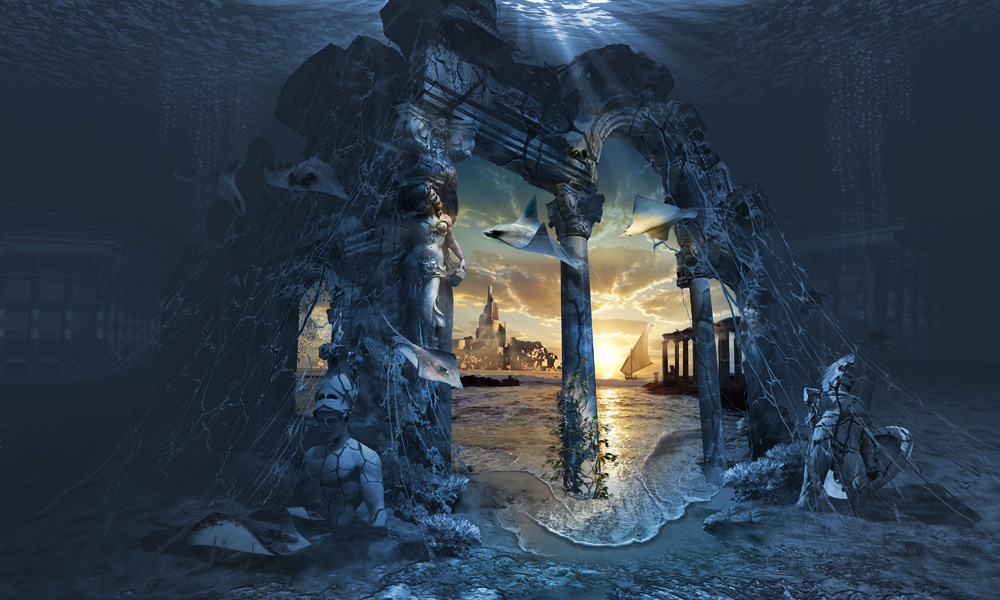
When you picture Atlantis, you probably imagine a futuristic city with crystal towers, flying machines, and maybe even psychic priest‑kings. That image does not come from ancient Greece; it comes from a mash‑up of nineteenth‑ and twentieth‑century occult writers, pulp novels, and TV shows that quietly rewrote the script in your head. Plato’s original version describes a powerful island society with concentric rings of land and water, impressive engineering, and a moral downfall, but nothing like a sci‑fi empire with lasers under the sea. If you go back to those dialogues, you see a story that is grand, yes, but still grounded in the kind of Bronze Age world archaeologists actually study.
For decades, people fed you versions of Atlantis that say more about modern anxieties and fantasies than about anything in the ancient record. Racial theories in the early twentieth century tried to turn Atlantis into the home of a “master race.” New Age movements later turned it into a spiritual origin point where you supposedly learned soul lessons in a higher dimension. You are dealing with centuries of reinterpretation layered over one short Greek text. Archaeologists are rethinking Atlantis partly because they want you to separate Plato’s brief, specific tale from the mountain of later inventions that have hijacked the public conversation.
What Plato Actually Said – and Why That Matters to You
If you strip away the modern noise, you are left with two dialogues written in the fourth century BCE: Timaeus and Critias. In them, Plato has a character recount a story supposedly passed down from Egyptian priests to the Athenian statesman Solon, then to later generations. Atlantis is described there as a powerful maritime state beyond the “Pillars of Heracles” (usually taken as the Strait of Gibraltar), larger than some known lands, with advanced irrigation, harbors, and a rigid social hierarchy. The story ends with Atlantis sinking into the sea in a single catastrophic day and night after it attacks a virtuous prehistoric Athens and is punished for its arrogance.
When you read this with modern eyes, you might instinctively treat it like a piece of historical reporting. But Plato was a philosopher, not a journalist, and he used invented cities in other works to make moral and political points. Many classicists argue that Atlantis functions as a thought experiment about hubris, imperial power, and the contrast between corrupt luxury and austere virtue. Archaeologists are rethinking the story by asking you to treat it first as literature with possible real inspirations, not as a GPS coordinate list. This shift changes everything: instead of hunting for a perfect match on the map, you start looking for the real‑world patterns and anxieties that Plato was weaving into his narrative.
Why Most Archaeologists Say “No” to a Literal Lost Continent
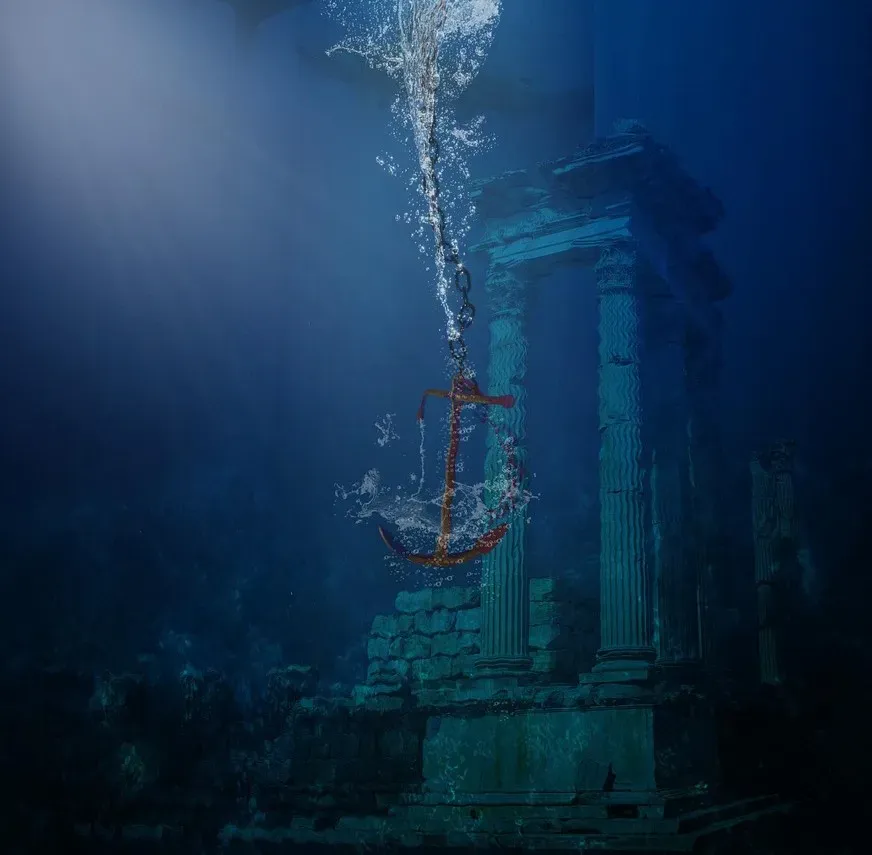
Here is the tough pill you are asked to swallow: there is no credible geological or archaeological evidence for a vanished mid‑ocean continent the size implied by literal readings of Plato. Modern sonar mapping, submersible exploration, and satellite bathymetry have given you detailed images of the Atlantic seafloor. You see ridges, trenches, volcanic islands, and plate boundaries, but you do not see the sunken plateau that a huge Atlantis would leave behind. On land, you do not see a sudden, global cultural gap around nine and a half thousand BCE where an advanced civilization disappears and other societies suddenly appear full‑blown with borrowed knowledge.
When archaeologists push back, they are not just being stubborn; they are applying the same standards they use everywhere else. If you claim that a massive state existed, you should expect traces: distinctive pottery, tools, building styles, writing systems, and trade goods scattered in neighboring regions. You do not get to hold Atlantis to lower standards of evidence than, say, ancient Egypt or the Maya just because the story feels more romantic. By insisting on consistent methods, archaeologists are actually inviting you to join them in treating the Atlantis question like any other claim about the past: interesting, but only as strong as the data that backs it up.
Real Catastrophes That May Have Sparked the Legend
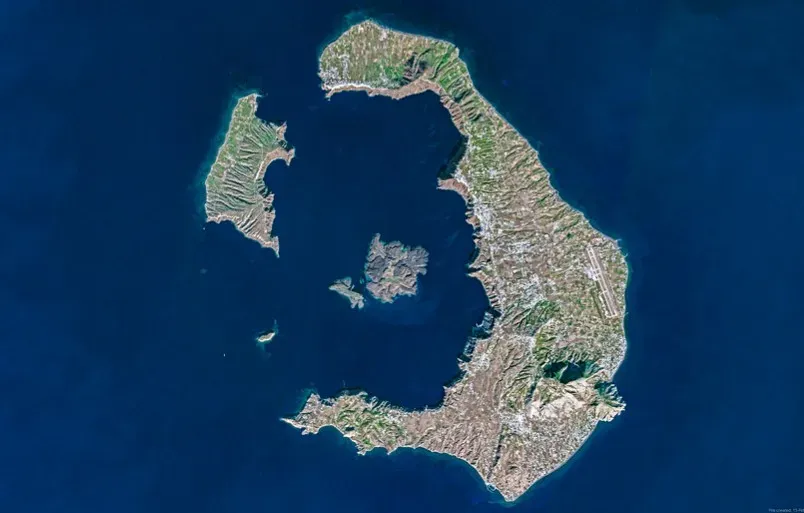
Where things get genuinely exciting for you is in the overlap between myth and real disaster. Around three and a half thousand years ago, the volcano at Santorini (ancient Thera) in the Aegean Sea erupted on a scale that was almost beyond imagination. Whole parts of the island collapsed into the sea, ash blanketed wide areas, and tsunamis likely hit nearby coasts. You can still walk through the buried Bronze Age town of Akrotiri, with its multi‑story houses and frescoes, frozen in time under volcanic debris. Many researchers think memories of that event, passed down and reworked, could have contributed to stories of a rich island destroyed by the sea.
Other scholars point you to changing sea levels after the last Ice Age, when coastlines shifted dramatically and low‑lying areas flooded. Communities living on continental shelves or shallow island chains would have seen their world shrink or vanish over generations. Imagine watching your harbor towns drown inch by inch, then telling your grandchildren that the old land lies beneath the waves. When you see Atlantis as a composite of real catastrophes rather than a single lost super‑city, it lines up more closely with how memory and storytelling usually work. Archaeologists are not chasing a perfect one‑to‑one match; they are tracing how big disasters echo through culture, often ending up as stories like the one that hooked you on Atlantis.
How New Tech Is Quietly Killing Old Atlantis Maps
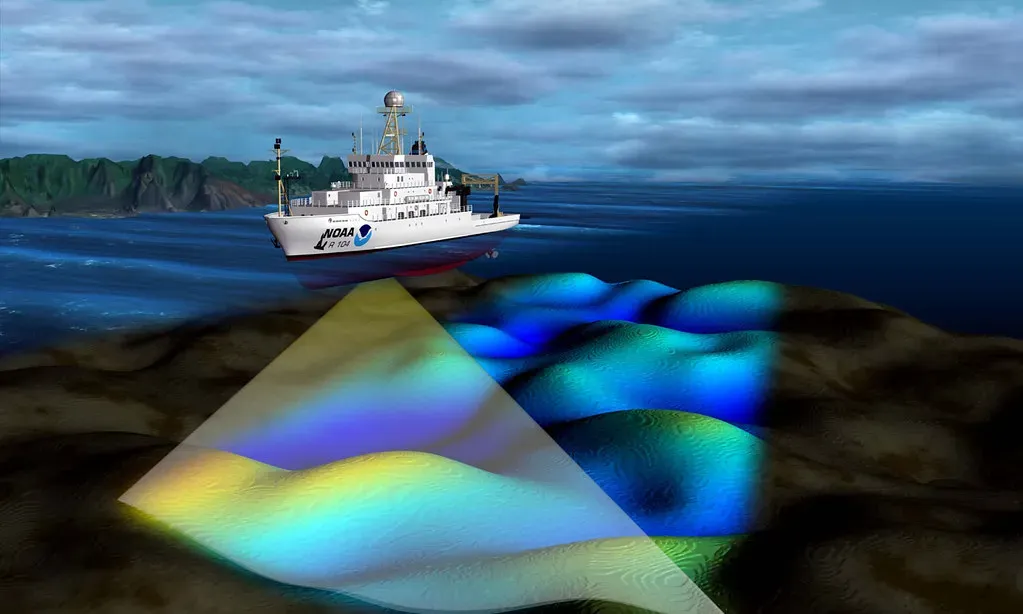
You now live in a world where an archaeologist can scan the ocean floor with multibeam sonar, laser‑map an entire buried town in 3D, or use satellite data to pick out ancient river channels under desert sands. That kind of technology has exploded your knowledge of past landscapes. It has found shipwrecks, submerged ports, and forgotten coastlines, but it has not revealed hidden Atlantean megacities. The more detailed your maps get, the harder it becomes to argue that a continent‑spanning island somehow slipped through the cracks of all this data without leaving a trace.
On land, tools like ground‑penetrating radar and LiDAR have uncovered dense cities under jungle canopies and layered settlements beneath modern towns. They have shown you that complex societies were more widespread than you once thought, especially in places like the Amazon and Southeast Asia. That should actually make you more excited about real archaeology, even as it undercuts grand Atlantis claims. The story is not that there was one ultra‑advanced, secret civilization; it is that many different cultures achieved impressive things in their own ways, and your new tools are finally catching up to them. In that context, the Atlantis story becomes a cautionary tale about looking for one magical answer instead of seeing the rich variety of the human past.
Why Fringe Theories Still Attract You (and How Archaeologists Respond)
Even with all this evidence, you still see fresh YouTube videos and posts claiming Atlantis was in Spain, or the Caribbean, or under Antarctica, or in the Sahara’s Richat Structure. Part of you is drawn to these ideas because they promise a secret that experts supposedly missed or covered up. That feeling can be intoxicating: you get to feel smarter than the mainstream, like you belong to a small group that knows what is “really” going on. The visuals help, too – circular landforms or odd stone patterns are easy to match in your mind to Plato’s rings and canals, even when the geology and dating do not fit at all.
Archaeologists are rethinking how they talk to you about this. Instead of just waving a hand and calling it nonsense, more of them are taking the time to explain why a specific claim does not hold up: the age of the rocks, the sea‑level history, the known cultural sequence in that region. They are also increasingly open about the limits of what they know and how uncertainties work, because when experts pretend to be flawless, you are more likely to jump ship to someone who confidently sells you a simple story. By treating you as a partner in evaluating evidence rather than as a gullible crowd to be scolded, archaeologists hope to help you enjoy big, imaginative questions without falling into the trap of pseudo‑science.
What Atlantis Teaches You About How Myths and History Intertwine
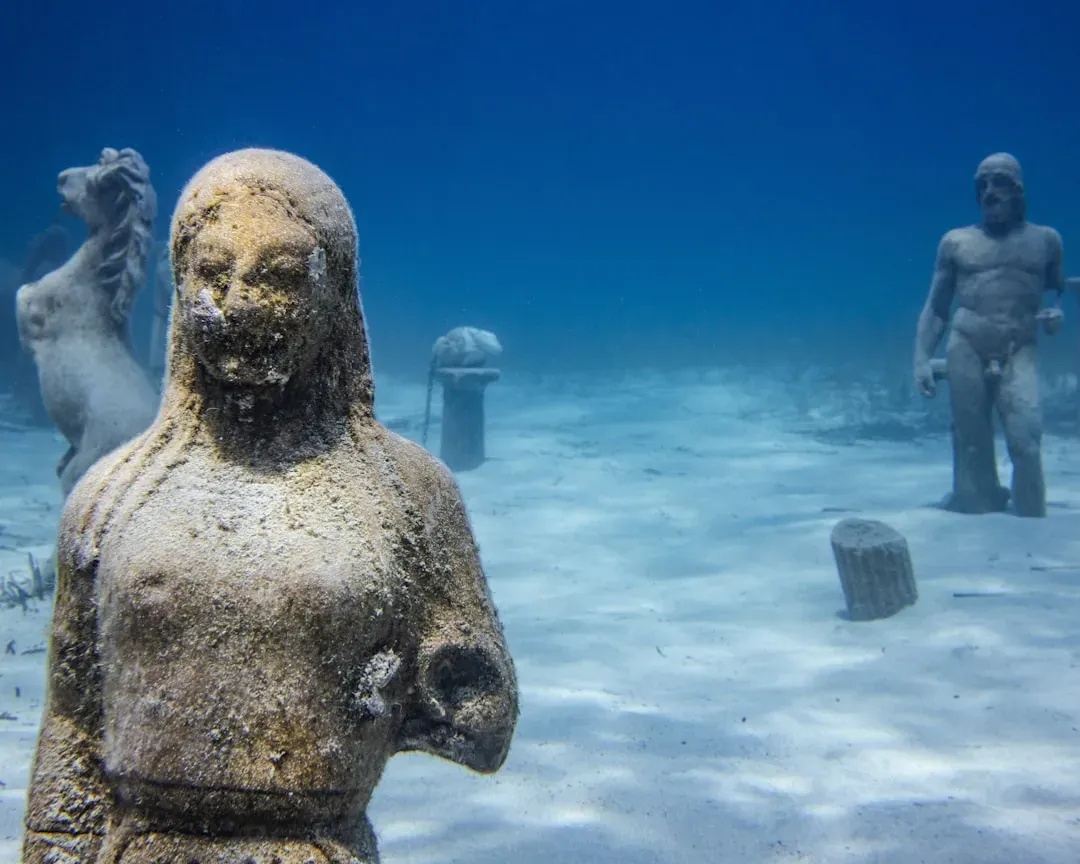
If you step back for a moment, Atlantis is really a lesson about how stories travel through time and how your brain handles mystery. A tale can start as a philosophical allegory, soak up fragments of real disasters, blend with local legends, and then get repackaged to fit the hopes and fears of each new era. You have seen it used to explain the origins of distant peoples, to justify racial hierarchies, to fuel spiritual movements, and to sell entertainment. Through all that, the core image – a brilliant island swallowed by the sea – stays just concrete enough to feel plausible and just fuzzy enough to resist being pinned down.
For archaeologists, that makes Atlantis less a research target and more a mirror they can hold up to you. It shows you how eager you are to believe in a golden age where problems were simpler and achievements more spectacular. It shows you how easily you can mistake repetition and confidence for proof. And it challenges you to ask better questions: not “Where is Atlantis?” but “Why do you want it to be real so badly?” When you start framing things that way, the legend becomes a tool for teaching critical thinking, not an endless scavenger hunt for a city that never quite materializes.
How You Can Enjoy Atlantis Without Getting Lost in It
None of this means you have to give up the thrill you felt the first time you heard about a lost civilization under the waves. You can still devour novels, games, and movies that play with the idea; you just do it with your eyes open. When someone claims they have finally solved the mystery, you ask basic questions: What is the evidence? How old is the site really? Does it match the culture, technology, and timeline we know from other finds? You treat extraordinary claims as an invitation to investigate, not as a shortcut around hard questions.
If you let archaeologists’ skepticism guide you instead of annoy you, you end up in a better place. You learn to appreciate the real sunken towns, drowned coastlines, and disaster stories that are just as dramatic as any Atlantean fantasy, because they happened to real people whose remains you can still touch and study. You get to keep your sense of wonder, but you aim it at things that deepen your understanding of the world instead of pulling you into endless speculation. In a way, you become the kind of careful, curious thinker Plato probably hoped you would be when he first spun that tale about an arrogant island and the sea that took it.
Conclusion: The Real Treasure Behind the Legend
When you look at the shifting conversation around Atlantis, you see less a hunt for a lost city and more a growing maturity in how you think about the past. Archaeologists are not secretly closing in on an underwater empire; they are using the legend as a spotlight on how evidence works, how myths grow, and how easily powerful stories can hijack your imagination. At the same time, real discoveries – from buried Aegean towns to newly mapped submerged landscapes – are giving you a richer, more nuanced picture of ancient catastrophes and human resilience than any single Atlantis theory ever could.
In the end, the story you are being asked to rethink is not just Atlantis; it is your own hunger for neat, all‑explaining answers. If you can hold on to the awe while also demanding solid proof, you gain something far more valuable than a ruined palace on the seafloor: you gain a clearer, humbler, more thrilling relationship with the past itself. Maybe the real question is not whether Atlantis was real, but whether you are ready to trade a perfect myth for a messier, truer kind of wonder – would you?