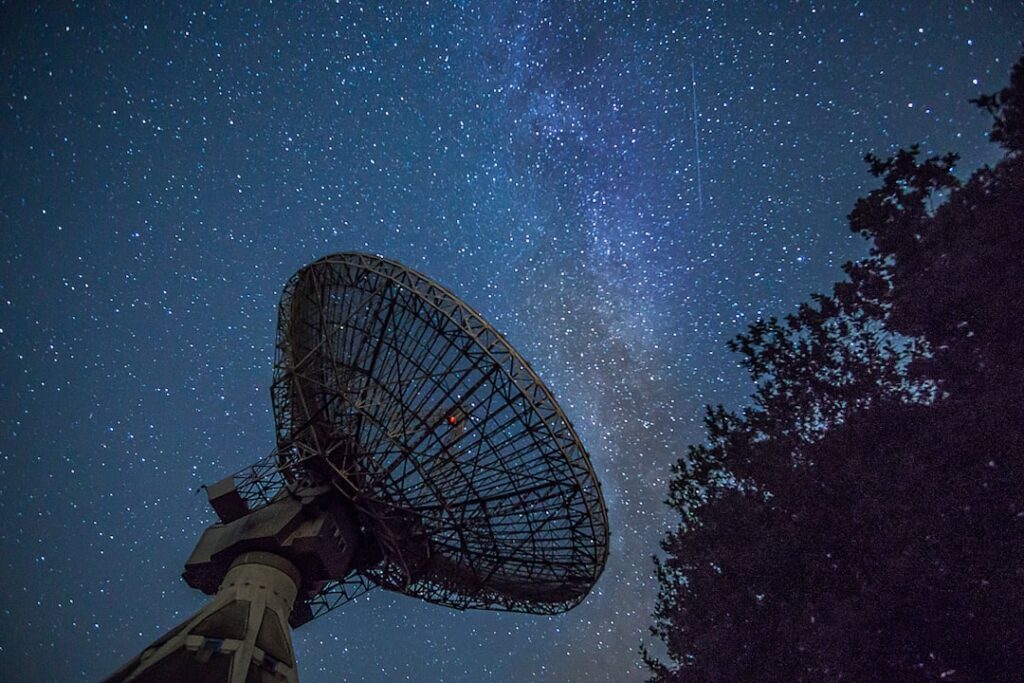

You are used to thinking of silence as nothing happening. A pause in a conversation means someone is thinking, hesitating, or has run out of things to say. Now imagine that, on a cosmic scale, what looks like silence to you might actually be the middle of a sentence, stretched across thousands or even millions of years. From that perspective, your entire lifetime is less than a single blink in a conversation that started before humans even evolved.
Astrophysics is slowly forcing you to admit something humbling: you might be radically misreading the universe’s pace. When you scan the sky for radio pulses or strange flashes and come up empty, it is tempting to say, “No one’s there.” But what if you are simply listening on the wrong timescale, like trying to follow a movie while only seeing one frame every decade? Once you think of time itself as part of the message, the apparent silence between signals suddenly starts to feel less empty and much more mysterious.
The Cosmic Clock You Live On Is Ridiculously Fast
You organize your entire life around seconds, minutes, hours, maybe years if you are planning ahead. Stars, galaxies, and black holes do not care about that clock at all. A star takes millions or billions of years to be born, burn steadily, and die; galaxies form, merge, and evolve over spans so long you cannot really picture them. If you compressed the entire history of the universe into a single year, all of human civilization would appear only in the last few seconds before midnight on December thirty‑first.
Now imagine a civilization that lives and thinks on those galactic timescales. For you, sending a text that takes a few seconds feels instant; for them, a “quick” message might take a thousand years to send and another thousand to reply. If your instruments only watch any given patch of sky for a few months or even a few decades, you are basically staring at one frozen frame of a movie that lasts for ages. What you confidently label as “silence” could simply be you catching the pause between two slow, deliberate beats of an unimaginably patient conversation.
Why Radio Silence Might Just Be Slow Talking
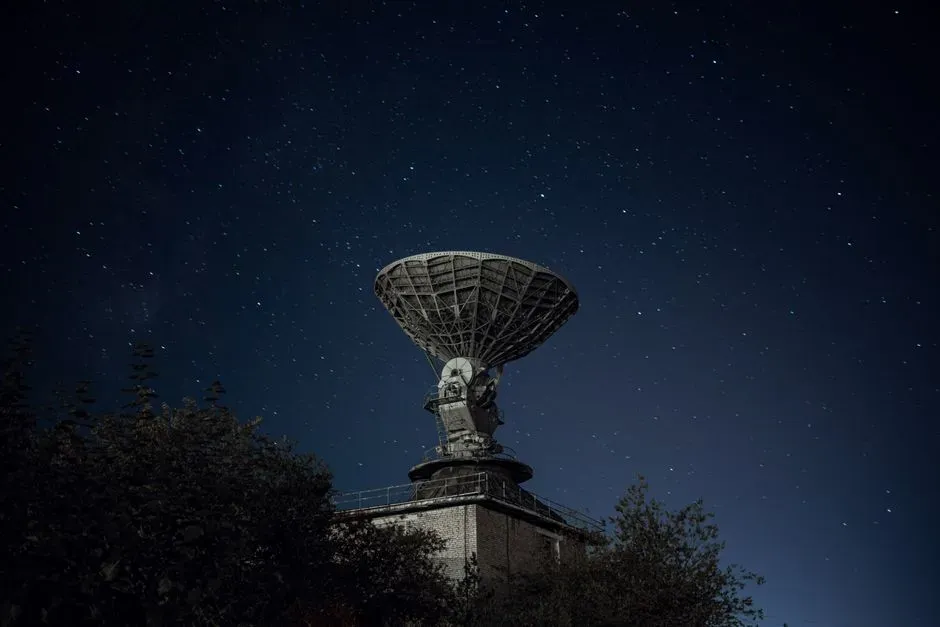
When you hear about the search for extraterrestrial intelligence, you probably picture scientists waiting for a clear, repeating beacon: something that turns on and off every few seconds, or a pattern that screams “this is artificial.” That assumption is built on your own speech rhythms and communication habits. You tend to project your speed, your idea of a reasonable response time, onto any hypothetical aliens, without even realizing you are doing it. It is a kind of cosmic egocentrism, just with clocks instead of beliefs.
But radio telescopes do not see much of that kind of quick, obvious chatter. Instead, you mostly detect steady noise from stars, galaxies, and the faint hiss of the cosmic microwave background. From that, it is tempting to conclude there is nothing structured out there. Yet if a civilization decided to use time itself as their main encoding channel, spacing out messages on scales of centuries or longer, your entire catalog of observations would capture almost nothing. You would be like someone trying to decode Morse code but only allowed to listen for one second every century; naturally, it all just sounds like silence to you.
Fast Radio Bursts: Glitches or Something More Subtle?
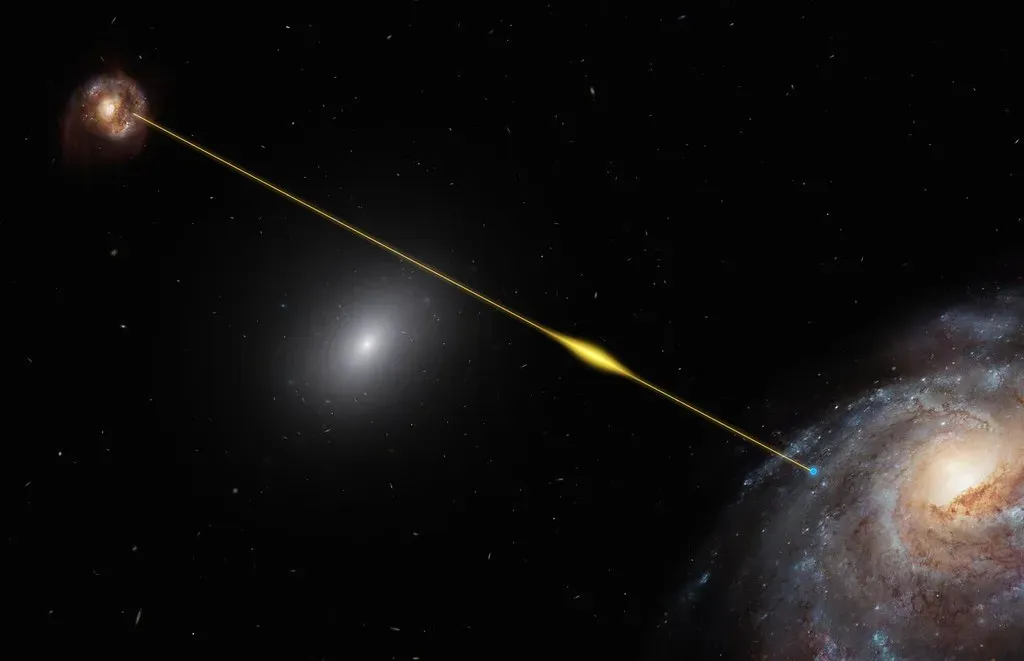
Fast Radio Bursts, or FRBs, are one of the weirdest puzzles you have stumbled across. They are incredibly brief flashes of radio waves from distant galaxies, often lasting only a tiny fraction of a second, yet releasing more energy than your sun does in days. Many FRBs appear to be one‑offs, but some repeat, and a few even show semi‑regular patterns or periods of activity and quiescence. You are certain that extreme astrophysical objects like neutron stars can explain a lot of them, but there are still rough edges that are not fully understood.
If you let yourself think more creatively for a moment, you can see why some people wonder whether FRBs hint at some kind of structured activity. To you, a millisecond pulse is a burst of speed; to a civilization that views centuries as a casual unit of time, that spike could just be one symbol in a language that unfolds over thousands of years. That does not mean FRBs are alien beacons – current evidence points strongly toward natural origins – but it does remind you that you may not be sampling the full “sentence.” You are watching fireworks through a keyhole, catching only the brightest flashes and none of the timing patterns that might matter most if anyone were deliberately speaking.
How Encoding a Message in Time Would Actually Work

You already use time as part of your communication without thinking about it. The length of pauses in speech, the timing of a musical rhythm, even the delay in a text reply all carry meaning. Now scale that idea way up. Imagine you are sending a signal across the galaxy and you want it to stand out from natural noise without wasting vast power. You could transmit very rarely but with very precisely chosen intervals – years, decades, or longer between blasts – encoding information in those gaps instead of in a rapid stream of bits like your digital devices do.
To detect that kind of message, you would need to observe the same region of sky for a very long time, carefully tracking not just whether something appears, but exactly when. That is not how most of your surveys are designed today; they are optimized to cover wide areas quickly, or to gather as much continuous data as possible over days or weeks, not centuries. So if an alien civilization is effectively “writing” in time with a pen that moves extremely slowly, your instruments are like someone skimming every thousandth page of a book and concluding there is no story because the pages you randomly saw look disconnected.
The Fermi Paradox Looks Different on a Long Timescale

The Fermi paradox nags at you with a simple question: if the galaxy contains so many stars and potentially habitable planets, where is everyone? One of the hidden assumptions inside that question is timing. You subconsciously expect that technological civilizations, if they exist, should overlap neatly with you and interact on human timescales. You imagine them sending probes and messages and building megastructures all while you are around to notice. It is a bit like walking through a city at three in the morning and declaring it uninhabited because no one happens to be on your street at that minute.
Once you factor in vastly different possible timescales, the puzzle softens. Civilizations could flare up and fade away across millions of years, rarely overlapping in their brief technological windows. Others might intentionally slow their communication strategies to match stellar or orbital cycles that unfold over tens of thousands of years. From your narrow window of observation – just a few decades of serious radio surveys – it is no surprise that you see a quiet sky. You may be living between the words of a story that stretches so far in time that your era barely counts as punctuation.
Why Your Telescopes Are Biased Toward Fast, Loud Signals
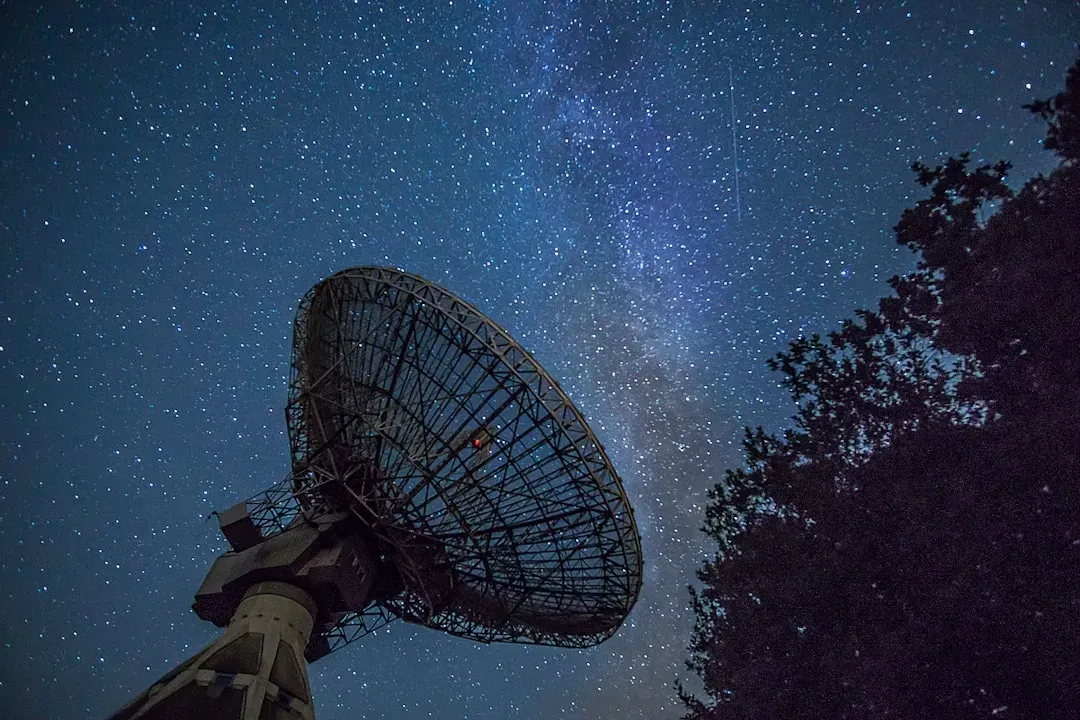
Every telescope and survey you build has trade‑offs. You can stare deeply at one patch of sky for a long time, or you can scan large areas quickly. You can design instruments that are sensitive to brief bursts, or ones that are better at picking up slow changes. Because you have limited funding, limited hardware, and limited human lifespans, you naturally prioritize experiments that yield results on human‑friendly timescales: years or at most a few decades. Nobody funds a project that only their great‑great‑grandchildren can finish.
The result is a bias you rarely talk about: you are much better at noticing signals that behave like you do – fast, energetic, and repetitive in days or months. Slow, sparse, or highly time‑stretched signals are basically invisible to your current strategies. To notice them, you would need “time‑domain” astronomy projects that span generations, with meticulous data archiving and long‑term continuity. That means thinking of your observatories less like short research campaigns and more like cathedrals that take many lifetimes to build. Until you embrace that mindset, you will keep calling it silence when in truth you have barely started listening.
Astrophysical Processes Themselves Can Mimic a Slow Language
Even if you never detect an alien technology, you are surrounded by cosmic processes that already look suspiciously like information written in time. Pulsars beat with astonishing regularity, acting like celestial clocks; variable stars brighten and fade in repeating cycles; black holes in binary systems produce periodic bursts as they interact with their companions. Each of these patterns encodes physical information about mass, spin, magnetic fields, and orbital dynamics. You may not call it language, but you already treat it that way: you decode timing patterns to learn what is happening at distances you can never visit.
Now imagine a sufficiently advanced civilization that understands these natural time patterns as easily as you read a book. They could piggyback subtle modulations onto existing astrophysical rhythms, tweaking timing here and there in ways that look like small anomalies to you. Because you often treat outliers as noise or messy data, you might already be discarding hints buried in those variations. In that sense, the universe is already speaking in a slow, patient code of pulses and cycles; you just have not decided yet whether you are reading a physics textbook or listening to a choir that includes more than just nature.
How You Might Actually Detect a Timescale‑Encoded Message
If you accept that time itself might be the main carrier of an extraterrestrial message, your search strategy would have to change. You would start building archives that keep raw radio data for decades instead of just storing processed summaries. You would develop algorithms that look not only for repeating frequencies, but for sequences of intervals that stand out from natural distributions. Instead of asking, “Do I see the same pulse every second?” you would ask, “Do I see anything that returns in a pattern of years that cannot be explained by known astrophysical cycles?”
On your end, that also means committing to projects that outlive individual careers. You would need global collaborations to keep telescopes pointed at key targets over generations, with standardized calibration so that a pulse recorded a hundred years from now can be cleanly compared to one you detected today. You might even start deliberately transmitting ultra‑slow messages yourself, designed to be understandable over millennia, just in case someone out there is watching on a similarly stretched clock. In other words, you stop treating the search for intelligence as a quick experiment and start treating it as a civilizational habit.
Rethinking Silence: What It Means for You Right Now
Once you see the silence between deep‑space radio signals as potentially meaningful, it changes how you feel about the night sky. Instead of staring into an empty void, you start to feel like you are walking into a vast cathedral right after the bells have finished ringing. The air is still vibrating with echoes you cannot quite hear, and you have arrived in the quiet space before the next chime. You do not know when it will sound again, but you realize that its timing is part of the message that defines the rhythm of the place.
For you personally, this is a reminder of scale and humility. Your conversations, your news cycles, even your entire civilization are compressed into a tiny sliver of cosmic time. That can feel unsettling, but it is also oddly freeing. It means you are not the final audience, just one early listener on a very long broadcast. As you go about your life, the universe continues to write in pulses and pauses that you are only beginning to notice. The real question is not whether the sky is silent, but whether you are willing to listen for longer than a single blink – because what might you hear if you did?