

If you could switch your eyes for X‑ray detectors and infrared telescopes, the night sky would feel a lot less cold than it looks. Scattered through the darkness are the burned-out cores of dead stars – white dwarfs – that, by every simple intuition, ought to be frozen and black by now. Yet astrophysics tells you something almost spooky: the universe itself is not old enough for a single one of them to have fully cooled off. Every white dwarf that has ever formed is still glowing weakly with leftover heat, like cosmic embers that simply refuse to die.
Once you see this, it changes how you think about time, about death (stellar death, at least), and about the way the universe ages. You are not just looking at cold relics; you are looking at clocks that tick so slowly that the entire history of galaxies is just the first few minutes on their timer. In this article, you’ll walk through why white dwarfs exist, how they cool, why their cooling is so absurdly slow, and what this means for the very distant future – including why no one, anywhere, has ever seen a truly dead, fully cooled white dwarf.
The Strange Fate of Most Stars: How White Dwarfs Are Born

When you look up at the sky, it’s tempting to think stars either shine or they explode and disappear. In reality, if a star is anything like the Sun in mass – and most stars are – its endgame is quieter, but also weirder. After spending billions of years calmly fusing hydrogen into helium in its core, it eventually runs out of easy fuel and starts to swell into a red giant. In that phase, it sheds its outer layers into space in a glowing shell of gas, leaving its core brutally exposed.
That exposed core is what you call a white dwarf. It is roughly the size of Earth but packs in about half to more than the Sun’s mass, so dense that a teaspoon of its material would weigh more than a skyscraper. Gravity is trying to crush it further, but quantum physics – via electron degeneracy pressure – holds it up. At the moment of its birth, a white dwarf is blazingly hot, easily over a hundred thousand degrees at the surface, yet it has no fresh nuclear fuel. From that point forward, its only job is to cool, slowly radiating away its stored thermal energy into space.
Why Cooling Takes So Long: The Physics of Stellar Embers
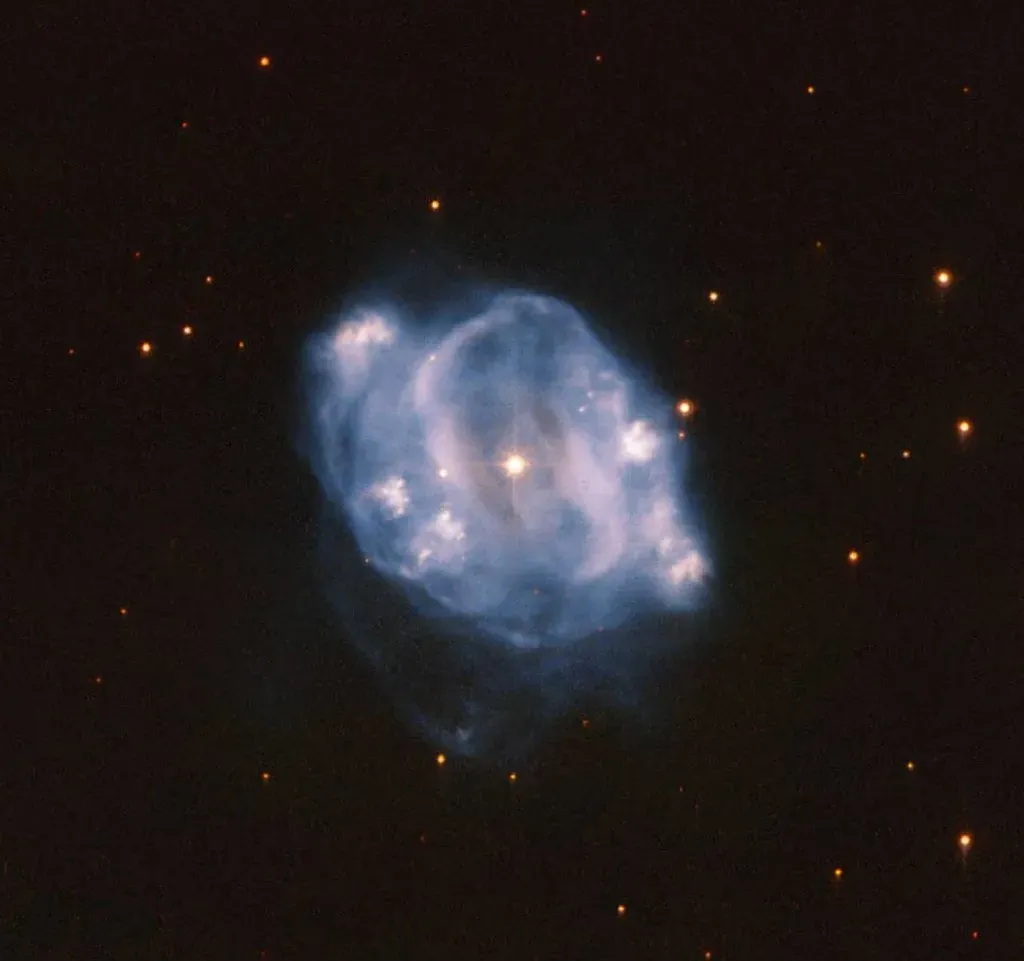
To understand why white dwarfs stay warm so long, you need to picture something with very little surface area but an enormous internal heat reservoir. A newly born white dwarf has the mass of a star crammed into a ball the size of Earth; inside, atoms are packed almost like a solid, and the star is incredibly hot throughout. But it can only lose energy from its surface, and that surface is tiny compared with its mass. It’s like trying to cool a red‑hot iron sphere the size of a city by blowing on it through a drinking straw.
On top of that, the matter inside a white dwarf behaves differently from normal gas. Electrons form a degenerate gas that does not cool by expanding as ordinary stellar material does, so the usual shortcut stars use for cooling – swelling and radiating more – is gone. As the outer layers radiate energy into space, the interior conducts heat outward with glacial slowness. The result is a kind of cosmic thermal inertia: even as the surface gets dimmer and redder, the core stays stubbornly warm for almost unimaginable spans of time.
The Universe Is Too Young: No Time Yet for a Truly Cold White Dwarf
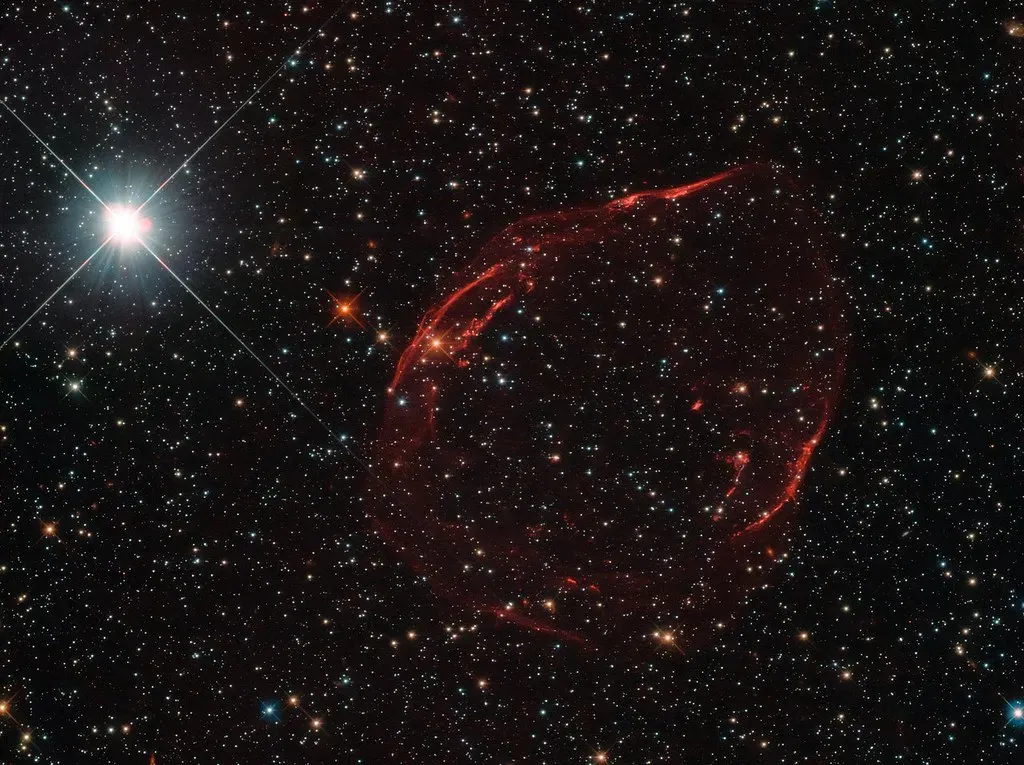
Here’s the key fact that flips your intuition: the universe itself is only about thirteen and a half billion years old, while detailed models of white dwarf cooling say you need far longer than that – many tens or even hundreds of billions of years – for one to truly cool into a dark, dead remnant. That means you are living in a universe where every white dwarf ever formed is still partway through its slow fade. Not one has had enough cosmic patience to finish the job.
When astronomers look at the white dwarfs in our own Milky Way halo and in ancient star clusters, they do find some that are incredibly cool and faint by astronomical standards. These are often around as old as the galaxy itself, so they have been cooling for nearly the whole history of the cosmos. But even these record‑holders still shine at temperatures above what you’d call room temperature, and they still radiate a detectable glow. In other words, they’re old, but not finished – like coals that have gone from orange to dull red, yet still too hot to pick up.
What a Fully Cooled White Dwarf Would Be – and Why You’ve Never Seen One

If you could fast‑forward the clock a hundred billion years or more, a fully cooled white dwarf would no longer look like a star. It would be a black dwarf, essentially an Earth‑sized, ultra‑dense ball that has radiated away almost all its thermal energy. Its temperature would be only slightly above the background of the universe, making it nearly impossible to detect with any telescope you know today. It would not shine; it would simply be a dark chunk of crystallized matter drifting through space.
The reason you have never seen a black dwarf is honestly simple: there has not been enough time since the Big Bang for one to form. Even the oldest white dwarfs you can find have not yet cooled down to that final, invisible stage. Observations back this up because the faintest, coolest white dwarfs in nearby stellar populations still sit well above the temperature they’d need to be considered fully cooled. Right now, black dwarfs are not just rare; they are objects that only exist in the far future, purely as a consequence of theoretical extrapolation.
Crystallizing Stars: Why White Dwarfs Stay Warm on the Inside

As a white dwarf ages, something remarkable happens in its interior: it slowly begins to crystallize. You can imagine the ions inside – mostly carbon and oxygen for Sun‑like stars – locking into a solid lattice as the star cools. This process turns the white dwarf’s core into a gigantic crystal, sometimes described as a star‑sized diamond. But crystallization is not just a pretty mental picture; it changes how the star stores and releases energy.
When the interior crystallizes, latent heat is released, a bit like the heat given off when water freezes into ice. That extra heat source slows down the cooling even more, providing yet another reason why these stellar embers refuse to go cold quickly. Astronomers see signatures of this crystallization in the way white dwarfs are distributed in brightness: there’s a subtle buildup of stars at certain luminosities where the cooling stalls. For you, the takeaway is that even the act of solidifying helps white dwarfs stay warm a little longer.
White Dwarfs as Cosmic Clocks: Reading the Age of the Galaxy

Because white dwarfs cool predictably over time, you can use them the way you might use a log’s embers to guess how long ago the campfire was lit. By measuring how bright and how cool a population of white dwarfs is, astronomers can estimate how long they have been cooling and therefore how old their parent stellar population is. This is especially powerful for star clusters, where the stars all formed around the same time, and for parts of the Milky Way where other age measurements are tricky.
When you look at the faintest white dwarfs in a cluster, you are seeing the lower end of the cooling sequence, which gives you a kind of age stamp. The fact that you do not see white dwarfs cooler than a certain point sets a limit on how old that cluster can be. It’s a bit like opening a freezer and inferring when ice trays were filled by how frozen they are. The time it takes white dwarfs to cool is so long that it reaches right up against the age of the universe itself, making them some of the most powerful natural clocks you have for cosmic archaeology.
The Far Future: A Universe of Slowly Fading Cinders

If you stretch your imagination far beyond human history, beyond the lifetime of galaxies as you know them, white dwarfs dominate the mental picture of the deep future. Long after stars like the Sun have died, long after star formation in most galaxies has dwindled, you are left with legions of white dwarfs slowly cooling in an ever‑expanding, dimming cosmos. Over trillions upon trillions of years, they will continue to radiate away their stored heat, drifting farther apart as the universe grows.
In that remote era, each white dwarf will eventually approach the black dwarf state, blending into the cold, dark background. But you are nowhere near that stage right now; you live in a very early universe by that standard, in a time when every white dwarf is still in the act of fading. Thinking this way, you realize the cosmos is not just young because galaxies are still forming; it is also young because none of the white dwarfs have had time to die thermally. Their unfinished cooling is a reminder that, on cosmic scales, you are watching only the first act.
What This Means for You: Time, Intuition, and a Still‑Warming Cosmos

When you hear that every white dwarf that will ever exist is still warm, you’re being confronted with how badly your everyday sense of time fails on cosmic scales. For you, a century is long, a million years is unimaginable, and a billion years is almost meaningless. Yet for a white dwarf, a billion years can be just the opening stretch of its cooling curve. You are basically catching these objects in their early middle age, even when you think they are ancient.
This perspective quietly reshapes how you think about endings. The death of a star is not a sudden stop but a slow fade that outlasts galaxies, cultures, and perhaps any life that ever emerged. By realizing that even the universe has not been around long enough to witness a single white dwarf fully cool, you are reminded that you live at an incredibly early, almost frantic stage of cosmic history. The embers of dead stars are still warm all around you, silently insisting that the story is nowhere near over. Did you expect the universe to be this young, even after thirteen‑plus billion years?