
If you grew up hearing that quantum physics says “things change when you look at them,” you were probably told it was just a poetic metaphor. A cute way of saying our knowledge changes, not reality itself. But the more you dig into modern experiments, the harder it is to escape a much stranger conclusion: in some very specific, carefully defined ways, the act of observing really does change what is there.
That does not mean you can stare at your bank account and make the numbers grow, or manifest parking spots with positive vibes. It does mean that, at the microscopic level, what counts as “real” is not fully specified until something in the world – an observer, a detector, a piece of apparatus – interacts with it. The details are subtle, and the hype is usually wrong, but the core idea is more literal, not less, than most pop explanations ever admit.
Why Quantum Physicists Care So Much About “Observation” In The First Place
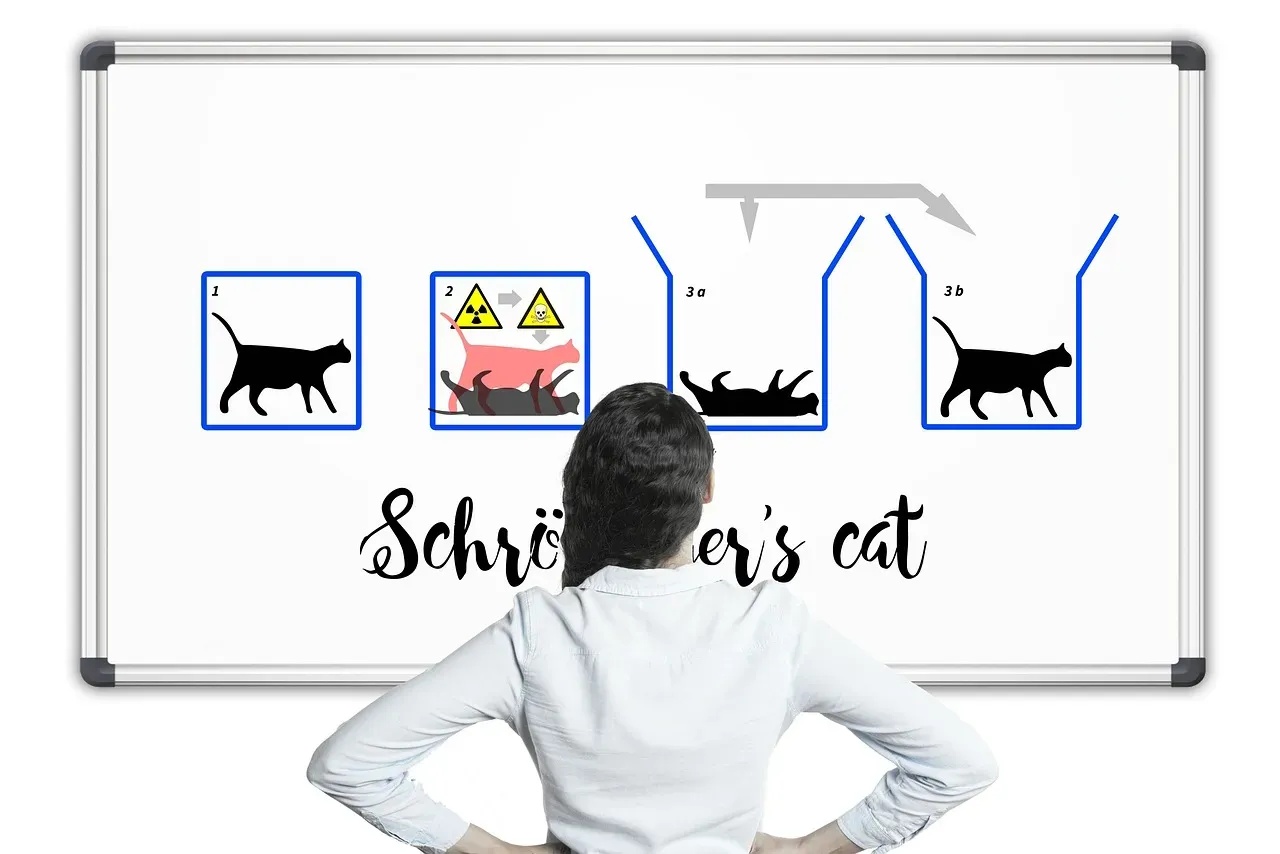
Here is the first surprising thing: in everyday life, we never need to ask what “observation” really means. A coffee cup is either on the table or it is not, whether you stare at it or not. But in quantum physics, particles are described by wavefunctions that spread out, overlap, and encode many possible outcomes at once. When you measure a property like position, you never see that whole smeared-out wave; you always get one definite result. The big question is why.
Early quantum physicists noticed that their equations predicted a cloud of possibilities that somehow “collapsed” into a specific event whenever a measurement was made. That collapse – going from “many possible” to “this is what actually happened” – is tied, mathematically and conceptually, to the act of observation. So the word “observer” entered the vocabulary not as a mystical add-on, but as a way to mark the exact moment the theory switches from probabilities to concrete results.
The Double-Slit Experiment: Where The Myth And The Reality Got Mixed Together
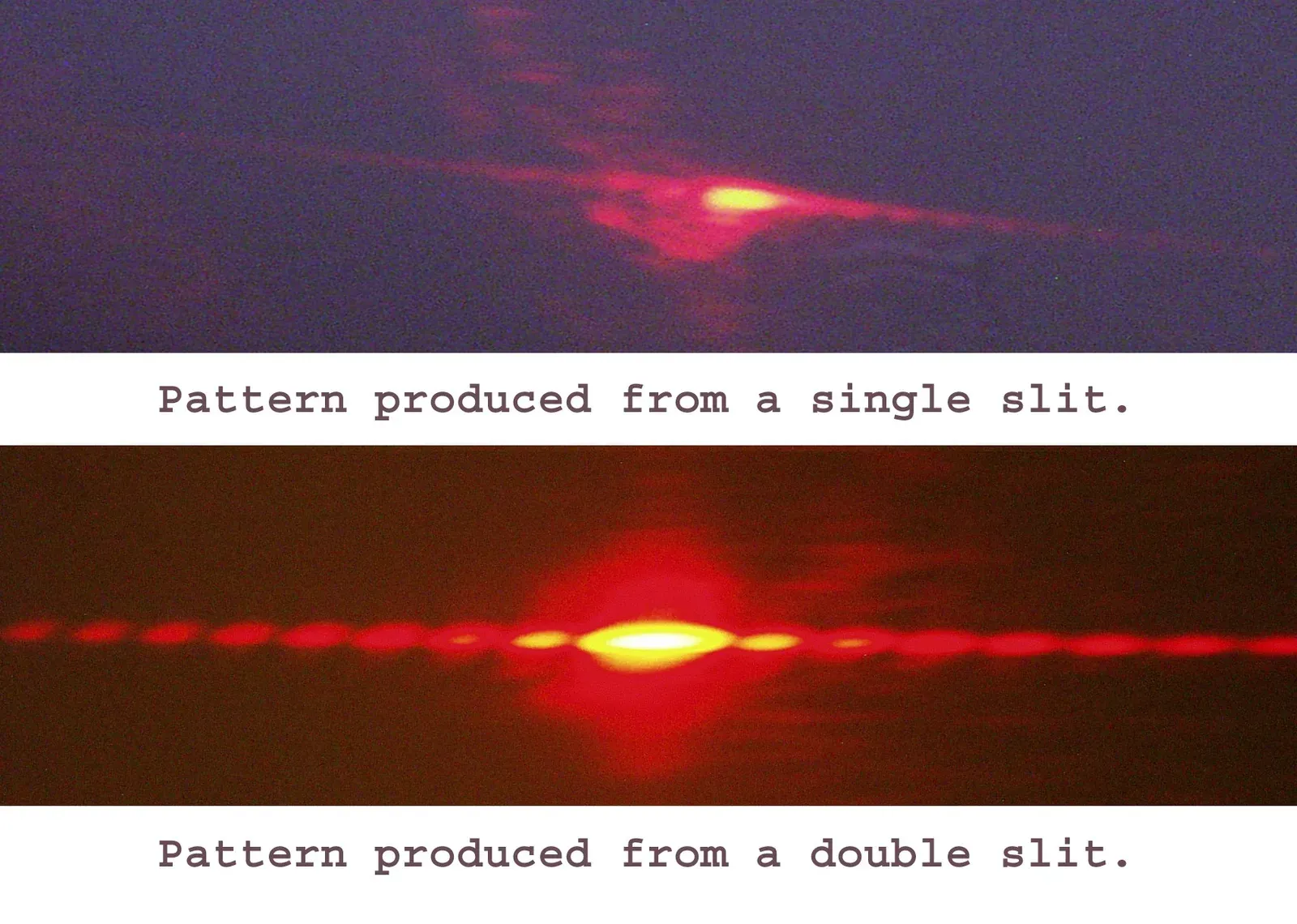
If there is one experiment that launched a thousand half-true TikToks, it is the double-slit. Fire electrons (or photons) at a barrier with two tiny openings, and if you do not check which slit they go through, they behave like waves: they create an interference pattern, as if each particle somehow went through both slits at once and interfered with itself. That alone is weird enough to bend your brain a little.
Now add a “which-path” detector that can tell which slit each particle used. Do that, and the interference vanishes, replaced by a pattern that looks like classical bullets picking one slit or the other. The bombshell is this: it does not matter whether any human ever looks at the recorded data. The crucial change happens when the particle interacts with a device that can, in principle, store that which-path information. In other words, the observer that changes the outcome is not your conscious mind; it is any physical interaction that marks a path.
Observation As Interaction, Not Magical Human Attention
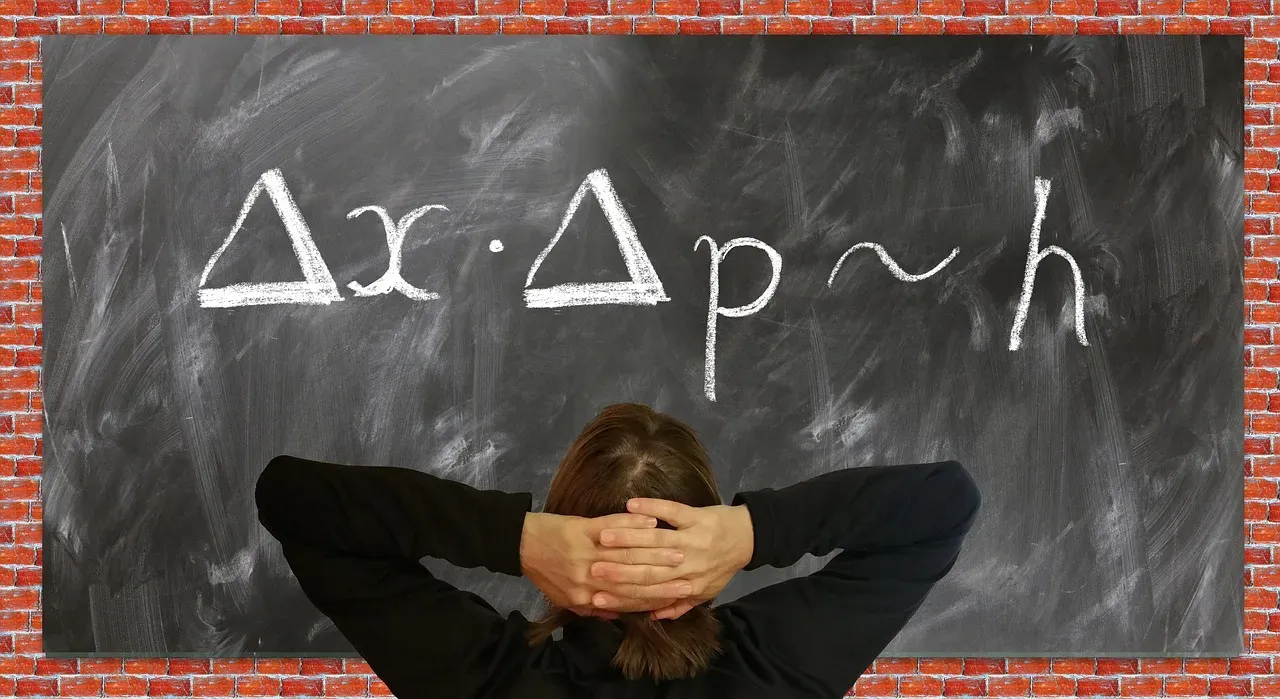
This is where a lot of popular explanations go off the rails. You will hear phrases like “reality only exists when you look at it,” which sounds romantic but is misleading. In the physics, observation is not about your eyes, your awareness, or your spiritual energy. It is about interactions strong enough to leave a trace – a click in a detector, a mark on a photographic plate, a change in a piece of hardware that could, at least in principle, be read out.
Think of a quantum system as a delicate pattern on the surface of still water. As long as nothing touches it, the ripples evolve freely and can interfere. The moment you drop a pebble – any pebble – into that water, you disturb the pattern and force it into a new shape. That pebble is the observer. It can be a sensor, an atom, a wall, or a human being, but consciousness is not required. The literal part is this: once that interaction happens, the set of possibilities is physically changed, not just your knowledge about it.
Decoherence: How The World “Watches” Everything All The Time
One of the most important modern ideas in quantum theory is decoherence, and it quietly demolishes the idea that the universe sits in limbo waiting for human eyes. A quantum system can exist in superpositions – roughly speaking, “both this and that” at once – only as long as it stays isolated. In the real world, almost nothing stays isolated. It is constantly jostled by air molecules, photons, and fields, each interaction leaking information into the environment.
Those countless tiny interactions act like a relentless army of observers. They rapidly suppress delicate quantum superpositions and pick out stable, classical outcomes: positions, shapes, pointer readings. From our point of view, it looks as though the system simply “was” in one definite state all along. Under the hood, though, what happened is that the environment effectively measured it. That is why a dust grain or a cat never behaves like an electron in the double-slit, even though, in principle, the same mathematical rules apply.
Does Consciousness Play Any Special Role At All?

It is very tempting to think consciousness must be doing something magical. After all, our experience of reality is so vivid that it feels like it must be the main act, not a side-effect of physical processes. Historically, a few interpretations of quantum mechanics flirted with the idea that conscious observers trigger wavefunction collapse. Those ideas are still occasionally discussed, but they are not necessary to make sense of the known experiments, and most working physicists do not rely on them.
What the data actually support is more down-to-earth and, in a way, more unsettling: the transition from many possibilities to one outcome appears whenever a system becomes entangled with its surroundings in a way that spreads information. Your brain is one such environment, but not a privileged one. In my own view, tying quantum measurement to consciousness overcomplicates things and muddies two hard problems at once. The physics of observation is already strange enough without declaring human awareness a kind of cosmic wand.
In What Sense Is The Change “Literal,” And Where Do People Overreach?
There really is a sense in which the observer changes what is being observed. Set up a quantum system one way, and do not collect certain information, and you will see interference fringes. Change your apparatus so that which-path information becomes available, and the fringes go away. That is not just a story you tell afterward; it is a tangible difference in the pattern of clicks on a screen. The math makes a sharp distinction between situations where information can exist in principle and where it fundamentally cannot.
But it is equally important not to inflate this into a cosmic self-help slogan. You cannot just “observe” yourself into a different past or bend macroscopic reality at will. The kinds of changes we are talking about live at the level of microscopic superpositions and extremely controlled experiments. The literal truth is powerful but narrow: the physical process that counts as an observation really does reshape which quantum possibilities remain available, yet it does so locally, under strict rules, not in service of our desires or narratives.
What This Actually Means For Reality (And For The Stories We Tell About It)
Here is the part that I find genuinely moving: quantum physics forces us to give up the idea of a completely observer-free description of reality, at least at the level of individual events. You cannot talk about what “really happened” without also talking about how you set up the experiment, what you allowed to interact with what, and which questions you chose to ask of the system. Those choices are not arbitrary, but they matter in a deeper way than classical intuition ever prepared us for.
My own opinion is that the most honest stance is a kind of disciplined humility. The observer effect is not just a metaphor; it is a real physical fact about how information, interaction, and possibility hang together. At the same time, it is not a magic key to manifestation or a blank check for mystical claims. We should let the weirdness challenge our intuition, but not license our fantasies. The universe is telling us that what we do, measure, and pay attention to really does help shape what becomes actual – but only within the hard constraints of physics, not the soft edges of wishful thinking. How much stranger, and how much more interesting, is that than the stories you were first told?