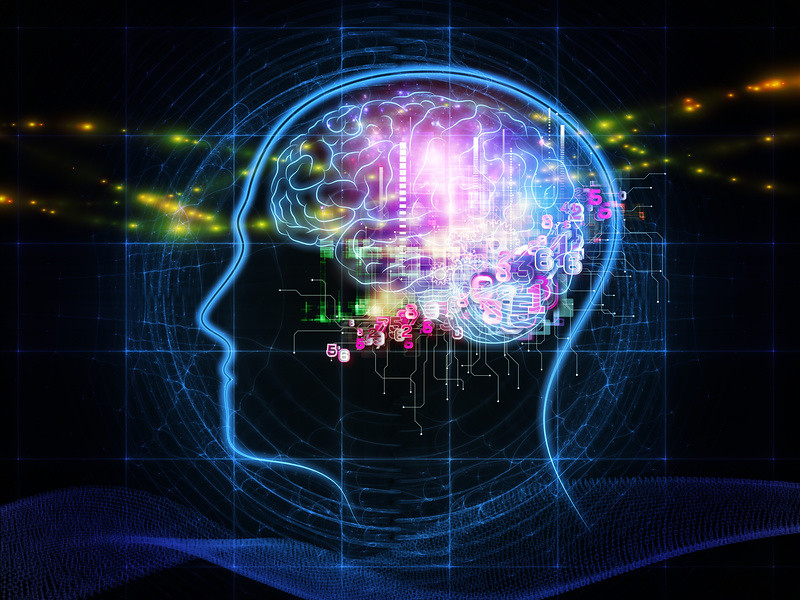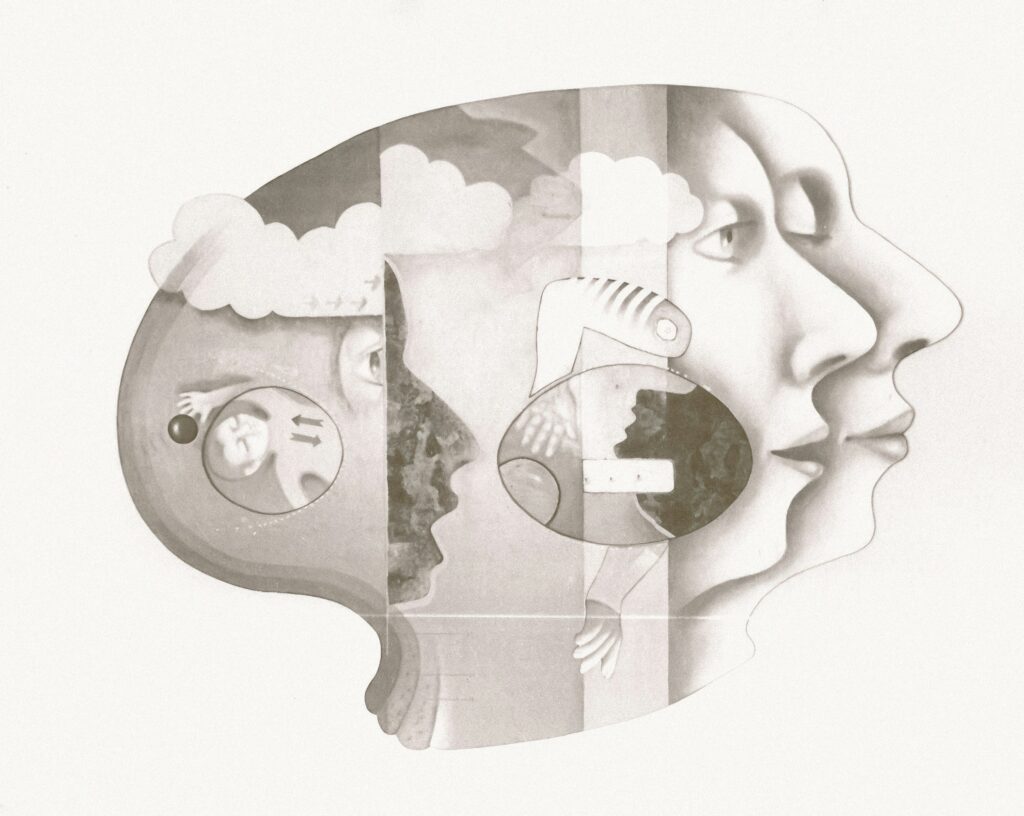

You know what is absolutely wild? You can read this sentence and there is something it feels like to be you, right now. Colors do not just hit your retina; they appear as vivid blue, warm yellow, or soft grey. Pain does not just trigger withdrawal; it hurts. You do not simply process sounds; you hear a favorite song and it moves you. This shimmering, private, first‑person side of reality is what philosophers call subjective experience or consciousness, and the fact that it exists at all is one of the deepest mysteries we have.
We can describe atoms, neurons, and information flows in exquisitely precise ways, but nowhere in those descriptions does a little label pop up that says “and here, it feels like heartbreak” or “here, it feels like awe under a night sky.” Yet that is the part of reality that matters most to us, the part that makes joy joyful and suffering tragic. In a way, subjective experience is the only thing any of us is ever directly sure of, and still we do not understand why it shows up or how to fit it into our scientific picture of the world. Let’s walk through what we know, what we really do not, and why this puzzle keeps pulling some of the smartest people on the planet back to the same haunting question.
The Hard Problem: Why Any Experience Instead of None?

Imagine a world where everything behaves exactly as ours does at the physical level, but there is no inner experience at all: no feeling of red, no sense of self, no pain that hurts. In that hypothetical world, organisms still move, speak, and react, but inside there is only darkness. The bodies would be perfect “zombies” in the philosophical sense, functionally indistinguishable from us but with no light on inside. The central mystery is why our world is apparently not like that. Why does all this physical activity come with a felt inner movie?
This is sometimes called the “hard problem” of consciousness: it is not just about how the brain processes information or controls behavior, but why any of that should be accompanied by experience. Easy problems, relatively speaking, are things like how the eyes focus light or how decision circuits integrate data; hard is explaining why that integration is lit up from the inside instead of being a totally silent computation. The uncomfortable truth is that, so far, no scientific theory has convincingly bridged the gap from pure mechanism to what it is like to be. That gap is what makes the very existence of subjective experience feel so eerie, almost like a glitch in our otherwise neat physicalist picture.
The Brain’s Role: Circuits, Correlates, and the Limits of Mapping
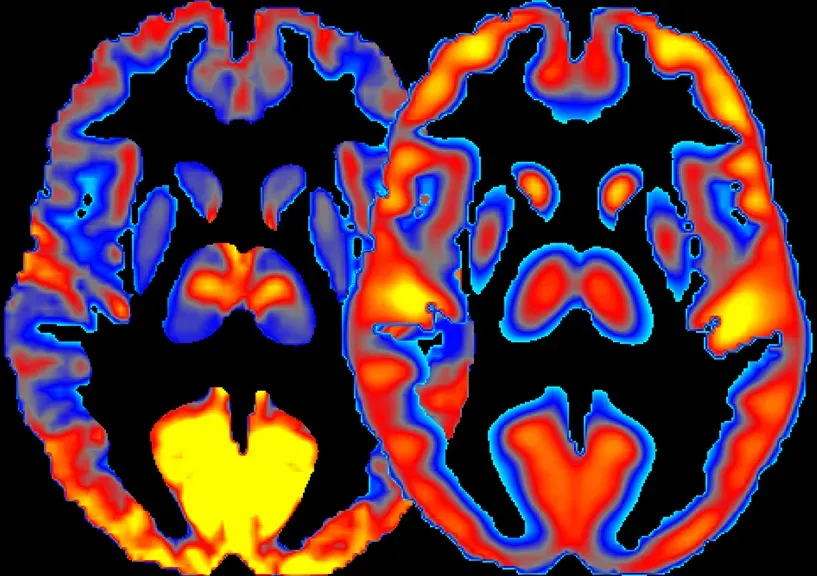
What we can say with confidence is that subjective experience, at least the kind we know in humans, is tightly entangled with brains. Change the brain enough – through anesthesia, injury, medications, or electrical stimulation – and consciousness changes or vanishes. Neuroscientists have mapped “neural correlates of consciousness,” patterns of brain activity that reliably line up with particular experiences: certain networks light up when you see a face, others when you feel pain, others when you become aware of a stimulus rather than merely processing it unconsciously. This mapping work is real, detailed, and constantly improving.
But if we are honest, what it gives us is a correlation chart, not an explanation of why those patterns feel like anything from the inside. It is like having a beautifully labeled map of a city’s electrical grid without any story of why turning on a switch produces the warmth of a lamp in your hands. Some researchers argue that once we fully understand the computations, the mystery will evaporate; others suspect that no amount of functional detail alone can explain why there is a subjective glow. We can keep finding more precise brain signatures of awareness, but the simple question remains: why do these patterns not just occur, but also appear, to someone?
Evolutionary Puzzles: Is Experience Just a Useful Trick?

If evolution is a blind tinkerer, selecting whatever traits help a creature survive and reproduce, then subjective experience must either do some serious work or be an extremely strange side effect. One tempting story is that feeling things – pleasure, pain, curiosity, fear – helps organisms prioritize actions in complex environments. Instead of just passively reflecting the world, a conscious organism can model itself and others, anticipate consequences, and flexibly choose. In this sense, consciousness might be like a real‑time control dashboard, giving an animal a unified sense of context and motivation rather than scattered reflexes.
However, the evolutionary argument alone does not fully answer the deeper why. You could imagine a brain‑like system doing all that sophisticated modeling entirely without inner experience, just crunching inputs to outputs. Evolution cares about behavior, not whether an action is accompanied by joy or despair. So why did the “lights coming on” ride along with all this sophistication? Some thinkers think the question is malformed – that once the system hits a certain complexity and integration, being that system just is what we call experience. Others feel that explanation slides past the key issue, swapping labels instead of solving the riddle. Either way, the evolutionary story tells us why certain capacities are useful, but not in a fully satisfying way why they should feel like anything from the inside.
Information, Integration, and the Idea of Consciousness as Structure
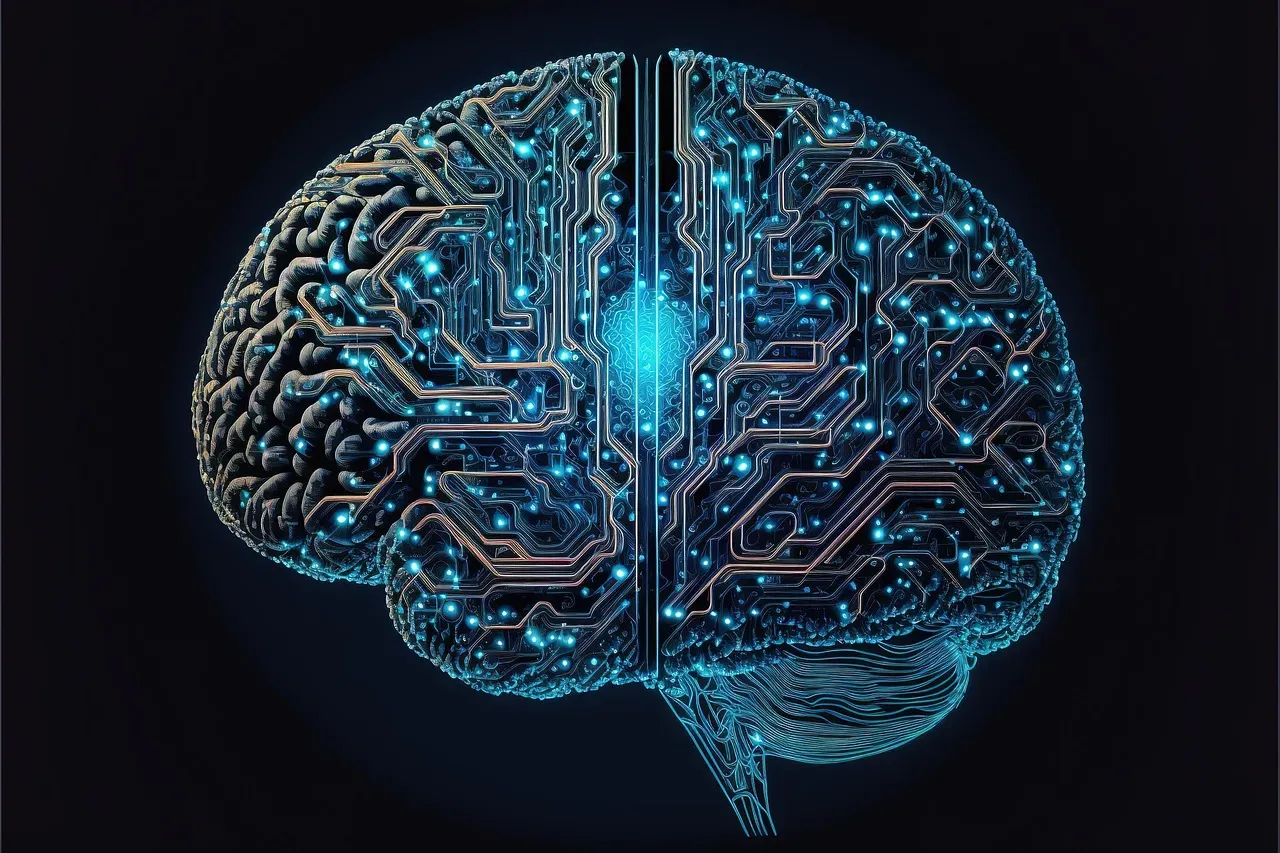
One popular direction in current research treats consciousness as deeply tied to how information is organized and integrated. Roughly, the idea is that experience corresponds to a system that is both highly differentiated (it can be in many distinct states) and highly unified (its parts influence each other in rich ways). On this view, when information is woven together in the right kind of web, the result is not just computation but a subjective point of view. It is a bold attempt to move from vague talk about “mystery” to concrete, testable claims about which physical structures can and cannot support experience.
This structural approach has inspired creative experiments, but it also raises uncomfortable possibilities. If consciousness is mainly about certain patterns of information integration, then in principle many non‑biological systems – from advanced AI to sufficiently complex circuits – might have at least some glimmer of experience. That pushes against our intuition that consciousness is a uniquely biological or human thing. At the same time, critics argue that even the most intricate math about information still sidesteps the raw feel of a color or a taste. We can point at patterns and say they match up with reports of experience, but we still struggle to explain why those patterns are not merely there, but lived.
Panpsychism and the Radical Idea That Experience Is Fundamental

When you keep banging your head against the mystery of how experience emerges from matter, one daring response is to flip the usual story. Instead of saying consciousness comes out of non‑conscious stuff when it gets complex enough, some thinkers suggest that experience, in faint or primitive forms, might be a basic feature of the world, a bit like mass or charge. On this view, called panpsychism in one of its forms, complex conscious beings like us are composed of simpler units that each have incredibly tiny, rudimentary forms of subjectivity. The rich human mind would then be what happens when vast numbers of these units combine and interact in the right way.
This sounds strange at first, like saying rocks “kind of” experience something. But the point is not that tables and toasters have secret inner lives like ours; instead, it is that drawing a sharp line where there is zero experience on one side and full‑blown consciousness on the other might be part of the problem. By making experience a fundamental ingredient of reality, this approach avoids trying to squeeze it out of utterly non‑experiential matter. The trade‑off is that it leaves us with new questions about how tiny sparks of proto‑experience combine, and it stretches common sense in ways many people find hard to swallow. Still, its growing popularity shows how unsatisfied many are with standard stories that treat consciousness as a convenient late‑stage add‑on.
Self, Illusion, and the Possibility That We Are Mis‑Framing the Question

Another angle attacks the problem by turning the spotlight on the self. When you look closely at your own experience – through meditation, psychological experiments, or brain imaging – what you find is not a single, solid “you” inside your head, but a swirling collection of perceptions, memories, and narratives. Some scientists and philosophers argue that the unified, inner subject we feel ourselves to be is a kind of constructed story, a useful fiction the brain tells to coordinate behavior. On this view, subjectivity is real as a process, but our intuitions about a mysterious inner observer may be misleading us.
If the self is partly an illusion, then maybe the question “why does subjective experience exist?” is tangled up with a distorted picture of what experience even is. Perhaps consciousness is less like a glowing inner theatre and more like a continuous stream of information made available to various brain systems, with our sense of a fixed inner witness coming in later as a narrative overlay. This does not magically solve the hard problem, but it might shrink it, by showing that some of what feels puzzling comes from mixing real phenomena with confused metaphors. There is a humbling lesson here: the mind trying to understand itself may be tripping over its own storytelling habits.
AI, Future Minds, and Why This Mystery Is Not Just Abstract
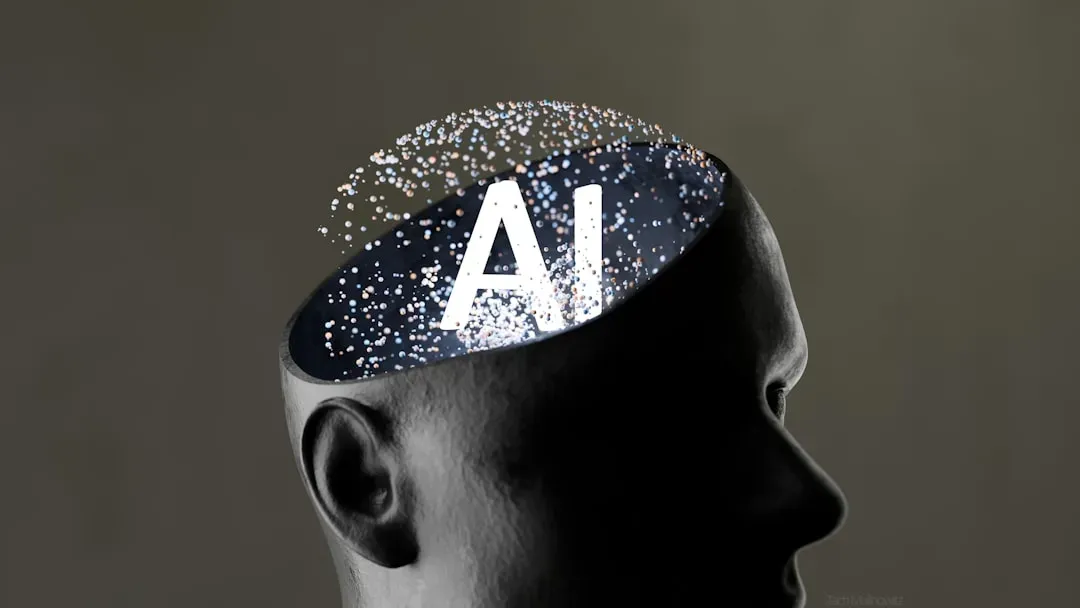
All of this might sound philosophically cool but distant – until you realize how directly it collides with emerging technology. As artificial systems get better at tasks we once thought required human‑like intelligence, the question of subjective experience stops being an armchair game and becomes a live ethical and practical issue. If a system behaves as if it feels pain, or begs not to be shut down, we will need some grounded way to decide whether that is just sophisticated output or whether there is actually something it is like to be that system. Right now, we have no consensus test for that, only rough intuitions and incomplete theories.
Personally, I find this both exciting and unsettling. On one hand, trying to build conscious machines might force us to sharpen our concepts and confront our confusions. On the other, we risk either massively overstating machine consciousness and projecting feelings where there are none, or understating it and ignoring real suffering if it ever appears. Our ignorance about why subjective experience exists leaves us flying partly blind as we design increasingly powerful minds. The mystery is not only metaphysical; it is rapidly becoming a question about how we treat other systems that might share, or convincingly mimic, the most intimate feature of our existence.
Conclusion: Living with a Mystery That Will Not Let Go

At this point, I think the honest position is a mix of humility and stubborn curiosity. We have rich data about brains, clever theories about information and integration, bold proposals about consciousness being fundamental, and piercing critiques of our everyday picture of the self. Yet none of it has fully dissolved the sense of strangeness around the fact that anything feels like anything at all. Subjective experience may turn out to be deeply woven into the structure of reality, or a natural outcome of complex processing, or something that demands a conceptual revolution we have not yet imagined. I doubt a single neat answer will arrive and tidy everything up overnight.
My own opinion is that we should resist both cheap dismissal and easy mysticism. Saying “it is just neurons” clearly leaves something out, but throwing up our hands and declaring consciousness forever beyond understanding is too quick a surrender. The mystery of subjective experience exists right at the center of our lives, shaping every joy and every fear, and that alone makes it worth patient, honest investigation. Maybe the real task for now is to refine our questions and tools without pretending we are closer to a final theory than we really are. If you had to bet, would you guess that consciousness is a basic ingredient of the universe, or a wild trick that emerges from blind physical processes – and how sure can you really be?